 Talmud Bavli
Sukkah 21b : Youtube
Daf TubeYoutube
3 video classes :
Sukkah Page 21b
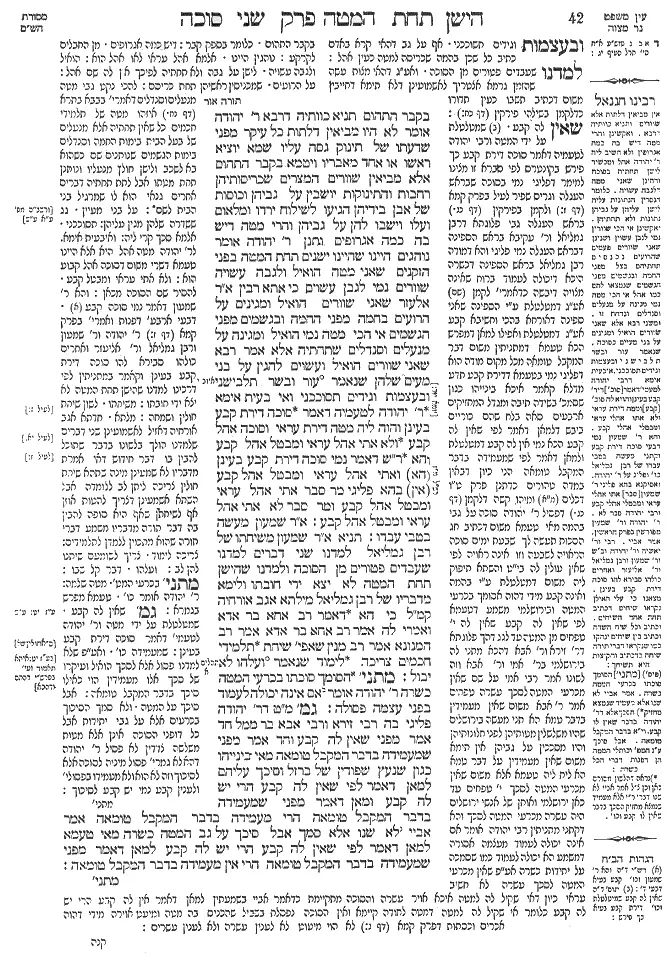
Sukkah 21b - Guemara
בקבר התהום תניא כוותיה דרבא ר' יהודה אומר לא היו מביאין דלתות כל עיקר מפני שדעתו של תינוק גסה עליו שמא יוציא ראשו או אחד מאבריו ויטמא בקבר התהום אלא מביאין שוורים המצרים שכריסותיהן רחבות והתינוקות יושבין על גביהן וכוסות של אבן בידיהן הגיעו לשילוח ירדו ומלאום ועלו וישבו להן על גביהן והרי מטה דיש בה כמה אגרופים ותנן ר' יהודה אומר נוהגים היינו שהיינו ישנים תחת המטה בפני הזקנים שאני מטה הואיל ולגבה עשויה שוורים נמי לגבן עשוים כי אתא רבין א"ר אלעזר שאני שוורים הואיל ומגינים על הרועים בחמה מפני החמה ובגשמים מפני הגשמים אי הכי מטה נמי הואיל ומגינה על מנעלים וסנדלים שתחתיה אלא אמר רבא שאני שוורים הואיל ועשוים להגין על בני מעים שלהן שנאמר (איוב י, יא) עור ובשר תלבישני ובעצמות וגידים תסוככני ואי בעית אימא ר' יהודה לטעמיה דאמר סוכה דירת קבע בעינן והוה ליה מטה דירת עראי וסוכה אהל קבע ולא אתי אהל עראי ומבטל אהל קבע והא ר"ש דאמר נמי סוכה דירת קבע בעינן (הא) ואתי אהל עראי ומבטל אהל קבע (אין) בהא פליגי מר סבר אתי אהל עראי ומבטל אהל קבע ומר סבר לא אתי אהל עראי ומבטל אהל קבע:
א"ר שמעון מעשה בטבי עבדו:
תניא א"ר שמעון משיחתו של רבן גמליאל למדנו שני דברים למדנו שעבדים פטורים מן הסוכה ולמדנו שהישן תחת המטה לא יצא ידי חובתו ולימא מדבריו של רבן גמליאל מילתא אגב אורחיה קמ"ל כי הא דאמר רב אחא בר אדא ואמרי לה אמר רב אחא בר אדא אמר רב המנונא אמר רב מנין שאפי' שיחת תלמידי חכמים צריכה לימוד שנאמר (תהלים א, ג) ועלהו לא יבול:
מתני׳ הסומך סוכתו בכרעי המטה כשרה ר' יהודה אומר אם אינה יכולה לעמוד בפני עצמה פסולה:
גמ׳ מ"ט דר' יהודה פליגי בה רבי זירא ורבי אבא בר ממל חד אמר מפני שאין לה קבע וחד אמר מפני שמעמידה בדבר המקבל טומאה מאי בינייהו כגון שנעץ שפודין של ברזל וסיכך עליהם למאן דאמר לפי שאין לה קבע הרי יש לה קבע ומאן דאמר מפני שמעמידה בדבר המקבל טומאה הרי מעמידה בדבר המקבל טומאה אמר אביי לא שנו אלא סמך אבל סיכך על גב המטה כשרה מאי טעמא למאן דאמר לפי שאין לה קבע הרי יש לה קבע למאן דאמר מפני שמעמידה בדבר המקבל טומאה הרי אין מעמידה בדבר המקבל טומאה:
Comments from Rashi on Masechet Sukkah Page 21b
בקבר התהום . כלומר בספק קבר: דיש כמה אגרופים . מן החבלים לקרקע: נוהגין היינו . אלמא אהל עראי לאו אהל הוא: הואיל ולגבה עשויה . לישן על גבה ולא תחתיה לפיכך אין לה שם אהל: על הרועים . שמכניסין ראשיהן תחת כריסם: להכי נקט גבי מטה מנעלים וסנדלים דאמרי' בבבא בתרא (דף נח.) איזהו מטה של תלמידי חכמים כל שאין תחתיה אלא מנעלים של בעל הבית בימות החמה וסנדלים בימות הגשמים שנותנים שם כשהוא בא לשכב ולישן חולץ מנעליו ונותנן תחת מטתו אבל לתת תחתיה דברים אחרים גנאי הוא לו שמרגיל בני הבית לשם: על בני מעיין . גג ששדרה שלהן מגין עליהן: תסוככני . אלמא סכך קרי ליה: ואיבעית אימא . לר' יהודה מטה אהל היא אלא היינו טעמא דשרי משום דסוכה אהל קבוע הוא: ולא אתי עראי ומבטל קבע . להסיר שם הסוכה מכאן: והא ר' שמעון דאמר נמי סוכה קבע . דבעי ארבע' דפנות ואמרי' בפרק קמא (דף ז:) ר' יהודה ור' שמעון ורבן גמליאל ור' אליעזר ואחרים כולהו סבירא להו סוכה דירת קבע בעינן וקאמר במתניתין לפי דרכינו למדנו שהישן תחת המטה לא יצא ידי חובתו: משיחתו . לשון שיחת חולין ושמחה: מלתא . חדתא אגב אורחיה דאזיל לאשמועינן שני דברים שלמדנו הולך בלשונו בדבר שתוכל להבין בו דבר חידוש דאי אמרת מדבריו לא שמעינן מינה שתהא שיחת חולין צריכה ליתן לב ללומדה אבל השתא אשמעינן דצריך להטות אוזן אף לשיחתן שאף היא סופה להבין בה דבר תורה מדבריו משמע דברי תורה שהוא מתכוין ללמדן לתלמידים: צריכה לימוד . צריך לשומעם שיתנו להן לב: ועלהו . דבר קל שבו: מתני' בכרעי המט' . מטה שלמה: ר' יהודה אומר כו' . טעמא מפרש בגמרא: גמ' שאין לה קבע . שמטלטלת על ידי מטה ור' יהודה לטעמי' דאמר סוכה דירת קבע בעינן: שמעמידה כו' . ואע"פ שלא למדנו פסול אלא לסכך הואיל ועיקרו של סכך אלו מעמידין הוי כאילו סיכך בדבר המקבל טומאה: אבל סיכך על המטה . ולא סמך הסיכוך בכרעים אלא על גבי יתידות אבל כל דופני הסוכה אינן אלא מטות משלשה צדדין לא פסיל ר' יהודה דהא לא גמרי' פסול מיניה לסוכה אלא לסיכוך וזה לא הוא ולא מעמידו בפסולי' ולענין קבע נמי יש קבע לסיכוך:
Comments from Tosafot - Sukkah 21b
ובעצמות וגידים תשוככני. אף על גב דהאי קרא באדם כתיב כל שכן בהמה שכריסה למטה כעין אהל: למדנו שעבדים פטורים מן הסוכה. ואע"ג דהאי מצות עשה שהזמן גרמא אצטריך לאשמועינן דלא תימא דחייבין משום דכתיב תשבו כעין תדורו כדלקמן בשילהי פירקין (סוכה דף כח:): שאין לה קבע. שמטלטלת על ידי המטה ורבי יהודה לטעמיה דאמר סוכה דירת קבע כך פירש בקונטרס לפי סברא זו מצינו למימר דפליגי נמי בסוכה שבראש העגלה וגריס שפיר לעיל בפרק קמא (דף ז:) ולקמן בפירקין (סוכה דף כג.) בראש העגלה גבי פלוגתא דרבן גמליאל ור' עקיבא בראש הספינה דבראש העגלה נמי פליגי והא דמודה רבן גמליאל בראש הספינה דכשרה היכא דיכולה לעמוד ברוח שאינה מצויה דיבשה כדאמרי' לקמן (שם) אע"ג דמטלטלת ע"י הספינה שאני ספינה דאורחא בהכי וחשיבא קבע אע"ג דמטלטלת ואפילו למאן דמפרש הכא טעמא דמתניתין משום דבר המקבל טומאה מכל מקום מודה הוא דפליגי נמי בטעמא דדירת קבע תדע מדלא קאמר איכא בינייהו כגון שסמכ' בשידה תיבה ומגדל המחזיקים ארבעים סאה בלח שהם כוריים ביבש דלמאן דאמר לפי שאין לה קבע הכא נמי אין לה קבע דמטלטלת ולמאן דאמר לפי שמעמידה בדבר המקבל טומאה הני כיון דבאין במדה טהורים כדתנן פרק ט"ו דכלים (מ"א) ומיהו קשה דלקמן (סוכה דף כג.) דפסיל ר' יהודה סוכה על גבי בהמה מאי טעמא משום דכתיב חג הסכות תעשה לך שבעת ימים סוכה הראויה לשבעה וזו אינה ראויה לפי שאין עולין לה בי"ט והשתא תיפוק ליה משום דמטלטלת ע"י בהמה ואינה קבע מידי דהוה אסומך בכרעי המטה ובירושלמי משמע דטעמא לפי שאין לה קבע שאין לה י' טפחים מן המטה עד לגג דהך פלוגתא דר' זירא ור' אבא דהכא מתני לה בירושלמי בר' אמי ור' אבא וזה לשונו אמר רבי אמי על שם שאין מכרעי המטה לסכך עשרה טפחים אמר ר' אבא משום שאין מעמידין בדבר טמא הא תני מעשה בירושלים שהיו משלשלין מטותיהן לפני חלונותיהן והיו מסככין על גביהן אין תימא משום שאין מעמידין על דבר טמא הא לית ליה טעמא אלא משום שאין מכרעי המטה לסכך י' טפחים עד כאן ירושלמי ואותן של אנשי ירושלים היה עשרה מכרעי המטה לסכך והא דקתני מתניתין רבי יהודה אומר אם אינה יכולה לעמוד מעצמה אסורה דמשמע הא יכולה לעמוד כמו שסמכה על יתידות כשרה אע"פ שאין מכרעי המטה לסכך עשרה לא חשיב עראי כיון דאי שקיל לה למטה איכא אויר עשרה והסוכה מתקיימת כדאמר אביי בשמעתין למאן דאמר אין לה קבע הרי יש לה קבע כלומר אי שקיל לה למטה דמטה לחודה קיימא ואין הסוכה נפסלת בשביל שהכניס בה מטה ומיעט אוירה מידי דהוה אכרים וכסתות דפרק קמא (דף ג:) לא הוי מיעוט לא לענין עשרה ולא לענין עשרים:
Sukkah 21b - Mishnah translated into english
with impurity imparted by a grave in the depths.
The Gemara comments: It is taught in a baraita in accordance with the opinion of Rava, as Rabbi Yehuda says: They would not bring doors at all, because a child has an exaggerated sense of self-confidence and perhaps he will extend his head or one of his limbs beyond the edge of the door and will become impure with impurity imparted by a grave in the depths. Rather, they would bring Egyptian oxen whose bellies are broad, and the children would sit upon them and they would hold cups of stone in their hands. When they reached the Siloam pool they descended and filled them, and ascended and sat themselves on the backs of the oxen.
The Gemara asks: But with regard to a bed, which measures several fistbreadths, didn’t we learn in the mishna that Rabbi Yehuda says: It was our custom that we would sleep beneath the bed before the Elders? Apparently, despite the fact that a bed measures several handbreadths, its legal status is not that of a tent. The Gemara answers: A bed is different, since it is designed specifically for use upon it; therefore, the status of the space beneath it is not that of a tent. The Gemara asks: Aren’t oxen like those used to transport the children to bring water for the red heifer also designated specifically for use upon them and nevertheless, Rabbi Yehuda deems their spinal column and bellies a tent.
When Ravin came to Babylonia from Eretz Yisrael he said that Rabbi Elazar said: Oxen are different since they protect the shepherds in the sun from the sun, and in the rain from the rain. Shepherds would lie beneath the bellies of the oxen as protection from the elements. The Gemara asks: If so, i.e., if an ox is rendered a tent because it provides protection, even if its primary designation is for use upon it, then the status of a bed too should be that of a tent, since it protects shoes and sandals that are placed beneath it.
Rather, Rava rejected that explanation and said: Oxen are different and their status is that of a tent since their bellies and backs are made to protect their innards, as it is stated: “With skin and flesh You have clothed me, and with bones and sinews You have knitted me together” (Job 10:11). Since flesh and skin are mentioned in the verse as providing shelter, the status of the oxen is that of a tent.
And if you wish, say instead: In this case Rabbi Yehuda conforms to his reasoning, as he stated elsewhere: We require a sukka that is a permanent residence. The bed in a sukka is a temporary residence, and the sukka is a permanent tent; and a temporary tent does not come and negate a permanent tent. The permanent sukka is significant and that significance supersedes any temporary structure within it. Therefore, in Rabbi Yehuda’s opinion, the status of the bed is not that of a tent.
The Gemara asks: But according to Rabbi Shimon, who also stated that we require a sukka that is a permanent residence, nevertheless, a temporary tent comes and negates a permanent tent. The Gemara answers: Yes, and that is the point over which they disagree. One Sage, Rabbi Shimon, holds: A temporary tent comes and negates a permanent tent, and one Sage, Rabbi Yehuda, holds: A temporary tent does not come and negate a permanent tent.
The mishna relates that Rabbi Shimon said, contrary to the opinion of Rabbi Yehuda: There was an incident involving Tavi, the Canaanite slave of Rabban Gamliel who was sleeping beneath the bed, and Rabban Gamliel claimed that Tavi did so because he was a Torah scholar and knew that slaves are exempt from the mitzva of sukka. It is taught in a baraita that Rabbi Shimon said: From the conversation of Rabban Gamliel we learned two matters. We learned that Canaanite slaves are exempt from the mitzva of sukka, and we learned that one who sleeps beneath the bed did not fulfill his obligation.
The Gemara questions the formulation of the baraita. And let Rabbi Shimon say: From the statement of Rabban Gamliel. Why did he use the atypical expression: From the conversation of Rabban Gamliel? The Gemara answers: Through this expression he teaches us another matter in passing, like that which Rabbi Aḥa bar Adda said, and some say that Rabbi Aḥa bar Adda said that Rabbi Hamnuna said that Rav said: From where is it derived that even the conversation of Torah scholars require analysis, even when the intention of the speaker was apparently not to issue a halakhic ruling? It is as it is stated with regard to the righteous: “Which brings forth its fruit in its season and whose leaf does not wither” (Psalms 1:3). This teaches that with regard to a Torah scholar, not only is his primary product, his fruit, significant but even ancillary matters that stem from his conversation, his leaves, are significant.
MISHNA: One who supports his sukka on the legs of the bed, i.e., he leans the sukka roofing on a bed, the sukka is fit. Rabbi Yehuda says: If the sukka cannot stand in and of itself without support of the bed, it is unfit.
GEMARA: The Gemara asks: What is the rationale for the statement of Rabbi Yehuda deeming this sukka unfit? Rabbi Zeira and Rabbi Abba bar Memel disagree with regard to the rationale. One said: It is unfit because it lacks permanence. The sukka is not stable enough, as if the bed is moved the sukka will collapse. And one said: It is unfit because he is supporting the roofing with an object that is susceptible to ritual impurity, as the bedframe is a vessel. Not only the roofing, but that which supports the roofing as well may not be susceptible to ritual impurity.
The Gemara asks: What is the practical difference between them? The Gemara explains: The difference is in a case where one wedged iron skewers into the ground and roofed the sukka upon them. According to the one who said that the reason the sukka is unfit is because it lacks permanence, this sukka has permanence, and it is fit. However, the one who said the reason the sukka is unfit is because he is supporting the roofing with an object that is susceptible to ritual impurity, he is supporting it with an object that is susceptible to ritual impurity, so it is unfit.
Abaye said: The Sages taught this dispute only in a case where one leaned the roofing on the bed. However, if one placed the roofing atop the bed, i.e., he affixed poles to the bed and the roofing is supported by those poles, everyone agrees that the sukka is fit. What is the reason that it is fit? According to the one who said that the sukka is unfit because it lacks permanence, this sukka has permanence as even if the bed is moved, the roofing will move with it and will not collapse. And according to the one who said the sukka is unfit because he supports it with an object that is susceptible to ritual impurity, in this case he is not supporting it with an object that is susceptible to ritual impurity, as the roofing is not supported by the bed.
Traduction : The William Davidson digital edition of the Koren Noé Talmud, with commentary by Rabbi Adin Even-Israel Steinsaltz.