 Talmud Bavli
The learning on the whole site is dedicated : L'ilui Nishmat Yaakov ben Myriam
The learning on the whole site is dedicated : L'ilui Nishmat יוסף בן מושה
The learning on the whole site is dedicated : L'ilui Nishmat אליעזר בן רחל
Bekhorot 53b : Youtube
Rabbi Dr. Moshe WeisblumYoutube
1 video class :
Bekhorot Page 53b
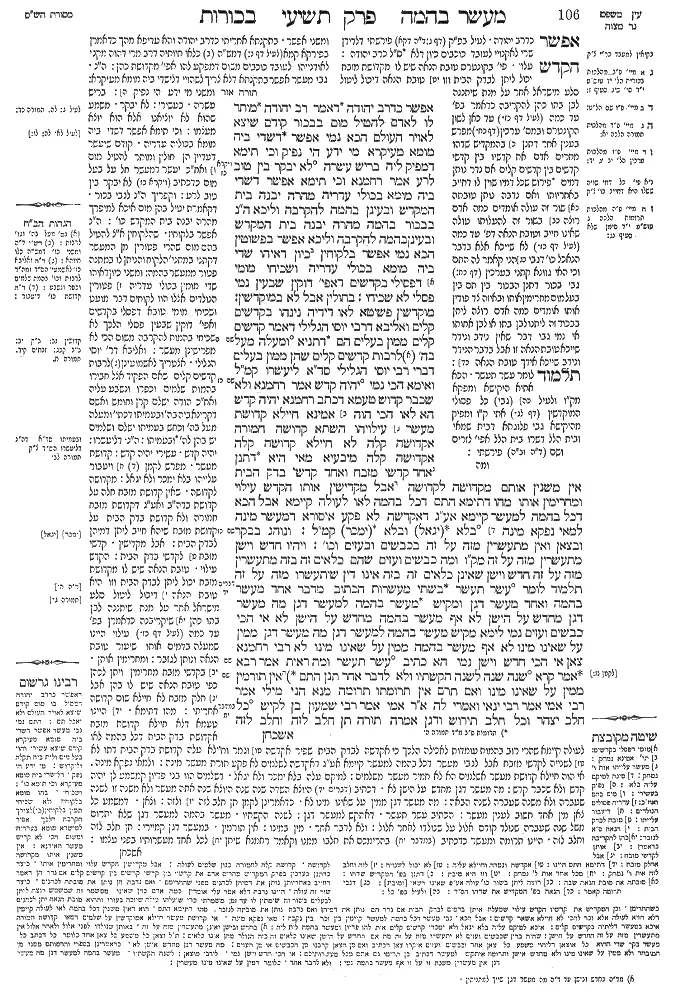
Bekhorot 53b - Guemara
אפשר כדרב יהודה דאמר רב יהודה מותר לו לאדם להטיל מום בבכור קודם שיצא לאויר העולם הכא נמי אפשר דשדי ביה מומא מעיקרא מי ידע הי נפיק וכי תימא דמפיק ליה בריש עשרה (ויקרא כז, לג) לא יבקר בין טוב לרע אמר רחמנא וכי תימא אפשר דשדי ביה מומא בכולי עדריה מהרה יבנה בית המקדש ובעינן בהמה להקרבה וליכא ה"נ בבכור בהמה מהרה יבנה בית המקדש ובעינן בהמה להקרבה וליכא אפשר בפשוטין הכא נמי אפשר בלקוחין כיון דאיהו שדי ביה מומא בכולי עדריה ושכיחי מומי דפסילי בקדשים דאפי' דוקין שבעין נמי פסלי לא שכיחי:
בחולין אבל לא במוקדשין:
מוקדשין פשיטא לאו דידיה נינהו בקדשים קלים ואליבא דרבי יוסי הגלילי דאמר קדשים קלים ממון בעלים הם דתניא (ויקרא כז, ז) ומעלה מעל בה' לרבות קדשים קלים שהן ממון בעלים דברי רבי יוסי הגלילי סד"א ליעשרו קמ"ל ואימא הכי נמי (ויקרא כז, ט) יהיה קדש אמר רחמנא ולא שכבר קדוש טעמא דכתב רחמנא יהיה קדש הא לאו הכי הוה אמינא חיילא קדושת מעשר עילויהו השתא קדושה חמורה אקדושה קלה לא חיילא קדושה קלה אקדושה קלה מיבעיא מאי היא דתנן אחד קדשי מזבח ואחד קדשי בדק הבית אין משנין אותם מקדושה לקדושה אבל מקדישין אותו הקדש עילוי ומחרימין אותו מהו דתימא התם דכל בהמה לאו לעולה קיימא אבל הכא דכל בהמה למעשר קיימא אע"ג דאקדשה לא פקע איסורא דמעשר מינה למאי נפקא מינה {ויקרא כז } בלא יגאל ובלא ימכר קמ"ל:
ונוהג בבקר ובצאן ואין מתעשרין מזה על זה בכבשים ובעזים וכו':
ויהיו חדש וישן מתעשרין מזה על זה מק"ו ומה כבשים ועזים שהם כלאים זה בזה מתעשרין מזה על זה חדש וישן שאינן כלאים זה בזה אינו דין שיתעשרו מזה על זה תלמוד לומר (דברים יד, כב) עשר תעשר בשתי מעשרות הכתוב מדבר אחד מעשר בהמה ואחד מעשר דגן ומקיש מעשר בהמה למעשר דגן מה מעשר דגן מחדש על הישן לא אף מעשר בהמה מחדש על הישן לא אי הכי כבשים ועזים נמי לימא מקיש מעשר בהמה למעשר דגן מה מעשר דגן ממין על שאינו מינו לא אף מעשר בהמה ממין על שאינו מינו לא רבי רחמנא צאן אי הכי חדש וישן נמי הא כתיב (דברים יד, כב) עשר תעשר ומה ראית אמר רבא אמר קרא (דברים יד, כב) שנה שנה לשנה הקשתיו ולא לדבר אחר תנן התם אין תורמין ממין על שאינו מינו ואם תרם אין תרומתו תרומה מנא הני מילי אמר רבי אמי אמר רבי ינאי ואמרי לה א"ר אמי אמר רבי שמעון בן לקיש (במדבר יח, יב) כל חלב יצהר וכל חלב תירוש ודגן אמרה תורה תן חלב לזה וחלב לזה
Comments from Rashi on Masechet Bekhorot Page 53b
ומשני אפשר . בתקנתא אחריתי כדרב יהודה והא עדיפא מהך כדאמרן בפירקא קמא (לעיל בכורות דף ג:) דמש"ה כלאי חיותיה דרב מרי דהוה מקני לאודנייהו לעובד כוכבים משום דמפקע להו אפי' מקדושת כהן: ה"נ . גבי מעשר אפשר בתקנתא דלא צריך לשהויי דלישדי ביה מומא מעיקרא: ומשני מי ידע הי נפיק: בריש עשרה . בעשירי: לא יבקר . משמע שהוא לא יוציאנו אלא הוא יוצא מעצמו: וכי תימא אפשר דשדי ביה מומא בכוליה עדריה . קודם שיעשר דעדיין הן חולין ומותר להטיל מום ואח"כ יעשר דמעשר חל על בעל מום כדכתיב (ויקרא כז) לא יבקר בין טוב לרע: וקפריך ה"נ לגבי בכור . דקאמרת יטיל בהן מום איכא למיפרך מהרה יבנה בית המקדש כו': ה"נ אפשר בלקוחין . שהלקוחין א"צ להטיל בהם מום שהרי פטורין מן המעשר דקתני במתני' הלקוח והניתן לו במתנה פטור ממעשר בהמה: ומשני כיון דאיהו שדי מומין בכולי עדריה . פטורין הנולדים אצלו הוו לקוחים דבר מועט ושכיחי מומי טובא דפסלי בקדשים ואפי' דוקין שבעין פסלי הלכך לא שכיחי בהמות להקרבה משום הכי לא מפרישינן מעשר: ואליבא דר' יוסי הגלילי . אצטריך לאשמועינן לרבות קדשים קלים שאם הפקיד אצל חבירו בהמות שלמים וכפרו ונשבע עליה ואח"כ הודה ישלם קרן וחומש ואשם דקרינא ביה בה' ובעמיתו דכתי' ומעלה מעל בה' וכחש בעמיתו ישלם ושלמים יש בהן לה' ובעמיתו: ה"נ . דליעשרו: יהיה קדש . עשירי יהיה קדש: קדושת מעשר . מפרש לקמן ויעבור עלייהו בלא ימכר ולא יגאל: מקדושה לקדושה . שאין קדושת מזבח חלה על קדושת בדה"ב ואע"ג דקדושת מזבח חמורה ולא קדושת בדק הבית על קדושת מזבח שיהא חייב ליתן דמיהן לבדק הבית: אבל מקדישין . קדשי מזבח לקדשי בדק הבית: הקדש עילוי . טובת הנאה שיש לו מקדושת מזבח יכול ליתן לבדק הבית וזו היא טובת הנאה דיכול ליטול סלע מישראל אחר על מנת שיתננה לבן בתו כהן שיקריבנה כדאמרן בפ' עד כמה (לעיל בכורות דף כז.) עילוי היינו שמעלה בדמים אותו שיעור טובת הנאה ונותן לגזבר: ומחרימין אותן . בקדשי מזבח מחרימין ויתן לכהן כפי טובת הנאה שיש לו בהן אבל חלק מזבח לא חיילא שום קדושה אחריתי: מהו דתימא . היינו טעמא דלא חיילא קדושת מזבח אקדושת בדק הבית דכל בהמה לאו לעולה קיימא שהרי רוב בהמות עומדות לאכילה הלכך כי אקדשה לבדק הבית שפיר אקדשה וגמר וחיילא עלה קדושת בדק הבית דתו לא לשנייה לקדשי מזבח אבל לגבי מעשר דכל בהמה למעשר קיימא אע"ג דאקדשה לשלמים לא פקע תורת מעשר מינה: ולמאי נפקא מינה . אי הוה חיילא קדושת מעשר אשלמים הא לא חמיר מעשר משלמים: למיקם עלה בלא ימכר ולא יגאל . דשלמים הוו בני פדיון קמשמע לן יהיה קדש ולא שכבר קדש: מה מעשר דגן מחדש על הישן לא . דכתיב (דברים יד) היוצא השדה שנה שנה היוצא שנה אתה מעשר ולא משנה זו לשנה שעברה ולא משנה שעברה לשנה הבאה: מה מעשר דגן ממין על שאינו מינו לא . כדאמרינן לקמן תן חלב לזה ולזה: וצאן . דמשמע כל צאן מין אחד חשוב לענין מעשר: הכתיב עשר תעשר . דאתקש למעשר דגן: לשנה הקשתיו . מעשר בהמה למעשר דגן שלא יתרום משל שנה שעברה שנולד קודם אלול על שנולדו לאחר אלול: ולא לדבר אחר . מין במינו: אין תורמין . במעשר דגן קמיירי: תן חלב לזה וחלב לזה . היינו תרומה ומעשר כדכתיב (במדבר יח) בהרימכם את חלבו ממנו וקאמר רחמנא שיתן לכל אחד מעשרותיו בפני עצמו:
Comments from Tosafot - Bekhorot 53b
אפשר כדרב יהודה . לעיל בפ"ק (בכורות דף ג: ד"ה דקא) פירשתי דלדידן שרי לאקנויי לעובד כוכבים כיון דלא ס"ל כרב יהודה: הקדש עלוי . פי' בקונטרס טובת הנאה שיש לו מקדושת מזבח יכול ליתן לבדק הבית וזו טובת הנאה דיכול ליטול סלע מישראל אחר על מנת שיתננה לבן בתו כהן להקריבה כדאמר בפ' עד כמה (לעיל בכורות דף כז.) עד כאן לשון הקונטרס ובמס' ערכין (דף כח.) מפרש בענין אחר דתנן בהמקדיש שדהו מחרים אדם את קדשיו בין קדשי קדשים בין קדשים קלים אם נדר נותן דמים פירוש שכל דמיו שוין לו דחייב באחריותו ואם נדבה נותן טובתה שור זה עולה אומדים כמה אדם רוצה בשור זה להעלותו עולה שאינו חייב וטובת הנאה דפ' עד כמה (לעיל בכורות דף כז.) לא שייכא אלא בדבר הנאכל כו' דגבי הני קאמר לה התם וכי האי גוונא קתני בערכין (דף כח:) גבי בכור דתנן הבכור בין תם בין בעל מום מחרימין אותו ובאיזה צד פודין אותו אומדים כמה אדם רוצה ליתן בבכור זה ליתנו לבן בתו או לבן אחותו אי נמי גבי דבר שאין נידב ונידר שייכא טובת הנאה זו אבל בדבר הנידר ונידב שייכא אידך טובת הנאה: תלמוד לומר עשר תעשר . הכא אתיא היקישא ומפקא מק"ו ולעיל (גבי) כל פסולי המוקדשין (דף לג.) אתי ק"ו ומפיק מהיקישא גבי פלוגתא דבית שמאי ובית הלל דשרו בית הלל אפי' לזרים ושם (ד"ה וב"ה) פירשתי:
Bekhorot 53b - Mishnah translated into english
The Gemara explains that it is possible to act in a different manner, so that the priest does not lose out on his rights to the firstborn animal. One can act in accordance with the opinion of Rabbi Yehuda, as Rabbi Yehuda says: It is permitted for a person to inflict a blemish upon a firstborn animal fetus before it emerges into the air of the world. The Gemara challenges: If so, here too, it is possible for one to inflict a blemish from the outset, before the animal becomes consecrated as the tithed animal.
The Gemara answers: How can one know which animal will emerge as the tenth? Since it is impossible to know this, one cannot inflict a blemish on the animal before it becomes consecrated. And if you would say that one should bring out the animal upon which he has inflicted the blemish at the head of the ten animals to ensure that it will be the tithed animal, this is not a valid option, as the Merciful One states: “He shall not inquire whether it be good or bad” (Leviticus 27:33). This means one may not plan in advance which animal will be the tenth.
And if you would say it is possible to inflict a blemish on the entire herd of animals and thereby ensure the tenth one will be blemished, that is also undesirable. The reason is that soon the Temple will be rebuilt and we will require animals for offerings, and there will be none remaining without a blemish.
The Gemara asks: But here too, with regard to a firstborn animal, why not also say that soon the Temple will be rebuilt and we will require animals for offerings and there will be none remaining without a blemish? The Gemara answers: It is possible to bring the offerings from ordinary animals that are not firstborns.
The Gemara challenges: Here too, with regard to the animal tithe, it is possible to bring the offerings from animals purchased from another person, which are exempt from animal tithe, as taught in the mishna on 55b. The Gemara answers: Since anyone who has animals inflicts a blemish on all of the animals in his herd to avoid consecrating the tithe, there will be very few unblemished animals available for purchase. And furthermore, blemishes that disqualify sacrificial animals are common, as even if the blemish is small, e.g., on the animal’s eyelid, it disqualifies the animal from being used for sacrifice. Therefore, it will not be common to find animals fit to be used as offerings. For this reason the Sages decreed that one should not tithe his animals in the present time.
§ The mishna teaches that the mitzva of animal tithe is in effect with regard to non-sacred animals but not with regard to sacrificial animals. The Gemara raises a difficulty: It is obvious that the mitzva to tithe is not in effect with regard to sacrificial animals, as they are not his. Since sacrificial animals have been dedicated to the Temple, of course the owner cannot subsequently consecrate them.
The Gemara answers: The mishna is referring to offerings of lesser sanctity, e.g., peace offerings, and it is in accordance with the opinion of Rabbi Yosei HaGelili, who says: Offerings of lesser sanctity are the monetary property of their owners, and therefore the owner can consecrate them. As it is taught in a baraita with regard to the guilt offering of a robber who takes a false oath, that the verse: “And he commits a trespass against the Lord” (Leviticus 5:21), serves to include one who takes a false oath with regard to offerings of lesser sanctity belonging to another, which are the property of their owners. This is the statement of Rabbi Yosei HaGelili. Accordingly, it might enter your mind to say that such animals should be tithed. Therefore, the mishna teaches us that the mitzva of animal tithe is not in effect with regard to sacrificial animals at all.
The Gemara suggests: But one can say it is indeed so, i.e., perhaps offerings of lesser sanctity can indeed be tithed. The Gemara responds that the Merciful One states: “And all the tithe of the herd or the flock, whatever passes under the rod, the tenth shall be sacred to the Lord” (Leviticus 27:32). This teaches that this mitzva applies only to an animal that can become sacred in the future but not to an animal that is already sanctified, e.g., that has been set aside as an offering of lesser sanctity.
The Gemara raises a difficulty: The reason that offerings of lesser sanctity cannot be tithed is that the Merciful One writes: “The tenth shall be sacred to the Lord,” from which it can be inferred that were that not the case, I would say that the sanctity of the animal tithe does take effect on the animal. This claim is difficult, as now that consecration of stringent sanctity does not take effect with regard to offerings of lesser sanctity, as will be explained, is it necessary to teach that a consecration of lesser sanctity does not take effect with regard to offerings of lesser sanctity?
The Gemara clarifies: What is this halakha that consecration of stringent sanctity does not take effect with regard to offerings of lesser sanctity? As we learned in a mishna (Temura 32a): Both concerning animals consecrated for the altar and items consecrated for Temple maintenance, one cannot alter their designation from one form of sanctity to another form of sanctity. But one can consecrate an animal already consecrated for the altar by consecration of its value, and that value is donated to the Temple treasury for maintenance, in addition to the sacrificing of the animal. And one can dedicate that value for the purpose of giving it to the priests. This mishna teaches that one may not consecrate an animal that has already been consecrated for Temple maintenance as an offering for the altar, despite the fact that an offering has more stringent sanctity, and if so, then the sanctity of the animal tithe certainly does not take effect with regard to offerings of lesser sanctity.
The Gemara answers: Even so, it is necessary for the mishna to teach that tithes do not take effect on offerings of lesser sanctity, lest you say that there, in the mishna in Temura, the reason is that not every animal stands to potentially become a burnt offering, i.e., an offering of more stringent sanctity, from the time it is born. For this reason the greater sanctity cannot take effect once the animal has been consecrated as an offering of lesser sanctity. But in the mishna here, where every animal stands to potentially become an animal tithe offering, one might have thought that even though it is consecrated as an offering of lesser sanctity, nevertheless the initial potential prohibition, i.e., status, of animal tithe is not abrogated from it.
The Gemara clarifies: What difference is there if an animal that has been consecrated as a peace offering is also sanctified as an animal tithe offering? The Gemara explains that if it is sanctified as an animal tithe offering, the prohibition of: “It shall not be redeemed” (Leviticus 27:33), and the prohibition of: It shall not be sold (see 32b), take effect. A peace offering can be redeemed, whereas it is prohibited to redeem or sell animal tithe even after its slaughter. Therefore, the mishna teaches us that the sanctity of animal tithe does not take effect on animals that have been consecrated as offerings of lesser sanctity.
§ The mishna teaches: And the animal tithe is in effect with regard to the herd and the flock, but they are not tithed from one for the other; and it is in effect with regard to sheep and goats, and they are tithed from one for the other. In this regard the Gemara cites a baraita: Let it be proven that the animals from the new flock and the animals from the old flock can be tithed from one for the other, by an a fortiori inference: And if sheep and goats, which are prohibited for interbreeding with each other due to the prohibition of diverse kinds, are nevertheless tithed from one for the other, with regard to animals from the new flock and the old flock, which are not prohibited for interbreeding with each other as diverse kinds, is it not logical that they should be tithed from one for the other?
The baraita continues: Therefore, the verse states: “You shall tithe a tithe from all the increase of your seed that the field brings forth year by year. And you shall eat before the Lord your God, in the place that He shall choose to place His name there, the tithe of your grain, of your wine, and of your oil, and the firstborn of your herds and of your flocks; that you may learn to fear the Lord your God always” (Deuteronomy 14:22–23). Here, the verse is speaking of two tithes; one is the animal tithe and the other one is the grain tithe. And the verse juxtaposes the animal tithe to the grain tithe, teaching that just as the grain tithe is not taken from the new grain for the old grain, so too, the animal tithe is not taken from the new flock for the old flock.
The Gemara asks: If so, let us say with regard to sheep and goats that they too are not tithed for each other, by the same reasoning, i.e., that the verse juxtaposes the animal tithe to the grain tithe: Just as grain tithe is not separated from one type of grain for another grain that is not its type, so too, animal tithe is not separated from one type of animal for another species of animal that is not its type. The Gemara answers that with regard to animal tithe the Merciful One has amplified the halakha by stating “flock” (Leviticus 27:32). This teaches that all species referred to with the term flock, i.e., sheep and goats, are tithed together.
The Gemara suggests: If so, let us also say that new flocks are tithed together with old flocks, based on that amplification of the verse. The Gemara answers that it is written: “You shall tithe a tithe” (Deuteronomy 14:22), to teach that old and new flocks are not tithed together. The Gemara asks: And what did you see that led you to use the juxtaposition to prohibit tithing old and new flocks together but not to prohibit tithing sheep and goats together? Rava said the verse states: “Year by year” (Deuteronomy 14:22), which teaches that I have juxtaposed the flocks with regard to the year in which they were born, i.e., to prohibit tithing old and new flocks together, but not with regard to another matter.
§ We learned in a mishna there (Terumot 2:4): One may not separate the portion of the produce designated for the priest [teruma] from one type of produce to exempt another type of produce that is not its type, and if one did separate teruma in that manner, his teruma is not teruma. The Gemara asks: From where is this matter derived? Rabbi Ami says that Rabbi Yannai says, and some say that Rabbi Ami says that Rabbi Shimon ben Lakish says, that the verse states with regard to teruma: “All the best of the oil, and all the best of the wine, and of the grain, the first part of them, which they give to the Lord, to you have I given them” (Numbers 18:12). The Torah says: Give the best, i.e., teruma and tithes, of this, the oil, and the best of that, the wine, separately, i.e., one may not give teruma or tithes from one for the other. This mitzva also applies to tithes, as it too is called: “The best” (Numbers 18:30).
Traduction : The William Davidson digital edition of the Koren Noé Talmud, with commentary by Rabbi Adin Even-Israel Steinsaltz.