 Talmud Bavli
Bekhorot 3a : Youtube
Rabbi Dr. Moshe WeisblumYoutube
1 video class :
Bekhorot Page 3a
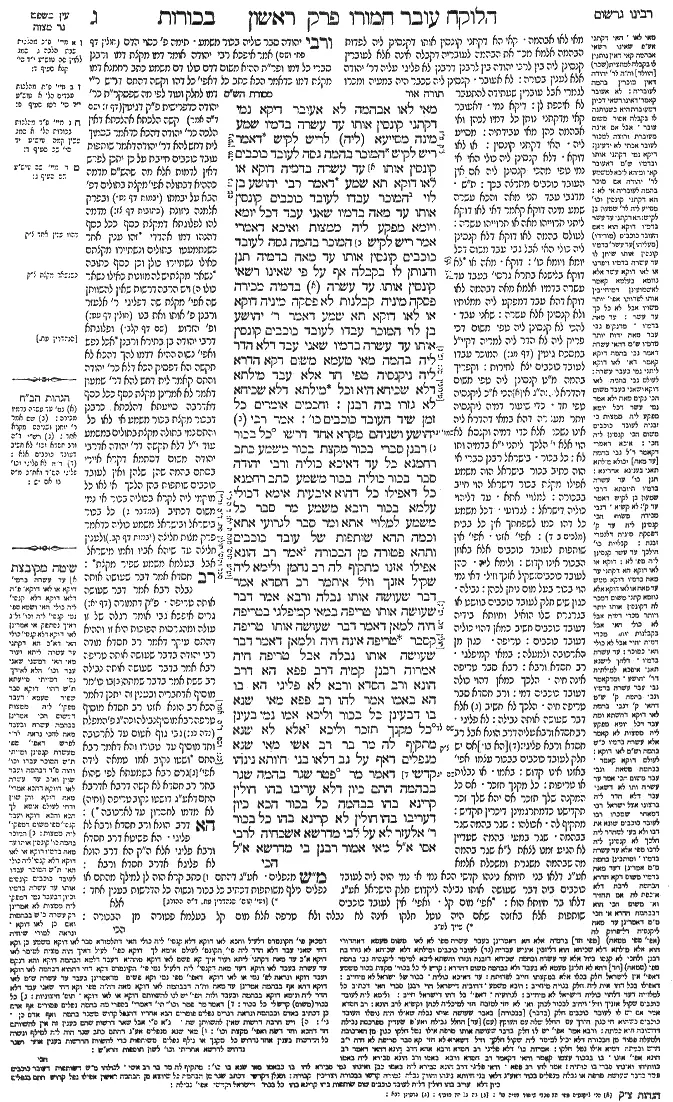
Bekhorot 3a - Guemara
מאי לאו אבהמה לא אעובר דיקא נמי דקתני קונסין אותו עד עשרה בדמיו שמע מינה מסייעא (ליה) לריש לקיש דאמר ריש לקיש המוכר בהמה גסה לעובד כוכבים קונסין אותו עד עשרה בדמיה דוקא או לאו דוקא תא שמע דאמר רבי יהושע בן לוי המוכר עבדו לעובד כוכבים קונסין אותו עד מאה בדמיו שאני עבד דכל יומא ויומא מפקע ליה ממצות ואיכא דאמרי אמר ריש לקיש המוכר בהמה גסה לעובד כוכבים קונסין אותו עד מאה בדמיה תנן והנותן לו בקבלה אף על פי שאינו רשאי קונסין אותו עד עשרה בדמיה מכירה פסקה מיניה קבלנות לא פסקה מיניה דוקא או לאו דוקא תא שמע דאמר ר' יהושע בן לוי המוכר עבדו לעובד כוכבים קונסין אותו עד עשרה בדמיו שאני עבד דלא הדר ליה בהמה מאי טעמא משום דקא הדרא ליה ניקנסיה טפי חד אלא עבד מילתא דלא שכיחא היא וכל מילתא דלא שכיחא לא גזרו ביה רבנן:
וחכמים אומרים כל זמן שיד העובד כוכבים כו':
אמר רבי יהושע ושניהם מקרא אחד דרשו (שמות יג, ב) כל בכור רבנן סברי בכור מקצת בכור משמע כתב רחמנא כל עד דאיכא כוליה ורבי יהודה סבר בכור כוליה בכור משמע כתב רחמנא כל דאפילו כל דהוא איבעית אימא דכולי עלמא בכור רובא משמע מר סבר כל משמע למלויי אתא ומר סבר לגרועי אתא וכמה תהא שותפות של עובד כוכבים ותהא פטורה מן הבכורה אמר רב הונא אפילו אזנו מתקיף לה רב נחמן ולימא ליה שקיל אזנך וזיל איתמר רב חסדא אמר דבר שעושה אותו נבלה ורבא אמר דבר שעושה אותו טריפה במאי קמיפלגי בטריפה חיה למאן דאמר דבר שעושה אותו טריפה קסבר טריפה אינה חיה ולמאן דאמר דבר שעושה אותו נבלה אבל טריפה חיה אמרוה רבנן קמיה דרב פפא הא דרב הונא ורב חסדא ורבא לא פליגי הא בו הא באמו אמר להו רב פפא מאי שנא בו דבעינן כל בכור וליכא אמו נמי בעינן (שמות לד, יט) כל מקנך תזכר וליכא אלא לא שנא מתקיף לה מר בר רב אשי מאי שנא מנפלים דאף על גב דלאו בני חיותא נינהו קדשי דאמר מר (שמות יג, יב) פטר שגר בהמה שגר בבהמה התם כיון דלא עריבו בהו חולין קרינא בהו בבהמה כל בכור הכא כיון דעריבו בהו חולין לא קרינא בהו כל בכור ר' אלעזר לא על לבי מדרשא אשכחיה לרבי אסי א"ל מאי אמור רבנן בי מדרשא א"ל
Comments from Rashi on Masechet Bekhorot Page 3a
מאי לאו אבהמה . קאי האי דקתני קונסין אותו דקנסינן ליה לפדות הבהמה אלמא מכר את הבהמה לעובריה דקבלה אינה אלא לעוברין קנסינן ליה בין לרבי יהודה בין לרבנן דרבנן לא פליגי עליה דר' יהודה אלא לענין בכורה: לא אעובר . קנסינן ליה שכבר היה במעיה ומכרו לגמרי אבל עוברין שעתידה להתעבר לא איכפת לן: דיקא נמי . דאעובר קאי מדקתני נותן כל דמיו לכהן ואי אבהמה כהן מאי עבידתיה: מסייע ליה . האי דקתני קונסין: או לאו דוקא . דלא קנסינן ליה כולי האי. אי נמי טפי מהכי קנסינן ליה אם אין העובד כוכבים מתרצה בכך: ת"ש . מדגבי עבד תני מאה והכא עשרה שמע מינה דוקא קאמר דאי לאו דוקא ליתני תרוייהו מאה או תרוייהו עשרה:
לעולם בהמה לאו דוקא דלא קנסינן ליה כולי האי אבל גבי עבד משום דכל יומא ויומא כו': דוקא . מאה או לא דוקא. בלישנא בתרא גרסי' בעבד עד עשרה בדמיו אלמא מאה דבהמה לאו דוקא דהא עבד דמפקע ליה ממצותיו ולא קנסינן אלא עשרה: שאני עבד . להכי לא קנסינן ליה טפי משום דכי פריק ליה לא הדר ליה למריה דקיי"ל במסכת גיטין (דף מג:) המוכר עבדו לעובד כוכבים יצא לחירות: וקפריך בהמה מ"ט . קנסינן ליה טפי משום דהדרא ליה: ה"ג אי הכי א"כ ליקנסיה טפי חד . כדי שיעור דמיה ליקנסיה יותר מעשרה דהא במאי דהדרא ליה אינו נשכר אלא כדי דמיה וקנסא לא הוי אלא י' הלכך ליתני י"א בדמיה ותו לא: כל בכור . בישראל. רבנן סברי אי הוה כתיב בכור בישראל הוה משמע אפילו מקצת בכור דישראל הוי חייב בבכורה: למלויי אתא . עד דליהוי כוליה דישראל: לגרועי . דכל משמע כל דהו כמו לשפחתך אין כל בבית (מלכים ב ד): אפי' אזנו . אפי' אין שותפות לעובד כוכבים אלא באוזן הבכור אינו קדוש: ולימא ליה . כהן לעובד כוכבים: שקיל אזנך וזיל . דאי נמי הוי בכור בעל מום ניתן לכהן: נבילה . כגון שיש חלק לעובד כוכבים בוושט או בגרגרת שלו הואיל וחיותא בידיה דעובד כוכבים חשיב כמאן דהוי כוליה דעובד כוכבים: טריפה . כגון מן הארכובה ולמעלה: במאי קמיפלגי . רב חסדא ורבא: רבא סבר טריפה אינה חיה . הלכך כמאן דהוי כולה דעובד כוכבים דמי: ורב חסדא סבר טריפה חיה . הלכך לא חשיב אלא דבר שעושה אותה נבילה: לא פליגי . רב חסדא ורבא עליה דרב הונא אבל רב חסדא ורבא פליגי: [הא בו . ] אם יש חלק לעובד כוכבים בבכור עצמו אפי' באזנו אינו קדוש: באמו . או נבלות או טריפות: כל מקנך תזכר . אם כל המקנה שלך תזכר אם יהא שלך זכר תקדישנו כדמתרגמינן דיכרין תקדיש: מתקיף לה . אכולהו: שגר בהמה שגר בבהמה . שגר במעי בהמה שעדיין לא הגיע זמנו לצאת. ל"א שגר בהמה מה שבהמה משגרת ומשכלת. אלמא אע"ג דלאו בני חיותא נינהו קדשי הכא נמי אי נמי הוה ליה לעובד כוכבים ביה דבר שעושה אותו נבילה ליקדוש חלק הישראל אע"ג דלאו בר חיותא הוא:
Comments from Tosafot - Bekhorot 3a
ורבי יהודה סבר כוליה בכור משמע . תימה פ' כסוי הדם (חולין דף פח. ושם) אמר איפכא רבי יהודה אומר דמו מקצת דמו ורבנן סברי כל דמו ופר"ת ההיא משום דדם כולו דם משמע כתב רחמנא דמו מקצת דמו כדאמר הכא כתב כל דאפי' כל דהו וקשה דהתם דריש ר"י דמו לחלק ועוד לפי מה שפסק ר"ת כר' יהודה כדפרישית פ"ק דגיטין (דף ז: ושם ד"ה אמר) קשה הלכתא אהלכתא דאין הלכה כר' יהודה דהכא כדאמר בסמוך לית דחש להא דר' יהודה דאמר שותפות עובד כוכבים חייבת על כן יתכן לפרש דאין לדמות אלא מה שהש"ס מדמה כההיא דבתולה אפי מקצת בתולים דפ' הבא על יבמתו (יבמות דף נט.) ובפרק אלמנה ניזונת (כתובות דף צז:) מדמה להו לפלוגתא דמקצת כסף ככל כסף דהנהו דמו אהדדי זהו ענין אחר כשנתמעטו בתולים ונשתיירו מקצתם כאילו נשתיירו כולן וכן כסף כתובה נשאר מקצת יש לה מזונות כאילו נשאר כולו ויש הרבה דרשות שאין להשוותן שה אפי' מקצת שה דפליגי ר' אלעזר ורבנן פ' אותו ואת בנו (חולין דף עט:) ופ' הזרוע (שם דף קלב.) ופלוגתא דרבי יהודה בן בתירא ורבנן אכל נפש ואפי' נשוה ההיא דדמו להך דהכא לא תקשה הא דפסיק הכא דלא כר' יהודה והתם קאמר לית דחש להא דר' שמעון דאמר לא אמרינן מקצת כסף ככל כסף דאדרבה סייעתא דהלכתא כרבנן דבכור מקצת בכור משמע אי לאו כל והתם נמי בתולה מקצת בתולים במשמע עוד י"ל דלא תקשה דר' יהודה אדרבי יהודה משום דסתמא דקרא איירי בסתם בהמה שהן שלהן ואין לעובד כוכבים שותפות בהן הלכך אי לאו כל מוקמי ליה לקרא בכוליה בכור אי נמי משום דכתיב (במדבר ג) כל בכור בישראל ובישראל משמע כוליה כדאמר פרק מצות חליצה (יבמות דף קב.) ולענין חליצה עד שיהא אביו ואמו מישראל אבל בעלמא משמע שפיר מקצת: רב חסדא אמר דבר שעושה אותה נבלה רבא אמר דבר שעושה אותה טריפה . פ"ק דתמורה (דף יא:) גריס איפכא גבי אומר רגלה של זו עולה ומהגרסות הפוכות היא זו וההיא דהתם עיקר דאמר רב חסדא מודה רבי יהודה בדבר שעושה אותה טריפה רבא אמר בדבר שעושה אותה נבילה רב ששת אמר בדבר שמתה בו כו מר מוסיף אדחבריה ובענין זה יתכן דאמר הכא רב הונא אזנו רב חסדא מוסיף טרפה רבא מוסיף נבילה וכה"ג פ' המפלת (נדה כג:) גבי גוף אטום עד לארכובה וחד מוסיף עד טבורו והא דאמר רבא התם ושטו נקוב אמו טמאה לידה אפי' גרס רבא בשמעתא לפי שהוא בתר רב חסדא לא קשה דרבא אדרבא התם דאע"ג דושטו נקוב טריפה (וחיה) לא מדמו לחסרון עד לארכובה: הא דרב הונא ורב חסדא ורבא לא פליגי . הא פשיטא דרב חסדא ורבא פליגי אלא ה"ק הא דרב הונא לא פליגא אדרב חסדא ורבא: מ"ש מנפלים . אע"ג דהתם כתב קרא הוה לן למילף מהתם או נפלים נילף משותפות דכתיב כל בכור ונשוה כל הדרשות בענין אחד:
Bekhorot 3a - Mishnah translated into english
What, is the baraita not referring to the animal when it prohibits giving it in receivership? If so, the baraita prohibits giving it to the gentile in exchange for half the rights to future fetuses, and certainly giving the gentile rights to all the future fetuses would be forbidden. The Gemara responds: No, it is referring to a case of an existing fetus, as the animal is pregnant, and therefore it is prohibited to sell it. It is permitted to sell to a gentile an animal that is not yet pregnant, for the rights to the fetuses alone.
The Gemara comments: The language of the baraita is also precise, as it teaches: The Sages penalize him up to ten times its value [damav], in masculine form, indicating that it is referring to the fetus and not the mother. The Gemara affirms: Learn from it that this is correct, and it cannot be proven from the baraita that it is forbidden to sell rights to a future fetus to a gentile.
The Gemara comments that the language of the baraita: The Sages penalize him up to ten times its value, supports the opinion of Reish Lakish, as Reish Lakish says: In the case of one who sells large livestock to a gentile, the Sages penalize him, requiring him to repurchase it from the gentile for up to ten times its value.
The Gemara asks: Does the phrase: For up to ten times its value, mean specifically this amount and no more, or does it not mean specifically this amount? The Gemara suggests: Come and hear a proof from that which Rabbi Yehoshua ben Levi says: In the case of one who sells his Canaanite slave to a gentile, the Sages penalize him, requiring him to repurchase the slave from the gentile for up to one hundred times its value. It is therefore evident that the phrase: For up to ten times its value, is not precise. The Gemara responds: A slave is different, as each day that he works for the gentile, the gentile restricts him from performing mitzvot. Therefore, one who sells a slave is penalized more severely than one who sells his animal to a gentile.
And there are those who say that there is another version of the previous discussion: Reish Lakish says that in the case of one who sells large livestock to a gentile, the Sages penalize him, requiring him to repurchase it from the gentile for up to one hundred times its value. We learned in a baraita: And in the case of one who gives the gentile an animal in receivership even though he is not permitted to do so, the Sages penalize him by requiring that he purchase the gentile’s portion of the animal for up to ten times its value. This contradicts the statement of Reish Lakish.
The Gemara responds: The penalties in these two cases are not the same, as in a case of a sale, the animal is entirely separated from the Jew, while in the case of receivership, it is not entirely separated from him, as the animal still belongs to the Jew. Therefore, the penalty in this case is not as severe.
The Gemara asks: Does the amount of one hundred times its value stated by Reish Lakish mean specifically this amount and no more, or does it not mean specifically this amount? The Gemara suggests: Come and hear a proof from that which Rabbi Yehoshua ben Levi says: In the case of one who sells his Canaanite slave to a gentile, the Sages penalize him, requiring him to repurchase the slave from the gentile for up to ten times its value. Apparently, the number one hundred is not meant literally. The Gemara responds: A slave is different, since the Sages already penalized the owner in that the slave does not return to him. Since the slave will be emancipated once the master redeems him, it may be that the Sages would not penalize him to such a great extent.
The Gemara challenges: Rather, what is the reason that he is penalized in the case of an animal more so than in the case of a slave? Is it because of the fact that it returns to him? If so, he should be penalized only one additional amount. If the difference is that an animal returns to its owners and a slave does not, then the difference in penalties should be reflective of this, and he should have to purchase the animal for no more than eleven times its value. Rather, the Gemara offers a different distinction: The sale of a slave is an uncommon matter, and the Sages did not issue a decree with regard to an uncommon matter. Therefore, one cannot compare the penalty in the case of selling a slave to the penalty in the case of selling an animal.
§ A previously cited baraita (2b) states that if one receives an animal from a gentile to care for and receives a portion of the offspring in exchange, Rabbi Yehuda holds that the Jew’s portion is sanctified with firstborn status. And the Rabbis say that as long as the ownership of the gentile is involved, i.e., he owns a portion of the firstborn animal, it does not have firstborn status. Rabbi Yehoshua said: And both of them interpreted the same one verse in accordance with their opinions. The verse states: “Sanctify to Me all the firstborn, whatever opens the womb, among the children of Israel” (Exodus 13:2).
The Rabbis hold that the words “the firstborn, whatever opens the womb, among the children of Israel” indicate that even when a Jew owns part of the firstborn, it is subject to the obligations of firstborn status. Therefore, the Merciful One wrote: “All the firstborn,” which teaches that it is not subject to the obligations of firstborn status unless the entire animal is owned by a Jew. And Rabbi Yehuda holds that the words “the firstborn, whatever opens the womb, among the children of Israel” indicate that only if the entire firstborn is owned by a Jew would it be subject to the obligations of firstborn status. Therefore, the Merciful One wrote the word “all” to demonstrate that even if any amount of the animal belongs to a Jew, it has firstborn status.
If you wish, say instead that everyone agrees that the words “the firstborn, whatever opens the womb, among the children of Israel” indicate that if the majority of the animal belongs to the Jew, it is subject to the obligations of firstborn status. One Sage, i.e., the Rabbis, holds that the word “all” indicates that it comes to fill the Jewish portion of ownership, meaning that it has firstborn status only if the entire animal belongs to a Jew. And one Sage, i.e., Rabbi Yehuda, holds that the word “all” comes to detract from the necessary Jewish ownership, indicating that the animal has firstborn status even if it is partially owned by a Jew.
§ The Gemara asks: And according to the Rabbis, how much should the gentile’s partnership in the animal be in order for it to be exempt from being counted a firstborn? Rav Huna says: It is sufficient even if the gentile owns only its ear. Rav Naḥman objects to this: Let the animal have firstborn status, and let the priest say to the gentile: Take your ear and go, as a blemished firstborn animal belongs to the priesthood.
It was stated that the amora’im engaged in a dispute concerning this question: Rav Ḥisda says that if the gentile is a partner in an item, i.e., a part of the body, that renders the animal a carcass, meaning if that limb were removed the animal would die immediately, the animal is exempt from the obligations of firstborn status. And Rava says it is exempt if the gentile is a partner in an item that if removed renders the animal a tereifa, meaning the animal will die but not immediately.
The Gemara asks: With regard to what principle do they disagree? The Gemara answers that they disagree about whether a tereifa can live for an extended period of time. According to the one who says that a gentile’s partnership in an item that renders the animal a tereifa exempts him from the obligations of firstborn status, it is because he holds that a tereifa cannot live, and therefore the gentile owns an essential portion of the animal. And according to the one who says that the gentile must be a partner in an item that renders the animal a carcass, this is because he holds that it cannot live without this part, but a tereifa can live for an extended period of time without those missing limbs.
The Sages said before Rav Pappa: That which Rav Huna said, that even if the gentile’s share of the animal is only its ear it does not have firstborn status, and that which Rav Ḥisda and Rava said, that the animal does not have firstborn status only if the gentile is a partner in the primary limbs of the body on which its life is dependent, do not disagree. This ruling of Rav Huna is referring to it, i.e., the fetus, while that ruling of Rav Ḥisda and Rava is referring to its mother.
Rav Pappa said to them: What is different about the case of the fetus, where owning a portion of its ear exempts the Jew from the obligations of firstborn status? It is because we require the fulfillment of the verse “all the firstborn,” i.e., that all of it be owned by the Jew, and that is not the case. If so, with regard to its mother as well we require the fulfillment of the verse: “From all your livestock you shall take the males” (Exodus 34:19), which also indicates that all the livestock, including the mother, must belong to the Jew, and this is not the case. Rather, there is no difference, and they disagree both in the case of the fetus and in that of the mother.
Mar bar Rav Ashi objects to this: Why does gentile partnership in an essential limb of the fetus exempt the Jew from the obligations of firstborn status? In what way is this animal different from non-viable newborns, which are sacred even though they are not viable? As the Master said in reference to the verse: “Every firstborn that emerges from [sheger] an animal” (Exodus 13:12), any fetus that dwells [shegar] inside an animal, i.e., inside the mother’s womb, even one that is non-viable, is also sanctified as a firstborn.
The Gemara responds: There, in the case of non-viable newborns, since there is no non-sacred element mixed in with them, we apply to the animal the phrase “all the firstborn.” But here, in the case where a gentile owns a portion of the fetuses, since a non-sacred element is mixed in with them, we do not apply to them the phrase: “all the firstborn.”
The Gemara relates that one day Rabbi Elazar did not enter the study hall. Rabbi Elazar then found Rabbi Asi, and said to him: What did the Sages say in the study hall? Rabbi Asi said to him:
Traduction : The William Davidson digital edition of the Koren Noé Talmud, with commentary by Rabbi Adin Even-Israel Steinsaltz.