 Talmud Bavli
Bekhorot 20a : Youtube
Rabbi Dr. Moshe WeisblumYoutube
1 video class :
Bekhorot Page 20a
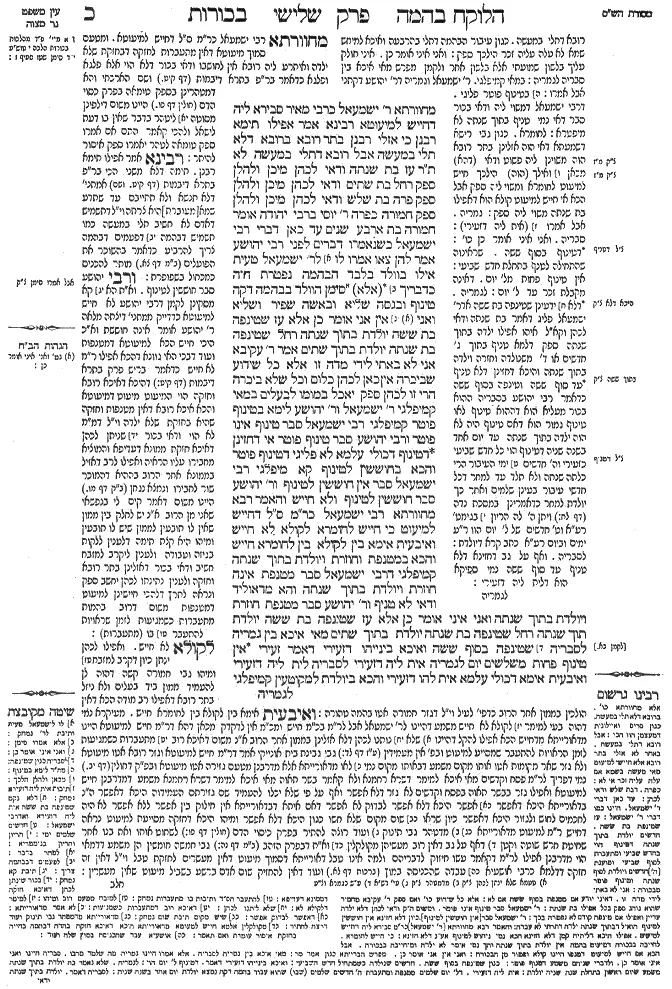
Bekhorot 20a - Guemara
מחוורתא ר' ישמעאל כרבי מאיר סבירא ליה דחייש למיעוטא רבינא אמר אפילו תימא רבנן כי אזלי רבנן בתר רובא ברובא דלא תלי במעשה אבל רובא דתלי במעשה לא ת"ר עז בת שנתה ודאי לכהן מיכן ולהלן ספק רחל בת שתים ודאי לכהן מיכן ולהלן ספק פרה בת שלש ודאי לכהן מיכן ולהלן ספק חמורה כפרה ר' יוסי ברבי יהודה אומר חמורה בת ארבע שנים עד כאן דברי רבי ישמעאל כשנאמרו דברים לפני רבי יהושע אמר להן צאו אמרו לו לר' ישמעאל טעית אילו בוולד בלבד הבהמה נפטרת היה כדבריך אלא סימן הוולד בבהמה דקה טינוף ובגסה שליא ובאשה שפיר ושליא ואני אין אני אומר כן אלא עז שטינפה בת ששה יולדת בתוך שנתה רחל שטינפה בת שנתה יולדת בתוך שתים אמר ר' עקיבא אני לא באתי לידי מדה זו אלא כל שידוע שביכרה אין כאן לכהן כלום וכל שלא ביכרה הרי זו לכהן ספק יאכל במומו לבעלים במאי קמיפלגי ר' ישמעאל ור' יהושע לימא בטינוף פוטר קמיפלגי רבי ישמעאל סבר טינוף אינו פוטר ורבי יהושע סבר טינוף פוטר אי דחזינן דטינוף דכולי עלמא לא פליגי דטינוף פוטר והכא בחוששין לטינוף קא מיפלגי רבי ישמעאל סבר אין חוששין לטינוף ור' יהושע סבר חוששין לטינוף ולא חייש והאמר רבא מחוורתא רבי ישמעאל כר"מ ס"ל דחייש למיעוט כי חייש לחומרא לקולא לא חייש ואיבעית אימא בין לקולא בין לחומרא חייש והכא במטנפת וחוזרת ויולדת בתוך שנתה קמיפלגי דרבי ישמעאל סבר מטנפת אינה חוזרת ויולדת בתוך שנתה והא מדאוליד ודאי לא טניף ור' יהושע סבר מטנפת חוזרת ויולדת בתוך שנתה ואני איני אומר כן אלא עז שטינפה בת ששה יולדת תוך שנתה רחל שטינפה בת שנתה יולדת בתוך שתים מאי איכא בין גמריה לסבריה שטינפה בסוף ששה ואיכא בינייהו דזעירי דאמר זעירי אין טינוף פחות משלשים יום לגמריה אית ליה דזעירי לסבריה לית ליה דזעירי ואיבעית אימא דכולי עלמא אית להו דזעירי והכא ביולדת למקוטעין קמיפלגי
Comments from Rashi on Masechet Bekhorot Page 20a
רובא דתלי במעשה . כגון עיבור הבהמה דתלי בהרבעה ואיכא למיחש שמא לא עלה עליה זכר הילכך ספק: ואני איני אומר כן . איני חולק עליך בלשון שמועתי אלא בלשון אחר. ולקמן מפרש מאי איכא בין סבריה לגמריה: במאי קמיפלגי ר' ישמעאל . וגמריה דר' יהושע דקתני אבל אמרו: בטינוף פוטר פליגי . דרבי ישמעאל דמשוי ליה ודאי בכור סבר דאי נמי טניף בתוך שנתה לא מיפטרא: לחומרא . כגון גבי רישא דשמעתא דאי הוה אזלינן בתר רובא הוה משוינן ליה פשוט ודאי (דהא) מכאן ואילך (הוה) הילכך חייש למיעוט לחומרא ומשוי ליה ספק אבל הכא אי חייש למיעוט קולא הוא דאפילו בת שנתה משוי ליה ספק: גמריה . אבל אמרו (אית ליה דזעירי): סבריה . ואני איני אומר כן כו': דטינוף בסוף ששה . שראינוה שהתחילה לטנף בתחלת חדש שביעי: אין טינוף פחות מל' יום . דאינה מקבלת זכר עד ל' יום: לגמריה . דלא ידעינן שטינפה בת ששה אדר' ישמעאל פליג דאמר בת שנתה ודאי לכהן וקא"ל איהו אפילו ילדה בתוך שנתה ספק דלמא טניף בתוך ג' חדשים או ד' משנולדה וחזרה וילדה בתוך שנתה והיכא דחזינן דלא טניף עד סוף ששה וטינפה בסוף ששה כדאמר רבי יהושע בסבריה ההוא בכור מעליא הוא דההוא טינוף לאו טינוף גמור הוא דאם טינוף היה לא הוה ילדה בתוך שנתה עד יום אחד בשנה שניה דטינוף הוי כל חדש שביעי כזעירי וה' חדשים ימי העיבור הרי כלתה שנתה ולא תלד עד למחר דכל חדשי עיבור בעינן שלמים ואחר כך יולדת למחר כדאמרינן במסכת נדה (דף לח:) ויתן ה' לה הריון בגימט' רע"א וט' חדשים של ל' יום הוו ר"ע ימים וביום רע"א כתב קרא דיולדת: לסבריה . ואף על גב דחזינא דלא טניף עד סוף ששה נמי ספיקא הוא דלית ליה דזעירי:
Comments from Tosafot - Bekhorot 20a
מחוורתא רבי ישמעאל כר"מ ס"ל דחייש למיעוטא . ומטעם סמוך מיעוטא דאין מתעברות לחזקה דבחזקת שלא ילדה ואיתרע ליה רובא אין לחושבו ודאי בכור דלא הוי אלא פלגא ופלגא כדאמר בר"פ בתרא דיבמות (דף קיט.) ושם הארכתי והא דמטהרינן בספק טומאה בפרק כסוי הדם (חולין דף פו.) היינו משום דילפינן מסוטה ליטהר בדבר שאין בו דעת לישאל ולהכי קאמר התם אם אמרו ספק טומאה לטהר יאמרו ספק איסור להיתר: רבינא אמר אפילו תימא רבנן . תימה דלא משני הכי בר"פ בתרא דיבמות (דף קיט. ושם) אמתני' דלא תנשא ולא תתייבם עד שתדע שמא [מעוברת] היא צרתה וי"ל דתשמיש דאדם לא חשיב תלי במעשה כמו תשמיש דבהמה דפעמים דבהמה צריך להרביע כדאמר בהשוכר את הפועלים (ב"מ דף צא.) מותר להכניס כמכחול בשפופרת: ורבי יהושע סבר חוששין לטינוף . וא"ת הא קא מסקינן לקמן דרבי יהושע לא חייש למיעוטא כדדייק ממתני' דיצתה מלאה ר' יהושע אומר אינה חוששת וא"כ היכי חייש הכא למיעוטא דמטנפות ועוד דבכי האי גוונא דהכא אפילו ר"מ לא חייש כדאמר בריש פרק בתרא דיבמות (דף קיט:) דהיכא דאיכא רובא וחזקה הוי המיעוט מיעוט דמיעוטא והכא איכא רובא דאין מטנפות וחזקה שהיא בחזקת שלא ילדה וי"ל דמ"מ לא הוי ודאי בכור שניתן לכהן דאיכא חזקת ממונא דעדיפא והמוציא מחבירו עליו הראיה ואפילו לרב דאזיל בממונא אחר הרוב בההיא דהמוכר שור לחבירו ונמצא נגחן (ב"ק דף מו.) היינו משום דאמר קים לי בנפשאי שאני מן הרוב א"נ יש לחלק בין ממון שאין לו תובעין לממון שיש לו תובעין ומיהו היא קצת תימה דלענין ללקות בגיזה ועבודה ולענין ליקרב למזבח חשיב ודאי בכור דאזלינן בתר רובא וחזקה ולענין נתינתו לכהן יחשב ספק ונראה לתרץ דלהכי חיישינן למיעוט דמטנפות משום דרוב בהמות מתעברות כשמגיעות לזמן שראויות להתעבר בו (מתעברות): לקולא לא חייש . ואפילו לכהן ינתן כיון דקרב למזבח ומיהו גבי חמורה קשה דהוה לן להעמיד ממון ביד בעלים ולא ניזל בתר רובא דאפילו רב מודה הכא דאין הולכין בממון אחר הרוב כדפי' לעיל וי"ל דגזר חמורה אטו בהמה טהורה: ואיבעית אימא בין לקולא בין לחומרא חייש . מעיקרא נמי דהוה בעי למימר לקולא לא חייש משמע דהיינו לר' ישמעאל אבל לר"מ בכ"מ חייש ומכ"מ אין לדקדק מכאן דהא דר"מ חייש למיעוטא היינו מדאורייתא מדחייש הכא אפילו להקל דהיינו שלא נותנו לכהן דלא אזלינן בממון אחר הרוב א"נ משום דאיכא רוב מתעברות כשמגיעות לזמן הראויות להתעבר שמסייע למיעוט ובפ' אין מעמידין (ע"ז דף לד:) גבי גבינת בית אונייקי אמר דר"מ חייש למיעוטא וגזר רובא אטו מיעוטא ולא גזר שאר מקומות אטו אותו מקום משמע דבאותו מקום נמי לאו מדאורייתא אלא מדרבנן מטעם גזירה אטו מיעוטא ובפ"ק דחולין (דף יב.) נמי דפריך לר"מ פסח וקדשים מאי איכא למימר דשרא רחמנא ולא קאמר בשר תאוה מאי איכא למימר דשרא רחמנא משמע דמדרבנן חייש למיעוטא ואפילו גזר בבשר תאוה בפסח וקדשים לא גזר דלא אפשר ואף על פי שלא יכלו להעמיד שם גזירתם העמידוה היכא דאפשר ה"נ בדאורייתא היכא דאפשר אפשר היכא דלא אפשר לבדוק לא אפשר דאם איתא דבדאורייתא אין חילוק בין אפשר ללא אפשר לא היה לחכמים לחוש ולגזור היכא דאפשר כיון שראו שום מקום שלא חשו כגון היכא דלא אפשר ומיהו היכא דחזקה מסייעת למיעוט נראה דחייש ר"מ למיעוט מדאורייתא מדטהר גבי תינוק ועוד רוצה להתיר בפרק כיסוי הדם (חולין דף פו:) לשחוט אותו ואת בנו אחר שחיטת חרש שוטה וקטן דאף על גב דאין רוב מעשיהן מקולקלין וא"ת דבפרק הזהב (ב"מ דף נה:) גבי חמשה חומשין הן משמע דדמאי הוי מדרבנן אפילו לר"מ דקאמר עשו חיזוק לדבריהם ולמה אינו טבל דאורייתא דסמוך מיעוט דאין מעשרים לחזקת טבל וי"ל דאין זה חזקה דדלמא כרבי אושעיא עבדה שהכניסה במוץ (ברכות דף לא.) ועוד דאין להחזיק שום אדם ברשע בשביל מיעוט שאין מעשרין:
Bekhorot 20a - Mishnah translated into english
It is clear, as was suggested initially, that Rabbi Yishmael holds in accordance with the opinion of Rabbi Meir, who says that one must be concerned for the minority.
Ravina says: You may even say that Rabbi Yishmael holds in accordance with the opinion of the Rabbis. When the Rabbis follow the majority, it is with regard to a majority that is not dependent upon an action but is simply the nature of reality. But in the case of a majority that is dependent upon an action, such as the pregnancy of a young goat, which depends upon whether or not it had copulated with a male, the Rabbis do not follow the majority.
§ The Sages taught in a baraita: If one purchased a goat within its first year from a gentile and does not know whether or not it had previously given birth, the subsequent male offspring certainly is given to the priest; from that point forward an offspring’s status as a firstborn is uncertain. If it was a ewe within its second year the offspring certainly is given to the priest; from that point forward an offspring’s status as a firstborn is uncertain. If it was a cow within its third year the offspring certainly is given to the priest; from that point forward an offspring’s status as a firstborn is uncertain. If it was a donkey it is subject to the same halakha as a cow. Rabbi Yosei, son of Rabbi Yehuda, says: The offspring of a donkey within its fourth year also has the status of a firstborn. Until here is the statement of Rabbi Yishmael.
The baraita continues: When these matters were stated by the students before Rabbi Yehoshua, he said to them: Go out and say to Rabbi Yishmael: You erred. Were an animal exempted only by giving birth to an offspring and in no other manner the halakha would be in accordance with your statement. But the Rabbis said: An indication of the offspring in a small animal is a murky discharge from the womb, which exempts subsequent births from the mitzva of the firstborn. And the indication in a large animal is the emergence of an afterbirth, and the indication in a woman is a fetal sac or an afterbirth.
Rabbi Yehoshua added: That is the opinion of the Rabbis, but I myself do not say so. Rather, I hold that a goat that expelled a murky discharge from the womb at the age of six months can give birth within its first year, and a ewe that expelled a murky discharge in its first year can give birth within its second year. The Gemara will later discuss the practical difference between his opinion and the ruling that he ascribes to the Rabbis. Rabbi Akiva says: I have not arrived at this method of determining firstborn status. Rather, in any case where it is known that the animal had previously given birth, the priest has nothing here. And in any case where it is known that the animal had not previously given birth, that is given to the priest. And if it is uncertain, it may be eaten in its blemished state by the owner.
The Gemara analyzes the baraita. With regard to what matter do Rabbi Yishmael and Rabbi Yehoshua disagree? Shall we say they disagree with regard to whether or not a murky discharge from the womb exempts an animal from the mitzva of the firstborn; as Rabbi Yishmael holds that a murky discharge does not exempt an animal because it is not a sign of a birth, and Rabbi Yehoshua holds that a murky discharge exempts an animal?
The Gemara rejects this suggestion: If we actually see a murky discharge, everyone agrees that the murky discharge exempts an animal. And here, it is with regard to whether one is concerned about the possibility that an animal might have expelled a murky discharge that they disagree. Rabbi Yishmael holds that we are not concerned about a murky discharge, and it can therefore be assumed that the first offspring born after its purchase from the gentile is firstborn; and Rabbi Yehoshua holds that one is concerned about a murky discharge, and due to the uncertainty the next offspring remains with its owner.
The Gemara objects: And is it correct that Rabbi Yishmael is not concerned about the possibility that the mother might have expelled a murky discharge before giving birth to a live offspring? But doesn’t Rava say: It is clear that Rabbi Yishmael holds in accordance with the opinion of Rabbi Meir, who says one must be concerned for the minority? If so, Rabbi Yishmael should be concerned for a murky discharge as well. The Gemara explains: Where Rabbi Yishmael is concerned is when the concern leads to a stringency. But if the concern would lead to a leniency, as in this case, where it would mean that the animal born after a year is only an uncertain firstborn, he is not concerned.
And if you wish, say instead: Whether it leads to a leniency or whether it leads to a stringency Rabbi Yishmael is concerned, and here they disagree with regard to whether or not an animal can expel a murky discharge and then return to its fertile state and give birth within its first year. As Rabbi Yishmael holds: An animal that expels a murky discharge does not return to its fertile state and give birth within its first year, and accordingly, from the fact that this animal gave birth it can be concluded that it certainly did not expel a murky discharge beforehand. And Rabbi Yehoshua holds: An animal that expels a murky discharge returns to its fertile state and can give birth within its first year.
§ The baraita teaches that Rabbi Yehoshua said: That is the opinion of the Rabbis, but I myself do not say so. Rather, I hold that a goat that expelled a murky discharge from the womb at the age of six months still gives birth within its first year, while a ewe that expelled a murky discharge in its first year still gives birth within its second year. The Gemara asks: Since according to both opinions an animal that expelled a murky discharge can still give birth within a year, what difference is there between Rabbi Yehoshua’s tradition of the opinion of the Rabbis and his own reasoning?
The Gemara answers: The difference between their opinions is in a case where a goat expelled a murky discharge at the end of its first six months of life, when the seventh month began, and then gave birth before the end of its first year. And there is a difference between them with regard to the statement of Ze’eiri, as Ze’eiri says: The expulsion of a murky discharge, which is sufficient to exempt an animal from having its future offspring counted a firstborn, prevents it from being impregnated for no less than thirty days. If an animal becomes pregnant within thirty days of expelling a murky discharge, evidently that discharge was not the sign of a fetus, and therefore the offspring will have firstborn status.
In this case, as the pregnancy of a goat lasts five months and a murky discharge was expelled at the end of the sixth month, a goat that gave birth by the end of the year, i.e., twelve months, must have become pregnant within a month of the discharge. The Rabbis, whose opinion Rabbi Yehoshua cited by tradition, accept the statement of Ze’eiri, and therefore they rule that this goat, which became pregnant within a month of the discharge, is not exempt from the mitzva of the firstborn. According to Rabbi Yehoshua’s own reasoning, he does not accept the statement of Ze’eiri, which means that although this animal became pregnant within a month of the discharge, it was nevertheless exempt from the mitzva of the firstborn.
The Gemara suggests another answer: And if you wish, say that everyone accepts the statement of Ze’eiri; and here, in the case of a goat that gave birth within its first year after having expelled a murky discharge at the end of its sixth month, they disagree with regard to whether or not an animal gives birth after incomplete months, i.e., prematurely.
Traduction : The William Davidson digital edition of the Koren Noé Talmud, with commentary by Rabbi Adin Even-Israel Steinsaltz.