 Talmud Bavli
Bekhorot 57b : Youtube
Rabbi Dr. Moshe WeisblumYoutube
1 video class :
Bekhorot Page 57b
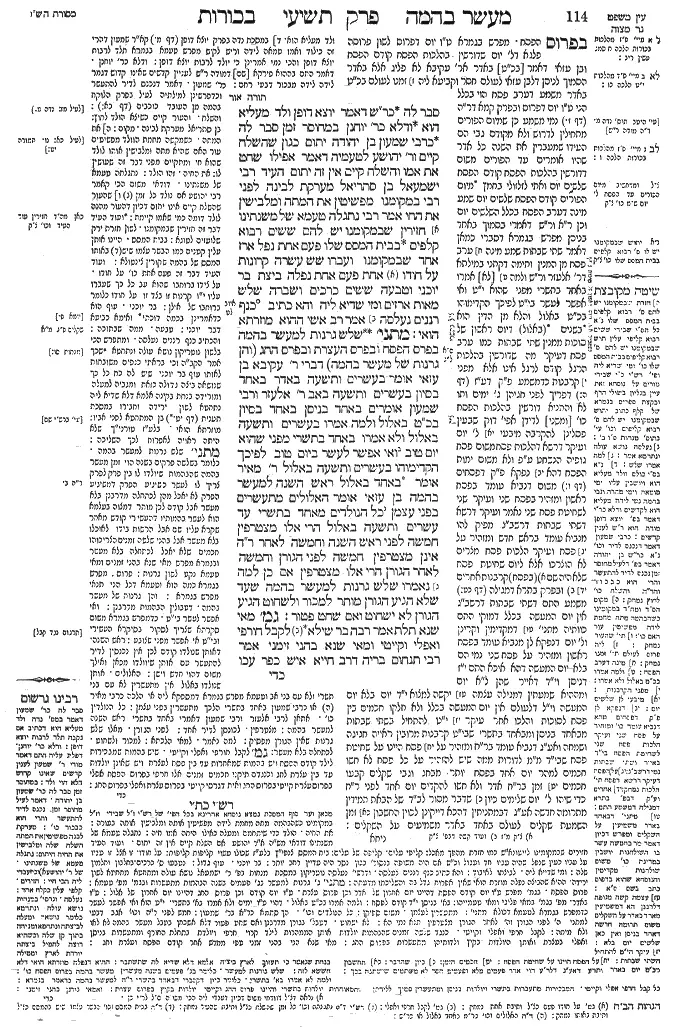
Bekhorot 57b - Guemara
סבר לה כר"ש דאמר יוצא דופן ולד מעליא הוא ודלא כר' יוחנן במחוסר זמן סבר לה כרבי שמעון בן יהודה יתום כגון שהשלח קיים ור' יהושע לטעמיה דאמר אפילו שחט את אמו והשלח קיים אין זה יתום העיד רבי ישמעאל בן סתריאל מערקת לבינה לפני רבי במקומנו מפשיטין את המתה ומלבישין את החי אמר רבי נתגלה טעמא של משנתינו חזירין שבמקומנו יש להם ששים רבוא קלפים בבית המסס שלו פעם אחת נפל ארז אחד שבמקומנו ועברו שש עשרה קרונות על חודו אחת פעם אחת נפלה ביצת בר יוכני וטבעה ששים כרכים ושברה שלש מאות ארזים ומי שדיא ליה והא כתיב (איוב לט, יג) כנף רננים נעלסה אמר רב אשי ההוא מוזרתא הואי:
מתני׳ שלש גרנות למעשר בהמה בפרס הפסח ובפרס העצרת ובפרס החג והן גרנות של מעשר בהמה דברי ר' עקיבא בן עזאי אומר בעשרים ותשעה באדר באחד בסיון בעשרים ותשעה באב ר' אלעזר ורבי שמעון אומרים באחד בניסן באחד בסיון בכ"ט באלול ולמה אמרו בעשרים ותשעה באלול ולא אמרו באחד בתשרי מפני שהוא יום טוב ואי אפשר לעשר ביום טוב לפיכך הקדימוהו בעשרים ותשעה באלול ר' מאיר אומר באחד באלול ראש השנה למעשר בהמה בן עזאי אומר האלולים מתעשרים בפני עצמן כל הנולדים מאחד בתשרי עד עשרים ותשעה באלול הרי אלו מצטרפין חמשה לפני ראש השנה וחמשה לאחר ר"ה אינן מצטרפין חמשה לפני הגורן וחמשה לאחר הגורן הרי אלו מצטרפין אם כן למה נאמרו שלש גרנות למעשר בהמה שעד שלא הגיע הגורן מותר למכור ולשחוט הגיע הגורן לא ישחוט ואם שחט פטור:
גמ׳ מאי שנא תלת אמר רבה בר שילא לקבל חורפי ואפלי וקייטי ומאי שנא בהני זימני אמר רבי תנחום בריה דרב חייא איש כפר עכו
Comments from Rashi on Masechet Bekhorot Page 57b
ולד מעליא הוא . במסכת נדה בפרק יוצא דופן (דף מ.) קא"ר שמעון דהרי זה כילוד ואמו טמאה לידה וריש לקיש מפרש טעמא בגמרא תלד לרבות יוצא דופן והכי נמי אמרינן כי יולד לרבות יוצא דופן: ודלא כר' יוחנן . דאמר התם בההוא פירקא דמודה ר"ש לעניין קדשים שאינו קדוש דגמר לידה לידה מבכור דבעי רחם: כר' שמעון . דאמר דנכנס לדיר להתעשר וכדפרשינן למילתיה לעיל בפרק הלוקח בהמה מן העובד כוכבים (בכורות דף כא:): והשלח . והעור קיים כשיצא הולד לחוץ: בן סתריאל מערקת לבינה . מקום: את המתה . כשמקשה מחמת הוולד מפשיטים עור האם שהיא מתה ומלבישין אותו לולד שהוא חי ומתקיים מפני דבר זה שעושין לו: את החיה . זהו הולד: נתגלתה טעמא של משנתינו . דודאי משום הכי קאמר רבי יהושע אם נולד כל זמן שהעור שהשלח קיים אינו יתום דכיון דהעור מהנה לולד דומה כמי שאמו קיימת: ועוד העיד דבר זה חזירין שבמקומנו . לשון חזרת ירק שלועזים לטוג"א: בבית המסס . היינו אותן עלין קטנים כמו הבשר עצמו שיש באותו המסס של בהמה שקורין צינטול"א: ועוד העיד דבר זה פעם אחת כו' על חודו . על צידו ברוחבו שהוא עב כל כך שעברו עליו י"ו קרנות זו בצד זו על חודו כלומר ברוחבו של אילן: בר יוכני . עוף הוא כדאמרינן בכמה דוכתי ואימא כביעא דבר יוכני: טבעה . ממה שבתוכה: והכתיב כנף רננים נעלסה . ומתפרש הכי בלשון נוטריקון נושא עולה ונתחטא שכך אמר הקב"ה וכי בראתי כנפים משובחות לאותו עוף בר יוכני שיש לה כח כל כך שנושא ביצה גדולה כזאת ומגביה למעלה ומורידה בנחת בקינה אלמא דלא שדיא ליה. נתחטא לשון ירידה וחבירו במסכת תענית (דף יט.) בן המתחטא לפני אביו: מוזרתא הואי . בלע"ז טורני"ך שלא היתה ראויה לאפרוח לכך השליכה: מתני' שלש גרנות למעשר בהמה . כלומר בשלשה פרקים בשנה הוי זמן מעשר בהמה שהבהמות שיולדו לו בין פרק לפרק צריך לו לעשר כשיגיע הפרק דמשיגיע הפרק לא יאכל מהן לכתחלה מדרבנן בלא מעשר אבל קודם לכן מותר דמצוה בעלמא הוא לעשר בהמותיו דהעשירי קודש מאחר שקרא עליו שם אבל הרשות בידו לאוכלו בלא מעשר אבל בהני שלשה זמנים הצריכוהו חכמים שלא יאכל לכתחלה בלא מעשר. ובגמרא מפרש מאי שנא בהני זמנים ומאי טעמא נקט לשון גרנות: פרוס . מפרש בגמרא כמה הוא. וטעמא דכל הני תנאי מפרש בגמרא: והן גרנות של מעשר בהמה . דטבולין הבהמות מדרבנן: ואי אפשר לעשר בי"ט . כדמפרש בגמרא משום סקרתא שצריך לסקור בסיקרא העשירי ובי"ט אי אפשר מפני שצובע: ראש השנה . דאותן שנולדו קודם לכן אין נכנסין לדיר להתעשר עם אותן שיוולדו מכאן ואילך משום דהוי חדש וישן: האלולים . אותן שנולדו באלול אין מתעשרין לא עם בני תשרי ולא עם בני אב. וטעמא מפרש בגמרא דמספקא ליה אי הלכה כרבי מאיר או כרבי שמעון באחד בתשרי הלכך מתעשרין בפני עצמן: כל הנולדין כו' . אתאן לרבי אלעזר ורבי שמעון דאמרי באחד בתשרי ראש השנה למעשר בהמה: מצטרפין . לכונסן לדיר אחד: לפני הגורן . מאלו שלש גרנות שאין הגורן מפסיק: למה נאמר . למאי הלכתא: למכור ולשחוט . לכתחלה בלא מעשר: גמ' לקבל חורפי ואפלי וקייטי . שיש בהמות שמבכירות לילד קודם הפסח ויש בהמות שמאחרות עד בין פסח לעצרת ויש שאינן יולדות עד בין עצרת לחג וכנגדם תיקנו חכמים זמנים אלו. חרפי בפרוס הפסח אפלי בפרוס עצרת קייטי בפרוס החג. ואית דגרסי קייטי בפרוס עצרת ואפלי בפרוס החג:
Comments from Tosafot - Bekhorot 57b
בפרוס הפסח . מפרש בגמרא ט"ו יום דפרוס לשון פרוסה פלגא דל' יום שדורשין בהלכות הפסח קודם הפסח ובן עזאי דאמר [בכ"ט] באדר אר' עקיבא לא פליג אלא באדר הסמוך לניסן דלבן עזאי לעולם חסר וקביעא ליה זמנו לעולם בכ"ט באדר משמע דערב פסח הוי בכלל הני ט"ו יום דפרוס ובפרק קמא דר"ה (דף ז.) נמי משמע כן שמיום הפורים מתחילין לדרוש ולא מקודם גבי הם העידו שמעברין את השנה כל אדר שהיו אומרים עד הפורים משום דדורשין בהלכות הפסח קודם הפסח שלשים יום ואתי לזלזולי בחמץ מיום הפורים קודם הפסח שלשים יום שמע מינה דערב הפסח בכלל השלשים יום וכן ר"א ור"ש דאמרי בסמוך באחד בניסן מפרש בגמרא דסברי כמאן דאמר שתי שבתות שמע מינה ערב פסח מן המנין ותימה דקתני במילתא דר' אלעזר ור"ש ולמה [לא] אמרו באחד בתשרי מפני שהוא י"ט ואי אפשר לעשר בי"ט לפיכך הקדימוהו בכ"ט באלול והלא מן הדין הוא בשנים (באלול) דיום ראשון של סוכות ממנין שתי שבתות כמו ערב פסח דעיקר מה שדורשין בהלכות הרגל קודם לרגל אינו אלא מפני קרבנות כדמשמע פ"ק דע"ז (דף ה:) דפריך לפני חגיהן ג' ימים ותו לא והתניא דורשין בהלכות הפסח כו' [ומשני] לדידן אפי' דוק שבעין פסלינן להקרבה מיבעי ל' יום ועיקר דרשא דהלכות פסח משום פסח גופיה הנשחט ע"פ ולא משום ימות הפסח דהא נפקא פ"ק דפסחים (דף ו:) משום דנביא עומד בפסח ראשון ומזהיר בפסח שני ועיקר שני לשחיטת פסח שני נאמר ועיקר דרשא דשתי שבתות דרשב"ג מפיק להו מנביא עומד בראש חדש ומזהיר על פסח ועיקר הלכות פסח מצרים לא הוצרכו אלא ליום שחיטת פסח שלא היה שם (בפסח) קרבנות אחרים ובפרק בתרא דמגילה (דף כט:) משמע התם דשתי שבתות דרשב"ג אין יום המעשה בכלל דמוקי התם כוותיה מתני' דמקדימין וקרינן ול' יום דנפקא לן מנביא עומד בפסח ראשון ומזהיר על פסח שני נמי הם בלא יום המעשה דהא איכא התם י"ז דניסן וי"ד דאייר שהן ל"א יום ומההיא שמעתין דמגילה עצמה יקשה למצוא י"ד יום בלא יום המעשה וי"ל דלעולם אין יום המעשה בכלל ולא חלקו חכמים בין פסח לסוכות והלכו אחר עיקר י"ט להתחיל בשתי שבתות מבאחד בניסן ומבאחד בתשרי שבי"ט קרבנות מרובין ראייה חגיגה ושמחה ואע"ג דנביא עומד בר"ח ומזהיר על פסח היינו על שחיטת פסח שבי"ד מ"מ לדורות ממה שיש להזהיר על כל פסח לא חשו חכמים למהר יום אחד בפסח יותר מבחג וגבי שקלים קבעו חכמים זמן בר"ח אדר ולא חשו להקדים יום אחד לפני ר"ח כדי שיהו ל' יום שלימים כיון שדבר מסור לב"ד של הבאת תמידין מתרומה חדשה אע"ג דבמתניתין דהכא דייקינן לכוין החשבון זמן השמעת שקלים לעולם באחד באדר משמיעים על השקלים:
Bekhorot 57b - Mishnah translated into english
he holds in accordance with the opinion of Rabbi Shimon, who says that a human child born by caesarean section is a full-fledged offspring and renders its mother ritually impure with the impurity of childbirth. Likewise, with regard to an animal born by caesarean section, he holds the birth was a proper birth and the animal may be brought as an offering, and therefore it also enters the pen to be tithed. And this is not in accordance with the opinion of Rabbi Yoḥanan, who holds that Rabbi Shimon concedes that an animal born by caesarean section is disqualified from being brought as an offering (see Nidda 40a).
And with regard to an animal whose time has not yet arrived, this tanna holds in accordance with the opinion of Rabbi Shimon ben Yehuda, who maintains that the obligation of animal tithe applies to such an animal. As for an orphan animal, he is referring to a case where the mother’s hide exists at birth, i.e., the mother’s hide is present after the birth, and therefore the animal is not considered an orphan. And Rabbi Yehoshua, whose opinion this tanna follows, conforms to his standard line of reasoning, as he says: Even if its mother was slaughtered but its hide exists at birth, i.e., if the mother’s hide is present after the birth, this is not an orphan.
Rabbi Yishmael ben Satriel, from a place called Arkat Leveina, testified before Rabbi Yehuda HaNasi: In our locale, if an animal dies while giving birth they flay the dead mother’s skin and clothe the living newborn animal with it for protection. Rabbi Yehuda HaNasi said: This testimony of yours reveals the reason for the ruling of the mishna that if the hide of the mother still exists the offspring is not considered to be an orphan; the hide serves as a substitute for the mother.
Rabbi Yishmael ben Satriel also testified before Rabbi Yehuda HaNasi: The lettuce in our locale has 600,000 leaves in its omasum, i.e., in its core. Rabbi Yishmael ben Satriel further testified before Rabbi Yehuda HaNasi: Once one cedar tree fell in our locale, and it was so wide that sixteen wagons passed over its back, meaning the width of its trunk, as one, i.e., side by side.
Rabbi Yishmael ben Satriel also testified before Rabbi Yehuda HaNasi: Once an egg of the bird called bar yokhani fell, and the contents of the egg drowned sixty cities and broke three hundred cedar trees. The Gemara asks: And does the bar yokhani bird throw its eggs to the ground? But isn’t it written: “The kenaf renanim bird rejoices, but are her wings and feathers those of the stork? For she leaves her eggs on the earth, and warms them in dust” (Job 39:13–14)? The Sages understood that kenaf renanim is another name for the bar yokhani bird. If so, how could its egg fall if it lays its eggs on the ground? Rav Ashi said in explanation: That egg was unfertilized, and since it would never hatch the bird threw it to the ground.
MISHNA: There are three times during the year designated for gathering the animals that were born since the last date for animal tithe: Adjacent to Passover, and adjacent to Shavuot, and adjacent to Sukkot. And those are the gathering times for animal tithe; this is the statement of Rabbi Akiva.
Ben Azzai says the dates are: On the twenty-ninth of Adar, on the first of Sivan, and on the twenty-ninth of Av. Rabbi Elazar and Rabbi Shimon say that the dates are: On the first of Nisan, on the first of Sivan, and on the twenty-ninth of Elul. And why did Rabbi Elazar and Rabbi Shimon say the twenty-ninth of Elul, and why did they not say the first of Tishrei? It is due to the fact that the first of Tishrei is the festival of Rosh HaShana, and one cannot tithe on a Festival. Consequently, they brought it earlier, to the twenty-ninth of Elul.
Rabbi Meir says: The beginning of the new year for animal tithe is on the first of Elul. Ben Azzai says: The animals born in Elul are tithed by themselves, due to the uncertainty as to whether the halakha is in accordance with the opinion of Rabbi Meir, i.e., that the new year begins on the first of Elul, or in accordance with the opinion of Rabbi Elazar and Rabbi Shimon, which would mean that the new year begins on the first of Tishrei.
According to the opinion of Rabbi Elazar and Rabbi Shimon, with regard to all animals that are born from the first of Tishrei until the twenty-ninth of Elul, those animals join to be tithed together. If five were born before Rosh HaShana and five after Rosh HaShana, those animals do not join to be tithed together. If five were born before a time designated for gathering and five after that time designated for gathering, those animals join to be tithed together. If so, why were three times stated for gathering the animals for animal tithe? The reason is that until the time designated for gathering arrives it is permitted to sell and slaughter the animals. Once the time designated for gathering arrives one may not slaughter those animals before tithing them; but if he slaughtered an animal without tithing it he is exempt.
GEMARA: The mishna teaches that there are three times during the year designated for gathering the animals born since the last date for animal tithe. The Gemara asks: What is different about these dates, i.e., why are there specifically three times designated in the year? Rabba bar Sheila said: There are three times in order to collect the animals born early in winter, and the animals born later in spring, and the animals born in the summer.
The Gemara asks: And what is different about these three times, i.e., before Passover, Shavuot, and Sukkot, that they are chosen? Rabbi Tanḥum, son of Rav Ḥiyya, of the village of Akko, says:
Traduction : The William Davidson digital edition of the Koren Noé Talmud, with commentary by Rabbi Adin Even-Israel Steinsaltz.