 Talmud Bavli
Bekhorot 32a : Youtube
Rabbi Dr. Moshe WeisblumYoutube
1 video class :
Bekhorot Page 32a
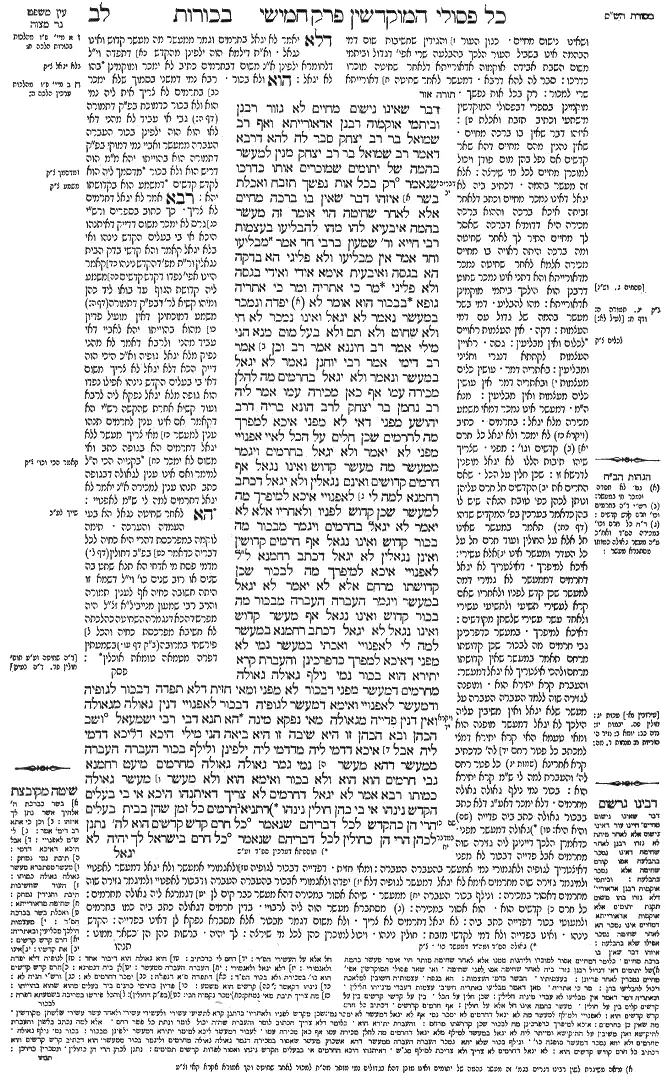
Bekhorot 32a - Guemara
דבר שאינו נישום מחיים לא גזור רבנן וביתמי אוקמוה רבנן אדאורייתא ואף רב שמואל בר רב יצחק סבר לה להא דרבא דאמר רב שמואל בר רב יצחק מנין למעשר בהמה של יתומים שמוכרים אותו כדרכו שנאמר (דברים יב, טו) רק בכל אות נפשך תזבח ואכלת בשר איזהו דבר שאין בו ברכה מחיים אלא לאחר שחיטה הוי אומר זה מעשר בהמה איבעיא להו מהו להבליעו בעצמות רבי חייא ור' שמעון ברבי חד אמר מבליעו וחד אמר אין מבליעו ולא פליגי הא בדקה הא בגסה ואיבעית אימא אידי ואידי בגסה ולא פליגי מר כי אתריה ומר כי אתריה גופא בבכור הוא אומר לא יפדה ונמכר במעשר נאמר לא יגאל ואינו נמכר לא חי ולא שחוט ולא תם ולא בעל מום מנא הני מילי אמר רב חיננא אמר רב וכן אמר רב דימי אמר רבי יוחנן נאמר לא יגאל במעשר ונאמר ולא יגאל בחרמים מה להלן מכירה עמו אף כאן מכירה עמו אמר ליה רב נחמן בר יצחק לרב הונא בריה דרב יהושע מפני דאי לא מפני איכא למפרך מה לחרמים שכן חלים על הכל לאיי אפנויי מפני לא יאמר ולא יגאל בחרמים ויגמר ממעשר מה מעשר קדוש ואינו נגאל אף חרמים קדושים ואינם נגאלין ולא יגאל דכתב רחמנא למה לי לאפנויי איכא למיפרך מה למעשר שכן קדוש לפניו ולאחריו אלא לא יאמר לא יגאל בחרמים ויגמר מבכור מה בכור קדוש ואינו נגאל אף חרמים קדושין ואינן נגאלין לא יגאל דכתב רחמנא ל"ל לאפנויי איכא למיפרך מה לבכור שכן קדושתו מרחם אלא לא יאמר לא יגאל במעשר ויגמר העברה העברה מבכור מה בכור קדוש ואינו נגאל אף מעשר קדוש ואינו נגאל לא יגאל דכתב רחמנא במעשר למה לי לאפנויי ואכתי במעשר נמי לא מפני דאיכא למפרך כדפרכינן והעברת קרא יתירא הוא בכור נמי נילף גאולה גאולה מחרמים דמעשר מפני דבכור לא מפני ומאי חזית דלא תפדה דבכור לגופיה ודמעשר לאפנויי ואימא דמעשר לגופיה דבכור לאפנויי דנין גאולה מגאולה ואין דנין פדייה מגאולה מאי נפקא מינה הא תנא דבי רבי ישמעאל (ויקרא יד, לט) ושב הכהן ובא הכהן זו היא שיבה זו היא ביאה הני מילי היכא דליכא דדמי ליה אבל איכא דדמי ליה מדדמי ליה ילפינן ולילף בכור העברה העברה ממעשר דהא מעשר נמי גמר גאולה גאולה מחרמים מיעט רחמנא גבי חרמים הוא הוא ולא בכור ואימא הוא ולא מעשר מעשר גאולה כמותו רבא אמר לא יגאל דחרמים לא צריך דאיתנהו היכא אי בי בעלים הקדש נינהו אי בי כהן חולין נינהו דתניא חרמים כל זמן שהן בבית בעלים הרי הן כהקדש לכל דבריהם שנאמר (ויקרא כז, כח) כל חרם קדש קדשים הוא לה' נתנן לכהן הרי הן כחולין לכל דבריהם שנאמר (במדבר יח, יד) כל חרם בישראל לך יהיה לא
Comments from Rashi on Masechet Bekhorot Page 32a
ושאינו נישום מחיים . כגון העור והגידין שחשיבות שום דמי הבהמה אינו בשביל העור הלכך בהבלעה שרי אפי' דגדול וביתמי משום השבת אבידה אוקמוה אדאורייתא דלאחר שחיטה מוכרו כדרכו: סבר לה להא דרבא . דמעשר לאחר שחיטה דאורייתא שרי למכור: רק בכל אות נפשך . מוקמינן בספרי דבפסולי המוקדשין מישתעי וכתיב תזבח ואכלת: איזהו דבר שאין בו ברכה מחיים . שאין נהנין מהם מחיים דהא שאר קדשים אם נפל בהן מום פודן ויכול למוכרן מחיים לכל מי שירצה: אלא זה מעשר בהמה . דכתיב ביה לא יגאל דאינו נמכר מחיים וכתב דלאחר זביחה איכא ברכה וההוא ברכה מכירה היא דדומיא דברכה שאסר לך מחיים התיר לך לאחר שחיטה ומה ברכה היתה ראויה בו מחיים מכירה. אלמא לאחר שחיטה נמכר מדאורייתא והא דתני אינו נמכר שחוט דרבנן הוא הילכך ביתמי מוקמינן אדאורייתא: מהו להבליע . דמי בשר מעשר בהמה של גדול עם דמי העצמות: דקה . אין העצמות ראויים לכלום ואין מבליעין: גסה . ראויין העצמות לקתתא דנגרי וחציני ומבליעין: באתריה דמר . עושין כלים מעצמות ובאתריה דמר אין עושין כלים מעצמות ואין מבליעין: מנא ה"מ . דמעשר אינו נמכר דמאי משמע מכירה מלא יגאל: בחרמים . כתיב (ויקרא כז) לא ימכר ולא יגאל כל חרם קדשים וגו': מפני . שצריך שיהו תיבות הללו לא יגאל מופנין לדרשא זו: שכן חלין על הכל . שאם החרים את הקדשים חל חרם עליהן ונותן לכהן כפי טובת הנאה שיש לו בהן כדאמר בערכין בפ' המקדיש שדהו (דף כח:) תאמר במעשר שאינו חל אלא על החולין ועוד חרם חל על כל העדר ומעשר אינו אלא עשירי: איכא למיפרך . דאיצטריך לא יגאל דחרמים דממעשר לא גמירי דמה למעשר שכן קדש לפניו ולאחריו שאם קרא לעשירי תשיעי ולתשיעי עשירי ולאחד עשר עשירי שלשתן מקודשים: דאיכא למיפרך . במעשר כדפרכינן גבי חרמים מה לבכור שכן קדושתו מרחם תאמר במעשר שאין קדושתו מרחם ולהכי איצטריך לא יגאל דמעשר: והעברת קרא יתירא הוא . ומופנה לגזירה שוה ללמד העברה העברה על מעשר שלא יגאל ואין משיבין עליה הילכך לא יגאל דמעשר מופנה הוא. ומאי טעמא האי קרא יתירא דמצי למכתב כל פטר רחם לה' כדכתיב קרא אחרינא (שמות יג) כל פטר רחם לה' והעברת למה לי ש"מ קרא יתירא הוא: בכור נמי נילף גאולה גאולה מחרמים . דלא ימכר דאע"ג דלא כתב בבכור גאולה כתב ביה פדייה (שם) והיא היא: גאולה דמעשר מפני . כדאמרן הלכך דיינינן ליה גזירה שוה מחרמים אבל פדייה דבכור לא מפני דאיצטריך לגופיה ולאגמורי נמי אמעשר בהעברה העברה: ומאי חזית . דפדייה דבכור לגופיה ולאגמורי אמעשר ולא יגאל דמעשר לאפנויי ולמיגמר גזירה שוה מחרמים אימא לא יגאל דמעשר לגופיה דלא יפדה ולאגמורי אבכור בהעברה העברה ודבכור לאפנויי ולמיגמר גזירה שוה מחרמים דאסור במכירה: ונילף בכור העברה ממעשר . שיהא אסור במכירה דהא מעשר כבר קים לן דגמרנא ליה גאולה מחרמים: מסתברא מעשר . הוה ליה לרבויי בדין חרמים דגאולה כתב ביה כמו בחרמים ולמעוטי בכור דפדייה כתב ביה: לא יגאל דחרמים לא צריך . ולא משום דגמר מבכור אלא מסברא נפקא לן דאינו בפדייה: הקדש נינהו . ואינו בפדייה ולא דמי לקדשי מזבח: חולין נינהו . ויכול למוכרן כהן לכל מי שירצה: כל חרם קדשים הוא . הוא אסור במכירה: לך יהיה . ברשות כהן הן כשאר ממונו:
Comments from Tosafot - Bekhorot 32a
ואף רב שמואל בר רב יצחק סבר לה להא דרבא . פי' מקרא אחרינא ולא מטעמיה: דלא יאמר לא יגאל בחרמים וגמר ממעשר מה מעשר קדוש ואינו נגאל . וא"ת דילמא הוה ילפינן מהקדש דתפדה וי"ל דלחומרא ילפינן א"נ משום דבחרמים כתיב לא ימכר ומוקמינן בהו לא יגאל: הוא ולא בכור . רבא נמי דמשני בסמוך שלא ימכר בחרמים לא צריך אית ליה נמי הוא ולא בכור כדמוכח בפ"ק דתמורה (דף ה:) גבי אי עביד לא מהני דאי לאו הוא הוה ילפינן בכור העברה העברה ממעשר ואביי נמי דמוקי בפ"ק דתמורה הוא בהוייתו יהא מ"מ הוה דריש הוא ולא בכור מדסמך ליה הוא לקדש קדשים דמשמע הוא בקדושתו יהא: רבא אמר לא יגאל דחרמים לא צריך . כך כתוב בספרים ורש"י גרס לא ימכר משום דדייק דאיתנהו היכא אי בי בעלים הקדש נינהו ואי בלא יגאל קאמר והא קדשי בדק הבית נגאלין ור"ת מפ' דהקדש נינהו קאמר היינו אפי' נפדו דקדש קדשים משמע ליה קדושת הגוף עד בואו ליד כהן ומיהו קשיא לר' דבפ"ק דתמורה (דף ה:) משמע דמוכחינן דאין מועיל פדיון מהוא בהוייתו יהא לאביי דאי עביד מהני ולרבא דאמר לא מהני נפיק מלא יגאל גופיה וא"כ היכי הוה דייק הכא דלא יגאל לא צריך משום דאי בי בעלים הקדש נינהו אפילו נפדו הוא גופה מלא יגאל נפקא ליה לרבא ועוד קשיא אחרת שהקשה רש"י הא דקאמר אם אינו ענין לחרמים תנהו ענין למעשר מאי צריך מעשר ללא יגאל דחרמים הא בגופה כתב ואי משום לא ימכר בקנייה הכי ה"ל למימר ואם אינו ענין לגאולה דבגופה כתב תנהו ענין למכירה א"נ יאמר לא יגאל דחרמים למה לי ש"מ לאפנויי:
Bekhorot 32a - Mishnah translated into english
But with regard to an item that is not appraised when an animal is sold when alive, e.g., the hide and sinews, as these are not primary contributing factors to the animal’s value, the Sages did not decree that one may not sell such items after the animal’s slaughter. Consequently, the meat of an animal tithe offering may be sold by means of inclusion in the animal’s hide, fat, sinews, and horns. And with regard to a case of young orphans, the Sages established the halakha as if by Torah law, and therefore the meat may be sold in its usual manner.
The Gemara notes: And even Rav Shmuel bar Rav Yitzḥak holds in accordance with that opinion of Rava, that by Torah law, the meat of a blemished animal-tithe offering may be sold in the normal manner. As Rav Shmuel bar Rav Yitzḥak says: From where is it derived that one may sell the meat of a blemished animal-tithe offering of young orphans in its usual manner, without having to resort to the method of inclusion?
It is derived from a verse, as it is stated in a verse discussing consecrated animals that became blemished: “Notwithstanding, after all the desire of your soul, you may slaughter and eat flesh, according to the blessing of the Lord your God” (Deuteronomy 12:15). Now which is the item that has no blessing when it is alive, i.e., it is prohibited to derive benefit from it, but it does have a blessing after its slaughter, as indicated by the verse “You may slaughter…according to the blessing of the Lord your God”? You must say that this is the meat of the animal tithe offering.
§ The baraita cited earlier teaches that the Sages permitted the inclusion of the value of a blemished animal-tithe offering’s meat in the cost of its hide, fat, sinews, and horns. In this regard, a dilemma was raised before the Sages: What is the halakha with regard to including the value of the meat in the cost of the animal’s bones? Rabbi Ḥiyya and Rabbi Shimon, son of Rabbi Yehuda HaNasi, disputed this matter. One says that one may include the value in the cost of the bones, and one says one may not include it.
The Gemara notes: And they do not disagree. This one, who maintains that one may not include the value in the cost of the bones, is referring to a small, domesticated animal, whose bones are incapable of being fashioned into utensils and are therefore never sold. That one, who holds that one may include the value in the cost of the bones, is referring to a large, domesticated animal, whose bones can be used and are therefore sold.
And if you wish, say instead that both this one and that one are referring even to a large, domesticated animal, and still they do not disagree. This Sage rules in accordance with the custom of his locale, and that Sage rules in accordance with the custom of his locale. In other words, in certain places the custom is to use the bones and sell them, while elsewhere they do not.
§ The Gemara returns to the matter itself, stated in the baraita: With regard to a firstborn male animal offering the verse states: “You shall not redeem” (Numbers 18:17), but it may be sold while alive, by the priest to whom it belongs. By contrast, with regard to the animal tithe offering, it is stated: “It shall not be redeemed” (Leviticus 27:33), indicating that its sanctity can never be removed from it, and it cannot be sold, not when alive and not when slaughtered, not when unblemished and not when blemished. The Gemara asks: From where is this matter derived, that the phrase “it shall not be redeemed” is referring to the prohibition against selling the animal tithe offering?
Rav Ḥinnana says that Rav says, and similarly, Rav Dimi says that Rabbi Yoḥanan says: It is stated: “It shall not be redeemed,” with regard to the animal tithe offering, and it is stated: “And it shall not be redeemed,” with regard to dedications [baḥaramim], i.e., property that one consecrated by means of the expression: Ḥerem. With regard to dedications, the verse states: “Notwithstanding, any dedicated item…may neither be sold nor redeemed” (Leviticus 27:28). This is a verbal analogy: Just as there, with regard to dedications, the prohibition against selling is mentioned together with the prohibition against redeeming, so too here, with regard to the animal tithe offering, the prohibition against selling is mentioned together with the prohibition against redeeming.
Rav Naḥman bar Yitzḥak said to Rav Huna, son of Rav Yehoshua: It must be that at least one of the phrases “It shall not be redeemed” is free, i.e., at least one of these terms is superfluous in its context, which means that it is included for the specific purpose of the verbal analogy. In such a case the verbal analogy cannot be refuted by logic, whereas if neither phrase is free one can refute the analogy if there is a significant difference between the two cases. As, if these terms are not free, the verbal analogy can be refuted: What is notable about dedications, in contrast to the animal tithe offering? They are notable in that they apply to all items one wishes to dedicate, whereas an animal tithe offering applies only to kosher animals.
The Gemara notes: This is not so [la’ai], as at least one of the phrases: “It shall not be redeemed,” is certainly free. How so? Let the verse not state: “It shall not be redeemed,” with regard to dedications, and instead one could derive the prohibition from an animal tithe offering: Just as an animal tithe offering is sacred and may not be redeemed, so too, dedications are also sacred and may not be redeemed. Why then do I need the phrase “It shall not be redeemed” that the Merciful One writes, in the case of dedications? It is evidently to be considered free to enable the verbal analogy.
The Gemara rejects this suggestion. It is still possible that the phrase “It shall not be redeemed,” written with regard to dedications, is not free, as the suggested derivation stated above can be refuted: What is notable about the animal tithe offering? It is notable in that there is sanctity before it and after it. If, instead of proclaiming as the tithe the tenth animal that one counted, one inadvertently proclaimed either the ninth animal or the eleventh animal as the tithe, the mistakenly proclaimed animal assumes the sacred status of the animal tithe offering. By contrast, one cannot inadvertently dedicate property to the Temple. Since the case of the animal tithe offering includes a stringency not shared by dedications, the phrase “It shall not be redeemed” is required to teach that dedications may not be redeemed, and is therefore not free for the verbal analogy.
The Gemara cites an alternative suggestion. Rather, let the verse not state: “It shall not be redeemed,” with regard to dedications, and instead one can derive the prohibition from the firstborn offering: Just as the firstborn offering is sacred and may not be redeemed, as the verse states: “You shall not redeem it” (Numbers 18:17), so too, dedications are also sacred and may not be redeemed. Why do I need the phrase “It shall not be redeemed” that the Merciful One writes in the case of dedications? It is evidently to be considered free to enable the verbal analogy to the animal tithe.
The Gemara rejects this suggestion as well: It is possible that the phrase “It shall not be redeemed” is not free, as the above derivation can be refuted: What is notable about the firstborn offering? It is notable in that its sanctity is from the womb, whereas dedications require an act of consecration.
Rather, let the verse not say: “It shall not be redeemed,” with regard to the animal tithe offering, and instead one can derive the prohibition from a verbal analogy from the term of passing stated there and the term of passing stated in the case of a firstborn. With regard to an animal tithe offering the verse states: “Whatsoever passes under the rod” (Leviticus 27:32), and in the case of the firstborn offering it is stated: “And you shall cause to pass all that opens the womb, to the Lord” (Exodus 13:12). Just as the firstborn offering is sacred and may not be redeemed, so too, an animal tithe offering is also sacred and may not be redeemed. Why do I need the phrase “It shall not be redeemed” that the Merciful One writes with regard to animal tithe offerings? It is evidently to be considered free to enable the verbal analogy to dedications.
The Gemara asks: But still, the phrase “It shall not be redeemed,” written with regard to the animal tithe offering, is itself not free, as the analogy between the animal tithe offering and the firstborn offering can be refuted as we refuted the analogy between the firstborn offering and dedications, since the firstborn offering is notable in that it is sanctified from the womb.
The Gemara answers: The term “And you shall cause to pass,” written in the context of the firstborn, is a superfluous verse, as it could have simply stated: All that opens the womb is to be for the Lord. Consequently, it is free to enable the verbal analogy. In sum, the Gemara is suggesting that due to the term “And you shall cause to pass,” there is a verbal analogy between the animal tithe offering and the firstborn offering, from which it is derived that the animal tithe offering may not be redeemed. This means that the phrase “It shall not be redeemed,” written with regard to the animal tithe offering, is free to enable the verbal analogy with dedications, from which the prohibition against selling the meat of the animal tithe offering is derived.
The Gemara raises a difficulty: With regard to a firstborn offering as well, let us derive that one may not sell its meat from a verbal analogy between the expression of redemption written there and the expression of redemption written in the context of dedications. This would contradict the ruling of the baraita that a firstborn offering can be sold after it enters the possession of the priest. The Gemara answers: The expression of redemption in the context of the animal tithe offering is free to enable the verbal analogy to dedications, but the expression of redemption in the context of a firstborn offering is not free, as it is required in its own context to teach that the firstborn offering may not be redeemed and as the source for the halakha of the animal tithe offering.
The Gemara asks: And what did you see that you said that the phrase “you shall not redeem” written in the context of a firstborn offering is not free, but is necessary for itself, i.e., to teach that it may not be redeemed, and yet the expression of redemption written with regard to the animal tithe offering is free to enable the verbal analogy, as the halakha of its redemption is derived from the firstborn? But one can say the reverse, that the expression of redemption written in the context of the animal tithe offering is for itself, whereas that written with regard to a firstborn offering is free.
The Gemara answers: We derive the expression of redemption [geula] written in the context of the animal tithe offering from the expression of redemption [geula] written in the context of dedications, but we do not derive the expression of redemption [pediya] written in the context of a firstborn offering from the different expression of redemption [geula] written in the context of the dedications.
The Gemara asks: What difference is there whether or not an identical expression is used for a verbal analogy? Didn’t the school of Rabbi Yishmael teach a verbal analogy with regard to leprosy of houses? The verse states: “And the priest shall return [veshav] on the seventh day” (Leviticus 14:39), and another verse with regard to the priest’s visit seven days later states: “And the priest shall come [uva] and look” (Leviticus 14:44). This returning and this coming have the same meaning and one can therefore derive by verbal analogy that the same halakha that applies if the leprosy had spread at the conclusion of the first week also applies if it had spread again by the end of the following week. Here too, the different terms of pediya and geula should not prevent the application of a verbal analogy.
The Gemara answers: This statement, that the phrases used for a verbal analogy do not have to be identical, applies only where there are no terms that are equivalent to it. But where there are terms that are equivalent to it, we derive the verbal analogy from the terms that are equivalent to it, rather than from the terms that are not equivalent.
The Gemara raises a difficulty: But let one derive that it is prohibited to sell the meat of a blemished firstborn offering from the verbal analogy between the expression of passing and the expression of passing, from the case of the animal tithe offering. This should be possible, as the sale of the meat of a blemished animal-tithe offering is also prohibited, as derived by a verbal analogy between the expression of redemption written in its context and the expression of redemption written with regard to dedications, as explained earlier.
The Gemara answers: The Merciful One limits the extension of the prohibition against selling with regard to dedications by adding the term “it” in the verse: “It is most holy to the Lord” (Leviticus 27:28). The term “it” teaches that the prohibition against selling applies only to it, i.e., dedications, but not to a firstborn offering. The Gemara raises a difficulty: But one can say instead that the term “it” teaches that the prohibition against selling applies to dedications, but not to the animal tithe offering. The Gemara answers: The prohibition against selling applies to the animal tithe offering, with regard to which the expression of redemption is written, just like dedications, while the term “it” limits the prohibition to the firstborn offering.
§ Rava says that there is an alternative explanation for the prohibition against selling the animal tithe. The phrase “It may not be redeemed,” written with regard to dedications, is unnecessary and is therefore free to enable a verbal analogy with the animal tithe offering. Rava explains: As where are the items of dedication, designated for the priests, located? If they are in the owner’s possession, they are considered consecrated and may not be redeemed. And if they are in the priest’s possession, they are considered non-sacred and the priest may sell them.
This is as it is taught in a baraita: Dedications, as long as they are in the owner’s possession, are like consecrated property in all respects, as it is stated: “Every dedicated item is most holy to the Lord” (Leviticus 27:28). Once the owner gave them to the priest, they are like non-sacred property in all respects, as it is stated: “Every dedicated item in Israel shall be for You” (Numbers 18:14). Rava continues: Accordingly, concerning the phrase “It may not
Traduction : The William Davidson digital edition of the Koren Noé Talmud, with commentary by Rabbi Adin Even-Israel Steinsaltz.