 Talmud Bavli
Bekhorot 12a : Youtube
Rabbi Dr. Moshe WeisblumYoutube
1 video class :
Bekhorot Page 12a
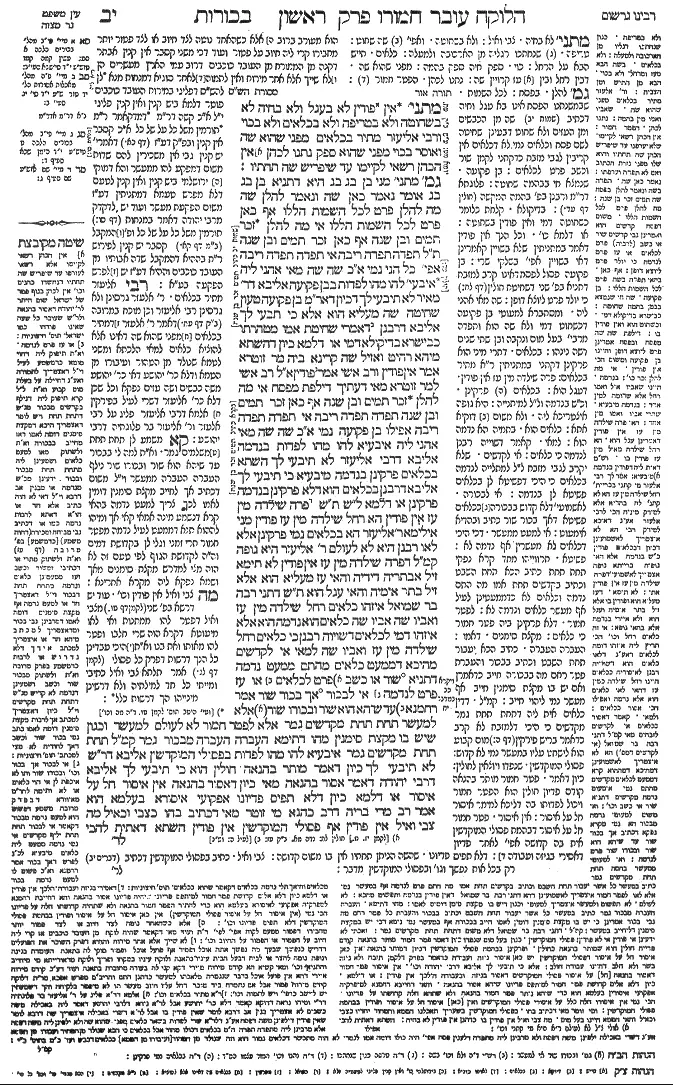
Bekhorot 12a - Guemara
מתני' אין פודין לא בעגל ולא בחיה לא בשחוטה ולא בטריפה ולא בכלאים ולא בכוי ורבי אליעזר מתיר בכלאים מפני שהוא שה ואוסר בכוי מפני שהוא ספק נתנו לכהן אין הכהן רשאי לקיימו עד שיפריש שה תחתיו:
גמ׳ מתני' מני בן בג בג היא דתניא בן בג בג אומר נאמר כאן שה ונאמר להלן שה מה להלן פרט לכל השמות הללו אף כאן פרט לכל השמות הללו אי מה להלן זכר תמים ובן שנה אף כאן זכר תמים ובן שנה ת"ל תפדה תפדה ריבה אי תפדה תפדה ריבה אפי' כל הני נמי א"כ שה שה מאי אהני ליה איבעי' להו מהו לפדות בבן פקועה אליבא דר' מאיר לא תיבעי לך דכיון דאר"מ בן פקועה טעון שחיטה שה מעליא הוא אלא כי תבעי לך אליבא דרבנן דאמרי שחיטת אמו מטהרתו כבישרא בדיקולא דמי או דלמא כיון דהשתא מיהא רהיט ואזיל שה קרינא ביה מר זוטרא אמר אין פודין ורב אשי אמר פודין א"ל רב אשי למר זוטרא מאי דעתיך דילפת מפסח אי מה להלן זכר תמים ובן שנה אף כאן זכר תמים ובן שנה תפדה תפדה ריבה אי תפדה תפדה ריבה אפילו בן פקועה נמי א"כ שה שה מאי אהני ליה איבעיא להו מהו לפדות בנדמה אליבא דרבי אליעזר לא תיבעי לך השתא בכלאים פרקינן בנדמה מיבעיא כי תיבעי לך אליבא דרבנן בכלאים הוא דלא פרקינן בנדמה פרקינן או דלמא ל"ש ת"ש פרה שילדה מין עז אין פודין הא רחל שילדה מין עז פודין מני אילימא ר' אליעזר הא בכלאים נמי פרקינן אלא לאו רבנן היא לא לעולם ר' אליעזר היא גופה קמ"ל דפרה שילדה מין עז אין פודין לא תימא זיל אבתריה דידיה והאי עז מעליא הוא אלא זיל בתר אימיה והאי עגל הוא ת"ש דתני רבה בר שמואל איזהו כלאים רחל שילדה מין עז ואביו שה אביו שה כלאים הוא נדמה הוא אלא איזהו דמי לכלאים דשויוה רבנן כי כלאים רחל שילדה מין עז ואביו שה למאי אי לקדשים מהיכא דממעט כלאים מהתם ממעט נדמה דתניא (ויקרא כב, כז) שור או כשב פרט לכלאים או עז פרט לנדמה אי לבכור (במדבר יח, יז) אך בכור שור אמר רחמנא עד שיהא הוא שור ובכורו שור אלא למעשר תחת תחת מקדשים גמר אלא לפטר חמור לא לעולם למעשר וכגון שיש בו מקצת סימנין מהו דתימא העברה העברה מבכור גמר קמ"ל תחת תחת מקדשים גמר איבעיא להו מהו לפדות בפסולי המוקדשין אליבא דר"ש לא תיבעי לך כיון דאמר מותר בהנאה חולין הוא כי תיבעי לך אליבא דרבי יהודה דאמר אסור בהנאה מאי כיון דאסור בהנאה אין איסור חל על איסור או דלמא כיון דלא תפיס פדיונו אפקועי איסורא בעלמא הוא אמר רב מרי בריה דרב כהנא מי זוטר מאי דכתיב בהו כצבי וכאיל מה צבי ואיל אין פודין אף פסולי המוקדשין אין פודין השתא דאתית להכי
Comments from Rashi on Masechet Bekhorot Page 12a
מתני' לא בחיה . צבי ואיל: ולא בשחוטה . ואפי' שה שחוט: טריפה . שנחתכו רגליה מן הארכובה ולמעלה: כלאים . תייש הבא על הרחל: כוי . ספק חיה ספק בהמה: מפני שהוא שה . דבין רחל ובין עז קרויין שה: נתנו לכהן . הפטר חמור: גמ' להלן . בפסח: לכל השמות . שבמשנתנו. הפסח אינו בא עגל וחיה דכתיב (שמות יב) שה מן הכבשים ומן העזים ולא שחוט דבעינן שחיטה לשם פסח וכלאים נמי לא דכלאים אין קריבין לגבי מזבח כדקתני לקמן שור וכשב פרט לכלאים: בן פקועה . שנמצא חי בבהמה שחוטה:
פלוגתא דר"מ ורבנן בפ' בהמה המקשה (חולין דף עד.): בדיקולא . קלחת. כלומר כשחוטה דמי ואין פודין בשחוטה: או דלמא כו' . וכל הנך אין פודין דאמר במתניתין שלא בשויין קאמרינן דאי בשויין אפי' בשלקי שרי: בן פקועה פסול לפסח דאינו קרב למזבח דתניא בפ' שני דשחיטת חולין (דף לח:) כי יולד פרט ליוצא דופן: שה מאי אהני ליה . ומסתברא למעוטי בן פקועה דכשחוט דמי ולא שה הוא ותפדה מרבי' בעל מום ונקבה ובן שתי שנים דשה נינהו: בכלאים . דתרי מיני הוא פרקינן דקתני במתניתין ר"א מתיר בכלאים: פרה שילדה מין עז אין פודין . דעגל הוא:
בכלאים פרקינן . וכ"ש בנדמה ול"ל למיתנייה: היא גופה איצטריכא ליה . ולא משום דוקיא אתא: כלאים הוא . בתמיה. הא נדמה הוא: למאי . קאמר דשוייה רבנן לנדמה כי כלאים: אי לקדשים . שלא יקרב לגבי מזבח ל"ל למתלייה לנדמה בכלאים כי היכי דפשיטא לן בכלאים פשיטא לן בנדמה: אי לבכורה . לאשמועי' דלא קדוש בבכורה ככלאים פשיטא דאך בכור שור כתיב ובהדיא אימעוט: אי למעט ממעשר . דכי היכי דכלאים לא מעשרין אף נדמה לא:
פשיטא תרווייהו מחד קרא נפקי תחת תחת כתיב הכא תחת השבט וכתיב בקדשים תחת אמו מה התם נדמה וכלאים לא כדממעטינן לעיל אף מעשר כלאים ונדמה לא: לפטר חמור . דלא פרקינן ביה פטר חמור כי כלאים: מקצת סימנים . דאמו: העברה העברה . כתיב הכא יעבור תחת השבט וכתיב בבכור והעברת פטר רחם מה בבכורה חייב כדאמרן ואם יש בו מקצת סימנין חייב אף מעשר נמי ליהוי חייב: קמ"ל . דדין כלאים אית ליה דתחת תחת גמר מקדשים כי היכי דלמזבח לא קרב כדאמר בריש פירקין (דף ג:) מום קבוע הוא לישחט עליו במעשר נמי לא קדוש: פסולי המוקדשין . שנפדו ויוצאין לחולין:
כיון דאמר . פטר חמור מותר בהנאה קודם פדיון חולין הוא הפטר חמור ויכול לפדותו בה דליכא למימר איסור חל על איסור: אין איסור . פטר חמור חל על איסור דבהמת פסולי המוקדשין אית בה קדושה אפי' לאחר פדיון דאסירי בגיזה ועבודה: דלא תפיס פדיונו . שהשה הניתן תחתיו אין בו משום קדושה: צבי ואיל . כתיב בפסולי המוקדשין דכתיב (דברים יב) רק בכל אות נפשך וגו' ובפסולי המוקדשין מדבר:
Comments from Tosafot - Bekhorot 12a
רבי אליעזר מתיר בכלאים . ר' אלעזר גרסינן ולא גרסינן רבי אליעזר וכן מוכח במרובה (ב"ק דף עח.) דאמר ר' אלעזר דמתיר בכלאים מפני שהוא שה דאינו אלא להוציא כלאים למאי הלכתא ומשני לטמא שנולד מן הטהור ועיבורו מן הטמא ודלא כר' יהושע דאי כר' יהושע משה כבשים ושה עזים נפקא וכל שכן דלא כר' אליעזר דשרי לעיל בפירקין אלמא דרבי אליעזר פליג על רבי אלעזר ור' אליעזר בר פלוגתיה דרבי יהושע: קא משמע לן תחת תחת משלמים גמר . וא"ת למה לי בבכור עד שיהא הוא שור ובכורו שור נילף העברה העברה ממעשר וי"ל משום דכתיב אך לחייב מקצת סימנין דומין לאמו לכך צריך למעט נדמה בהאי קרא דנשמע מינה אמאי קאי אך ומיהו לההוא תנא דממעט לעיל נדמה מפטר חמור תרי זמני וגלי לן בקדושת דמים וה"ה לקדושת הגוף לפי טעם זה לא הוה מצי למדרש מקצת סימנים מאך ושמא נפקא ליה מקרא אחרינא: מה צבי ואיל אין פודין וכו' . עוד יש דרשא בפ' שני (לקמן בכורות דף טו.) מצבי ואיל דפטר להו ממתנות ואי לאו מיעוטא דקרא הוה שרי חלבו ופטר להו מאותו ואת בנו וא"ת היכי עבדינן כל הנך דרשות דפרק כל פסולי (לקמן בכורות דף לג.) אמר תלתא צבי ואיל כתיבי ומייתי כל חד למילתיה ולא דרשינן מינייהו הך דרשות כלל:
Bekhorot 12a - Mishnah translated into english
MISHNA: One may not redeem a firstborn donkey, neither with a calf, nor with an undomesticated animal, nor with a slaughtered animal, nor with a tereifa, nor with a hybrid of a sheep and a goat, nor with a koy, which is an animal with regard to which it is uncertain whether it is domesticated or undomesticated. And Rabbi Eliezer deems it permitted to redeem a firstborn donkey with a hybrid of a sheep and a goat, because it is a lamb, i.e., that hybrid has the status of a lamb, but prohibits redeeming it with a koy, because its status is uncertain. If one gave the firstborn donkey to a priest, the priest may not keep it unless he first designates a lamb in its stead for redemption.
GEMARA: Whose opinion is expressed in the first clause of the mishna? It is the opinion of ben Bag Bag, as it is taught in a baraita that ben Bag Bag says: It is stated here, with regard to the redemption of a firstborn donkey: “And you shall redeem a firstborn donkey with a lamb” (Exodus 13:13), and it is stated there, with regard to the Paschal offering: “In the tenth day of this month they shall take to them every man a lamb” (Exodus 12:3). By inference, just as there, with regard to the Paschal offering, the Torah excludes all of these names, i.e., all of these types of animals listed in the mishna, from being fit for sacrifice as a Paschal offering, so too here, with regard to the redemption of a firstborn donkey, the Torah excludes all of these names.
The Gemara challenges: If this halakha is derived from the Paschal offering, then perhaps just as there, the Paschal offering must be a lamb that is male, unblemished, and in its first year (Exodus 12:5), so too here, the lamb must be male, unblemished, and in its first year. The Gemara explains that the verse states: “You shall redeem” (Exodus 13:13), and: “You shall redeem” (Exodus 34:20). This repetition serves to include female lambs, blemished lambs, and lambs that are beyond their first year.
The Gemara asks: If the repetition of the terms “you shall redeem,” “you shall redeem,” serves to include, then even all of these types of animals that are listed in the mishna should be included. The Gemara answers: If so, what purpose does the verbal analogy of “lamb,” “lamb,” between the firstborn donkey and the Paschal offering serve?
§ A dilemma was raised before the Sages: What is the halakha with regard to redeeming a firstborn donkey with a lamb that was removed alive from its mother’s womb after the mother was ritually slaughtered [ben pekua]? The Gemara explains the question: According to the opinion of Rabbi Meir you should not raise the dilemma, as since Rabbi Meir says that a ben pekua requires ritual slaughter, it is considered a full-fledged lamb. Rather, you should raise the dilemma according to the opinion of the Rabbis, who say that the slaughter of its mother renders the fetus permitted for consumption, as it is considered part of the mother, which was already slaughtered.
Is it considered like meat that is placed in a pot, i.e., as if it had been slaughtered, in which case it is included in the prohibition against redeeming a firstborn donkey with a slaughtered animal? Or perhaps since now, in any event, it runs along, we call it a lamb.
The Gemara cites a dispute with regard to this issue: Mar Zutra said that one may not redeem a firstborn donkey with a ben pekua, and Rav Ashi said that one may redeem with it.
Rav Ashi said to Mar Zutra: What is the reason for your opinion? Is it because you derive the halakhot of redeeming a firstborn donkey from the Paschal offering, and a ben pekua is unfit for sacrifice as a Paschal offering? If so, just as there, with regard to the Paschal offering, it must be male, unblemished, and in its first year, so too here, the lamb must be male, unblemished, and in its first year. Mar Zutra responded: The repetition of the terms “you shall redeem,” “you shall redeem,” included a lamb that is not male, unblemished, or in its first year.
Rav Ashi said to him: If the repetition of the terms “you shall redeem,” “you shall redeem,” included additional types of lambs, even a ben pekua is included. Mar Zutra responded: If so, what purpose does the verbal analogy of “lamb,” “lamb,” between the firstborn donkey and the Paschal offering serve? It must be that the term “you shall redeem” does not serve to include those animals.
§ A dilemma was raised before the Sages: What is the halakha with regard to redeeming a firstborn donkey with a lamb whose parents are both sheep but it resembles another animal such as a goat? The Gemara clarifies: According to the opinion of Rabbi Eliezer, do not raise the dilemma, as now that it is established that he holds that one may redeem with a hybrid of a goat and a sheep, with regard to a lamb that resembles a goat but is not from a hybrid, is it necessary to state that one may redeem with it?
Rather, when should you raise the dilemma? Raise it according to the opinion of the Rabbis, who hold that one may not redeem a firstborn donkey with a hybrid of a sheep and a goat. Do they hold that one does not redeem with a hybrid of a goat and a sheep, but one does redeem with a lamb that resembles another animal? Or perhaps there is no difference between them?
The Gemara suggests: Come and hear a resolution from a baraita: With regard to a cow that gave birth to a goat of sorts, one may not redeem a firstborn donkey with the goat of sorts. The Gemara infers: But it can be inferred that with regard to a ewe that gave birth to a goat of sorts, one may redeem with it. Whose opinion is expressed in the baraita? If we say that it is the opinion of Rabbi Eliezer, he holds that one may redeem even with a hybrid of a sheep and goat, and this ruling would be unnecessary. Rather, is it not the opinion of the Rabbis, indicating that they hold that one may redeem a firstborn donkey with a lamb that resembles another animal?
The Gemara responds: No, actually the baraita is in accordance with the opinion of Rabbi Eliezer, and it teaches us the halakha itself that one may not redeem using the offspring in a case where a cow gave birth to a goat of sorts, i.e., where the offspring has the appearance of a goat. This is necessary so that you do not say that the halakha should follow the appearance of the offspring itself, and therefore this offspring is a full-fledged goat and should be suitable for redeeming a firstborn donkey. Rather, follow its mother, and this offspring is treated as a calf, which is not suitable for redeeming a firstborn donkey.
The Gemara suggests: Come and hear a resolution from a baraita that Rabba bar Shmuel teaches: What is considered an animal that is a hybrid? It is a ewe that gave birth to a goat of sorts and the father of the offspring is a lamb. The Gemara analyzes the baraita: If its father is a lamb, is the offspring a hybrid? It is an animal that resembles an animal of another type. Rather, the baraita means: What animal is similar to a hybrid, and the Rabbis rendered it tantamount to a hybrid, which is unsuitable for redeeming? It is a ewe that gave birth to a goat of sorts and its father is a lamb.
Now, to what halakha is this baraita referring? If it is referring to sacrificial animals, i.e., to the fact that such an animal is unfit for sacrifice as an offering, why does the baraita derive its status from that of a hybrid? From the same verse where one derives that the Torah excludes a hybrid as an offering, one can derive that it also excludes an animal that resembles an animal of another type. As it is taught in a baraita that in the verse: “When a bull, or a lamb, or a goat, is brought forth…it may be accepted as an offering…to the Lord” (Leviticus 22:27), the words “a bull, or a lamb” are interpreted as excluding a hybrid, and the words “or a goat” are interpreted as excluding an animal that resembles an animal of another type.
If the baraita is referring to the halakha of a firstborn and teaches that an animal that resembles an animal of another type does not have firstborn status, this is derived from another verse, as the Merciful One states: “But the firstborn of an ox” (Numbers 18:17), which indicates that there is firstborn status only if it is an ox and its firstborn is an ox, but not when the offspring resembles an animal of another type.
Rather, perhaps it is referring to the mitzva of the animal tithe and teaches that an animal that resembles an animal of another type is not tithed with the other animals. This ruling is also unnecessary, as it is derived via a verbal analogy from the word: “Under” (Leviticus 22:27), which is stated with regard to sacrificial animals, and the word: “Under” (Leviticus 27:32), which is stated in the context of animal tithe. Rather, the baraita must be referring to the lamb that is used to redeem a firstborn donkey, and it teaches that a lamb that resembles an animal of another type is unfit for use as redemption.
The Gemara responds: No, actually the baraita is referring to the halakha of animal tithe in a case where the animal that resembles an animal of another type has some characteristics of the mother. It was necessary for the baraita to teach that such an animal is not included in the animal tithe, lest you say that it is derived via a verbal analogy from the term: Passing, stated with regard to the animal tithe (see Leviticus 27:32), and the term: Passing, stated with regard to a firstborn animal (see Exodus 13:12), that just as an animal with some characteristics of the mother does have firstborn status (see 16b), so too, such an animal should be included in the obligation of animal tithe.
Therefore, the tanna teaches us that it is derived via a verbal analogy from the word “under” that is stated with regard to sacrificial animals and the word “under” that is stated in the context of animal tithe, that an animal with some characteristics of the mother is unfit for animal tithe. The status of such a lamb with regard to redeeming a firstborn donkey may not be proven from the baraita.
§ A dilemma was raised before the Sages: What is the halakha with regard to redeeming a firstborn donkey with disqualified consecrated animals that were redeemed? It is forbidden to shear or work such animals. Does the principle of: A prohibition does not take effect where another prohibition already exists, apply here?
The Gemara clarifies: According to the opinion of Rabbi Shimon, you should not raise the dilemma. Since he says that it is permitted to derive benefit from a firstborn donkey, its status is non-sacred, and no forbidden status is transferred to the redemption lamb. When should you raise the dilemma? Raise it according to the opinion of Rabbi Yehuda, who says that it is prohibited to derive benefit from a firstborn donkey.
What is the halakha? It could be reasoned that since it is prohibited to derive benefit from the firstborn donkey, when he redeems it with a lamb, the forbidden status of the donkey must be able to be transferred to the lamb, which cannot occur in the case of a disqualified consecrated lamb, as a prohibition does not take effect where another prohibition already exists.
Or perhaps it could be reasoned that since the actual prohibition against deriving benefit from the donkey is not transferred to its object of redemption, i.e., the lamb, as deriving benefit from the lamb is permitted, the act of redemption should be seen as merely an abrogation of the donkey’s forbidden status. The forbidden status is not transferred to the lamb, and consequently the principle that a prohibition does not take effect where another prohibition already exists does not apply.
Rav Mari, son of Rav Kahana, says: Is that which is written with regard to disqualified consecrated animals insignificant? The Torah states that their status is: “Like the gazelle and like the hart” (Deuteronomy 12:15), indicating that just as one may not redeem a firstborn donkey with a gazelle or a hart, so too, one may not redeem a firstborn donkey with disqualified consecrated animals.
The Gemara comments: Now that you have arrived at this explanation,
Traduction : The William Davidson digital edition of the Koren Noé Talmud, with commentary by Rabbi Adin Even-Israel Steinsaltz.