 Talmud Bavli
Bekhorot 25a : Youtube
Rabbi Dr. Moshe WeisblumYoutube
1 video class :
Bekhorot Page 25a
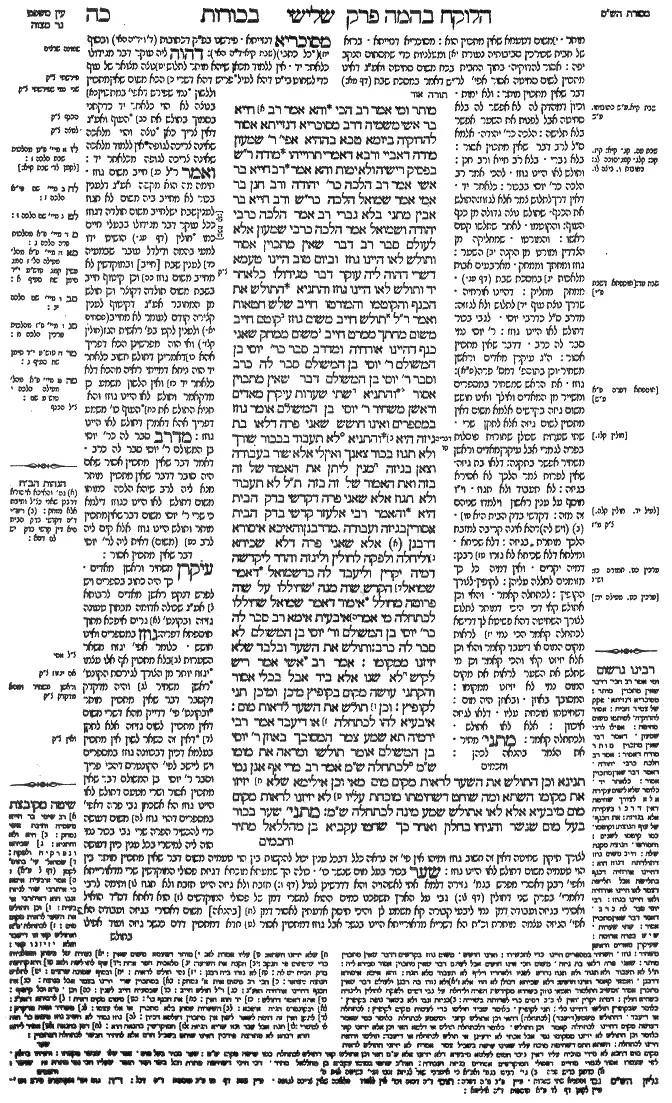
Bekhorot 25a - Guemara
מותר ומי אמר רב הכי והא אמר רב חייא בר אשי משמיה דרב מסוכריא דנזייתא אסור להדוקיה ביומא טבא בההיא אפי' ר' שמעון מודה דאביי ורבא דאמרי תרוייהו מודה ר"ש בפסיק רישיה ולא ימות והא אמר רב חייא בר אשי אמר רב הלכה כר' יהודה ורב חנן בר אמי אמר שמואל הלכה כר"ש ורב חייא בר אבין מתני בלא גברי רב אמר הלכה כרבי יהודה ושמואל אמר הלכה כרבי שמעון אלא לעולם סבר רב דבר שאין מתכוין אסור ותולש לאו היינו גוזז וביום טוב היינו טעמא דשרי דהוה ליה עוקר דבר מגידולו כלאחר יד ותולש לאו היינו גוזז והתניא התולש את הכנף והקוטמו והמורטו חייב שלש חטאות ואמר ר"ל תולש חייב משום גוזז קוטם חייב משום מחתך ממרט חייב משום ממחק שאני כנף דהיינו אורחיה ומדרב סבר כר' יוסי בן המשולם ר' יוסי בן המשולם סבר לה כרב וסבר ר' יוסי בן המשולם דבר שאין מתכוין אסור והתניא שתי שערות עיקרן מאדים וראשן משחיר ר' יוסי בן המשולם אומר גוזז במספרים ואינו חושש שאני פרה דלאו בת גיזה היא והתניא (דברים טו, יט) לא תעבוד בבכור שורך ולא תגוז בכור צאנך ואין לי אלא שור בעבודה וצאן בגיזה מנין ליתן את האמור של זה בזה ואת האמור של זה בזה ת"ל לא תעבוד ולא תגוז אלא שאני פרה דקדשי בדק הבית היא והאמר רבי אלעזר קדשי בדק הבית אסורין בגיזה ועבודה מדרבנן והאיכא איסורא דרבנן אלא שאני פרה דלא שכיחא וליחלה ולפקה לחולין וליגזה והדר ליקדשה דמיה יקרין וליעבד לה כדשמואל דאמר שמואל הקדש שוה מנה שחיללו על שוה פרוטה מחולל אימור דאמר שמואל שחיללו לכתחלה מי אמר איבעית אימא רב סבר לה כר' יוסי בן המשולם ור' יוסי בן המשולם לא סבר לה כרב:
ותולש את השער ובלבד שלא יזיזנו ממקומו:
אמר רב אשי אמר ריש לקיש לא שנו אלא ביד אבל בכלי אסור והקתני עושה מקום בקופיץ מיכן ומיכן תני לקופיץ:
וכן תולש את השער לראות מום:
איבעיא להו לכתחלה או דיעבד אמר רבי ירמיה תא שמע צמר המסובך באוזן ר' יוסי בן המשולם אומר תולשו ומראה את מומו ש"מ לכתחלה ש"מ אמר רב מרי אף אנן נמי תנינא וכן התולש את השער לראות מקום מום מאי וכן אילימא שלא יזיזו את מקומו השתא ומה שוחט דשחיטתו מוכחת עליו לא יזיזנו לראות מקום מום מיבעיא אלא לאו אתולש שמע מינה לכתחלה ש"מ:
מתני׳ שער בכור בעל מום שנשר והניחו בחלון ואחר כך שחטו עקביא בן מהללאל מתיר
Comments from Rashi on Masechet Bekhorot Page 25a
מותר . משום דטעמא שאין מתכוין הוא: מסוכריא דנזייתא . ברזא של חבית שכורכין סביבותיה נעורת ומטלניות כדי שתסתום הנקב יפה: אסור להדוקיה . בתוך החבית בכח משום סחיטה ואע"ג דאינו מתכוין לשום סחיטה אסור אפי' לר"ש דאמר במסכת שבת (דף מא:) דבר שאין מתכוין מותר: ולא ימות . וכיון דמהדק לה לא אפשר לה בלא סחיטה אבל לפנות את השער אפשר בלא תלישה: הלכה כר' יהודה . אלמא ס"ל לרב דבר שאין מתכוין אסור: בלא גברי . בלא רב חייא ורב חנן: ותולש לאו היינו גוזז . להכי אמר רב הלכה כר' יוסי בבכור: כלאחר יד . דאין דרך לתלוש צמר אלא לגזוז: התולש את הכנף . שתולש נוצה גדולה מן כנף העוף: והקוטמו . לאחר שתלשו קטם ראשו: והמורטו . שמחליקה מן הצדדין ומורט מן הקנה השער: גוזז ומחתך וממחק מארבעים אבות מלאכות במסכת שבת (דף עג.) ממחק מחליק: דהיינו אורחיה . שדרך נוצת עוף לתלוש ולא לגזזה: מדרב ס"ל כדרבי יוסי . לגבי בכור דתולש לאו היינו גוזז: ר' יוסי נמי סבר לה כרב . דדבר שאין מתכוין אסור: ה"ג עיקרן מאדים וראשן משחיר . וכן בתוספ' דמס' פרה (פ"ב ה"ד): גוזז . את הראש שמשחיר במספרים ומשייר מן המאדים ואילך ואינו חושש משום גיזה בקדשים אלמא משום דאין מתכוין לשום גיזה אלא לתקן שרי. שתי שערות שכולן שחורות פוסלות בפרה לגמרי אבל עיקרן מאדים וראשן משחיר אפשר בתקנה: דלאו בת גיזה . שאין לפרות צמר הלכך לא אסירא בגיזה: לא תעבוד ולא תגוז . וי"ו מוסף על ענין ראשון וילמדו שניהם זה מזה: דקדשי בדק הבית היא . (ויש לה) דהא אינה קריבה למזבח הלכך מותרת בגיזה: דלא שכיחא . ומילתא דלא שכיחא לא גזרו רבנן: דמיה יקרים . ואין דמיה כל כך מזומנים לחללה עליהן: לקופיץ . לצורך הקופיץ: לכתחלה . קאמר והאי וכן אתולש קאי דכי היכי דמותר לתלוש לצורך השחיטה דהא פשיטא לך דרישא לכתחלה קאמר הכי נמי לראות מקום המום או דיעבד קאמר והאי וכן אלא יזיזנו קאי והכי קאמר וכן מי שתלש את השער לראות את מקום המום נמי לא יזיזנו ממקומו: המסובך באוזן . ובאוזן היה מום: דשחיטתו מוכחת עליו . דלאו לגיזה איכוון: אלא לאו אתולש . ולכתחלה קאמר: מתני' מתיר . את הצמר בהנאה לכהן:
Comments from Tosafot - Bekhorot 25a
מסוכריא דנזייתא . פירשנו בפ"ק דכתובות (ד' ו. ד"ה האי) ובסוף (כל כתבי) (שבת קיא. ד"ה האי): דהוה ליה עוקר דבר מגידולו כלאחר יד . אין ללמוד מכאן שיהא מותר לתלוש נוצה מצואר של עוף כדי לשחוט בי"ט דהא לעיל פריש דהא דשרי הכא משום שאין מתכוין וללשון נמי שפירש דאפי' במתכוין בנוצה לא הוי כלאחר יד כדקתני בסמוך בתולש את העוף ואע"ג דאין צריך כאן נוצה והוי מלאכה שאינה צריכה לגופה אין ללמוד מלאכה שאינה צריכה לגופה מכלאחר יד: ואמר ר"ל חייב משום גוזז . תימה מה הוא מקשה אע"ג דלענין בכור לא מחייב ביה משום לא תגוז לענין שבת יש לחייב משום תולדה דגוזז ככל עוקר דבר מגידולו בבעלי חיים כמו חולין (דף עג.) הושיט ידו למעי בהמה ודילדל עובר שבמעיה לענין שבת [חייב] ובמוקדשין לא מחייב משום גוזז וכן קיטוף חייב בשבת משום תולדה דקוצר וכן תולש מן המחובר אע"ג דקיטוף לענין קצירה קודם לעומר לא מחייב (פסחים יא.) ולענין לקט בפ' ראשית הגז (חולין קלז.) ואי הוה מפרשינן הכא דפריך אהא דאמרינן דתולש חשוב כלאחר יד הוה ניחא דמייתי ראיה מהכא דלא כלאחר יד ואין הלשון משמע כן מדקאמר ותולש לאו היינו גוזז והא תניא התולש את העוף כו' משמע דפריך אהא דאמרן דתולש לאו היינו גוזז: מדרב סבר לה כר' יוסי בן המשולם ר' יוסי סבר לה כרב . דאמר דבר שאין מתכוין אסור שאם היה סובר דדבר שאין מתכוין מותר מנא ליה לרב שיהא הלכה כמותו משום דתולש לאו היינו כגוזז דילמא כי שרי ר' יוסי משום דבר שאין מתכוין מותר ותולש היינו גוזז אלא קים ליה לרב (משום) דאית ליה לר' יוסי דבר שאין מתכוין אסור: עיקרן משחיר וראשן מאדים . כך היה כתוב בספרים ויש לפרש דנקט ראשן מאדים לרבותא אע"ג שכולה אדומה מבחוץ טעונה גזיזה ובקונט' גריס איפכא מתוך תוספתא דפרה: גוזז במספרים ואינו חושש . כלומר אפי' יגזוז משאר השערות בלא מתכוין אף אלו עצמו יגזוז יותר מן הצורך לגירסת הקונט' ראשן משחיר והיה מדקדק דקסבר דבר שאין מתכוין מותר ובקונט' פי' דדייק מהא דשרי משום דאין מתכוין לשום גזיזה אלא לתקן דאין זה כשאר לשון אין מתכוין בעלמא דכיון דבכוונה גוזז במספרים ויש ליישב לפי' הקונטרס דהכי פריך וסבר ר' יוסי בן המשולם דבר שאין מתכוין אסור ושרי מטעם דתולש לאו היינו גוזז הא אשכחן גבי פרה דאפי' במספרים דהוי גוזז משום דעושה כדי להכשיר הפרה שרי גבי בכור נמי הוה ליה למישרי בכל ענין כיון דעושה לצורך תיקון שחיטה דאין זה חשוב גוזז ומיהו אין פי' זה נראה כלל דבכל ענין יכול להקשות בין הוי טעמיה משום דבר שאין מתכוין מותר בין הוי טעמיה משום דתולש לאו היינו גוזז: שער בכור בעל מום שנשר כו' . כולה הך שמעתא מוכחא דגיזת פסולי המוקדשין שרי מדאורייתא ואפי' רבנן דאסרי מפרש בגמ' גזירה דלמא אתי לאשהויה והא דדרשינן לעיל (בכורות דף ו:) תזבח ולא גיזה היינו תזבח ולא תגוז ותימה לרבי דאמרי' בפרק שני דחולין (דף לו:) גבי על הארץ תשפכנו כמים ההוא למשרי דמן של פסולי המוקדשים הוא דאתא דס"ד הואיל ואסירי בגיזה ועבודה דמן נמי ליבעי קבורה קא משמע לן והיכי תיסק אדעתין לאסור דמן [בהנאה] משום דאסירי בגיזה ועבודה הא אפי' הגיזה עצמה מותרת וכ"ת הא דשריא מדאורייתא היינו בנשר אבל גוזז דמתכוין אסור חדא דמתכוין דדם כנשר גיזה ועוד אפילו בתולש פליגי כדמוכח בסוף פירקין (דף כו.) דשרי (ר"ע) מכלל כי אסרי רבנן מדרבנן ואפי' בעולה תמימה לא מיתסרא הגיזה אלא מדרבנן כדמוכח לקמן גבי תולש צמר מעולה תמימה והא דפריך תולש מי איכא למאן דשרי היינו מדרבנן כדפי' שם בקונטרס משום דרשע הוא ועוד קשה בההוא דחולין למה לי קרא דם פסולי המוקדשין דשרי בהנאה והלא אף בקדשים דם מותר בהנאה משנעשית מצותו והתם דליכא מצוה למה יהא אסור ועוד מאי קאמר הואיל ואסירי בגיזה ועבודה והא לאחר שחיטה מותר לגזוז ולעבוד דמזביחה ואילך הכל מותר והתם בדם שחיטה איירי וחלב נמי לא אסרינן מדכתיב בשר (אלא) מחיים ולא לאחר שחיטה כמו למאן דדריש לעיל בפ' שני (בכורות דף טו:) אין לך בהם היתר אכילה אלא משעת זביחה ואילך ועוד דשרי לכולי עלמא מדבעי למילף היתר חלב בפרק קמא (לעיל בכורות ו:) מדאסר רחמנא חלב של פסולי המוקדשין ולא קאמר דאיצטריך משום ההוא דלאחר שחיטה ומיהו מצינו למימר דאיצטריך קרא תשפכנו כמים משום דם שיצא קודם שחיטת רוב אבל מ"מ קשה מהא דשמעתין ואומר רבי דס"ד למיסר כמו (חלב והוו בשר) וה"ה בשר ולא דם ולא דמי לגיזה דשמא דגיזה מתזבח נפקא דמשמע תזבח ולא תגוז אבל כאן ואכלת בשר כתיב (דברים יב) משמע בשר תאכל ולא חלב ודם ולאסור אפי' בהנאה אע"פ שהדרשה אינה מיושבת על הדם כמו חלב דשרי באכילה הוא והא דלא מייתי התם בשר ולא חלב אלא תזבח ולא גיזה ריש מילתא נקט ועוד ניחא ליה לאתויי איסור גיזה אפי' לענין מלקו' כמו מתחלה קודם שנפלו (דתנן) הגוזז והעובד סופג ארבעים וכיון שהחמירה בו תורה כל כך ה"א לדרוש קראי לחומרא בשר ולא חלב ודם אי לאו כמים וכן מוכח בפרק קמא (לעיל בכורות ו:) דהא דדרשינן בשר ולא חלב לא שיהא אסור לחלוב דבעו למידק מינה היתר חלב מדגלי רחמנא גבי פסולי המוקדשין בשר ולא חלב הא דחולין שרי שמע מינה דלאסור החלב שנחלב אתא קרא:
Bekhorot 25a - Mishnah translated into english
it is permitted to pluck the hair in order to facilitate proper slaughter.
The Gemara raises a difficulty: And does Rav actually say this? But doesn’t Rav Ḥiyya bar Ashi say in the name of Rav: In the case of this cloth stopper of a barrel [mesokhrayya denazyata], it is prohibited to insert it tightly into the spout of the barrel on a Festival, because in the process liquid will be squeezed from the cloth, and squeezing liquids is prohibited on Shabbat and Festivals? Apparently, Rav prohibits even unintentional actions, and it follows that it is prohibited to clear hair with a cleaver on a Festival, as one will unintentionally pluck out some hair.
The Gemara explains: In that case of the stopper, even the lenient authority, Rabbi Shimon, concedes that it is prohibited, as Rava and Abaye both say: Rabbi Shimon concedes that an unintentional act is prohibited if it falls under the category known as: Cut off its head and will it not die, i.e., when a prohibited labor is the inevitable consequence of an unintentional act. In the case of the cloth stopper, some water will inevitably be squeezed out.
The Gemara objects to the claim that Rav agrees with the opinion of Rabbi Shimon that a regular unintentional act is permitted: But doesn’t Rav Ḥiyya bar Ashi say that Rav says: The halakha is in accordance with the opinion of Rabbi Yehuda, and Rav Ḥanan bar Ami says that Shmuel says: The halakha is in accordance with the opinion of Rabbi Shimon. And Rav Ḥiyya bar Avin teaches Rav and Shmuel’s rulings without mentioning either man, neither Rabbi Ḥiyya bar Ashi nor Rav Ḥanan bar Ami, and says: Rav says the halakha is in accordance with the opinion of Rabbi Yehuda, and Shmuel says the halakha is in accordance with the opinion of Rabbi Shimon.
Rather, actually Rav holds that an unintentional act is prohibited, and he permits plucking the hair of a firstborn because he maintains that plucking is not considered a form of shearing. And this is the reason he permits clearing the hair with a cleaver on a Festival, because it is considered uprooting an item from its place of growth in an unusual manner, and performing a prohibited labor in an unusual manner is not prohibited by Torah law.
The Gemara raises a difficulty: And can it be claimed that plucking is not considered a form of shearing? But isn’t it taught in a baraita: One who unwittingly plucks a large feather from the wing of a bird on Shabbat, and one who snips the tip of the feather, and one who pulls out the thin threads that constitute the feather is obligated to bring three sin offerings, one for each transgression. And Reish Lakish says, in explanation: One who plucks the wing is liable due to the labor of shearing. One who snips the tip of the feather is liable due to the labor of cutting. And one who pulls out the threads is liable due to the labor of smoothing. The Gemara explains: Plucking a wing is different from plucking hair, as that is the normal method employed to remove feathers.
The Gemara comments: And from the fact that Rav holds in accordance with the opinion of Rabbi Yosei ben HaMeshullam that plucking is not considered shearing, it can be inferred that Rabbi Yosei ben HaMeshullam holds in accordance with the opinion of Rav that an unintentional act is prohibited. The Gemara asks: And does Rabbi Yosei ben HaMeshullam hold that an unintentional act is prohibited?
But isn’t it taught in a baraita: With regard to a red heifer, which is rendered unfit if it possesses two black hairs, that had two hairs whose roots were red but whose tops were black, Rabbi Yosei ben HaMeshullam says: One shears the tops with scissors, and he need not be concerned that he is violating the prohibition against shearing a consecrated animal. Apparently, the reason is that he does not intend to shear the red heifer but only to render it fit. This indicates that Rabbi Yosei ben HaMeshullam holds an unintentional act is permitted.
The Gemara answers: A red heifer is different, as it is not subject to the prohibition against shearing a consecrated animal because it does not have wool, and that is why it is permitted to cut the tops of its hairs. The Gemara raises a difficulty: But isn’t it taught in a baraita: The verse states: “You shall do no work with the firstborn of your ox, and you shall not shear the firstborn of your flock” (Deuteronomy 15:19). I have derived only that a firstborn ox may not be used for labor and that a firstborn sheep may not be used for shearing. From where is it derived to apply what is said about that animal to this one, and what is said about this animal to that one? The verse states: “You shall do no work…and you shall not shear.” The term “and” indicates the two parts of the verse apply to both animals. Evidently, the act of shearing does apply to an ox, including a red heifer.
Rather, the red heifer is different, as it has the sanctity of items consecrated for Temple maintenance, and therefore the prohibitions that apply to offerings do not necessarily apply to it. The Gemara raises a difficulty: But doesn’t Rabbi Elazar say it is prohibited to shear or perform labor with items consecrated for Temple maintenance? The Gemara answers: That prohibition applies by rabbinic law. The Gemara retorts: But that does not resolve the difficulty, as there is nevertheless still a prohibition by rabbinic law. Why, then, did Rabbi Yosei ben HaMeshullam deem it permitted for one to shear the tops of its hairs with scissors? The Gemara accepts this objection: Rather, the red heifer is different, as it is uncommon, and Rabbi Yosei ben HaMeshullam therefore maintains that the prohibition by rabbinic law was not applied to this case.
The Gemara challenges: But let the owner desacralize the heifer and render it non-sacred, and shear it, and then consecrate it again. The Gemara explains it is unreasonable to demand he desacralize it, as its price is expensive, and it would take an exceptionally large sum of money to desacralize it. The Gemara challenges: But let him act in accordance with the statement of Shmuel, as Shmuel says: A consecrated animal worth one hundred dinars that one desacralized upon the value of one peruta is desacralized. The Gemara explains: You can say that Shmuel said that he has successfully desacralized the animal, but did he say an animal may be desacralized in this manner ab initio? The Gemara therefore concludes that Rabbi Yosei ben HaMeshullam deems it permitted for one to cut the tops of a red heifer’s hairs because it is an uncommon case.
And if you wish, say instead that although Rav holds in accordance with the opinion of Rabbi Yosei ben HaMeshullam, Rabbi Yosei ben HaMeshullam does not hold in accordance with the opinion of Rav.
§ The mishna teaches: One who is slaughtering a firstborn clears space with a cleaver from here and from there, on either side of the neck, although he thereby plucks out the hair. He may clear space in this manner provided that he does not move the hair from its place. Rav Ashi says that Reish Lakish says: They taught that this is permitted only if one plucks the hair by hand, but if he does it with a tool it is prohibited, as it appears as though he is shearing the firstborn. The Gemara asks: But isn’t it taught that one may clear space with a cleaver from here and from there on either side of the neck? The Gemara answers: Teach it as: One may clear space with his hands for a cleaver, but he may not clear space with a cleaver.
The mishna further teaches: And likewise, one plucks the hair to enable one of the Sages to examine the place of a blemish. A dilemma was raised before the Sages: Is this permitted ab initio, or only after the fact? Rabbi Yirmeya said: Come and hear a baraita: If there is wool that is entangled in a firstborn’s ear, and it is obscuring a blemish that must be examined, Rabbi Yosei ben HaMeshullam says: One plucks the wool and shows the animal’s blemish to a Sage in order to determine whether it is permitted to slaughter the animal outside the Temple. One can conclude from the baraita that it is permitted ab initio. The Gemara affirms: Indeed, conclude from it that this is so.
The Gemara corroborates its conclusion. Rav Mari said: We learn in the mishna as well: And likewise, one plucks the hair to examine the place of a blemish. What is the mishna referring to in its comparison: And likewise? If we say it is referring to the mishna’s ruling that when one slaughters a firstborn he may not move the plucked hair from its place, then the second halakha is unnecessary. Now that it is taught that if, when one comes to slaughter the animal, where its imminent slaughter renders it evident that he does not intend to shear it, but nevertheless he may not remove the hair, is it necessary to teach that one may not remove the plucked hair in order to examine the place of a blemish?
Rather, isn’t the mishna’s comparison referring to the fact that it is permitted to pluck the hair ab initio? Just as it is permitted to pluck the hair for the purpose of slaughtering the animal, so too, it is permitted to pluck the hair in order to examine a blemish. Conclude from it that it is permitted ab initio. The Gemara affirms: Indeed, conclude from it that this is so.
MISHNA: With regard to the hair of a blemished firstborn animal that shed from the animal, and which one placed in a compartment for safekeeping, and thereafter he slaughtered the animal; given that after the animal dies he is permitted to derive benefit from the hair the animal had on its body when it died, what is the halakhic status of hair that shed from the animal while it was alive? Akavya ben Mahalalel deems its use permitted,
Traduction : The William Davidson digital edition of the Koren Noé Talmud, with commentary by Rabbi Adin Even-Israel Steinsaltz.