 Talmud Bavli
Bekhorot 18a : Youtube
Rabbi Dr. Moshe WeisblumYoutube
1 video class :
Bekhorot Page 18a
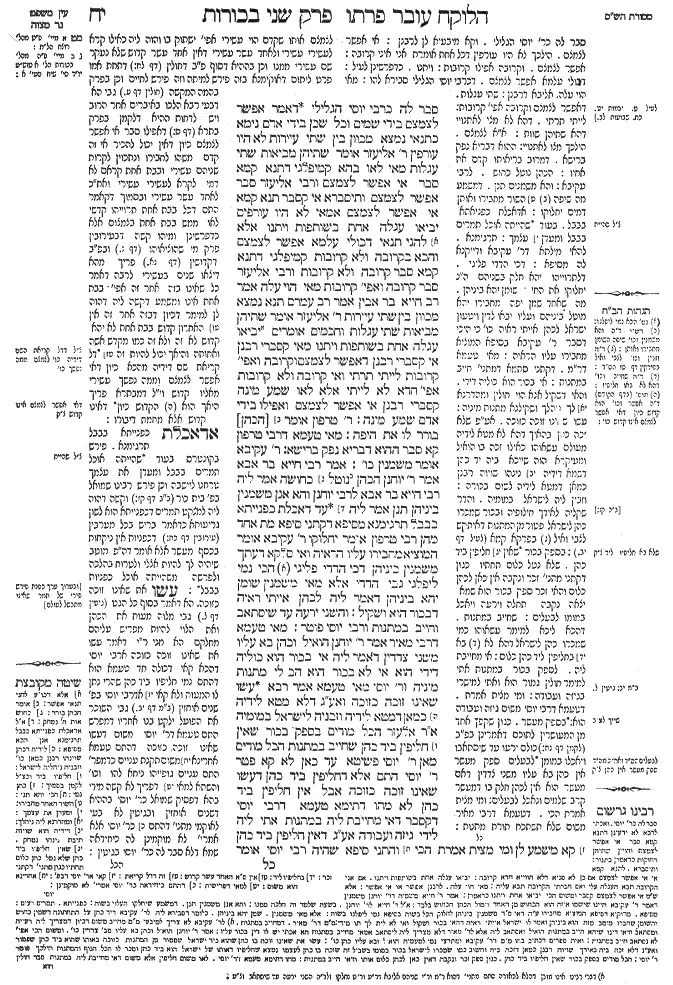
Bekhorot 18a - Guemara
סבר לה כרבי יוסי הגלילי דאמר אפשר לצמצם בידי שמים וכל שכן בידי אדם נימא כתנאי נמצא מכוון בין שתי עיירות לא היו עורפין ר' אליעזר אומר שתיהן מביאות שתי עגלות מאי לאו בהא קמיפלגי דתנא קמא סבר אי אפשר לצמצם ורבי אליעזר סבר אפשר לצמצם ותיסברא אי קסבר תנא קמא אי אפשר לצמצם אמאי לא היו עורפים יביאו עגלה אחת בשותפות ויתנו אלא להני תנאי דכולי עלמא אפשר לצמצם והכא בקרובה ולא קרובות קמיפלגי דתנא קמא סבר קרובה ולא קרובות ורבי אליעזר סבר קרובה ואפי' קרובות מאי הוי עלה אמר רב חייא בר אבין אמר רב עמרם תנא נמצא מכוון בין שתי עיירות ר' אליעזר אומר שתיהן מביאות שתי עגלות וחכמים אומרים יביאו עגלה אחת בשותפות ויתנו מאי קסברי רבנן אי קסברי רבנן דאפשר לצמצם וקרובה ואפי' קרובות לייתי תרתי ואי קרובה ולא קרובות אפי' חדא לא לייתי אלא לאו שמע מינה קסברי רבנן אי אפשר לצמצם ואפילו בידי אדם שמע מינה:
ר' טרפון אומר [הכהן] בורר לו את היפה:
מאי טעמא דרבי טרפון קא סבר ההוא דבריא נפק ברישא:
ר' עקיבא אומר משמנין כו':
אמר רבי חייא בר אבא אמר ר' יוחנן הכהן נוטל כחושה אמר ליה רבי חייא בר אבא לרבי יוחנן והא אנן משמנין ביניהן תנן אמר ליה עד דאכלת כפנייתא בבבל תרגימנא מסיפא דקתני סיפא מת אחד מהן רבי טרפון אומר יחלוקו ר' עקיבא אומר המוציא מחבירו עליו הראיה ואי סלקא דעתך משמנין ביניהן דכי הדדי פליגי הכי נמי ליפלגי גבי הדדי אלא מאי משמנין שומן יהא ביניהן דאמר ליה לכהן אייתי ראיה דבכור הוא ושקיל:
והשני ירעה עד שיסתאב וחייב במתנות ורבי יוסי פוטר:
מאי טעמא דרבי מאיר אמר ר' יוחנן הואיל וכהן בא עליו משני צדדין דאמר ליה אי בכור הוא כוליה דידי הוא אי לא בכור הוא הב לי מתנות מיניה ור' יוסי מאי טעמא אמר רבא עשו שאינו זוכה כזוכה ואע"ג דלא מטא לידיה כמאן דמטא לידיה וזבניה לישראל במומיה א"ר אלעזר הכל מודים בספק בכור שאין חליפין ביד כהן שחייב במתנות הכל מודים מאן ר' יוסי פשיטא עד כאן לא קא פטר ר' יוסי התם אלא דחליפין ביד כהן דעשו שאינו זוכה כזוכה אבל אין חליפין ביד כהן לא מהו דתימא טעמא דרבי יוסי דקסבר דאי מחייבת ליה במתנות אתי ליה לידי גיזה ועבודה אע"ג דאין חליפין ביד כהן קא משמע לן ומי מצית אמרת הכי והתני סיפא שהיה רבי יוסי אומר
Comments from Rashi on Masechet Bekhorot Page 18a
סבר לה כר' יוסי הגלילי . וקא מיבעיא לן לרבנן: אי אפשר לצמצם . הילכך לא היו עורפין דכל אחת אומרת אני איני קרובה: אפשר לצמצם . וקרובה אפילו קרובות: ויתנו . כדפרשינן לעיל: דכולי עלמא אפשר לצמצם . דכרבי יוסי הגלילי סבירא להו: מאי הוי עלה . אליבא דרבנן: שתי עגלות . דאפשר לצמצם וקרובה אפי' קרובות: לייתי תרתי . דהא לא מצי לאתנויי דהא שתיהן שוות: א"א לצמצם . הילכך מצו לאתנויי: ההוא דבריא נפק ברישא . דמרוב בריאותו קדם את אחיו: הכהן נוטל כחוש . לרבי עקיבא: והא משמנים תנן . דמשמע מה שיפה השור מחבירו ואותן דמים יחלוקו: אדאכלת כפניאתא בבבל . בעוד שהייתה אוכל תמרים בבבל ומעדן עצמך: תרגימנא . להאי מילתא דר' עקיבא ודייקנא לה מסיפא: דכי הדדי פליגי . דלתרוייהו יהא חלק בשניהם ה"נ יחלוקו את החי: שומן יהא ביניהן . מה שאחד שמן יפה מחבירו יהא מוטל ביניהם ועליו יבאו לדין ויטעון ישראל לכהן אייתי ראיה כו' כי היכי דסבר ר' עקיבא בסיפא המוציא מחבירו עליו הראיה: מאי טעמא דר"מ . דקתני סתמא דמתני' חייב במתנות: אי בכור הוא כוליה דידי . והאי דשקיל אנא הוי חולין ומהדרנא לך ניהלך ושקילנא מתנות מיניה: וזבין ליה לישראל במומיה . והדר שקליה לאידך חילופיה ובכור שמכרו כהן לישראל פטור מן המתנות דאיתקש לצבי ואיל בפרקא קמא (לעיל בכורות דף יב.): עשו שאינו זוכה כזוכה . אע"פ שלא זכה כהן בהאיך דהא לא מטא לידיה מעולם עשאוהו כאילו זכה בו הואיל ומעיקרא הוה שייכא ביה יד כהן דשמא דידיה נינהו שויוה רבנן כמאן דמטא לידיה לשום בכורה: בספק בכור שאין חליפין ביד כהן . שלא נטל כלום תחתיו כגון דקתני מתני' זכר ונקבה אין כאן לכהן כלום והאי זכר ספק בכור הוא שמא יצאה נקבה תחלה וירעה ויאכל במומו לבעלים: שחייב במתנות . דהכא ליכא למימר עשאוהו כמי שמכרו כהן לישראל דהא לא בא בחליפין ליד כהן כלום: אי מחייבת ליה . לספק בכור במתנות אתי למימר חולין גמור הוא ואתי למישרי בגיזה ועבודה: ומי מצית אמרת . דטעמא דרבי יוסי משום גיזה ועבודה הוא:
Comments from Tosafot - Bekhorot 18a
אדאכלת כפנייתא בבבל תרגימנא . פירש בקונטרס בעוד שהייתה אוכל תמרים בבבל ומעדן את עצמך טרחנו ליישבה וכן פירש רבינו שמואל בפ' בית כור (ב"ב דף קז:) וקשה דהוה ליה למנקט תמרים דכפנייתא הוא לשון גריעותא כדאמר בריש בכל מערבין (עירובין דף כח:) דכפניות אין ניקחות בכסף מעשר אלא אומר דה"פ מוטב שיהיה לך להיות אצלי ולטרוח בהלכה ולפרשה משהייתה אוכל כפניות בבבל: עשו את שאינו זוכה כזוכה . הא דאמר בסוף כל הגט (גיטין דף ל.) גבי מלוה מעות את הכהן ואת הלוי להיות מפריש עליהם מחלקם הא מני ר"י דאמר עשו את שאינו זוכה כזוכה ארבי יוסי דהכא קאי דכולה חד טעמא הוא דהתם נמי חליפיו ביד כהן שהרי נתן לו המעות ולא קאי אדרבי יוסי בפ' שנים אוחזין (ב"מ דף יב.) גבי השוכר את הפועל ילקט בנו אחריו דמפרש התם טעמא דר' יוסי משום דעשו שאינו זוכה כזוכה דהתם טעמא אחרינא משום תקנת עניים כדמפר' התם עניים גופייהו ניחא להו וכו' והשתא למאי דפריך לא קשה מידי בהא דפסיק שמואל כר' יוסי בההיא דשנים אוחזין ובגיטין לא בעי לאוקמי מתני' דהתם כר' יוסי אלא אמרי' לא מוקמינן לה כיחידאה שמא דלא סבר לה כר' יוסי בגיטין:
Bekhorot 18a - Mishnah translated into english
holds in accordance with the opinion of Rabbi Yosei HaGelili, who says: It is possible for two matters that are in the hands of Heaven to coincide precisely, and all the more so matters that are in human hands. Consequently, one cannot cite Rabbi Eliezer’s opinion in order to determine the opinion of the Rabbis.
The Gemara suggests: Let us say that this is subject to a dispute between tanna’im, as it is taught in a baraita: If the corpse of a slain person was found precisely between two towns, they would not break the heifer’s neck at all. Rabbi Eliezer says: The two towns bring two heifers between them. What, is it not correct to say that they disagree with regard to this matter, in that the first tanna holds that it is impossible for two matters to coincide precisely and Rabbi Eliezer holds that it is possible for two matters to coincide precisely?
The Gemara rejects this suggestion: And how can you understand that to be the dispute? If the first tanna holds that it is impossible for two matters to coincide precisely, why does he claim that they would not break the heifer’s neck? Let them bring one heifer in partnership and stipulate that it is brought for the town that is actually nearest.
Rather, with regard to these tanna’im, everyone agrees that it is possible for two matters to coincide precisely. And here they disagree over whether the singular form kerova in the phrase “the town which is nearest [kerova]” indicates that only the nearest town brings a heifer, and not the many nearest [kerovot] towns; as the first tanna holds that it is derived from the term “kerova” that only the nearest town brings a heifer, and not multiple kerovot; and Rabbi Eliezer holds that although the verse states “kerova,” nevertheless this includes even multiple towns that are kerovot.
The Gemara asks: What conclusion was reached about the Rabbis’ opinion with regard to whether matters in human hands can coincide precisely? Rav Ḥiyya bar Avin says that Rav Amram says: The Sages taught in a baraita: If the slain person was found precisely between two towns, Rabbi Eliezer says: The two towns bring two heifers between them; and the Rabbis say: They bring one heifer in partnership and stipulate that it is brought for the town that is nearest.
What do the Rabbis hold in this regard? If the Rabbis hold that is possible for two matters that are in human hands to coincide precisely, and the singular “kerova” includes even multiple towns, kerovot, then they should bring two heifers. And if they hold that “kerova” indicates: But not kerovot, then they should not bring even one heifer. Rather, must one not conclude from it that the Rabbis hold: It is impossible for two matters to coincide precisely, and this is true even with regard to matters that are in human hands? Indeed, conclude from it that this is so.
§ The mishna teaches that in the case of a ewe that gave birth for the first time to two male offspring whose heads emerged as one, Rabbi Tarfon says: The priest chooses the better of the two. The Gemara asks: What is the reasoning of Rabbi Tarfon? He holds that it is presumed that the healthier and better of the two emerged first, and therefore it belongs to the priest.
The mishna further teaches that Rabbi Akiva says: They assess the value of the lambs between them. Rabbi Ḥiyya bar Abba says that Rabbi Yoḥanan says: According to Rabbi Akiva, the priest takes the leaner of the two. Rabbi Ḥiyya bar Abba said to Rabbi Yoḥanan: But didn’t we learn that they assess the value of the offspring between them, which indicates that the priest and owner divide their value? Rabbi Yoḥanan said to him: While you were eating dates in Babylonia, we in Eretz Yisrael explained it based on the latter clause in the mishna.
As the latter clause teaches: If one of the two born together died, Rabbi Tarfon says: The priest and the owner divide the remaining lamb, and Rabbi Akiva says: Since there is uncertainty to whom it belongs, it remains in the possession of the owner, as the burden of proof rests upon the claimant. And if it enters your mind that when Rabbi Akiva said that they assess the value between them he meant that they divide the value between them, then in the latter clause too, let them divide the value of the remaining offspring between them instead of leaving it with the owner. Rather, what does: They assess [meshammenin] the value between them, mean? It means that the additional fat [shumman] of the better twin will be the subject of dispute between them, as the owner says to the priest: Bring a proof that the better one is the firstborn, and take it.
§ The mishna teaches: And the second lamb that remains in the possession of the owner must graze until it becomes blemished, at which point he may slaughter and eat it, and he is obligated to have the gifts of the priesthood, i.e., the foreleg, the jaw, and the maw, taken from it; and Rabbi Yosei deems him exempt from giving those gifts. The Gemara asks: What is the reasoning of Rabbi Meir, whose opinion is the ruling cited first in the mishna? Rabbi Yoḥanan says: The owner is obligated since the priest comes upon him from two sides, i.e., by force of two complementary claims, as the priest says to him: If the second lamb is in fact the firstborn, it is mine in its entirety, and if it is not the firstborn, at least give me the priestly gifts from it.
And what is the reasoning of Rabbi Yosei, who deems the owner exempt from giving the priestly gifts from the second animal? Rava says: In this particular case, the Sages rendered one who did not acquire the animal like one who acquired the animal. And therefore, even though the second lamb of the Israelite did not actually enter the priest’s possession, it is considered as though it entered the priest’s possession and he then sold it to the Israelite in its blemished state, in exchange for the lamb he received. The owner can then claim that perhaps it is the firstborn, and he already fulfilled his obligation of giving it to the priest.
§ Rabbi Elazar says: Everyone concedes in the case of an animal with uncertain firstborn status, the replacement for which is not in the possession of the priest, that it is obligated to have gifts of the priesthood taken from it. In other words, in a case where the priest receives neither offspring, e.g., when a male and female are born together, all agree that the owner must give the gifts to the priest.
The Gemara asks: When Rabbi Elazar said that everyone concedes, to whom was he referring? Was he referring to Rabbi Yosei? That seems obvious. After all, Rabbi Yosei deemed the owner exempt from giving the gifts only there, where the replacement is in the possession of the priest, as the Sages rendered one who did not acquire the animal like one who acquired the animal. But if the replacement is not in the possession of the priest, evidently Rabbi Yosei does not rule that one is exempt, as his reasoning does not apply. Why, then, is the statement of Rabbi Elazar necessary?
The Gemara answers that Rabbi Elazar’s statement is in fact necessary, lest you say that the reason Rabbi Yosei deems him exempt from giving the gifts is that he holds that if you deem him obligated in the gifts, he will assume that the animal is completely non-sacred and come to use it for shearing and labor. Consequently, even though there is no replacement in the hands of the priest, the Sages ruled that one is exempt from giving the gifts, in order to ensure that he does not violate the prohibition against shearing the animal or using it for labor. Rabbi Elazar therefore teaches us that this is not the halakha, as Rabbi Yosei agrees that one is obligated to give the priestly gifts in such circumstances.
The Gemara objects: And how can you say this? But doesn’t the latter clause of the mishna (18b) teach: As Rabbi Yosei says:
Traduction : The William Davidson digital edition of the Koren Noé Talmud, with commentary by Rabbi Adin Even-Israel Steinsaltz.