 Talmud Bavli
The learning on the whole site is dedicated : L'ilui Nishmat Ledicia bat David Banoun
The learning on the whole site is dedicated : L'ilui Nishmat יוסף בן מושה
The learning on the whole site is dedicated : L'ilui Nishmat Yaakov ben Myriam
Shevu'ot 21b : Youtube
Daf TubeYoutube
2 video classes :
Shevu'ot Page 21b
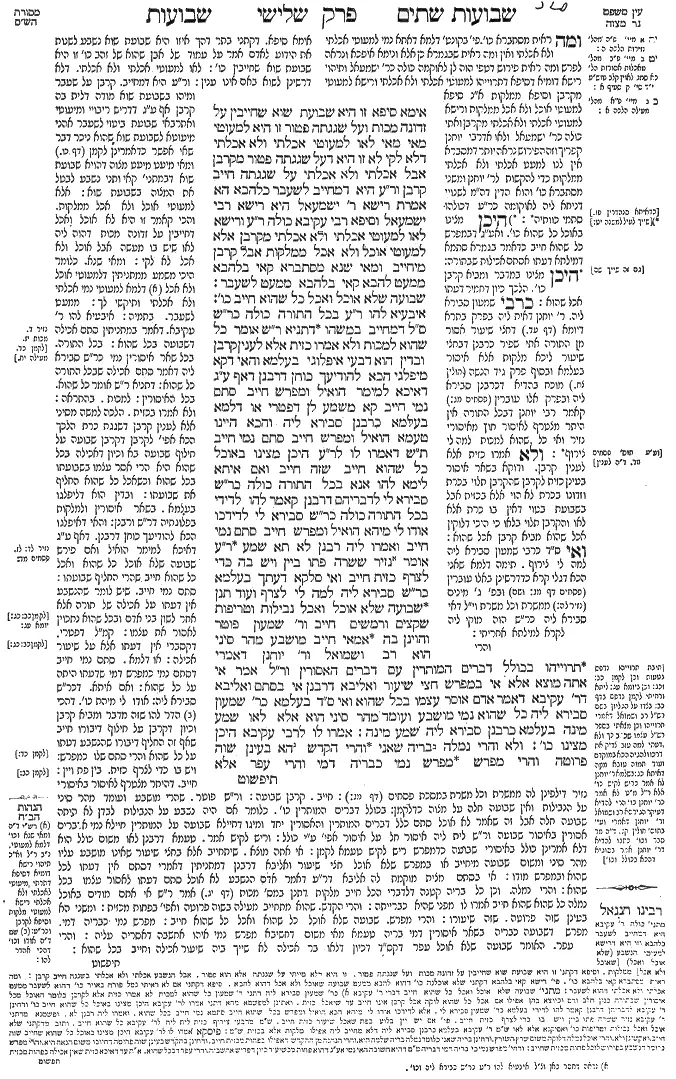
Shevu'ot 21b - Guemara
אימא סיפא זו היא שבועת שוא שחייבין על זדונה מכות ועל שגגתה פטור זו היא למעוטי מאי מאי לאו למעוטי אכלתי ולא אכלתי דלא לקי לא זו היא דעל שגגתה פטור מקרבן אבל אכלתי ולא אכלתי על שגגתה חייב קרבן ור"ע היא דמחייב לשעבר כלהבא הא אמרת רישא ר' ישמעאל היא רישא רבי ישמעאל וסיפא רבי עקיבא כולה ר"ע ורישא לאו למעוטי אכלתי ולא אכלתי מקרבן אלא למעוטי אוכל ולא אכל ממלקות אבל קרבן מיחייב ומאי שנא מסתברא קאי בלהבא ממעט להבא קאי בלהבא ממעט לשעבר:
שבועה שלא אוכל ואכל כל שהוא חייב כו':
איבעיא להו ר"ע בכל התורה כולה כר"ש ס"ל דמחייב במשהו דתניא ר"ש אומר כל שהוא למכות ולא אמרו כזית אלא לענין קרבן ובדין הוא דבעי איפלוגי בעלמא והאי דקא מיפלגי הכא להודיעך כוחן דרבנן דאף ע"ג דאיכא למימר הואיל ומפרש חייב סתם נמי חייב קא משמע לן דפטרי או דלמא בעלמא כרבנן סבירא ליה והכא היינו טעמא הואיל ומפרש חייב סתם נמי חייב ת"ש דאמרו לו לר"ע היכן מצינו באוכל כל שהוא חייב שזה חייב ואם איתא לימא להו אנא בכל התורה כולה כר"ש סבירא לי לדבריהם דרבנן קאמר להו לדידי בכל התורה כולה כר"ש סבירא לי לדידכו אודו לי מיהא הואיל ומפרש חייב סתם נמי חייב ואמרו ליה רבנן לא תא שמע ר"ע אומר נזיר ששרה פתו ביין ויש בה כדי לצרף כזית חייב ואי סלקא דעתך בעלמא כר"ש סבירא ליה למה לי לצרף ועוד תנן שבועה שלא אוכל ואכל נבילות וטריפות שקצים ורמשים חייב ור' שמעון פוטר והוינן בה אמאי חייב מושבע מהר סיני הוא רב ושמואל ור' יוחנן דאמרי תרוייהו בכולל דברים המותרין עם דברים האסורין ור"ל אמר אי אתה מוצא אלא אי במפרש חצי שיעור ואליבא דרבנן אי בסתם ואליבא דר' עקיבא דאמר אדם אוסר עצמו בכל שהוא ואי ס"ד בעלמא כר' שמעון סבירא ליה כל שהוא נמי מושבע ועומד מהר סיני הוא אלא לאו שמע מינה בעלמא כרבנן סבירא ליה שמע מינה:
אמרו לו לרבי עקיבא היכן מצינו כו':
ולא והרי נמלה בריה שאני והרי הקדש הא בעינן שוה פרוטה והרי מפרש מפרש נמי כבריה דמי והרי עפר אלא
Comments from Rashi on Masechet Shevu'ot Page 21b
אימא סיפא . דקתני בתר דהך איזו היא שבועת שוא נשבע לשנות את הידוע לאדם אמר על עמוד של אבן שהוא של זהב כו' זו היא שבועת שוא שחייבין כו': לאו למעוטי אכלתי ולא אכלתי . דלא דרשינן לשוא באם אינו ענין: ור"ע היא דמחייב . קרבן על שעבר ומיהו בשבועת שוא מודה דלית בה קרבן אף ע"ג דדריש ריבויי ומיעוטי ואתרבאי שבועת ביטוי לשעבר אהני מיעוטא לשבועת שוא שהוא ניכר דבר שאי אפשר כדאמרינן לקמן (שבועות דף כו.) ומאי מיעט מיעט מצוה דהויא שבועת שוא דבמתני' קאי ותני נשבע לבטל את המצוה בשבועת שוא: אלא למעוטי אוכל ולא אכל ממלקות . והכי קאמר זו היא לא אוכל ואכל דחייבין על זדונה מכות דהוה ליה לאו שיש בו מעשה אבל אוכל ולא אכל לא לקי: ומאי שנא . כלומר היכי משמע ממתניתין דלמעוטי אוכל ולא אכל דלמא למעוטי נמי אכלתי ולא אכלתי ותיקשי לך: ממעט לשעבר . בתמיה: איבעיא להו ר' עקיבא . דאמר במתניתין סתם אכילה דשבועה בכל שהוא: בכל התורה . בכל שאר איסורין נמי כר"ש סבירא ליה דאמר סתם אכילה שבכל התורה כל שהוא: דתניא ר"ש אומר כל שהוא . בכל האיסורין: למכות . בהתראה: ולא אמרו בכזית . הלכה למשה מסיני אלא לענין קרבן דשגגת כרת הלכך הכא אפי' לקרבן דקרבן שבועה על חילוף שבועה בא וכיון דאכילה בכל שהוא היא הרי אסר עצמו בשבועתו בכל שהוא וכשאכל כל שהוא החליף את שבועתו: ובדין הוא דליפלגו בעלמא . בשאר איסורין ולמלקות בפלוגתיה דר"ש ורבנן: והאי דאיפלגו הכא להודיעך כוחן דרבנן . דאף ע"ג דאיכא למימר הואיל ואם פירש שבועה שלא אוכל כל שהוא ואכל כל שהוא חייב שהרי החליף שבועתו: סתם נמי חייב . שיש לומר שהנשבע אין דעתו על אכילה של תורה אלא אחר לשון בני אדם ובכל שהוא נתכוין לאסור את עצמו: קמ"ל דפטרי . דקסברי אין דעתו אלא על שיעור אכילה: או דלמא . סתם נמי חייב דסתם נמי כמפרש דמי שדעתו היתה על כל שהוא: ואם איתא . דכר"ש סבירא ליה: אודו לי מיהת כו' . דהכי הדר להו שזה מדבר ומביא קרבן וכיון דקרבן על חילוף דיבורו חייב שאף זה החליף דיבורו שהנשבע דעתו על כל שהוא והרי סתם שלו כמפרש: ויש בו כדי לצרף כזית . בין פת ויין: חייב . דהיתר מצטרף לאיסור באיסורי נזיר דילפינן לה ממשרת וכל משרת במסכת פסחים (דף מג:): חייב . קרבן שבועה: ור"ש פוטר . שהרי מושבע ועומד מהר סיני על הנבילות ואין שבועה חלה על מצוה כדלקמן: בכולל דברים המותרין . כו'. כלומר אם היה נשבע על הנבילות לבדן לא היתה שבועה חלה אבל זה שאמר לא אוכל סתם כלל דברים המותרין והאסורין יחד ומיגו דחיילא שבועה על המותרין חיילא נמי אדברים אסורין באיסור שבועה ור"ש לית ליה איסור חל על איסור אפי' ע"י כולל: וריש לקיש אמר . טעמא דרבנן לאו משום כולל הוא דלא אמרינן כולל באיסורי שבועה כדמפרש ריש לקיש טעמא לקמן: אי אתה מוצא . שיתחייב אלא בחצי שיעור שאינו מושבע עליו מהר סיני ומשום שבועה מיחייב או במפרש שלא אוכל חצי שיעור ואליבא דרבנן דמתניתין דאמרי דסתם אין דעתו לכל שהוא ובמפרש מודו: אי בסתם . מצית מוקמת לה אליבא דר"ע דאמר אדם הנשבע לא אוכל סתם דעתו לאסור עצמו בכל שהוא: והרי נמלה . וכן כל בריה קטנה דלדברי הכל חייב מלקות דתנן במס' מכות (דף יג.) אמר ר"ש אי אתם מודים באוכל נמלה כל שהוא שהוא חייב אמרו לו מפני שהיא כברייתה: והרי הקדש . שהוא מתחייב מעילה בשוה פרוטה ואפי' בפחות מכזית: ומשני הא בעינן שוה פרוטה . שזה שיעורו: והרי מפרש . שבועה שלא אוכל כל שהוא ואכל כל שהוא חייב: מפרש נמי כבריה דמי . מפרש דשבועה כבריה בשאר איסורין דמי בריה טעמא מאי משום דחשיבא מפרש נמי איהו אחשבה דאסריה עליה: והרי עפר . האומר שבועה שלא אוכל עפר דקס"ד דכיון דלאו בר אכילה לא שייך ביה שיעור אכילה וחייב בכל שהוא:
Comments from Tosafot - Shevu'ot 21b
ומה ראית מסתברא כו'. פי' בקונט' דלמא דאתא נמי למעוטי אכלתי ולא אכלתי ואין ומה ראית שבגמרא כן אלא ונימא איפכא ונראה לפרש ומה ראית פירוש דטפי הוה לן לאוקמה כולה כר' ישמעאל ותיהוי רישא דומיא דסיפא דתרוייהו למעוטי אכלתי ולא אכלתי ורישא למעוטי מקרבן וסיפא ממלקות א"נ סיפא למעוטי אוכל ולא אכל ממלקות ורישא למעוטי אכלתי ולא אכלתי מקרבן ואתי כולה כר' ישמעאל ולאו אדרבי יוחנן קפריך וזה הפירוש נראה יותר דמסברא אין לנו למעט אכלתי ולא אכלתי ממלקות כדי להקשות לר' יוחנן ומשני מסתברא כו' והוא הדין דה"מ לשנויי דניחא ליה לאוקומה כר"ע דכולהו סתמי כוותיה: היכן מצינו באוכל כל שהוא כו'. ואע"ג דבמפרש כל שהוא חייב כדאמר בגמרא סתמא דמילתא דעתו אסתם אכילות שבתורה: היכן מצינו במדבר ומביא קרבן כו'. הלכך כיון דחמיר דעתו אכל שהוא: כרבי שמעון סבירא ליה. ר' יוחנן דאית ליה בפרק בתרא דיומא (דף עד.) דחצי שיעור אסור מן התורה אתי שפיר כרבנן דבחצי שיעור ליכא מלקות אלא איסור בעלמא ובסוף פרק גיד הנשה (חולין צח.) מוכח בהדיא דכרבנן סבירא ליה ובפרק אלו עוברין (פסחים מג:) קאמר רבי יוחנן דבכל התורה אין היתר מצטרף לאיסור חוץ מאיסורי נזיר ואי כל שהוא למכות למה לי צירוף: ולא אמרו כזית אלא לענין קרבן. ודוקא בשאר איסור בעינן כזית לקרבן שהקרבן תלוי בכרת וזדונו בכרת לא הוי אלא בכזית אבל בשבועת בטוי דאין בו כרת אלא לאו והקרבן תלוי בלאו כי היכי דלוקין אכל שהוא מביא קרבן אכל שהוא: ואי ס"ד כרבי שמעון סבירא ליה למה לי צירוף. תימה דלמא שאני הכא דגלי קרא כדדרשינן באלו עוברין (פסחים דף מג: ושם) ובפ' ג' מינים (נזיר לה:) ממשרת וכל משרת וי"ל דאי סבירא ליה כר"ש הוה מוקי ליה לקרא למילתא אחריתי:
Shevu'ot 21b - Mishnah translated into english
The Gemara asks: Say the latter clause of the mishna (29a): Which oath is an oath taken in vain? It is when one takes an oath to deny that which is known to people to be true, like one says with regard to a stone column that it is made of gold. This is an oath taken in vain, for which one is liable to receive lashes if he takes the oath intentionally, and for which he is exempt if he takes it unwittingly. When the mishna says: This is an oath taken in vain, it is to exclude what? What, isn’t that phrase added to the mishna to exclude one who takes an oath saying: I ate, or: I did not eat, teaching that he is not flogged?
The Gemara responds: No, the mishna adds: This is an oath, to teach that for violating the prohibition against taking an oath in vain unwittingly, one is exempt from bringing an offering; but one who takes an oath saying: I ate, or: I did not eat, is liable to bring an offering for an unwitting violation. And this is in accordance with the opinion of Rabbi Akiva, who deems one liable to bring an offering for oaths referring to the past just like one is liable for oaths referring to the future.
The Gemara asks: But didn’t you say that the first clause of that mishna is in accordance with the opinion of Rabbi Yishmael? How can the first clause follow Rabbi Yishmael’s opinion and the latter clause follow Rabbi Akiva’s conflicting opinion? The Gemara answers: The entire mishna is in accordance with the opinion of Rabbi Akiva, and the first clause does not serve to exclude one who took an oath saying: I ate, or: I did not eat, from the liability to bring an offering. Rather, it serves to exclude one who took an oath saying: I will eat, and who subsequently did not eat, from the liability to receive lashes. But he is still liable to bring an offering.
The Gemara asks: And what is different about this way of understanding the mishna that it is to be preferred? The Gemara answers: It stands to reason that when the mishna is addressing an oath referring to the future, it excludes an oath referring to the future, in accordance with the reading that the entire mishna is in accordance with the opinion of Rabbi Akiva. Does it makes sense that when addressing an oath referring to the future, it excludes an oath referring to the past, as the reading of the first clause in accordance with the opinion of Rabbi Yishmael would have it? Therefore, the added sentence: This is an oath on an utterance, in the first clause, serves to exclude one who took an oath saying: I will eat, and who subsequently did not eat, from the liability to receive lashes; and the whole mishna can be understood as being in accordance with the opinion of Rabbi Akiva that one is liable to bring an offering even for oaths relating to the past.
§ The mishna teaches that if one says: On my oath I will not eat, and he then ate any amount, even less than an olive-bulk, he is liable according to Rabbi Akiva. A dilemma was raised before the Sages: Does Rabbi Akiva in the entire Torah, i.e., in general, hold that the halakha is in accordance with the opinion of Rabbi Shimon, who deems one liable for eating any amount of forbidden food? As it is taught in a baraita: Rabbi Shimon says: One who eats any amount of forbidden food is liable to receive lashes, and the Sages stated the measure of an olive-bulk only in the matter of determining liability to bring an offering.
And if in fact Rabbi Akiva agrees with the opinion of Rabbi Shimon, then by right, the mishna should have taught that Rabbi Akiva and the Rabbis disagree in general. And the reason that it states only here that they disagree is to convey to you the far-reaching nature of the opinion of the Rabbis. The Rabbis hold that even though it is possible to say that since one who eats less than an olive-bulk after taking an oath in which he specifically forbids himself any amount is liable, one who eats less than an olive-bulk without so specifying in his oath will also be liable, as that is included in his oath not to eat, that reasoning is not accepted. The mishna therefore states the dispute in the context of an oath that he will not eat in order to teach us that, according to the Rabbis, as long as he did not specify that his oath includes any amount, he is exempt from receiving lashes.
The Gemara presents the other side of the dilemma: Or perhaps, in general, Rabbi Akiva holds like the Rabbis that one must consume at least an olive-bulk in order to be liable for a prohibition that involves eating. And here, with regard to an oath that one will not eat, this is the reason he disagrees: Since one who specifically forbids himself any amount is liable, one who eats less than an olive-bulk without so specifying in his oath will also be liable.
Come and hear that which the Rabbis said to Rabbi Akiva: Where do we find that one who eats any amount is liable, leading you to say that this person is liable? The Gemara explains why this is relevant: If it is so that according to Rabbi Akiva one is always liable for eating any amount, let him say to them: In the entire Torah I hold in accordance with the opinion of Rabbi Shimon.
The Gemara answers: The fact that Rabbi Akiva did not answer the Rabbis in that way does not necessarily indicate that he does not agree with Rabbi Shimon in general. Perhaps he is speaking to the Rabbis in accordance with their own statement, and this is how he would respond to their question: As far as my opinion is concerned, in the entire Torah I hold that the halakha is in accordance with the opinion of Rabbi Shimon that one is liable for all prohibitions involving eating when one eats any amount. According to you, admit to me at least that since one who specifically forbids himself any amount is liable, one who eats less than an olive-bulk without so specifying in his oath will also be liable. And the Rabbis said to him: No, we will not admit that.
The Gemara presents another attempt to resolve the dilemma. Come and hear a mishna (Nazir 34b): Rabbi Akiva says: A nazirite who soaked his bread in wine and ate it, and the two together contain enough to combine to an olive-bulk, is liable, even though there is less than the minimal measure of wine. And if it should enter your mind that he holds in accordance with the opinion of Rabbi Shimon in general, then why do I need the wine and bread to combine to the measure of an olive-bulk? Consumption of any amount of wine should be sufficient for him to be liable.
And additionally, we learned in a mishna (22b): If one says: On my oath I will not eat, and then ate the meat of unslaughtered carcasses, or animals with a wound that will cause them to die within twelve months [tereifot], or repugnant creatures, or creeping animals, he is liable; and Rabbi Shimon deems him exempt. And we discussed it: Why is he liable for breaking his oath when he eats non-kosher food? He is already under oath from Mount Sinai not to eat forbidden food, and an oath cannot take effect to render a matter forbidden that is already forbidden. Rav and Shmuel and Rabbi Yoḥanan both, i.e., all, say that this is a case where he incorporates into the oath that he will not eat some permitted items, along with the statement concerning the forbidden items. Since the oath takes effect with regard to the permitted items, it extends also to the forbidden ones.
And Reish Lakish says: You find that one is liable for eating forbidden food as the result of an oath only if it is both an oath where he specifies that it includes a half-measure, in this case, less than an olive-bulk, and in accordance with the opinion of the Rabbis that one is not liable for eating a half-measure unless it is specified in the oath. Since eating a half-measure is not prohibited by the Torah, the oath takes effect. Alternatively, you find that one is liable if he took the oath without specifying that the oath prohibits less than the usual measure and in accordance with the opinion of Rabbi Akiva, who says that a person renders himself prohibited from eating any amount by taking an oath not to eat.
And if it enters your mind that Rabbi Akiva holds in accordance with the opinion of Rabbi Shimon in general, this is difficult, as one who consumes any amount is also already under oath from Mount Sinai. Why should the oath take effect according to Reish Lakish? Rather, must one not conclude from it: In general, Rabbi Akiva holds like the Rabbis, and it is only with regard to unspecified oaths that he deems one liable for eating any amount? The Gemara affirms: Conclude from it that Rabbi Akiva holds like the Rabbis.
§ The mishna teaches: The Rabbis said to Rabbi Akiva: Where do we find that one who eats any amount is liable, leading you to say that this person is liable? The Gemara asks: And do we not? But isn’t one who eats an ant liable, despite the fact that it is smaller than an olive-bulk? The Gemara answers: A whole entity is different, since it has significance.
The Gemara asks: But isn’t one who eats less than an olive-bulk of consecrated food liable? The Gemara answers: In order to be liable for eating consecrated food, we require a different measure, an amount worth one peruta. One is not liable for eating an amount worth less than that.
The Gemara asks: But isn’t one who specifies in his oath that he is prohibited from eating any amount liable for doing so? The Gemara answers: One who specifies that eating any amount is prohibited is indeed comparable to one who eats a whole entity, since he has granted it significance.
The Gemara asks: But isn’t there an unresolved question with regard to one who took an oath not to eat and then ate dirt? If, as the Rabbis claim, one is not liable for eating less than a full measure, you could rather
Traduction : The William Davidson digital edition of the Koren Noé Talmud, with commentary by Rabbi Adin Even-Israel Steinsaltz.