 Talmud Bavli
The learning on the whole site is dedicated : L'ilui Nishmat רינה בת לדיסיה
The learning on the whole site is dedicated : L'ilui Nishmat Rav Chlomo Ben Jamilla
The learning on the whole site is dedicated : For the success of Elyahou ben H'anna & family
Shevu'ot 20b : Youtube
Daf TubeYoutube
2 video classes :
Shevu'ot Page 20b
Shevu'ot 20b - Guemara
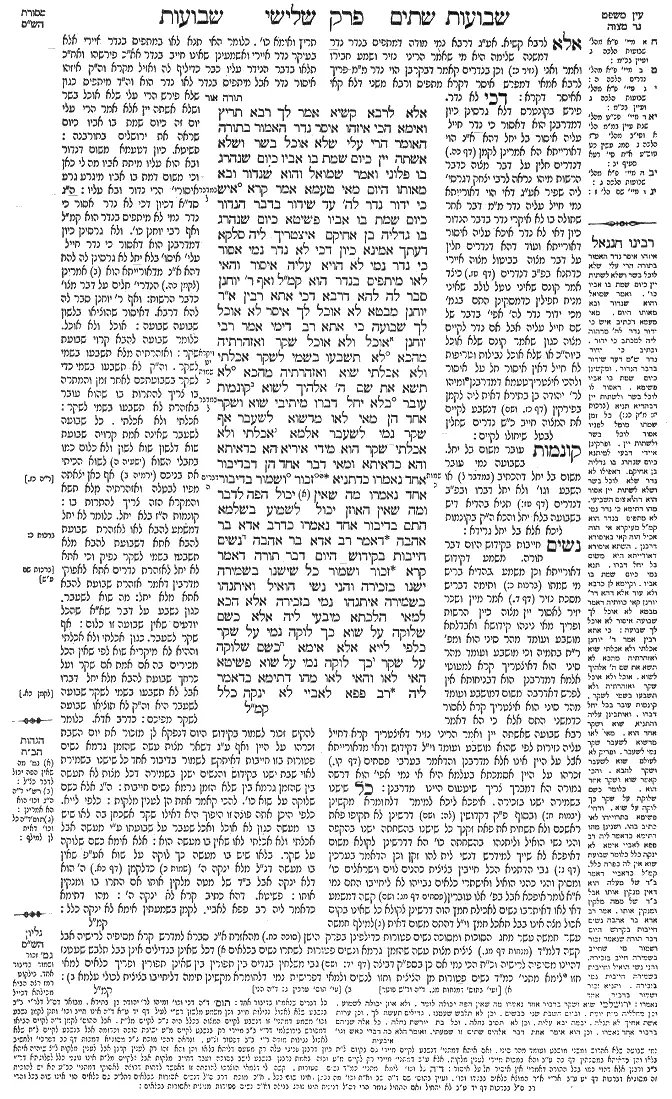
אלא לרבא קשיא אמר לך רבא תריץ ואימא הכי איזהו איסר נדר האמור בתורה האומר הרי עלי שלא אוכל בשר ושלא אשתה יין כיום שמת בו אביו כיום שנהרג בו פלוני ואמר שמואל והוא שנדור ובא מאותו היום מאי טעמא אמר קרא (במדבר ל, ג) איש כי ידור נדר לה' עד שידור בדבר הנדור כיום שמת בו אביו פשיטא כיום שנהרג בו גדליה בן אחיקם איצטריך ליה סלקא דעתך אמינא כיון דכי לא נדר נמי אסור כי נדר נמי לא הויא עליה איסור והאי לאו מיתפיס בנדר הוא קמ"ל ואף ר' יוחנן סבר לה להא דרבא דכי אתא רבין א"ר יוחנן מבטא לא אוכל לך איסר לא אוכל לך שבועה כי אתא רב דימי אמר רבי יוחנן אוכל ולא אוכל שקר ואזהרתיה מהכא (ויקרא יט, יב) לא תשבעו בשמי לשקר אכלתי ולא אכלתי שוא ואזהרתיה מהכא (שמות כ, ו) לא תשא את שם ה' אלהיך לשוא קונמות עובר (במדבר ל, ג) בלא יחל דברו מיתיבי שוא ושקר אחד הן מאי לאו מדשוא לשעבר אף שקר נמי לשעבר אלמא אכלתי ולא אכלתי שקר הוא מידי איריא הא כדאיתא והא כדאיתא ומאי דבר אחד הן דבדיבור אחד נאמרו כדתניא (שמות כ, ז) זכור (דברים ה, יא) ושמור בדיבור אחד נאמרו מה שאין יכול הפה לדבר ומה שאין האוזן יכול לשמוע בשלמא התם בדיבור אחד נאמרו כדרב אדא בר אהבה דאמר רב אדא בר אהבה נשים חייבות בקידוש היום דבר תורה דאמר קרא זכור ושמור כל שישנו בשמירה ישנו בזכירה והני נשי הואיל ואיתנהו בשמירה איתנהו נמי בזכירה אלא הכא למאי הלכתא מיבעי ליה אלא כשם שלוקה על שוא כך לוקה נמי על שקר כלפי לייא אלא אימא כשם שלוקה על שקר כך לוקה נמי על שוא פשיטא האי לאו והאי לאו מהו דתימא כדאמר ליה רב פפא לאביי לא ינקה כלל
Comments from Rashi on Masechet Shevu'ot Page 20b
תריץ ואימא כו' . כלומר האי תנא לאו במתפיס בנדר איירי אלא בעיקר נדר איירי ואשמעינן שאינו חייב בנדר אא"כ פירשהו ואח"כ תלאו בדבר הנידר עליו כבר כדיליף לה ואזיל מקרא וה"ק איזהו איסור נדר אבל מיתפיס בנדר לאו נדר הוא וה"ד מיתפיס כגון שלא פירש הרי עלי שלא אוכל בשר ושלא אשתה יין אלא אמר הרי עלי יום זה כיום שמת בו אביו כיום שראה את ירושלים בחורבנה: פשיטא . כיון דטעמא משום דנדור ובא הוא עליו מיתת אביו מה לי כאן וכי משום דמת בו אביו מיגרע גרע איסורי' הרי נדור ובא עליו: ה"ג סד"א דכיון דכי לא נדר אסור כי נדר נמי לא מיתפיס בנדר הוא קמ"ל ואף רבי יוחנן כו' . ולא גרסינן כיון דמדרבנן הוא דאסור כי נדר חייל עלי' איסו' בלא יחל לא גרסינן לה להא דהא א"נ מדאורייתא הוא אמרינן (לקמן שבועות כה.) הנדרי' חלים על דבר מצו' כדבר הרשות: ואף ר' יוחנן סבר לה להא דרבא . דאיסור שהוציאו בלשון שבועה שבועה: אוכל ולא אוכל . כלומר שבועה להבא קרוי שבועת שקר: ואזהרתיה מלא תשבעו בשמי לשקר . וה"ק לא תשבעו בשמי כדי לשקר בשבועתכם לאחר זמן והמתרה בו צריך להתרות בו שהוא עובר באזהרת לא תשבעו בשמי לשקר: אכלתי ולא אכלתי . כל שבועה לשעבר שאינה אמת קרויה שבועת שוא דלשון שוא לשון ולא כלום כמו בחבלי השוא (ישעיהו ה) לשוא הכיתי את בניכם (ירמיהו ב) אף כאן יצאתה מפיו לבטלה ואזהרתיה מלא תשא והמקרא הזה צריך להתרות בו: קונמות ה"ז בלא יחל . כלומר לא יחל דמשמע להבא לאו לאזהרת שבועת להבא אתא דשבועת להבא מלא תשבעו בשמי לשקר נפיק וכי אתא לא יחל לאזהרת נדרים אתא לאפוקי מדרבין דאמר אזהרת שבועת להבא אתא מלא יחל: מה שוא לשעבר . כגון נשבע על דבר שא"א שהכל יודעים שאין שבועה זו כלום: אף שקר לשעבר . כגון אכלתי ולא אכלתי וההיא לא מיקריא שוא לפי שאין הכל מכירים בה אם אמת אם שקר ועל כרחך שבועת להבא מלא יחל דברו אבל לא תשבעו בשמי לשקר שבועה לשעבר היא וה"ק לא תוציאו שבועה לשקר מפיכם: כדרב אדא . כלומר להקיש זכור לשמור בקידוש היום דנפקא לן מזכור את יום השבת זכרהו על היין ואף ע"ג דשאר מצות עשה שהזמן גרמא נשים פטורות בזו חייבות דאיתקש לשמור בדיבור אחד כל שישנו בשמירת לאוי שבת ישנו בקידוש והנשים ישנן בשמירה דכל מצות לא תעשה בין שהזמן גרמא בין שלא הזמן גרמא נשים חייבות: ה"ג אלא כשם שלוקה על שוא כו' . להכי קאמר אחת הן לענין מלקות: כלפי לייא . כלפי היכן אתה פונה זו היפוך היא דאילו שקר אשכחן בה לאו שיש בו מעשה כגון לא אוכל ואכל שעבר על שבועתו ע"י מעשה אבל אכלתי ולא אכלתי לאו שאין בו מעשה הוא: אלא אימא כשם שלוקה על שקר . בלאו שיש בו מעשה כך לוקה על שוא אע"פ שאין בו מעשה דנ"ל מלא ינקה ה' (שמות כ) כדלקמן (שבועות דף כא.) ה' הוא דלא ינקה אבל ב"ד של מטה מלקין אותו אם התרו בו ומנקין אותו: פשיטא . דהא כתיב קרא לא ינקה ה': מהו דתימא כדאמר ליה רב פפא לאביי . לקמן בשמעתין אימא לא ינקה כלל:
Comments from Tosafot - Shevu'ot 20b
אלא לרבא קשיא. אע"ג דרבא נמי מודה דמתפיס בנדר נדר דמשנה שלימה היא מי שאמר הריני נזיר ושמע חבירו ואמר ואני (נזיר כ:) וכן בנדרים קאמר דבקרבן הוי נדר מ"מ פריך לרבא אמאי דמפרש איסר דקרא מתפיס ורבא משני דלא קאי אאיסר דקרא: דכי לא נדר. פירש בקונטרס דלא גרסינן כיון דמדרבנן הוא דאסור כי נדר חייל עליה איסור בל יחל דהא א"נ הוי דאורייתא הא אמרינן לקמן (שבועות דף כה.) דנדרים חלין על דבר מצוה כדבר הרשות מיהו נראה לרבי יצחק דגרסי' ליה שפיר אע"ג דאי הוי דאורייתא נמי חייל עליה נדר מ"מ דבר אחר שתולה בו לא איקרי נדר בדבר הנדור כיון דאי לא נדר איכא עליה איסור דאורייתא ועוד דהא דנדרים חלין על דבר מצוה בביטול מצוה איירי כדתנא בפ"ב דנדרים (דף טז.) כיצד אמר קונם שאיני נוטל לולב שאיני מניח תפילין כדמסקינן התם בגמ' מכי ידור נדר לה' אפי' בדבר של שם חייל עליה אבל אם נדר לקיים מצוה כגון שאמר קונם שלא אוכל ביוה"כ או שלא אוכל נבילות וטריפות לא חייל דאין איסור חל על איסור ולהכי איצטריך טעמא דמדרבנן ומיהו לר' יהודה בן בתירא דאית ליה לקמן בפירקין (שבועות דף כז. ושם) דנשבע לקיים את המצוה חייב כ"ש נדרים שחלין לבטל שיחולו לקיים: קונמות עובר משום בל יחל . בשבועה נמי עובר משום בל יחל דהכתיב (במדבר ל) או השבע וגו' ולא יחל דברו ובפ"ב דנדרים (דף טז:) תניא בהדיא דיש בשבועה בלא יחל והכא ה"ק בקונמות ליכא אלא בל יחל גרידא: נשים חייבות בקידוש היום דבר תורה. משמע דקידוש דאורייתא וכן משמע בהדיא בריש מי שמתו (ברכות כ:) ותימה דבריש מסכת נזיר (דף ד.) אמר מיין ושכר יזיר לאסור יין מצוה כיין הרשות ופריך מאי נינהו קידושא ואבדלתא מושבע ועומד מהר סיני הוא ומפ' ר"ת בתמיה וכי מושבע ועומד מהר סיני הוא דאיצטריך קרא למעוטי אלמא דמדרבנן הוא דבניחותא אין לפרש דאדרבה משום דמושבע ועומד מהר סיני הוא איצטריך קרא לאסור כדמשני התם אלא כי הא דאמר רבא שבועה שאשתה יין ואמר הריני נזיר דאיצטריך קרא דחייל עליה נזירות לפי שהוא מושבע ועומד וי"ל דקידוש ודאי מדאורייתא אבל על היין אינו אלא מדרבנן והדאמר בערבי פסחים (דף קו) . זכרהו על היין אסמכתא בעלמא היא אי נמי אפי' הוא דרשה גמורה הא דמברך צריך שיטעום היינו מדרבנן: כל שישנו בשמירה ישנו בזכירה. איפכא ליכא למימר דלחומרא מקשינן (יבמות ח:) ובסוף פ"ק דקדושין (לה: ושם) דרשינן לא תקיפו פאת ראשכם ולא תשחית את פאת זקנך כל שישנו בהשחתה ישנו בהקפה והני נשי הואיל וליתנהו בהשחתה כו' הא דדרשינן לקולא משום דאיפכא לא שייך למידרש דנשי לית להו זקן וכן הדאמר בערכין (דף ג:) גבי הדתניא הכל חייבין בציצית כהנים לוים וישראלים כו' ומסיק והני כהני הואיל ואישתרי כלאים גבייהו לא ליחייבו התם נמי א"א לומר איפכא אבל בפ' אלו עוברין (פסחים דף מג: ושם) קשה דמשמע דאי לאו דאיתרבו נשים לאכילת חמץ הוה דרשינן לקולא כל שאינו בקום אכול מצה אינו בבל תאכל חמץ וי"ל דהתם משום דאית למילף חמשה עשר חמשה עשר מחג הסוכות ומסוכה נשים פטורות כדילפינן בפרק הישן (סוכה כח.) מהאזרח א"נ סברא למדרש קרא מסיפיה לרישיה אבל קשה דלמ"ד (מנחות דף מג.) ציצית מצות עשה שהזמן גרמא ונשים פטורות לשתרו נשים בכלאים דכל שאינן בגדילים אינן בבל תלבש שעטנז דהיינו מסיפיה לרישיה וכ"ת הכי נמי אם כן בספ"ק דביצה (דף יד: ושם) גבי משלחין בגדים בין תפורין בין שאינן תפורין ופריך כלאים למאי חזו לימא מתני' כמ"ד נשים פטורות מן הציצית וחזו לנשים ולמאי דפרישית נמי דלחומרא מקשינן תימה דליחייבו בציצית לכולי עלמא:
Shevu'ot 20b - Mishnah translated into english
But according to Rava’s opinion, that association with an oath is not considered an oath, the baraita poses a difficulty, as it indicates that association with a vow is considered a vow; a corresponding rule should apply to an oath.
The Gemara answers: Rava could say to you: Resolve the difficulty posed by the baraita and say that the baraita teaches this: Which is the bond of a vow mentioned in the Torah? When is a bond, i.e., the acceptance of a prohibition on oneself, considered a vow? According to Rava, “bond” in the verse is not referring to association. Rather, it is referring to one who says: It is incumbent upon me that I will not eat meat and that I will not drink wine like on the day that his, i.e., my, father died, or: Like on the day that so-and-so was killed. And Shmuel says: This is the halakha only when he is prohibited from eating meat and drinking wine by vow since that day, e.g., the day his father died.
What is the reason for Shmuel’s caveat? The verse states: “When a man vows a vow to the Lord” (Numbers 30:3). The redundancy in the phrase “vows a vow” teaches that when one associates a vow with another prohibition, it does not take effect unless he vows by associating it with an item forbidden by means of a vow. Association is derived from this verse and is limited to vows.
The Gemara discusses the baraita: One who says: It is incumbent upon me that I will not eat meat and that I will not drink wine like on the day that his father died. The Gemara asks: Isn’t it obvious that he is prohibited from eating meat and drinking wine? Why does the baraita need to mention the specific example of a vow concerning the day his father died? The Gemara answers: It was necessary that the baraita state that the vow takes effect for the sake of the other example: Like on the day that Gedaliah ben Ahikam was killed. Otherwise, it may enter your mind to say: Since, even if he did not vow to refrain from eating meat or drinking wine on that day they would be prohibited to him anyway, as it is a public fast day, when he did vow to refrain from eating and drinking on that day, the prohibition of the vow would not take effect on him, and that subsequent vow would then not be associated with a vow, but with an ordinary prohibition. Therefore, the baraita teaches us that the vow made on the fast day takes effect and the second vow can be associated with it.
The Gemara comments: And Rabbi Yoḥanan also holds in accordance with this opinion of Rava that a bond is not an association with an oath, but an oath itself, as when Ravin came from Eretz Yisrael to Babylonia he reported that Rabbi Yoḥanan says: If one says: By my clear utterance I will not eat of yours, or: On my bond I will not eat of yours, it is an oath.
§ When Rav Dimi came from Eretz Yisrael, he reported that Rabbi Yoḥanan says: If one takes an oath, saying: I will eat, or: I will not eat, relating to the future, and does not fulfill it, it is a false oath. And its prohibition in the Torah is from here: “And you shall not take an oath by My name falsely, so that you profane the name of your God; I am the Lord” (Leviticus 19:12). If one takes an oath, saying: I ate, or: I did not eat, relating to past actions, and it is a lie, it is an oath taken in vain, and its prohibition in the Torah is from here: “You shall not take the name of the Lord your God in vain; for the Lord will not absolve of guilt he that takes His name in vain” (Exodus 20:7).
Rav Dimi continued: With regard to vows where one states that an item is forbidden like an offering [konamot], if he subsequently derives benefit from that item, one violates the prohibition: “When a man vows a vow to the Lord, or takes an oath to bind his soul with a bond, he shall not break his word; he shall do according to all that proceeds out of his mouth” (Numbers 30:3).
The Gemara raises an objection from a baraita: The prohibitions against taking an oath in vain and taking a false oath are one. The Gemara suggests: What, is the baraita not teaching that if an oath taken in vain refers to the past, a false oath also refers to the past? Apparently, the statements: I ate, and: I did not eat, are both false oaths, contrary to Rabbi Yoḥanan’s statement that a false oath is one that relates to the future.
The Gemara answers: Are the cases comparable? This case, of a false oath, is as it is and that case, of an oath taken in vain, is as it is. What, then, is the meaning of the assertion of the baraita that they are one? It is that both were spoken in a single utterance at the giving of the Torah, like that which is taught in a baraita: “Remember the Sabbath day, to keep it holy” (Exodus 20:8), and: “Observe the Sabbath day, to keep it holy” (Deuteronomy 5:12), were spoken in one utterance, in a manner that the human mouth cannot say and that the human ear cannot hear.
The Gemara asks: Granted, there, “remember” and “observe” were spoken in a single utterance in order to teach the halakha that Rav Adda bar Ahava says; as Rav Adda bar Ahava says: Women are obligated to recite kiddush sanctifying the seventh day, by Torah law, even though it is a positive, time-bound mitzva, since the verses state: “Remember,” and: “Observe,” indicating that anyone who is obligated to observe, i.e., is prohibited from performing labor on Shabbat, is obligated to remember, by reciting kiddush. And these women, since they are obligated to observe, they also are obligated to remember. But here, with regard to the prohibitions against taking a false oath and taking an oath in vain, for what halakha is it necessary for them to have been spoken in a single utterance?
The Gemara explains: Rather, the baraita states that these two oaths are one to teach that just as one is flogged for taking an oath in vain, so is one also flogged for taking a false oath.
The Gemara asks: Isn’t it the opposite [kelapei layya]? It is clear that one receives lashes for taking a false oath about the future, which one violates with an action, but an oath taken in vain about the past is merely a verbal pronouncement. Rather, say like this: Just as one is flogged for taking a false oath, i.e., violating one’s oath about the future, so is one also flogged for taking an oath in vain.
The Gemara asks: Why must the baraita state that one is flogged for either type of oath? Isn’t it obvious? This is a prohibition and that is a prohibition, and for both one is liable to receive lashes. The Gemara answers: Lest you say as Rav Pappa said to Abaye, that the verse: “For the Lord will not absolve of guilt he that takes His name in vain” (Exodus 20:7), might indicate that God will not absolve him at all, and even if he is punished he cannot atone for his sin,
Traduction : The William Davidson digital edition of the Koren Noé Talmud, with commentary by Rabbi Adin Even-Israel Steinsaltz.