 Talmud Bavli
Sotah 23b : Youtube
Daf TubeYoutube
2 video classes :
Sotah Page 23b
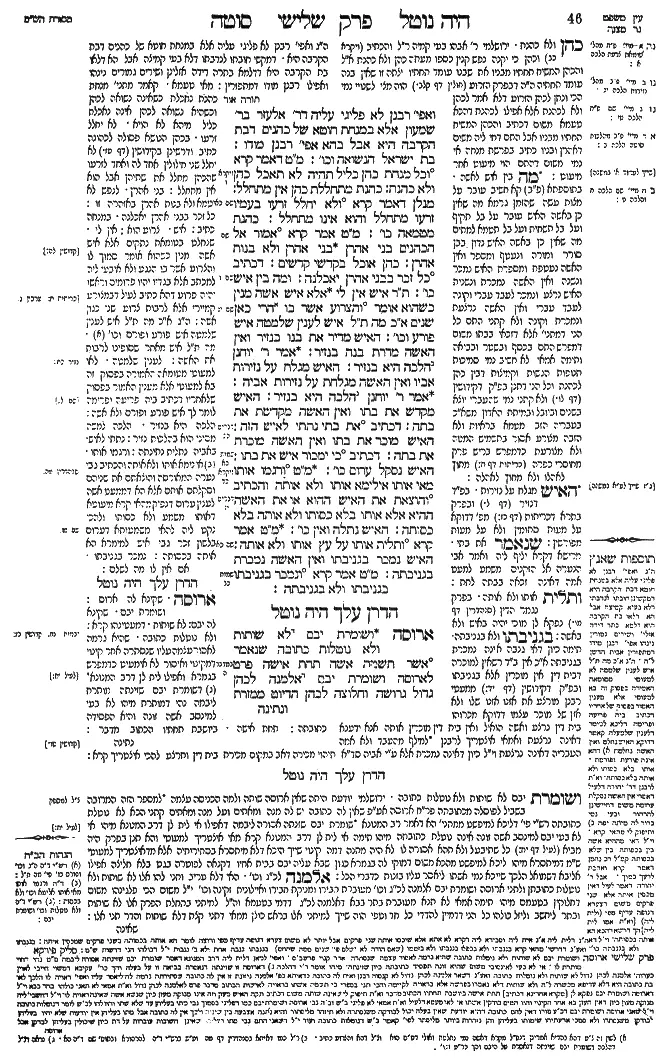
Sotah 23b - Guemara
ואפי' רבנן לא פליגי עליה דר' אלעזר בר' שמעון אלא במנחת חוטא של כהנים דבת הקרבה היא אבל בהא אפי' רבנן מודו בת ישראל הנשואה וכו' מ"ט דאמר קרא (ויקרא ו, טז) וכל מנחת כהן כליל תהיה לא תאכל כהן ולא כהנת כהנת מתחללת כהן אין מתחלל מנלן דאמר קרא (ויקרא כא, טו) ולא יחלל זרעו בעמיו זרעו מתחלל והוא אינו מתחלל כהנת מטמאה כו' מ"ט אמר קרא (ויקרא כא, א) אמור אל הכהנים בני אהרן בני אהרן ולא בנות אהרן כהן אוכל בקדשי קדשים דכתיב (ויקרא ו, יא) כל זכר בבני אהרן יאכלנה ומה בין איש כו' ת"ר איש אין לי אלא איש אשה מנין כשהוא אומר (ויקרא יג, מה) והצרוע אשר בו הרי כאן שנים א"כ מה ת"ל איש לענין שלמטה איש פורע וכו' האיש מדיר את בנו בנזיר ואין האשה מדרת בנה בנזיר אמר ר' יוחנן הלכה היא בנזיר האיש מגלח על נזירות אביו ואין האשה מגלחת על נזירות אביה אמר ר' יוחנן הלכה היא בנזיר האיש מקדש את בתו ואין האשה מקדשת את בתה דכתיב (דברים כב, טז) את בתי נתתי לאיש הזה האיש מוכר את בתו ואין האשה מוכרת את בתה דכתיב (שמות כא, ז) כי ימכור איש את בתו האיש נסקל ערום כו' מ"ט (ויקרא כד, יד) ורגמו אותו מאי אותו אילימא אותו ולא אותה והכתיב (דברים יז, ה) והוצאת את האיש ההוא או את האשה ההיא אלא אותו בלא כסותו ולא אותה בלא כסותה האיש נתלה ואין כו' מ"ט אמר קרא (דברים כא, כב) ותלית אותו על עץ אותו ולא אותה האיש נמכר בגניבתו ואין האשה נמכרת בגניבתה מ"ט אמר קרא (שמות כב, ב) ונמכר בגניבתו בגניבתו ולא בגניבתה
הדרן עלך היה נוטל
מתני׳ ארוסה ושומרת יבם לא שותות ולא נוטלות כתובה שנאמר (במדבר ה, כט) אשר תשטה אשה תחת אישה פרט לארוסה ושומרת יבם אלמנה לכהן גדול גרושה וחלוצה לכהן הדיוט ממזרת
Comments from Rashi on Masechet Sotah Page 23b
ה"ג ואפי' רבנן לא פליגי עליה אלא במנחת חוטא של כהנים דבת הקרבה היא . דמקשי חובתו לנדבתו דלא בעי קמיצה אבל הא דלאו בת הקרבה היא דדלמא בתרה דידה אזלינן ושירים גמורים נינהו ואפילו רבנן מודו דמתפזרין: מאי טעמא . קאמר מתני' מנחת כהנת נאכלת כשאינה נשואה לכהן וכשהיא נשואה לכהן אינה נאכלת כליל מיהא לא הויא: לא יחלל זרעו . בכהן הנושא פסולה לכהונה כתיב ודרשינן בקידושין (דף עז.) לא יחלל שני חילולין אחד לה ואחד לזרעו שהכהן מחלל את שתיהן אבל הוא אין מתחלל: בני אהרן . לנפש לא יטמא ולא בנות אהרן באזהרה זו: כל זכר בבני אהרן יאכלנה . במנחה כתיב: איש . צרוע הוא: אין לי . שנחלט בטומאת נתקים אלא איש אשה מנין כשהוא אומר סמוך לו והצרוע אשר בו הנגע ולא איבעי ליה למכתב אלא בגדיו יהיו פרומים וראשו יהיה פרוע דהא כתיב לעיל דבמצורע קמיירי אלא לרבות צרוע שני כגון אשה: ה"ג א"כ מה ת"ל איש לענין שלמטה איש פורע ופורם וכו' . מה ת"ל איש מאחר שסופינו לרבות את האשה: לענין שלמטה . לאו למעוטי מטומאה האמורה בפסוק זה בא למעוטי אלא מענין האמור בפסוק שלאחריו דכתיב ביה פריעה ופרימה לומר לך איש פורע ופורם ולא אשה: הלכה היא בנזיר . הלכה למשה מסיני הוא בהלכות נזיר: נתתי לאיש . באביה נתלית נתינתה: ורגמו אותו . אי נימא אותו ולא אותה והכתיב גבי נערה המאורסה והוצאתם את שניהם וסקלתם אותם אלא הא דממעט אשה לענין ערום דנפיק מהאי קרא מיעוטא דאותו משמע ולא כסותו ולהכי נקט ליה להאי משמעותא דערום בלשון זכר גבי איש למימרא הא אותה בכסותה: נמכר בגניבתו . אם אין לו מה לשלם: מתני' ארוסה . שקינא לה ארוס: ושומרת יבם . שקינא לה יבם: לא שותות . דמעטינהו קרא: ולא נוטלות כתובה . שהיא גרמה לאסור עצמה עליו שנסתרה אחר קינוי דמקינוי ואיסור לא אימעיט כדמפרש בגמרא ואפילו לית לן דרב המנונא דשומרת יבם שזינתה מותרת ליבמה נהי דמותרת מיהו לא בעי למינסב אשה זונה והיא הפסידה כתובתה: תחת אישה . ביושבת תחתיו הכתוב מדבר:
Comments from Tosafot - Sotah 23b
כהן ולא כהנת . ירושלמי ר' אבהו בעי קמיה ר"ל והכתיב (ויקרא כב) וכהן כי יקנה נפש קנין כספו מעתה כהן ולא כהנת א"ל והכהן המשיח תחתיו מבניו את שבנו עומד תחתיו יצתה זו שאין בנה עומד תחתיה ה"ה דבפרק הזרוע (חולין דף קלב.) הוה מצי לשנויי נמי הכי ונתן לכהן הזרוע דלא אמר לכהן ולא לכהנת אלא אפילו לכהנת דהכא טעמא משום דכתיב והכהן המשיח תחתיו מבניו אבל התם דחי ליה משום דאהרן ובניו כתיב בפרשת מנחה אי נמי משום דהתם הוי מיעוט אחר מיעוט: מה בין איש לאשה . בתוספתא (פ"ב) קא חשיב עובר על מצות עשה שהזמן גרמא מה שאין כן באשה האיש עובר על בל תקיף ועל בל תשחית ועל בל תטמא למתים מה שאין כן באשה האיש נדון בבן סורר ומורה ונעטף ומספר ואין האשה נעטפת ומספרת האיש נמכר ונשנה ואין האשה נמכרת ונשנית האיש נרצע ונמכר לעבד עברי וקונה לעבד עברי ואין האשה נרצעת ונמכרת וקונה ולא קתני התם כל הני דמתני' אלא דזכאי בבתו משום דמפרש התם בכסף ובשטר ובביאה ותימה אמאי לא חשיב נמי סמיכות תנופות הגשות וקמיצות דבין כהן לכהנת וכל הני דתנן בפ"ק דקידושין (דף לו.) ולא קתני נמי שהעברי יוצא בשנים וביובל ובמיתת האדון משא"כ בעבריה הזב מטמא בראיות ולא הזבה מצורע אסור בתשמיש המטה ולא מצורעת כדמפרש בריש פרק מחוסרי כפרה (כריתות דף ח:) מחוץ לאהלו ולא מחוץ לאהלה: האיש מגלח על נזירות . בפ"ד דנזיר (דף ל.) ובפרק בתרא דכריתות (דף כז:) מפ' דדוקא על מעות סתומין ולא על מעות מפורשין: שנאמר את בתי . מרישא דקרא יליף ליה ואמר אבי הנערה אל הזקנים משמע למעט אמה דאינה זכאה בבתה לתת: ותלית אותו ולא אותה . בפרק נגמר הדין (סנהדרין דף מו.) נפקא לן מוכי יהיה באיש ולא באשה: בגניבתו ולא בגניבתה . תימה כיון דאי גנבה אינה נמכרת בגניבתה א"כ אין ב"ד רשאין למוכרה דבית דין אין מוכרין אלא בגניבתו ובפ"ק דקידושין (דף יד:) ממעטי רבנן מורצע את אזנו אזנו שלו ולא אזן של מוכר עצמו דדוקא מכרוהו בית דין נרצע ואשה הואיל ואין בית דין מוכרין אותה אנא ידענא דאינה נרצעת ואמאי איצטריך לרבנן למילף מהעבד ולא אמה העבריה דאינה נרצעת וי"ל כיון דאינה נמכרת אלא ע"י אביה סד"א תיהוי מכירה דאב במקום מכירת בית דין ותרצע להכי איצטריך קרא: מתני' ושומרת יבם לא שותות ולא נוטלות כתובה . ירושלמי יודעת היתה שאין ארוסה שותה ולמה הכניסה עצמה למספר הזה המרובה בשביל לפוסלה מכתובתה פר"ח ארוסה אע"פ שאין לה כתובה יש לה מנה ומאתים ועל מנה ומאתים קתני הכא לא נוטלת כתובתה רש"י פי' דליכא למיפשט ממתני' הא דאמר רב המנונא שומרת יבם שזנתה אסורה ליבמה דאפילו אי לית לן דרב המנונא מיהו אי לא בעי יבם למינסב אשה זונה אינה נוטלת כתובתה מיהו תימה אי לית לן דרב המנונא קרא מאי איצטריך למעוטי והא תנן בפרק היה מביא (לעיל סוטה דף יח:) כל שתיבעל ולא תהא אסורה לו. לא היה מתנה דמה קינוי שייך היכא דלא מיתסרא בסתירותיה אלא מדאיצטריך למעוטי ש"מ דמיתסרא מיהו ליכא למיפשט מהכא משום דמוקי לה בגמרא כגון שבא עליה יבם בבית אחיו דקנאה לפוטרה בגט בלא חליצה אפילו אליבא דשמואל הלכך שייכא נמי אשתו ליאסר עליו בזנות כדברי הכל: אלמנה לכ"ג וכו' . האי דלא עריב ותני להו אלו לא שותות ולא נוטלות כתובתן ולתני ארוסה ושומרת יבם אלמנה לכ"ג וכו' מעוברת חבירו ומניקת חבירו ואיילונית זקינה וכו' י"ל משום הכי פלגינהו משום דחלוקין בטעמם מיהו תימה אמאי לא תנא מעוברת בתר בבא דאלמנה לכ"ג דדמי בטעמא וה"ל למיתני בתחלת הפרק אלו לא שותות ובתר ליחשב וליזל כולהו כל הני דדמיין להדדי כל חד וטפי הוה שייך למיתני אלו בראש כולן ממאי דתני קצת דלא שותות והדר תני אלו:
Sotah 23b - Mishnah translated into english
And even the Rabbis do not disagree with Rabbi Elazar, son of Rabbi Shimon, except with regard to the meal-offering of a sinner who is a priest, as they hold that it is fit to be sacrificed in its entirety without removing a handful. However, in this case, i.e., in the case of the meal-offering of a sota who is married to a priest, even the Rabbis agree that its remainder is scattered on the place of the ashes, since the handful is removed from the offering.
§ The mishna states: In the case of an Israelite woman who is married to a priest, her meal-offering is burned; and in the case of the daughter of a priest who is married to an Israelite, her meal-offering is eaten. The Gemara asks: What is the reason for this? This is as the verse states: “And every meal-offering of a priest shall be completely burned; it shall not be eaten” (Leviticus 6:16). One can infer that this applies to a priest, but not to the daughter of a priest.
The mishna states: The daughter of a priest can become disqualified from marrying a priest and from partaking of teruma by engaging in sexual intercourse with someone forbidden to her, but a priest does not become desacralized by engaging in sexual intercourse with a woman forbidden to him. The Gemara asks: From where do we derive this? It is as the verse states with regard to a priest who marries a woman forbidden to him: “And he shall not disqualify his offspring among his people” (Leviticus 21:15), indicating that his offspring from forbidden intercourse are desacralized, but he is not personally desacralized through his actions.
The mishna states: A daughter of a priest may become impure with impurity imparted by a corpse, but a priest may not. The Gemara asks: What is the reason for this? The Gemara answers: The verse states: “Speak to the priests, the sons of Aaron, and say to them: None shall become impure for the dead among his people” (Leviticus 21:1). The verse indicates that this applies to the sons of Aaron and not to the daughters of Aaron.
The mishna states: A priest may eat from offerings of the most sacred order, but a daughter of a priest may not eat from offerings of the most sacred order. The Gemara explains: This is derived as it is written with regard to the meal-offering, which is an offering of the most sacred order: “Every male among the children of Aaron may eat of it” (Leviticus 6:11).
§ The mishna states: And what are the halakhic differences between a man and a woman? A man lets his hair grow and rends his garments when he is a leper, but a woman does not. The Sages taught: The verse states: “He is a leprous man, he is impure” (Leviticus 13:44). I have derived only that the halakhot of a confirmed leper apply to a man; from where do I derive that they apply to a woman? When it says in the subsequent verse: “And the leper in whom the plague is, his clothes shall be rent, and the hair of his head shall grow wild and he shall cover his upper lip; and he shall cry: Impure, impure” (Leviticus 13:45), there are two individuals indicated here, as this verse did not need to restate “and the leper,” as the subject of the verse was clear from the previous verse.
If so, what is the meaning when the verse states: A leprous “man”? This is referring to the matter of rending one’s clothes and letting one’s hair grow wild, which is stated in the verse below, and teaches that a man lets the hair of his head grow and rends his garments, but a woman does not.
The mishna states: A man can vow that his minor son shall be a nazirite, but a woman cannot vow that her son shall be a nazirite. Rabbi Yoḥanan says: This is a halakha transmitted orally to Moses from Sinai with regard to the nazirite, and it is not derived from the Bible. The mishna states: A man can shave at the culmination of his naziriteship by using offerings designated for his father’s naziriteship, but a woman cannot shave by using offerings designated for her father’s naziriteship. Rabbi Yoḥanan says: This is a halakha transmitted orally to Moses from Sinai with regard to the nazirite, and it is not derived from the Bible.
The mishna states: A man can betroth his daughter to another man while she is a minor, but a woman cannot betroth her daughter. The Gemara explains: This is as it is written: “And the father of the maiden shall say to the elders: I gave my daughter to this man as a wife” (Deuteronomy 22:16), indicating that it is only the father who has the power to betroth his daughter. The mishna states: A man can sell his daughter as a maidservant but a woman cannot sell her daughter. The Gemara explains: This is derived as it is written: “And if a man sells his daughter to be a maidservant” (Exodus 21:7), indicating that only a man can sell his daughter, while a woman cannot.
§ The mishna states: A man is stoned naked, but a woman is not stoned naked. The Gemara asks: What is the reason for this? The Gemara answers: The verse states: “And let the entire congregation stone him” (Leviticus 24:14). What does the term “him” come to exclude? If we say this means that they stone him but not her, i.e., that a woman is not stoned at all, but isn’t it written: “And you shall take out that man or that woman, who did this evil thing, to your gates, that man or that woman; and you shall stone them with stones, and they shall die” (Deuteronomy 17:5). Rather, the term “him” excludes his garment, indicating that he is stoned without his garment. And a woman is excluded from this halakha, as one may infer from the term “him” that they do not stone her without her garment.
The mishna states: A man is hanged, but a woman is not hanged. The Gemara asks: What is the reason for this? The verse states: “And if a man has committed a sin worthy of death, and he is put to death, and you shall hang him on a tree” (Deuteronomy 21:22). The verse indicates that one should hang “him,” a man, but not her, a woman.
The mishna states: A man is sold for his committing an act of theft, but a woman is not sold for her committing an act of theft. The Gemara asks: What is the reason for this? The verse states: “If the sun rose upon him, there is blood-guilt for him; he shall make restitution; if he has nothing, then he shall be sold for his theft” (Exodus 22:2). The verse indicates that he is sold for his theft, but she is not sold for her theft.
MISHNA: With regard to a betrothed woman who secluded herself with another man after being warned by her betrothed, and a widow waiting for her brother-in-law [yavam] to perform levirate marriage who secluded herself with another man after being warned by her yavam, they neither drink the bitter water nor collect payment of their marriage contracts. The reason they are not entitled to payment of their marriage contracts is that the betrothed woman became forbidden to her betrothed or the widow became forbidden to her yavam due to her own actions of entering into seclusion with the paramour. And the fact that they do not drink the bitter water is as it is stated: “This is the law of jealousy, when a wife, while under her husband, goes astray, and is defiled” (Numbers 5:29). The verse excludes a betrothed woman and a widow awaiting her yavam; since they are not yet married, neither is considered as “under her husband.”
The mishna delineates cases where the woman’s marriage was prohibited in the first place: With regard to a widow who was married to a High Priest, or a divorcée or ḥalutza who was married to a common priest, or a mamzeret
Traduction : The William Davidson digital edition of the Koren Noé Talmud, with commentary by Rabbi Adin Even-Israel Steinsaltz.