 Talmud Bavli
The learning on the whole site is dedicated : L'ilui Nishmat יוסף בן מושה
The learning on the whole site is dedicated : L'ilui Nishmat Chemouel Eliezer ben Batcheva
The learning on the whole site is dedicated : L'ilui Nishmat Jamila bat Chlomo Abensour
Sotah 4a : Youtube
Daf TubeYoutube
2 video classes :
Sotah Page 4a
Sotah 4a - Guemara
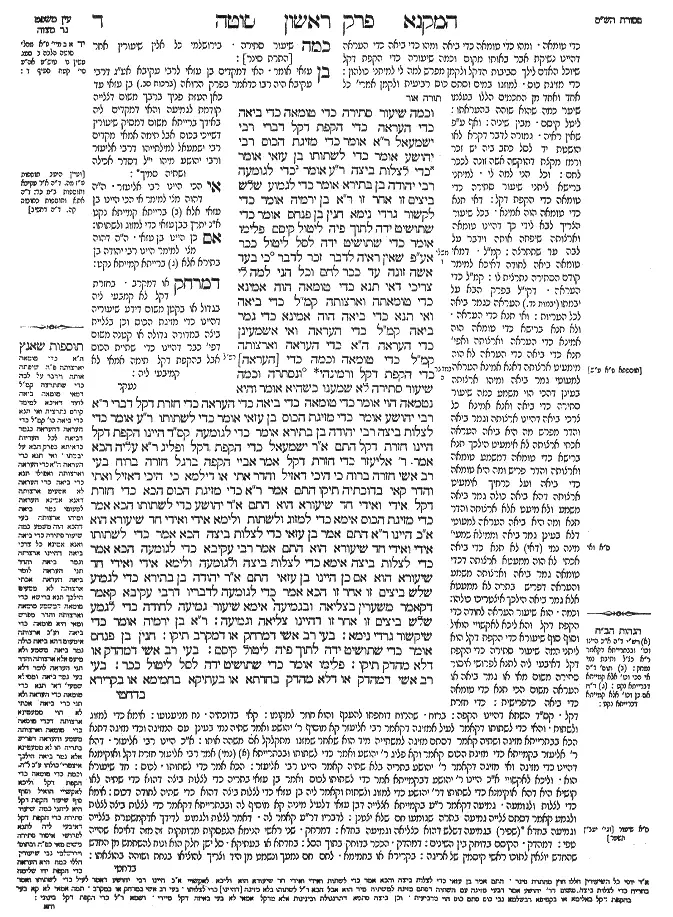
וכמה שיעור סתירה כדי טומאה כדי ביאה כדי העראה כדי הקפת דקל דברי רבי ישמעאל ר"א אומר כדי מזיגת הכוס רבי יהושע אומר כדי לשתותו בן עזאי אומר כדי לצלות ביצה ר"ע אומר כדי לגומעה רבי יהודה בן בתירא אומר כדי לגמוע שלש ביצים זו אחר זו ר"א בן ירמיה אומר כדי לקשור גרדי נימא חנין בן פנחס אומר כדי שתושיט ידה לתוך פיה ליטול קיסם פלימו אומר כדי שתושיט ידה לסל ליטול ככר אע"פ שאין ראיה לדבר זכר לדבר (משלי ו, כו) כי בעד אשה זונה עד ככר לחם וכל הני למה לי צריכי דאי תנא כדי טומאה הוה אמינא כדי טומאתה וארצותה קמ"ל כדי ביאה ואי תנא כדי ביאה הוה אמינא כדי גמר ביאה קמ"ל כדי העראה ואי אשמעינן כדי העראה ה"א כדי העראה וארצותה קמ"ל כדי טומאה וכמה כדי [העראה] כדי הקפת דקל ורמינהי (במדבר ה, יג) ונסתרה וכמה שיעור סתירה לא שמענו כשהוא אומר והיא נטמאה הוי אומר כדי טומאה כדי ביאה כדי העראה כדי חזרת דקל דברי ר"א רבי יהושע אומר כדי מזיגת הכוס בן עזאי אומר כדי לשתותו ר"ע אומר כדי לצלות ביצה רבי יהודה בן בתירא אומר כדי לגומעה קס"ד היינו הקפת דקל היינו חזרת דקל התם א"ר ישמעאל כדי הקפת דקל ופליג ר"א עליה הכא אמר ר' אליעזר כדי חזרת דקל אמר אביי הקפה ברגל חזרה ברוח בעי רב אשי חזרה ברוח כי היכי דאזיל והדר אתי או דילמא כי היכי דאזיל ואתי והדר קאי בדוכתיה תיקו התם אמר ר"א כדי מזיגת הכוס הכא כדי חזרת דקל אידי ואידי חד שיעורא הוא התם א"ר יהושע כדי לשתותו הכא אמר כדי מזיגת הכוס אימא כדי למזוג ולשתות ולימא אידי ואידי חד שיעורא הוא א"כ היינו ר"א התם אמר בן עזאי כדי לצלות ביצה הכא אמר כדי לשתותו אידי ואידי חד שיעורא הוא התם אמר רבי עקיבא כדי לגומעה הכא אמר כדי לצלות ביצה אימא כדי לצלות ביצה ולגומעה ולימא אידי ואידי חד שיעורא הוא אם כן היינו בן עזאי התם א"ר יהודה בן בתירא כדי לגמוע שלש ביצים זו אחר זו הכא אמר כדי לגומעה לדבריו דרבי עקיבא קאמר דקאמר משערין בצליאה ובגמיעה אימא שיעור גמיעה לחודה כדי לגמע שלש ביצים זו אחר זו דהיינו צליאה וגמיעה ר"א בן ירמיה אומר כדי שיקשור גרדי נימא בעי רב אשי דמרחק או דמקרב תיקו חנין בן פנחס אומר כדי שתושיט ידה לתוך פיה ליטול קיסם בעי רב אשי דמהדק או דלא מהדק תיקו פלימו אומר כדי שתושיט ידה לסל ליטול ככר בעי רב אשי דמהדק או דלא מהדק בחדתא או בעתיקא בחמימא או בקרירא
Comments from Rashi on Masechet Sotah Page 4a
כדי טומאה . ומהו כדי טומאה כדי ביאה ומהו כדי ביאה כדי העראה דהיינו נשיקת אבר באותו מקום וכמה שיעורה כדי הקפת דקל שיוכל האדם לילך סביבות הדקל ולקמן מפרש למה לי למיתני כולהון: כדי מזיגת כוס . למוזגו במים וסתם כוס רביעית ולקמן אמרי' כל אחד ואחד מן החכמים הללו בעצמו שיער כמה שהוא שוהה בהעראתו: ליטל קיסם . מבין שיניה: ואף ע"פ שאין ראיה . גמורה לדבר דקרא לאו הושטת יד לסל כתב ביה יש זכר ורמז מקצת דהוקשה אשה זונה לככר לחם: וכל הני למה לי . למיתני ברישא ליתני שיעור סתירה כדי טומאה כדי הקפת דקל: דאי תנא כדי טומאה הוה אמינא . בכל שיעור הצריך לבא לידי כך דהיינו טומאה וארצותה שיפתה אותה וידבר על לבה עד שתתרצה: קמ"ל . דמאי טומאה ביאה לחודה דאיכא למימר קודם הסתירה נתרצית לו: קמ"ל כדי העראה . דקי"ל בפרק הבא על יבמתו (יבמות נד.) העראה כגמר ביאה לכל העריות: ואי תנא כדי העראה . ולא תנא ברישא כדי טומאה הוה אמינא כדי העראה וארצותה ואפי' תנא כדי ביאה כדי העראה לא הוה מימעיט ארצותה דאנא אמינא העראה למעוטי גמר ביאה ומיהו ארצותה בעינן דהכי הוי משמע כמה שיעור סתירה כדי ביאה ואנא אמינא כל צרכי ביאה דהיינו ארצותה וגמר ביאה והדר מפרש מה היא ביאה העראה אכתי ארצותה לא אימעיט הילכך תנא ברישא כדי טומאה דמשמע טומאה וארצותה והדר פריש ומה היא טומאה כדי ביאה ועל כרחיך אימעיט ארצותה דהא ביאה כולה גמר ביאה משמע ולא מיעט אלא ארצותה והדר תנא ומה היא ביאה העראה למעוטי דלא בעינן גמר ביאה וממילא שמעי' מינה נמי (דאי) לא תנא כדי ביאה אכתי לא הוה ממעטא ארצותה דכדי טומאה גמר ביאה וארצותה משמע והעראה דפריש בתרה לא ממעטא אלא גמר ביאה הילכך איצטריכו כולהו: וכמה . הוא שיעור העראה לחודה כדי הקפת דקל והא ליכא לאקשויי הואיל וסוף סוף שיעורא כדי הקפת דקל הוא ליתני כמה שיעור סתירה כדי הקפת דקל דאיבעי ליה לתנא לפרושי איסור סתירה משום מאי או גמר ביאה או העראה משום הכי תנא כדי טומאה כדי ביאה כדפרישית: כדי חזרת דקל . קס"ד השתא דהיינו הקפה: ברוח . שהרוח דוחפתו להענף והוא חוזר למקומו: קאי בדוכתיה . נח מניענועו: אימא כדי למזוג ולשתות . והאי כדי לשתותו דקאמר לעיל אמזיגה דקאמר רבי אליעזר קא מוסיף ר' יהושע ואמר שתיה נמי בעינן עם המזיגה וכדי מזיגה דתנא הכא בבתריתא מזיגה ושתיה קאמר דסתם מזיגה למשתייה מיד הוא שאחר שמזגו מתקלקל אם משהה אותו: א"כ היינו רבי אליעזר . דהא ר' אליעזר בקמייתא כדי מזיגת הכוס קאמר וקא פליג ר' יהושע ואמר כדי לשתותו ובבתרייתא (נמי) אמר רבי אליעזר חזרת דקל ואוקימנא דהיינו כדי מזיגה ואי מזיגה דקאמר ר' יהושע בתריה בלא שתיה קאמר היינו רבי אליעזר: הכא אמר כדי לשתותו . לכוס: חד שיעורא הוא . וליכא לאקשויי א"כ היינו ר' יהושע דבקמייתא אמר כדי לשתותו לכוס ואמר בן עזאי בתריה כדי לצלות ביצה דהוא כדי שתיה לאו קושיא היא דהא אוקימנא כדי לשתותו דר' יהושע כדי למזוג ולשתות וקאמר ליה בן עזאי כדי לצלות ביצה דהוא כדי שתיה לחודה דכוס: אימא כדי לצלות ולגומעה . גמיעה דקאמר ר"ע בקמייתא אצלייה דבן עזאי דלעיל מיניה קא מוסיף לה ובבתרייתא דקאמר כדי לצלות ביצה לצלות ולגמע קאמר דסתם צלייה גמיעה בתרה שגומעו חם שלא יצטנן: לדבריו דר"ע קאמר לה . דאמר לצלות ולגמוע לדידך אדקמשערת בצלייה וגמיעה בחדא (שפיר) בגמיעה דשלש דהוא כצליאה וגמיעה בחדא: דמרחק . שני ראשי הנימא הנפסקות מרוחקות זה מזה דאיכא שהייה טפי: דמהדק . הקיסם בדוחק בין השינים: דמהדק . הככר בדוחק בתוך הסל: בחדתא או בעתיקא . סל ישן חלק הוא ונוח להשתמש מן החדש שהחדש יוצאין לתוכו ראשי קיסמין של אריגה: בקרירא או בחמימא . לחם חם נמעך ונשמט מן היד וצריך להוציאו בנחת ושוהה בהוצאתו:
Comments from Tosafot - Sotah 4a
כמה שיעור סתירה . בירושלימי כל אלין שיעורין אחר [התרת סינר]: בן עזאי אומר . האי דמקדים בן עזאי לרבי עקיבא אע"ג דרבי עקיבא היה רבו כדאמר בפרק הרואה (ברכות סב.) בן עזאי עד כאן העזת פניך ברבך משום דצלייה קודמת לגמיעה והאי דמקדים ליה באידך ברייתא משום דמסיק שיעורין דשייכי בכוס אבל תימה אמאי מקדים רבי ישמעאל למילתייהו דרבי אליעזר ורבי יהושע מיהו י"ל דסדר אכילה ושתיה סמיך: אי הכי היינו רבי אליעזר . ה"ה דהוה מצי למימר אי הכי היינו בן עזאי אלא ברייתא קמייתא נקט א"נ יתרץ בבן עזאי כדי למזוג ולשתותו: אם כן היינו בן עזאי . ה"ה דהוה מצי למימר היינו רבי יהודה בן בתירא אלא ברייתא קמייתא נקט: דמרחק או דמקרב . בחזרת דקל לא קמבעי ליה בגדול או בקטן משום דידע שיעוריה דהיינו כדי מזיגת הכוס וכן בצליית ביצה במדורה גדולה או קטנה משום דפי' כבר דהיינו כדי שתיית הכוס אבל בהקפת דקל תימה אמאי לא קמיבעי ליה:
Sotah 4a - Mishnah translated into english
The baraita clarifies: And what is the measure of seclusion, i.e., how is the seclusion of a sota defined? The measure of seclusion is equivalent to the time needed for defilement, which is equivalent to the time needed to perform intercourse, which is equivalent to the time needed to perform the initial stage of intercourse.
The baraita quotes several practical examples of this period of time. This is equivalent to the time needed for circling a palm tree; this is the statement of Rabbi Yishmael. Rabbi Eliezer says: This is equivalent to the time needed for mixing a cup of wine with water, with the total volume of a quarter-log. Rabbi Yehoshua says: This is equivalent to the time needed to drink that cup of wine.
The baraita quotes several more examples. Ben Azzai says: This is equivalent to the time needed to roast an egg. Rabbi Akiva says: This is equivalent to the time needed to swallow it. Rabbi Yehuda ben Beteira says: This is equivalent to the time needed to swallow three eggs one after another. Rabbi Elazar ben Yirmeya says: This is equivalent to the time needed for a weaver [gardi] to tie a string [nima].
Ḥanin ben Pineḥas says: This is equivalent to the time that a woman may need to extend her hand into her mouth to remove a wood chip from between her teeth. The Sage Peleimu says: This is equivalent to the time that she may need to extend her hand into a basket in order to take a loaf of bread. He adds: Although there is no explicit proof from a verse for the matter, there is an allusion to the matter from the verse: “For on account of a harlot a man is brought to a loaf of bread” (Proverbs 6:26).
The baraita stated that the measure of seclusion is equivalent to the time needed for defilement, which is equivalent to the time needed to perform sexual intercourse, which is equivalent to the time needed to perform the initial stage of intercourse, and it added nine practical examples of that length of time. The Gemara asks: And why do I need all these times when one should have sufficed?
The Gemara answers: All three are necessary, as if the baraita taught only: Equivalent to the time needed for defilement, I would say that the measure is equivalent to the time for her defilement and her appeasement, i.e., the amount of time needed to convince her to engage in sexual intercourse. Therefore, the baraita teaches us that the measure is equivalent to the time needed to perform sexual intercourse alone.
And if the baraita taught only: The measure of seclusion is equivalent to the time needed to perform sexual intercourse, I would say that the measure is equivalent to the time needed for the completion of the act of intercourse. Therefore, the baraita teaches us that the measure is equivalent to the time needed to perform the initial stage of intercourse.
And if the baraita taught only: The measure of seclusion is equivalent to the time needed to perform the initial stage of intercourse, I would say that the measure is equivalent to the time needed to perform the initial stage of intercourse and her appeasement. Therefore, the baraita teaches us that the measure is equivalent to the time needed for defilement, which does not include appeasement. The baraita concludes by offering a practical measure: And what is the measure of the equivalent amount of time needed to perform the initial stage of intercourse? It is equivalent to the time needed for circling a palm tree. Other Sages then offered their own practical examples.
And the Gemara raises a contradiction from a different baraita (Tosefta 1:2): The verse states: “And she was defiled secretly” (Numbers 5:13), and we have not heard what is the measure of seclusion. When it says in that verse: “And she was defiled secretly,” you must say that the measure of seclusion is equivalent to the time needed for defilement, which is equivalent to the time needed to perform sexual intercourse, which is equivalent to the time needed to perform the initial stage of intercourse, which is equivalent to the time needed for the returning of a palm tree; this is the statement of Rabbi Eliezer.
The baraita continues: Rabbi Yehoshua says: This is equivalent to the time needed for mixing a cup of wine with water, with the total volume of a quarter-log. Ben Azzai says: This is equivalent to the time needed to drink that cup of wine. Rabbi Akiva says: This is equivalent to the time needed to roast an egg. Rabbi Yehuda ben Beteira says: This is equivalent to the time needed to swallow it.
The Gemara now addresses several contradictions between this baraita and the one quoted earlier. The Gemara first comments: It might enter our mind to say that circling a palm tree is the same as the returning of a palm tree. The Gemara asks: There, in the first baraita, Rabbi Yishmael says it is equivalent to the time needed for circling a palm tree and Rabbi Eliezer disagreed with him, while here, in the second baraita, Rabbi Eliezer himself says it is equivalent to the time needed for the returning of a palm tree; doesn’t this contradict what he stated in the previous baraita?
To resolve this contradiction, Abaye says: These measures are not the same, as circling is referring to the amount of time it takes for one to circle a palm tree by foot, and returning is referring to the amount of time it takes for a palm branch blown by the wind to revert to its prior position.
Rav Ashi asks: This returning of the palm branch by the wind, is this the time only so that it goes forward with the wind and returns to its place one time, not including the time it is still moving back and forth due to the wind? Or perhaps it is the time so that it goes forward with the wind and comes back and returns until it settles in its place. The Gemara states: The question shall stand unresolved.
The Gemara presents another contradiction. There, in the first baraita, Rabbi Eliezer says: This is equivalent to the time needed for pouring a cup of wine. Here, in the second baraita, he says: This is equivalent to the time needed for the returning of a palm tree. The Gemara answers: This and that are one, i.e., the same, measure.
The Gemara presents another contradiction. There, in the first baraita, Rabbi Yehoshua says: This is equivalent to the time needed for drinking a cup of wine. Here, in the second baraita, he says: This is equivalent to the time needed for mixing a cup of wine. The Gemara answers: Say that he requires both together, i.e., he requires an amount of time equivalent to the time needed to both mix and drink a cup of wine. The Gemara asks: Instead of combining the measures, why not let us say that this and that are one measure? The Gemara answers: If so, this is the same as the opinion of Rabbi Eliezer in the first baraita, with whom Rabbi Yehoshua disagrees.
The Gemara presents another contradiction. There, in the first baraita, ben Azzai says: This is equivalent to the time needed to roast an egg. Here, in the second baraita, he says: This is equivalent to the time needed to drink a cup of wine. The Gemara answers: This and that are one measure.
The Gemara presents another contradiction. There, in the first baraita, Rabbi Akiva says: This is equivalent to the time needed to swallow an egg. Here, in the second baraita, he says: This is equivalent to the time needed to roast an egg. The Gemara answers: Say that he requires both together, i.e., he requires an amount of time equivalent to the time needed to roast an egg and to swallow it. The Gemara asks: Instead of combining the measures, why not let us say that this and that are one measure? The Gemara answers: If so, this is the same as the opinion of ben Azzai in the first baraita, with whom Rabbi Akiva disagrees.
The Gemara presents another contradiction. There, in the first baraita, Rabbi Yehuda ben Beteira says: This is equivalent to the time needed to swallow three eggs one after another. Here, in the second baraita, he says: This is equivalent to the time needed to swallow an egg, meaning one egg. The Gemara answers: In the first baraita, he did not state his own opinion, but stated his opinion in accordance with the statement of Rabbi Akiva, who stated that one measures according to the time needed for roasting and swallowing. Rabbi Yehuda responded: Say instead the measure of the time needed for swallowing alone, i.e., an amount of time equivalent to the time needed to swallow three eggs one after another, which is equal to the amount of time necessary for roasting and swallowing, and therefore Rabbi Akiva would not need to include roasting in the measurement.
The Gemara discusses an opinion cited in the first baraita. Rabbi Elazar ben Yirmeya says: This is equivalent to the time needed for a weaver to tie a string. Rav Ashi asks: Is this speaking of where the ends of the string to be tied are far apart from each other, or is it speaking of where they are near to each other? The Gemara states: The question shall stand unresolved.
The Gemara discusses another opinion cited in the first baraita. Ḥanin ben Pineḥas says: This is equivalent to the time that a woman may need to extend her hand into her mouth to remove a wood chip from between her teeth. Rav Ashi asks: Is this speaking of a case where the wood chip is stuck between her teeth, or is it speaking of a case where it is not stuck? The Gemara states: The question shall stand unresolved.
The Gemara discusses another opinion cited in the first baraita. Peleimu says: This is equivalent to the time that a woman may need to extend her hand into a basket in order to take a loaf of bread. Rav Ashi asks: Is this speaking of an occasion where the loaf adheres to the basket, or is it speaking of a case where it does not adhere? Is this speaking of a case where the basket is new, whereby the tips of the shoots forming the basket might restrain the loaf, or this speaking of where the basket is old and smooth, enabling easy removal? Is this speaking of a case where the loaf is hot and therefore softer and may adhere to the basket, or is this speaking of a case where the loaf is cold and easily removed?
Traduction : The William Davidson digital edition of the Koren Noé Talmud, with commentary by Rabbi Adin Even-Israel Steinsaltz.