 Talmud Bavli
The learning on the whole site is dedicated : L'ilui Nishmat אליעזר בן רחל
The learning on the whole site is dedicated : L'ilui Nishmat רינה בת לדיסיה
The learning on the whole site is dedicated : L'ilui Nishmat Yechayahou ben Moche
Sotah 41a : Youtube
Daf TubeYoutube
2 video classes :
Sotah Page 41a
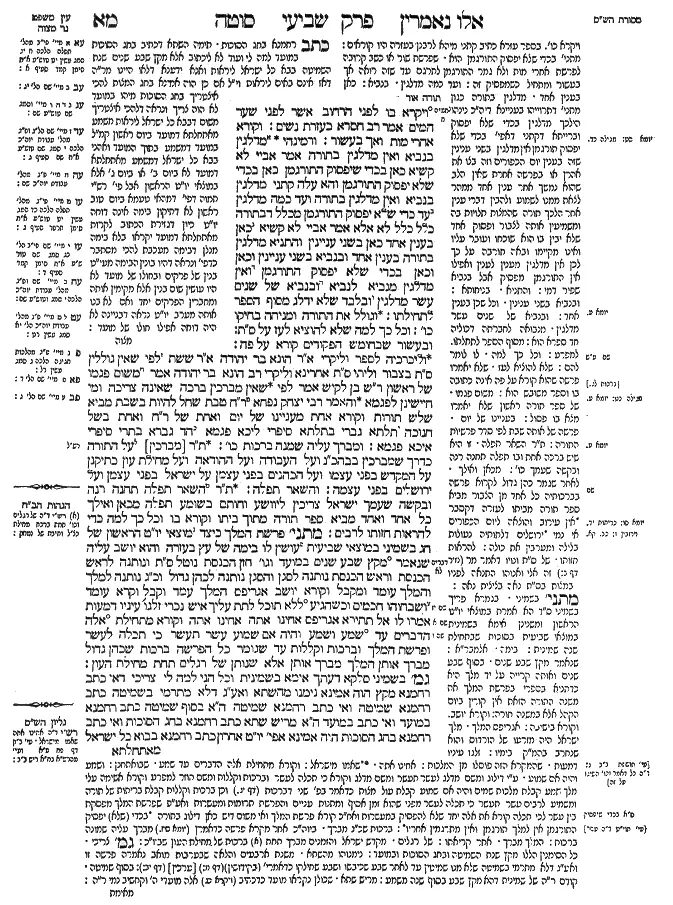
Sotah 41a - Guemara
(נחמיה ח, ג) ויקרא בו לפני הרחוב אשר לפני שער המים אמר רב חסדא בעזרת נשים וקורא אחרי מות ואך בעשור ורמינהי מדלגין בנביא ואין מדלגין בתורה אמר אביי לא קשיא כאן בכדי שיפסוק התורגמן כאן בכדי שלא יפסוק התורגמן והא עלה קתני מדלגין בנביא ואין מדלגין בתורה ועד כמה מדלגין עד כדי שלא יפסוק התורגמן מכלל דבתורה כלל כלל לא אלא אמר אביי לא קשיא כאן בענין אחד כאן בשני עניינין והתניא מדלגין בתורה בענין אחד ובנביא בשני עניינין וכאן וכאן בכדי שלא יפסוק התורגמן ואין מדלגין מנביא לנביא ובנביא של שנים עשר מדלגין ובלבד שלא ידלג מסוף הספר לתחילתו וגולל את התורה ומניחה בחיקו כו' וכל כך למה שלא להוציא לעז על ס"ת ובעשור שבחומש הפקודים קורא על פה וליכרכיה לספר וליקרי א"ר הונא בר יהודה א"ר ששת לפי שאין גוללין ס"ת בצבור וליתי ס"ת אחרינא וליקרי רב הונא בר יהודה אמר משום פגמו של ראשון ר"ש בן לקיש אמר לפי שאין מברכין ברכה שאינה צריכה ומי חיישינן לפגמא והאמר רבי יצחק נפחא ר"ח טבת שחל להיות בשבת מביא שלש תורות וקורא אחת מעניינו של יום ואחת של ר"ח ואחת בשל חנוכה תלתא גברי בתלתא סיפרי ליכא פגמא חד גברא בתרי סיפרי איכא פגמא ומברך עליה שמנה ברכות כו' ת"ר [מברכין] על התורה כדרך שמברכין בבהכ"נ ועל העבודה ועל ההודאה ועל מחילת עון כתיקנן על המקדש בפני עצמו ועל הכהנים בפני עצמן על ישראל בפני עצמן ועל ירושלים בפני עצמה והשאר תפלה ת"ר השאר תפלה תחנה רנה ובקשה שעמך ישראל צריכין ליוושע וחותם בשומע תפלה מכאן ואילך כל אחד ואחד מביא ספר תורה מתוך ביתו וקורא בו וכל כך למה כדי להראות חזותו לרבים מתני׳ פרשת המלך כיצד מוצאי יו"ט הראשון של חג בשמיני במוצאי שביעית עושין לו בימה של עץ בעזרה והוא יושב עליה שנאמר (דברים לא, י) מקץ שבע שנים במועד וגו חזן הכנסת נוטל ס"ת ונותנה לראש הכנסת וראש הכנסת נותנה לסגן והסגן נותנה לכהן גדול וכ"ג נותנה למלך והמלך עומד ומקבל וקורא יושב אגריפס המלך עמד וקבל וקרא עומד ושבחוהו חכמים וכשהגיע (דברים יז, טו) ללא תוכל לתת עליך איש נכרי זלגו עיניו דמעות אמרו לו אל תתירא אגריפס אחינו אתה אחינו אתה וקורא מתחילת (דברים א, א) אלה הדברים עד (דברים ו, ד) שמע ושמע והיה אם שמוע עשר תעשר כי תכלה לעשר ופרשת המלך וברכות וקללות עד שגומר כל הפרשה ברכות שכהן גדול מברך אותן המלך מברך אותן אלא שנותן של רגלים תחת מחילת העון גמ׳ בשמיני סלקא דעתך אימא בשמינית וכל הני למה לי צריכי דאי כתב רחמנא מקץ הוה אמינא נימנו מהשתא ואע"ג דלא מתרמי בשמיטה כתב רחמנא שמיטה ואי כתב רחמנא שמיטה ה"א בסוף שמיטה כתב רחמנא במועד ואי כתב במועד ה"א מריש שתא כתב רחמנא בחג הסוכות ואי כתב רחמנא בחג הסוכות הוה אמינא אפי' יו"ט אחרון כתב רחמנא בבוא כל ישראל
Comments from Rashi on Masechet Sotah Page 41a
ויקרא כו' . בספר עזרא כתיב קתני מיהא לרבנן בעזרה היו קוראים: מתני' בכדי שלא יפסוק המתורגמן הוא . שפרשת שור או כשב קרובה לפרשת אחרי מות ולא גמר התורגמן לתרגם עד שזה רואה אך בעשור ומתחיל כשמפסיק זה: ועד כמה מדלגין . בנביא: כאן בענין אחד . מדלגין בתורה כגון מתני' דתרוייהו בעניינא דיה"כ נינהו הילכך מדלגין בכדי שלא יפסוק וברייתא דקתני דאפי' בכדי שלא יפסוק תורגמן אין מדלגין בשני ענינין שזה בענין יום הכפורים וזה בצו את אהרן או בפרשה אחרת שאין הלב שהוא נמשך אחר ענין אחד ממהר לצאת ממנו לשמוע ולהבין דברי ענין אחר הלכך תורה שהמצות תלויות בה ומשמיעין אותה לצבור ופסוק אחד שלא יבין בו הוא שוכחו ועובר עליו ואינו מקיימו ובאה חורבה על כך לכן אין מדלגין מענין לענין ואפילו אין התורגמן מפסיק אבל בנביא שפיר דמי: והתניא . בניחותא: ובנביא בשני ענינין . וכל שכן בענין אחד: ובנביא של שנים עשר מדלגין . מנבואה לחברתה דכוליה חד ספרא הוא: מסוף הספר לתחלתו . למפרע: וכל כך למה . לו לומר להם: שלא להוציא לעז . שלא יאמרו פרשה שהוא קורא על פה אינה כתובה בו וספר משובש הוא: משום פגמו . של ספר תורה ראשון שלא יאמרו מצא בו פסול: בעניינו של יום . פרשה של אותה שבת לפי סדר פרשיות התורה: ת"ר השאר תפלה . זו היא שיש ברכה אחת ובו תפלה תחנה רנה ובקשה שעמך כו': מכאן ואילך . לאחר שגמר כהן גדול לקרוא פרשה בברכותיה כל אחד מן הצבור מביא ספר תורה מביתו לעזרה דקסבר אין עירוב והוצאה ליום הכפורים אי נמי ירושלים דלתותיה נעולות בלילה ומערבין את כולה: להראות חזותו . של ס"ת ונויו דאמר מר (נזיר דף ב:) זה אלי ואנוהו התנאה לפניו במצות בס"ת נאה בציצית נאה: מתני' בשמיני . בגמרא פריך בשמיני ס"ד הא אמרת במוצאי יו"ט הראשון ומשנינן אימא בשמינית במוצאי שביעית בסוכות שבתחילת שנה שמינית: בימה . אלמבר"א: שנאמר מקץ שבע שנים . בסוף שבע שנים ואותה קרייה על יד מלך היא כדתניא בספרי בפרשת המלך את משנה התורה הזאת אין קורין ביום הקהל אלא במשנה תורה: וקורא יושב . וקורא בישיבה: אגריפס המלך . מלך ישראל היה מזרעו של הורדוס והוא שנחרב בהמ"ק בימיו: זלגו עיניו דמעות . שהמקרא הזה פוסלו מן המלכות: אחינו אתה . שאמו מישראל: וקורא מתחילת אלה הדברים עד שמע . שבואתחנן: ושמע והיה אם שמוע . ע"י דילוג ומשם מדלג לעשר תעשר ומשם מדלג וקורא כי תכלה לעשר וברכות וקללות ומשם חוזר למפרע וקורא אשימה עלי מלך שמע קבלת מלכות שמים והיה אם שמוע קבלת עול מצות כדאמר בפ' שני דברכות (דף יג.) וכן ברכות וקללות קבלת בריתות של תורה ומשמיע לרבים עשר תעשר כי תכלה לעשר מפני שהוא זמן אסיף ומתנות עניים והפרשת תרומות ומעשרות ואע"פ שפרשת המלך מפסקת בין עשר לכי תכלה קורא את אלה יחד שלא להפסיק במעשרות ואח"כ קורא פרשת המלך ואי משום דיש כאן דילוג בתורה בכדי (שלא) יפסיק התורגמן אין למלך תורגמן ואין מתרגמין אחריו: ברכות שכ"ג מברך . ביוה"כ אחר מקרא פרשה כדאמרן (יומא סח.) מברך עליה שמונה ברכות: המלך מברך . אחר קריאתו: של רגלים . מקדש ישראל והזמנים מברך תחת ברכות של מחילת העון שביו"כ: גמ' צריכי . כל הסימנין הללו מקץ שנת השמיטה ובחג הסוכות ובמועד: נימנוהו מהשתא . משנת ארבעים והלאה שבערבות מואב נאמרה פרשה זו ואע"ג דלא מתרמי בשמיטה שלא מנו שמיטין עד לאחר. שבע שכיבשו ושבע שחילקו כדאמרי' (בקידושין) (דף מ:) [ערכין] (דף יב:): בסוף שמיטה . קודם ר"ה של שמינית דהא מקץ שבע בסוף שנה משמע: מריש שתא . שכולן נקראו מועד כדכתיב (ויקרא כג) אלה מועדי ה' וקחשיב נמי ר"ה:
Comments from Tosafot - Sotah 41a
כתב רחמנא בחג הסוכות . תימה השתא דכתיב בחג הסוכות במועד למה לי ועוד לא ליכתוב אלא מקץ שבע שנים שנת השמיטה בבא כל ישראל ליראות ואנא ידענא דלאו היינו מר"ה דאז אינם באים ליראות וי"ל אם כן הוה אמינא בחג המצות להכי איצטריך בחג הסוכות מיהו במועד לא הוה צריך ונראה דלהכי איצטריך משום דבבא כל ישראל ליראות משמע מאתחלתא דמועד ביום ראשון קמ"ל במועד דמשמע בתוך המועד ואהני בבא כל ישראל דמשמע מאתחלתא דמועד לא ביום ב' או ביום ג' אלא במוצאי יו"ט הראשון אבל פי' רש"י תמוה דפי' דמהאי טעמא ביום טוב ראשון לא דתיקון בימה אינה דוחה יו"ט כיון דגזירת הכתוב לקרות מאתחלתא דמועד יקראו בלא בימה מנלן דבימה מעכבת להכי מסתבר כדפי' ונראה דהיו בונין הבימה מעי"ט בנין של פרקים ובחולו של מועד לא היו עושין שום בנין אלא מקימין אותה ומחברין הפרקים יחד ואם לא בנו אותה מערב יו"ט נראה דבניינה לא היה דוחה אפילו חולו של מועד:
Sotah 41a - Mishnah translated into english
“And he read there before the broad place that was before the Gate of the Water” (Nehemiah 8:3). According to this opinion, the High Priest would read from the Torah in the Temple courtyard. Rav Ḥisda says in response: The baraita also means that the reading takes place in the women’s courtyard.
§ It is taught in the mishna that the High Priest receives the Torah scroll and reads the Torah portion beginning with the verse: “After the death” (Leviticus 16:1), and the portion beginning with the verse: “But on the tenth” (Leviticus 23:26). Since these two portions are not adjacent to each other, the High Priest skips the section between the two portions. The Gemara raises a contradiction from a mishna (Megilla 24a): One may skip sections when reading the haftara in the Prophets, but one may not skip sections when reading in the Torah.
Abaye said: This is not difficult. There, in the mishna in tractate Megilla that teaches that one may not skip, the intention is that one should not skip if the sections are so far apart from one another that the delay caused by doing so will be of such length that the translator who recites the Aramaic translation will conclude his translation before the next section is reached. However, in the case of the mishna here, it is permitted to skip verses because the two passages are in close proximity to one another. The delay caused is of such short length that the translator will still not conclude his translation.
The Gemara challenges this resolution: But isn’t it taught about this mishna in a baraita: One may skip sections when reading in the Prophets, but one may not skip sections when reading in the Torah. And how much may one skip from one passage to another in the Prophets? One may skip when the section skipped is of such short length that when the furling of the scroll is completed the translator will still not have concluded his translation. By inference, when reading in the Torah one may not skip at all.
Rather, Abaye said another explanation: This is not difficult. In the mishna here, it is permitted to skip because both passages pertain to a single topic. There, in the mishna in tractate Megilla that teaches that one may not skip, the halakha is referring to a case where the passages pertain to two different topics.
And this is as it is taught in a baraita: One may skip sections when reading in the Torah when both sections pertain to a single topic, and in the Prophets one may skip from one section to another even if they pertain to two different topics. And both here and there, one may skip only when the section skipped is of such short length that when the furling of the scroll is completed the translator will still not have concluded his translation.
And one may not skip from one book of the Prophets to another book of the Prophets, even if both pertain to the same topic. But among the books of the Twelve Prophets one may skip, provided that one does not skip from the end of the book to its beginning. Rather, if one wishes to read from several of the Twelve Prophets, he must read the passages in the order that they are written.
§ It is taught in the mishna: And he furls the Torah scroll, and places it on his bosom, and says: More than what I have read before you is written here. The Gemara comments: And why must he say all of this? It is so as to not cast aspersions on the Torah scroll, because people might think the portion that he read by heart is not written there.
It is stated in the mishna that he reads by heart the portion beginning with: “And on the tenth,” from the book of Numbers (29:7–11). The Gemara asks: But let him furl the Torah scroll to that portion and read it from the text. Rav Huna bar Yehuda says that Rav Sheshet says: This is not done because one may not furl a Torah scroll in public, out of respect for the congregation.
The Gemara asks: But why not let them bring another Torah scroll that has previously been furled to that portion and read from it? Rav Huna bar Yehuda says: People might then mistakenly think that the second scroll was brought due to a flaw that was found in the first scroll. Rabbi Shimon ben Lakish says: Another scroll is not brought because then the High Priest will need to recite an additional blessing over it, and one may not recite a blessing that is unnecessary.
The Gemara questions Rav Huna bar Yehuda’s answer: But are we really concerned that people will think that there is a flaw in the first scroll? But didn’t Rabbi Yitzḥak Nappaḥa say: When the New Moon of Tevet, which always occurs during Hanukkah, occurs on Shabbat, one brings three Torah scrolls. And he reads from one scroll the topic of the day, i.e., the weekly portion; and from one scroll the portion of the New Moon; and from one scroll the portion of Hanukkah. It is apparent from the statement of Rabbi Yitzḥak Nappaḥa that many Torah scrolls may be used, and there is no concern that people will mistakenly think that one or more has a flaw.
The Gemara answers: When three men read from three scrolls, there is no concern that people will think that one of the scrolls has a flaw, since people assume that it is befitting for each individual to read from his own scroll. However, when one man reads from two different Torah scrolls, there is a concern that people will think that the first scroll has a flaw, and they will not realize that this was done only to avoid forcing the community to wait while the scroll is furled.
§ It is taught in the mishna: And after the reading the High Priest recites eight blessings. The Sages taught that these are the eight blessings: He recites a blessing concerning the Torah in the usual way one recites a blessing in the synagogue, and he recites the three blessings concerning the Temple service, and concerning thanksgiving, and concerning forgiveness for iniquity, and all are recited in accordance with their established forms in the Amida prayer. He recites the blessing concerning the Temple in and of itself, the blessing concerning the priests in and of itself, the blessing concerning the Jewish people in and of itself, and the blessing concerning Jerusalem in and of itself.
With regard to the end of the mishna, which states: And the rest of the prayer, the Sages taught: The text of the rest of the prayer is as follows: A supplication, a song, and a request that Your people, Israel, are in need of redemption. And he concludes the blessing with: Blessed are You, Lord, the One Who hears prayer. From this point forward, each and every person present brings a Torah scroll from his home and reads from it. And why do all these people bring their personal Torah scrolls? Everyone brings his own in order to show its beautiful appearance to the public, as a way of showing fondness for the mitzva.
MISHNA: How is the portion of the Torah that is read by the king recited at the assembly, when all the Jewish people would assemble? At the conclusion of the first day of the festival of Sukkot, on the eighth, after the conclusion of the Sabbatical Year, they make a wooden platform for the king in the Temple courtyard, and he sits on it, as it is stated: “At the end of every seven years, in the Festival of the Sabbatical Year” (Deuteronomy 31:10).
The synagogue attendant takes a Torah scroll and gives it to the head of the synagogue that stands on the Temple Mount. And the head of the synagogue gives it to the deputy High Priest, and the deputy High Priest gives it to the High Priest, and the High priest gives it to the king. And the king stands, and receives the Torah scroll, and reads from it while sitting.
King Agrippa arose, and received the Torah scroll, and read from it while standing, and the Sages praised him for this. And when Agrippa arrived at the verse in the portion read by the king that states: “You may not appoint a foreigner over you” (Deuteronomy 17:15), tears flowed from his eyes, because he was a descendant of the house of Herod and was not of Jewish origin. The entire nation said to him: Fear not, Agrippa. You are our brother, you are our brother.
And the king reads from the beginning of Deuteronomy, from the verse that states: “And these are the words” (Deuteronomy 1:1), until the words: “Hear, O Israel” (Deuteronomy 6:4). And he then reads the sections beginning with: “Hear, O Israel” (Deuteronomy 6:4–9), “And it shall come to pass, if you shall hearken” (Deuteronomy 11:13–21), “You shall tithe” (Deuteronomy 14:22–29), “When you have made an end of the tithing” (Deuteronomy 26:12–15), and the passage concerning the appointment of a king (Deuteronomy 17:14–20), and the blessings and curses (Deuteronomy 28), until he finishes the entire portion.
The same blessings that the High Priest recites on Yom Kippur, the king recites at this ceremony, but he delivers a blessing concerning the Festivals in place of the blessing concerning forgiveness for iniquity.
GEMARA: The mishna states that the assembly takes place on the eighth. The Gemara asks: Does it enter your mind that the assembly takes place on the eighth day of the festival of Sukkot? The mishna clearly states that the ceremony takes place at the conclusion of the first day of the Festival. Rather, say that it takes place during the eighth year of the Sabbatical cycle.
The verse describes in detail when the assembly takes place: “At the end of every seven years, in the Festival of the Sabbatical Year, in the festival of Sukkot, when all Israel comes to appear before the Lord your God” (Deuteronomy 31:10–11). The Gemara asks: And why do I need all these details?
The Gemara answers: All of these details are necessary, as, if the Merciful One had written only “at the end of every seven years” (Deuteronomy 31:10), I would have said that we count from now, i.e., from when this was said, and that the tally of years begins from the fortieth year in the wilderness, even though by this calculation the assembly would not occur in the Sabbatical Year. Therefore, the Merciful One writes: “The Sabbatical Year.”
And if the Merciful One had written only the phrase: At the end of every seven years of the “Sabbatical Year,” I would have said that it takes place at the end of the Sabbatical Year. Therefore, the Merciful One writes: “In the Festival,” and the first Festival following the Sabbatical Year is in the month of Tishrei.
And if the Torah had written only: “At the end of every seven years in the Festival of the Sabbatical Year,” I would have said that it takes place on the festival of Rosh Hashanah, which is on the first day of Tishrei. Therefore, the Merciful One also writes: “In the festival of Sukkot.”
And if the Merciful One had written only: “In the festival of Sukkot,” I would have said that it could refer even to the last day of the Festival. Therefore, the Merciful One also writes: “When all Israel comes” (Deuteronomy 31:11),
Traduction : The William Davidson digital edition of the Koren Noé Talmud, with commentary by Rabbi Adin Even-Israel Steinsaltz.