 Talmud Bavli
Sotah 33a : Youtube
Daf TubeYoutube
2 video classes :
Sotah Page 33a
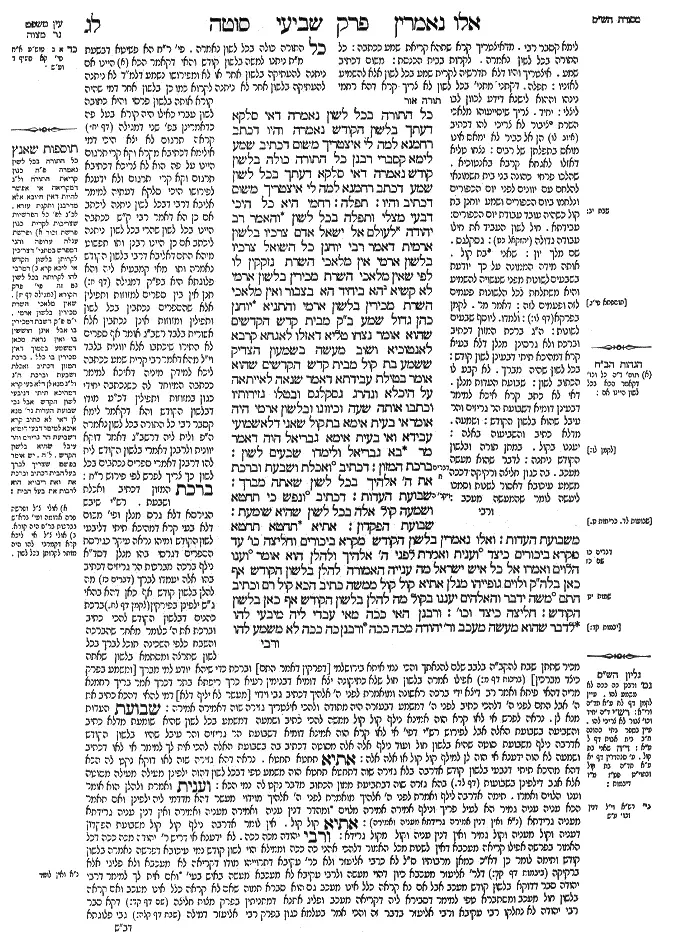
Sotah 33a - Guemara
כל התורה בכל לשון נאמרה דאי סלקא דעתך בלשון הקודש נאמרה והיו דכתב רחמנא למה לי איצטריך משום דכתיב שמע לימא קסברי רבנן כל התורה כולה בלשון קודש נאמרה דאי סלקא דעתך בכל לשון שמע דכתב רחמנא למה לי איצטריך משום דכתיב והיו תפלה רחמי היא כל היכי דבעי מצלי ותפלה בכל לשון והאמר רב יהודה לעולם אל ישאל אדם צרכיו בלשון ארמית דאמר רבי יוחנן כל השואל צרכיו בלשון ארמי אין מלאכי השרת נזקקין לו לפי שאין מלאכי השרת מכירין בלשון ארמי לא קשיא הא ביחיד הא בצבור ואין מלאכי השרת מכירין בלשון ארמי והתניא יוחנן כהן גדול שמע ב"ק מבית קדש הקדשים שהוא אומר נצחו טליא דאזלו לאגחא קרבא לאנטוכיא ושוב מעשה בשמעון הצדיק ששמע בת קול מבית קדש הקדשים שהוא אומר בטילת עבידתא דאמר שנאה לאייתאה על היכלא ונהרג גסקלגס ובטלו גזירותיו וכתבו אותה שעה וכיוונו ובלשון ארמי היה אומר אי בעית אימא בת קול שאני דלאשמועי עבידא ואי בעית אימא גבריאל הוה דאמר מר בא גבריאל ולימדו שבעים לשון ברכת המזון דכתיב (דברים ח, י) ואכלת ושבעת וברכת את ה' אלהיך בכל לשון שאתה מברך שבועת העדות דכתיב (ויקרא ה, א) ונפש כי תחטא ושמעה קול אלה בכל לשון שהיא שומעת שבועת הפקדון אתיא תחטא תחטא משבועת העדות ואלו נאמרין בלשון הקודש מקרא ביכורים וחליצה כו' עד מקרא ביכורים כיצד (דברים כו, ה) וענית ואמרת לפני ה' אלהיך ולהלן הוא אומר (דברים כז, יד) וענו הלוים ואמרו אל כל איש ישראל מה ענייה האמורה להלן בלשון הקודש אף כאן בלה"ק ולוים גופייהו מנלן אתיא קול קול ממשה כתיב הכא קול רם וכתיב התם (שמות יט, יט) משה ידבר והאלהים יעננו בקול מה להלן בלשון הקודש אף כאן בלשון הקודש חליצה כיצד וכו' ורבנן האי ככה מאי עבדי ליה מיבעי להו לדבר שהוא מעשה מעכב ור' יהודה מכה ככה ורבנן כה ככה לא משמע להו
Comments from Rashi on Masechet Sotah Page 33a
לימא קסבר רבי . מדאיצטריך קרא שתהא קריאת שמע ככתבה: כל התורה בכל לשון נאמרה . לקרות בבית הכנסת: משום דכתיב שמע . איצטריך והיו דלא תדרשיה לקרית שמע בכל לשון אלא להשמיע לאזניו: תפלה . דקתני מתני' בכל לשון לא צריך קרא דהא רחמי נינהו וההוא לישנא דידע לכוון לבו ליצלי: יחיד . צריך שיסייעוהו מלאכי השרת ציבור לא צריכי להו דכתיב (איוב לו) הן אל כביר לא ימאס אינו מואס בתפלתן של רבים: נצחו טליא דאזלו לאגחא קרבא באנטוכיא . שהלכו פרחי כהונה בני בית חשמונאי להלחם עם יוונים לפני יום הכפורים ונלחמו ביום הכפורים ושמע יוחנן בת קול כשהיה עובד עבודת יום הכפורים: עבידתא . חיל לשון העביד את חילו עבודה גדולה (יחזקאל כט): גסקלגס . שם מלך יון: שאני בת קול . אותה מידה הממונה על כך יודעת בשבעים לשונות מפני שעשויה להשמיע והיא משתלחת לכל הלשונות פעמים לזה ופעמים לזה: דאמר מר . לקמן בפרקא (סוטה דף לו:): ולמדו . ליוסף שבעים לשונות: ה"ג ברכת המזון דכתיב וברכת ולא גרסינן מנלן דלא בעיא קרא דמהיכא תיתי דבעינן לשון קודש: בכל לשון שהיה מברך . לא קבע לו הכתוב לשון: שבועת העדות מנלן . דאי לא כתב קרא איכא למימר דבעינן דומיא דשבועת הר גריזים והר עיבל שהוא בלשון הקודש: ושמעה . מדלא כתיב והשביעוה באלה: יעננו בקול . במתן תורה ובלשון הקודש ניתנה: לדבר שהוא מעשה מעכב . בה כגון חליצה ורקיקה דככה משמע עיכובא דאסור לשנות וסמכו ליעשה לומר שהמעשה מעכב:
Comments from Tosafot - Sotah 33a
כל התורה כולה בכל לשון נאמרה . פי' ר"ח הא פשיטא דבשעת מ"ת ניתנו למשה בלשון קודש והאי דקאמר הכא היינו אם ניתנה להעתיקה בלשון אחר או לא ומפירושו נשמע דלמ"ד לא ניתנה להעתיקה בלשון אחר לא ניתנה לקרוא כמו כן בלשון אחר דמי שהיה קורא אותה בלשון פרסי והיא כתובה לשון עברי כאילו היה קורא בעל פה כדאמרינן בפ' שני דמגילה (דף יח.) קראה תרגום לא יצא היכי דמי אילימא דכתיבא מקרא וקא קרי תרגום היינו על פה הוא לא צריכא דכתיבא תרגום וקא קרי תרגום ולא ידענא לפירושו היכי סלקא דעתיה למימר אליבא דרבי דבכל לשון ניתנה ליכתב אם כן הא דאמר רבי ק"ש ככתבה היינו בכל לשון שהרי בכל לשון ניתנה ליכתב אם כן היינו רבנן ותו תפשוט מיהא התם דאליבא דרבי בלשון הקודש נאמרה ותו מאי קמבעיא ליה והא פלוגתא היא בפ"ק דמגילה (דף ח:) תנן אין בין ספרים למזוזות ותפילין אלא שהספרים נכתבין בכל לשון ותפילין ומזוזות אינן נכתבין אלא אשורית בלבד רשב"ג אומר אף ספרים לא התירו שיכתבו אלא יוונית בלבד וי"ל מהא דאמר רבי קרית שמע ככתבה ליכא למידק מיניה דאיכא למימר ככתבה המיוחד לה כשנכתבה יחידי כגון במזוזות ותפילין דכ"ע מודו דבלשון הקודש והא דקאמר לימא קסבר רבי כל התורה בכל לשון נאמרה ה"פ ולית ליה דרשב"ג דאמר דוקא יוונית ולרבנן דאמרי בלשון הקודש לית להו דרבנן דאמרי ספרים נכתבים בכל לשון כך צריך לפרש לפי פירוש ר"ח: ברכת המזון דכתיב ואכלת ושבעת . רש"י שיבש הגירסא דלא גרס מנלן ופי' משום דלא בעי קרא דמהיכא תיתי דליבעי לשון הקודש ומיהו נראה עיקר כגירסת הספרים דגרסי בהו מנלן דסד"א נילף ברכה מברכות הר גריזים דכתיב בהו אלה יעמדו לברך (דברים כז) מה להלן בלשון קודש אף כאן דהא בהאי ג"ש ילפינן בפירקין (לקמן סוטה דף לח.) ברכת כהנים דבלשון הקודש להכי כתיב וברכת את ה' כלומר מאחר שהברכה והשבח כלפי השכינה תוכל לברך בכל לשון שתרצה ומסתמא בלשון שאתה מכיר שתתן שבח להקב"ה בלבב שלם להנאתך והכי נמי איתא בירושלמי [דפרקין דאמר התם] וברכת כדי שיהא יודע למי מברך [ומשמע בפרק כיצד מברכין] (ברכות דף מ:) אפילו אמרה בלשון חול שלא כתיקונה יצא דומיא דבנימין רעיא כרך ריפתא בתר דכרך אמר בריך רחמנא מריה דהאי פיתא ואמר רב דיצא ידי ברכה ראשונה ומואמרת לפני ה' אלהיך דכתיב גבי וידוי [מעשר לא יליף דלא] דמי להאי דהכא כתיב את ה' אבל התם לפני ה' דלהכי כתיב לפני ה' דמשמע דבעזרה היה מתודה ולהכי איצטריך גזירה שוה דאמירה אמירה: שבועת העדות מנא לן . נראה לפרש אי לאו קרא הוה אמינא נילף קול קול ממשה להכי כתיב ושמעה דמשמע בכל לשון שהיא שומעת מדלא כתיב והשביעה בשבועת האלה אבל לפירוש רש"י דפי' אי לאו קרא הוה אמינא דומיא דשבועת הר גריזים והר עיבל שהיו בלשון הקודש אדרבה נילף משבועת סוטה שהיא בלשון חול ועוד נילף אלה אלה מסוטה דכתיב בה בשבועת האלה להכי אית לך למימר אי לאו דכתיב ושמעה לא הוה ידענא אי הוה לן למילף קול קול או אלה אלה: אתיא תחטא תחטא . נראה דהא גזירה שוה לאו דוקא נקט לה הכא דהא מהיכא תיתי דנבעי בלשון קודש אדרבה בלא גזירה שוה דתחטא תחטא הוה משמע טפי דבכל לשון דהוה ילפינן מעילה מעילה מסוטה אלא אגב דילפינן בשבועות (דף לד.) בהא גזרה שוה דבתביעת ממון הכתוב מדבר נקט לה נמי הכא: וענית ואמרת ולהלן הוא אומר וענו הלוים ואמרו . תימה אדרבה לילף ואמרת לפני ה' אלהיך מואמרת לפני ה' אלהיך מוידוי מעשר דהא מדדמי ליה ילפינן ואם תאמר הכא עניה עניה גמיר הא לעיל פריך ונילף אמירה אמירה מלוים ומהדר דנין עניה ואמירה מעניה ואמירה ואין דנין עניה גרידתא מעניה גרידתא (נ"א ואין דנין אמירה גרידתא מעניה ואמירה): אתיא קול קול . אין לומר אדרבה נילף קול קול משבועת הפקדון דעניה וקול מעניה וקול גמיר ואין דנין עניה וקול מקול גרידא: ורבי יהודה מכה ככה . לא ידענא אי דריש ר' יהודה מכה ככה דכל האמור בפרשה אפילו קריאה מעכבא דאין לשנות מכל האמור דלהכי אהני כה ככה וממילא הוי לשון קודש נמי עיכובא דפרשה נאמרה בלשון קודש ותימה לומר כן דא"כ כמאן מרבותיו ס"ל לא כרבי אליעזר ולא כר' עקיבא דתרוייהו מודו דקריאה לא מעכבא ולא פליגי אלא ברקיקה (ביבמות דף קד:) דלר' אליעזר מעכבא כיון דהוי מעשה ולרבי עקיבא לא מעכבא מעשה באיש בעי' ואם אית לך למימר דרבי יהודה סבר דדוקא בלשון קודש מעכב אבל אם לא קראה כלל אינו מעכב גם הוא סברא תמוה שאם לא קראה כלל אינו מעכב ואם קראה בלשון חול מעכב ומסתברא טפי למימר דסבירא ליה דקריאה מעכב ופליג אתנא דמתניתין בפרק מצות חליצה (שם דף קד:) דקא סבר רבי יהודה לא נחלקו רבי עקיבא ורבי אליעזר בדבר זה והכי אמר בעלמא כגון בפרק רבי אליעזר דמילה (שבת דף קלה:) גבי פלוגתא דב"ש וב"ה תמיה לרבי כיון דהטיל הכתוב ככה בין קריאה למעשה [נימא] דלעכבו תרוייהו ותו איכא למיתמה אדרבה הוה לן למימר אליבא דרבי יהודה אפילו אי לא הוה כתיב אלא כה דקריאה מעכבא ולא מעשה דהא שמעינן ליה בפ"ק דר"ה (דף ט:) דמקרא נדרש לפניו ולא לאחריו דאמר יובל אע"פ שלא שמטו אע"פ שלא תקעו יכול אע"פ שלא שילחו ת"ל היא דברי רבי יהודה ומפרש טעמא מקרא נדרש לפניו ולא לאחריו ולא לפני פניו כלומר עיכובא דהיא נדרש דוקא אוקראתם דרור שלפניו ולא אושבתם איש אל אחוזתו של אחריו ולא אתקיעה שלפני פניו וי"ל דה"פ ורבי יהודה האי דמעשה מעכב מכה ככה דאי לא הוי כתיב אלא כה ה"א דדרשינן ליה דוקא אקריאה שלפניו להכי כתיב ככה יתירא למדרשיה נמי אמעשה שלאחריו:
Sotah 33a - Mishnah translated into english
that the entire Torah may be recited in any language, as, if it should enter your mind to say that the entire Torah may be recited only in the sacred tongue and not in any other language, why do I need that which the Merciful One writes: “And these words, which I command you this day, will be”? If in fact it is prohibited for one to recite any portion of the Torah in a language other than Hebrew, then prohibiting the recitation of Shema in a language other than Hebrew is superfluous. Since the Torah specifically requires Shema to be recited in Hebrew, it must be because the rest of the Torah may be recited in any language.
The Gemara rejects this suggestion: This is not unquestionably so, as the phrase “and these words, which I command you this day, will be” is necessary in this case because “hear” is also written. Had it not said “and these words, which I command you this day, will be,” it would have been derived from the word “hear” that Shema may be recited in any language, in accordance with the opinion of the Rabbis. Therefore, the phrase “and these words, which I command you this day, will be” is necessary.
The Gemara asks: Shall we say that the Rabbis hold that the entire Torah may be recited only in the sacred tongue and not in any other language? As, if it should enter your mind to say that the Torah may be recited in any language, why do I need that which the Merciful One writes: “Hear”? It is permitted for one to recite the entire Torah in any language, rendering a specific requirement with regard to Shema superfluous.
The Gemara rejects this: The word “hear” is necessary in any case, because “and these words, which I command you this day, will be” is also written. Had it not been for the word “hear,” the Rabbis would have understood that it is prohibited to recite Shema in any other language, in accordance with the opinion of Rabbi Yehuda HaNasi. Therefore, the word “hear” is necessary.
§ It is stated in the mishna that the Amida prayer may be recited in any language. The reason for this is that since prayer is a request for divine mercy, one may pray in any way that one desires.
The Gemara asks: But may prayer really be recited in any language? But didn’t Rav Yehuda say: A person should never request in the Aramaic language that his needs be met, as Rabbi Yoḥanan said that with regard to anyone who requests in the Aramaic language that his needs be met, the ministering angels do not attend to him, as the ministering angels are not familiar [makkirin] with the Aramaic language?
The Gemara answers: This is not difficult, as that statement of Rabbi Yoḥanan is referring to the prayer of an individual, who needs the support of the angels, whereas this statement of the mishna is referring to communal prayer.
The Gemara asks: And are the ministering angels not familiar with the Aramaic language? But isn’t it taught in a baraita (Tosefta 13:5): Yoḥanan the High Priest heard a Divine Voice emerging from the House of the Holy of Holies that was saying: The youth who went to wage war in Antokhya have been victorious. And there was another incident involving Shimon HaTzaddik, who heard a Divine Voice emerging from the House of the Holy of Holies that was saying: The decree that the enemy intended to bring against the Temple is annulled, and Gaskalgas, Caligula, has been killed and his decrees have been voided. And people wrote down that time that the Divine Voice was heard, and later found that it matched exactly the moment that Caligula was killed. The Gemara concludes: And this Divine Voice was speaking in the Aramaic language.
The Gemara answers: If you wish, say that the Divine Voice is different, as its purpose is to communicate a message, and therefore it also communicates in Aramaic. And if you wish, say instead that it was the angel Gabriel, as the Master said with regard to Joseph: Gabriel came and taught him seventy languages, as he knows all of the languages, as opposed to the other angels, who do not.
§ It is stated in the mishna that Grace after Meals may be recited in any language. As it is written: “And you shall eat, and be satisfied, and bless the Lord your God” (Deuteronomy 8:10). The word “bless” is homiletically interpreted to mean: In any language that you bless.
It is stated in the mishna that an oath of testimony may be said in any language, as it is written: “And if anyone sins, in that he heard the voice of adjuration” (Leviticus 5:1). The emphasis on hearing in the verse is interpreted to mean that it can be recited in any language that a person hears, i.e., understands.
It is stated in the mishna that an oath on a deposit may be taken in any language. This is derived by means of a verbal analogy from the word “sins” (Leviticus 5:21) that appears in the portion of an oath on a deposit, and the word “sins” (Leviticus 5:1) that is mentioned in the portion of an oath of testimony.
§ It is stated in the mishna: And these are recited only in the sacred tongue: The recitation of the verses that one recounts when bringing the first fruits to the Temple; and ḥalitza… How is it derived that the recitation when bringing the first fruits is recited specifically in Hebrew? When the Torah discusses this mitzva it states: “And you shall speak and say before the Lord your God” (Deuteronomy 26:5), and below, in the discussion of the blessings and curses, it states: “And the Levites shall speak and say to all the men of Israel” (Deuteronomy 27:14). Just as there, in the portion of the Levites, they speak in the sacred tongue, so too here, in the portion of the first fruits, the recitation is in the sacred tongue.
The Gemara asks: And from where do we derive that the Levites themselves answered in Hebrew? The Gemara answers: It is derived from a verbal analogy between the word “voice” that appears here, in the portion of the blessings and curses, and the word “voice” in the verse that relates to Moses. It is written here: “With a loud voice” (Deuteronomy 27:14), and it is written there: “Moses spoke, and God answered him by a voice” (Exodus 19:19). Just as there, the Ten Commandments were stated in the sacred tongue, so too here, the Levites spoke in the sacred tongue.
It is stated in the mishna: How is it derived that the recitation at a ḥalitza ceremony must be in Hebrew? The verse states: “And she shall speak and say: So shall it be done to the man that doth not build up his brother’s house” (Deuteronomy 25:9). Rabbi Yehuda derives this halakha from the phrase: “And she shall speak and say: So” (Deuteronomy 25:9). The Gemara asks: And what do the Rabbis do with, i.e., how do they interpret, this word “so”? They require it to teach that any matter detailed in the portion that is an action is indispensable to the ḥalitza ceremony, as the verse states: “So shall it be done.” However, the other aspects of the ritual, e.g., the recitations, are not indispensable, and in their absence the ritual is valid after the fact.
And Rabbi Yehuda derives this halakha from the fact that the verse could have used the shorter form of the word so [ko], and instead uses the longer form of the word so [kakha]. He therefore derives both halakhot from this word. And the Rabbis do not learn anything from the difference between ko and kakha.
Traduction : The William Davidson digital edition of the Koren Noé Talmud, with commentary by Rabbi Adin Even-Israel Steinsaltz.