 Talmud Bavli
Sotah 42a : Youtube
Daf TubeYoutube
2 video classes :
Sotah Page 42a
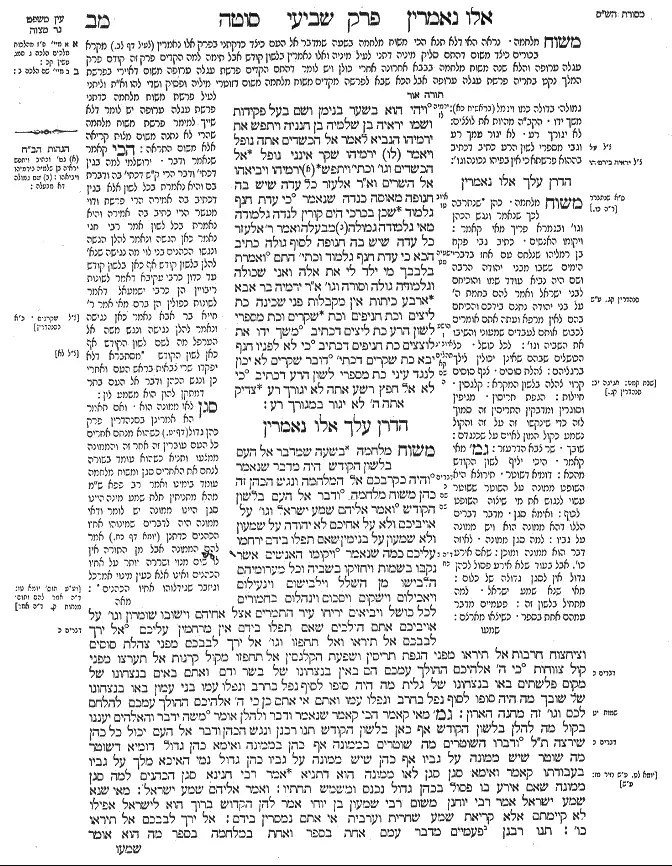
Sotah 42a - Guemara
(ירמיהו לז, יג) ויהי הוא בשער בנימן ושם בעל פקידות ושמו יראיה בן שלמיה בן חנניה ויתפש את ירמיהו הנביא לאמר אל הכשדים אתה נופל ויאמר (לו) ירמיה שקר אינני נופל אל הכשדים וגו' וכתי' ויתפש ירמיהו ויביאהו אל השרים וא"ר אלעזר כל עדה שיש בה חנופה מאוסה כנדה שנאמר (איוב טו, לד) כי עדת חנף גלמוד שכן בכרכי הים קורין לנדה גלמודה מאי גלמודה גמולה מבעלה ואמר ר' אלעזר כל עדה שיש בה חנופה לסוף גולה כתיב הכא כי עדת חנף גלמוד וכתי' התם (ישעיהו מט, כא) ואמרת בלבבך מי ילד לי את אלה ואני שכולה וגלמודה גולה וסורה וגו' א"ר ירמיה בר אבא ארבע כיתות אין מקבלות פני שכינה כת ליצים וכת חניפים וכת שקרים וכת מספרי לשון הרע כת ליצים דכתיב (הושע ז, ה) משך ידו את לוצצים כת חניפים דכתיב (איוב יג, טז) כי לא לפניו חנף יבא כת שקרים דכתי' (תהלים קא, ז) דובר שקרים לא יכון לנגד עיני כת מספרי לשון הרע דכתיב (תהלים ה, ה) כי לא אל חפץ רשע אתה לא יגורך רע צדיק אתה ה' לא יגור במגורך רע
הדרן עלך אלו נאמרין
מתני׳ משוח מלחמה בשעה שמדבר אל העם בלשון הקודש היה מדבר שנאמר ' (דברים כ, ב) והיה כקרבכם אל המלחמה ונגש הכהן זה כהן משוח מלחמה (דברים כ, ב) ודבר אל העם בלשון הקודש (דברים כ, ג) ואמר אליהם שמע ישראל וגו' על אויביכם ולא על אחיכם לא יהודה על שמעון ולא שמעון על בנימין שאם תפלו בידם ירחמו עליכם כמה שנאמר (דברי הימים ב כח, טו) ויקומו האנשים אשר נקבו בשמות ויחזיקו בשביה וכל מערומיהם הלבישו מן השלל וילבישום וינעילום ויאכילום וישקום ויסכום וינהלום בחמורים לכל כושל ויביאום יריחו עיר התמרים אצל אחיהם וישובו שומרון וגו' על אויביכם אתם הולכים שאם תפלו בידם אין מרחמין עליכם (דברים כ, ג) אל ירך ' לבבכם אל תיראו ואל תחפזו וגו' אל ירך לבבכם מפני צהלת סוסים וציחצוח חרבות אל תיראו מפני הגפת תריסין ושפעת הקלגסין אל תחפזו מקול קרנות אל תערצו מפני קול צווחות (דברים כ, ד) כי ה' אלהיכם ההולך עמכם הם באין בנצחונו של בשר ודם ואתם באים בנצחונו של מקום פלשתים באו בנצחונו של גלית מה היה סופו לסוף נפל בחרב ונפלו עמו בני עמון באו בנצחונו של שובך מה היה סופו לסוף נפל בחרב ונפלו עמו ואתם אי אתם כן כי ה' אלהיכם ההולך עמכם להלחם לכם וגו' זה מחנה הארון גמ׳ מאי קאמר הכי קאמר שנאמר ודבר ולהלן אומר (שמות יט, יט) משה ידבר והאלהים יעננו בקול מה להלן בלשון הקודש אף כאן בלשון הקודש תנו רבנן ונגש הכהן ודבר אל העם יכול כל כהן שירצה ת"ל (דברים כ, ה) ודברו השוטרים מה שוטרים בממונה אף כהן בממונה ואימא כהן גדול דומיא דשוטר מה שוטר שיש ממונה על גביו אף כהן שיש ממונה על גביו כהן גדול נמי האיכא מלך על גביו בעבודתו קאמר ואימא סגן סגן לאו ממונה הוא דתניא אמר רבי חנינא סגן הכהנים למה סגן ממונה שאם אירע בו פסול בכהן גדול נכנס ומשמש תחתיו ואמר אליהם שמע ישראל מאי שנא שמע ישראל אמר רבי יוחנן משום רבי שמעון בן יוחי אמר להן הקדוש ברוך הוא לישראל אפילו לא קיימתם אלא קריאת שמע שחרית וערבית אי אתם נמסרין בידם אל ירך לבבכם אל תיראו כו' תנו רבנן פעמיים מדבר עמם אחת בספר ואחת במלחמה בספר מה הוא אומר
Comments from Rashi on Masechet Sotah Page 42a
ויהי הוא בשער בנימין . לאחר כמה ימים היה ירמיה יוצא מירושלים ללכת ארץ בנימין לחלוק נחלה שנפלה לו ותפסו יראיה ויאמר לו אל הכשדים אתה נופל: גמולה . בדולה כמו ויגמל (בראשית כא): משך ידו . הקב"ה מהיות את לוצצים: לא יגורך רע . לא יגור עמך רע וגבי מספרי לשון הרע כתיב דכתיב בההוא פרשתא כי אין בפיהו נכונה וגו': מתני' משוח מלחמה . כהן שנתרבה לכך שנאמר ונגש הכהן וגו' ובגמרא פריך מאי קאמר: ויקומו האנשים . כתיב גבי פקח בן רמליהו שנלחם עם אחז בדברי הימים ששבו מבני יהודה הרבה ושם היה נביא עודד שמו והוכיחם לבני ישראל ואמר להם בחמת ה' על בני יהודה נתנם בידכם והכיתם בהם לאין מרפא ועתה אתם אומרים לכבוש אותם לעבדים שמעוני והשיבו את השביה וגו': לכל כושל . כל הכושלים שבהם שאינן יכולין לילך ברגליהם: צהלת סוסים . צנף סוסים קרוי צהלה בלשון המקרא: קלגסין . חיילות: הגפת תריסין . מגיפין וסוגרין ומדבקין התריסין זה סמוך לזה כדי שינקשו זה על זה והקול נשמע כקול המון לאיים על שכנגדם: שובך . שר צבא הדרעזר: גמ' מאי קאמר . היכי יליף לשון הקודש מהכא: דומיא דשוטר . תירוצא היא השופט ממונה על השוטר ששוטר עשוי לנגוש את מי שיצוה השופט לכוף: ואימא סגן . מדבר דברים הללו דהא ממונה הוא ויש ממונה על גביו: למה סגן ממונה . לאיזה דבר הוא ממונה ומוכן. שאם אירע : שאם אירע כו' . אבל בעוד שלא אירע פסול לכהן גדול אין לסגן גדולה של כלום: מאי שנא שמע ישראל . למה מתחיל בלשון זה: פעמיים מדבר עמהם אחת בספר . כשיצאו מארצם:
Comments from Tosafot - Sotah 42a
מתני' משוח מלחמה . נראה האי דלא תנא הכי משוח מלחמה בשעה שמדבר אל העם כיצד כדקתני בפרק אלו נאמרין (לעיל סוטה דף לב.) מקרא בכורים כיצד משום דהתם סליק מיניה דתני לעיל מיניה ואלו נאמרין בלשון קודש אבל תימה למה הקדים פרק זה קודם פרק עגלה ערופה והלא שנה משוח מלחמה בבבא אחרונה אחרי כולן ויש לומר דהתם הקדים פרשת עגלה ערופה משום דאיירי בפרשת המלך נקט בתריה פרשת עגלה ערופה אבל הכא שבא לפרשה מקדים משוח מלחמה משום דזוטרי מיליה ופסיק ושדי להו וא"ת וליתני לעיל פרשת משוח מלחמה כדתני פרשת עגלה ערופה יש לומר דלא שייך למימר פרשת משוח מלחמה שהרי לא נתנה משום מצות קריאה אלא משום התראה: הכי קאמר שנאמר ודבר . ירושלמי למה בגין דכתי' ודבר הרי ק"ש דכתי' בה ודברת בם והיא נאמרת בכל לשון אלא בגין דכתיב בה אמירה הרי פרשת ודוי מעשר הרי כתיב בה אמירה והיא נאמרת בכל לשון אמר רבי חגי נאמר כאן הגשה ונאמר להלן הגשה ונגשו הכהנים בני לוי מה נגישה שנא' להלן בלשון קודש אף כאן בלשון קודש עד כדון כרבי עקיבא דאמר לשונות ריבויין הן כרבי ישמעאל דאמר לשונות כפולין הן ברם מאי אמר ר' חייא בר אבא נאמר כאן נגישה ונאמר להלן נגישה ונגש משה אל הערפל מה לשם לשון הקודש אף כאן לשון הקודש מסתברא דלא ופקדו שרי צבאות בראש העם ואחרי כן ונגש הכהן ודבר אל העם בתר דמתקן להון הוא משמע לון: סגן לאו ממונה הוא . ואם תאמר הא אמרינן בסנהדרין פרק כהן גדול (דף יט.) כשהוא מנחם אחרים כל העם עוברין זה אחר זה והממונה ממצעו ותניא כשהוא עומד בשורה לנחם את האחרים סגן ומשוח מלחמה עומד בימינו ואמר רב פפא ש"מ מהא מתניתין תלת שמע מינה היינו סגן היינו ממונה יש לומר ודאי ממונה היה לדברים שמינוהו אחיו הכהנים כדתנן (יומא דף כח.) אמר להם הממונה אבל מן התורה אין לו שום מנוי ושררה יותר על אחיו הכהנים ואינו אלא כעין מינוי אמרכל וגיזבר שגידלוהו אחיו הכהנים:
Sotah 42a - Mishnah translated into english
“And when he was in the gate of Benjamin, a captain of the ward was there, whose name was Irijah, the son of Shelemiah, the son of Hananiah; and he laid hold on Jeremiah the prophet, saying: You shall fall to the Chaldeans. Then Jeremiah said: It is false; I shall not fall to the Chaldeans” (Jeremiah 37:13–14). And it is then written: “So Irijah laid hold on Jeremiah, and brought him to the princes” (Jeremiah 37:14). Irijah was the grandson of Hananiah, and Jeremiah was punished by falling into his hands because he had flattered his grandfather.
And Rabbi Elazar says: Any congregation in which there is flattery is as repulsive as a menstruating woman, as it is stated: “For a flattering congregation shall be desolate [galmud]” (Job 15:34), and in the cities overseas they call a menstruating woman galmuda. What is the meaning of the word galmuda? It means separated [gemula] from her husband [mibbala].
And Rabbi Elazar says: Any congregation in which there is flattery is ultimately exiled. It is written here: “For a flattering congregation shall be desolate [galmud]” (Job 15:34), and it is written there: “Then you will say in your heart: Who has begotten me these, seeing I have been bereaved of my children, and am solitary [galmuda], an exile, and wandering?” (Isaiah 49:21). The verse states: “An exile,” as an appositive to “galmuda,” indicating that they are the same.
Rabbi Yirmeya bar Abba says: Four classes of people will not greet the Divine Presence: The class of cynics, and the class of flatterers, and the class of liars, and the class of slanderers.
The proof for this statement is as follows: The class of cynics, as it is written: “He draws His hand from cynics” (Hosea 7:5), i.e., God does not want to be in their presence; the class of flatterers, as it is written: “That a flatterer cannot come before Him” (Job 13:16); the class of liars, as it is written: “He who speaks falsehood shall not dwell before My eyes” (Psalms 101:7).
The class of slanderers will not greet the Divine Presence, as it is written: “For You are not a god who has pleasure in wickedness, evil shall not sojourn with You” (Psalms 5:5), which means: You, the Lord, are righteous and evil shall not dwell with You in Your dwelling place. “Evil” here is referring to slanderers, as is evident from the continuation of the chapter, which states: “For there is no sincerity in their mouth; their inward part is a yawning gulf, their throat is an open tomb, they make smooth their tongue” (Psalms 5:10).
MISHNA: With regard to the priest who was anointed for war, at the time that he would speak to the nation, he would speak to them in the sacred tongue, Hebrew, as it is stated: “And it shall be, when you draw near to the battle, that the priest shall approach and speak to the people” (Deuteronomy 20:2). This priest identified in the verse is the priest anointed for war, the priest who is inaugurated specifically to serve this function. “And speak to the people”; he addresses them in the sacred tongue, Hebrew.
The Torah dictates the priest’s address: “And he shall say to them: Hear Israel, you draw near today to battle against your enemies; let not your heart faint; fear not, nor be alarmed, and do not be terrified of them” (Deuteronomy 20:3). The priest expounds: “Against your enemies” and not against your brothers. This is not a war of the tribe of Judah against Simon and not Simon against Benjamin, such that if you fall into their hands your brothers will have mercy on you, as it is stated with regard to a war between Judah and Israel: “And the men that have been mentioned by name rose up, and took the captives, and with the spoil clothed all that were naked among them, and arrayed them, and shod them, and gave them to eat and to drink, and anointed them, and carried all the feeble of them upon donkeys, and brought them to Jericho, the city of palm trees, unto their brethren; then they returned to Samaria” (II Chronicles 28:15). Rather, you are marching to war against your enemies, and if you fall into their hands, they will not have mercy on you.
The priest continues: “Let not your heart faint; fear not, nor be alarmed, and do not be terrified of them” (Deuteronomy 20:3). “Let not your heart faint” due to the neighing of horses and the sharpening of the enemy’s swords. “Fear not” due to the knocking of shields [terisin] and the noise of their boots [calgassin]. “Nor be alarmed” by the sound of trumpets. “Do not be terrified” due to the sound of shouts.
The priest explains why the soldiers need not be terrified. “For the Lord your God is He that goes with you, to fight for you against your enemies, to save you” (Deuteronomy 20:4). Remember that they come to war championed by flesh and blood, and you are coming championed by the Omnipresent. The Philistines came championed by Goliath. What was his end? In the end, he fell by the sword, and they fell with him (see I Samuel, chapter 17). The Ammonites came championed by Shobach. What was his end? In the end, he fell by the sword, and they fell with him (see II Samuel, chapter 10). But as for you, you are not so, reliant upon the strength of mortals: “For the Lord your God is He that goes with you, to fight for you against your enemies, to save you”; this verse is referring to the camp of the Ark of the Covenant that accompanies them out to war.
GEMARA: The Gemara clarifies an ambiguous point in the mishna: What is it saying when the mishna derives from the verse that the priest must address the people in Hebrew? The Gemara answers: This is what the mishna is saying: The ruling is derived from a verbal analogy, as it is stated here: “And speak” (Deuteronomy 20:2), and there, concerning the giving of the Torah, it is stated: “Moses spoke and God answered him by a voice” (Exodus 19:19). Just as there, the voice spoke in the sacred tongue, so too here, the priest speaks in the sacred tongue.
The Sages taught: “The priest shall approach and speak to the people” (Deuteronomy 20:2). One might have thought that any priest who would want to address the people may assume this role. To counter this idea, the verse states: “And the officers shall speak” (Deuteronomy 20:5). Just as the officers described are those who have been appointed to discharge their responsibilities, so too, the priest described is one who has been appointed for this role. The Gemara asks: But if so, why not say that the High Priest should deliver this address, as he is also appointed? The Gemara replies: The appointed priest must be similar to an appointed officer. Just as an officer is one who has someone else, i.e., a judge, with greater authority appointed above him, so too, the priest described must be one who has someone else, i.e., the High Priest, appointed above him.
The Gemara rejects this answer: The High Priest also meets this qualification, as there is the king above him, and therefore, the High Priest should deliver the address. The Gemara clarifies: The caveat that one must have someone appointed above him is saying someone above him in his function. That there is a king is irrelevant to the station of the High Priest, who ranks highest in the priesthood. The Gemara suggests: Then say it may be the deputy High Priest, who is second to the High Priest; he should deliver the address. The Gemara answers: The deputy is not an appointed office, as this position has no particular function other than being a ready substitute for the High Priest. As it is taught in a baraita: Rabbi Ḥanina, the deputy High Priest, says: To what end is the deputy appointed? It is merely for the possibility that if some disqualification befalls the High Priest, the deputy steps in and serves in his stead. However, the deputy has no specific role of his own.
§ The Torah says about the priest anointed for war: “And he shall say to them: Hear Israel” (Deuteronomy 20:3). The Gemara asks: What is different in this setting that necessitates the usage of the phrase: “Hear Israel”? Rabbi Yoḥanan said in the name of Rabbi Shimon ben Yoḥai: The Holy One, Blessed be He, said to the Jewish people: Even if you have not fulfilled any mitzva except reciting Shema of the morning and the evening, you will not be delivered into the hands of your enemies. As an allusion to this promise, the priest’s address borrows the phrase “Hear Israel,” a phrase most familiar from the beginning of the recitation of Shema.
With respect to the mishna’s comments about the verse: “Let not your heart faint; fear not, nor be alarmed, and do not be terrified of them” (Deuteronomy 20:3), the Sages taught (Tosefta 7:18): The priest speaks with them twice, one time when they are gathered for war at the border, and one time when they are on the battlefield itself. When they are at the border, what does he say?
Traduction : The William Davidson digital edition of the Koren Noé Talmud, with commentary by Rabbi Adin Even-Israel Steinsaltz.
Sotah 42a : Significance
Next step
Finished studying Sotah 42a? Carry on with the rest of the tractate.
Study Sotah 42bFrequently asked questions: Sotah 42a
Where is Sotah 42a in tractate Sotah?
Sotah 42a is page 81 of 96 in tractate Sotah (Seder Nashim).
When is daf 42 of Sotah studied in Daf Yomi?
Daf Yomi covers one daf a day, both sides. Daf 42 of Sotah will be studied on October 11, 2030.
Is there a video class on Sotah 42a?
Yes, by Daf Tube, Rabbi Dr. Moshe Weisblum. These classes were published on YouTube by their authors and are gathered on this site.
What is tractate Sotah about?
Masechet Sota Sota is the fifth tractate of the Seder Nashim. The Sota gemara is the study of the laws concerning the woman suspected of adultery, the breaking of the neck of the heifer and the rules of exemption from military conscription. The Sota tractate is a gemara that contains 9 chapters.
Your study is also dedicated to them
- L'ilui Nishmat Rav Chlomo Ben Jamilla
- L'ilui Nishmat אליעזר בן רחל
- L'ilui Nishmat Jamila bat Chlomo Abensour