 Talmud Bavli
The learning on the whole site is dedicated : L'ilui Nishmat Avraham Ben Simha
The learning on the whole site is dedicated : L'ilui Nishmat Amram ben Itshak Loubaton
The learning on the whole site is dedicated : L'ilui Nishmat Yechayahou ben Moche
Sotah 27b : Youtube
Daf TubeYoutube
2 video classes :
Sotah Page 27b
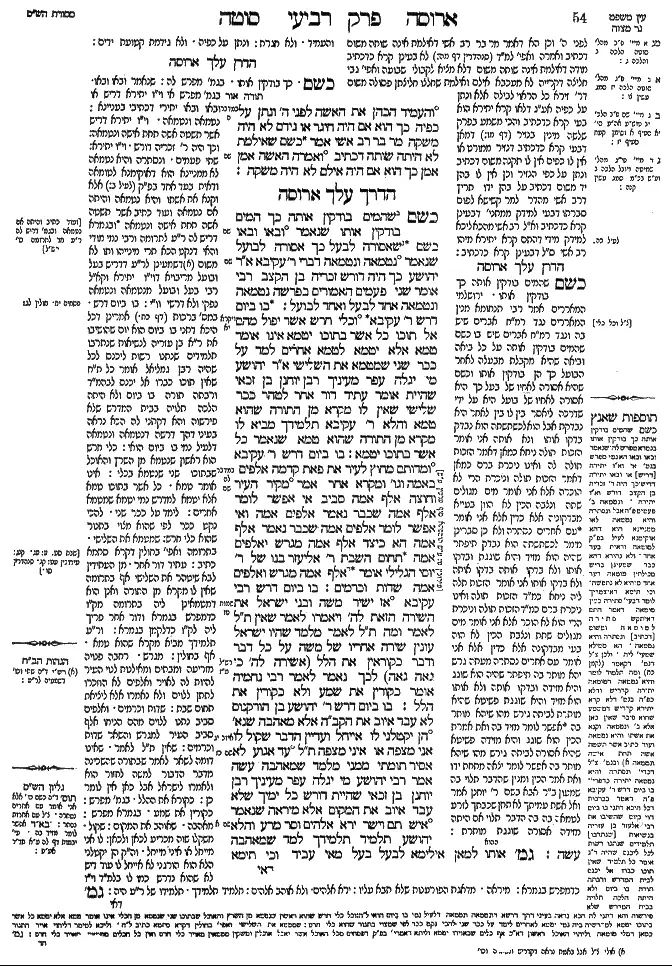
Sotah 27b - Guemara
(במדבר ה, יח) והעמיד הכהן את האשה לפני ה' ונתן על כפיה כך הוא אם היה חיגר או גידם לא היה משקה מר בר רב אשי אמר כשם שאילמת לא היתה שותה דכתיב (במדבר ה, כב) ואמרה האשה אמן אמן כך הוא אם היה אילם לא היה משקה
הדרן עלך ארוסה
מתני׳ כשם שהמים בודקין אותה כך המים בודקין אותו שנאמר (במדבר ה, כב) ובאו ובאו כשם שאסורה לבעל כך אסורה לבועל שנאמר (במדבר ה, יג) נטמאה ונטמאה דברי ר' עקיבא א"ר יהושע כך היה דורש זכריה בן הקצב רבי אומר שני פעמים האמורים בפרשה נטמאה ונטמאה אחד לבעל ואחד לבועל בו ביום דרש ר' עקיבא (ויקרא יא, לג) וכלי חרש אשר יפול מהם אל תוכו כל אשר בתוכו יטמא אינו אומר טמא אלא יטמא לטמא אחרים למד על ככר שני שמטמא את השלישי א"ר יהושע מי יגלה עפר מעיניך רבן יוחנן בן זכאי שהיית אומר עתיד דור אחר לטהר ככר שלישי שאין לו מקרא מן התורה שהוא טמא והלא ר' עקיבא תלמידך מביא לו מקרא מן התורה שהוא טמא שנאמר כל אשר בתוכו יטמא בו ביום דרש ר' עקיבא (במדבר לה, ה) ומדותם מחוץ לעיר את פאת קדמה אלפים באמה וגו' ומקרא אחר אמר (במדבר לה, ד) מקיר העיר וחוצה אלף אמה סביב אי אפשר לומר אלף אמה שכבר נאמר אלפים אמה ואי אפשר לומר אלפים אמה שכבר נאמר אלף אמה הא כיצד אלף אמה מגרש ואלפים אמה תחום השבת ר' אליעזר בנו של ר' יוסי הגלילי אומר אלף אמה מגרש ואלפים אמה שדות וכרמים בו ביום דרש רבי עקיבא (שמות טו, א) אז ישיר משה ובני ישראל את השירה הזאת לה' ויאמרו לאמר שאין ת"ל לאמר ומה ת"ל לאמר מלמד שהיו ישראל עונין שירה אחריו של משה על כל דבר ודבר כקוראין את הלל (אשירה לה' כי גאה גאה) לכך נאמר לאמר רבי נחמיה אומר כקורין את שמע ולא כקורין את הלל בו ביום דרש ר' יהושע בן הורקנוס לא עבד איוב את הקב"ה אלא מאהבה שנא' (איוב יג, טו) הן יקטלני לו אייחל ועדיין הדבר שקול לו אני מצפה או איני מצפה ת"ל (איוב כז, ה) עד אגוע לא אסיר תומתי ממני מלמד שמאהבה עשה אמר רבי יהושע מי יגלה עפר מעיניך רבן יוחנן בן זכאי שהיית דורש כל ימיך שלא עבד איוב את המקום אלא מיראה שנאמר (איוב א, ח) איש תם וישר ירא אלהים וסר מרע והלא יהושע תלמיד תלמידך למד שמאהבה עשה גמ׳ אותו למאן אילימא לבעל בעל מאי עביד וכי תימא
Comments from Rashi on Masechet Sotah Page 27b
והעמיד . ולא חגרת: ונתן על כפיה . ולא גידמת קטועת ידים: מתני' כשם. כך בודקין אותו . בגמ' מפרש לה: שנאמר ובאו ובאו . בגמ' מפרש אי וי"ו יתירא דריש או ובאו ובאו יתירי דכתיבי בעניינא: נטמאה ונטמאה . וי"ו יתירא דריש אשר תשטה אשה תחת אישה ונטמאה: וכך היה ר' זכריה דורש . וי"ו יתירא: שתי פעמים . ונסתרה והיא נטמאה לא ממניינא הוא דאוקימנא לטומאה ודאית בעד אחד בפ"ק (לעיל סוטה ב:) אלא וקנא את אשתו והיא נטמאה והיתה אם נטמאה ועוד כתיב אשר תשטה אשה תחת אישה ונטמאה. ובגמרא דריש לה ר"ע לתרומה ורבי נמי מודי והאי דנקט הכא תרי מינייהו ותו לא משום דשמעינן לר"ע דדריש בעל ובועל מריבויא דוי"ו יתירא וקא"ל רבי בעל ובועל מנטמאה ונטמאה נפקי ולא דרשי וו"י: בו ביום דרש . במס' ברכות (דף כח.) אמרינן דכל היכא דתני בו ביום הוא יום שהושיבו את ר"א בן עזריה לנשיאות שנתרבו תלמידים שנתנו רשות ליכנס לכל שהיה רבן גמליאל אומר כל ת"ח שאין תוכו כברו אל יכנס לבהמ"ד ורבתה תורה בו ביום ולא היתה הלכה תלויה בבית המדרש שלא פירשוה והא דקתני לה הכא נראה בעיני דהך דרשה דנטמאה ונטמאה דלעיל נמי בו ביום הואי: כלי חרש הוא ראשון שנטמא מן השרץ והאוכל שבתוכו שני שנטמא בכלי: אינו אומר טמא . כל אשר בתוכו טמא אלא יטמא למדרש נמי יטמא שמטמא אחרים: לימד על ככר שני . להכי נקט ככר לפי שהוא מצוי בתנור שהוא כלי חרש: שמטמא את השלישי . בתרומה ואפי' בחולין דקרא סתמא כתיב: עתיד דור אחר . מן העתידין לבא שיטהר את השלישי אף בתרומה שאין לו מקרא מן התורה ואנן הוא דמטמאינן ליה בתרומה מק"ו כדמפרש בגמרא ודור אחר פריך ליה לק"ו כדלקמן בגמרא: ור"ע תלמידך מביא מקרא שהוא טמא . אף בחולין: מגרש . רחבה פנויה מזריעה ומבתים ומאילנות לנוי העיר להיות לה לאויר ואלפים לא הוזכרו לתתן ללוים ולא נאמרו אלא ליציאת תחום שבת: שדות וכרמים . ואלפים סביב נתנו ללוים מהם הניחו אלף סביב העיר למגרש והשאר שדות וכרמים: שאין ת"ל לאמר . שאינו דומה לשאר לאמר שבתורה שהשכינה מדבר הדבור למשה לחזור הוא ולאמרו לישראל אבל כאן אין לומר כן: כקורא את ההלל . בגמ' מפרש: כקורין את שמע . בגמרא מפרש: מאהבה . שאוהב את המקום: שקול . משקלו שוה מכריע לכאן ולכאן: לו אני מייחל או איני מייחל . וה"ק הן יקטלני הלא הוא הורגני לא אייחל לו עוד דיש לא שהוא נדרש כמו לו בלמ"ד וי"ו כדמפרש בגמרא: מיראה . מדאגת הפורענות שלא תבא עליו: ירא אלהים . ולא אוהב אלהים: תלמיד תלמידך . תלמידו של ר"ע היה:
Comments from Tosafot - Sotah 27b
מתני' כשם שהמים בודקין אותה כך בודקין אותו . ירושלמי המאררים אמר רבי תנחומא מנין המאררים נגד רמ"ח אברים שיש בה ונגד רמ"ח אברים שיש בו כשם שהמים בודקין אותה על כל ביאה וביאה שהיא מקבלת מבעלה לאחר הבועל כך הן בודקין אותו וכשם שהיא אסורה לאחיו של בעל כך היא אסורה לאחיו של בועל היא על ידי שדרכה ליאסר בין לו בין לאחר היא נבדקת אבל הוא לכשתשתה הוא נבדק בדקו אותו ולא אותה אני אומר הזכות תולה ניחא כמאן דאמר הזכות תולה לה ואינו ניכרת ברם כמאן דאמר הזכות תולה וניכרת הרי לא הוכרה אלא אני אומר מים מגולים שתה ונצבה הכין לא הוון בעייא מבדקוניה אלא כדין אלא אני אומר עם אחרים נסתרה ולא כן סברינן מימר לכשתשתה הוא נבדק תיפתר שהיה הוא מזיד והיא שוגגת ובדקו אותו ולא בדקו אותה בדקו אותה ולא בדקו אותו אני אומר הזכות תלה ליה ניחא כמ"ד הזכות תולה ואינו ניכרת ברם כמ"ד הזכות תולה וניכרת הרי הוא לא הוכר אלא אני אומר מים מגולים שתת ונצבת הכין לא הוה בעי מבדקונה אלא כדין אלא אני אומר עם אחרים נסתרה מעתה גרש יהא מותר בה תיפתר שהיה הוא שוגג והיא מזידה ובדקו אותה ולא אותו הוא מזיד והיא שוגגת פשיטא שהיא מותרת לביתה גירש מהו שיהא מותר בה אפשר לומר מזיד בה ואת אמרת הכין הוא שוגג והיא מזידה פשיטא שהיא אסורה לביתה גירש מהו שיהא מותר בה אפשר לומר יצאה מתחת ידו ואת אמר הכין ומנין שהדבר תלוי בה שמעון ב"ר אבא בשם ר' יוחנן אמר ואל אשת עמיתך לא תתן שכבתך לזרע לטמאה בה בה הדבר תלוי אם היתה מזידה אסורה שוגגת מותרת:
Sotah 27b - Mishnah translated into english
“And the priest shall stand the woman before the Lord…and place the meal-offering of memorial in her hands” (Numbers 5:18), indicating that if she is unable to stand up straight or if she does not have hands with which to accept the offering, then she does not drink; so too, if the husband were lame or without hands, he would not cause his wife to drink. Mar Bar Rav Ashi says: Just as a mute woman would not drink, as it is written: “And the woman shall say: Amen, Amen” (Numbers 5:22), indicating that she must be able to speak; so too, if the husband were mute, he would not cause his wife to drink.
MISHNA: Just as the water evaluates her fidelity, so too, the water evaluates his, i.e., her alleged paramour’s, involvement in the sin, as it is stated: “And the water that causes the curse shall enter into her” (Numbers 5:24), and it is stated again: “And the water that causes the curse shall enter into her and become bitter” (Numbers 5:27). It is derived from the double mention of the phrase “and…shall enter” that both the woman and her paramour are evaluated by the water.
Furthermore, prior to her drinking the water, just as she is forbidden to her husband, so too is she forbidden to her paramour, because in contrast to the verse stating: “Is defiled [nitma’a]” (Numbers 5:14), a superfluous conjoining prefix vav is added to a later verse, rendering the phrase: “And is defiled [venitma’a]” (Numbers 5:29). The addition indicates another prohibition, that of the woman to her paramour. This is the statement of Rabbi Akiva.
Rabbi Yehoshua said: That was how Zekharya ben HaKatzav would interpret it, i.e., he also derived from the superfluous vav that the woman is forbidden to her paramour. Rabbi Yehuda HaNasi says an alternate source: The two times that the defilement of the wife is stated in the passage, namely: “And he warns his wife, and she is defiled” (Numbers 5:14), and the later verse: “When a wife, being under her husband, goes astray and is defiled” (Numbers 5:29), indicate that her defilement results in two prohibitions. One is that she is forbidden to her husband and one is that she is forbidden to her paramour.
§ On that same day that Rabbi Elazar ben Azarya was appointed head of the Sanhedrin, Rabbi Akiva interpreted the verse: “And every earthen vessel into which any of them falls, whatever is in it shall be impure [yitma], and you shall break it” (Leviticus 11:33), as follows: The verse does not state: Is impure [tamei], but rather: “Shall be impure,” in order to indicate that not only does the vessel itself become ritually impure, but it can now render other items ritually impure. This teaches with regard to a loaf that has second-degree ritual impurity status due to its being placed inside an earthenware vessel that had first-degree impurity, that it can render other food with which it comes into contact impure with third-degree impurity status.
After hearing Rabbi Akiva’s statement, Rabbi Yehoshua said: Who will remove the dirt from your eyes, Rabban Yoḥanan ben Zakkai, so that you could live and see this? As you would say: In the future, another generation is destined to deem pure a loaf that contracted third-degree impurity, as there is no explicit verse from the Torah stating that it is impure. But now Rabbi Akiva, your disciple, brings a verse from the Torah indicating that it is impure, as it is stated: “Whatever is in it shall be impure.”
Furthermore, on that same day Rabbi Akiva interpreted the verses with regard to the Levite cities as follows: One verse states: “And you shall measure outside the city for the east side two thousand cubits…this shall be for them the open land outside the cities” (Numbers 35:5), and another verse states: “And the open land around the cities, which you shall give to the Levites, shall be from the wall of the city and outward one thousand cubits round about” (Numbers 35:4).
It is impossible to say that the area around the cities given to the Levites was only one thousand cubits, as it is already stated: “Two thousand cubits.” And it is impossible to say that two thousand cubits were left for them, as it is already stated: “One thousand cubits.” How can these texts be reconciled? One thousand cubits are to be set aside as a tract of open land surrounding the city, and the two thousand cubits are mentioned not in order to be given to the Levites, but to indicate the boundary of the Shabbat limit, beyond which it is forbidden to travel on Shabbat. This verse thereby serves as the source for the two-thousand-cubit Shabbat limit.
Rabbi Eliezer, son of Rabbi Yosei HaGelili, says otherwise: One thousand cubits were given to the Levites as an open tract of land, that could not be planted or built upon, and two thousand cubits of additional land were given to the Levites for planting fields and vineyards.
Additionally, on that same day Rabbi Akiva interpreted the verse: “Then Moses and the children of Israel sang this song to the Lord, and said, saying” (Exodus 15:1), as follows: As there is no need for the verse to state the word “saying,” because it states the word “said” immediately prior to it, why must the verse state the word “saying”? It teaches that the Jewish people would repeat in song after Moses every single statement he said, as is done when reciting hallel. After Moses would recite a verse, they would say as a refrain: “I will sing to the Lord, for He is highly exalted” (Exodus 15:1). It is for this reason that the word “saying” is stated, in addition to the word “said.”
Rabbi Neḥemya says: The people sang the song together with Moses as is done when reciting Shema, which is recited in unison after the prayer leader begins, and not as is done when reciting hallel.
On that same day Rabbi Yehoshua ben Hyrcanus taught: Job served the Holy One, Blessed be He, only out of love, as it is stated: “Though He will slay me, still I will trust in Him” (Job 13:15). And still, the matter is even, i.e., the verse is ambiguous, as there are two possible interpretations of the verse. Was Job saying: I will await Him, expressing his yearning for God; or should the verse be interpreted as saying I will not await Him. As the word “lo” can mean either “to him” or “not,” it is unclear which meaning is intended here. This dilemma is resolved elsewhere, where the verse states a clearer indication of Job’s intent: “Till I die I will not put away my integrity from me” (Job 27:5). This teaches that he acted out of love.
Rabbi Yehoshua said: Who will remove the dirt from your eyes, Rabban Yoḥanan ben Zakkai, so that you could live and see this? As you taught all your life that Job worshipped the Omnipresent only out of fear, as it is stated: “And that man was wholehearted and upright, and God-fearing, and shunned evil” (Job 1:1); but now Yehoshua ben Hyrcanus, the disciple of your disciple, has taught that Job acted out of love.
GEMARA: It is stated in the mishna that just as the water evaluates whether the woman was unfaithful, so too, the water evaluates whether he committed this sin. The Gemara asks: To whom does this refer? If we say that it is referring to the husband, what did the husband do that he should be evaluated? And if you would say
Traduction : The William Davidson digital edition of the Koren Noé Talmud, with commentary by Rabbi Adin Even-Israel Steinsaltz.