 Talmud Bavli
Sotah 17a : Youtube
Daf TubeYoutube
2 video classes :
Sotah Page 17a
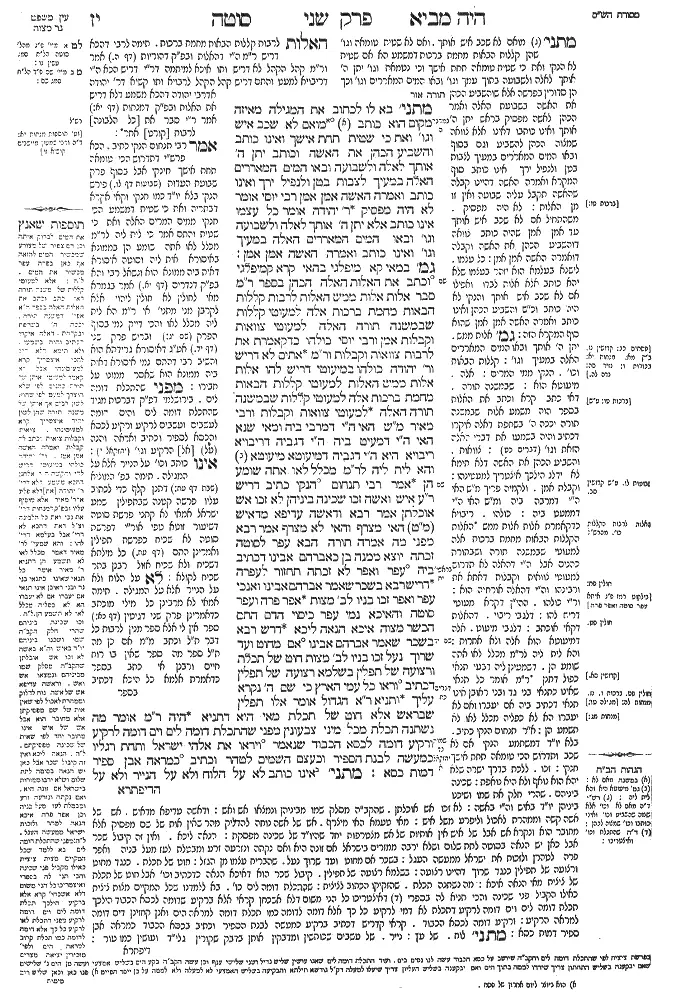
Sotah 17a - Guemara
מתני׳ בא לו לכתוב את המגילה מאיזה מקום הוא כותב (במדבר ה, יט) מואם לא שכב איש וגו' ואת כי שטית תחת אישך ואינו כותב והשביע הכהן את האשה וכותב יתן ה' אותך לאלה ולשבועה ובאו המים המאררים האלה במעיך לצבות בטן ולנפיל ירך ואינו כותב ואמרה האשה אמן אמן רבי יוסי אומר לא היה מפסיק ר' יהודה אומר כל עצמו אינו כותב אלא יתן ה' אותך לאלה ולשבועה וגו' ובאו המים המאררים האלה במעיך וגו' ואינו כותב ואמרה האשה אמן אמן גמ׳ במאי קא מיפלגי בהאי קרא קמיפלגי (במדבר ה, כג) וכתב את האלות האלה הכהן בספר ר"מ סבר אלות אלות ממש האלות לרבות קללות הבאות מחמת ברכות אלה למעוטי קללות שבמשנה תורה האלה למעוטי צוואות וקבלות אמן ורבי יוסי כולהו כדקאמרת את לרבות צוואות וקבלות ור"מ אתים לא דריש ור' יהודה כולהו במיעוטי דריש להו אלות אלות ממש האלות למעוטי קללות הבאות מחמת ברכות אלה למעוטי קללות שבמשנה תורה האלה למעוטי צוואות וקבלות ורבי מאיר מ"ש האי ה"י דמרבי ביה ומאי שנא האי ה"י דמעיט ביה ה"י דגביה דריבויא ריבויא היא ה"י דגביה דמיעוטא מיעוטא והא לית ליה לר"מ מכלל לאו אתה שומע הן אמר רבי תנחום (במדבר ה, יט) הנקי כתיב דריש ר"ע איש ואשה זכו שכינה ביניהן לא זכו אש אוכלתן אמר רבא ודאשה עדיפא מדאיש (מ"ט) האי מצרף והאי לא מצרף אמר רבא מפני מה אמרה תורה הבא עפר לסוטה זכתה יוצא ממנה בן כאברהם אבינו דכתיב ביה (בראשית יח, כז) עפר ואפר לא זכתה תחזור לעפרה דריש רבא בשכר שאמר אברהם אבינו ואנכי עפר ואפר זכו בניו לב' מצות אפר פרה ועפר סוטה והאיכא נמי עפר כיסוי הדם התם הכשר מצוה איכא הנאה ליכא דרש רבא בשכר שאמר אברהם אבינו (בראשית יד, כג) אם מחוט ועד שרוך נעל זכו בניו לב' מצות חוט של תכלת ורצועה של תפלין בשלמא רצועה של תפלין דכתיב (דברים כח, י) וראו כל עמי הארץ כי שם ה' נקרא עליך ותניא ר"א הגדול אומר אלו תפלין שבראש אלא חוט של תכלת מאי היא דתניא היה ר"מ אומר מה נשתנה תכלת מכל מיני צבעונין מפני שהתכלת דומה לים וים דומה לרקיע ורקיע דומה לכסא הכבוד שנאמר (שמות כד, י) ויראו את אלהי ישראל ותחת רגליו כמעשה לבנת הספיר וכעצם השמים לטהר וכתיב (יחזקאל א, כו) כמראה אבן ספיר דמות כסא מתני׳ אינו כותב לא על הלוח ולא על הנייר ולא על
Comments from Rashi on Masechet Sotah Page 17a
מתני' מואם לא שכב איש אותך . ואם לא שטית טומאה וגו' שהן קללות הבאות מחמת ברכות דמשמע הא אם שטית לא הנקי ואת כי שטית טומאה תחת אישך וכי נטמאת וגו' יתן ה' אותך לאלה ולשבועה בתוך עמך וגו' ובאו המים המאררים וגו' וכך הן סדורין בפרשה אלא שוהשביע הכהן את האשה בשבועת האלה ואמר הכהן לאשה מפסיק בראש יתן ה' אותך ואינו כותבו דאינו אלא צוואה שמצוה הכהן להשביע וגם בסוף ובאו המים המאררים במעיך לצבות בטן ולנפיל ירך אינו כותב סוף המקרא ואמרה האשה דהיינו קבלה שהאשה תקבל עליה שבועה ואין זו מן האלות: לא היה מפסיק . משהתחיל אם לא שכב איש אותך עד אמן אמן שהיה כותב צוואה דוהשביע הכהן את האשה וקבלה דואמרה האשה אמן אמן: כל עצמו . לישנא בעלמא הוא יזהר בעצמו שלא יהא כותב אלא אלות לבדו ואפילו אם לא שכב איש אותך והנקי לא היה כותב וכ"ש והשביע הכהן ואינו כותב ואמרה האשה אמן אמן שהוא סוף המקרא הזה: גמ' אלות ממש . יתן ה' אותך ובאו המים המאררים האלה במעיך וגו': קללות הבאות וכו' . הנקי ממי המרים: אלה . מיעוטא הוא: שבמשנה תורה . דאי כתב קרא וכתב את האלות בספר הוה משמע אלות שבמשנה תורה יככה ה' בשחפת דאלה איקרו דכתיב והיה בשמעו את דברי האלה הזאת וגו' (דברים כט): צוואות . והשביע הכהן את האשה דלא תימא לא ידלג הילכך איצטריך למעטינהו: וקבלת אמן . ולקמיה פריך מ"ש האי ה"י דמרבה ביה ומ"ש האי ה"י דממעט ביה: כולהו . ריבויא כדקאמרת אלות אלות ממש האלות הקללות הבאות מחמת ברכות אלה למעוטי שבמשנה תורה ושבתורת כהנים אבל ה"י דהאלה לא תדרוש למעוטי צוואות וקבלות דאתא את ורבינהו וה"י דהאלה אורחיה הוא: ור"י כולהו . ההי"ן דקרא מעוטי דריש להו: דלגבי ריבוי . דהאלות דקאי אוכתב: דלגבי מיעוט . אלה דמיעוטא הוא אלה ולא אחרות: והא לית ליה לר"מ מכלל לאו אתה שומע הן . דשמעינן ליה דבעי תנאי כפול דתנן ר"מ אומר כל תנאי שאינו כתנאי בני גד ובני ראובן אינו תנאי דכתיב ביה אם יעברו ואם לא יעברו הא לא כפליה מכלל לאו לא תשמע הן: א"ר תנחום הנקי כתיב . בלא יו"ד דמשתמע הנקי אם לא שכב ותדרוש הכי טומאה תחת אישך חנקי: זכו . ללכת בדרך ישרה שלא יהא הוא נואף ולא היא נואפת: שכינה ביניהם . שהרי חלק את שמו ושיכנו ביניהן יו"ד באיש וה"י באשה: לא זכו אש אוכלתן . שהקב"ה מסלק שמו מביניהן ונמצאו אש ואש: ודאשה עדיפא מדאיש . אש של אשה קשה וממהרת לאכול וליפרע משל איש: מאי טעמא האי מיצרף . אש של אשה נוחה להדליק מהר שאין אות של שם מפסיק אלא מחובר הוא ונקרא אש אבל של איש אין אותיות של אש מצטרפות יחד שהיו"ד של שכינה מפסקת: הנאה ליכא . ואין זה קיבול שכר אבל כאן יש הנאה בסוטה לתת שלום ושלא ירבה ממזרים בישראל אם זונה היא ואם נקתה ונזרעה זרע ומבטלת לעז מעל בניה ואפר פרה לטהרן ולזכות את ישראל ממעשה העגל: בשכר אם מחוט ועד שרוך נעל . שהבריח עצמו מן הגזל: חוט של תכלת . כנגד מחוט ורצועה של תפילין כנגד שרוך דהיינו רצועה: בשלמא רצועה של תפילין . קיבול שכר הוא דאיכא הנאה כדכתיב וכו' אבל חוט של תכלת של ציצית מאי הנאה איכא: מה נשתנה תכלת . שהזקיקו הכתוב לציצית: שהתכלת דומה לים כו' . בא ללמדנו שכל המקיים מצות ציצית כאילו הקביל פני שכינה והכי תניא לה בספרי דאיצטריכו כל הני משום דלא אשכחן קראי אלא ברקיע שדומה לכסא הכבוד הילכך תכלת דומה לים וים דומה לרקיע דתכלת לא דמי לרקיע כל כך אלא דומה לדומה כמו תכלת דומה למראה הים ואנן קחזינן דים דומה למראה הרקיע: ורקיע דומה לכסא הכבוד . קראי קדריש דכתיב ברקיע כמעשה לבנת הספיר וכתיב בכסא הכבוד כמראה אבן ספיר דמות כסא: מתני' לוח . של עץ: נייר . של עשבים שכותשין ומדבקין אותן בדבק שקורין גלי"ד ועושין כמו עור:
Comments from Tosafot - Sotah 17a
האלות לרבות קללות הבאות מחמת ברכות . תימה לרבי דהכא דריש ר"מ ה"י דהאלות ובפ"ק דהוריות (דף ה.) אמר ור"מ קהל הקהל לא דריש ותו איכא למיתמה דר"י דריש הכא ה"י דריבויא למעט והתם דריש קהל הקהל לרבויא ותו קשיא דר' יהודה אדרבי יהודה דהכא משמע דלא דריש את האלות ובפ"ק דמנחות (דף יא:) אמר ר"י סבר את [כל הלבונה] לרבות [קורט] אחר: אמר רבי תנחום הנקי כתיב . הכא פרש"י דתדרוש הכי טומאה תחת אישך חינקי אבל בסוף פרק שבועת העדות (שבועות דף לו.) פירש הנקי בלא יו"ד כמו חנקי וקאי אקרא דבתריה ואת כי שטית דמשמע הכי חנקי ממים המרים האלה ואת כי שטית והתם אמר כי לית ליה לר"מ מכלל לאו אתה שומע הן בממונא באיסורא אית ליה וסוטה איסורא דאית ביה ממונא הוא ונשאל רבי והא בפ"ק דנדרים (דף יא.) אמר בגמרא מאי לחולין לא חולין ליהוי אלא לקרבן מני מתני' אי ר"מ הא לית ליה מכלל לאו והכי דייק נמי בסוף הפרק (שם יג:) ובריש פרק שני (דף יד.) אע"ג דאיסורא גרידתא הוא והשיב רבי דהתם נמי איסורא דאית ביה ממונא הוא שאסר ממונו על חבירו: מפני שהתכלת דומה לים . בירושלמי דפ"ק דברכות מגיד שהתכלת דומה לים והים דומה לעשבים ועשבים לרקיע ורקיע לכסא והכסא לספיר וכתיב ואראה והנה (על) [אל] הרקיע וגו' (יחזקאל י): אינו כותב וכו' על הנייר אלא על המגילה . תימה בפ' המוציא (שבת דף עח:) דתנן קלף כדי לכתוב עליו פרשה קטנה שבתפילין שמע ישראל אמאי לא קתני פרשת סוטה דשיעור זוטא טפי אור"י דפרשת סוטה לא שכיח כפרשת תפילין ואמרינן התם (דף עח.) כל מילתא דשכיח ולא שכיח אזול רבנן בתר שכיח לקולא: לא על הלוח ולא על הנייר אלא על המגילה . תימה אמאי לא מרבינן כל מילי מוכתב כדאמרינן פרק שני דגיטין (דף כא:) ספר אין לי אלא ספר מנין לרבות כל דבר ת"ל וכתב מ"מ אם כן מה ת"ל ספר מה ספר שאין בו רוח חיים ורבנן אי כתב בספר כדאמרת אלמא כל היכא דכתיב בספר כ"ע מודו דמרבינן כל מילי בר מדבר שיש בו רוח חיים מיהו לפי' ר"ת לא קשיא מידי דפי' התם בכלל ופרט וכלל דרשינן ליה. דחזר וכתב ונתן לה (ספר כריתות) אבל הכא כלל ופרט הוא ואין בכלל אלא מה שבפרט א"נ התם קרא יתירא הוא דקא דריש משום דכתיב תרי זימני וכתב לה ספר כריתות ובירושלמי מקשה ליה נמי הכא כתיב ספר והכא כתיב ספר הכא את אומר כל דבר שהוא בתלוש והכא את אומר הכין שנייא היא הכא דכתיב בספר אבל בגמרא דידן לא אמר התם הכי דאמר אי כתיב בספר כדקא אמרת דהוי מרבינן כל מילי דתלוש בר מדבר שיש בו רוח חיים ירושלמי תניא ר"א בן שמוע אומר אין כותבין על עורות בהמה טמאה אמר ר"ש מכיון דאיתמר למחיקה ניתנה למה אינו כותב תני ר"א [בר שמעון] אומר רואה אני את דברי ר"א בן שמוע מדברי אבא שמא תאמר איני שותה ונמצא השם גנוז על עור בהמה טמאה ותו התם ר' לוי בר סיסי בעי קמיה רבי מגילת סוטה מהו שתטמא את הידים א"ל הרי זו שאלה א"ר יוסי אינה שאלה כלום גזרו על הספרים שיטמאו את הידים לא מפני קדושתן וזו למחיקה נתנה לא צריכא [דלא] הואיל ונתנה למחיקה:
Sotah 17a - Mishnah translated into english
MISHNA: When the priest comes to write the scroll of the sota that is to be placed in the water, from what place in the Torah passage concerning the sota (Numbers 5:11–31) does he write?
He starts from the verse: “If no man has lain with you, and if you have not gone astray to defilement while under your husband, you shall be free from this water of bitterness that causes the curse” (Numbers 5:19); and continues: “But if you have gone astray while under your husband, and if you are defiled, and some man has lain with you besides your husband” (Numbers 5:20).
And then he does not write the beginning of the following verse, which states: “Then the priest shall cause the woman to swear with the oath of cursing, and the priest shall say to the woman” (Numbers 5:21), but he does write the oath recorded in the continuation of the verse: “The Lord shall make you a curse and an oath among your people when the Lord will cause your thigh to fall away, and your belly to swell. And this water that causes the curse shall go into your bowels, and cause your belly to swell, and your thigh to fall away” (Numbers 5:21–22); but he does not write the conclusion of the verse: “And the woman shall say: Amen, amen” (Numbers 5:22).
Rabbi Yosei says: He does not interrupt the verses but rather writes the entire passage without any omissions.
Rabbi Yehuda says: He writes nothing other than curses recorded in the final verses cited above: “The Lord shall make you a curse and an oath among your people when the Lord will cause your thigh to fall away, and your belly to swell. And this water that causes the curse shall go into your bowels, and cause your belly to swell, and your thigh to fall away.” And he does not write the conclusion of the verse: “And the woman shall say: Amen, amen.”
GEMARA: With regard to what issue do the Sages in the mishna disagree? What is the source of their disagreement? They disagree concerning the proper interpretation of the verse: “And the priest shall write these [ha’eleh] curses [et ha’alot] in a scroll” (Numbers 5:23).
Rabbi Meir, the first tanna of the mishna, reasons: The word “alot,” curses, is referring to actual curses. The prefix ha, meaning: The, in the word “ha’alot” serves to include curses that come on account of the blessings, i.e., the curses that are inferred from the phrase: “You shall be free from this water of bitterness that causes the curse” (5:19). The word “eleh,” meaning these, is a limiting term that serves to exclude the long list of curses that are recorded in Mishne Torah, the book of Deuteronomy (chapter 28). Although these curses are also referred to as “alot,” the priest does not write them. The addition of the definite article in the word “ha’eleh” serves to exclude the commands recorded in the sota passage and the acceptances by the word “amen” recorded there as well. The priest need not write these sections of the passage.
And Rabbi Yosei interprets it: It would all be as you, Rabbi Meir, said; however, the additional word “et” in the verse amplifies its scope. It serves to include both commands and acceptances, as they must be written in the scroll as well.
And why does Rabbi Meir disagree? As a rule, he does not interpret the additional word et as amplifying a verse’s scope.
And as for Rabbi Yehuda, he interprets all of the terms in the verse as exclusionary: The word “alot” is referring specifically to the actual curses recorded in the verses. The definite article in the word “ha’alot” serves to exclude curses that come on account of blessings. The word “eleh” serves to exclude the curses recorded in the Mishne Torah. And the definite article in the word “ha’eleh” serves to exclude the commands and acceptances recorded in the verses.
The Gemara asks: But according to Rabbi Meir, what is different about this letter heh at the beginning of the word “ha’alot” such that it amplifies the halakha to include curses that come on account of the blessings, and what is different about that letter heh in the word “ha’eleh” such that it excludes the commands and acceptances by the word “amen”? Why should one amplify while the other excludes?
The Gemara answers: The letter heh when written near an amplifier is an amplifier. The word “alot” itself amplifies the halakha, and the definite article extends that amplification; and a heh when written near a restrictor is a restrictor. The word “eleh” itself restricts the halakha, and the definite article before it extends that restriction.
The Gemara asks: But Rabbi Meir does not accept the principle that from a negative statement you can infer a positive statement. What is to be gained by writing the blessings if one cannot infer the curses from them?
Rabbi Tanḥum says: It is written: “If no man has lain with you…you shall be free [hinnaki]” (Numbers 5:19). The word “hinnaki” should be interpreted as if it were in fact ḥinnaki, meaning: You shall choke. When read with the beginning of the next verse, it then forms the sentence: You shall choke… if you have gone astray while under your husband. Therefore, Rabbi Meir understands the blessings themselves to have a dimension of a curse.
§ Rabbi Akiva taught: If a man [ish] and woman [isha] merit reward through a faithful marriage, the Divine Presence rests between them. The words ish and isha are almost identical; the difference between them is the middle letter yod in ish, and the final letter heh in isha. These two letters can be joined to form the name of God spelled yod, heh. But if due to licentiousness they do not merit reward, the Divine Presence departs, leaving in each word only the letters alef and shin, which spell esh, fire. Therefore, fire consumes them.
Rava said: And the fire that consumes the woman is stronger and more immediate than that which consumes the man. What is the reason for this? The letters alef and shin in the word isha are adjacent, joined together, but in the word ish they are not joined, as the letter yod is written between them.
Additionally, Rava says: For what reason did the Torah say: Bring dust for the sota? It is because if she merits to be proven faithful after drinking the water of the sota, a child like our Patriarch Abraham will emerge from her, as it is written with regard to Abraham that he said: “I am but dust and ashes” (Genesis 18:27). But if she does not merit to be proven faithful after drinking the water of the sota, she shall die and return to her dust, the soil from which mankind was formed.
And Rava further taught: As reward for that which our Patriarch Abraham said: “And I am but dust and ashes” (Genesis 18:27), his children merited two mitzvot: The ashes of the red heifer (see Numbers, chapter 19) and the dust of the sota.
The Gemara asks: But there is also another mitzva involving dust: The dust used for covering the blood of a slaughtered undomesticated animal or fowl (see Leviticus 17:13).
The Gemara answers: There, the dust does serve as an accessory to the mitzva of covering the blood, but there is no benefit imparted by it. It occurs after the animal has been slaughtered and does not itself render the meat fit for consumption.
Rava further taught: As reward for that which our Patriarch Abraham said to the king of Sodom: “That I will not take a thread nor a shoe strap nor anything that is yours” (Genesis 14:23), distancing himself from anything not rightfully his, his children merited two mitzvot: The thread of sky-blue wool worn on ritual fringes and the strap of phylacteries.
The Gemara asks: Granted, the strap of the phylacteries impart benefit, as it is written: “And all the peoples of the earth shall see that the name of the Lord is called upon you; and they shall be afraid of you” (Deuteronomy 28:10). And it is taught in a baraita that Rabbi Eliezer the Great says: This is a reference to the phylacteries of the head, upon which the name of God is written. Phylacteries therefore impart the splendor and grandeur of God and are a fit reward.
But what is the benefit imparted by the thread of sky-blue wool? The Gemara answers: As it is taught in a baraita that Rabbi Meir would say: What is different about sky-blue from all other colors such that it was specified for the mitzva of ritual fringes?
It is because sky-blue dye is similar in its color to the sea, and the sea is similar to the sky, and the sky is similar to the Throne of Glory, as it is stated: “And they saw the God of Israel; and there was under His feet the like of a paved work of sapphire stone, and the like of the very heaven for clearness” (Exodus 24:10). This verse shows that the heavens are similar to sapphire, and it is written: “And above the firmament that was over their heads was the likeness of a throne, as the appearance of a sapphire stone” (Ezekiel 1:26). Therefore, the throne is similar to the heavens. The color of sky blue dye acts as an indication of the bond between the Jewish people and the Divine Presence.
MISHNA: The priest does not write the scroll of the sota upon a wooden tablet, and not upon paper made from grass, and not upon
Traduction : The William Davidson digital edition of the Koren Noé Talmud, with commentary by Rabbi Adin Even-Israel Steinsaltz.