 Talmud Bavli
Sotah 31a : Youtube
Daf TubeYoutube
2 video classes :
Sotah Page 31a
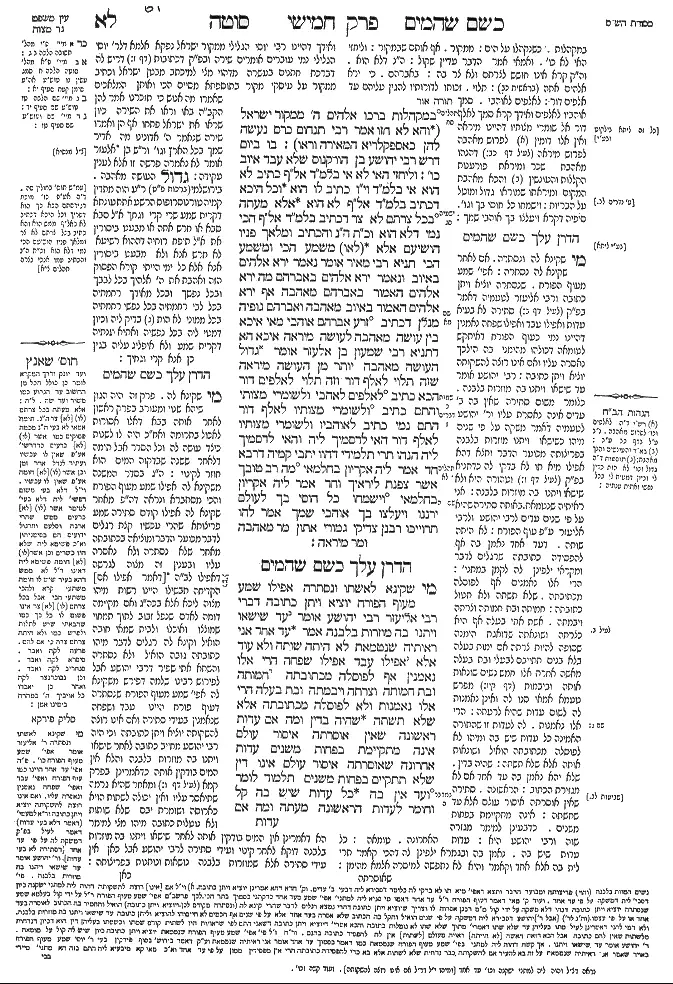
Sotah 31a - Guemara
(תהלים סח, כז) במקהלות ברכו אלהים ה' ממקור ישראל (והא לא חזו אמר רבי תנחום כרס נעשה להן כאספקלריא המאירה וראו) בו ביום דרש רבי יהושע בן הורקנוס שלא עבד איוב כו' וליחזי האי לא אי בלמ"ד אל"ף כתיב לא הוא אי בלמ"ד וי"ו כתיב לו הוא וכל היכא דכתיב בלמ"ד אל"ף לא הוא אלא מעתה (ישעיהו סג, ט) בכל צרתם לא צר דכתיב בלמ"ד אל"ף הכי נמי דלא הוא וכ"ת ה"נ והכתיב ומלאך פניו הושיעם אלא (לאו) משמע הכי ומשמע הכי תניא רבי מאיר אומר נאמר ירא אלהים באיוב ונאמר ירא אלהים באברהם מה ירא אלהים האמור באברהם מאהבה אף ירא אלהים האמור באיוב מאהבה ואברהם גופיה מנלן דכתיב (ישעיהו מא, ח) זרע אברהם אוהבי מאי איכא בין עושה מאהבה לעושה מיראה איכא הא דתניא רבי שמעון בן אלעזר אומר גדול העושה מאהבה יותר מן העושה מיראה שזה תלוי לאלף דור וזה תלוי לאלפים דור הכא כתיב (שמות כ, ה) לאלפים לאהבי ולשומרי מצותי והתם כתיב (דברים ז, ט) ולשומרי מצותיו לאלף דור התם נמי כתיב לאוהביו ולשומרי מצותיו לאלף דור האי לדסמיך ליה והאי לדסמיך ליה הנהו תרי תלמידי דהוו יתבי קמיה דרבא חד אמר ליה אקריון בחלמאי (תהלים לא, כ) מה רב טובך אשר צפנת ליראיך וחד אמר ליה אקריון בחלמאי (תהלים ה, יב) וישמחו כל חוסי בך לעולם ירננו ויעלצו בך אוהבי שמך אמר להו תרוייכו רבנן צדיקי גמורי אתון מר מאהבה ומר מיראה
הדרן עלך כשם שהמים
מתני׳ מי שקינא לאשתו ונסתרה אפילו שמע מעוף הפורח יוציא ויתן כתובה דברי רבי אליעזר רבי יהושע אומר עד שישאו ויתנו בה מוזרות בלבנה אמר עד אחד אני ראיתיה שנטמאת לא היתה שותה ולא עוד אלא אפילו עבד אפילו שפחה הרי אלו נאמנין אף לפוסלה מכתובתה חמותה ובת חמותה וצרתה ויבמתה ובת בעלה הרי אלו נאמנות ולא לפוסלה מכתובתה אלא שלא תשתה שהיה בדין ומה אם עדות ראשונה שאין אוסרתה איסור עולם אינה מתקיימת בפחות משנים עדות אחרונה שאוסרתה איסור עולם אינו דין שלא תתקיים בפחות משנים תלמוד לומר (במדבר ה, יג) ועד אין בה כל עדות שיש בה קל וחומר לעדות הראשונה מעתה ומה אם
Comments from Rashi on Masechet Sotah Page 31a
במקהלות . כשנקהלו על הים: ממקור . אף אותם שבמקור: וליחזי האי לא כו' . ואמאי אמר הדבר עדיין שקול: ה"נ דלא הוא . וה"ק קרא אינו חושש לצרתם ולא צר בה: באברהם . כי ירא אלהים אתה (בראשית כב): תלוי . זכותו לדורותיו להגין עליהם עד אלפים דור: לאלפים לאוהבי . סמך אוהביו לאלפים ואידך קרא סמך לאלף דור אל שומרי מצותיו דהיינו מיראה ואין אלו דומין לפרוש מאהבה לפרוש מיראה (לעיל סוטה דף כב:) דהנהו מאהבת שכר ומיראת פורענות הקללות והעונשין והכא מאהבת המקום ומיראתו שמוראו גדול ומוטל על הבריות: וישמחו כל חוסי בך וגו' . סיפיה דקרא ויעלצו בך אוהבי שמך: מי שקינא לה ונסתרה . אם לאחר שקינא לה נסתרה: אפי' שמע מעוף הפורח . שנסתרה יוציא ויתן כתובה ורבי אליעזר לטעמיה דאמר בפ"ק (לעיל סוטה דף ב:) סתירה לא בעיא עדות ואפילו עבד ואפילו שפחה נאמנין דהיינו נמי כעוף הפורח דאיתקש לטומאה דכולהו מהימני בה הילכך נאסרה עליו ואם אינו רוצה להשקותה יוציא ויתן כתובה: רבי יהושע אומר עד שישאו ויתנו בה מוזרות בלבנה . כלומר משום סתירה שאין בה ב' עדים אינה נאסרת עליו ור' יהושע לטעמיה דאמר משקה על פי שנים מיהו כשישאו ויתנו מוזרות בלבנה בפריצותה מכוער הדבר ותצא דהא אפילו מיא תו לא בדקי לה כדתניא בפ"ק (לעיל סוטה דף ו:) וטהורה היא ולא שישאו ויתנו בה מוזרות בלבנה: אני ראיתיה שנטמאת . באותה סתירה שהיא על פי שנים עדים לרבי יהושע ולרבי אליעזר ע"פ עוף הפורח: לא היתה שותה . דעד אחד נאמן בה אף להפסידה כתובתה שרגלים לדבר ומקראי ילפינן לה לקמן במתני': הרי אלו נאמנים אף לפוסלה מכתובתה . שלא תשתה ולא תטול כתובתה: חמותה ובת חמותה וצרתה ויבמתה . אשת אחי בעלה אף היא כצרתה ושונאתה שדואגת הימנה שסופה להיות צרתה אם ימות בעלה בלא בנים תתייבם לבעלי ובת בעלה מאשה אחרת אלו חמש נשים שונאות אותה וביבמות (דף קיז:) מפרש טעמא אמאי סנו לה ואינן נאמנות לה לשום עדות שהיא לרעתה: הרי אלו נאמנות . לה לעדות זו שהתורה האמינה כל עדות שיש בה ומיהו לא לפוסלה מכתובתה הואיל ושונאות אותה אלא שלא תשתה: שהיה בדין . שלא יהא נאמן בה עד אחד אם לא מגזירת הכתוב: הראשונה . סתירה שאין אוסרתה איסור עולם אלא עד שתשתה: אינה מתקיימת בפחות משנים . כדבעינן למימר מגזרה שוה ורבי יהושע היא: עדות האחרונה . טומאה: כל עדות שיש בה . נאמן בה ובגמרא ילפינן לה דהכי קאמר תרי לית בה אלא אחד וקאמר והיא לא נתפשה למיסרה אלמא מהימן:
Comments from Tosafot - Sotah 31a
גדול העושה מאהבה . בירושלמי (ברכות פ"ט) ר"ע הוה מתדין קמיה טורנוסרופוס הרשע אחת עונתא דקרית שמע שרי קרי וגחך א"ל סבא סבא או חרש אתה או מבעט ביסורין את א"ל תיפח רוחיה דההוא רשיעא לא חרש אנא ולא מבעט ביסורין אנא אלא כל ימי הייתי קורא הפסוק הזה ואהבת את ה' אלהיך בכל לבבך ובכל נפשך ובכל מאודך רחמתיה בכל לבי רחמתיה בכל נפשי רחמתיה בכל ממוני לא הות בדיק ליה וכיון דמטי ליה בכל נפשיה ואתיא ענתיה דקרית שמע ולא איפליג עליה בגין כן אנא קרי וגחיך: מי שקינא לה . פרק זה היה הגון שיהא שנוי ומעורב בפרק ראשון לאחר אותה בבא דאלו אסורות לאכול בתרומה ואח"כ היה לו לשנות כיצד עושה לה וכל הסדר אבל תימה דלאחר ששנה שבדקוה המים הוא חוזר לקינוי: ה"ג בסדר המשנה משקינא לה אפילו שמע מעוף הפורח והכי מסתברא ונראה דה"פ מאחר שקינא לה אפילו קודם סתירה שמע פריצותא שהרי עכשיו קצת רגלים לדבר מכוער הדבר ומוציאה בכתובתה מאחר שלא נסתרה ולא נאסרה עליו ובענין זה מצוה לגרשה דאפילו לב"ה [דאמר אפילו אם] הקדיחה תבשילו היינו רשות מיהו מצוה ליכא אלא בכה"ג ואם מקיימה דומה לאדם שנפל זבוב לתוך תמחוי שמוצצו ואוכלו ולבית שמאי חובה הואיל וקינא לה רגלים לדבר מיהו כתובתה גובה הואיל ולא נסתרה והשתא אתי שפיר דרבי יהושע אבל לפירוש רבינו שלמה דפירש משקינא לה אפי' שמע מעוף הפורח שנסתרה דעוף פורח היינו עבד ושפחה שנאמנין בעידי סתירה ואם אינו רוצה להשקותה יוציא ויתן כתובתה וכי היה רבי יהושע מחייב כתובה לאחר שישאו ויתנו בה מוזרות בלבנה והלא אין המים בודקין אותה כדאמרינן בפרק קמא (לעיל סוטה דף ו:) ומאחר שהיא גרמה שתיאסר עליו ואין יכולה לשתות הויא כארוסה ושומרת יבם שלא שותות ולא נוטלות כתובה מיהו מצי למימר הא דאמרינן אין המים בודקין אותה לאחר שישאו ויתנו בה מוזרות בלבנה דוקא לאחר קינוי ועידי סתירה לרבי יהושע אבל כאן אין עידי סתירה אלא שמוזרות בלבנה נושאות ונותנות בפריצותה:
Sotah 31a - Mishnah translated into english
“In full assemblies, bless God, the Lord, you that are from the source of Israel” (Psalms 68:27), indicating that even children that are in the “source,” i.e., their mother’s womb, blessed God when they gathered at the sea.
The Gemara asks: But the fetuses could not see, so how could they have honestly said: “This is my God and I will glorify him”? Rabbi Tanḥum says: Their mother’s stomach was transformed for them like luminous crystal [aspaklarya], and they saw through it.
§ On that same day Rabbi Yehoshua ben Hyrcanus taught that Job served the Holy One, Blessed be He, only out of love, as it is stated: “Though He will slay me, still I will trust in Him [lo]” (Job 13:15). The mishna continues that the word lo in the verse is ambiguous as to whether it is indicative of Job expressing his yearning for God or his lack thereof. The Gemara asks: Let us see whether this word lo is written lamed alef, and therefore its meaning is: I will not trust, or whether it is written lamed vav, according to which its meaning is: I trust in Him. Why is there room for doubt with regard to the meaning of the verse?
The Gemara counters: But is it true that anywhere that the word lo is written lamed alef, its meaning is: Not? If that is so, then in the verse: “In all their affliction He was [lo] afflicted” (Isaiah 63:9), where the word lo is written lamed alef, so too, does it mean: Not, i.e., God was not afflicted in the afflictions of the Jewish people?
And if you would say that indeed that is the meaning of the verse, but isn’t it written in the continuation of that same verse: “And the angel of His Presence saved them,” which clearly indicates that God was concerned with their afflictions? Evidently, the word lo in that verse means: “In all their affliction He was afflicted.” Rather, is it not clear that lamed alef sometimes indicates this and sometimes indicates that? Therefore, the mishna had to derive the proper meaning of the word from another verse.
It is taught in a baraita (Tosefta 6:1) that Rabbi Meir says: It is stated with regard to Job that he was “God-fearing” (Job 1:1), and it is stated with regard to Abraham that he was “God-fearing” (Genesis 22:12). Just as the description “God-fearing,” which is stated with regard to Abraham, is referring to Abraham’s fearing God out of love, so too, the description “God-fearing” that is stated with regard to Job indicates that Job feared God out of love.
The Gemara asks: And with regard to Abraham himself, from where do we derive that he acted out of a sense of love? As it is written: “The offspring of Abraham who loved Me” (Isaiah 41:8).
The Gemara asks: What difference is there between one who performs mitzvot out of love and one who performs mitzvot out of fear? The Gemara answers: There is that which is taught in a baraita that Rabbi Shimon ben Elazar says: Greater is the one who performs mitzvot out of love than the one who performs mitzvot out of fear, as with regard to this one who acts out of fear, his merits endure for one thousand generations, and with regard to that one who serves God out of love, his merits endure for two thousand generations.
Proof of this assertion is that here it is written: “And showing mercy unto thousands of generations of those who love Me and keep My commandments” (Exodus 20:5), indicating that merits can last for thousands of generations for those who act out of love, and there it is written: “Know therefore that the Lord your God, He is God; the faithful God, Who keeps the covenant and mercy with those who love Him and keep His commandments for a thousand generations” (Deuteronomy 7:9). The first verse indicates that those who act out of love retain their merits for thousands of generations, whereas the second verse, which mentions only one thousand generations of merit, is referring to the merits of those who keep God’s mitzvot out of fear.
The Gemara asks: But there also, in the second verse, it is written: “The faithful God, Who keeps the covenant and mercy with those who love Him and keep His commandments for a thousand generations” (Deuteronomy 7:9). Why is the verse interpreted specifically with regard to those who worship God out of fear, yet it is written that they keep His mitzvot out of love? Both types of people seem to be indicated in both verses.
The Gemara answers: That verse, which mentions one thousand generations, is understood as referring to that which is adjacent to it. The phrase “for a thousand generations” is understood as referring those who perform mitzvot out of fear, as it is written immediately preceding the phrase “and keep His commandments,” which does not mention love. And this verse, which mentions thousands of generations, is understood as referring to that which is adjacent to it: “Unto thousands of generations of those who love Me.”
It happened that there were these two students who were sitting before Rava, and one said to him: It was read to me in my dream: “How abundant is Your goodness, which You have laid up for those who fear You” (Psalms 31:20). And one said to Rava: It was read to me in my dream: “So shall all those who take refuge in You rejoice; they will forever shout for joy, and You will shelter them; let them also who love Your name exult in You” (Psalms 5:12). Rava said to them: You are both completely righteous Sages. One Sage, the second dreamer, serves God out of love, and one Sage, the first dreamer, serves God out of fear. Each Sage’s dream corresponded to his manner of serving God.
MISHNA: In the case of one who warned his wife not to seclude herself with a particular man and she subsequently secluded herself with the man she was warned about, even if he heard about it from a flying bird, or any other source whatsoever, he must divorce his wife. However, he must still grant her the money accorded to her by her marriage contract because there is no actual proof of her seclusion with the man in question. This is the statement of Rabbi Eliezer, who, as quoted in the first mishna of the tractate (2a), holds that there is no necessity for witnesses to testify with regard to the seclusion, and the woman becomes forbidden to her husband even in the absence of witnesses, by the husband’s word alone.
Rabbi Yehoshua disagrees, as he did in the mishna (2a), and says: He does not divorce his wife in the absence of witnesses until the gossiping women who sit and spin thread by the light of the moon begin to discuss her behavior, as they share the gossip of the town. The Gemara earlier (6b) taught that a woman whose infidelity became subject to this public discussion can no longer be tested by the bitter water of a sota. Consequently, she must get divorced.
The mishna continues to list various possible testimonies concerning such acts of seclusion. If one witness said: I saw that she became defiled during her seclusion by engaging in sexual intercourse with that other man, she does not drink the bitter water, but rather, he divorces her immediately. And furthermore, even if the one who testified was a slave or a maidservant, neither of whom is generally regarded as a valid witness, they are deemed credible to testify to the wife’s adultery even to the extent that their testimony disqualifies her from receiving her marriage contract and prevents her from drinking the bitter water.
The mishna continues by listing women whose testimony is only partially accepted concerning this matter: Her mother-in-law, and her mother in-law’s daughter, and her rival wife, i.e., a second wife of the husband, and her yevama, i.e., her husband’s brother’s wife, and her husband’s daughter, all of whom are generally not deemed credible if they say anything incriminating pertaining to this woman due to the tumultuous relationships these women often have. They are all deemed credible to testify concerning the woman’s defilement while in seclusion, but are not deemed credible to the extent that their testimony will disqualify her from receiving her marriage contract; rather, it is deemed credible to the extent that she will not drink of the bitter water of a sota.
This ruling allowing one witness’s testimony with regard to defilement needs to be stated, as, by right, it should not have been deemed credible based on the following a fortiori inference: And just as if with regard to the first testimony concerning seclusion, which does not forbid her with an irrevocable prohibition, as the woman can be found innocent permitting her again to her husband by drinking the bitter water, is not established with fewer than two witnesses, since according to the mishna the testimony of seclusion requires two witnesses, then with regard to the final testimony concerning defilement, which forbids her to her husband with an irrevocable prohibition, is it not logical that it should also not be established with fewer than two witnesses?
Therefore, to counter this derivation, the verse states: “And there be no witness against her” (Numbers 5:13), teaching that any testimony with regard to defilement that there is against her is sufficient, and two witnesses are not required.
The Mishnah asks: And from now that it is established that one witness suffices to testify with regard to defilement, an a fortiori inference can be made with regard to the first testimony of seclusion: And just as if
Traduction : The William Davidson digital edition of the Koren Noé Talmud, with commentary by Rabbi Adin Even-Israel Steinsaltz.