 Talmud Bavli
Nazir 45b : Youtube
Daf TubeYoutube
2 video classes :
Nazir Page 45b
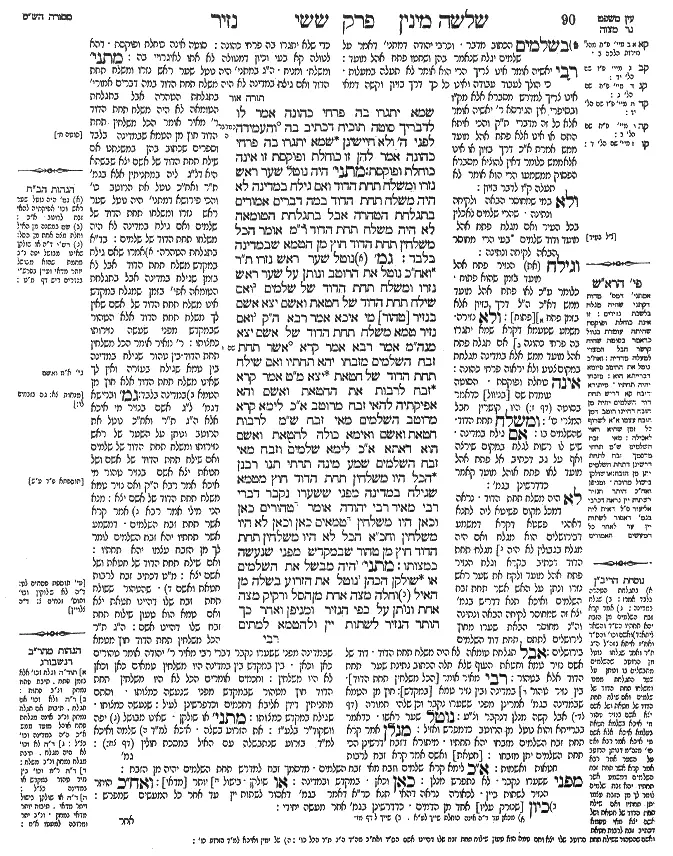
Nazir 45b - Guemara
שמא יתגרו בה פרחי כהונה אמר לו לדבריך סוטה תוכיח דכתיב בה (במדבר ה, יח) והעמידה לפני ה' ולא חיישינן שמא יתגרו בה פרחי כהונה אמר להן זו כוחלת ופוקסת זו אינה כוחלת ופוקסת:
מתני׳ היה נוטל שער ראש נזרו ומשלח תחת הדוד ואם גילח במדינה לא היה משלח תחת הדוד במה דברים אמורים בתגלחת הטהרה אבל בתגלחת הטומאה לא היה משלח תחת הדוד ר"מ אומר הכל משלחין תחת הדוד חוץ מן הטמא שבמדינה בלבד:
גמ׳ נוטל שער ראש נזרו ת"ר ואח"כ נוטל את הרוטב ונותן על שער ראש נזרו ומשלח תחת הדוד של שלמים ואם שילח תחת הדוד של חטאת ואשם יצא אשם בנזיר [טהור] מי איכא אמר רבא ה"ק ואם נזיר טמא משלח תחת הדוד של אשם יצא מנה"מ אמר רבא אמר קרא (במדבר ו, יח) אשר תחת זבח השלמים מזבחו יהא תחתיו ואם שילח תחת הדוד של חטאת יצא מ"ט אמר קרא זבח לרבות את החטאת ואשם והא אפיקתיה להאי זבח מרוטב א"כ לימא קרא מרוטב השלמים מאי זבח ש"מ לרבות חטאת ואשם ואימא כולה לחטאת ואשם הוא דאתא א"כ לימא שלמים וזבח מאי זבח השלמים שמע מינה תרתי תנו רבנן הכל היו משלחין תחת הדוד חוץ מטמא שגילח במדינה מפני ששערו נקבר דברי רבי מאיר רבי יהודה אומר טהורים כאן וכאן היו משלחין טמאים כאן וכאן לא היו משלחין וחכ"א הכל לא היו משלחין תחת הדוד חוץ מן טהור שבמקדש מפני שנעשה כמצותו:
מתני׳ היה מבשל את השלמים או שולקן הכהן נוטל את הזרוע בשלה מן האיל וחלה מצה אחת מן הסל ורקיק מצה אחת ונותן על כפי הנזיר ומניפן ואחר כך הותר הנזיר לשתות יין ולהטמא למתים
Comments from Rashi on Masechet Nazir Page 45b
כדי . שלא יתגרו בה פרחי כהונה: סוטה אינה כוחלת ופוקסת . דהא לנוולה קא בעי וכיון דמנוולה לא אתו לאיגרויי בה: מתני' ומשלח . ומניח: ה"ג במתני' היה נוטל שער ראש נזרו ומשלח תחת הדוד ואם גילח במדינה לא היה משלח תחת הדוד במה דברים אמורי' בתגלחת הטהרה אבל בתגלחת הטומאה לא היה משלח תחת הדוד ר' מאיר אומר הכל משלחין תחת הדוד חוץ מן הטמא שבמדינה בלבד . וספרים שכתוב בהן במשנתנו אם שילח תחת הדוד של אשם יצא שבשתא היא דל"ג ליה במתניתין אלא בגמ' ת"ר ואח"כ נוטל את הרוטב כו' והכי פירושא דמתני' היה נוטל שער ראש נזרו ומשלחו תחת הדוד של שלמים ואם גילח במדינה לא היה משלחו תחת הדוד של שלמים: בד"א בתגלחת הטהרה . אמרו שאם גילח במקדש משלח תחת הדוד אבל לא בזמן שגילח במדינה אבל בתגלחת הטומאה אפי' בזמן שמגלח במקדש אינו משלח תחת הדוד של אשם שאין לך משלח תחת הדוד אלא הטהור שבמקדש מפני שעשה נזירותו כמצותו: ר' מאיר אומר הכל משלחין תחת הדוד . בין טהור שגילח במדינה בין טמא שגילח בעזרה ואין לך שאינו משלח תחת הדוד אלא חוץ מן הטמא במדינה בלבד: גמ' וברישא דגמ' ל"ג אשם בנזיר מי איכא אלא ה"ג ת"ר ואח"כ נוטל את הרוטב ונותן על השער של ראש נזירותו ומשלח תחת הדוד של שלמים ואם שילח תחת הדוד של אשם ושל חטאת יצא אשם בנזיר טהור מי איכא אמר רבא ה"ק ואם נזיר טמא משלח תחת הדוד של אשם יצא: מנא הני מילי אמר רבא אמר קרא אשר תחת זבח השלמים . דמשמע אשר תחתיו יהא זבח השלמים לומר לך מן הזבח עצמו יהא תחתיו: ואם שילח . תחת הדוד של חטאת ושל אשם יצא: מ"ט דכתיב זבח לרבות חטאת ואשם . שהטהור ששולח תחת זבח שלו דהיינו חטאת יצא ואם טמא הוא טעון שילוח תחת זבח שלו דהיינו אשם: ה"ג ת"ר הכל משלחין תחת הדוד חוץ מטמא שבמדינה מפני ששערו נקבר דברי רבי מאיר ר' יהודה אומר טהורים כאן וכאן . בין במקדש בין במדינה היו משלחין טמאים כאן וכאן לא היו משלחין: וחכמים אומרים הכל לא היו משלחין תחת הדוד חוץ מטהור שבמקדש מפני שנעשה כמצותו . וסתם מתניתין דידן אליבא דחכמים וכדפרשינן לעיל: שנעשה כמצותו . שגילח במקדש כמצותו: מתני' או שולקן . שאינו מבושל יפה וושקוד"ר (ושקו"ד: כמעט חי (לא מבושל)) בלע"ז: את הזרוע בשלה . איכא למ"ד שלמה ואיכא למ"ד בזרוע שנתבשלה עם האיל במסכת חולין (דף צח:):
Comments from Tosafot - Nazir 45b
ומשלח תחת הדוד . שהשלמים בו: אם גילח במדינה . שיש לו רשות לגלח במקום שירצה ואף על גב דכתיב אל פתח אהל מועד לאו פתח אוהל מועד קאמר כדדרשינן בגמ': לא היה משלח תחת הדוד . נראה דמכל מקום פשיטא ליה לתנא דאהני פשטא דקרא דמשמע דבירושלים הוא מגלח ואם היה מגלח בגבולין לא היה מגלח תחת הדוד דכתיב בקרא וגלח הנזיר פתח אהל מועד ולקח את שער ראש נזרו ונתן על האש אשר תחת זבח השלמים ואיכא תנא דדריש בגמ' יצא זה שמחוסר לקיחה הבאה ונתינה וה"נ מחוסר הבאת שערו מחוץ לירושלים לתתם תחת דוד השלמים בירושלים: אבל תגלחת טומאה לא היה משלח תחת הדוד . דוד של אשם נזיר טמא וחטאת העוף שלא תלה הכתוב נתינת שער תחת הדוד אלא בטהור: רבי מאיר אומר [הכל משלחין תחת הדוד] . בין נזיר טהור במדינה ובין נזיר טמא [במקדש]: חוץ מן הטמא שבמדינה . בגמ' אמרינן מפני ששערו נקבר וכן שלהי תמורה (דף לד.) אבל קשה מנלן דנקבר וצ"ע: נוטל שער ראשו . כדאמר בברייתא והוא נוטל מן הרוטב כדמפרש ואזיל: מנלן אמר קרא תחת זבח השלמים מזבחו יהא תחתיו . מיתורא דזבח דרשינן הכי תחת השלמים יתן מזבחו: [חטאת] ואשם אמר קרא זבח לרבות חטאות ואשמות: א"כ לימא קרא שלמים וזבח מאי זבח השלמים . מדסמך זבח למדרש תחת השלמים יהיה מן הזבח: מפני ששערו נקבר . לא נתפרש מנלן: כאן וכאן . במקדש ובמדינה: או שולקן . בישול יותר [מדאי]: ואח"כ הותר הנזיר לשתות ביין . לכאורה נראה דהאי תנא כר"א דאמר בגמ' דאסור לשתות יין עד אחר כל המעשים שמפרש:
Nazir 45b - Mishnah translated into english
lest the young priests [pirḥei khehuna] present will become aroused by her when she uncovers her hair in their presence. One of the other Sages said to Rabbi Shimon Shezuri: According to your statement, the case of a sota will prove that this is not a concern, as it is written with regard to her: “And he shall set her before the Lord” (Numbers 5:16), and yet we are not concerned that perhaps the young priests will become aroused by her when her hair is uncovered.
Rabbi Shimon Shezuri said to them: There is a difference between a female nazirite and a sota. This one, the nazirite, paints her eyes blue [koḥelet] and applies blush [fokeset] to her face, and therefore there is a concern that young priests might be aroused by her appearance. By contrast, that one, the sota, does not apply blue eye shadow and does not apply blush. Since a sota is not beautified, but is made to appear wretched and looks disheveled, there is no concern that she might arouse the men.
MISHNA: After the nazirite shaved off his hair, he would take the hair of his consecrated head and throw it under the pot in which the peace-offering was cooked, where it would burn. And if the nazirite shaved in the rest of the country, i.e., outside the Temple, he would not throw the hair under the pot. In what case is this statement said? It is said with regard to the shaving of purity. However, with regard to the shaving of impurity, i.e., shaving that accompanied his guilt-offering and sin-offering of birds after his term of naziriteship was interrupted by impurity, he would not throw his hair under the pot in which his offerings were cooked, as the Torah stated this requirement only for a pure nazirite.
Rabbi Meir says: Everyone throws his hair under the pot, including a pure nazirite who shaved outside the Temple and an impure nazirite, except for an impure nazirite who shaved in the rest of the country. In that case alone he refrains from throwing his hair to be burned beneath his offering.
GEMARA: The mishna states that he would take the hair of his consecrated head. The Sages taught: And afterward, after cooking the peace-offering, he takes the gravy [rotev] in which the offering had been cooked, places it on the shaven hair of his consecrated head, and throws the hair under the pot of his peace-offering. And if he threw his hair under the pot of the sin-offering or the guilt-offering, he has fulfilled his obligation after the fact. The Gemara expresses surprise at this statement: Is there a guilt-offering brought by a pure nazirite? Only an impure nazirite brings a guilt-offering. Rava said that this is what the tanna said, i.e., meant: And if an impure nazirite threw his hair under the pot of the guilt-offering, he has fulfilled his obligation.
The Gemara asks: From where are these matters derived, that he must pour gravy from the offering over his hair? Rava said that as the verse states: “And he shall take the hair of his consecrated head and put it on the fire which is under the sacrifice of the peace-offering” (Numbers 6:18), this indicates that part of his sacrifice must be under the hair.
With regard to the statement of the baraita: And if he threw his hair under the pot of the sin-offering he has fulfilled his obligation, the Gemara asks: What is the reason for this? The Gemara answers that the verse states: “The sacrifice of the peace-offering,” when it could simply have stated: The peace-offering. This serves to include the sin-offering and the guilt-offering, which are also sacrifices. The Gemara asks: But you have already derived from this term “sacrifice” that he must pour part of the gravy of the peace-offering over his hair. The Gemara answers: If so, let the verse say explicitly: From the gravy of the peace-offering. Why does it state: “Sacrifice”? Learn from here that it serves to include the sin-offering and the guilt-offering.
The Gemara questions this statement from a different perspective: And one can say that this verse comes entirely to teach about the sin-offering and guilt-offering, and it does not refer to the gravy at all. The Gemara answers: If so, let it state: Peace-offering and a sacrifice; for what reason does it write: “The sacrifice of the peace-offering”? Conclude two conclusions from the verse.
§ The Sages taught (Tosefta 4:6): All nazirites would throw their hair under the pot, except for an impure nazirite who shaved in the rest of the country, because that one’s hair is buried. This is the statement of Rabbi Meir. Rabbi Yehuda says: Pure nazirites, whether they are here or there, inside or outside the Temple, would throw their hair under the pot; impure nazirites, whether here or there, would not throw it. And the Rabbis say: None would throw their hair under the pot, except for a pure nazirite in the Temple, because only in that case is the mitzva performed properly, as commanded by the Torah.
MISHNA: The nazirite would cook the peace-offering or overcook it, i.e., cook it thoroughly. The priest takes the cooked foreleg from the ram, and one unleavened loaf from the basket, and one unleavened wafer, and places them on the palms of the nazirite and waves them, as described in the Torah (Numbers 6:19–20). And afterward the nazirite is permitted to drink wine and to contract ritual impurity imparted by a corpse.
Traduction : The William Davidson digital edition of the Koren Noé Talmud, with commentary by Rabbi Adin Even-Israel Steinsaltz.