 Talmud Bavli
Mo'ed Katan 22b : Youtube
Daf TubeYoutube
2 video classes :
Mo'ed Katan Page 22b
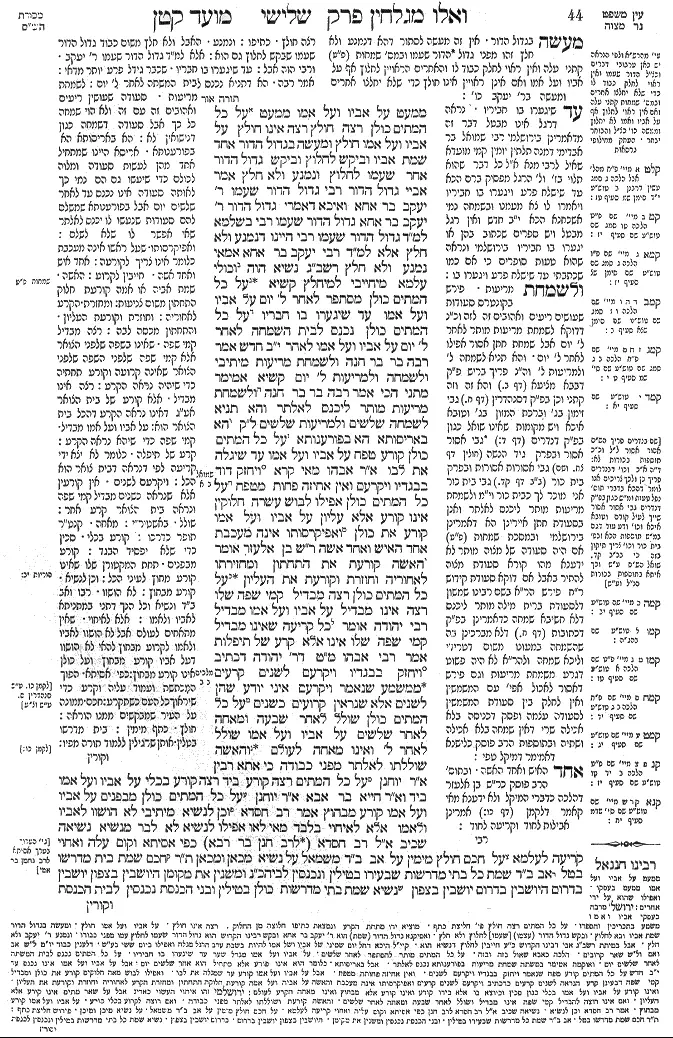
Mo'ed Katan 22b - Guemara
ממעט על אביו ועל אמו ממעט על כל המתים כולן רצה חולץ רצה אינו חולץ על אביו ועל אמו חולץ ומעשה בגדול הדור אחד שמת אביו וביקש לחלוץ וביקש גדול הדור אחר שעמו לחלוץ ונמנע ולא חלץ אמר אביי גדול הדור רבי גדול הדור שעמו ר' יעקב בר אחא ואיכא דאמרי גדול הדור ר' יעקב בר אחא גדול הדור שעמו רבי בשלמא למ"ד גדול הדור שעמו רבי היינו דנמנע ולא חלץ אלא למ"ד רבי יעקב בר אחא אמאי נמנע ולא חלץ רשב"ג נשיא הוה וכולי עלמא מיחייבי למיחלץ קשיא על כל המתים כולן מסתפר לאחר ל' יום על אביו ועל אמו עד שיגערו בו חבריו על כל המתים כולן נכנס לבית השמחה לאחר ל' יום על אביו ועל אמו לאחר י"ב חדש אמר רבה בר בר חנה ולשמחת מריעות מיתיבי ולשמחה ולמריעות ל' יום קשיא אמימר מתני הכי אמר רבה בר בר חנה ולשמחת מריעות מותר ליכנס לאלתר והא תניא לשמחה שלשים ולמריעות שלשים ל"ק הא באריסותא הא בפורענותא על כל המתים כולן קורע טפח על אביו ועל אמו עד שיגלה את לבו א"ר אבהו מאי קרא (שמואל ב א, יא) ויחזק דוד בבגדיו ויקרעם ואין אחיזה פחות מטפח על כל המתים כולן אפילו לבוש עשרה חלוקין אינו קורע אלא עליון על אביו ועל אמו קורע את כולן ואפיקרסותו אינה מעכבת אחד האיש ואחד אשה ר"ש בן אלעזר אומר האשה קורעת את התחתון ומחזירתו לאחוריה וחוזרת וקורעת את העליון על כל המתים כולן רצה מבדיל קמי שפה שלו רצה אינו מבדיל על אביו ועל אמו מבדיל רבי יהודה אומר כל קריעה שאינו מבדיל קמי שפה שלו אינו אלא קרע של תיפלות אמר רבי אבהו מ"ט דר' יהודה דכתיב (מלכים ב ב, יב) ויחזק בבגדיו ויקרעם לשנים קרעים ממשמע שנאמר ויקרעם איני יודע שהן לשנים אלא שנראין קרועים כשנים על כל המתים כולן שולל לאחר שבעה ומאחה לאחר שלשים על אביו ועל אמו שולל לאחר ל' ואינו מאחה לעולם והאשה שוללתו לאלתר מפני כבודה כי אתא רבין א"ר יוחנן על כל המתים רצה קורע ביד רצה קורע בכלי על אביו ועל אמו ביד וא"ר חייא בר אבא א"ר יוחנן על כל המתים כולן מבפנים על אביו ועל אמו קורע מבחוץ אמר רב חסדא וכן לנשיא מיתיבי לא הושוו לאביו ולאמו אלא לאיחוי בלבד מאי לאו אפילו לנשיא לא לבר מנשיא נשיאה שכיב א"ל רב חסדא (לרב חנן בר רבא) כפי אסיתא וקום עלה ואחוי קריעה לעלמא על חכם חולץ מימין על אב ב"ד משמאל על נשיא מכאן ומכאן ת"ר חכם שמת בית מדרשו בטל אב ב"ד שמת כל בתי מדרשות שבעירו בטילין ונכנסין לביהכ"נ ומשנין את מקומן היושבין בצפון יושבין בדרום היושבין בדרום יושבין בצפון נשיא שמת בתי מדרשות כולן בטילין ובני הכנסת נכנסין לבית הכנסת
Comments from Rashi on Masechet Mo'ed Katan Page 22b
רצה חולץ . כתיפו: ונמנע . האבל ולא חלץ משום כבוד גדול הדור שעמו שבקש לחלוץ גם הוא: אלא למ"ד גדול הדור שעמו ר' יעקב . ורבי הוה אבל: עד שיגערו בו חבריו . שכבר גידל פרע יותר מדאי: אמר רבה . הא דתניא נכנס לבית המשתה לאחר ל' יום: לשמחת מריעות . סעודה שעושין ריעים ואהובים זה עם זה ולא הוי שמחה כל כך אבל סעודה דשמחה כגון דנישואין לא: הא באריסותא הא בפורענותא . אריסא היינו שמתחיל אחד מהן לעשות סעודה ומלוה לכולם כדי שיעשו גם הם נמי כך לאותה סעודה אינו נכנס עד לאחר שלשים יום אבל בפורענותא שמשלם להם סעודות שנעשו לו יכנס לאלתר שאי אפשר לו שלא לשלם: ואפיקרסותו . שעל ראשו אינה מעכבת כלומר אינו צריך לקורעה: אחד איש ואחד אשה . חייבין לקרוע: האשה . שמת אביה או אמה קורעת חלוק התחתון משום צניעות: ומחזרת . הקרע לאחוריה: וחוזרת וקורעת העליון . והתחתון מכסה לבה: רצה מבדיל קמי שפה . שאינו בשפה שלפני הצואר אלא קמי שפה שלפני השפה שלפני הצואר שאינה קרועה וקורע תחתיה כדי שיהיה נראה הקרע: רצה אינו מבדיל . אלא קורע של בית הצואר אע"ג דאינו נראה הקרע דהכל בית הצואר הוא: על אביו ועל אמו מבדיל . קמי שפה כדי שיהא נראה הקרע: קרע של תיפלה . כלומר לא יצא ידי קריעה לפי דנראה דבית צואר הוא הכל: ויקרעם לשנים . אין קורעין אלא שנראה כשנים מבדיל קמי שפה ונראה בית הצואר קרע אחר: שולל . באשטיר"י: מאחה . קנט"ר תופר כדרכו: קורע בכלי . סכין כדי שלא יפסיד הבגד: קורע מבפנים . תחת המקטורן שלו שאינו קורע מחוץ לעיני הכל: וכן לנשיא . קורע מבחוץ: לא הושוו . רבו ואב ב"ד ונשיא וכל הנך דתני במתניתא לאביו ולאמו: אלא לאיחוי . שאין מתאחים לעולם אבל לא הושוו לאביו ולאמו לקרוע מבחוץ להאי לא הושוו דעל אביו קורע מבחוץ ועל כולן אינו קורע מבחוץ: כפי אסיתא . הפוך המכתשת ועמוד עליה וקרע כדי שיראוך כל העם כשתקרע: חכם . ממונה על העיר שמבקשים ממנו הוראה: חולץ . כתף מימין: בית מדרשו בטלין . אותן שרגילין ללמוד תורה מפיו:
Comments from Tosafot - Mo'ed Katan 22b
מעשה בגדול הדור. אין זה מעשה לסתור דהא דנמנע ולא חלץ זהו מפני גדול הדור שעמו ובמס' שמחות (פ"ט) קתני עלה ואין ראוי לחלק כבוד לו והאחרים הראויין לחלוץ אף על אביו ועל אמו ואם אינן ראויין אינו חולץ כדי שלא יחלצו אחרים ומעשה בר' יעקב כו': עד שיגערו בו חביריו. נראה דרגל אינו מבטל דבר זה מדאמרינן בירושלמי רבי שמואל בר אבדימי דמנה תלתין יומין קמי מועדא שאיל לרבי מנא א"ל כל דבר שהוא תלוי בז' ול' הרגל מפסיק ברם הכא עד שישלח פרע ויגערו בו חביריו ויאמרו לו צא מעמנו ובשמחה נמי אשכחנא הכא י"ב חדש ואין רגל מבטל ויש ספרים שכתוב בהן או יגערו בו חביריו בירושלמי ונראה שהוא טעות סופרים כי אם כמו שכתבתי עד שישלח פרע ויגערו בו: ולשמחת מריעות. פירש בקונטרס סעודות שעושים ריעים ואהובים זה לזה וכ"נ דדוקא לשמחת מריעות מותר לאחר ל' יום אבל שמחת חתן אסור אפילו לאחר ל' יום. והא תניא לשמחה ל' ולמריעות ל' וה"נ פריך בריש פ"ק דבבא מציעא (דף ב.) והא זה וזה קתני וכן בפ"ק דסנהדרין (דף ח.) גבי זימון בג' וברכת המזון בג' וטובא איכא ויש מקומות שאינו שואל כגון בפ"ק דנדרים (דף ד:). גבי אסור אסור ובפרק גיד הנשה (חולין דף צח. ושם) גבי אסורות אסורות ובפרק בית כור (ב"ב דף קד.) גבי בית כור אני מוכר לך כבית כור וי"מ ולשמחת מריעות מותר ליכנס לאלתר ואנן בסעודת חתן איירינן הא דאמרינן בירושלמי ובמסכת שמחות (פ"ט) אם היה סעודה של מצוה מותר לא ידענא מהו קורא סעודת מצוה להתיר באבל אם דוקא סעודת קידוש ר"ח פירש הר"א בשם רבינו שמשון דלסעודת ברית מילה מותר ליכנס דלא חשיבא שמחה כדאמרינן בפ"ק דכתובות (דף ח.) דלא מברכינן בה שהשמחה במעונו משום דטרידי וליכא שמחה ולהר"א לא היה פשוט דגרע משמחת מריעות וגם פירש דאסור לאכול אפי' עם המשמשין ואין לחלק בין סעודת המשמשין לסעודה עצמה ופסק דכניסה בלא אכילה שרי דאין שמחה בלא אכילה ושתיה ובתוספות הרב פוסק כלישנא דאמימר דמיקל טפי: אחד האיש ואחד האשה. ובתוס' הרב פוסק כר"ש בן אלעזר דהלכה כדברי המיקל. ולא ידענא מאי קאמר דלקמן (מועד קטן דף כו:) אמרינן אבילות לחוד וקריעה לחוד:
Mo'ed Katan 22b - Mishnah translated into english
reduce it. In the case of his father or mother, he must always reduce his business.
With regard to all other deceased relatives, if the mourner wishes, he may remove his garment from one of his shoulders, and if he wishes not to remove it, he need not remove it. However, in the case of his father or mother, he must always remove his garment from one of his shoulders.
There was an incident when the father of a leading authority of his generation died, and the authority wished to remove his garment from one shoulder. Another leading authority of the generation also wished to remove his own garment together with him, in order to join him in his mourning, but due to this the first person refrained and did not remove his garment, so that his colleague would not remove his garment as well.
Abaye said: The leading authority of the generation mentioned here is Rabbi Yehuda HaNasi, and the leading authority of the generation who was with him was Rabbi Ya’akov bar Aḥa. And some say: The leading authority of the generation was Rabbi Ya’akov bar Aḥa, and the leading authority of the generation who was with him was Rabbi Yehuda HaNasi.
The Gemara examines this issue: Granted, according to the one who said that the leading authority of the generation who was with him was Rabbi Yehuda HaNasi, this is the reason that he refrained and did not remove his garment from his shoulder. That is to say, Rabbi Ya’akov bar Aḥa refrained from doing so because he did not wish to cause the Nasi to remove his own garment.
But according to the one who said that it is Rabbi Ya’akov bar Aḥa who was the leader of the generation with him, why did Rabbi Yehuda HaNasi refrain and not remove his garment from his shoulder? Rabban Shimon ben Gamliel, the father of Rabbi Yehuda HaNasi, was also the Nasi, and everyone is required to remove his garment from his shoulder for him, as was the accepted practice. Therefore, Rabbi Ya’akov bar Aḥa would also have been required to bare his shoulder. Why, then, did Rabbi Yehuda HaNasi prevent him from doing so? The Gemara concludes: Indeed this is difficult.
§ The Gemara returns to the continuation of the baraita: With regard to all deceased relatives except for parents, one may cut his hair after thirty days. In the case of one’s father or mother, one may not cut his hair until his colleagues have rebuked him for his hair being too long. With regard to all other deceased relatives, he may enter a place where a joyous celebration is taking place after thirty days; in the case of his father or mother, he may enter such a place only after twelve months.
Rabba bar bar Ḥana said: The ruling that a mourner may enter a house of joy after thirty days applies specifically to a joyous social gathering, that is to say, to the joyous meals that a group of friends would eat together, each taking a turn hosting. But this ruling does not apply to a large joyous occasion, such as a wedding feast. The Gemara raises an objection from a baraita which adds: And also for joyous social gatherings, thirty days. This implies that when the baraita speaks of joyous celebrations without further specification, it is not referring to joyous social gatherings, but even to weddings and other joyous occasions. The Gemara concludes: Indeed, it is difficult.
Ameimar taught the previous discussion as follows: Rabba bar bar Ḥana said an alternative version of the discussion: For a joyous social gathering one is permitted to enter immediately. The Gemara poses a question: But isn’t it taught in a baraita: For joyous celebrations and for joyous social gatherings, one must wait thirty days?
The Gemara answers: This is not difficult. This ruling, of the baraita, is referring to an initial gathering, when the mourner is the first in the group of friends to host. The baraita teaches that in such a situation the mourner is required to wait thirty days before doing so. That ruling, of Rabba bar bar Ḥana, is referring to a reciprocal gathering. The mourner’s friends have already hosted these gatherings, and now it is his turn to host. Since he is required to host such a gathering for his colleagues, he need not postpone it. Rather, he may host the group immediately.
The baraita continues: With regard to all other deceased relatives, one rends his garment the length of a handbreadth, and that suffices. In the case of his father or mother, he must rend his garment until he reveals his heart. Rabbi Abbahu said: What is the verse that teaches that the rent must be a handbreadth? “And David took hold of his clothes and rent them” (II Samuel 1:11), and taking hold cannot be done for a garment less than a handbreadth.
The baraita teaches further: With regard to all other deceased relatives, even if he is wearing ten garments, one on top of the other, he rends only his outer garment. But in the case of his father or mother, he must rend them all. Failure to rend his undergarment, however, does not invalidate the fulfillment of the mitzva.
Both a man and a woman are required to rend their garments. Rabbi Shimon ben Elazar says: A woman first rends her inner garment and turns it around, so that the tear is on her back. And only afterward does she rend her outer garment, so that she does not expose her chest.
With regard to all other deceased relatives, if one wishes he may rip apart his garment on the hem, rather than merely expanding the neck hole, so that the tear stands out distinctly from the opening of the garment. If he wishes not to do this, he does not rip apart the hem in this manner. That is to say, one may simply enlarge the neck hole, although rending a garment in this way makes the tear less prominent. In the case of one’s father or mother, however, he must always rip apart the hem.
Rabbi Yehuda says: Any rending that does not rip apart his garment on the hem of the garment is nothing other than a frivolous rent of no significance, as it must be evident that one has rent his garment in mourning and that the rent is not merely an imperfection in the garment. Rabbi Abbahu said: What is the reason for Rabbi Yehuda’s opinion? As it is written: “And he took hold of his own clothes and he rent them in two pieces” (II Kings 2:12). From that which is stated: “And he rent,” do I not know that he rent them in two? Rather, these words teach that the rent clothes must appear as if they were torn into two pieces, i.e., the tear must be obvious and visible.
The baraita continues: With regard to all other deceased relatives, one may tack the tear with rough stitches after seven days, and one may join the edges more carefully after thirty days. But in the case of one’s father or mother, he may tack the tear only after thirty days, and he may never again join the edges more carefully. A woman, however, may tack the tear immediately, due to her honor, for it would be dishonorable for her to be seen with torn garments.
When Ravin came from Eretz Yisrael to Babylonia, he said that Rabbi Yoḥanan said: With regard to all other deceased relatives, if one wishes, he may rend his garment with his hand; and if he wishes, he may rend it with a utensil in a way that will preserve it. But in the case of his father or mother, he must rend his garment with his hand in a manner that will utterly ruin it.
And Rabbi Ḥiyya bar Abba said that Rabbi Yoḥanan said: With regard to all other deceased relatives, one rends his garment on the inside, meaning, he rends his inner garment and not necessarily his outermost garment. In the case of one’s father or mother, however, he must rend the garment on the outside, i.e., the outermost garment. Rav Ḥisda said: And likewise, over a Nasi, one is required to rend his garment as he does over his father.
The Gemara raises an objection from a baraita in which it was taught: The halakhot of rending for the death of other people referred to in the baraita, e.g., a Nasi, a president of the court, or one’s teacher, were likened to the halakhot of rending for one’s father or mother only with regard to the issue of carefully rejoining the edges of the rent, as in all of these cases it is prohibited to mend one’s garment with precise stitches.
What, is this baraita not also referring even to one who rends his garment for the Nasi? The Gemara rejects this: No, the baraita is referring to the other people, aside from one who rends his garment for the Nasi, as rending for the Nasi is the same as rending for one’s father with regard to all aspects of the rending.
It was related that the Nasi died, and Rav Ḥisda said to Rav Ḥanan bar Rava: Turn the mortar over and stand on it, and show the rent to everyone. Everyone will then rend his garment in this manner, as everyone is required to rend his garment over the death of the Nasi.
§ It was further taught: For mourning a Sage, one removes his garment from the right shoulder. For the president of the court he removes his garment from the left shoulder. For the Nasi he removes his garment from here and from here, from both shoulders.
The Sages taught the following baraita: When a Sage dies, his study hall ceases its regular study as a sign of mourning over him. When the president of the court dies, all of the study halls in his city cease their regular study, and everyone enters the synagogue and changes their places there as a sign of mourning over him. Those who ordinarily sit in the north should sit in the south, and those who ordinarily sit in the south should sit in the north. When a Nasi dies, all study halls cease their regular study. On Shabbat, the members of the synagogue enter the synagogue for public Torah reading, which requires a congregation of ten,
Traduction : The William Davidson digital edition of the Koren Noé Talmud, with commentary by Rabbi Adin Even-Israel Steinsaltz.