 Talmud Bavli
The learning on the whole site is dedicated : L'ilui Nishmat Reuven ben Rivka SEBBAG
The learning on the whole site is dedicated : L'ilui Nishmat יוסף בן מושה
The learning on the whole site is dedicated : L'ilui Nishmat Chemouel Eliezer ben Batcheva
Mo'ed Katan 25a : Youtube
Daf TubeYoutube
2 video classes :
Mo'ed Katan Page 25a
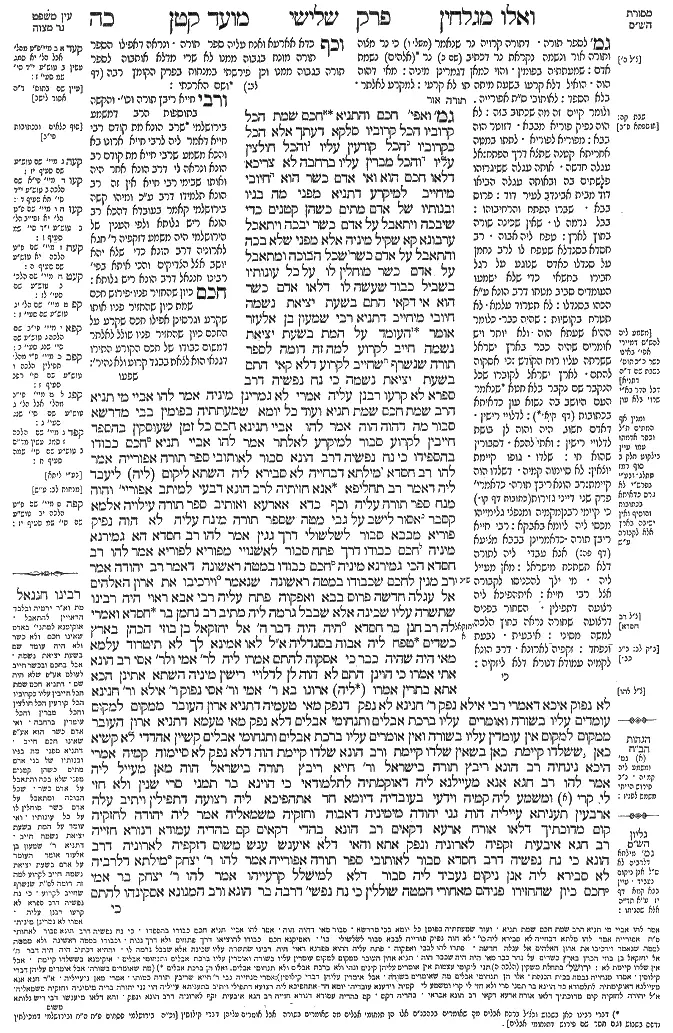
Mo'ed Katan 25a - Guemara
גמ׳ ואפי' חכם והתניא חכם שמת הכל קרוביו הכל קרוביו סלקא דעתך אלא הכל כקרוביו הכל קורעין עליו והכל חולצין עליו והכל מברין עליו ברחבה לא צריכא דלאו חכם הוא ואי אדם כשר הוא חיובי מיחייב למיקרע דתניא מפני מה בניו ובנותיו של אדם מתים כשהן קטנים כדי שיבכה ויתאבל על אדם כשר יבכה ויתאבל ערבונא קא שקיל מיניה אלא מפני שלא בכה והתאבל על אדם כשר שכל הבוכה ומתאבל על אדם כשר מוחלין לו על כל עונותיו בשביל כבוד שעשה לו דלאו אדם כשר הוא אי דקאי התם בשעת יציאת נשמה חיובי מיחייב דתניא רבי שמעון בן אלעזר אומר העומד על המת בשעת יציאת נשמה חייב לקרוע למה זה דומה לספר תורה שנשרף שחייב לקרוע דלא קאי התם בשעת יציאת נשמה כי נח נפשיה דרב ספרא לא קרעו רבנן עליה אמרי לא גמרינן מיניה אמר להו אביי מי תניא הרב שמת חכם שמת תניא ועוד כל יומא שמעתתיה בפומין בבי מדרשא סבור מה דהוה הוה אמר להו אביי תנינא חכם כל זמן שעוסקין בהספד חייבין לקרוע סבור למיקרע לאלתר אמר להו אביי תניא חכם כבודו בהספידו כי נח נפשיה דרב הונא סבור לאותובי ספר תורה אפורייה אמר להו רב חסדא מילתא דבחייה לא סבירא ליה השתא ליקום (ליה) ליעבד ליה דאמר רב תחליפא אנא חזיתיה לרב הונא דבעי למיתב אפוריי' והוה מנח ספר תורה עליה וכף כדא אארעא ואותיב ספר תורה עילויה אלמא קסבר אסור לישב על גבי מטה שספר תורה מונח עליה לא הוה נפיק פוריא מבבא סבור לשלשולי דרך גגין אמר להו רב חסדא הא גמירנא מיניה חכם כבודו דרך פתח סבור לאשנויי מפוריא לפוריא אמר להו רב חסדא הכי גמירנא מיניה חכם כבודו במטה ראשונה דאמר רב יהודה אמר רב מנין לחכם שכבודו במטה ראשונה שנאמר (שמואל ב ו, ג) וירכיבו את ארון האלהים אל עגלה חדשה פרוס בבא ואפקוה פתח עליה רבי אבא ראוי היה רבינו שתשרה עליו שכינה אלא שבבל גרמה ליה מתיב רב נחמן בר חסדא ואמרי לה רב חנן בר חסדא (יחזקאל א, ג) היה היה דבר ה' אל יחזקאל בן בוזי הכהן בארץ כשדים טפח ליה אבוה בסנדליה א"ל לאו אמינא לך לא תיטרוד עלמא מאי היה שהיה כבר כי אסקוה להתם אמרו ליה לר' אמי ולר' אסי רב הונא אתי אמרו כי הוינן התם לא הוה לן לדלויי רישין מיניה השתא אתינן הכא אתא בתרין אמרו (ליה) ארונו בא ר' אמי ור' אסי נפוק ר' אילא ור' חנינא לא נפוק איכא דאמרי רבי אילא נפק ר' חנינא לא נפק דנפק מאי טעמיה דתניא ארון העובר ממקום למקום עומדים עליו בשורה ואומרים עליו ברכת אבלים ותנחומי אבלים דלא נפק מאי טעמא דתניא ארון העובר ממקום למקום אין עומדין עליו בשורה ואין אומרים עליו ברכת אבלים ותנחומי אבלים קשיין אהדדי לא קשיא כאן ששלדו קיימת כאן בשאין שלדו קיימת ורב הונא שלדו קיימת הוה דלא נפק לא סיימוה קמיה אמרי היכא נינחיה רב הונא ריבץ תורה בישראל ור' חייא ריבץ תורה בישראל הוה מאן מעייל ליה אמר להו רב חגא אנא מעיילנא ליה דאוקמתיה לתלמודאי כי הוינא בר תמני סרי שנין ולא חזי לי קרי ומשמע ליה קמיה וידעי בעובדיה דיומא חד אתהפיכא ליה רצועה דתפילין ויתיב עלה ארבעין תעניתא עייליה הוה גני יהודה מימיניה דאבוה וחזקיה משמאליה אמר ליה יהודה לחזקיה קום מדוכתיך דלאו אורח ארעא דקאים רב הונא בהדי דקאים קם בהדיה עמודא דנורא חזייה רב חגא איבעית זקפיה לארוניה ונפק אתא והאי דלא איענש ענש משום דזקפיה לארוניה דרב הונא כי נח נפשיה דרב חסדא סבור לאותובי ספר תורה אפורייה אמר להו ר' יצחק מילתא דלרביה לא סבירא ליה אנן ניקום נעביד ליה סבור דלא למישלל קרעייהו אמר להו ר' יצחק בר אמי חכם כיון שהחזירו פניהם מאחורי המטה שוללין כי נח נפשי' דרבה בר הונא ורב המנונא אסקינהו להתם
Comments from Rashi on Masechet Mo'ed Katan Page 25a
גמ' לספר תורה . דתורה קרויה נר שנאמר (משלי ו) כי נר מצוה ותורה אור ונשמה נקראת נר דכתיב (שם כ) נר (אלהים) נשמת אדם: שמעתתיה בפומין . והוי כמאן דגמרינן מיניה: מאי דהוה הוה . הואיל דלא קרעו בשעת מיתה תו לא קרעי: למקרע לאלתר . בלא הספד: לאותובי ס"ת אפורייה . ולומר קיים זה מה שכתוב בזה: לא הוה נפיק פוריא מבבא . דזוטר הוה בבא: מפוריא לפוריא . לתתו במטה אחריתא קטנה שתצא דרך הפתח: אל עגלה חדשה . אותה עגלה ששיגרוהו פלשתים בה ובאותה עגלה הביאו דוד מבית אבינדב לעיר דוד: פרוס בבא . שברו הפתח והרחיבוהו: בבל גרמה לו . שאין שכינה שורה בחוץ לארץ: טפח ליה אבוה . רב חסדא בסנדלא שטפח לו לרב נחמן על סנדלו כאדם שנוגע על רגל חבירו בחשאי כדי שלא ישמעו העומדים סביב מטתו דרב הונא ע"א הכהו בסנדלו: לא תטרוד עלמא . לא תטרח בקושיות: שהיה כבר . כלומר ההיא שעתא הוה ולא יותר ויש אומרים שהיה כבר בארץ ישראל ששרתה עליו רוח הקודש: כי אסקוה להתם . לארץ ישראל לקוברו שכל הנקבר שם נקבר בלא חטא שנאמר העם היושב בה נשוא עון כדאיתא בכתובות (דף קיא.): לדלויי רישין . דאדם חשוב היה והוה לן בושת לדלויי רישין: ואתי להכא . דסבורין שהוא חי: שלדו . גופו קיימת יוצאין: לא סיימוה קמיה . דשלדו הוה קיימת: רב הונא ריבץ תורה . כדאמרינן פרק שני דייני גזירות (כתובות דף קו.) כי קיימי רבנן מקמיה ומנפצי גלימייהו מכסי ליה ליומא באבקא: רבי חייא ריבץ תורה . כדאמרינן בבבא מציעא (דף פה:) אנא עבדי ליה לתורה דלא תשתכח מישראל: מאן מעייל ליה . מי ילך להכניסו לקבורה אצל רבי חייא: איתהפיכא ליה רצועה דתפילין . השחור בפנים דרצועה שחורה נראה בחוץ הלכה למשה מסיני: איבעית . נבעת ונפחד: זקפיה לארונא . דרב הונא לקמיה עמודא דנורא דלא ליזקיה:
Comments from Tosafot - Mo'ed Katan 25a
וכף כדא אארעא ואנח עליה ספר תורה. ונראה דאפילו הספר תורה מונח בגבוה ממנו לא שרי מדלא אותבוה לספר תורה בגבוה ממנו וכן פירשתי במנחות בפרק הקומץ רבה (דף לב:). ושם הארכתי: ורבי חייא ריבץ תורה וכו'. והקשה בתוספות הרב דמשמע בירושלמי. שרב הונא מת קודם רבי חייא דאמר ליה לרבי חייא ארונו בא והכא משמע שרבי חייא מת קודם רב הונא ונראה לי דרב הונא אחר היה ואותו שבימי רבי חייא אין זה רב הונא תלמידו דרב ע"כ ומיהו קשה בירושלמי קאמר בעובדא דהכא רב הונא ריש גלותא ולפי הענין של הירושלמי היה משמע דזקפיה ר' חגא לארוניה דרב הונא כדי שלא יהא יושב אצל הצדיקים והכי איתא בפי' רבינו חננאל דרב הונא ריש גלותא: חכם כיון שהחזיר פניו. פירוש חכם שמת כיון שהחזיר פניו אותו שקרע וגרסינן אפילו חכם שקרע על החכם כיון שהחזיר פניו שולל לאלתר דמשום כבודו של חכם הקורע התירו דגנאי הוא לצאת בבגד קרוע ולא נהיר':
Mo'ed Katan 25a - Mishnah translated into english
GEMARA: The mishna teaches that only the relatives of the deceased rend their clothes. The Gemara asks: And is this the case even if the deceased was a Torah Sage? But isn’t it taught otherwise in a baraita: When a Torah scholar dies, everyone is his relative.
The Gemara clarifies: Does it enter your mind to say that everyone is his relative? Rather, this baraita should be understood as follows: Everyone is considered to be like his relative in the sense that everyone rends his garment in anguish over him, and everyone bares his shoulder over him in mourning, and everyone eats the mourner’s meal over him in the public square as mourners do. The death of a Torah scholar is a personal loss for every Jew. So why is the mishna limited to only relatives? The Gemara answers: No, it is necessary for the mishna to teach this halakha in a case where the deceased is not a Torah scholar.
The Gemara asks: And if the deceased was an upright person who feared Heaven and performed good deeds, then aren’t all those present at his death obligated to rend their garments over his death? As it is taught in a baraita: For what reason do a person’s sons and daughters die when they are young? They die so that he will cry and mourn over the death of an upright person.
The Gemara questions the formulation: They die so that he will cry and mourn? Is security, i.e., his children, taken from him in advance to ensure that in the future he will mourn over the death of an upright person? Rather the baraita means as follows: His children died because he did not cry or mourn over an upright person who died. As with regard to anyone who cries and mourns over an upright person who died, they forgive him for all his transgressions because of the honor he accorded to the deceased. If this is the case, one also rends his clothes over an upright person. The Gemara answers: Rather, the mishna is referring only to one who was not an upright person.
The Gemara challenges: But if one was standing there at the time of the soul’s departure, i.e., at the time of death, he is also obligated to rend his clothes. As it is taught in a baraita: Rabbi Shimon ben Elazar says: One who stands over the deceased at the time of the soul’s departure is obligated to rend his clothes. To what may this be likened? To a Torah scroll that is burned, for which anyone present is obligated to rend his clothes.
The Gemara answers: The mishna must be referring to a person who was not standing there at the time of the soul’s departure but who heard that someone who is not a close relative died, and the deceased was neither a Torah scholar nor an upright person.
§ The Gemara relates that when Rav Safra passed away the other Sages did not rend their garments over him. They said: We did not learn from him, as he did not disseminate his Torah knowledge to the public. Abaye berated them and said to them: Is it taught in the baraita: If one’s teacher died? It is taught: If a Torah scholar died, and Rav Safra was certainly a Torah scholar. And furthermore, every day his teachings are in our mouths in the study hall, so that even if we did not learn directly from him, we should still be considered his students.
The other Sages thought that what was done was done, and it was now too late for them to rend their garments. Abaye said to them: We learned: With regard to a Torah scholar, as long as they are engaged in eulogizing him, then people are obligated to rend their garments, even after the time of his death. They then thought to rend their garments immediately. Abaye said to them: It is taught in a baraita: A Torah scholar’s honor is at the time of his eulogy, and so you should wait until the time of the eulogy before rending your garments.
§ The Gemara relates another incident: When Rav Huna died they thought to place a Torah scroll on his bier, as was commonly done after the death of a Torah scholar, as if to say that the deceased fulfilled everything written in the scroll. Rav Ḥisda said to them: This is a practice that he did not hold with during his lifetime; now should we stand up and do it for him when he is dead? As Rav Taḥlifa said: I myself saw Rav Huna, who wished to sit on his bed, and there was a Torah scroll placed on it. And he turned a jug over and placed the Torah scroll on it so that he could then sit on the bed. Apparently he holds that it is prohibited to sit on a bed upon which a Torah scroll lies. Therefore, it would be inappropriate to lay a Torah scroll next to his body after he died.
When they tried to remove his corpse from his house for the burial, the bier would not fit through the narrow door. They then thought to lower the bier from the roof. Rav Ḥisda said to them: This I learned from him, Rav Huna himself: A scholar’s honor is for him to be taken out through the main opening, and not in any other manner.
They then thought to move him from his bier to a narrower bier so that it would fit through the door. But Rav Ḥisda said to them: I learned from him, Rav Huna himself, as follows: A scholar’s honor is for him to be taken out on the first bier. As Rav Yehuda said that Rav said: From where is it derived that a scholar’s honor is for him to be taken out on the first bier? As it is stated: “And they set the Ark of God upon a new cart” (II Samuel 6:3). When taking the Ark to Jerusalem, King David had it placed back on the cart upon which it had been returned by the Philistines, and a Torah scholar is considered to be similar to the Ark of the Covenant. When they saw that there was nothing else that they could do, they broke the doorway and took him out through it.
Rabbi Abba opened his eulogy for him: Our Rabbi was worthy that the Divine Presence should rest upon him, except for the fact that Babylonia caused it not to rest. In other words, it was only because he lived in Babylonia and not in Eretz Yisrael that the Divine Presence did not rest upon him.
Rav Naḥman bar Ḥisda raised an objection against this, and some say that it was Rav Ḥanan bar Ḥisda: Is it not stated: “The word of the Lord came [hayo haya] to Ezekiel the priest, son of Buzi, in the land of the Chaldeans” (Ezekiel 1:3), thereby implying that a prophet can prophesy outside of Eretz Yisrael?
His father tapped him with his sandal on his foot, thereby hinting to him that he should be quiet. He said to him: Have I not told you not to trouble everyone with questions in the middle of a eulogy? The Gemara answers the question: What is the meaning of the doubling of the word “came [hayo haya]”? It implies that it had already come before, i.e., that Ezekiel had already begun to prophesy in Eretz Yisrael, and his prophecy in Babylonia was merely a continuation of that prophecy.
§ The Gemara relates that when they took Rav Huna there, to Eretz Yisrael, for burial they said to Rabbi Ami and Rabbi Asi: Rav Huna has come, and they misunderstood and thought that he was still alive. They said: When we were there, in Babylonia, we did not have strength to lift our heads before him. Now that we have come here, has he come after us?
They said to them: His coffin has come. Rabbi Ami and Rabbi Asi went out to meet his funeral procession. Rabbi Ila and Rabbi Ḥanina did not go out. Some say that Rabbi Ila went out, but Rabbi Ḥanina did not go out.
The Gemara asks: Those who went out, what is the reason that they went? As it is taught in a baraita: When a coffin is passing from place to place, the people stand in a line to show respect for the deceased, and they recite the mourners’ blessing and the consolation of the mourners over it. Those who did not go out, what is the reason that they did not? As it is taught in another baraita: When a coffin is passing from place to place, they do not stand in a line to show respect for the deceased, and they do not recite the mourners’ blessing or the consolation of the mourners for him.
The Gemara asks: If so, these two tannaitic statements contradict each other. The Gemara answers: It is not difficult: Here, the baraita is referring to a case where the skeleton of the deceased is still intact, and the mourning practices must be observed. And there the baraita is referring to a case where the skeleton of the deceased is no longer intact, and it is not necessary to observe the customs of mourning. And Rav Huna’s skeleton was still intact. The reason that the one Sage did not go out was that they did not confirm for him that the skeleton was still intact.
The Sages of Eretz Yisrael said: Where shall we bury him? They concluded: Rav Huna disseminated Torah to the people of Israel, and similarly Rabbi Ḥiyya disseminated Torah to the people of Israel; therefore, it is appropriate to bury Rav Huna next to Rabbi Ḥiyya.
They asked: Who will take him in to Rabbi Ḥiyya’s burial cave, as few are fit to enter it? Rav Ḥagga said to them: I will take him into the cave, for I presented my studies before him when I was just eighteen, never having experienced a seminal emission. And so too I attended to him and knew his great deeds. For example, one day one of the straps of his phylacteries turned around, the unpainted side being turned outward, and he observed forty fasts for this, as he had acted negligently, allowing the black side to face inward.
Rav Ḥagga took him in. The body of Rabbi Ḥiyya’s son Yehuda lay buried to the right of his father, and the body of his other son Ḥizkiyya lay to his left. The spirit of Yehuda said to the spirit of Ḥizkiyya: Rise from your place, as it is not proper conduct to remain lying when the body of Rav Huna is standing here. When Ḥizkiyya’s corpse stood up, a pillar of fire rose with him. When Rabbi Ḥagga saw this, he was frightened by what he saw, and so he stood up Rav Huna’s coffin and went away. The Gemara comments: And he was not punished or harmed by this pillar of fire because he set up Rav Huna’s coffin as protection for himself.
§ The Gemara relates another story about the burial of one of the Sages: When Rav Ḥisda died they thought to place a Torah scroll on his bier. Rabbi Yitzḥak said to them: This is a practice that this Rabbi did not hold with during his lifetime; should we stand up and do it for him now that he is dead?
They then thought not to tack, i.e., sew up, the tears that they had made in their clothes. Rabbi Yitzḥak bar Ami said to them: When the deceased is a Torah Sage, they may tack the tears once they turn their faces from the bier.
The Gemara relates that when Rabba bar Huna and Rav Hamnuna died, they took them both up there, to Eretz Yisrael.
Traduction : The William Davidson digital edition of the Koren Noé Talmud, with commentary by Rabbi Adin Even-Israel Steinsaltz.