 Talmud Bavli
Mo'ed Katan 20a : Youtube
Daf TubeYoutube
2 video classes :
Mo'ed Katan Page 20a
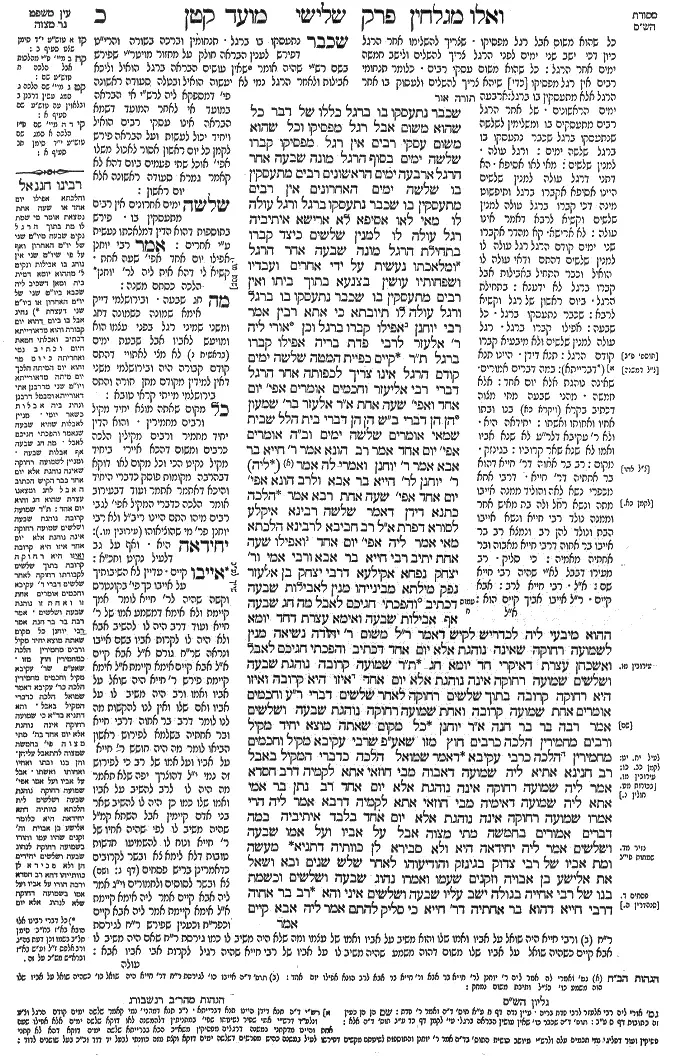
Mo'ed Katan 20a - Guemara
שכבר נתעסקו בו ברגל כללו של דבר כל שהוא משום אבל רגל מפסיקו וכל שהוא משום עסקי רבים אין רגל מפסיקו קברו שלשה ימים בסוף הרגל מונה שבעה אחר הרגל ארבעה ימים הראשונים רבים מתעסקין בו שלשה ימים האחרונים אין רבים מתעסקין בו שכבר נתעסקו ברגל ורגל עולה לו מאי לאו אסיפא לא ארישא איתיביה רגל עולה לו למנין שלשים כיצד קברו בתחילת הרגל מונה שבעה אחר הרגל ומלאכתו נעשית על ידי אחרים ועבדיו ושפחותיו עושין בצנעא בתוך ביתו ואין רבים מתעסקין בו שכבר נתעסקו בו ברגל ורגל עולה לו תיובתא כי אתא רבין אמר רבי יוחנן אפילו קברו ברגל וכן אורי ליה ר' אלעזר לרבי פדת בריה אפילו קברו ברגל ת"ר קיים כפיית המטה שלשה ימים קודם הרגל אינו צריך לכפותה אחר הרגל דברי רבי אליעזר וחכמים אומרים אפי' יום אחד ואפי' שעה אחת א"ר אלעזר בר' שמעון הן הן דברי ב"ש הן הן דברי בית הלל שבית שמאי אומרים שלשה ימים וב"ה אומרים אפי' יום אחד אמר רב הונא אמר ר' חייא בר אבא אמר ר' יוחנן ואמרי לה אמר (ליה) ר' יוחנן לר' חייא בר אבא ולרב הונא אפי' יום אחד אפי' שעה אחת רבא אמר הלכה כתנא דידן דאמר שלשה רבינא איקלע לסורא דפרת א"ל רב חביבא לרבינא הלכתא מאי אמר ליה אפי' יום אחד ואפילו שעה אחת יתיב רבי חייא בר אבא ורבי אמי ור' יצחק נפחא אקילעא דרבי יצחק בן אלעזר נפק מילתא מבינייהו מנין לאבילות שבעה דכתיב (עמוס ח, י) והפכתי חגיכם לאבל מה חג שבעה אף אבילות שבעה ואימא עצרת דחד יומא ההוא מיבעי ליה לכדריש לקיש דאמר ר"ל משום ר' יהודה נשיאה מנין לשמועה רחוקה שאינה נוהגת אלא יום אחד דכתיב והפכתי חגיכם לאבל ואשכחן עצרת דאיקרי חד יומא חג ת"ר שמועה קרובה נוהגת שבעה ושלשים שמועה רחוקה אינה נוהגת אלא יום אחד איזו היא קרובה ואיזו היא רחוקה קרובה בתוך שלשים רחוקה לאחר שלשים דברי ר"ע וחכמים אומרים אחת שמועה קרובה ואחת שמועה רחוקה נוהגת שבעה ושלשים אמר רבה בר בר חנה א"ר יוחנן כל מקום שאתה מוצא יחיד מקיל ורבים מחמירין הלכה כרבים חוץ מזו שאע"פ שרבי עקיבא מקיל וחכמים מחמירין הלכה כרבי עקיבא דאמר שמואל הלכה כדברי המקיל באבל רב חנינא אתיא ליה שמועה דאבוה מבי חוזאי אתא לקמיה דרב חסדא אמר ליה שמועה רחוקה אינה נוהגת אלא יום אחד רב נתן בר אמי אתא ליה שמועה דאימיה מבי חוזאי אתא לקמיה דרבא אמר ליה הרי אמרו שמועה רחוקה אינה נוהגת אלא יום אחד בלבד איתיביה במה דברים אמורים בחמשה מתי מצוה אבל על אביו ועל אמו שבעה ושלשים אמר ליה יחידאה היא ולא סבירא לן כוותיה דתניא מעשה ומת אביו של רבי צדוק בגינזק והודיעוהו לאחר שלש שנים ובא ושאל את אלישע בן אבויה וזקנים שעמו ואמרו נהוג שבעה ושלשים וכשמת בנו של רבי אחייה בגולה ישב עליו שבעה ושלשים איני והא רב בר אחוה דרבי חייא דהוא בר אחתיה דר' חייא כי סליק להתם אמר ליה אבא קיים
Comments from Rashi on Masechet Mo'ed Katan Page 20a
כל שהוא משום אבל רגל מפסיקו . שצריך להשלימו אחר הרגל כיון דכי ישב שני ימים לפני הרגל צריך להשלים ולישב חמשה ימים אחר הרגל: כל שהוא משום עסקי רבים . כלומר תנחומי רבים אין רגל מפסיקו [כדי] שיהא צריך להשלים ולעסוק בו אחר הרגל אלא מתעסקין בו ברגל: ארבעה ימים הראשונים . של אחר הרגל רבים מתעסקים בו ומשלימין לשלשה שנתעסקו ברגל שכבר נתעסקו בו ברגל שלשה ימים: ורגל עולה . למנין שלשים: מאי לאו אסיפא . הא דתני דרגל עולה למנין שלשים היינו אסיפא אקברו ברגל ותיפשוט מינה דכי קברו ברגל עולה למנין שלשים וקשיא לרבא דאמר אינו עולה: לא ארישא . קא מהדר אקברו שני ימים קודם הרגל רגל עולה לו למנין שלשים דהתם ודאי עולה לו הואיל וכבר התחיל באבילות אבל קברו ברגל לא ידענא: בתחילת הרגל . ביום ראשון של רגל וקשיא לרבא: שכבר נתעסקו ברגל . כל שבעה: אפילו קברו ברגל . רגל עולה למנין שלשים ולא מיבעיא קברו קודם הרגל: תנא דידן . היינו תנא (דברייתא): במה דברים אמורים . שאינה נוהגת אלא יום אחד: אלא חמשה . מהני שבעה מתי מצוה דכתיב בקרא (ויקרא כא) בנו ובתו אחיו ואחותו ואשתו: יחידאה היא . ולא ר' עקיבא דלר"ע לא שנא אביו ואמו לא שנא שאר קרוביו: בגינזק . מקום: רב בר אחוה דר' חייא דהוא בר אחתיה דר' חייא . דרבי אחא מכפרי נשא לאה והוליד ממנה אייבו מתה ונשא רחל ולה בת מאיש אחר וממנה נולד רבי חייא ונשא אייבו הבת ונולד להן רב ונמצא רב בר אייבו בר אחוה דרבי חייא מאבוה ובר אחתיה מאמיה: כי סליק . רב מעירו דבבל לא"י שהיה רבי חייא שם: א"ל . רבי חייא לרב: אבא קיים . ר"ל אייבו אביך קיים הוא:
Comments from Tosafot - Mo'ed Katan 20a
שכבר נתעסקו בו ברגל. תנחומין וברכה בשורה והרי"ט דפירש לענין הבראה חולק על מחזור ויטר"י שפירש בשם רש"י שהיה אומר שאין עושים הבראה ברגל הואיל וליכא אבילות ולאחר הרגל נמי לא יעשוה הואיל ובטלה סעודה ראשונה פי' דמספקא ליה לרש"י אי הבראה במועד אי לאחר המועד דשמא הבראה אינו עסקי רבים הואיל ויחיד יכול לעשות ועל הבראה פירש לקמן כל יום ראשון אסור לאכול משלו אפי' אוכל שתי פעמים ביום דהא לא קאמר גמרא סעודה ראשונה אלא יום ראשון: שלשה ימים אחרונים אין רבים מתעסקין בו. פירש בתוספות דהוא הדין דמלאכתו נעשית ע"י אחרים: אמר רבי יוחנן אפילו יום אחד אפי' שעה אחת. קשיא לי דהא אית ליה לר' יוחנן הלכה כסתם משנה: מה חג שבעה. ובירושלמי דייק אימא שמונה כשמונה דחג ומשני שמיני רגל בפני עצמו הוא ומויעש לאביו אבל שבעת ימים (בראשית נ) לא מצי לאתוי דהתם קודם קבורה היה ובירושלמי משני דאין למידין מקודם מתן תורה והתם בירושלמי מייתי קראי טובא: כל מקום שאתה מוצא יחיד מקיל ורבים מחמירין. והוא הדין יחיד מחמיר ורבים מקילין הלכה כרבים ומשום דהכא איירי ביחיד מקיל נקיט הכי וכל מקום לאו דוקא דבהרבה מקומות פוסק כדברי היחיד והיכא דאתמר אתמר ועוד דבעירוב אומר הלכה כדברי המקיל אפי' לגבי רבים מיהו התם היינו ריב"ל ולא רבי יוחנן פר' מי שהוציאוהו (עירובין מו.): יחידאה היא. ואף על גב דלעיל נקיט וחכ"א: אייבו קיים. עדיין לא השיבותיך על אייבו כך פי' בקונטרס וקשה שהיה לר' חייא לומר אמך קיימת ולא אימא דמשמע אמו של ר' חייא ועוד דרב היה לו להשיב אבא ולא היה לו לקרות אביו בשם אייבו ונראה שר"ח גורס א"ל אבא קיים א"ל אבא קיים אימא קיימת א"ל אימא קיימת פירש ר' חייא היה שואל על אביו ואמו ורב היה משיב לו על אביו ואם שלו ואין לנו להקשות מה לנו לומר דרב בר אחוה דרבי חייא ובר אחתיה בשלמא לפירוש ראשון הביאו לומר מה היה חושש ר' חייא על אביו ועל אמו של רב כי לפירוש זה נמי י"ל דהוצרך יפה שלא תאמר מה היה לו לרב להשיב על אביו ואמו שלו כמו כן היה לו להשיב שאר בני אדם קיימין אבל השתא קמ"ל שהיה משיב לו לפי שהיה אחיו של ר' חייא ונוח לו להשמיעו חדשות טובות דלא לימא צא ובשר לקרובים כדאמרינן בריש פסחים (דף ג: ושם) צא ובשר לסוסים ולחמורים וי"ג אמר . ליה אבא קיים אמר ליה אימא קיימת א"ל אימא קיימת אמר ליה אבא קיים וכפר"ח וכענין שפירש ר"ח לגירסת ר"ח ורבי חייא היה שואל על אביו ואמו שלו והוא משיב על אביו ואמו של עצמו ומה שלא היה משיב לו כמו גירסת ר"ח שאם היה משיב לו אבא קיים כשהיה שואל על אביו שלו משום דהוה משמע שהיה משיב לו על אביו של רבי חייא שהיה רגיל לקרות אבי אביו אבא:
Mo'ed Katan 20a - Mishnah translated into english
for they already occupied themselves with him when they came to console him during the Festival. The general principle with regard to the matter is as follows: Any activity that is prohibited to the mourner because it is an expression of mourning is interrupted by the Festival and remains prohibited afterward. And anything that involves the public’s occupation with the mourner, e.g., coming to the mourner to offer him comfort and condolence, is not interrupted by the Festival, for people console the mourner during the Festival as well.
If he buries his relative three days before the end of the Festival, the mourner must count seven days of mourning after the Festival because his mourning never began. On the first four days of his mourning, the public must occupy themselves with him and come to console him. On the three last days, however, the public need not occupy themselves with him, as they already occupied themselves with him during the Festival. That is to say, they certainly came to console him during the Festival, although the period of mourning did not actually begin until afterward. And the Festival counts for him toward the thirty-day mourning period.
With regard to the statement of the baraita that the Festival counts toward the thirty-day period of mourning: What, is it not referring to the latter clause of that baraita, which speaks about a case where the burial was performed during the Festival itself? If this is the case, then a refutation of Rava’s opinion is stated explicitly, that the Festival counts toward the thirty-day mourning period, even if the deceased was buried on the Festival itself. Rava rejects this argument: No, it is referring to the first clause, which discusses a case where the burial was performed before the Festival, and since rites of mourning were observed already before the Festival, the Festival is counted toward the thirty-day period of mourning. Therefore, it is not a refutation of Rava’s halakha.
Abaye raised an objection to Rava’s opinion from another baraita, in which it was taught: A pilgrimage Festival counts toward the thirty-day period of mourning. How so? If one buried his dead relative at the beginning of a pilgrimage Festival, he must count seven days of mourning after the Festival, and during this period his work is performed by others. And his menservants and maidservants perform this work in private inside his house, and the public need not occupy themselves with him and come to console him, for they already occupied themselves with him during the Festival. And the Festival counts for him. Here it is explicitly stated that the Festival counts toward the thirty-day period of mourning, even when the deceased was buried during the Festival itself. The Gemara concludes: This is indeed a conclusive refutation of Rava’s opinion.
When Ravin came from Eretz Yisrael to Babylonia, he said that Rabbi Yoḥanan said: Even if one buried his dead relative during the Festival, the Festival counts toward his thirty-day period of mourning. And, similarly, Rabbi Elazar ruled for Rabbi Pedat, his son: Even if one buried his dead relative during the Festival it counts towards his thirty days.
§ The Sages taught the following baraita: If one fulfilled the obligation of overturning the bed for three days before the pilgrimage Festival, he is no longer required to overturn it after the Festival; this is the statement of Rabbi Eliezer. But the Rabbis say: Even if one overturned his bed for only one day, or even for only one hour, he is not required to overturn it after the Festival.
Rabbi Elazar, son of Rabbi Shimon, said: This is the statement of Beit Shammai, and that is the statement of Beit Hillel. In other words, Rabbi Eliezer and the Rabbis disagreed about a matter that was the subject of an earlier dispute between Beit Shammai and Beit Hillel, for Beit Shammai say: Three days, and Beit Hillel say: Even one day.
Rav Huna said that Rabbi Ḥiyya bar Abba said that Rabbi Yoḥanan said, and some say a different version of this line of transmission: Rabbi Yoḥanan said to Rabbi Ḥiyya bar Abba and to Rav Huna: Even one day, even one hour. The Gemara cites Rava, who said: The halakha is in accordance with the opinion of the tanna of our mishna, who said three days. Based on this, we rule that the mourning rites are not canceled after the Festival unless they were observed for at least three days before the Festival.
Ravina happened to come to the city of Sura on the banks of the Euphrates River. Rav Ḥaviva said to Ravina: What is the halakha with regard to this issue? He said to him: Even one day, and even one hour.
§ It was related that Rabbi Ḥiyya bar Abba, Rabbi Ami, and Rabbi Yitzḥak Nappaḥa were once sitting in the pavilion of Rabbi Yitzḥak ben Elazar and were conversing. A matter emerged from among them: From where is it derived that the rites of mourning are observed for seven days? As it is written: “And I will turn your Festivals into mourning” (Amos 8:10). Just as a Festival lasts for seven days, so too mourning lasts for seven days.
The Gemara asks: And say that perhaps mourning is like Shavuot, which is only one day. The Gemara rejects this argument: That derivation, from the one day of Shavuot, is required for what was stated by Reish Lakish, as Reish Lakish said in the name of Rabbi Yehuda Nesia: From where is it derived that mourning in the case of distant tidings, i.e., when one hears that one of his relatives died a long time ago, applies for only one day? As it is written: “And I will turn your Festivals into mourning,” and we find with regard to Shavuot that one day is also called a Festival.
The Sages taught the following baraita: In the case of recent tidings of a relative’s death, mourning applies for seven- and thirty-day periods. In the case of distant tidings, it applies only for one day. What are considered recent tidings and what are considered distant tidings? Recent tidings are news that arrives within thirty days of the person’s death. Distant tidings are news that arrives after thirty days; this is the statement of Rabbi Akiva. And the Rabbis say: Both in the case of recent tidings and in the case of distant tidings, mourning applies for seven- and thirty-day periods.
Rabba bar bar Ḥana said that Rabbi Yoḥanan said: Wherever you find an individual being lenient and the majority being stringent, the halakha is in accordance with the majority, except for this case, for even though Rabbi Akiva is lenient and the Rabbis are stringent, the halakha is in accordance with the opinion of Rabbi Akiva. This is in keeping with the principle stated by Shmuel: The halakha follows the statement of the more lenient authority in matters relating to mourning.
It was related that Rav Ḥanina received distant tidings of his father’s death from Bei Ḥozai. He came before Rav Ḥisda to ask what he should do. Rav Ḥisda said to him: In the case of distant tidings, mourning applies for only one day. It was similarly related that Rav Natan bar Ami received a report about his mother’s death from Bei Ḥozai. He came before Rava, and Rava said to him: They said that in the case of distant tidings, mourning applies for only one day.
Rav Natan raised an objection to Rava’s opinion based on what was taught in a baraita: In what case is this statement that mourning applies for only one day said? In the case of the other five close relatives, over whose death it is a mitzva to mourn, i.e., son, daughter, brother, sister, and spouse. But for one’s father or mother, one is required to mourn for seven and thirty days, even when the report of the parent’s death is received some time after the event.
Rava said to him: This is an individual opinion, and we do not hold in accordance with his opinion, as it is taught in a baraita: There was an incident and the father of Rabbi Tzadok died in the city of Ginzak, and they informed him of his father’s passing only after three years. He came and asked Elisha ben Avuya and the Elders with him what he should do. And Elisha ben Avuya said to him: Observe the rites of mourning for seven and thirty days. And when the son of Rabbi Aḥiyya died in the Diaspora, and Rabbi Aḥiyya was informed about his passing a long time afterward, he sat in mourning for seven and thirty days. Therefore, it is clear that this opinion was held only by a few individual Sages, but it was not generally accepted.
The Gemara asks: Is that so, that this is Rabbi Aḥiyya’s opinion? But Rav was the son of Rabbi Ḥiyya’s brother and also the son of Rabbi Ḥiyya’s sister, for Rav’s father, Aivu, was Rabbi Ḥiyya’s paternal half brother, and Rav’s mother was Rabbi Ḥiyya’s maternal half sister. When Rav went there, Eretz Yisrael, his uncle Rabbi Ḥiyya said to him: Is your father, Aivu, still alive?
Traduction : The William Davidson digital edition of the Koren Noé Talmud, with commentary by Rabbi Adin Even-Israel Steinsaltz.