 Talmud Bavli
Mo'ed Katan 12a : Youtube
Daf TubeYoutube
3 video classes :
Mo'ed Katan Page 12a
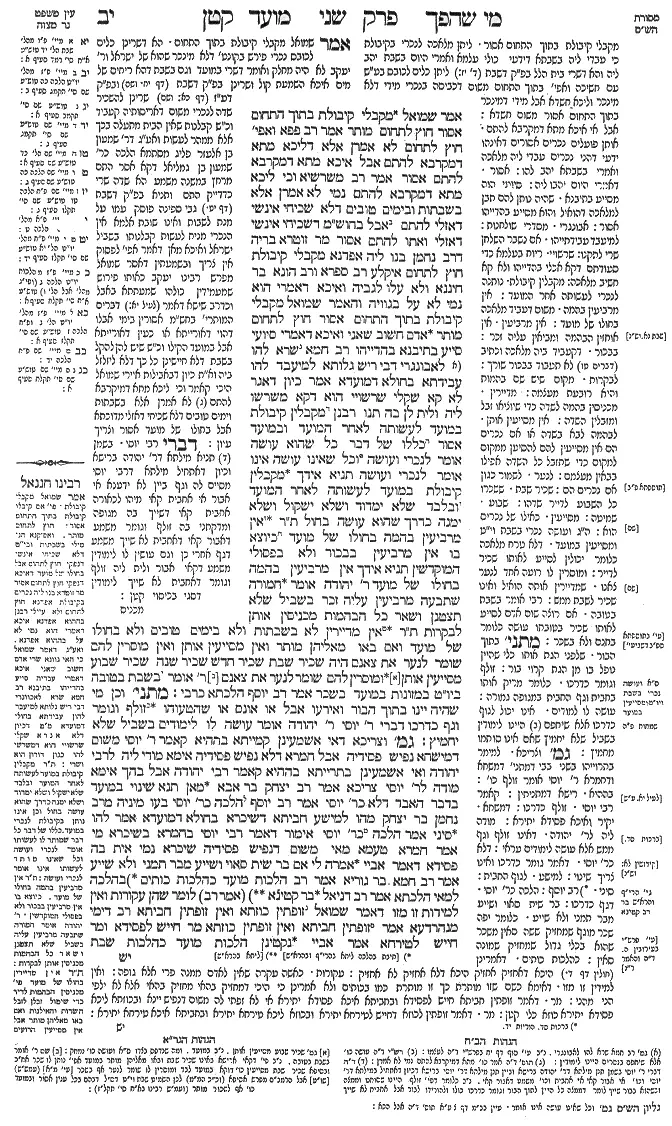
Mo'ed Katan 12a - Guemara
אמר שמואל מקבלי קיבולת בתוך התחום אסור חוץ לתחום מותר אמר רב פפא ואפי' חוץ לתחום לא אמרן אלא דליכא מתא דמקרבא להתם אבל איכא מתא דמקרבא להתם אסור אמר רב משרשיא וכי ליכא מתא דמקרבא להתם נמי לא אמרן אלא בשבתות ובימים טובים דלא שכיחי אינשי דאזלי להתם אבל בחוש"מ דשכיחי אינשי דאזלי ואתו להתם אסור מר זוטרא בריה דרב נחמן בנו ליה אפדנא מקבלי קיבולת חוץ לתחום איקלע רב ספרא ורב הונא בר חיננא ולא עלו לגביה ואיכא דאמרי הוא נמי לא על בגוויה והאמר שמואל מקבלי קיבולת בתוך התחום אסור חוץ לתחום מותר אדם חשוב שאני ואיכא דאמרי סיועי סייע בתיבנא בהדייהו רב חמא שרא להו לאבונגרי דבי ריש גלותא למיעבד להו עבידתא בחולא דמועדא אמר כיון דאגר לא קא שקלי שרשויי הוא דקא משרשו ליה ולית לן בה תנו רבנן מקבלין קיבולת במועד לעשותה לאחר המועד ובמועד אסור כללו של דבר כל שהוא עושה אומר לנכרי ועושה וכל שאינו עושה אינו אומר לנכרי ועושה תניא אידך מקבלין קיבולת במועד לעשותה לאחר המועד ובלבד שלא ימדוד ושלא ישקול ושלא ימנה כדרך שהוא עושה בחול ת"ר אין מרביעין בהמה בחולו של מועד כיוצא בו אין מרביעין בבכור ולא בפסולי המוקדשין תניא אידך אין מרביעין בהמה בחולו של מועד ר' יהודה אומר חמורה שתבעה מרביעין עליה זכר בשביל שלא תצטנן ושאר כל הבהמות מכניסין אותן לבקרות ת"ר אין מדיירין לא בשבתות ולא בימים טובים ולא בחולו של מועד ואם באו מאליהן מותר ואין מסייעין אותן ואין מוסרין להם שומר לנער את צאנם היה שכיר שבת שכיר חדש שכיר שנה שכיר שבוע מסייעין אותן ומוסרין להם שומר לנער את צאנם ר' אומר בשבת בטובה ביו"ט במזונות במועד בשכר אמר רב יוסף הלכתא כרבי:
מתני׳ וכן מי שהיה יינו בתוך הבור ואירעו אבל או אונס או שהטעוהו זולף וגומר וגף כדרכו דברי ר' יוסי ר' יהודה אומר עושה לו לימודים בשביל שלא יחמיץ:
גמ׳ וצריכא דאי אשמעינן קמייתא בההיא קאמר ר' יוסי משום דמישחא נפיש פסידיה אבל חמרא דלא נפיש פסידיה אימא מודי ליה לרבי יהודה ואי אשמעינן בתרייתא בההיא קאמר רבי יהודה אבל בהך אימא מודה לר' יוסי צריכא אמר רב יצחק בר אבא מאן תנא שינוי במועד בדבר האבד דלא כר' יוסי אמר רב יוסף הלכה כר' יוסי בעו מיניה מרב נחמן בר יצחק מהו למישע חביתא דשיכרא בחולא דמועדא אמר להו סיני אמר הלכה כר' יוסי אימור דאמר רבי יוסי בחמרא בשיכרא מי אמר חמרא טעמא מאי משום דנפיש פסידיה שיכרא נמי אית בה פסידא דאמר אביי אמרה לי אם בר שית סאוי ושייע מבר תמני ולא שייע אמר רב חמא בר גוריא אמר רב הלכות מועד כהלכות כותים בהלכה למאי הלכתא אמר רב דניאל בר קטינא (אמר רב) לומר שהן עקורות ואין למידות זו מזו דאמר שמואל זופתין כוזתא ואין זופתין חביתא רב דימי מנהרדעא אמר זופתין חביתא ואין זופתין כוזתא מר חייש לפסידא ומר חייש לטירחא אמר אביי נקטינן הלכות מועד כהלכות שבת
Comments from Rashi on Masechet Mo'ed Katan Page 12a
מקבלי קיבולת בתוך התחום אסור . ליתן מלאכה לנכרי בקיבולת כי עבדי ליה בשבתא דידעי כולי עלמא ואמרי היום בשבת יהב ליה והא דשרי בית הלל בפ"ק דשבת (ד' יז:) ליתן כלים לכובס בע"ש עם חשיכה ואפי' בתוך התחום משום דכביסה בנכרי מידי דלא מינכר וליכא חשדא אבל מידי דמינכר בתוך התחום אסור משום חשדא: אבל אי איכא מתא דמקרבא להתם . אותן פועלים נכרים אסורים דאינהו ידעי דהני נכרים עבדי ליה מלאכה ואמרי בשבתא יהב להו: אסור . דאמרי היום יהבו ליה: סיועי הוה מסייע בתיבנא . שהיה נותן להם תבן למלאכה דהואיל והוא מסייע בהדייהו אסור: אבוגנגרי . מסדרי שולחנות: למיעבד עבידיתייהו . אם נשבר השלחן שרי לתקנו: שרשויי . ריוח בעלמא כדי סעודתם דקא אכלי בהדייהו ולא קא חשיב מלאכה: מקבלין קיבולת . נותנה לנכרי לעשותה אחר המועד: אין מרביעין בהמה . משום דעביד מלאכה בחולו של מועד: אין מרביעין . אין אוחזין הבהמה ומביאין עליה זכר: בבכור . דקעביד ביה מלאכה וכתיב (דברים טו) לא תעבוד בבכור שורך: לבקרות . מקום שיש שם בהמות והיא רובעת מעצמה: מדיירין . מכניסין בהמה לשדה כדי שיוציאו זבל ומזבלין השדה: אין מסייעין אותן . לבהמה לבא בשדה או אם נכרים הם אין מסייעין להם להסיען ממקום למקום כדי שתזבל כל השדה אפילו בבאין מעצמם: לנער . לשמור כגון אם נכרים הם: שכיר שבת . ששכרו כל השבוע לדייר שדהו: שבוע . שמיטה: מסייעין . כאילו של נכרים הוא: ה"ג ועושה נכרי בשבת וי"ט ומסייעין במועד . דלא טרח מלאכה כלומר יכולין לסייע לאותו שכיר לדייר: ומוסרין לו רועה אחד לנער צאנו . שמדיירין אותה הואיל ואינו שכיר לשבת ממש: רבי אומר בשבת בטובה . אם רוצה שום אדם לסייע לאותו שכיר בטובתו עושה כלומר בחנם ולא בשכר: מתני' בתוך הבור . שלפני הגת אותו כלי שהיין נופל בו מן הגת קרוי בור: זולף וגומר כדרכו . כלומר מריק אותו בחבית וגף החבית במגופה גמורה: עושה לו למודים . אינו יכול לגוף כדרכו אלא שיתפס היינו לימודין בשביל שלא יחמיץ שאם אינו סותמו מחמיץ: גמ' וצריכא . למימר בתרוייהו בשני בבי דמתני' דמשחא ודחמרא ר' יוסי אומר זולף כו': בההיא רישא דמתניתין: קאמר רבי יוסי . זולף כדרכו: דמשחא . יקיר ואיכא פסידא יתירא: מודה ליה לר' יהודה . דאינו זולף וגף ממש אלא עושה לימודים עראי: דלא כר' יוסי . דאמר גומר כדרכו ואינו צריך שינוי: למישע . לגוף החבית: סיני. רב יוסף: הלכה כר' יוסי . דגף כדרכו: בר שית סאוי ושייע מבר תמני ולא שייע . כלומר יפה שכר מוגף שמחזיק ששה סאין משכר שהוא בכלי גדול שמחזיק שמונה סאין: כהלכות כותים . דאמרינן (חולין דף ד.) היכא דאחזיק אחזיק היכא דלא אחזיק לא אחזיק: עקורות . כאשה עקרה שאין לאדם ממנה פרי אלא גופה: ואין למידין זו מזו . דאימא כשם שזו מותרת כך זו מותרת כמו בכותים ולא אמרינן כי היכי דמחזיק בהאי מחזיק בהאי אלא לא ילפי הני מהני: מר . דאמר זופתין חביתא חייש לפסידא ובחביתא איכא פסידא יתירא אי לא זפתי לה משום דנפיש יינא ובכוזתא ליכא פסידא יתירא כוזא כלי קטן: מר . דאמר זופתין לכוזא דחייש לטירחא יתירא ובכוזא ליכא טירחא יתירא ובחביתא איכא טירחא יתירא:
Comments from Tosafot - Mo'ed Katan 12a
אמר שמואל מקבלי קיבולת בתוך התחום. הא דשרינן כלים לכובס נכרי פירש בקונט' דלא מינכר שהוא של ישראל ור' יעקב לא היה מחלק ואומר דשרי במועד וגם בשבת דהא ריחים של מים איכא השמעת קול ושרינן בפ"ק דשבת (דף יח. ושם) ובפ"ק דע"ז (דף כא: ושם) שרינן להשכיר שדה לנכרי משום דאריסותיה קעביד וכ"ש קבלנות שאין הבית מתעלה בכך אלא ממהר לעשות ואע"ג דר' שמעון בן אלעזר פליג מסתמא הלכה כר' שמעון בן גמליאל דקא אסר התם מרחץ במשנה משמע הא שדה שרי כדדייק התם ותניא בפ"ק דשבת (דף יט.) גבי ספינה פוסק עמו על מנת לשבות ואינו שובת אלמא אין הנכרי מניח לעשות קבלנותו בשביל ישראל ואיכא מאן דאמר אפי' לפסוק אין צריך ובשמעתין דאסר שמואל מפרש רבינו יעקב כאותו פירוש שמעמידין כולהו שמעתתא באבל וכדרב שישא דאמר (לעיל מועד קטן יא:) דברים המותרי' בחש"מ אסורין בימי אבלו דהוי דאורייתא או כעין דאורייתא אבל במועד הקילו וכ"ש שיש להן להקל בשבת דלא חיישינן כל כך דלא ליזלזל ביה וא"ת כיון דבאבילות איירי שמואל היכי קאמר וכי ליכא מתא דמיקרבא להתם לא אמרן אלא בשבתות וימים טובים דלא שכיחי דאזלי מדוכתא אבל בחולו של מועד אסור וצריך עיון: דברי רבי יוסי. בשמן תניא מילתא דר' יהודה ברישא וכיון דאתחיל מילתא דרבי יוסי מסיים לה וגף ביין לא ידענא אי אבור אי אחבית קאי מיהו לכאורה אחבית קאי דשייך בה מגופה ומדקתני בה זולף וגומר משמע דאבור קאי דאחבית לא שייך משמע דגף אחרי כן וגם עושין לו לימודין משמע דקאי אבור ולית ליה זולף וגומר דאחבית לא שייך לימודין דסגי בכיסוי קטן:
Mo'ed Katan 12a - Mishnah translated into english
§ Shmuel said: With regard to gentile contractors, who are paid for the completed job rather than by the day, it is prohibited for them to work for a Jew within the boundaries of the Shabbat limit on a day that it is prohibited for the Jew to work. It looks like the Jew assigned work for them to do on that day, even though they in fact make their own schedule. Outside the Shabbat limit, where Jews will not see the work being done, it is permitted.
Rav Pappa said: And even outside the Shabbat limit, we said only that it is permissible to let them work when there is no other city in close proximity to there, but if there is another city in close proximity to there, it is prohibited, since the work is likely to be seen by a Jew.
Rav Mesharshiyya said: And even when there is no other city in close proximity, we said that it is permissible for gentile contractors to work for a Jew only on Shabbatot and Festivals, when Jewish people do not routinely go there, i.e., to the place where the work is being performed. However, on the intermediate days of a Festival, when Jewish people routinely come and go from there and see the work being done, it is prohibited.
The Gemara relates about Mar Zutra, son of Rav Naḥman, that gentile contractors built a mansion [apadana] for him outside the Shabbat limit. Rav Safra and Rav Huna bar Ḥinnana happened to come there, but they did not enter it, because it had been built on Shabbat in a prohibited manner. And there are those who say: Even he, Mar Zutra himself, did not enter it.
The Gemara asks: But didn’t Shmuel say: With regard to gentile contractors, within the boundaries of the Shabbat limit, it is prohibited to let them work on Shabbat, but outside the Shabbat limit it is permitted? The Gemara answers: An important person is different and must behave in a stricter manner. And there are those who say: He provided them with assistance with straw for making the bricks. Consequently, they were not fully independent contractors, and therefore it was prohibited for them to work on Shabbat, even outside the Shabbat limit.
The Gemara relates that Rav Ḥama permitted the bath attendants [abunagrei] of the Exilarch’s house to work for them, i.e., the Exilarch and his household, on the intermediate days of a Festival. He said in explanation of this leniency: Since they do not take payment for working during the week of the Festival, they are merely conferring a favor on the Exilarch. Therefore, it is not viewed as actual labor, and we have no problem with it.
The Sages taught in a baraita: Gentiles may receive contract work on the intermediate days of a Festival in order to execute it after the Festival, but it is prohibited to execute it during the Festival week itself. The principle of the matter is: Any action that a Jew may perform himself, he may tell a gentile to perform, and any action that he may not perform himself, he may not tell a gentile to perform. It is taught in another baraita: A gentile may receive contract work on the intermediate days of a Festival in order to execute it after the Festival, provided that he does not measure, weigh, or count, in order to plan the work, in the same manner as he does on an ordinary weekday.
The Sages taught in a baraita: One may not breed an animal, i.e., coax or compel a male to mate with a female, on the intermediate days of a Festival, as this is similar to prohibited labor. Similarly, one may not breed a firstborn animal, nor an unfit consecrated animal. It is prohibited to ever work these animals because of their sanctified status, and breeding them resembles working them.
It is taught in another baraita: One may not breed an animal on the intermediate days of a Festival. Rabbi Yehuda says: If a she-donkey yearns for a mate because she is in heat, one may breed her with a male, lest she cool off, i.e., lest her estrus cycle pass without her mating, which will cause a significant loss. With regard to all other animals that are in heat, they are merely brought into corrals in which there are males, there being no need for further human intervention.
The Sages taught in a baraita: One may not enclose livestock in particular areas of a field, in order to fertilize that area with their manure, on Shabbatot, or on Festivals, or on the intermediate days of a Festival. But if the animals came on their own to the field, it is permitted, and he need not remove them although he benefits from their manure.
The baraita continues: And one may not assist gentile shepherds in pasturing their sheep in his field so that it will be fertilized, nor may one provide them with a shepherd to help herd their sheep all around the field so that it is completely fertilized. If the gentile shepherds were hired by the week, by the month, by the year, or by the septennial period, i.e., the seven years from one Sabbatical Year to the next, one may assist them and provide them with a shepherd to herd their sheep. Since they were hired for an extended period of time, it is not as though they were hired specifically for Shabbat or the Festival. Rabbi Yehuda HaNasi says: On Shabbat one may have the gentile pasture the sheep in one’s field as a favor, i.e. in order to earn one’s good graces, but not for pay; on a Festival, it is permitted even in exchange for food; and on the intermediate days of the Festival, it is permitted for pay. Rav Yosef said: The halakha is in accordance with the opinion of Rabbi Yehuda HaNasi.
MISHNA: And similarly, with regard to one whose wine was already in the collection pit beside the wine press and needed to be removed lest it sour, and mourning for some close relative or some other unavoidable accident befell him, or his workers misled him, promising to come but failing to do so, during the intermediate days of the Festival he may draw off the wine and complete the process, and then plug each barrel of wine in its usual manner; this is the statement of Rabbi Yosei. Rabbi Yehuda says: He should construct a wooden panel to cover the collection pit so that the wine will not sour.
GEMARA: The Gemara comments: And both this mishna and the previous one (11b), about the olive press, are necessary, as, if the tanna teaches us only the first mishna, one might say that only in that case does Rabbi Yosei say that one is permitted to complete the process, because in the case of oil, the potential loss is considerable. However, in the case of wine, where the loss is not as considerable, one might say that he concedes to Rabbi Yehuda that it must be done in an altered manner. And if he teaches us only the last mishna, one might say that only in that case involving wine did Rabbi Yehuda say that one must be stringent, but in the other case involving oil one might say that he concedes to Rabbi Yosei and is lenient. Therefore, it is necessary to teach both cases.
Rav Yitzḥak bar Abba said: Who is the tanna who teaches that labor performed during the intermediate days of the Festival must be performed in an altered fashion even with regard to a matter that, if unattended, will result in significant loss? That ruling is not in accordance with Rabbi Yosei’s opinion, as Rabbi Yosei permits one to perform labor that will prevent such a loss even in the usual manner. Rav Yosef said: The halakha is in accordance with the opinion of Rabbi Yosei, and it is permitted in cases of loss to perform labor in the usual manner.
The students asked of Rav Naḥman bar Yitzḥak: What is the halakha with regard to sealing a barrel of beer during the intermediate days of the Festival? If it is not properly sealed, the beer will leak out through the sides of the barrel. He said to them: Sinai, i.e., Rav Yosef, said: The halakha is in accordance with the opinion of Rabbi Yosei. They asked: Say that Rabbi Yosei said that one may be lenient about wine, but about beer does he say the same thing? Beer is much cheaper than wine, and the loss would be much less significant.
The Gemara explains why no distinction should be made: With regard to wine, what is the reason that Rabbi Yosei was lenient? It is because the loss involved is considerable; with beer as well, there is a loss if the barrel is not properly sealed, as Abaye said: My foster mother told me: It is better to have a barrel of six se’a that is sealed than a barrel of eight se’a that is not sealed, as in the end more beer will remain in the smaller sealed barrel than in the larger unsealed one.
§ Rav Ḥama bar Gurya said that Rav said: The halakhot relating to the intermediate days of a Festival resemble the halakhot relating to the Samaritans in the halakha. The Gemara asks: With regard to what aspect of the halakha are they similar? Rav Daniel bar Ketina said that Rav said: He meant to convey that they are sterile, and one may not learn further halakhot by extrapolation one from one another in both of these areas of halakha.
The Gemara offers an example: For instance, Shmuel said: One may seal a jug with pitch, but one may not seal a barrel with pitch on the intermediate days of a Festival. Rav Dimi from Neharde’a said: One may seal a barrel with pitch, but one may not seal a small jug with pitch. Their reasoning is as follows: This Sage, i.e., Rav Dimi, was more concerned about possible financial loss, and so he permitted sealing the larger vessel, for which the potential for loss is great, but not the smaller one. And this Sage, i.e., Shmuel was concerned about unnecessary exertion on the Festival, and therefore he permitted sealing the smaller vessel, which requires less effort.
Abaye stated a different principle: We have a tradition that the halakhot of the intermediate days of a Festival are like the halakhot of Shabbat:
Traduction : The William Davidson digital edition of the Koren Noé Talmud, with commentary by Rabbi Adin Even-Israel Steinsaltz.