 Talmud Bavli
Mo'ed Katan 22a : Youtube
Daf TubeYoutube
2 video classes :
Mo'ed Katan Page 22a
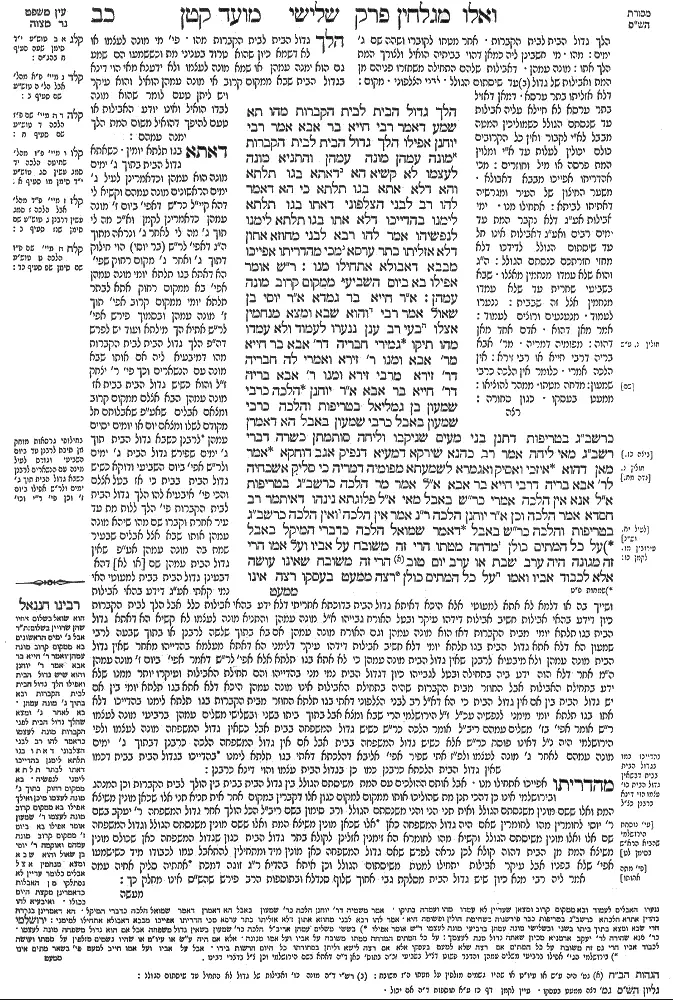
Mo'ed Katan 22a - Guemara
הלך גדול הבית לבית הקברות מהו תא שמע דאמר רבי חייא בר אבא אמר רבי יוחנן אפילו הלך גדול הבית לבית הקברות מונה עמהן מונה עמהן והתניא מונה לעצמו לא קשיא הא דאתא בגו תלתא והא דלא אתא בגו תלתא כי הא דאמר להו רב לבני הצלפוני דאתו בגו תלתא לימנו בהדייכו דלא אתו בגו תלתא לימנו לנפשיהו אמר להו רבא לבני מחוזא אתון דלא אזליתו בתר ערסא מכי מהדריתו אפייכו מבבא דאבולא אתחילו מנו:
ר"ש אומר אפילו בא ביום השביעי ממקום קרוב מונה עמהן:
א"ר חייא בר גמדא א"ר יוסי בן שאול אמר רבי והוא שבא ומצא מנחמין אצלו בעי רב ענן ננערו לעמוד ולא עמדו מהו תיקו גמירי חבריה דר' אבא בר חייא מר' אבא ומנו ר' זירא ואמרי לה חבריה דר' זירא מרבי זירא ומנו ר' אבא בריה דר' חייא בר אבא א"ר יוחנן הלכה כרבי שמעון בן גמליאל בטריפות והלכה כרבי שמעון באבל כרבי שמעון באבל הא דאמרן כרשב"ג בטריפות דתנן בני מעים שניקבו וליחה סותמתן כשרה דברי רשב"ג מאי ליחה אמר רב כהנא שירקא דמעיא דנפיק אגב דוחקא אמר מאן דהוא איזכי ואסיק ואגמרא לשמעתא מפומיה דמריה כי סליק אשכחיה לר' אבא בריה דרבי חייא בר אבא א"ל אמר מר הלכה כרשב"ג בטריפות א"ל אנא אין הלכה אמרי כר"ש באבל מאי א"ל פלוגתא נינהו דאיתמר רב חסדא אמר הלכה וכן א"ר יוחנן הלכה ר"נ אמר אין הלכה ואין הלכה כרשב"ג בטריפות והלכה כר"ש באבל דאמר שמואל הלכה כדברי המיקל באבל על כל המתים כולן מדחה מטתו הרי זה משובח על אביו ועל אמו הרי זה מגונה היה ערב שבת או ערב יום טוב הרי זה משובח שאינו עושה אלא לכבוד אביו ואמו על כל המתים כולן רצה ממעט בעסקו רצה אינו
Comments from Rashi on Masechet Mo'ed Katan Page 22a
הלך גדול הבית לבית הקברות . אחר מטתו לקוברו ושהה שם ג' ימים: מהו . מי חשבינן ליה כמאן דהוי בביתיה הואיל ולצורך המת הלך אתו: מונה עמהן . דאבילות שלהם התחילה משחזרו פניהם מן המת ואבילות של גדול עד שיסתום הגולל: לבני הצלפוני . מקום: דלא אזליתו בתר ערסא . דמאן דאזיל בתר ערסא לא חיילא עליה אבילות עד שנסתם הגולל כשמוליכין המטה מבבל לא"י לקבור ואין כל הקרובים כולם יכולין לעלות עד א"י ומלוין המת פרסה או מיל וחוזרים: מכי אהדריתו אפייכו מבבא דאבולא . משער החיצון של העיר ומגרשיה דאתיתו לביתא: אתחילו מנו . ימי אבילות אע"ג דלא נקבר המת עד ימים רבים ואע"ג דאבילות אינו חל עד שיסתום הגולל לדידכו דלא מחזי חזרתכם כנסתם הגולל: ה"ג והוא שלא עמדו מנחמין מאצלו . שבא בשביעי שחרית עד שלא עמדו מנחמין אצל זה שבבית: ננערו לעמוד . מנענעים ורוצים לעמוד: אמר מאן דהוא . אדם אחד מאן דהוה: מפומיה דמריה . מר' אבא בריה דרבי חייא או רבי זירא: אין הלכה אמרי . כלומר אין הלכה כרבי שמעון: מדחה מטתו . ממהר להוציאו: ממעט בעסקו . כגון סחורה:
Comments from Tosafot - Mo'ed Katan 22a
הלך גדול הבית לבית הקברות מהו. פי' מי מונה לעצמו או לא דשמא כיון שהוא טרוד בעניני מת וכששמעו הם שמע גם הוא ימנה עמהן או שמא מונה לעצמו ולא ידענא מאי הוי דינא בגדול הבית שבא ממקום קרוב אי מונה עמהן הואיל והוא עיקר ויש ליתן טעם לומר שהוא מונה לבדו הואיל ואינו יודע האבילות או טעם להיפך דהואיל משום המת הלך ימנה עמהם: דאתא בגו תלתא יומין. כשאתא גדול הבית בתוך ג' ימים מונה הוא עמהן וכדאמרינן לעיל ג' ימים הראשונים מונה עמהם וקשיא לי דהא קיי"ל כר"ש דאפי' ביום ז' מונה עמהן כדאמרינן לקמן וא"כ מה לי תוך ג' מה לי לאחר ג' ונראה מתוך ה"ג דאפי' לר"ש (בר יוסי) הוי חילוק דתוך ג' ואחר ג' מקום רחוק שפי' הא דאתא בגו תלתא יומי מונה עמהן אפי' בא ממקום רחוק אתא לבתר תלתא יומי ממקום קרוב אפי' תוך ז' מונה עמהן ובסמוך פירש אפי' לר"ש אתיא הך מילתא ועוד יש לפרש דה"פ הלך גדול הבית לבית הקברות מהו דמיבעיא ליה אם אותו שבא מונה עם הנשארים וכך פי' ר' יצחק ז"ל והוא כשיש גדול הבית בבית אז מונה עמהן הבא אצלם ממקום קרוב ומצאם אבלים שאע"פ שאבלותם חל מקודם לשלו ומצאם יום או יומים יסיים עמהן. לרבנן כשבא גדול הבית תוך ג' ימים שפירש גדול הבית ג' ימים ולר"ש אפי' ביום השביעי ודוקא כשיש גדול הבית בבית כי אז בטל אצלם והכי פי' איבעיא להו הלך גדול הבית לבית הקברות פי' הלך ללות מת עד עיר אחרת וקברו שם מהו שיהא מונה עמהן אותו שבא אצל אבלים שבעיר שמת בה מונה עמהן אע"פ שאין גדול הבית עמהן שם [או לא] דהא דבעינן גדול הבית בבית למעוטי האי נמי קאתי אע"ג דידע בהאי אבילות ושייך בה או דלמא לא אתא למעוטי אלא היכא דאיתא גדול הבית בדוכתא אחריתי דלא ידע בהאי אבילות כלל אבל הלך לבית הקברות כיון דידע בהאי אבילות חשיב אבילות דידהו עיקר ובטל האורח גבייהו א"ל מונה עמהן והתניא מונה לעצמו לא קשיא הא דאתא גדול הבית בגו תלתא יומי מבית הקברות דאז הוא מונה עמהן וגם האורח מונה עמהן אם בא בתוך שלשה לרבנן או בתוך שבעה לרבי שמעון הא דלא אתא גדול הבית בגו תלתא יומי דלא חשיב אבילות דידהו עיקר דלימני הא דאתא מעלמא בהדייהו מאחר שאין גדול הבית מונה עמהן ולא מיבעיא לרבנן שאין גדול הבית מונה עמהן כי לא אתא בגו תלתא אלא אפי' לר"ש דאמר אפי' ביום ז' מונה עמהן ה"מ אחר דלא הוה ידע ביה בתחילה ובטל לגבייהו כיון דגדול הבית נמי מני בהדייהו והם תחילת האבילות ועיקרו יותר ממנו שלא ידע בתחילת האבילות אבל החוזר מבית הקברות שהיה בתחילת האבילות אינו מונה עמהן היכא דלא אתא בגו תלתא יומי בין אם יש גדול הבית בין אם אין גדול הבית כי הא דא"ל רב לבני הצלפוני דאתי בגו תלתא החוזר מבית הקברות בגו תלתא לימנו בהדייכו דלא אתו בגו תלתא יומי מימני לנפשיה עכ"ל ז"ל הירושלמי הרי שבא ומצא אבל בתוך ביתו בשני ובשלישי משלים עמהן ברביעי מונה לעצמו ר"ש אומר אפי' בז' משלים עמהם ריב"ל אומר הלכה כר"ש כשיש גדול המשפחה בבית אבל כשאין גדול המשפחה מונה לעצמו ולפי הירושלמי היה נ"ל דאינו פוסק כר"ש אלא כשיש גדול המשפחה בבית אבל אם אין גדול המשפחה הלכה כרבנן דבתוך ג' ימים מונה עמהם לאחר ג' מונה לעצמו ולפ"ז אתי שפיר אפי' אליבא דהלכתא דאתי בגו תלתא לימנו בהדייכו בגדול הבית בבית דכמו שאין גדול הבית הלכתא כרבנן כמו כן בגדול הבית עצמו והוי דינא כרבנן: מהדריתו אפייכו אתחילו מנו. אבל אותם ההולכים עם המת משיסתם הגולל בין גדול הבית בבית בין הולך לבית הקברות וכן המנהג ובירושלמי אינו כן דהכי תנן מת שהוליכו אותו ממקום למקום כגון אלו דקברין במקום אחר אית תניא תני אלו שכאן מונין משיצא המת ואלו ששם מונין משנסתם הגולל ואית תני הני והני משנסתם הגולל ורב סימון בשם ריב"ל הכל הולך אחר גדול המשפחה ר' יעקב בשם ר' יוסי לחומרין מהו לחומרין שאם היה גדול המשפחה כאן אלו שכאן מונין משיצא המת ואלו ששם מונין משנסתם הגולל וגדול המשפחה שם אלו ואלו מונין משיסתם הגולל וקשיא מהו לחומרא הא זימנין אזלינן לקולא בתר גדול הבית כגון שגדול המשפחה כאן שכולם מונין משיצא המת מן הבית דהוה קולא לכן נראה לפרש שאם גדול המשפחה כאן מונין מיד ומתחילין להתאבל עמו לכבודו מיד כשישמעו אפי' שלא בפניו אבל עיקר אבילות יתחילו למנות משיסתום הגולל וכן איתא בהדיא ר"ג זוגה דמכת. אחתיה סליק אחיה עמה אמר ליה רבי מנא כיון שיש גדול הבית מסלקת גבי אחוך שלוף סנדלא ובתוספות הרב פירש שהש"ס אינו מחלק כך:
Mo'ed Katan 22a - Mishnah translated into english
If the principal member of the household went with the remains of the deceased to the cemetery and did not return for several days, what is the halakha? If another mourner came to the house of mourning during his absence, does he follow the principal member of the household and count from the time of the burial, or does he count from the time that the funeral procession departed, like the other members of the household?
The Gemara answers: Come and hear that which Rabbi Ḥiyya bar Abba said that Rabbi Yoḥanan said: Even if the principal member of the household went to the cemetery, the mourner who comes home during his absence counts with them, i.e., the other members of the household who did not go to the cemetery. The Gemara asks: Does he really count and complete his mourning with them? But isn’t it taught otherwise in a baraita, that he counts seven days on his own?
The Gemara answers: This is not difficult. This statement, that he counts with them, is referring to a case where the principal member of the household came home within three days. And the other ruling, that he counts on his own, is referring to a case where he did not come home within three days. This conclusion is similar to what Rav said to the sons of Hatzleponi when they were in mourning: Those who come home within three days should count with you; whereas those who do not come home within three days should count on their own.
Rava said to the people of Meḥoza: Those of you who do not follow the coffin all the way to the place of interment should begin counting your days of mourning from when you turn your faces from the city gates to return home. Since the dead were commonly transported long distances and buried far away, most of the mourners did not accompany their deceased relatives to the actual site of burial.
§ The Gemara cites the baraita taught above: Rabbi Shimon says: Even if one of the mourners came on the seventh day from a nearby place, he counts with the other mourners and completes the seven-day period of mourning with them. Rabbi Ḥiyya bar Gamda said that Rabbi Yosei ben Shaul said that Rabbi Yehuda HaNasi said: And this is the halakha, provided that he came and found consolers still present in the house.
§ Rav Anan asks: If the consolers had already stirred themselves to stand up and leave but did not yet actually stand up and leave, what is the halakha? Is it considered as if the consolers have already left or not? This question was not answered, and the dilemma stands unresolved.
The Gemara relates that a colleague of Rabbi Abba bar Ḥiyya learned the following principle as a tradition from Rabbi Abba. The Gemara asks: And who was this colleague? It was Rabbi Zeira. And some say a different version of this tradition: A colleague of Rabbi Zeira learned a tradition from Rabbi Zeira. The Gemara asks: And who is this colleague? It was Rabbi Abba, son of Rabbi Ḥiyya bar Abba: Rabbi Yoḥanan said: The halakha is in accordance with the opinion of Rabban Shimon ben Gamliel with regard to an animal that is unsuitable for human consumption because of severe organic disease or congenital defect, making it a tereifa, and the halakha is in accordance with the opinion of Rabbi Shimon with regard to the halakhot of mourning.
The Gemara explains: The halakha is in accordance with the opinion of Rabbi Shimon with regard to mourning, concerning that which we just said about a mourner who arrives on the seventh day. The halakha is in accordance with the opinion of Rabban Shimon ben Gamliel with regard to defects in animals that render them tereifa concerning that which we learned in a baraita: If the animal’s intestines became perforated, but the hole was stopped up by mucus, so that nothing comes out of this hole, the animal is fit. Unlike an ordinary hole in the intestines, this hole does not render the animal a tereifa and make it unfit for consumption. This is the statement of Rabban Shimon ben Gamliel.
The Gemara asks: What is this mucus? Rav Kahana said: The fat [shirka] of the intestines that comes out under pressure. Someone whose name was not given said: May I merit to go up to Eretz Yisrael and learn this halakha from the mouth of its author.
When he went up from Babylonia to Eretz Yisrael, he found Rabbi Abba, son of Rabbi Ḥiyya bar Abba, and said to him: Did the Master say that the halakha is in accordance with the opinion of Rabban Shimon ben Gamliel with regard to defects that render the animal a tereifa? He said to him: I said just the opposite, namely, that the halakha is not in accordance with Rabban Shimon ben Gamliel, and therefore such a hole in the animal’s intestine makes it unfit for eating.
He asked him again: What about the other ruling reported in your name, that the halakha is in accordance with the opinion of Rabbi Shimon with regard to mourning? Is this accurate? He said to him: This issue is subject to dispute, as it was stated: Rav Ḥisda said: The halakha is in accordance with the opinion of Rabbi Shimon, and similarly Rabbi Yoḥanan said: It is the halakha. But Rav Naḥman said: It is not the halakha.
The Gemara concludes: The halakha is not in accordance with the opinion of Rabban Shimon ben Gamliel with regard to the aforementioned issue of tereifa, and the halakha is in accordance with Rabbi Shimon with regard to mourning, as Shmuel stated a principle: The halakha follows the opinion of the more lenient authority in matters relating to mourning.
§ It was taught in a baraita: With regard to all other deceased relatives, it is praiseworthy for one to be quick in taking the bier out for burial. But in the case of one’s father or mother, acting in this manner is condemnable, as one should draw out the period of acute mourning for his parent. If, however, it was Friday or the eve of a Festival, then one is praiseworthy for expediting his parent’s burial because he does this only out of respect for his father or mother, as he does not want them to remain unburied for the duration of Shabbat or the Festival.
With regard to all other dead, if the mourner wishes he may reduce his business due to mourning. If, however, he wishes not to do so, he need not
Traduction : The William Davidson digital edition of the Koren Noé Talmud, with commentary by Rabbi Adin Even-Israel Steinsaltz.
Mo'ed Katan 22a : Significance
Next step
Finished studying Mo'ed Katan 22a? Carry on with the rest of the tractate.
Study Mo'ed Katan 22bFrequently asked questions: Mo'ed Katan 22a
Where is Mo'ed Katan 22a in tractate Mo'ed Katan?
Mo'ed Katan 22a is page 41 of 55 in tractate Mo'ed Katan (Seder Moed).
When is daf 22 of Mo'ed Katan studied in Daf Yomi?
Daf Yomi covers one daf a day, both sides. Daf 22 of Mo'ed Katan will be studied on July 7, 2029.
Is there a video class on Mo'ed Katan 22a?
Yes, by Daf Tube, Rabbi Dr. Moshe Weisblum. These classes were published on YouTube by their authors and are gathered on this site.
What is tractate Mo'ed Katan about?
The Masechet Moed Katan is the eleventh tractate of the Seder Moed. The Moed Katan gemara is the study of the laws of the half-holidays that separate the holiday from Passover and Sukot. The Moed Katan tractate is a very short gemara.
Your study is also dedicated to them
- L'ilui Nishmat אליעזר בן רחל
- L'ilui Nishmat Rav Chlomo Ben Jamilla
- L'ilui Nishmat Avraham Ben Simha