 Talmud Bavli
Mo'ed Katan 29a : Youtube
Daf TubeYoutube
2 video classes :
Mo'ed Katan Page 29a
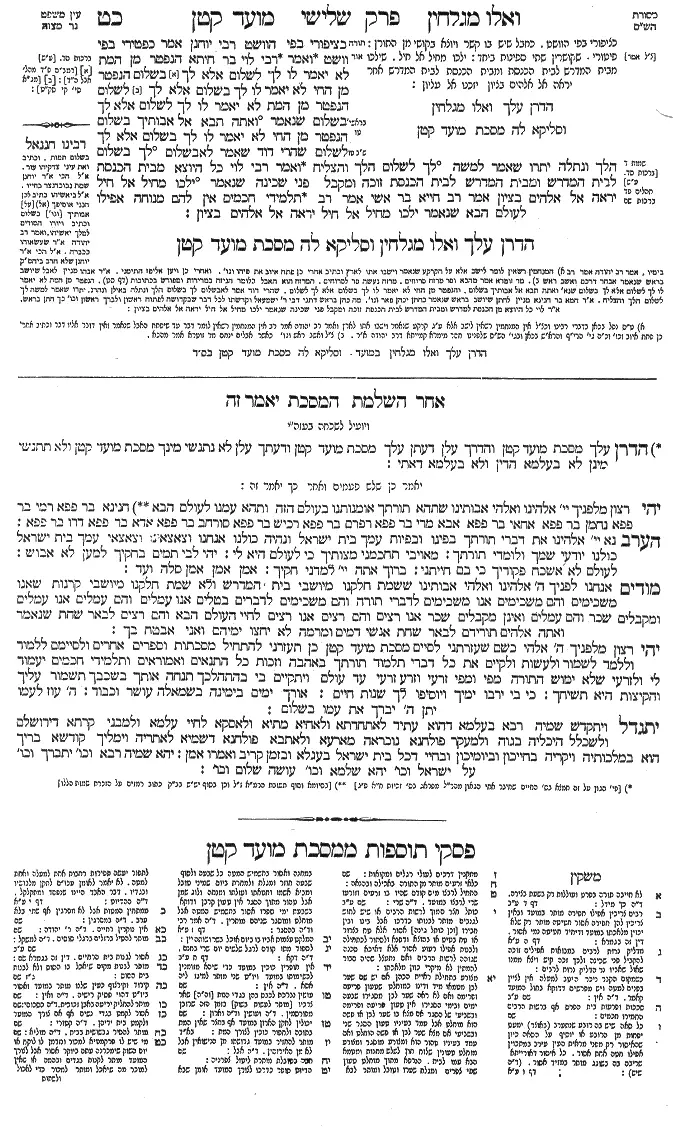
Mo'ed Katan 29a - Guemara
כציפורי בפי הוושט רבי יוחנן אמר כפטירי בפי וושט ואמר רבי לוי בר חיתא הנפטר מן המת לא יאמר לו לך לשלום אלא לך בשלום הנפטר מן החי לא יאמר לו לך בשלום אלא לך לשלום הנפטר מן המת לא יאמר לו לך לשלום אלא לך בשלום שנאמר (בראשית טו, טו) ואתה תבא אל אבותיך בשלום הנפטר מן החי לא יאמר לו לך בשלום אלא לך לשלום שהרי דוד שאמר לאבשלום (שמואל ב טו, ט) לך בשלום הלך ונתלה יתרו שאמר למשה (שמות ד, יח) לך לשלום הלך והצליח ואמר רבי לוי כל היוצא מבית הכנסת לבית המדרש ומבית המדרש לבית הכנסת זוכה ומקבל פני שכינה שנאמר (תהלים פד, ח) ילכו מחיל אל חיל יראה אל אלהים בציון אמר רב חייא בר אשי אמר רב תלמידי חכמים אין להם מנוחה אפילו לעולם הבא שנאמר ילכו מחיל אל חיל יראה אל אלהים בציון:
הדרן עלך מסכת מועד קטן
Comments from Rashi on Masechet Mo'ed Katan Page 29a
כציפורי בפי הוושט . כחבל שיש בו קשר ויוצא בקושי מן התורן: פיטורי . שקושרין שתי ספינות ביחד: ילכו מחיל אל חיל . שילכו מבית המדרש לבית הכנסת ומבית הכנסת לבית המדרש אחר יראה אל אלהים בציון יזכנו אל עליון:
Mo'ed Katan 29a - Mishnah translated into english
as it is for a knotted rope [tzippori] to pass through an eye [veshet] in a ship’s rigging. Rabbi Yoḥanan said: It is as difficult as it is for a halyard [pitirei] to pass through an eye [veshet].
And Rabbi Levi bar Ḥayyata said: One who departs from the deceased should not say to him: Go to peace, but rather he should say: Go in peace. One who departs from the living should not say to him: Go in peace, but rather he should say: Go to peace.
One who departs from the deceased should not say to him: Go to peace, but rather: Go in peace, as it is stated: “And you shall go to your fathers in peace; you shall be buried in a good old age” (Genesis 15:15).
One who departs from the living should not say to him: Go in peace, but rather: Go to peace, as David said to Absalom: “Go in peace” (II Samuel 15:9), and he subsequently went and was hanged; whereas Jethro said to Moses: “Go to peace” (Exodus 4:18), and he went and was successful.
And Rabbi Levi said: Anyone who leaves from the synagogue and goes to the study hall or goes from the study hall to the synagogue, i.e., he goes from the mitzva of prayer to the mitzva of Torah study or vice versa, merits to receive the Divine Presence, as it is stated: “They go from strength to strength, every one of them appears before God in Zion” (Psalms 84:8).
With regard to the same verse, Rav Ḥiyya bar Ashi said that Rav said: Torah scholars have no rest, even in the World-to-Come, as even there they remain in constant movement and ascent, as it is stated: “They go from strength to strength, every one of them appears before God in Zion.” Even when they are in the World-to-Come, they continue to go from strength to strength, until the final redemption will arrive in the end of days and God will appear in Zion.
Traduction : The William Davidson digital edition of the Koren Noé Talmud, with commentary by Rabbi Adin Even-Israel Steinsaltz.
Mo'ed Katan 29a : Significance
Next step
You have reached the end of tractate Mo'ed Katan.
Start tractate HagigahFrequently asked questions: Mo'ed Katan 29a
Where is Mo'ed Katan 29a in tractate Mo'ed Katan?
Mo'ed Katan 29a is page 55 of 55 in tractate Mo'ed Katan (Seder Moed).
When is daf 29 of Mo'ed Katan studied in Daf Yomi?
Daf Yomi covers one daf a day, both sides. Daf 29 of Mo'ed Katan will be studied on July 14, 2029.
Is there a video class on Mo'ed Katan 29a?
Yes, by Daf Tube, Rabbi Dr. Moshe Weisblum. These classes were published on YouTube by their authors and are gathered on this site.
What is tractate Mo'ed Katan about?
The Masechet Moed Katan is the eleventh tractate of the Seder Moed. The Moed Katan gemara is the study of the laws of the half-holidays that separate the holiday from Passover and Sukot. The Moed Katan tractate is a very short gemara.
Your study is also dedicated to them
- L'ilui Nishmat Ledicia bat David Banoun
- L'ilui Nishmat Nissim ben Barukh Malka
- L'ilui Nishmat Reuven ben Rivka SEBBAG