 Talmud Bavli
The learning on the whole site is dedicated : L'ilui Nishmat Chemouel Eliezer ben Batcheva
The learning on the whole site is dedicated : L'ilui Nishmat Yaakov ben Myriam
The learning on the whole site is dedicated : L'ilui Nishmat Ledicia bat David Banoun
Mo'ed Katan 27a : Youtube
Daf TubeYoutube
2 video classes :
Mo'ed Katan Page 27a
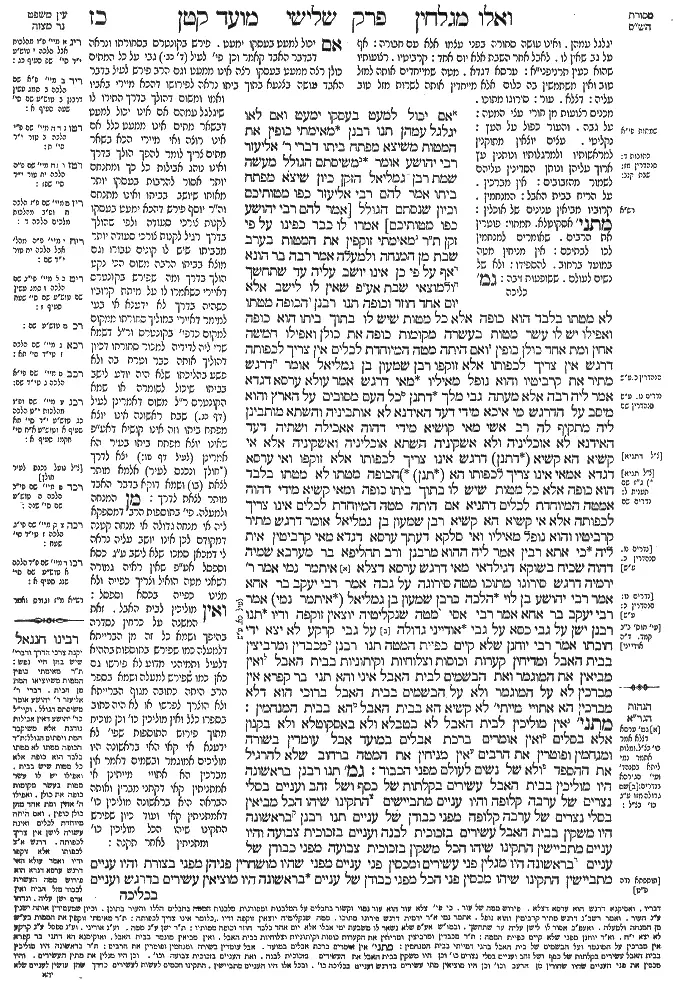
Mo'ed Katan 27a - Guemara
אם יכול למעט בעסקו ימעט ואם לאו יגלגל עמהן תנו רבנן מאימתי כופין את המטות משיצא מפתח ביתו דברי ר' אליעזר רבי יהושע אומר משיסתם הגולל מעשה שמת רבן גמליאל הזקן כיון שיצא מפתח ביתו אמר להם רבי אליעזר כפו מטותיכם וכיון שנסתם הגולל אמר להם רבי יהושע כפו מטותיכם אמרו לו כבר כפינו על פי זקן ת"ר מאימתי זוקפין את המטות בערב שבת מן המנחה ולמעלה אמר רבה בר הונא אף על פי כן אינו יושב עליה עד שתחשך ולמוצאי שבת אע"פ שאין לו לישב אלא יום אחד חוזר וכופה תנו רבנן הכופה מטתו לא מטתו בלבד הוא כופה אלא כל מטות שיש לו בתוך ביתו הוא כופה ואפילו יש לו עשר מטות בעשרה מקומות כופה את כולן ואפילו חמשה אחין ומת אחד כולן כופין ואם היתה מטה המיוחדת לכלים אין צריך לכפותה דרגש אין צריך לכפותו אלא זוקפו רבן שמעון בן גמליאל אומר דרגש מתיר את קרביטיו והוא נופל מאיליו מאי דרגש אמר עולא ערסא דגדא אמר ליה רבה אלא מעתה גבי מלך דתנן כל העם מסובים על הארץ והוא מיסב על הדרגש מי איכא מידי דעד האידנא לא אותביניה והשתא מותבינן ליה מתקיף לה רב אשי מאי קושיא מידי דהוה אאכילה ושתיה דעד האידנא לא אוכליניה ולא אשקיניה השתא אוכליניה ואשקיניה אלא אי קשיא הא קשיא (דתנן) דרגש אינו צריך לכפותו אלא זוקפו ואי ערסא דגדא אמאי אינו צריך לכפותו הא (תנן) הכופה מטתו לא מטתו בלבד הוא כופה אלא כל מטות שיש לו בתוך ביתו כופה ומאי קשיא מידי דהוה אמטה המיוחדת לכלים דתניא אם היתה מטה המיוחדת לכלים אינו צריך לכפותה אלא אי קשיא הא קשיא רבן שמעון בן גמליאל אומר דרגש מתיר קרביטיו והוא נופל מאיליו ואי סלקא דעתך ערסא דגדא מאי קרביטין אית ליה כי אתא רבין אמר ליה ההוא מרבנן ורב תחליפא בר מערבא שמיה דהוה שכיח בשוקא דגילדאי מאי דרגש ערסא דצלא איתמר נמי אמר ר' ירמיה דרגש סירוגו מתוכו מטה סירוגה על גבה אמר רבי יעקב בר אחא אמר רבי יהושע בן לוי הלכה כרבן שמעון בן גמליאל (איתמר נמי) אמר רבי יעקב בר אחא אמר רבי אסי מטה שנקליטיה יוצאין זוקפה ודיו תנו רבנן ישן על גבי כסא על גבי אודייני גדולה על גבי קרקע לא יצא ידי חובתו אמר רבי יוחנן שלא קיים כפיית המטה תנו רבנן מכבדין ומרביצין בבית האבל ומדיחין קערות וכוסות וצלוחיות וקיתוניות בבית האבל ואין מביאין את המוגמר ואת הבשמים לבית האבל איני והא תני בר קפרא אין מברכין לא על המוגמר ולא על הבשמים בבית האבל ברוכי הוא דלא מברכין הא אתויי מייתי' לא קשיא הא בבית האבל הא בבית המנחמין:
מתני׳ אין מוליכין לבית האבל לא בטבלא ולא באסקוטלא ולא בקנון אלא בסלים ואין אומרים ברכת אבלים במועד אבל עומדין בשורה ומנחמין ופוטרין את הרבים אין מניחין את המטה ברחוב שלא להרגיל את ההספד ולא של נשים לעולם מפני הכבוד:
גמ׳ תנו רבנן בראשונה היו מוליכין בבית האבל עשירים בקלתות של כסף ושל זהב ועניים בסלי נצרים של ערבה קלופה והיו עניים מתביישים התקינו שיהו הכל מביאין בסלי נצרים של ערבה קלופה מפני כבודן של עניים תנו רבנן בראשונה היו משקין בבית האבל עשירים בזכוכית לבנה ועניים בזכוכית צבועה והיו עניים מתביישין התקינו שיהו הכל משקין בזכוכית צבועה מפני כבודן של עניים בראשונה היו מגלין פני עשירים ומכסין פני עניים מפני שהיו מושחרין פניהן מפני בצורת והיו עניים מתביישין התקינו שיהו מכסין פני הכל מפני כבודן של עניים בראשונה היו מוציאין עשירים בדרגש ועניים
Comments from Rashi on Masechet Mo'ed Katan Page 27a
יגלגל עמהן . ואינו עושה סחורה בפני עצמו אלא עם חבורה: אף על גב שאין לו . לאבל אחר השבת אלא יום אחד: קרביטיו . רצועותיו שהוא כעין תרניפני"א: ערסא דגדא . מטה שמייחדים אותה למזל טוב ואין משתמשין בה כלום אלא מייחדין אותה לשרות מזל טוב עליה: דצלא . עור: סירוגו מתוכו . מכניס רצועות מן חורי עצי המטה: על גבה . והעור כפול על העץ: נקליטי . עצים יוצאין מתוקנין למראשותיו ולמרגלותיו ונותנין עץ ארוך עליהן ונותן הסדינין עליהם לשמור מהזבובים: אין מברכין . על הריח בבית האבל: המנחמין . קרוביו מביאין ענינים של אוכלין: מתני' אסקוטלא . תמחוי: פוטרין את הרבים . שאומרים למנחמין לכו לבתיכם: אין מניחין מטה במועד ברחוב . להספידו: ולא של נשים לעולם . ששופעות זיבה: גמ'
Comments from Tosafot - Mo'ed Katan 27a
אם יכול למעט בעסקו ימעט. פירש בקונטרס בסחורתו ונראה דבדבר האבד קאמר וכן פי' לעיל (מועד קטן ד' כב.) גבי על כל המתים כולן רצה ממעט בעסקו רצה אינו ממעט וגם הרב פירש לעיל בדבר האבד עושה בצנעא בתוך ביתו נראה לפירושו דהכא מיירי באביו ואמו ומשום דהולך בדרך התירו לו שיגלגל עמהם אם אינו יכול למעט דבשאר מתים אינו ממעט כלל אם אינו רוצה ואי מיירי הכא בשאר מתים צריך לומר להפך הולך בדרך ואינו נוהג אבילות כל כך ומתנחם יותר אסור להרבות בעסקו יותר מאותו שיושב בביתו ואינו מתנחם וה"ר יוסף פירש דהכא ימעט בעסקו לקנות צורכי סעודה ולפי שהולך בדרך רגיל לקנות צורכי סעודה יותר מבביתו שיש לו קונים עבורו וגם מוצא בביתו הרבה משום הכי נקט הולך בדרך ומה שפירש בקונטרס דאיירי כשאמרו לו על מיתת קרוביו כשהיה בדרך לא ידענא אי בעי למימר דאיירי במוליך סחורתו ממקום למקום כדפי' בקונטרס ור"ל דשמא שרי ליה לדידיה למכור סחורתו דכיון דהוליך אותה כבר וטרח בה ולא פשע בהליכתו שלא היה יודע לישב בביתו שיכול לשומרה או שמא הקונטרס ר"ל משום דאמרינן לעיל (מועד קטן דף כג.) שבת ראשונה אינו יוצא מפתח ביתו וזה אינו קושיא דאע"פ שאינו יוצא מפתח ביתו בעיר הא אמרינן (לעיל מועד קטן דף טו:) יצא לדרך (. חולץ ונכנס לעיר אלמא מותר לצאת (בו) ושמא דוקא בדבר האבד מותר לצאת לדרך: מן המנחה ולמעלה. פי' בתוספות הרב דמספקא ליה אי מנחה גדולה אי מנחה קטנה דמקודם לכן אינו יושב עליה נראה לי דמכאן סמכו שלא לישב ע"ג כסא וספסל אע"פ שאין ראיה גמורה דשאני מטה הואיל וצריך כפייה ולא מצינו כפייה בכסא וספסל: ואין מוליכין לבית האבל. זאת המשנה על כרחין נסדרה בהיפך ושמא כל זה מן הברייתא דלמעלה כמו שפירש בתוספות בההיא. דלעיל ותמיהני מדוע לא פירשו גם כאן כמו שפירש למעלה ושמא בספר הרב היתה כתובה מגוף הברייתא ולא הוצרך לפרשו או לא היה כתוב בספרו כלל ואין מוליכין כו' וכן מוכיח מתוך פירוש התוספות שפי' לא ידענא אי קאי האי בראשונה היו מוליכים אמוגמר ובשמים דאמר אין מברכין הא אתויי מייתינן אי אמתניתין קאי דקתני מברין ואותה הבראה היא בראשונה מוליכין כו' דאמתניתין קאי ועוד כיון שפירש התקינו שיהו הכל מוליכין כו' ומתניתין לאחר תקנה:
Mo'ed Katan 27a - Mishnah translated into english
if he can reduce his business, he should reduce it; and if not, he may carry on with them, i.e., his business partners. He may act in partnership with the members of the group with which he is traveling, but he may not engage in business independently.
§ The Sages taught the following baraita: From when do the mourners overturn their beds? From when the corpse is taken out of the opening of his house; this is the statement of Rabbi Eliezer. Rabbi Yehoshua says: From when the tomb is sealed with the grave cover.
There was an incident in which the Nasi Rabban Gamliel the Elder died, and once his body left the opening of his house, Rabbi Eliezer said to the members of the household: Overturn your beds. And once the tomb was sealed with the grave cover, Rabbi Yehoshua said to them: Overturn your beds. They then said to him: We already overturned them in accordance with the Elder, i.e., Rabbi Eliezer.
The Sages taught in a baraita: From when do the mourners stand their beds upright on Friday; as the rites of mourning are not observed on Shabbat, and the beds must be returned to their ordinary position beforehand? From minḥa time onward. Rabba bar Huna said: Even so, one may not sit down on his upright bed immediately. Rather, he must wait until it becomes dark to do so. And at the conclusion of Shabbat, even if he has only one more day to sit in mourning, i.e., his period of mourning concludes on Sunday, he must once again overturn his bed.
The Sages taught in a baraita: With regard to one who is in mourning and must overturn his bed, he overturns not only his own bed, but rather he overturns all the beds he has in his house. And even if he has ten beds in ten different places, he overturns them all. And even if there are five brothers and one of them died, all of them overturn their beds wherever they live.
If, however, it is a bed designated for the storage of garments and not for sleeping, he is not required to overturn it. It is also not necessary to overturn a dargash, but rather he stands it upright. Rabban Shimon ben Gamliel says: With regard to a dargash, one loosens its loops [karbitav], which hold up the pillows, and it falls on its own.
The Gemara asks: What is the meaning of the word dargash? Ulla said: It is a good-luck [gada] bed, as it was common to have ornamental beds for good luck, which were not used for sleeping.
Rabba said to him: However, if that is so, then the following statement with regard to a king is difficult, as we learned in a mishna (Sanhedrin 20a): When the mourner’s meal is served to the king and his family, all the people recline on the ground, and he, the king, due to his honor, reclines on a dargash. Is there anything upon which we would not have seated him until now, when he was not a mourner, but now, specifically during the mourning period, we seat him on it?
Rav Ashi strongly objects to this: What is the difficulty raised by Rabba? One can answer: The halakha is just as it is in the case of eating and drinking, that until now, before one became a mourner, we did not feed him or give him drink, but now that he is a mourner we feed him and give him drink during the first meal after the burial.
Rather, if it is difficult, this is difficult, as we learned in a baraita: It is not necessary to overturn a dargash, but rather he stands it upright. But if it is a good-luck bed, why is it not necessary to overturn it? Didn’t we learn: One who is in mourning and must overturn his bed overturns not only his own bed, but rather he overturns all the beds in his house, including this good luck bed?
The Gemara rejects this: And what is difficult in this? One can answer: The halakha is just as it is in the case of a bed designated for the storage of garments, as it is taught in a baraita: If it is a bed designated for the storage of garments, and not for sleeping, one is not required to overturn it. So too, one is not required to overturn a dargash, as it is a bed that is not used for sleeping.
Rather if it is difficult, this is the difficulty: It was taught in a baraita: Rabban Shimon ben Gamliel says: With regard to a dargash, one loosens the loops that hold up the pillows, and it falls on its own. And if it enters your mind to say that a dargash is a good-luck bed, it is like other beds, so what loops does it have?
When Ravin came from Eretz Yisrael to Babylonia, one of the Sages, whose name was Rav Taḥalifa from the West, and who was frequently found in the market of leather workers, said to him: What is a dargash? It is a leather bed.
It was also stated that Rabbi Yirmeya said: A dargash has its interlacing from the inside, i.e., attached to loops that go through holes that are made in the bed frame itself; whereas a bed has its interlacing from the outside, i.e., the strapping itself is looped around the wood of the frame, and therefore it cannot be loosened.
Rabbi Ya’akov bar Aḥa said in the name of Rabbi Yehoshua ben Levi: The halakha is in accordance with the opinion of Rabban Shimon ben Gamliel with regard to a dargash. It was also stated that Rabbi Ya’akov bar Aḥa said in the name of Rabbi Asi: A bed whose posts [naklitin] extend, meaning that they are very long so that the bed will remain high off the ground even if it is overturned, may be stood upright and that is sufficient. That is to say, one is not required to overturn such a bed.
The Sages taught the following baraita: If the mourner sleeps on a chair, or on a large overturned mortar, or on the ground, he does not fulfill his obligation, even though he is uncomfortable while sleeping. Rabbi Yoḥanan said: This is because he did not fulfill the mitzva of overturning the bed.
The Sages taught another baraita: One may sweep and sprinkle water on a dirt floor in the house of a mourner, and one may wash bowls, cups, jugs, and pitchers in the house of a mourner. But one may not bring incense or fragrant spices into the house of a mourner.
The Gemara asks: Is that so? But doesn’t bar Kappara teach the following baraita: One may not recite a blessing either over incense or over fragrant spices in the house of a mourner? From this one may infer that one may not recite a blessing over these incense or spices, but one may bring them into the house of the mourner. This appears to contradict the previous baraita.
The Gemara explains: It is not difficult. Here, the baraita is referring to the house of a mourner, into which spices should not be taken; there, the baraita that states that one may not recite a blessing over them, is referring to the house of the consolers, his relatives, into which spices may be brought.
MISHNA: One does not bring the first meal after the burial to the house of mourning on a small tray [tavla], in a bowl [iskutla], or in a narrow-mouthed basket [kanon], but rather in ordinary baskets. And the mourners’ blessing is not recited on the intermediate days of a Festival, but the consolers may stand in a row when the mourners leave the cemetery and console them. And the mourners dismiss the many consolers, by telling them that they may return home after they have fulfilled the mitzva of consoling the mourners.
The bier of the deceased is not set down in the street during the intermediate days of a Festival so as not to encourage eulogies. On an ordinary weekday, people would gather in the street around the bier to eulogize the deceased, but this should be avoided during the intermediate days of the Festival. And the biers of women are never set down, even if it is not the intermediate days of a Festival, due to their honor. Blood might drip from their bodies, and it would cause them dishonor if their blood stained the street.
GEMARA: The Sages taught the following baraita: At first, the meal after the burial would be brought to the house of the mourner in various ways. The wealthy would bring the meal in baskets of silver and gold, and the poor would bring it in baskets of peeled willow branches. And the poor were embarrassed, as everyone would see that they were poor. The Sages instituted that everyone should bring the meal in baskets of peeled willow branches, due to the honor of the poor.
The Sages taught a similar baraita: At first, they would serve wine in the house of the mourner during the first meal after the burial; the wealthy would do so in cups made from white glass, and the poor would serve this wine in cups of colored glass. And the poor were embarrassed, as everyone would see that they were poor. The Sages instituted that all should serve drinks in the house of the mourner in colored glass cups, due to the honor of the poor.
Furthermore, at first they would uncover the faces of the wealthy who passed away and cover the faces of the poor, because their faces were blackened by famine. And the poor were embarrassed because they were buried in a different manner. The Sages instituted that everyone’s face should be covered, due to the honor of the poor.
Additionally, at first the wealthy would take the deceased out for burial on a dargash, and the poor would take the deceased out
Traduction : The William Davidson digital edition of the Koren Noé Talmud, with commentary by Rabbi Adin Even-Israel Steinsaltz.