 Talmud Bavli
Mo'ed Katan 26a : Youtube
Daf TubeYoutube
2 video classes :
Mo'ed Katan Page 26a
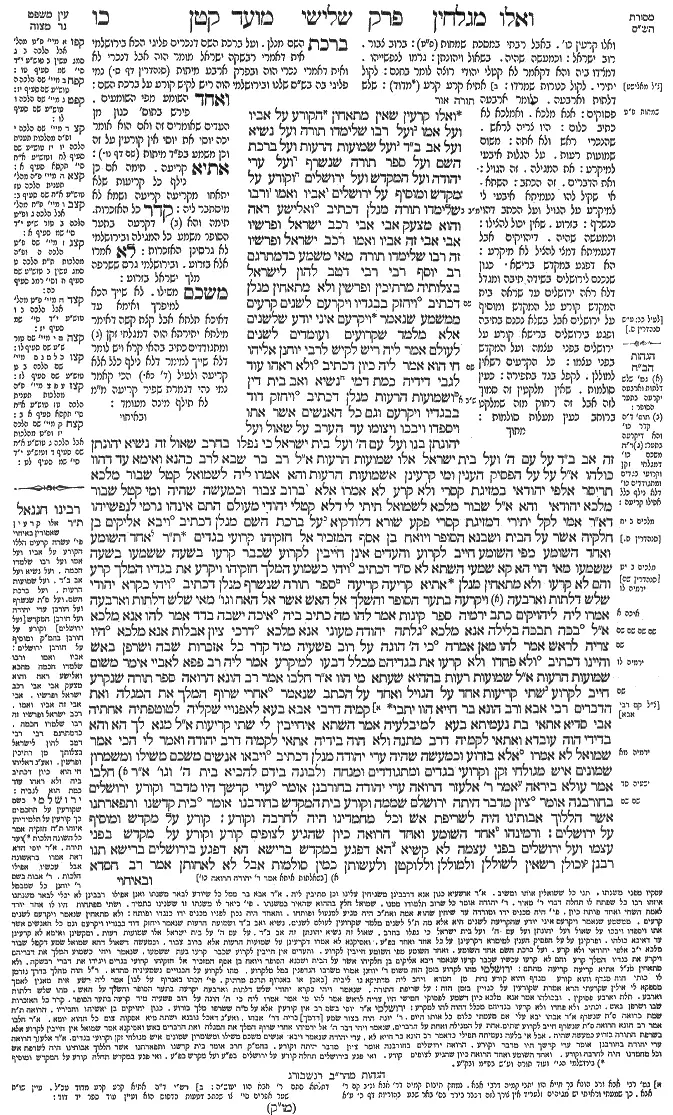
Mo'ed Katan 26a - Guemara
ואלו קרעין שאין מתאחין הקורע על אביו ועל אמו ועל רבו שלימדו תורה ועל נשיא ועל אב ב"ד ועל שמועות הרעות ועל ברכת השם ועל ספר תורה שנשרף ועל ערי יהודה ועל המקדש ועל ירושלים וקורע על מקדש ומוסיף על ירושלים אביו ואמו ורבו שלימדו תורה מנלן דכתיב (מלכים ב ב, יב) ואלישע ראה והוא מצעק אבי אבי רכב ישראל ופרשיו אבי אבי זה אביו ואמו רכב ישראל ופרשיו זה רבו שלימדו תורה מאי משמע כדמתרגם רב יוסף רבי רבי דטב להון לישראל בצלותיה מרתיכין ופרשין ולא מתאחין מנלן דכתיב (מלכים ב ב, יב) ויחזק בבגדיו ויקרעם לשנים קרעים ממשמע שנאמר ויקרעם איני יודע שלשנים אלא מלמד שקרועים ועומדים לשנים לעולם אמר ליה ריש לקיש לרבי יוחנן אליהו חי הוא אמר ליה כיון דכתיב (מלכים ב ב, יב) ולא ראהו עוד לגבי דידיה כמת דמי נשיא ואב בית דין ושמועות הרעות מנלן דכתיב (שמואל ב א, יא) ויחזק דוד בבגדיו ויקרעם וגם כל האנשים אשר אתו ויספדו ויבכו ויצומו עד הערב על שאול ועל יהונתן בנו ועל עם ה' ועל בית ישראל כי נפלו בחרב שאול זה נשיא יהונתן זה אב ב"ד על עם ה' ועל בית ישראל אלו שמועות הרעות א"ל רב בר שבא לרב כהנא ואימא עד דהוו כולהו א"ל על על הפסיק הענין ומי קרעינן אשמועות הרעות והא אמרו ליה לשמואל קטל שבור מלכא תריסר אלפי יהודאי במזיגת קסרי ולא קרע לא אמרו אלא ברוב צבור וכמעשה שהיה ומי קטל שבור מלכא יהודאי והא א"ל שבור מלכא לשמואל תיתי לי דלא קטלי יהודי מעולם התם אינהו גרמי לנפשייהו דא"ר אמי לקל יתירי דמזיגת קסרי פקע שורא דלודקיא על ברכת השם מנלן דכתיב (מלכים ב יח, לז) ויבא אליקים בן חלקיה אשר על הבית ושבנא הסופר ויואח בן אסף המזכיר אל חזקיהו קרועי בגדים ת"ר אחד השומע ואחד השומע מפי השומע חייב לקרוע והעדים אינן חייבין לקרוע שכבר קרעו בשעה ששמעו בשעה ששמעו מאי הוי הא קא שמעי השתא לא ס"ד דכתיב (מלכים ב יט, א) ויהי כשמוע המלך חזקיהו ויקרע את בגדיו המלך קרע והם לא קרעו ולא מתאחין מנלן אתיא קריעה קריעה ספר תורה שנשרף מנלן דכתיב (ירמיהו לו, כג) ויהי כקרא יהודי שלש דלתות וארבעה ויקרעה בתער הסופר והשלך אל האש אשר אל האח וגו' מאי שלש דלתות וארבעה אמרו ליה ליהויקים כתב ירמיה ספר קינות אמר להו מה כתיב ביה (איכה א, א) איכה ישבה בדד אמר להו אנא מלכא א"ל (איכה א, ב) בכה תבכה בלילה אנא מלכא (איכה א, ג) גלתה יהודה מעוני אנא מלכא (איכה א, ד) דרכי ציון אבלות אנא מלכא (איכה א, ה) היו צריה לראש אמר להו מאן אמרה (איכה א, ה) כי ה' הוגה על רוב פשעיה מיד קדר כל אזכרות שבה ושרפן באש והיינו דכתיב (ירמיהו לו, כד) ולא פחדו ולא קרעו את בגדיהם מכלל דבעו למיקרע אמר ליה רב פפא לאביי אימר משום שמועות הרעות א"ל שמועות רעות בההיא שעתא מי הוו א"ר חלבו אמר רב הונא הרואה ספר תורה שנקרע חייב לקרוע שתי קריעות אחד על הגויל ואחד על הכתב שנאמר (ירמיהו לו, כז) אחרי שרוף המלך את המגלה ואת הדברים רבי אבא ורב הונא בר חייא הוו יתבי קמיה דרבי אבא בעא לאפנויי שקליה לטוטפתיה אחתיה אבי סדיא אתאי בת נעמיתא בעא למיבלעיה אמר השתא איחייבין לי שתי קריעות א"ל מנא לך הא והא בדידי הוה עובדא ואתאי לקמיה דרב מתנה ולא הוה בידיה אתאי לקמיה דרב יהודה ואמר לי הכי אמר שמואל לא אמרו אלא בזרוע וכמעשה שהיה ערי יהודה מנלן דכתיב (ירמיהו מא, ה) ויבאו אנשים משכם משילו ומשמרון שמונים איש מגולחי זקן וקרועי בגדים ומתגודדים ומנחה ולבונה בידם להביא בית ה' וגו' א"ר חלבו אמר עולא ביראה אמר ר' אלעזר הרואה ערי יהודה בחורבנן אומר (ישעיהו סד, ט) ערי קדשך היו מדבר וקורע ירושלים בחורבנה אומר (ישעיהו סד, ט) ציון מדבר היתה ירושלם שממה וקורע בית המקדש בחורבנו אומר (ישעיהו סד, י) בית קדשנו ותפארתנו אשר הללוך אבותינו היה לשריפת אש וכל מחמדינו היה לחרבה וקורע:
קורע על מקדש ומוסיף על ירושלים:
ורמינהו אחד השומע ואחד הרואה כיון שהגיע לצופים קורע וקורע על מקדש בפני עצמו ועל ירושלים בפני עצמה לא קשיא הא דפגע במקדש ברישא הא דפגע בירושלים ברישא תנו רבנן וכולן רשאין לשוללן ולמוללן וללוקטן ולעשותן כמין סולמות אבל לא לאחותן אמר רב חסדא
Comments from Rashi on Masechet Mo'ed Katan Page 26a
ואלו קרעין כו' . באבל רבתי במסכת שמחות (פ"ט): ברוב ציבור . רוב ישראל: וכמעשה שהיה . בשאול ויהונתן: גרמו לנפשייהו . דמרדו ביה והא דקאמר לא קטלי יהודי רוצה לומר בחנם: לקול יתירי . לקול כנורות שמרדו: אתיא קרע קרע (מדוד): שלש דלתות וארבעה . כלומר ארבעה פסוקים: אנא מלכא . ואמלכא לא כתיב כלום: היו צריה לראש . שהנכרי ראש ולא אתה: משום שמועות רעות . על הגלות איבעי למיקרע: את המגילה . זה הגויל: ואת הדברים . זה הכתב: השתא . אי שקיל להו נעמיתא איבעי לי למיקרע על הגויל ועל הכתב דהוי כנשרף: בזרוע . שאין יכול להצילו: וכמעשה שהיה . דיהויקים אבל דנעמיתא דמצי להציל. לא מיקרע: הא דפגע במקדש ברישא . כגון כשנכנס לירושלים בשידה תיבה ומגדל דלא ראה ירושלים עד שראה בית המקדש. קורע על המקדש ומוסיף על ירושלים אבל בשלא נכנס בתיבה ופגע בירושלים ברישא קורע על ירושלים בפני עצמה ועל המקדש בפני עצמו: כל הקרעים רשאין למוללן . לקפל בגד בתפירה: כעין סולמות . שאין מלקטין זה סמוך לזה אבל זה רחוק מזה שמלקט ברוחב כעין מעלות סולמות:
Comments from Tosafot - Mo'ed Katan 26a
ברכת השם מנלן. ועל ברכת השם דנכרים פליגי הכא בירושלמי אית דאמרי רבשקה ישראל מומר הוה אבל דנכרי לא ואית דאמרי נכרי הוה ובפרק ארבע מיתות (סנהדרין דף ס.) נמי פליגי בה בש"ס שלנו ובירושלמי הוה ריש לקיש קורע על ברכת השם: ואחד השומע מפי השומעים. פירש בתוס' כגון מן העדים שאומרים זה ואם הוא אומר יכה יוסי את יוסי אין קורעין על זה וכן משמע בפ"ד מיתות (שם דף נו.): אתיא קריעה. תימה אם כן נילף כל קריעות שלא יתאחו מקריעה קריעה ושמא לא מיסתבר ליה: קדר כל האזכרות. תימה והא דקרעה בתער הסופר משמע כל המגילה ובירושלמי לא גרסינן האזכרות: לא אמרו אלא בזרוע. ובירושלמי גרס ששרפה מלך ישראל בזרוע: משכם משילו. לא שייך הכא למיפרך ואימא עד דאיכא תלתא אבל קצת קשה דאימר מילתא יתירתא הוה דמגלחי זקן ומתגודדים כתיב בהאי קרא ויש לומר דלא שייך למימר דלא נילף כלל אלא קריעה ולעיל (מועד קטן ד' כא.) הכי קאמר נמי נהי דגמרת שפיר קריעה מ"מ לא תילף מינה מעומד:
Mo'ed Katan 26a - Mishnah translated into english
And these are the rents of mourning that may never be properly mended: One who rends his garments for the death his father, or for his mother, or for his teacher who taught him Torah, or for the Nasi, or for the president of the court; or upon hearing evil tidings; or hearing God’s name being blessed, which is a euphemism for hearing God’s name being cursed; or when a Torah scroll has been burned; or upon seeing the cities of Judea that were destroyed or the destroyed Temple or Jerusalem in ruins. This is the way one conducts himself when approaching Jerusalem when it lies in ruin: He first rends his garments for the Temple and then extends the rent for Jerusalem.
The Gemara elaborates upon the halakhot mentioned in this baraita: From where do we derive that one must rend his clothing for his father, his mother, and his teacher who taught him Torah? As it is written with regard to the prophet Elijah, when he ascended to Heaven in a tempest: “And Elisha saw it, and he cried, My father, my father, the chariots of Israel and their horsemen” (II Kings 2:12). The Gemara interprets this verse as follows: “My father, my father”; this comes to teach that one must rend his garments for the death of his father or mother. “The chariots of Israel and their horsemen”; this comes to include also one’s teacher who taught him Torah.
The Gemara asks: From where may it be inferred that this is referring to one’s teacher? The Gemara explains: As the verse was translated by Rav Yosef: My teacher, my teacher, who was better for the protection of the Jewish people with his prayers than an army with chariots and horsemen.
And from where do we derive that these rents are never to be properly mended? As it is written: “And he took hold of his own clothes, and rent them in two pieces” (II Kings 2:12). From the fact that it is stated: “And he rent them,” do I not know that he rent them in two pieces? Rather, when the verse adds that they were torn into two pieces, it teaches that they must remain torn in two pieces forever. Accordingly, this rent must never be properly mended.
Reish Lakish said to Rabbi Yoḥanan: But isn’t Elijah still alive? Why, then, did Elisha rend his garments for him? He said to him: Since it is written: “And he saw him no more” (II Kings 2:12), Elijah was considered dead from Elisha’s perspective, and so Elisha rent his clothing for him.
§ From where do we derive that one must rend his clothing for the death of the Nasi or the president of the court and upon hearing evil tidings? As it is written, when David heard about the defeat of Israel and the death of Saul and his sons: “Then David took hold of his clothes, and rent them; and likewise all the men that were with him: And they mourned, and wept, and fasted until evening, for Saul and for Jonathan his son, and for the people of the Lord, and for the house of Israel; because they were fallen by the sword” (II Samuel 1:11–12).
The Gemara explains how the aforementioned halakhot are derived from the verse: “Saul”; this is a reference to the Nasi, as Saul was king of Israel. “Jonathan”; this is a reference to the president of the court. “For the people of the Lord, and for the house of the Israel”; these are a reference to evil tidings.
Rav bar Shaba said to Rav Kahana: But perhaps you can say that one need not rend his clothing until all these calamities occur together, and that rending clothing is performed only over a tragedy of this magnitude. He said to him: The repetition of the word “for”: “For Saul,” “for Jonathan,” and “for the people of the Lord” divides the matter and teaches that each individual misfortune is sufficient cause to rend one’s garments.
The Gemara asks: But do we actually rend our clothing upon hearing evil tidings? But didn’t they say to Shmuel: King Shapur killed twelve thousand Jews in Mezigat Caesarea, and Shmuel did not rend his clothing?The Gemara answers: They said that one must rend his clothing upon hearing evil tidings only in a case where the calamity involved the majority of the community of Israel and resembles the incident that occurred when Saul was killed and the entire nation of Israel suffered defeat.
The Gemara tangentially asks: Did King Shapur really kill Jews? But didn’t King Shapur say to Shmuel: I have a blessing coming to me, for I have never killed a Jew? The Gemara answers: King Shapur never instigated the killing of Jews; there, however, they brought it upon themselves, as Rabbi Ami said in an exaggerated manner: Due to the noise of the harp strings of Mezigat Caesarea, the walls of Laodicea were breached, for the residents of the city celebrated when they rebelled against King Shapur. Because they rebelled against him and threatened his rule, he was forced to kill them.
§ The Gemara continues its analysis of the baraita: From where do we derive that one must rend his garments upon hearing God’s name being blessed, i.e., cursed? As it is written with regard to the blasphemous words said by Rab-shakeh: “Then came Eliakim, son of Hilkiya, who was over the household, and Shebna the scribe, and Joah, son of Asaph, the recorder, to Hezekiah with their clothes rent” (II Kings 18:37).
The Sages taught a baraita with regard to this issue: Both one who actually hears the curse and one who hears from the mouth of the one who heard the curse are obligated to rend their garments. But the witnesses who testify against the person who uttered the blasphemy are not obligated to rend their clothing when they testify as to what they heard because they already rent their clothing when they heard the curse the first time.
The Gemara asks: What difference does it make that they rent their garments when they heard the curse the first time? Didn’t they hear it again now? The Gemara rejects this argument: This will not enter your mind, as it is written: “And it came to pass, when King Hezekiah heard it, that he rent his clothes” (II Kings 19:1). This indicates that the king rent his garments, but those who reported the blasphemy to him did not rend theirs, as they had already rent their garments the first time.
And from where do we derive that these rents may not be properly mended? This is derived by way of a verbal analogy between the verb rending used here with regard to Hezekiah and the verb rending used in the case of Elijah and Elisha.
§ From where do we derive that one must rend his garments when a Torah scroll has been burned? As it is written: “And it came to pass, that when Jehudi had read three or four leaves, he would cut it with a penknife, and cast it into the fire that was in the brazier” (Jeremiah 36:23). With regard to the verse itself the Gemara asks: What is meant by “three or four leaves,” and why did he cut the book only at that point?
The Gemara explains: They said to Jehoiakim: Jeremiah has written a book of Lamentations over the future downfall and destruction of Jerusalem. He said to them: What is written in it? They read him the first verse: “How does the city sit solitary” (Lamentations 1:1). He said to them: I am king, and this does not apply to me. They read him the second verse: “She weeps sore in the night” (Lamentations 1:2). He said to them: I am king, and this does not apply to me. They read him the third verse: “Judah is gone into exile due to affliction” (Lamentations 1:3). He said to them: I am king. They read to him: “The ways of Zion do mourn” (Lamentations 1:4). He said to them: I am king. These are the four leaves, or verses, that he read first.
They read him an additional verse: “Her adversaries have become the chief” (Lamentations 1:5), i.e., the reigning king will be removed from power. Once he heard this, he said to them: Who said this? They said to him: This is the continuation of the verse: “For the Lord has afflicted her for the multitude of her transgressions” (Lamentations 1:5). Immediately, he cut out all the names of God from the book and burned them in fire. This is as it is written: “Yet they were not afraid, nor rent their garments, neither the king, nor any of his servants that heard all these words” (Jeremiah 36:24). By inference, this shows that they were required to rend their clothing when they saw this.
Rav Pappa said to Abaye: Perhaps you can say that they should have rent their garments due to the evil tidings contained in the scroll and not because of the destruction of the book? Abaye said to him: Were they evil tidings at that time? This was a prophecy and not an account of current events.
Rabbi Ḥelbo said that Rav Huna said: One who sees a Torah scroll that was torn is obligated to make two rents, one for the parchment that was damaged and one for the writing, as it is stated: “Then the word of the Lord came to Jeremiah, after the king had burned the scroll and the words” (Jeremiah 36:27). This implies that a separate rent must be made for each of them, both the parchment and the writing.
It was related that Rabbi Abba and Rav Huna bar Ḥiyya were sitting before Rabbi Abba. Rabbi Abba needed to relieve himself. He removed his phylacteries from his head and placed them on the cushion on which he was sitting. An ostrich came and wanted to swallow the phylacteries.
He said: Now, had it succeeded to swallow it, I would have been obligated to make two rents. He said to him: From where do you derive this? There was an incident in which I was involved and I came before Rav Mattana asking what to do, but he did not have an answer readily available. I then came before Rav Yehuda, and he said to me: Shmuel said as follows: They said that one is obligated to rend his clothing only when a Torah scroll or some other sacred book is torn by force, and it resembles the incident that occurred with Jehoiakim.
§ From where do we derive that one must rend his garments upon seeing the cities of Judea in ruin? As it is written: “There came certain men from Shechem, from Shiloh, and from Samaria, eighty people, their beards shaven, and their clothes rent, and having cut themselves, with offerings and incense in their hand, to bring to the house of the Lord” (Jeremiah 41:5). This indicates that they rent their garments upon seeing the destruction.
Rabbi Ḥelbo said that Ulla Bira’a said that Rabbi Elazar said: One who sees the cities of Judea in their desolation says: “Your sacred cities are become a wilderness” (Isaiah 64:9), and then rends his garments. One who sees Jerusalem in its desolation says: “Zion is a wilderness, Jerusalem a desolation” (Isaiah 64:9), and then rends his garments. One who sees the Temple in its desolation says: “Our sacred and our beautiful house, where our fathers praised You, is burned with fire; and all our pleasant things are laid waste” (Isaiah 64:10), and then rends his garments.
It was taught in the baraita: He first rends his garments for the Temple and then extends the rent for Jerusalem. And they raise a contradiction from another baraita that states: Both one who hears that Jerusalem is in ruin and one who sees the destruction, once he reaches Mount Scopus [Tzofim], rends his garments. And he rends his garments for the Temple separately and for Jerusalem separately.
The Gemara answers: This is not difficult. This baraita, which states that instead of making a separate rent for Jerusalem one may extend the first rent that he had made for the Temple, is referring to the case where one reached the Temple first, before seeing the rest of Jerusalem, and saw it in ruin. That baraita, which states that one must make separate rents for Jerusalem and for the Temple, is referring to the case where one reached Jerusalem first, and only afterward the Temple.
§ The Sages taught the following baraita: And all of these rents, one may tack them together with loose stitches, and hem them, and gather them, and fix them with imprecise ladder-like stitches. But one may not mend them with precise stitches.
Rav Ḥisda said:
Traduction : The William Davidson digital edition of the Koren Noé Talmud, with commentary by Rabbi Adin Even-Israel Steinsaltz.