 Talmud Bavli
Mo'ed Katan 13b : Youtube
Daf TubeYoutube
3 video classes :
Mo'ed Katan Page 13b
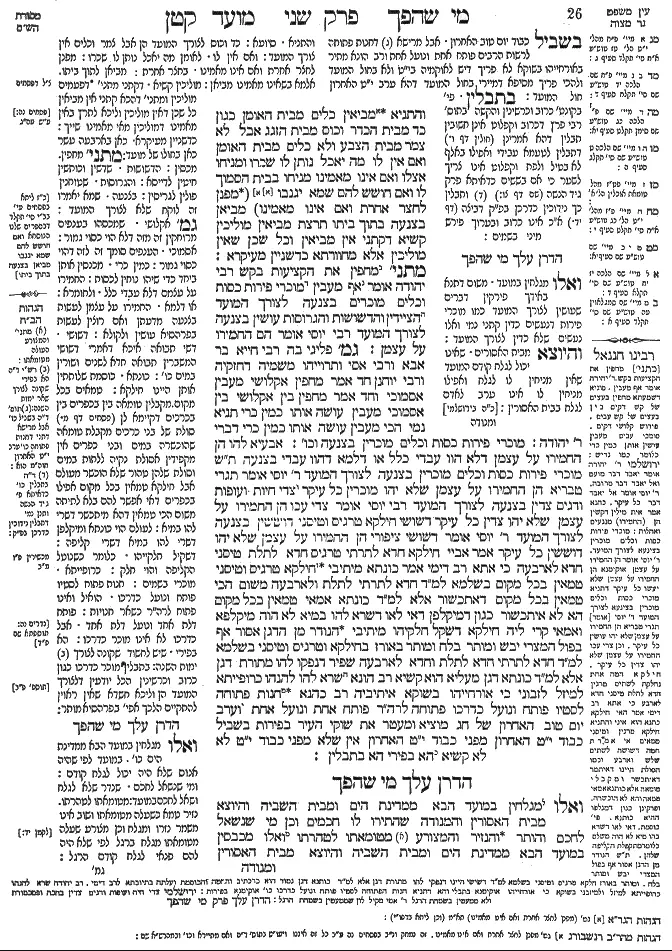
Mo'ed Katan 13b - Guemara
והתניא מביאין כלים מבית האומן כגון כד מבית הכדר וכוס מבית הזגג אבל לא צמר מבית הצבע ולא כלים מבית האומן ואם אין לו מה יאכל נותן לו שכרו ומניחו אצלו ואם אינו מאמינו מניחו בבית הסמוך לו ואם חושש להם שמא יגנבו (מפנן לחצר אחרת ואם אינו מאמינו) מביאן בצנעה בתוך ביתו תרצת מביאין מוליכין קשיא דקתני אין מביאין וכל שכן שאין מוליכין אלא מחוורתא כדשניין מעיקרא:
מתני׳ מחפין את הקציעות בקש רבי יהודה אומר אף מעבין מוכרי פירות כסות וכלים מוכרים בצנעה לצורך המועד הציידין והדשושות והגרוסות עושין בצנעה לצורך המועד רבי יוסי אומר הם החמירו על עצמן:
גמ׳ פליגי בה רבי חייא בר אבא ורבי אסי ותרוייהו משמיה דחזקיה ורבי יוחנן חד אמר מחפין אקלושי מעבין אסמוכי וחד אמר מחפין בין אקלושי בין אסמוכי מעבין עושה אותו כמין כרי תניא נמי הכי מעבין עושה אותו כמין כרי דברי ר' יהודה:
מוכרי פירות כסות וכלים מוכרין בצנעה וכו':
אבעיא להו הן החמירו על עצמן דלא הוו עבדי כלל או דלמא דהוו עבדי בצנעה ת"ש מוכרי פירות כסות וכלים מוכרין בצנעה לצורך המועד ר' יוסי אומר תגרי טבריא הן החמירו על עצמן שלא יהו מוכרין כל עיקר צדי חיות ועופות ודגים צדין בצנעה לצורך המועד רבי יוסי אומר צדי עכו הן החמירו על עצמן שלא יהו צדין כל עיקר דשושי חילקא טרגיס וטיסני דוששין בצנעה לצורך המועד ר' יוסי אומר דשושי ציפורי הן החמירו על עצמן שלא יהו דוששין כל עיקר אמר אביי חילקא חדא לתרתי טרגיס חדא לתלת טיסני חדא לארבעה כי אתא רב דימי אמר כונתא מיתיבי חילקא טרגיס וטיסני טמאין בכל מקום בשלמא למ"ד חדא לתרתי לתלת ולארבעה משום הכי טמאין בכל מקום דאתכשור אלא למ"ד כונתא אמאי טמאין בכל מקום הא לא איתכשור כגון דמיקלפן דאי לאו דשרא להו במיא לא הוה מיקלפא ואמאי קרי ליה חילקא דשקל חלקיהו מיתיבי הנודר מן הדגן אסור אף בפול המצרי יבש ומותר בלח ומותר באורז בחילקא וטרגיס וטיסני בשלמא למ"ד חדא לתרתי חדא לתלת וחדא לארבעה שפיר דנפקו להו מתורת דגן אלא למ"ד כונתא דגן מעליא הוא קשיא רב הונא שרא להו להנהו כרופייתא למיזל לזבוני כי אורחייהו בשוקא איתיביה רב כהנא חנות פתוחה לסטיו פותח ונועל כדרכו פתוחה לרה"ר פותח אחת ונועל אחת וערב יום טוב האחרון של חג מוציא ומעטר את שוקי העיר בפירות בשביל כבוד י"ט האחרון מפני כבוד י"ט האחרון אין שלא מפני כבוד י"ט לא לא קשיא הא בפירי הא בתבלין:
הדרן עלך מי שהפך:
מתני׳ ואלו מגלחין במועד הבא ממדינת הים ומבית השביה והיוצא מבית האסורין והמנודה שהתירו לו חכמים וכן מי שנשאל לחכם והותר והנזיר והמצורע מטומאתו לטהרתו ואלו מכבסין במועד הבא ממדינת הים ומבית השביה והיוצא מבית האסורין
Comments from Rashi on Masechet Mo'ed Katan Page 13b
והתניא . סיועא: כד וכוס לצורך המועד הן אבל צמר וכלים אין צורך המועד: ואם אין לו . לאומן מה יאכל נותן לו שכרו: מפנן לחצר אחרת ואם אינו מאמינו . בחצר אחרת: מביאן לתוך ביתו . אלמא בשאינו מאמינו מביאן: מוליכין קשיא . דקתני מתני' דפעמים מוליכין ומתני' דהכא קתני אין מביאין כל שכן דאין מוליכין וליכא לתרץ באין מאמינו דמוליכין מאי מאמינו שייך: כדשניין מעיקרא . כאן בארבעה עשר כאן בחולו של מועד: מתני' מחפין . מכסין: הדשושות . שדשין וכותשין חיטין לדייסא: והגרוסות . שטוחנין פולין לגריסין: בצנעה . שמא יאמרו זה לוקח שלא לצורך המועד: גמ' אקלושי . שמכסהו בענפים מרוחקין זה מזה דלא הוי כסוי גמור: אסמוכי . הענפים סומך זה לזה דהוי כסוי גמור: כמין כרי . מכנסין אותן ביחד כדי שיהו נוחין לכסות: החמירו על עצמם דלא עבדי כלל . ולחומרא: או דלמא . החמירו על עצמן לעשות בצנעה מדעתן ואם רוצין לעשות בפרהסיא עושין ולקולא: דשושי . דשי תבואה איכא דאמרי דשושי המשברין תבואה חדא לשנים ושורין במים כו': כונתא . כוסמת שלותתין אותן היינו חילקא: טמאים בכל מקום . מקבלין טומאה בין בכפרים בין בכרכים דקיימא לן (פסחים דף מ.) סולת של בני כרכים מקבלת טומאה שהוכשרה במים ובני כפרים אין מקפידין אסולת נקיה ללתות במים וסולת שלהן טהור שלא הוכשר מעולם אבל חילקא טמאין בכל מקום אפילו בכפרים דאי אפשר להם בלא לתיתה משום הכי טמאין דהא מיתכשר דשרי להו במיא: לעולם הוי כונתא ומיקלפן דשרי להו במיא דשרי קליפה: דשקיל חלקייהו . כלומר כשנוטל הקליפה והוי חלק: כרופייתא . מוכרי בשמים: חנות פתוח לסטיו פותח ונועל כדרכו . הואיל ואינו פתוח לרה"ר כשאר חנויות: פותח דלת אחד ונועל דלת אחד . אבל כדרכו לא אינו מוכר כדרכו: הא בפירי . שיש לחשוד שקונה לצורך ימות השנה: בתבלין . מוכר כדרכו כגון כרוב וכרשינין הכל יודעין דלצורך המועד הן וליכא חשדא שאין ראוין להתקיים הלכך אפי' בפרהסיא מותר: מתני' ואלו מגלחין במועד הבא ממדינת הים כו' . במועד לפי שהיה אנוס שלא היה יכול לגלח קודם: ומי שנשאל לחכם . שנדר שלא לגלח ושאל לחכם במועד: מטומאתו לטהרתו . נזיר טמא כשעלה מטומאתו ושוב אינו משמר נזרו ומגלח וכן מצורע שעלה מטומאתו מגלח ברגל לפי שלא היה להם פנאי לגלח קודם הרגל:
Comments from Tosafot - Mo'ed Katan 13b
בשביל כבוד יום טוב האחרון. אבל מרישא דחנות פתוחה לרשות הרבים פותח אחת ונועל אחת ורב הונא מתיר באורחייהו בשוקא לא פריך דיש לאוקמיה בי"ט ולא בחול המועד ולהכי פריך מסיפא דמיירי בחול המועד דהא ערב י"ט האחרון חול המועד: בתבלין. פי' בקונט' כרוב וכרשינין והקשה בתוס' רבי פרץ דכרוב וקפלוט אינן חשובין תבלין דהא אמרינן (חולין דף ו.) דתבלין לטעמא עבידי ואפילו באלף לא בטיל ולפת וקפלוט אינו צריך לשער כי אם בששים כדאיתא פרק גיד הנשה (שם דף צו:) ותבלין כך נידוכין כדרכן בפ"ק דביצה (דף יד.) א"כ אינו כרוב ובערוך פירש מיני בשמים: מתני' ואלו מגלחין במועד. משום דתנא באידך פירקין דברים שעושין לצורך המועד כמו מוכרי פירות דנעשים כדין קתני נמי ואלו נעשים שלא כדין לצורך המועד: והיוצא מבית האסורים. שאינו יכול לגלח קודם המועד שאין מניחין לו לגלח ואפילו מניחין לו אינו ערב לאדם לגלח בבית האסורין: [כ"ה בירושלמי]
Mo'ed Katan 13b - Mishnah translated into english
And so it is taught in a baraita: One may bring home utensils from the house of a craftsman; for example, a jug from the jug-maker's house and a cup from the glass-blower’s house, as they will be used on the Festival itself. But he may not bring home wool from the dyer’s house or utensils from the craftsman’s house, as they are not needed on the Festival. But if the craftsman has nothing to eat, he may give him his wages during the Festival week and leave the utensil with him. And if he does not trust the craftsman to properly safeguard his utensil, he may take the utensil from the craftsman and leave it in a house near him. And if he is concerned about his utensils lest they be stolen, he may move them to another courtyard. And if he does not trust the owner of the other courtyard, he may bring them into his house discreetly.
The Gemara comments: You have adequately explained the contradiction between the mishnayot about whether one may bring home utensils from the house of a craftsman. The mishna that permits it can be understood as referring to a case where the craftsman is not to be trusted. But the mishna in Pesaḥim also states that one may take utensils to the house of a craftsman, and this is difficult, as the mishna above teaches: One may not bring home utensils from the house of a craftsman. And this indicates that all the more so, one may not take utensils from his house to that of the craftsman. Rather, it is clear as we answered initially that one mishna is referring to the eve of Passover and the other to the intermediate days of a Festival.
MISHNA: On the intermediate days of a Festival, figs that were spread out to dry may be covered with straw to protect them from rain and dew. Rabbi Yehuda says: One may even condense the figs. Those who sell produce, clothing, and utensils may sell them in private, for the sake of the Festival. Fishermen, and groats makers [dashoshot], and bean pounders, who pulverize the beans, may ply their trades in private for the sake of the Festival. Rabbi Yosei says: They were stringent with themselves to refrain from this work even with respect to what was needed for the Festival.
GEMARA: Rabbi Ḥiyya bar Abba and Rabbi Asi disagree about the following issue, and both of them assert their opinions in the name of Ḥizkiyya and Rabbi Yoḥanan. One said: Cover the figs means to lightly cover them with straw, and condense means to spread straw over them densely. And the other one said: Cover means to spread straw over them whether lightly or densely, and condense means to amass the figs into a pile, making it as if it were a pile of grain. This is also taught in a baraita: One may condense, i.e., amass the figs into a pile, making it as if it were a pile of grain. This is the statement of Rabbi Yehuda.
§ The mishna states: On the intermediate days of a Festival, those who sell produce, clothing, and utensils may sell them in private, for the sake of the Festival. Fishermen, groats makers, and bean pounders may ply their trades in private for the sake of the Festival. Rabbi Yosei says that they were stringent with themselves. The Sages were asked: When it says that they were stringent with themselves, does it mean that that they did not work at all on the intermediate days of a Festival, or perhaps it means that they did their work in private, though it is permitted to do it publicly?
The Gemara answers based on a baraita. Come and hear: Those who sell produce, clothing, and utensils may sell them in private, for the sake of the Festival. Rabbi Yosei says: The merchants of Tiberias were stringent with themselves not to sell at all, even in private. Hunters of animals, fowlers, and fishermen may hunt their quarry discreetly for the sake of the Festival. Rabbi Yosei says: The hunters of Akko were stringent with themselves not to hunt at all. Groats makers who crack grain into groats called ḥilka, targis, and tisanei, crack the grain in private for the sake of the Festival. Rabbi Yosei says: The groats makers of Tzippori were stringent with themselves not to crack grain at all. According to Rabbi Yosei, the stringencies involve refraining from work entirely.
Abaye said: The term ḥilka means one kernel that is broken into two; the term targis means one kernel that is broken into three; and the term tisanei means one grain that is broken into four. When Rav Dimi came from Eretz Yisrael to Babylonia, he said: Ḥilka is referring to emmer wheat.
The Gemara raises an objection from a baraita: Ḥilka, targis, and tisanei are susceptible to ritual impurity everywhere. Granted, according to the one who said that these are one grain broken into two, into three, and into four, due to that reason they are susceptible to impurity everywhere, as they have already become fit to contract ritual impurity by being rinsed with water in their processing. But according to the one who says that ḥilka is emmer wheat that has not necessarily been processed, why is it susceptible to ritual impurity everywhere, since it has not necessarily become fit to contract impurity by coming into contact with water?
The Gemara answers: The baraita is referring to a case where, for example, the emmer wheat was husked, since if it had not been previously soaked in water, it would not have been possible to husk it. And why, according to this opinion, is it called ḥilka? It is called this because their husks [ḥelkayhu] were removed.
The Gemara raises an objection from a baraita: One who vows to prohibit himself from eating grain [dagan] is prohibited to partake of even dry Egyptian beans, and it is permitted for him to partake of fresh beans. And it is permitted for him to partake of rice, as well as of ḥilka, and targeis, and tisnei. Granted, according to the one who said that these are one grain broken into two, one grain broken into three, and one grain broken into four, it is fine, as when the wheat is crushed into these it leaves the category of grain. But according to the one who says that ḥilka is emmer wheat, it is still a proper grain. The Gemara concludes: Indeed, it is difficult.
§ The Gemara relates that Rav Huna permitted the spice merchants [kerufayata] to go and sell their products in their usual manner in the marketplace on the intermediate days of a Festival. Rav Kahana raised an objection to Rav Huna’s ruling from a baraita: If a store opens into a row of pillars that runs along the street, the storekeeper may open and close it in his usual manner on the intermediate days of a Festival, since it is not in the public’s view.
However, if it is open to the public domain, he may open only one door and must close the other. And on the eve of the last day of the festival of Sukkot, he may take out his wares from the store and adorn the markets of the city with fruit in honor of the last day of the Festival. The Gemara infers: For the honor of the last day of the Festival, yes, it is permitted for him to open the store in order to give people the opportunity to prepare for the holiday, but when not for the honor of the Festival, i.e., during the other intermediate days of the Festival, he is not permitted to do so. How, then, did Rav Huna permit those spice merchants to sell as usual on the intermediate days of the Festival?
The Gemara answers: This is not difficult: This baraita that prohibits selling in the usual manner is referring to the sale of fruit, which is usually bought in large quantities and could have been purchased before the Festival; people might therefore suspect the buyer of purchasing it for use after the Festival. In contrast, this lenient ruling of Rav Huna is referring to the sale of spices, which is permitted because people buy them only in small quantities for the sake of the Festival.
MISHNA: And these may shave and cut their hair on the intermediate days of a Festival: One who comes from a country overseas; and one who is released from a house of captivity; and one who comes out of prison on the intermediate days of a Festival; and one who had been ostracized and therefore prohibited from cutting his hair, and the Sages released him from his decree of ostracism on the intermediate days of the Festival; and similarly, one who had vowed not to cut his hair and then requested of a Sage to dissolve his vow and was released from it on the intermediate days of the Festival; and the nazirite whose term of naziriteship ended on the intermediate days of a Festival; and the leper who needs to purify himself on the intermediate days and must shave his entire body in order to leave his state of ritual impurity and regain his ritual purity. Since these people were not able to cut their hair on the eve of the Festival, they are permitted to do so on the intermediate days of the Festival.
And these may launder their clothes on the intermediate days of a Festival: One who comes from a country overseas; and one who is released from a house of captivity; and one who comes out of prison on the intermediate days of a Festival;
Traduction : The William Davidson digital edition of the Koren Noé Talmud, with commentary by Rabbi Adin Even-Israel Steinsaltz.