 Talmud Bavli
Bekhorot 6b : Youtube
Rabbi Dr. Moshe WeisblumYoutube
1 video class :
Bekhorot Page 6b
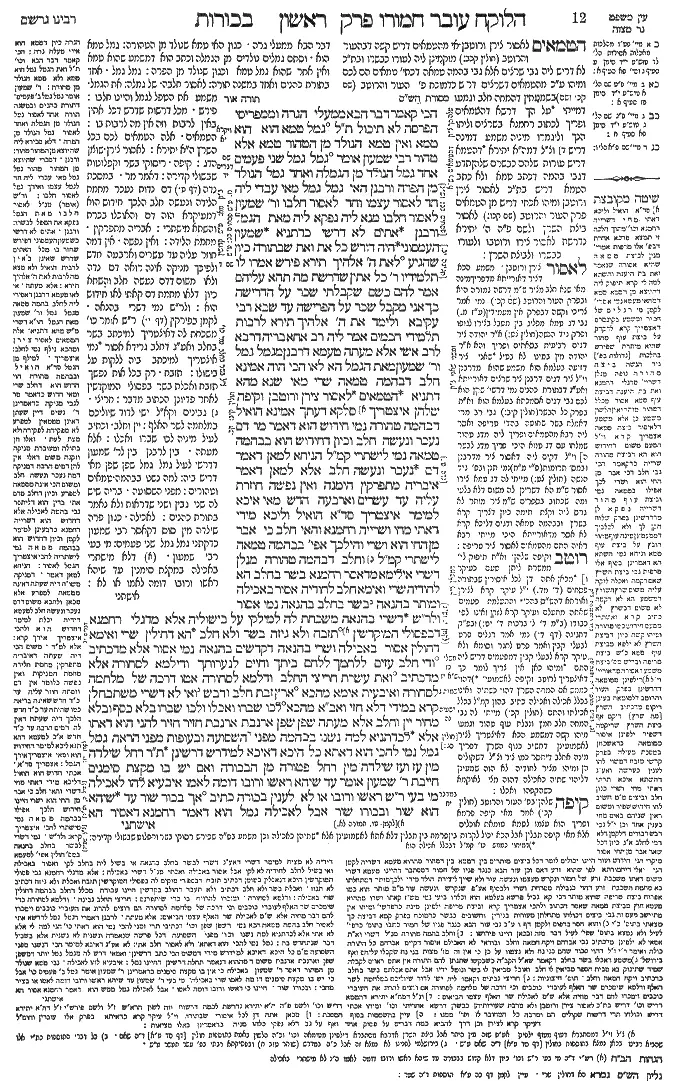
Bekhorot 6b - Guemara
הכי קאמר דבר הבא ממעלי הגרה וממפריסי הפרסה לא תיכול ת"ל {ויקרא יא } גמל טמא הוא הוא טמא ואין טמא הנולד מן הטהור טמא אלא טהור רבי שמעון אומר {ויקרא יא } גמל {דברים יד } גמל שני פעמים אחד גמל הנולד מן הגמלה ואחד גמל הנולד מן הפרה ורבנן האי גמל גמל מאי עבדי ליה חד לאסור עצמו וחד לאסור חלבו ור' שמעון לאסור חלבו מנא ליה נפקא ליה מאת הגמל ורבנן אתים לא דרשי כדתניא שמעון העמסוני היה דורש כל את ואת שבתורה כיון שהגיע {דברים ד } לאת ה' אלהיך תירא פירש אמרו לו תלמידיו ר' כל אתין שדרשת מה תהא עליהם אמר להם כשם שקבלתי שכר על הדרישה כך אני מקבל שכר על הפרישה עד שבא רבי עקיבא ולימד את ה' אלהיך תירא לרבות תלמידי חכמים אמר ליה רב אחא בריה דרבא לרב אשי אלא מעתה טעמא דרבנן מגמל גמל ור' שמעון מאת הגמל הא לאו הכי הוה אמינא חלב דבהמה טמאה שרי מאי שנא מהא דתניא הטמאים לאסור צירן ורוטבן וקיפה שלהן איצטריך סלקא דעתך אמינא הואיל דבהמה טהורה נמי חידוש הוא דאמר מר דם נעכר ונעשה חלב וכיון דחידוש הוא בבהמה טמאה נמי לישתרי קמ"ל הניחא למאן דאמר דם נעכר ונעשה חלב אלא למאן דאמר איבריה מתפרקין הימנה ואין נפשה חוזרת עליה עד עשרים וארבעה חדש מאי איכא למימר איצטריך סד"א הואיל וליכא מידי דאתי מחי ושרייה רחמנא והאי חלב כי אבר מן החי הוא ושרי והילכך אפי' בבהמה טמאה לישתרי קמ"ל וחלב דבהמה טהורה מנלן דשרי אילימא מדאסר רחמנא בשר בחלב הא לחודיה שרי ואימא חלב לחודיה אסור באכילה ומותר בהנאה בשר בחלב בהנאה נמי אסור ולר"ש דשרי בהנאה משכחת לה למילקי על בישוליה אלא מדגלי רחמנא דבפסולי המוקדשין {דברים יב } תזבח ולא גיזה בשר ולא חלב הא דחולין שרי ואימא דחולין אסור באכילה ושרי בהנאה דקדשים בהנאה נמי אסור אלא מדכתיב (משלי כז, כז) ודי חלב עזים ללחמך ללחם ביתך וחיים לנערותך ודילמא לסחורה אלא מדכתיב (שמואל א יז, יח) ואת עשרת חריצי החלב ודלמא לסחורה אטו דרכה של מלחמה לסחורה ואיבעית אימא מהכא (שמות ג, ח) ארץ זבת חלב ודבש ואי לא דשרי משתבח לן קרא במידי דלא חזי ואב"א מהכא (ישעיהו נה, א) לכו שברו ואכלו ולכו שברו בלא כסף ובלא מחיר יין וחלב אלא מעתה שפן שפן ארנבת ארנבת חזיר חזיר להני הוא דאתו אלא לכדתניא למה נשנו בבהמה מפני השסועה ובעופות מפני הראה גמל גמל נמי להכי הוא דאתא כל היכא דאיכא למידרש דרשינן ת"ר רחל שילדה מין עז ועז שילדה מין רחל פטורה מן הבכורה ואם יש בו מקצת סימנים חייבת ר' שמעון אומר עד שיהא ראשו ורובו דומה לאמו איבעיא להו לאכילה מי בעי ר"ש ראשו ורובו או לא לענין בכורה כתיב (במדבר יח, יז) אך בכור שור עד שיהא הוא שור ובכורו שור אבל לאכילה גמל הוא דאמר רחמנא דאסיר הא
Comments from Rashi on Masechet Bekhorot Page 6b
דבר הבא ממעלי גרה . כגון האי טמא שנולד מן הטהורה: גמל טמא הוא . וסתם גמלים נולדים מן הגמלה וכתב הוא דמשמע שהוא טמא ואין אחר שהוא גמל טמא וכגון שנולד מן הפרה: גמל גמל . אחד בתורת כהנים ואחד במשנה תורה: לאסור חלבה . של גמלה: את הגמל . משמע את הטפל לגמל והיינו חלבו: פירש . מכל דרשות שדרש דכל אתין באין לרבות וזה אין מה לרבות בו: הטמאים . אלה הטמאים לכם בכל השרץ ה"א יתירא: לאסור צירן . שומן הדג: קיפה . ריסוקי בשר וקפלוטות שבשולי קדירה: דאמר מר . במסכת נדה (דף ט.) דם נדות נעכר מחמת הלידה ונעשה חלב הלכך חידוש הוא דמעיקרא הוה דם והאוכלו בכרת והשתא מישתרי: אבריה מתפרקין . מחמת הלידה: ואין נפשה . אין דמה חוזר עליה עד עשרים וארבעה חדש ולפיכך מניקה אינה רואה דם נדה ולאו משום דדם נעשה חלב. והשתא כיון דלאו מחמת דם קאתי לאו חידוש הוא: ולר"ש נמי דשרי בהנאה . לקמן בפירקין (בכורות דף י.) ר"ש אומר כו' משכחת לה דאיצטריך למיכתב בשר בחלב ואע"ג דחלב גרידא אסור נמי איצטריך למיכתב ביה ללקות על בישולו: תזבח . רק בכל אות נפשך תזבח ואכלת בשר. בפסולי המוקדשין לאחר פדיונן הכתוב מדבר: חריצי . גבינים וקא"ל ישי לדוד שיוליכם במלחמה לשר האלף: יין וחלב . וכתיב לעיל מיניה לכו שברו ואכלו: אלא מעתה . בין לרבנן בין לר' שמעון דדרשי לעיל גמל גמל שפן שפן מאי דריש ביה: למה נשנו בבהמה . טמאים וטהורים: מפני השסועה . בריה שיש לה שני גבין ושני שדראות ולא נאמר בתורת כהנים: לאכילה . כגון פרה שילדה מין סוס דקאסר רבי שמעון כדקתני גמל גמל שני פעמים: מי בעי רבי שמעון . דלא מישתרי באכילה במקצת סימנין עד שיהא ראשו ורובו דומה לאמו או לא:
Comments from Tosafot - Bekhorot 6b
ורבי שמעון נפקא מאת הגמל . הכא דריש ר"ש את ובפ' קמא דמנחות (דף יא:) גבי לבונה אמר ר"ש את לא דריש וצ"ל את לא דריש לההיא דרשא תדע מדלא מייתי עלה ההיא דשמעון העמסוני כדמייתי הכא וא"ת דמשמע הכא מאן דדריש את אסר קלוט כר"ש ורבי יוסי הגלילי דריש בפ' ארבעה וחמשה (ב"ק מא:) דדריש בעל השור נקי מדמי ולדות ואת להנאת עורו ובפ' בהמה המקשה (חולין דף ע:) שרי קלוט גבי בהמה שמת עוברה ואמר ר' יוסי הגלילי בטמאה טמא בטהורה טהור דכתיב וכל הולך על כפיו מהלכי כפים טמא לך ופריך קלוט במעי קלוטה ליטמא ש"מ פשיטא לי' לר' יוסי בטהורה טהור וי"ל ניחא ליישב מילתיה דר' יוסי אפילו למ"ד קלוט שרי א"נ בראשו ורובו דמי לאמו איירי דמודה ר' שמעון דשרי ויש לדקדק מהכא דהכי הלכתא דלא דרשינן את דקיימא לן כרבנן דשרו קלוט כדמוכח פרק בהמה המקשה (שם עה:) דאמר הכל מודים בקלוט בן קלוטה בן פקועה שמותר תרתי תמיהי דכירי אינשי ש"מ קלוט שרי ואיכא לאוקמא בראשו ורובו דמי לאמו אם כן נתיר קלוט מהא טעמא ואת יעמיד לאסור חלבו וגמל נשנה מפני שסועה כמו שפן וארנבת כדאמר לקמן וה"נ נימא לר' יוסי הגלילי אבל יש לדקדק מדאמר פרק בנות כותים (נדה דף לז.) נקטינן אין קושי סותר בזיבה ואי משכחת תנא דאמר סותר ר' אליעזר היא והתם (דף לה.) מפרש טעמא דר' אליעזר משום דדריש את ובכתובות פ' הנושא (דף קג.) דאמר הזהרו בכבוד אמכם וקאמר אשת אב הואי ופריך אשת אב נמי דאורייתא היא את אביך לרבות אשת אביך י"ל ניחא לי' ליישב דברי רבי ככולי עלמא עוד נראה דאין זה ראיה מנדה דמה הוא זקוק לומר אי משכחת תנא דאמר סותר ר' אליעזר היא הא איכא כל הני תנאי דדרשי את: פירש . וא"ת לוקמא בכבוד אב ואם דמשווה כבודן לכבוד המקום קידושין (דף ל:) ולעבור עליו בשני עשה (כדאמר תפילה ושיחה עשה) י"ל דמשמע ליה דומיא מורא של מקום וזה אי אפשר ורבי עקיבא מרבה תלמידי חכמים דתנן (אבות פ"ד מי"ב) מורא רבך כמורא שמים: הטמאים לאסור צירן ורוטבן . אי מהטמאים דריש קשה דבהעור והרוטב (חולין קכב:) מוקמינן ליה לעורו כבשרו ובת"כ לא דריש ליה גבי שרצים אלא גבי בהמה טמאה דכתי' טמאים הם לכם ומיהו ע"כ מהטמאים דשרצים דריש כדמוכח פ' העור והרוטב (שם קכ. ושם) בשמעתין דהמחה חלב וגמעו דמייתי על הך דרשא דהטמאים ופריך לכתוב רחמנא בשרצים וליתו הנך וליגמרו מיניה משמע דמינה דריש וצ"ל דמה"א יתירא דהטמא דריש עורות שלהם כבשרם שלהן תדע דגבי בהמה דכתב טמא ולא כתב הטמא דריש בת"כ לאסור צירן ורוטבן ומיהו אכתי דריש מן הטמאים פרק העור והרוטב (שם קכו:) לאסור ביצת השרץ ולשם פ"ה ה' יתירא נדרשת לאסור צירו ורוטבו ולעורו כבשרו ולביצת השרץ: לאסור צירן ורוטבן . משמע הכא דציר דאורייתא מדפריך מינה מאי שנא חלב מציר ש"מ דרשה גמורה היא ובפרק העור והרוטב (שם קכ.) נמי אמר צריכי וקשה דבפרק אין מעמידין (ע"ז מ.) גבי דג טמא מפליג בין מטבל בצירו לגופו ופרק גיד הנשה (חולין צט:) א"ר יהודה ציר דגים רביעית בסאתים ופריך והא א"ר יהודה מין במינו לא בטיל שאני ציר דזיעה בעלמא הוא משמע שהוא מדרבנן וי"ל ציר דגים דרבנן ציר שרצים דאורייתא ואע"ג דבתורת כהנים נמי דרשי' שקץ הוא לכם גבי דגים אסמכתא בעלמא הוא וא"ת בפרק כל הבשר (חולין קיב:) גבי רב מרי דאמלח בשר שחוטה בהדי טריפה ואסר ליה רבא מהטמאים ופריך ליה מדג טהור שמלחו עם דג טמא היכי פריך מדג לבשר וי"ל דקים ליה דאסור ציר מדרבנן ובמס' תרומות (פ"י מ"ח) נמי תנן ובפ' גיד הנשה (חולין צט:) מייתי לה דג טמא צירו אסור ש"מ הא דשרינן לה משום דלא בלעו ומה שכתוב בספרים ש"מ ציר מותר לא גרס ליה וקצת תימה כיון דצריך קרא בשרץ ובבהמה טמאה ודגים דליכא קרא לא אסר מדאורייתא היכי מייתי רבא ראיה התם מהטמאים לאסור ציר טריפה: רוטב וקיפה שלהן . וא"ת תיפוק לי' ממשרת ליתן טעם כעיקר מכאן אתה דן לכל איסורין שבתורה פסחים (ד' מד.) י"ל עיקר קרא לצירן ואורחא דהש"ס בהכי והתעלמת פעמים שאתה מתעלם ועיקר קרא לזקן ואינו לפי כבודו (ב"מ ד' ל ברכות ד' יט:) ובפ"ק דחגיגה (דף ד.) נמי אמר רגלים פרט לבעלי קבין ואמר פרט לחגר וסומא ולא עיקר קרא לבעלי קבין דמפעמים דריש ליה התם. ומיהו כאן אין צריך לומר כך דאיצטריך לרוטב וקיפה לאשמועי' דהוי כממש אם המחה השרץ דהוי כשתיה ואינו בכלל אכילה ואכילה כתיב בהון קמ"ל בכלל אכילתו והתם (חולין קכ.) מייתי לה גבי המחה חלב חמץ ונבלת עוף טהור וגמעו מיהו קשה דמשמע הכא דאיצטריך לציר לאשמועינן דחשיב כגוף השרץ דפריך מינה אחלב דיתסר כמו ציר וצ"ל דשקולים הן ומיהו מציר לחודיה לא הוה שמעינן דליהוי שתיה כאכילה דהוה מצי לאוקמא כשהקפהו ואכלו: קיפה שלהן . בפ' העור והרוטב (חולין קכ.) אמר מאי קיפה פרמא ופריך הוא עצמו לטמא טומאת אוכלים אלא מאי קיפה תבלין אבל הכא יכול לקרות בין פרמא בין תבלין דלא אתא לאשמועינן אלא שתיהן כאכילה וכן משמע בפ"ה שפירש רסוקי בשר וקפלוט שבשולי קדירה:
Bekhorot 6b - Mishnah translated into english
This is what it is saying: You shall not eat a being that comes from one of those animals that chew their cud and have split hooves if it itself does not have the signs of being kosher. To counter this, the continuation of the verse states: “The camel…is impure for you” (Leviticus 11:4). This indicates that a camel itself is non-kosher, but a non-kosher animal that is born from a kosher animal is not non-kosher; rather, it is kosher.
Rabbi Shimon says it is stated: “Camel” (Leviticus 11:4), “camel” (Deuteronomy 14:7), teaching the term two times with regard to the prohibition of consumption. This teaches that both a camel that is born from a camel and a camel that is born from a cow are non-kosher. According to Rabbi Shimon, a non-kosher animal born to a kosher animal is forbidden for consumption, in contrast to the ruling in the mishna.
The Gemara asks: And as for the Rabbis in the baraita, who disagree with Rabbi Shimon, what do they do with this repetition of “camel,” “camel”? The Gemara answers that one of the verses is written to prohibit the camel itself and one is written to prohibit the female camel’s milk. The Gemara asks: And as for Rabbi Shimon, from where does he derive that a camel’s milk is forbidden? The Gemara answers: He derives it from the phrase “the camel [et hagamal].” The verse could have stated just the term “hagamal.” The addition of the word “et” teaches that the prohibition applies also to its milk. And the Rabbis do not interpret instances of “et” as a means to derive new halakhot; they consider it to be an ordinary part of the sentence structure and not a source for exegetical exposition.
As it is taught in a baraita: Shimon HaAmasoni would interpret each and every occurrence of the word “et” in the Torah, deriving additional halakhot with regard to the particular subject matter. Once he reached the verse: “You shall fear the Lord your God” (Deuteronomy 6:13), which is written with the added word “et,” he withdrew from this method of exposition, as whose fear could be an extension of the fear of God? His students said to him: Our teacher, what will be with all the occurrences of “et” that you interpreted until now? Shimon HaAmasoni said to them: Just as I received reward for the exposition, so I receive reward for my withdrawal from using this method of exposition.
The word “et” in this verse was not explained until Rabbi Akiva came and taught: “You shall fear the Lord your God”; the word “et” in the verse serves to include Torah scholars, i.e., that one is commanded to fear them just as one fears God. In any event, Shimon HaAmasoni no longer derived additional halakhot from “et.” The Rabbis follow the conclusion of Shimon HaAmasoni that “et” is not expounded.
Rav Aḥa, son of Rava, said to Rav Ashi: If that is so, that the reason of the Rabbis for the halakha that a camel’s milk is forbidden is that it is derived from the words “camel,” “camel,” written twice, and Rabbi Shimon derives it from “the camel [et hagamal],” then could it be reasoned that if not for this derivation I would say that milk of a non-kosher animal is permitted?
In what way is this case different from that which is taught in a baraita: The Torah states with regard to the prohibition against eating creeping animals: “These are they that are impure [hateme’im] to you among all the creeping animals” (Leviticus 11:31). The Sages interpret the letter heh in the term “that are impure [hateme’im]” to prohibit their juice that oozes from their body and their gravy that is produced when they are cooked, and sediments of their flesh that congeal at the bottom of the dish when cooked. Evidently, any liquid that emerges from a non-kosher animal is forbidden.
Rav Ashi responded: The additional exposition to derive that camel’s milk is forbidden was necessary, because it might enter your mind to say it may be permitted, since the permissibility of consumption of the milk of a kosher animal is also a novelty. The milk originates from the blood, which is forbidden for consumption, as the Master said that the reason a nursing woman does not experience menstruation is because the blood is spoiled and becomes milk. Since it is a novelty that the Torah permits milk despite its origins, it might enter your mind to say that with regard to a non-kosher animal it should also be permitted. Therefore, the verse teaches us that it is forbidden.
The Gemara challenges: This works out well according to the one who says that a nursing woman does not menstruate because the blood is spoiled and becomes milk. But according to the one who says that the milk does not originate from blood, but rather the reason she does not menstruate is because her limbs become disjointed and her soul, i.e., her health, does not return to her until twenty-four months later, what is there to say? Why does the Torah employ a verse to render forbidden the milk of a non-kosher animal?
The Gemara answers: It was necessary, because it might enter your mind to say it may be permitted; since generally speaking there is nothing that comes from a living animal that the Merciful One permits, and yet this milk of a kosher animal is similar to a limb severed from the living and is nevertheless permitted, the permissibility of milk is a novelty of the Torah. And consequently it might enter your mind to say that even the milk of a non-kosher animalshould be permitted in line with that novelty. Therefore, the verse teaches us that it is forbidden.
§ The Gemara asks: And from where do we derive that the milk of a kosher animal is in fact permitted? If we say that it is derived from the fact that the Merciful One prohibits eating meat that was cooked in milk, indicating that milk by itself is permitted, one can reject this proof and say that milk alone is forbidden only for consumption but permitted with regard to deriving benefit from it. By contrast, meat that was cooked in milk is forbidden with regard to deriving benefit from it as well.
And according to Rabbi Shimon, who deems meat that was cooked in milk permitted with regard to deriving benefit from it, you find a reason for the Torah to mention the prohibition of meat and milk together, even if milk alone is forbidden as well, and that is in order to render one liable to receive lashes for cooking them together, which would not apply to cooking milk alone.
Rather, one can prove that milk is permitted for consumption since the Merciful One revealed that with regard to disqualified consecrated animals that were redeemed: “You may slaughter and eat meat” (Deuteronomy 12:15). This verse is interpreted in the following manner: “You may slaughter,” but you may not use its wool from shearing. You may eat its “meat,” but you may not consume its milk. It can be inferred from here that milk of non-sacred kosher animals is permitted.
The Gemara rejects this proof: But one could say the distinction between non-sacred milk and milk from sacrificial animals is not with regard to the permissibility of consumption. Rather, milk of non-sacred animals is forbidden for consumption but is permitted with regard to deriving benefit from it, but the milk of sacrificial animals is forbidden with regard to deriving benefit as well.
Rather, proof may be brought that milk is permitted from the fact that it is written: “And there will be goats’ milk enough for your food, for the food of your household, and maintenance for your maidens” (Proverbs 27:27). According to the verse, goats’ milk serves as food, and therefore must be kosher.
The Gemara rejects the proof: But perhaps the verse is referring to selling the milk as merchandise and using the money to buy food, and not to consuming the milk itself. Rather, proof may be brought from the fact that it is written with regard to Jesse’s instructions to his son David upon sending him with provisions for his brothers, who were at war against the Philistines: “And these ten cheeses you shall bring to the captain of their thousand” (I Samuel 17:18), which indicates they ate dairy products.
The Gemara rejects this proof as well: But perhaps this verse too means the captain can sell the cheese as merchandise. The Gemara responds: Is that to say that it is the norm during war to engage in commerce? Clearly the cheese was meant for consumption, which proves it is permitted to eat dairy products.
And if you wish, say instead that proof may be brought from here: The Torah praises Eretz Yisrael as: “A land flowing with milk and honey” (Exodus 3:17), and if milk was not permitted, would the verse praise the land to us with an item that is not suitable for consumption? And if you wish, say instead a proof from here: “Come, buy, and eat; and come, buy wine and milk without money and without price” (Isaiah 55:1).
§ The Gemara returns to the dispute between Rabbi Shimon and the Rabbis, who interpret the repetition of the word “camel” as indicating the prohibitions against eating a camel born from a cow and consuming its milk, respectively, and asks: But if that is so, that the repetition indicates these halakhot, then with regard to the words: “Hare,” “hare,” “rock badger,” “rock badger,” “swine,” “swine” (see Leviticus 11:5–7; Deuteronomy 14:7–8), which are all mentioned twice as being forbidden, do these words come to teach these halakhot as well?
The Gemara explains: They are necessary only for that which is taught in a baraita: Why were all of the non-kosher animals and birds repeated in Deuteronomy (14:7–20), after having been mentioned already in Leviticus (11:10–20)? With regard to the animals, it is because of the shesua (see Deuteronomy 14:7), an animal with two backs and two spines, which is not mentioned in Leviticus, and with regard to the birds, it is because of the ra’a (see Deuteronomy 14:13).
The Gemara challenges: If so, then the double reference of “camel,” “camel,” also comes for this purpose of teaching about the shesua, and not to teach a separate halakha about the camel. The Gemara explains: Nevertheless, anywhere that it is possible to interpret the verse as teaching an additional halakha, we interpret it in that manner. Only where there is no possibility of such an interpretation is the concept of repeating the passage merely to introduce one additional detail invoked.
§ The Gemara discusses an additional source that cites the opinion of Rabbi Shimon: The Sages taught in a baraita that in the case of a ewe that gave birth to a goat of sorts and a goat that gave birth to a ewe of sorts, in each case the mother is exempt from its offspring being counted a firstborn. And if it has some of the characteristics of its mother, the mother is obligated, i.e., subject to accounting its offspring a firstborn. Rabbi Shimon says: The offspring does not have firstborn status unless its head and the majority of its body are similar to the appearance of its mother.
A dilemma was raised before the Sages: With regard to the permissibility of eating a non-kosher animal that was born to a kosher animal, does Rabbi Shimon require its head and most of its body to resemble its mother, or not, and possessing some of the characteristics of its mother suffices?
The Gemara explains: With regard to the halakha of firstborn status, it is written: “But the firstborn of an ox” (Numbers 18:17), which indicates that it does not have firstborn status unless it is an ox and its firstborn is an ox. If its head and most of its body do not resemble an ox, it does not have firstborn status according to Rabbi Shimon. But with regard to consumption, where Rabbi Shimon holds a camel born to a kosher animal is forbidden, perhaps it is only an ordinary-looking camel that the Merciful One states is forbidden, but if
Traduction : The William Davidson digital edition of the Koren Noé Talmud, with commentary by Rabbi Adin Even-Israel Steinsaltz.