 Talmud Bavli
Bekhorot 60b : Youtube
Rabbi Dr. Moshe WeisblumYoutube
1 video class :
Bekhorot Page 60b
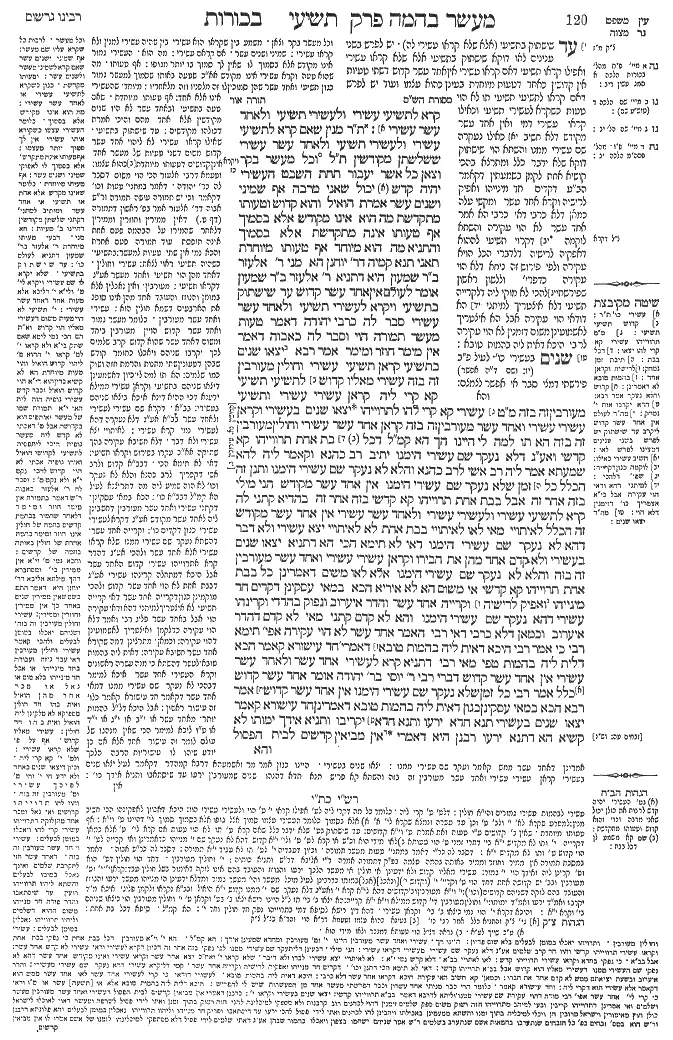
Bekhorot 60b - Guemara
קרא לתשיעי עשירי ולעשירי תשיעי ולאחד עשר עשירי:
ת"ר מנין שאם קרא לתשיעי עשירי ולעשירי תשיעי ולאחד עשר עשירי ששלשתן מקודשין ת"ל (ויקרא כז, לב) וכל מעשר בקר וצאן כל אשר יעבור תחת השבט העשירי יהיה קדש יכול שאני מרבה אף שמיני ושנים עשר אמרת הואיל והוא קדוש וטעותו מתקדשת מה הוא אינו מקודש אלא בסמוך אף טעותו אינה מתקדשת אלא בסמוך והתניא מה הוא מיוחד אף טעותו מיוחדת תאני תנא קמיה דר' יוחנן הא מני ר' אלעזר ב"ר שמעון היא דתניא ר' אלעזר ב"ר שמעון אומר לעולם אין אחד עשר קדוש עד שישתוק בתשיעי ויקרא לעשירי תשיעי ולאחד עשר עשירי סבר לה כרבי יהודה דאמר טעות מעשר תמורה הוי וסבר לה כאבוה דאמר אין מימר חוזר ומימר אמר רבא יצאו שנים בתשיעי קראן תשיעי עשירי וחולין מעורבין זה בזה עשירי מאליו קדוש לתשיעי תשיעי קא קרי ליה קראן עשירי עשירי ותשיעי מעורבין זה בזה מ"ט עשירי קא קרי להו לתרוייהו יצאו שנים בעשירי וקראן עשירי עשירי ואחד עשר מעורבין זה בזה קראן אחד עשר עשירי וחולין מעורבין זה בזה הא תו למה לי היינו הך הא קמ"ל דכל בת אחת תרווייהו קא קדשי ואע"ג דלא נעקר שם עשירי הימנו יתיב רב כהנא וקאמר ליה להא שמעתא אמר ליה רב אשי לרב כהנא והלא לא נעקר שם עשירי הימנו ותנן זה הכלל כל זמן שלא נעקר שם עשירי הימנו אין אחד עשר מקודש הני מילי בזה אחר זה אבל בבת אחת תרוייהו קא קדשי בזה אחר זה בהדיא קתני לה קרא לתשיעי עשירי ולעשירי עשירי ולאחד עשר עשירי אין אחד עשר מקודש זה הכלל לאיתויי מאי לאו לאיתויי בבת אחת לא לאיתויי יצא עשירי ולא דבר דהא לא נעקר שם עשירי הימנו דאי לא תימא הכי הא דתניא יצאו שנים בעשירי ולא קדם אחד מהן את חבירו וקראן עשירי עשירי ואחד עשר מעורבין זה בזה והלא לא נעקר שם עשירי הימנו אלא לאו משום דאמרינן כל בבת אחת תרוייהו קא קדשי אי משום הא לא איריא הכא במאי עסקינן דקדים חד מינייהו ואפיק לרישיה וקרייה אחד עשר והדר איערוב ונפוק בהדדי וקרינהו עשירי דהא נעקר שם עשירי הימנו והא לא קדם קתני מאי לא קדם דהדר איערוב וכמאן דלא כרבי דאי רבי האמר אחד עשר לא הוי עקירה אפי' תימא רבי כי אמר רבי היכא דאית ליה בהמות טובא דאמרי' חד עישורא קאמר הכא דלית ליה בהמות טפי מאי רבי דתניא קרא לעשירי אחד עשר ולאחד עשר עשירי אין אחד עשר קדוש דברי רבי ר' יוסי בר' יהודה אומר אחד עשר קדוש כלל אמר רבי כל זמן שלא נעקר שם עשירי הימנו אין אחד עשר קדוש אמר רבא הכא במאי עסקינן כגון דאית ליה בהמות טובא דאמרינן חד עישורא קאמר יצאו שנים בעשירי תנא חדא ירעו ותנא חדא יקריבו ותניא אידך ימותו לא קשיא הא דתנא ירעו רבנן היא דאמרי אין מביאין קדשים לבית הפסול
Comments from Rashi on Masechet Bekhorot Page 60b
וכל מעשר בקר וצאן . משמע בין שקראו הוא עשירי בין שהיה עשירי למנין ולא קראו עשירי: שמיני ושנים עשר . אם קראם עשירי: מה הוא . העשירי גמור אינו מקודש אלא בסמוך לו שאין לך סמוך בו יותר מגופו: אף טעותו . מה שהוא טעה וקרא עשירי אינו מקודש אא"כ שטעה באותו שסמוך למעשר גמור כגון תשיעי ואחד עשר שהן סמוכין לו זה מלפניו וזה מלאחריו: מיוחד . שהעשירי אינו אלא אחד: אף טעותו מיוחדת . שאם טעה בתשיעי ובאחד עשר לא היו שנים מקודשין אלא אחד מהם והיכי אמרת דכולהו מקודשים: עד שישתוק בתשיעי . שאילו קראו עשירי לא ליהוי אחד עשר קדוש משום דשני טעיות של מעשר אחד אינן קדושים דטעותו מיוחדת כהוא עצמו: וטעמא דרבי אלעזר הכי הוי משום דסבר לה כר' יהודה דאמר במתני' טעות וכו' דקאמר וכי יש תמורה עושה תמורה ור"ש אבוה דר' אלעזר אמר בפ' ראשון דתמורה (דף ט.) דאין ממירין וחוזרין וממירין דלאחר שהמירו על הבהמה פעם אחת אינה תופסת עוד תמורה פעם אחרת והכא נמי אין שתי טעיות למעשר: בתשיעי . כשהיה תשיעי ראוי לצאת: עשירי וחולין . דאחד מהן הוי תשיעי ואחד מעשר אע"ג דקראו תשיעי: מעורבין . ואין נאכלין אלא במומן והגוזז והעובד אחד מהן אינו סופג את הארבעים דשמא חולין הוא: עשירי ואחד עשר מעורבין . כלומר מעשר גמור ואחד עשר קדוש הויין מעורבין ביחד ומשום דאחד עשר שהוא קדוש קרב שלמים לכך יקרבו שניהם ויאכלו כחומר קודש שבהן דטעונין שתי מתנות והרמת חזה ושוק כמו שלמים: הא תו למה לי . כיון דאשמעינן דיצאו שניהם בתשיעי וקראן עשירי ממילא ידענא דכי ההיא דינא איכא ביצאו שניהם בעשירי: בב"א . דקרא שם עשירי לעשירי ולאחד עשר בב"א אע"ג דלא נעקרה דהא לעשירי נמי קרא עשירי: לאיתויי יצא עשירי ולא דבר . דלא חשיבא עקירה בהך שתיקה אא"כ עקרו בפירוש וקראו תשיעי: דאי לא תימא הכי . דבב"א קדוש. ולרב אשי דקפריך לרב כהנא והלא לא נעקר וכו' לא הוה שמיע ליה מה דתריצנא לעיל הא קמ"ל דבב"א כו': הכא במאי עסקינן . דקתני עשירי ואחד עשר מעורבין דחשבינן ליה לאחד עשר מקודש אע"ג דקרא לעשירי עשירי כגון דקדים כו': וקרייה אחד עשר . דהשתא נעקר שם עשירי ממנו שלא קראו עשירי אלא אחד עשר ולהכי אע"ג דהדר קרא אתרוייהו עשירי קדוש האחד עשר אבל היכא דמתחלה קרינהו עשירי אע"ג דבבת אחת לא הוי אחד עשר קדוש ולהכי מוקמינן כגון דקרייה אחד עשר דאי קרייה תשיעי לא איצטריך למיתני דהא ודאי עקירה הוי אבל באחד עשר פליג רבי ואמר דלא הוי עקירה כדלקמן ואיצטריך לאשמועינן דהוי עקירה: וכמאן . מתרצינן דמה שקורא אחד עשר חשיבא עקירה: דאית ליה בהמות טובא . לעשר דהשתא כי מנה עשרה ראשונים וקרא העשירי אחד עשר איכא למימר דבהכי לא נעקר שם עשירי ממנו דמאי אחד עשר דקאמר חד עישורא קאמר כלו' זה עישור ראשון: אבל היכא דל"ל בהמות יותר . מאחד עשר או י"ב או י"ג או י"ד או ט"ו ליכא למימר הכי שאין מנהגו של עולם לומר זה עישור אחד אלא אם כן יודע שיהו לו עישוריות הרבה הלכך אמרינן דאחד עשר ממש קאמר ועקר שם עשירי ממנו: יצאו שנים בעשירי . היינו כגון אמר מר ואשמעתא דרבא קמהדר דקאמר לעיל יצאו שנים בעשירי קראן עשירי עשירי ואחד עשר מעורבין זה בזה והשתא קא פריש תנא חדא דהנהו שנים שמעורבין ירעו עד שיסתאבו ותניא אידך כו': אין מביאין קדשים לבית הפסול . שאילו היו קריבים צריך לאוכלן כחומר שבהם דצריך להרים מהם חזה ושוק וליתן לכהנים ומתוך שהכהנים מועטין הן אין נאכל אלא לכהנים שמא לא יהו מצויין אוכלין לאותן חזה ושוק ויפסלו בלינה לאחר שני ימים ולילה אחד והשתא מביא אחד מהם שהוא מעשר לבית הפסול דהא מעשר ודאי אינו צריך הרמת חזה ושוק לכהנים אלא הכל נאכל לכל אדם ומצויין לו אוכלין הרבה ולא ליתי לעולם לידי פסול לינה. במס' זבחים פ' כל הזבחים שנתערבו (דף עה:) גמרי' פלוגתא דר"ש ורבנן דתנן אשם שנתערב בשלמים ר"ש אומר שניהם ישחטו בצפון ויאכל כחמור שבהן אמרו לו אין מביאים קדשים לבית הפסול:
Comments from Tosafot - Bekhorot 60b
עד שישתוק בתשיעי (אלא שלא קראו עשירי לה) . יש לפרש בשני ענינים לאו דוקא שישתוק בתשיעי אלא שלא קראו עשירי ואפילו קראו תשיעי דאם קראו עשירי אין אחד עשר קדוש דשתי טעיות אין קדושין כאחד דטעות מיוחדת בעינן כהוא עצמו ועוד יש לפרש דאם קראו לתשיעי תשיעי תו לא הוי טעות כשקרא לעשירי תשיעי וכאילו קראו עשירי דמי ואין אחד עשר מקודש דלא חשיב כאילו נעקרה שם עשירי ממנו והשתא הוי שישתוק דוקא שלא ידבר כלל ומתרצא בהכי קושיא אחת לקמן בשמעתין דקאמר הב"ע דקדים חד מינייהו ואפיק לרישיה וקרא אחד עשר ומקשי עלה כמאן דלא כרבי דאי כרבי הא אמר אחד עשר לא הוי עקירה והשתא לוקמה דקרוי תשיעי לההוא דאפקיה לרישיה דלדברי הכל הויא עקירה ולפי פירוש זה ניחא דלא הוי עקירה כדפרי' וללשון ראשון שפירשתי להכי לא מוקי ליה דלקרייה תשיעי דלא איצטריך למיתני הא דודאי הוי עקירה אבל הא איצטריך לאשמועינן משום דזמנין לא הוי עקירה לרבי היכא דאית ליה בהמות טובא: שנים בעשירי כו' . לעיל פ"ב (בכורות יז: ושם ד"ה אפשר) פירשתי דמצי סבר אי אפשר לצמצם:
Bekhorot 60b - Mishnah translated into english
§ The mishna teaches: If he mistakenly called the ninth: Tenth, and the tenth: Ninth, and the eleventh: Tenth, all three are sacred, although each has a different halakhic status. The Gemara cites a relevant baraita: The Sages taught: From where is it derived that if one mistakenly called the ninth animal: Tenth, and the tenth animal: Ninth, and the eleventh animal: Tenth, that all three of them are sanctified?
The verse states: “And all the tithe of the herd or the flock, whatever passes under the rod, the tenth shall be sacred to the Lord” (Leviticus 27:32). This indicates that the tenth animal that passes under the rod is imbued with sanctity, in addition to any animal that the owner designates as the tenth. One might have thought that I include even the eighth animal or the twelfth animal, if they were mistakenly designated as the tenth.
You said in response that since the tenth animal is sanctified and the animal that he designated by mistake as the tenth is sanctified, their statuses should be compared: Just as the tenth animal is sanctified only with an animal that was close to the number ten, i.e., it itself was the tenth, so too, an animal that was designated by mistake is sanctified only if it is close to the number ten, i.e., if it is the ninth or eleventh, but not if it is the eighth or the twelfth.
The mishna teaches that if one mistakenly designated the ninth and the eleventh animals as the tenth they are both sanctified. The Gemara raises a difficulty: But isn’t it taught in a baraita that just as the tenth animal itself is unique, i.e., it is only one, so too, an animal that was designated by mistake is unique, i.e., only one additional animal receives the sanctity, but not both the ninth and the eleventh?
The Gemara answers that a tanna taught before Rabbi Yoḥanan: In accordance with whose opinion is this baraita? It is in accordance with the opinion of Rabbi Elazar, son of Rabbi Shimon, as it is taught in a baraita that Rabbi Elazar, son of Rabbi Shimon, says: The eleventh animal is never sanctified unless the owner is silent when the ninth animal leaves the pen, i.e., he does not designate it as the tenth, and he subsequently calls the tenth animal the ninth and the eleventh animal the tenth. But if he had already designated the ninth animal as the tenth, the eleventh cannot become sanctified.
The Gemara further explains that Rabbi Elazar, son of Rabbi Shimon, holds in accordance with the opinion of Rabbi Yehuda, who says: When the owner makes a mistake in designating animal tithe, e.g., if one designates the ninth animal as the tenth, the designated animal has the status of a substitute animal. And Rabbi Elazar also holds in accordance with the opinion of his father, Rabbi Shimon, who says: One cannot effect substitution on one animal by substituting it for a specific offering, and again effect substitution, on another animal, by substituting it for the same offering, and if one attempts to do so the second animal does not become consecrated. Therefore, if one mistakenly called the ninth animal the tenth, that ninth animal has sanctity; but if he also calls the eleventh animal the tenth, this designation has no effect.
§ Rava says: If two animals emerged from the pen together as the ninth, and he called them both the ninth, then the tenth, i.e., the tithe, and a non-sacred animal are considered intermingled with each other. Rava elaborates: The tenth is sanctified of its own accord, despite the fact that he called it the ninth. And the animal that came out ninth is non-sacred, as it came out ninth and he called it the ninth. Since there is no way to determine which animal is which, neither of them can be brought as an offering, and they must both be left to graze until they develop a blemish.
If two animals emerged from the pen together as the ninth, and he called them both the tenth, then the tenth, i.e., the tithe, and the ninth animal, which he designated as the tenth, are intermingled with each other. What is the reason? He called both of them the tenth. The tenth has the sanctity of the tithe while the ninth was designated as the tenth, and therefore may not be eaten until it develops a blemish. Since there is no way to determine which animal is which, neither can be sacrificed, but they must both be left to graze until they develop a blemish.
If two animals emerged from the pen together as the tenth, and he called them both the tenth, then the tenth, and the eleventh animal, which he designated as the tenth, are intermingled with each other. If he called them both the eleventh, the tenth and a non-sacred animal are intermingled with each other.
The Gemara asks: Why do I need this additional case? This reasoning for the halakha in the case where the animals emerged together as the tenth is identical to that of the first case, where the animals emerged together as the ninth. The Gemara answers: This latter clause teaches us that in every case where two animals emerge as one they are both sanctified, and this is the halakha even though the name of the tenth was not removed from the tenth animal. This situation is not included in the principle of the mishna: In any situation where the name of the tenth was not removed from the tenth animal, the eleventh that was called tenth is not consecrated.
The Gemara relates that Rav Kahana sat and recited this halakha. Rav Ashi said to Rav Kahana: But the name of the tenth has not been removed from it. And didn’t we learn in the mishna that this is the principle: In any situation where the name of the tenth was not removed from the tenth animal, the eleventh that was called tenth is not consecrated? Rav Kahana replied to Rav Ashi: This statement, that the designation of tenth must be removed, applies only when the animals leave the pen one after the other. But if two animals emerge from the pen at the same time, and he simultaneously designated the tenth and eleventh as tithe, both of them are sanctified.
The Gemara raises a difficulty: How can the mishna be explained as referring only to a case where the animals left the pen one after the other? After all, the mishna teaches explicitly: If one called the ninth animal: Tenth, and the tenth: Tenth, and the eleventh: Tenth, the eleventh is not consecrated. This is the principle: In any situation where the name of the tenth was not removed from the tenth animal, the eleventh that was called tenth is not consecrated. What does the phrase: This is the principle, serve to include? Does it not serve to include a case where the tenth and eleventh animals leave the pen at the same time? And if so, it is teaching that in such a case the eleventh animal is not sanctified.
Rav Kahana would answer: No; it serves not to include that case, but to include a situation where the tenth animal emerged from the pen and the owner did not speak at all, and when the eleventh animal came out he designated it as the tenth. Therefore, the eleventh animal is not sanctified, as he did not remove the name of the tenth from the tenth animal. But if the tenth and eleventh animals came out at the same time, and he designated them both as the tenth, they are both sanctified.
The Gemara adds that this must be the case, because if you do not say this explanation of the mishna there is a problem with that which is taught in a baraita: If two animals emerged from the pen together as the tenth, and one did not come out before the other, and he called them both the tenth, the tenth and eleventh animals are intermingled with each other. One is sacred with the sanctity of the animal tithe while the other is a peace offering, but there is no way to determine which animal is which. The Gemara explains the problem here: How can this baraita be reconciled with the mishna? He did not remove the name of the tenth from the tenth animal. Rather, is it not due to the fact that we say: In any case where two animals come out of the pen at the same time both of them are sanctified?
Rav Ashi would rebut this claim: If it is due to that reason there is no conclusive argument. Here we are dealing with a case where one of the two animals came out before the other and brought its head out from the pen, and the owner called that animal the eleventh, and afterward it became intermingled with the other animals, and the last two animals came out together, and he called them both the tenth animal. In such a case both animals are sanctified, as the name of the tenth was removed from the tenth animal when he mistakenly called it the eleventh animal.
The Gemara raises a difficulty with regard to this explanation: How can one interpret the baraita as referring to a case where one animal put its head out before the other? But isn’t it taught explicitly in the baraita: And one did not come out before the other? The Gemara answers: What does the baraita mean when it states: And one did not come out before the other? It means that it did not come out completely, but returned and became intermingled with the other animals.
The Gemara asks: And in accordance with whose opinion is this baraita taught? It is not taught in accordance with the opinion of Rabbi Yehuda HaNasi. As, if it reflects the opinion of Rabbi Yehuda HaNasi there is a difficulty. Doesn’t Rabbi Yehuda HaNasi say: If one called the tenth animal the eleventh, it is not considered a removal of the name of the tenth from the tenth animal?
The Gemara answers: You may even say that the baraita is in accordance with the opinion of Rabbi Yehuda HaNasi, as when Rabbi Yehuda HaNasi said his statement he was referring only to a case where the owner has many animals to tithe. The reason is that we say that when he said: Aḥad asar, eleventh, his intention was to say: Ḥad issura, one group of ten, i.e., that this tenth animal completes one set of ten animals, not that it is the eleventh. Here it is referring to a situation where he does not have many animals to tithe, and therefore he could not have been speaking of more than one set of ten, in which case Rabbi Yehuda HaNasi agrees that calling it the eleventh removes its status as the tenth.
The Gemara asks: To what statement of Rabbi Yehuda HaNasi is the Gemara referring? As it is taught in a baraita: If one called the tenth animal the eleventh and the eleventh animal the tenth, the eleventh animal is not sanctified; this is the statement of Rabbi Yehuda HaNasi. Rabbi Yosei, son of Rabbi Yehuda, says: The eleventh animal is sanctified. Rabbi Yehuda HaNasi said a principle: As long as the name of the tenth has not been removed from the tenth animal, the eleventh animal is not sanctified. To clarify why the eleventh animal is not sanctified according to Rabbi Yehuda HaNasi even though the name of the tenth was removed from the tenth animal when it was called the eleventh, Rava said: Here we are dealing with a case where he has many animals, and the reason is that we say that when he said: Aḥad asar, his intention was to say: Ḥad issura.
§ The Gemara returns to the earlier discussion. The baraita teaches: If two animals emerged from the pen together as the tenth, and one did not come out before the other, and he called them both the tenth, the tenth and eleventh animals are intermingled with each other. The Gemara notes that there is apparently a dispute between tanna’im as to how these animals must be treated. One tanna taught that both animals must be left to graze until they develop a blemish, and then they may be eaten by the owner. And one tanna taught that both animals must be sacrificed. And it is taught in another baraita that both animals must die.
The Gemara resolves the apparent contradiction. It is not difficult: This ruling, of the tanna who taught that both animals must be left to graze until they develop a blemish, is in accordance with the opinion of the Rabbis, who say: One may not bring sacrificial animals to a situation where the time in which they may be eaten is decreased, thereby increasing the likelihood of disqualification. If both animals were to be sacrificed they would have to be eaten in accordance with the stringencies of both the animal tithe offering and the peace offering. They would have to be eaten within two days, like a peace offering, while the breast and the thigh would be given to the priests, as in the case of an animal tithe offering. Since only priests may eat those portions it is possible that they would be unable to eat them within the permitted time, and the remaining meat would become disqualified.
Traduction : The William Davidson digital edition of the Koren Noé Talmud, with commentary by Rabbi Adin Even-Israel Steinsaltz.