 Talmud Bavli
Bekhorot 45b : Youtube
Rabbi Dr. Moshe WeisblumYoutube
1 video class :
Bekhorot Page 45b
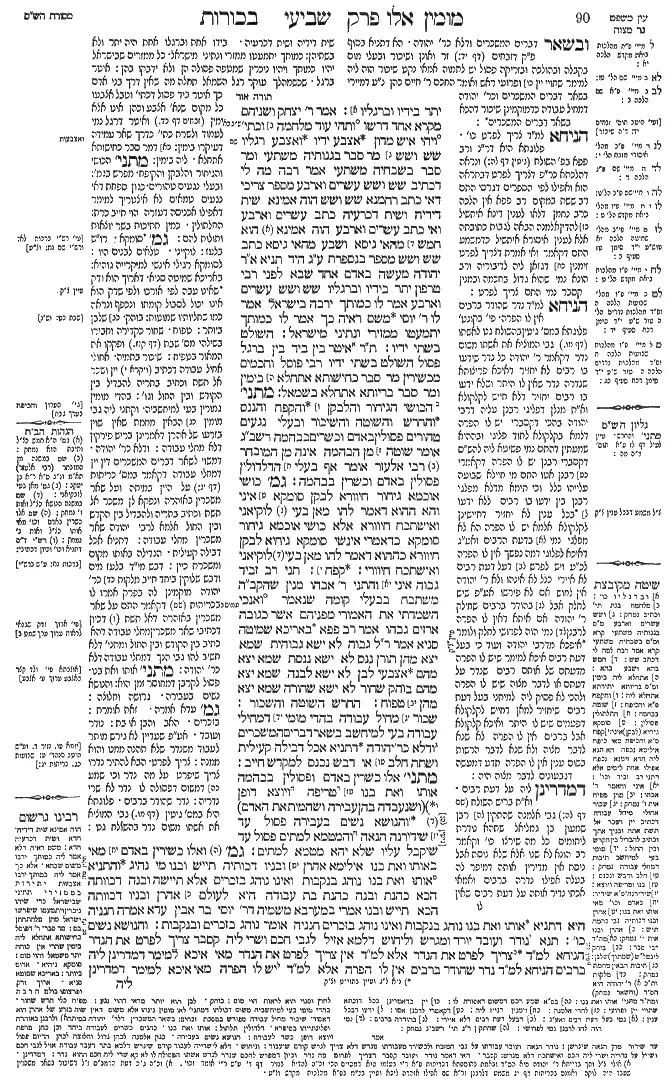
Bekhorot 45b - Guemara
יתר בידיו וברגליו:
אמר ר' יצחק ושניהם מקרא אחד דרשו (שמואל ב כא, טו) ותהי עוד מלחמה וכתי' (שמואל ב כא, כ) ויהי איש מדון אצבע ידיו ואצבע רגליו שש ושש מר סבר בגנותיה משתעי ומר סבר בשבחיה משתעי אמר רבה מה לי דכתיב שש ושש עשרים וארבע מספר צריכי דאי כתב רחמנא שש ושש הוה אמינא שית דידיה ושית דכרעיה כתב עשרים וארבע ואי כתב עשרים וארבע הוה אמינא הוא חמש מהאי גיסא ושבע מהאי גיסא כתב שש ושש מספר בנספרת ע"ג היד תניא א"ר יהודה מעשה באדם אחד שבא לפני רבי טרפון יתר בידיו וברגליו שש ושש עשרים וארבע אמר לו כמותך ירבה בישראל אמר לו ר' יוסי משם ראיה כך אמר לו כמותך יתמעטו ממזירי ונתיני מישראל:
השולט בשתי ידיו:
ת"ר איטר בין ביד בין ברגל פסול השולט בשתי ידיו רבי פוסל וחכמים מכשירין מר סבר כחישותא אתחלא בימין ומר סבר בריותא אתחלא בשמאל:
מתני׳ הכושי הגיחור והלבקן והקפח והננס והחרש והשוטה והשיכור ובעלי נגעים טהורים פסולין באדם וכשרים בבהמה רשב"ג אומר שוטה מן הבהמה אינה מן המובחר רבי אלעזר אומר אף בעלי הדלדולין פסולין באדם וכשרין בבהמה:
גמ׳ כושי אוכמא גיחור חיוורא לבקן סומקא איני והא ההוא דאמר להו מאן בעי לוקיאני ואישתכח חיוורא אלא כושי אוכמא גיחור סומקא כדאמרי אינשי סומקא גיחיא לבקן חיוורא כההוא דאמר להו מאן בעי לוקיאני ואישתכח חיוורי:
קפח:
תני רב זביד גבוה איני והתני ר' אבהו מנין שהקב"ה משתבח בבעלי קומה שנאמר (עמוס ב, ט) ואנכי השמדתי את האמורי מפניהם אשר כגובה ארזים גבהו אמר רב פפא באריכא שמיטה סניא אמר ר"ל גבוה לא ישא גבוהית שמא יצא מהן תורן ננס לא ישא ננסת שמא יצא מהם אצבעי לבן לא ישא לבנה שמא יצא מהם בוהק שחור לא ישא שחורה שמא יצא מהן טפוח:
החרש השוטה והשכור:
שכור מחיל עבודה בהדי מומי דמחילי עבודה בעי למיחשב בשאר דברים המשכרים ודלא כר' יהודה דתניא אכל דבילה קעילית ושתה חלב או דבש נכנס למקדש חייב:
מתני׳ אלו כשרין באדם ופסולין בבהמה אותו ואת בנו טריפה ויוצא דופן ושנעבדה בהן עבירה ושהמית את האדם והנושא נשים בעבירה פסול עד שידירנה הנאה והמטמא למתים פסול עד שיקבל עליו שלא יהא מטמא למתים:
גמ׳ ואלו כשירין באדם מאי באותו ואת בנו אילימא אהרן ובניו דכותיה תייש ובנו מי נהיג והתניא אותו ואת בנו נוהג בנקבות ואינו נוהג בזכרים אלא תיישה ובנה דכוותה הכא כהנת ובנה כהנת בת עבודה היא לעולם אהרן ובניו דכוותה הכא תייש ובנו אמרי במערבא משמיה דר' יוסי בר אבין עדא אמרה חנניה היא דתניא אותו ואת בנו נוהג בנקבות ואינו נוהג בזכרים חנניה אומר נוהג בזכרים ובנקבות:
והנושא נשים כו':
תנא נודר ועובד יורד ומגרש וליחוש דלמא אזיל לגבי חכם ושרי ליה קסבר צריך לפרט את הנדר הניחא למ"ד צריך לפרט את הנדר אלא למ"ד אין צריך לפרט את הנדר מאי איכא למימר דמדרינן ליה ברבים הניחא למ"ד נדר שהודר ברבים אין לו הפרה אלא למ"ד יש לו הפרה מאי איכא למימר דמדרינן
Comments from Rashi on Masechet Bekhorot Page 45b
שית דידיה ושית דכרעיה . בידו אחת וברגלו אחת היה יתר ולא בשתיהן: כמותך יתמעטו ממזרי ונתיני מישראל . כל ממזרים שבישראל יהיו כמותך ויהיו ניכרין שמטפה פסולה הן ולא ידבקו בהן: איטר ברגל . שכשמהלך עוקר רגל השמאל תחלה מה שאין דרך בני אדם כך. איטר ביד פסול דכתי' וטבל אצבעו כל מקום שנא' אצבע וכהן אינו אלא ימין (זבחים דף כד.) ואיטר דרגל נמי לעמוד ולשרת כתי' כדרך שאר עמידה דעיקרו בימין: דמר סבר כחישותא אתחלא . ליה בימין: מתני' הכושי והגיחור והלבקן והקיפח . מפרש בגמ': ובעלי נגעים טהורים . כגון ספחת. דאי נגעים טמאים לא איצטריך למימר דאפילו אכניסה דעזרה הוי חייב כרת: התלתולין . כמין חתיכות בשר יוצאות ותולות להם: גמ' סומקא . רו"ש בלעז: לוקייני . טלאים לבנים היו: לסומקא רגילי אינשי למיקרייה גוהיא: באריכא שמיטה סניא . דארוך הוא ודק שאינו עבה לפי אורכו ולפי שדק הוא אינו יכול לסבול קומתו ונכפף ונראה כמו שחליותיו שמוטות: בוהק . שלבן ביותר: טפוח . שחור כקדירה וחבירו בשילהי מס' שבת (דף קנז.) ופקקו את המאור בטפיח: שיכור . בתמיה: אחולי אחיל עבודה . דכתיב (ויקרא י) יין ושכר אל תשת וכתיב בתריה להבדיל בין הקודש ובין החול וגו': בהדי מומין . גמורין בעי למיחשביה וקתני ליה גבי מומין הבאין מחמת שאין שוין בזרעו של אהרן דאמרינן בריש פירקין דלא מחלי עבודה: ודלא כר' יהודה . דמשוי לשאר דברים המשכרים דין יין דמחלי עבודה דקאמר במס' כריתות (דף יג:) על היין במיתה ועל שאר משכרין באזהרה ונפקא לן משכר אל תשת וכתיב בתריה ולהבדיל בין הקדש ובין החול אלמא לרבי יהודה שאר משכרין מחלי עבודה: דתניא אכל דבילה קעילית . הגדילה באותו מקום ומשכרת כיין: דבש . מי"ד בלע"ז מים ודבש שלוקין ביחד חייב מלקות כר' יהודה מוקמינן לה בפרק אמרו לו בכריתות (שם) דקאמר התם על שאר משכרין באזהרה דאל תשת דכיון דכתיבי שאר משכרין מחלי עבודה דהא כתיב בין הקודש ובין החול ומתני' דלא חשיב להו גבי הנך דמחלי עבודה דלא כר' יהודה: מתני' אותו ואת בנו . פסול לקרבן דמחוסר זמן הוא: והנושא נשים בעבירה . גרושה וחלוצה: גמ' עדא אמרה . זאת אומרת: בזכרים . האב והבן או בת: נודר ועובד . אע"פ שעדיין לא גירש מותר לעבוד משנדר שלא תהנה ממנו והוא ממנה: צריך לפרט . הבא להתיר נדרו צריך שיפרט על מה נדר וכי שמע דמשום דפסולה לו נדר לא שרי נדריה: נדר שהודר ברבים . פלוגתא היא במס' גיטין (דף מו.) גבי המוציא את אשתו משום נדר בהשולח גט:
Comments from Tosafot - Bekhorot 45b
ובשאר דברים המשכרים ודלא כר' יהודה . הא דתניא בסוף פ"ק דזבחים (דף יד:) זר ואונן ושיכור ובעלי מום בקבלה ובהולכה ובזריקה פסול יש לתמוה אמאי נקט שיכור הוה ליה למימר שתויי יין ופרועי ראש ואומר החכם ר' חיים כהן נ"ע דמיירי בשאר דברים המשכרים וכר' יהודה דמחיל עבודה כדמוקמינן שיכור דהכא בשאר דברים המשכרים: הניחא למ"ד צריך לפרט כו' . פלוגתא היא דר"נ ורב פפא בפ' השולח (גיטין דף לה:) ונראה דהלכתא כר"פ דצריך לפרט דבתראה הוא ואפילו לפי הספרים דגרסי התם רב ששת במקום רב פפא אין הלכה כרב נחמן דלאו לענין דינא איתשיל להדין אלמנה הבאה לגבות כתובתה אלא לענין איסורא איתשיל כדמשמע התם דקאמר ואי אמרת דצריך לפרט זימנין דגזאן ליה לדיבוריה ורב הונא נמי שהוא גדול בחכמה ובמנין קסבר נמי התם צריך לפרט: הניחא למ"ד נדר שהודר ברבים אין לו הפרה . פי' בקונט' פלוגתא במס' גיטין בהשולח גט לאשתו (דף מו.) גבי המוציא את אשתו משום נדר דקאמר ר' יהודה כל נדר שידעו בו רבים לא יחזיר דאיכא פריצותא שנדרה נדר שאין לו היתר ושלא ידעו בו רבים יחזיר דלא חייש לקלקולא וא"ת מנלן דפליגי רבנן עליה דרבי יהודה בהכי דקסברי יש לו הפרה דלמא בקלקולא לחוד פליגי ובההיא שמעתין דהתם נמי פשיטא ליה להש"ס דקסברי רבנן יש לו הפרה דקאמרי רבנן אטו התם מי חיילא שבועה עלייהו כלל וכי תימא מדלא מפלגי רבנן בין ידעו בו רבים ללא ידעו בכל ענין לא יחזיר דחיישינן לקלקולא אלמא יש לו הפרה הא לא מפלגי נמי בדעת הרבים ואע"ג דאיכא לפלוגי דמה נפשך אין לו הפרה לכ"ע ויש לפרש דעל דעת רבים לא איירי כלל לא אינהו ולא ר' יהודה אין לחוש אם לא פירשו אע"פ שיש לחלק אבל בהודר ברבים שחילק ר' יהודה אם איתא דאין לו הפרה לרבנן נמי הוה לפרושי לחלק ולומר איפכא מדרבי יהודה ועוד כי בעל דעת רבים איכא למימר שיש לו הפרה מדעתם של אותם רבים שנדר על דעתם או לדבר מצוה שיש לו הפרה ולהכי לא פסיק ליה למיתני בעל דעת רבים שיחזיר למאן דחייש לקלקולא דפעמים שיש לו היתר ואיכא קלקולא אבל ברבים אין לו הפרה לא שנא לדבר מצוה ולא שנא לדבר הרשות בשום ענין אין לו הפרה תדע דמעשה דגבעונים לדבר מצוה היה: דמדרינן ליה על דעת רבים . וא"ת בריש השולח (שם דף לה:) גבי אלמנה שהתקין רבן שמעון בן גמליאל שתהא נודרת ליתומים כל מה שירצו כו' וקאמר רב הונא לא שנו אלא שלא ניסת אבל ניסת אין מדירין אותה דמיפר לה בעלה אפילו נדרה ברבים ואמאי אכתי נדיר אותה על דעת רבים שאין לו הפרה כדאמר אמימר הכא ויש לפרש דלענין נדרי אשתו אין לחלק בין ברבים בין על דעת רבים כיון דברבים יש לו הפרה לרב הונא ה"ה על דעת רבים בנדרי אשתו וכי פריך התם ארב הונא וליחוש דילמא אזלא לגבי חכם ושרי לה ומשני קסבר צריך לפרט את הנדר הוה מצי לשנויי דמדיר ליה על דעת רבים אלא דלא צריך ועוד י"ל דרב הונא לית ליה דאמימר דהא דקאמר אמימר אפילו למ"ד נדר שהודר ברבים כו' לאו אפלוגתא דאמוראי קאי דרב הונא ורב נחמן בריש השולח (שם) אלא אפלוגתא דר' יהודה ורבנן בסוף השולח (שם דף מו.):
Bekhorot 45b - Mishnah translated into english
§ The mishna teaches that if one has an extra appendage on his hands and on his feet, six on each for a total of twenty-four, Rabbi Yehuda deems him fit while the Rabbis disqualify him. Rabbi Yitzḥak says: And both derived their opinions from one verse, as it is stated with regard to David’s war against the Philistines: “And there was again war at Gath” (II Samuel 21:20), and it is also written in that same verse: “And there was a champion, who had on every hand six fingers, and on every foot six toes, twenty-four in number.” One Sage, i.e., the Rabbis, holds that the verse speaks of negative qualities of the champion, and therefore it may be derived from here that extra appendages are blemishes; and one Sage, Rabbi Yehuda, holds that the verse speaks in his praise, which means that extra appendages are not blemishes at all.
With regard to that verse, Rabba says: Why do I need that which is written in the verse: “On every hand six fingers, and on every foot six toes, twenty-four in number”? Isn’t it obvious that one who has six appendages on each limb will have twenty-four in total? Rabba explains: All of these details are necessary, as, had the Merciful One written only six and six, I would say there were six of his hand and six of his foot, i.e., he had only twelve appendages. Therefore, the Merciful One wrote “twenty-four.” And had the Merciful One written only “twenty-four,” I would say he had five fingers on this side and seven fingers on that side. Therefore, the verse wrote six and six. The verse concludes with the term “in number” to indicate that these fingers were counted in a single row on the back of the hand.
With regard to the dispute concerning whether or not extra appendages are a blemish, it is taught in a baraita that Rabbi Yehuda says: There was an incident involving one man who came before Rabbi Tarfon, and he had extra appendages on his hands and on his feet, six and six, for a total of twenty-four appendages. Rabbi Tarfon said to him: There should increase among the Jewish people those that are like you, i.e., strong men. Clearly, extra appendages are not a blemish but a praiseworthy condition. Rabbi Yosei said to Rabbi Yehuda: You seek to bring a proof from there? This is what Rabbi Tarfon actually said to him: All mamzerim and Gibeonites should be like you, i.e., physically weak, so that they should decrease from the Jewish people.
§ The mishna teaches that in the case of a priest who has control of both of his hands, i.e., he is ambidextrous, Rabbi Yehuda HaNasi deems him disqualified and the Rabbis deem him fit. With regard to this dispute the Sages taught in a baraita: One whose left side is dominant, whether his left hand or his left foot, is disqualified from performing the Temple service. Furthermore, in the case of one who has control of both of his hands, Rabbi Yehuda HaNasi deems him disqualified and the Rabbis deem him fit. The Gemara explains this dispute: One Sage, Rabbi Yehuda HaNasi, holds that he learned to control his left hand because a weakness began in his right hand. He is therefore disqualified, as his right hand is weak. And one Sage, i.e., the Rabbis, holds that a strength began in his left hand that allowed him to control both hands. Nevertheless, his right hand remains strong.
MISHNA: Concerning the kushi, the giḥor, the lavkan, the kipe’aḥ, the dwarf, the deaf-mute, the imbecile, the drunk, and those with ritually pure marks, their conditions disqualify a person from performing the Temple service and are valid, i.e., they do not disqualify with regard to being sacrificed, in the case of an animal. Rabban Shimon ben Gamliel says: An imbecile among animals is not optimal for sacrifice. Rabbi Elazar says: Even with regard to those with flesh or skin that hangs from their body, that blemish disqualifies in the case of a person and is valid in the case of an animal.
GEMARA: The mishna teaches that a kushi, a giḥor, and a lavkan are disqualified. The Gemara explains: A kushi is one whose skin is extremely black, a giḥor is one whose skin is extremely white, and a lavkan is one whose skin is extremely red. The Gemara asks: Is that so? But there was a certain person who said to others: Who wants a lukiyani lamb, and the lamb was found to be white. Rather, a kushi is one whose skin is extremely black; a giḥor is one whose skin is extremely red, as people say about one whose skin is extremely red: Giḥia red; and a lavkan is one whose skin is extremely white, as in the case of that person who said: Who wants a lukiyani, and it was found to be white.
§ The mishna teaches that a kipe’aḥ is disqualified. Rav Zevid taught that this is referring to one who is extremely tall. The Gemara asks: Is that so, that one who is tall is considered blemished? But didn’t Rabbi Abbahu teach: From where is it derived that the Holy One, Blessed be He, is praised through His destruction of those of stature? As it is stated: “Yet I destroyed the Amorite before them, whose height was like the height of the cedars” (Amos 2:9). Rav Pappa said in response: The mishna is not referring to one who is tall and has a healthy build, but to one who is long, emaciated, and ugly.
Reish Lakish says: A man who is tall should not marry a woman who is also tall, lest there emerge from them a child who is extremely tall. Similarly, a man who is a dwarf should not marry a woman who is also a dwarf, lest there emerge from them a child who is exceptionally short. A man whose skin is pale should not marry a woman whose skin is also pale, lest there emerge from them a child who is extremely pale. Likewise, a man whose skin is dark should not marry a woman whose skin is also dark, lest there emerge from them a child who is extremely dark.
§ The mishna teaches that the deaf-mute, the imbecile, and the drunk are disqualified. The Gemara challenges: Since one who is drunk profanes the Temple service, the blemish of drunkenness should have been counted in the previous chapter together with those who have blemishes that profane the service. By contrast, those listed in this mishna are disqualified only because they are not equal among the seed of Aaron, and the halakha is that rites performed by priests with such blemishes are not profaned after the fact (see 43b).
The Gemara responds: The mishna is referring to a case where one became drunk through other intoxicating agents, not through wine. In such a case, the rites are not profaned. And this is not in accordance with the opinion of Rabbi Yehuda, who holds that even in such a case the rites are profaned, as it is taught in a baraita: Rabbi Yehuda says that a priest who ate pressed figs from Ke’ila or drank milk or honey, thereby becoming intoxicated, and entered the Sanctuary to serve, is liable to receive lashes. This is because he transgressed the prohibition: “Drink no wine nor strong drink, you, nor your sons with you, when you go into the Tent of Meeting” (Leviticus 10:9). He understands that “strong drink” means any intoxicating agent. The verse indicates that one who performs the Temple service while drunk profanes the service, as it states immediately afterward: “And that you may put difference between the holy and the common.”
MISHNA: These flaws do not disqualify a person from performing the Temple service, but they do disqualify an animal from being sacrificed: An animal whose mother or offspring were slaughtered that day, as slaughtering it would violate the prohibition against slaughtering the animal itself and its offspring on the same day; a tereifa; one born by caesarean section; one with which a transgression of bestiality was performed; and one that killed a person.
And a priest who marries women by a transgression, e.g., a divorcée or a woman who underwent ḥalitza, is disqualified from performing the Temple service until he vows not to derive benefit from her. The vow ensures that he will divorce her promptly. And a priest who becomes impure through exposure to corpses is disqualified from performing the Temple service until he accepts upon himself a commitment that he will no longer become impure through exposure to corpses.
GEMARA: The mishna teaches about these flaws that do not disqualify a person from performing the Temple service but do disqualify an animal from being sacrificed, one of which is: Itself and its offspring. The Gemara asks: To what possible case involving people is the mishna referring when it differentiates between people and animals with regard to the flaw of: Itself and its offspring?
If we say this is referring to Aaron and his sons, and it means that they may serve in the Temple on the same day, then in the corresponding situation the mishna must be referring to a male goat and its offspring. And does such a prohibition apply? But isn’t it taught in a baraita: The prohibition against slaughtering an animal itself and its offspring on the same day applies to female animals, i.e., a mother and its offspring, but it does not apply to males, i.e., a father and its offspring. Rather, the mishna is referring to a female goat and its offspring, that they may not be slaughtered on the same day. If so, in the corresponding situation here, with regard to the priesthood, the mishna must be referring to a female priest and her son. But is a female priest fit for performing the Temple service at all? Clearly not.
The Gemara explains: Actually, the mishna is referring to Aaron and his sons, and in the corresponding situation here, it is referring to a male goat and its offspring. And as for the difficulty that the prohibition of: Itself and its offspring, applies only to the mother, they said in the West, Eretz Yisrael, in the name of Rabbi Yosei bar Avin: That is to say, the mishna is in accordance with the opinion of Ḥananya, as it is taught in a baraita: The prohibition against slaughtering an animal itself and its offspring on the same day applies to female animals but it does not apply to male animals. Ḥananya says: It applies to both male and female animals.
§ The mishna teaches that a priest who marries women by a transgression is disqualified from performing the Temple service until he vows not to derive benefit from her. It is taught in a baraita: If a priest was performing a sacrificial rite and it was discovered that he married a woman who was forbidden to him, he does not stop performing the rite. Rather, he vows not to derive benefit from her and then continues to perform the rite. Once he has finished, he descends from the altar and divorces his wife.
The Gemara asks: How can he be permitted to perform the Temple service before actually divorcing his wife? But let us be concerned that perhaps he will go before a Sage who will dissolve his vow. The Gemara responds: The tanna holds that when one seeks to dissolve a vow, he must delineate the conditions of the vow to the Sage. Accordingly, when the Sage hears that he uttered this vow because he married a woman who was forbidden to him, the Sage will not dissolve it.
The Gemara asks: This works out well according to the one who says one must delineate the conditions of the vow. But according to the one who says he does not need to delineate the conditions of the vow, what can be said? The Gemara responds that we administer the vow to the priest in public. Such a vow cannot be dissolved.
The Gemara persists: This works out well according to the one who says that a vow that was taken in public has no option of nullification by a halakhic authority, but according to the one who says it has the option of nullification, what can be said? The Gemara responds that we administer the vow
Traduction : The William Davidson digital edition of the Koren Noé Talmud, with commentary by Rabbi Adin Even-Israel Steinsaltz.