 Talmud Bavli
Bekhorot 44b : Youtube
Rabbi Dr. Moshe WeisblumYoutube
1 video class :
Bekhorot Page 44b
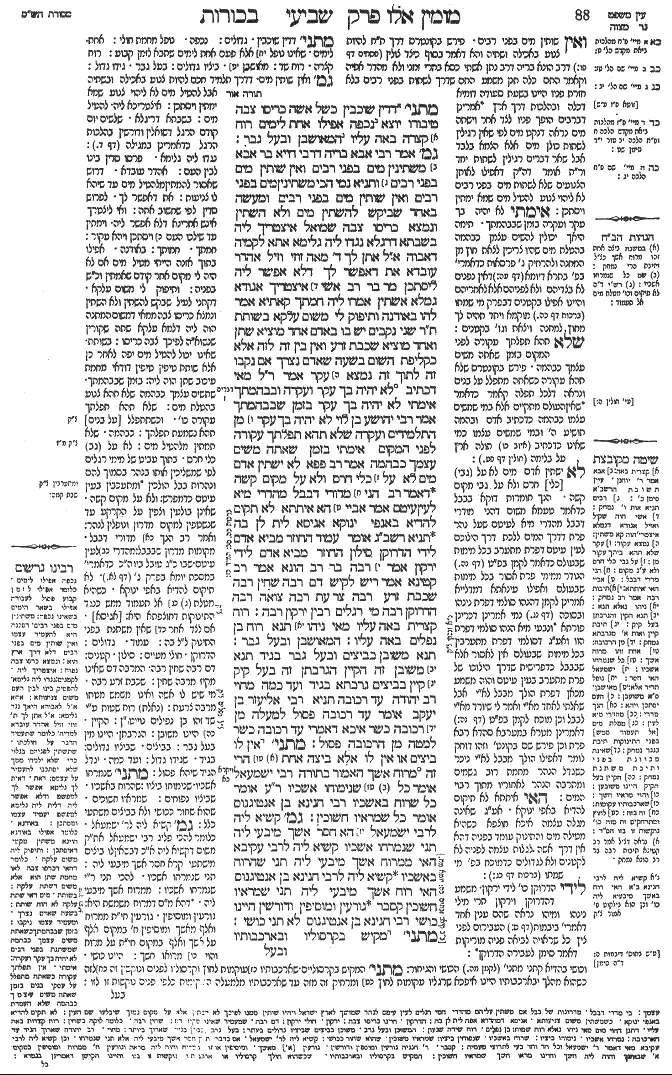
Bekhorot 44b - Guemara
מתני׳ דדין שוכבין כשל אשה כריסו צבה טיבורו יוצא נכפה אפילו אחת לימים רוח קצרה באה עליו המאושבן ובעל גבר:
גמ׳ אמר רבי אבא בריה דרבי חייא בר אבא משתינין מים בפני רבים ואין שותין מים בפני רבים ותניא נמי הכי משתינין מים בפני רבים ואין שותין מים בפני רבים ומעשה באחד שביקש להשתין מים ולא השתין ונמצא כריסו צבה שמואל איצטריך ליה בשבתא דרגלא נגדו ליה גלימא אתא לקמיה דאבוה א"ל אתן לך ד' מאה זוזי וזיל אהדר עובדא את דאפשר לך דלא אפשר ליה ליסתכן מר בר רב אשי איצטריך אגודא גמלא אשתין אמרו ליה חמתך קאתיא אמר להו באודנה ותיפוק לי משום עלקא בשותת ת"ר שני נקבים יש בו באדם אחד מוציא שתן ואחד מוציא שכבת זרע ואין בין זה לזה אלא כקליפת השום בשעה שאדם נצרך אם נקבו זה לתוך זה נמצא עקר אמר ר"ל מאי דכתיב (דברים ז, יד) לא יהיה בך עקר ועקרה ובבהמתך אימתי לא יהיה בך עקר בזמן שבבהמתך אמר רבי יהושע בן לוי לא יהיה בך עקר מן התלמידים ועקרה שלא תהא תפלתך עקורה לפני המקום אימתי בזמן שאתה משים עצמך כבהמה אמר רב פפא לא ישתין אדם מים לא על כלי חרס ולא על מקום קשה דאמר רב הני מדורי דבבל מהדרי מיא לעין עיטם אמר אביי הא איתתא לא תקום להדיא באנפי ינוקא אגיסא לית לן בה תניא רשב"ג אומר עמוד החוזר מביא אדם לידי הדרוקן סילון החוזר מביא אדם לידי ירקון אמר רבה בר רב הונא אמר רב קטינא אמר ריש לקיש דם רבה שחין רבה שכבת זרע רבה צרעת רבה צואה רבה הדרוקן רבה מי רגלים רבין ירקון רבה:
רוח קצרית באה עליו מאי ניהו תנא רוח בן נפלים באה עליו:
המאושבן ובעל גבר:
תנא משובן בביצים ובעל גבר בגיד תנא משובן זה הקיין הגרבתן זה בעל קיק קיין בביצים גרבתא בגיד ועד כמה מחוי רב יהודה עד רכובה תניא רבי אליעזר בן יעקב אומר עד רכובה פסול למעלה מן רכובה כשר איכא דאמרי עד רכובה כשר למטה מן הרכובה פסול:
מתני׳ אין לו ביצים או אין לו אלא ביצה אחת הרי זה (ויקרא כא, כ) מרוח אשך האמור בתורה רבי ישמעאל אומר כל שנימוחו אשכיו ר"ע אומר כל שרוח באשכיו רבי חנינא בן אנטיגנוס אומר כל שמראיו חשוכין:
גמ׳ קשיא ליה לרבי ישמעאל הא חסר אשך מיבעי ליה תני שנמרחו אשכיו קשיא ליה לרבי עקיבא האי ממרוח אשך מיבעי ליה תני שהרוח באשכיו קשיא ליה לרבי חנינא בן אנטיגנוס האי רוח אשך מיבעי ליה תני שמראיו חשוכין קסבר גורעין ומוסיפין ודורשין היינו כושי רבי חנינא בן אנטיגנוס לא תני כושי:
מתני׳ מקיש בקרסוליו ובארכבותיו
Comments from Rashi on Masechet Bekhorot Page 44b
מתני' דדין שוכבין . גדולים: נכפה . נופל מחמת חולי: אחת לימים . שאינו נופל אלא פעם אחת לימים שתבא לזמן קבוע: רוח קצרה . רוח שד: מאושבן . ביציו גדולים: בעל גבר . גידו גדול: גמ' ואין שותין מים . דדרך תלמיד חכם להיות צנוע באכילה ובשתיה אבל להטיל מים לא ליהוי צנוע שמא ימתין ויסתכן: איצטריכא ליה . להטיל מים: בשבתא דריגלא . שלשים יום קודם הרגל דשואלין ודורשין בהלכות הרגל כדאמרינן במגילה (דף ד.): נגדו ליה גלימא . פרסו סדין בינו לבין העם: אהדר עובדא . דרוש שאסור להמתין מלהטיל מים עד שיהא לו צניעות: את דאפשר לך . לפרוש סדין לפי שחשוב אתה: ואי ליצטרך אינש אחרינא דלא אפשר ליה וימתין עד שילכו העם ויסתכן ויהא עקור: חמתך . חמותך: באודנה . אפילו בתוך אזנה הייתי מטיל מים אם לא היה לי מקום אחר קודם שאמתין וכ"ש בפניה: ותיפוק לי משום עלקא . דקתני לעיל שבקש להשתין ולא השתין ונמצא כריסו צבה ממאי דמשום המתנה הוה ליה דלמא עלקא שתה שקורין שנשוא"ה לפיכך צבה כריסו: בשותת . שאינו יכול להטיל מים יפה לאחר כן אלא שותת טיפין טיפין דודאי מחמת עיכוב שתן הוה ליה: בזמן שבבהמתך . שתשים עצמך כבהמה שלא תהא צנוע בהטלת מים: שלא תהא תפלתך עקורה כו' . וכשתתפלל [על בנים] תהא נשמעת תפלתך: כבהמה . שלא תמתין מלהטיל מים: לא על (גב) כלי חרס . בתוך עביט של מימי רגלים לפי שמשליכין אותו בנהר בסמוך להם ונהרות בבל הולכין ומתעכבין בעין עיטם כדמפרש: ולא על מקום קשה . שאינן בולעין וצפין על הקרקע עד שנשטפין למקום מדרון ונופלין לנהר: ואמר רב הנך מדורי דבבל . מקומות מדרון שבבבל: מהדרי לעין עיטם . שבו כ"ג טובל ביוה"כ כדאמרי' במסכת יומא בפרק ג' (דף לא.): לא תיקום להדיא באפי ינוקא . כשהיא מטלת אל תעמוד ממש כנגד התינוקות דחוצפתא היא: [אגיסא] . אם לצד אחר שאין משתנת בפני התינוק ל"ל בה: עמוד . גדולים: הדרוקן . חולי מעיים: סילון . קטנים: דם רבה שחין רבה . המרבה דם שאינו מקיז מרבה שחין: שכבת זרע רבה . מי שיש לו אשה ואינו משמש מטתו מרבה צרעת: נאלת רוח שטות ע"י שד זהו בן נפילים נוייטו"ן: הקיין . היינו משובן: הגרבתן . היינו מין בעל גבר: בביצים . שביציו גדולים: בגיד . שגידו גדול: ועד כמה . יגדל הגיד שיהא פסול: מתני' שנמרחו אשכיו . שנימוחו ביציו: שהרוח באשכיו . שביציו נפוחים: שמראיו חשוכים . שהוא שחור ככושי. ולא בביצים משתעי כלל: גמ' קשיא ליה לר' ישמעאל . כלומר להכי פליג רבי ישמעאל את"ק משום דקשיא ליה א"כ דבשאין לו ביצים מישתעי קרא חסר אשך מיבעי ליה: תני שנמרחו אשכיו . להכי תני ר"י שנמרחו אשכיו: ממרוח אשך מיבעי ליה . דהא מ"ם דמרוח משמשת היא: גורעין ומוסיפין . גורעין חי"ת ממרוח ואלף מאשך ומוסיפין ח' במקום אלף על אשך ואלף במקום חי"ת על מרוח והוי מרואו חשך: היינו כושי . וכושי בהדיא קתני מתני (לקמן בכורות מה.) הכושי והגיחור: מתני' המקיש בקרסוליים . שארכבותיו עוקמות לחוץ וקרסוליו לפנים ונוקשין זה לזה כשהוא מהלך. ובארכבותיו היינו איפכא שרגליו עקומות לחוץ ומרחיק זה מזה עד שארכבותיו מלמעלה העקומות כלפי פנים נוקשות זו לזו:
Comments from Tosafot - Bekhorot 44b
ואין שותין מים בפני רבים . פירש בקונטרס דרך ת"ח להיות צנוע באכילה ושתיה והא דאמר בסוף כיצד צולין (פסחים דף פו:) דרב הונא בריה דרב נתן אשתי כסא בתרי זמני ולא מהדר אפיה וקאמר התם כלה תנן משמע התם שדרך לשתות בפני רבים בלא חזרת פניו היינו בשעת סעודה דומיא דכלה ובהלכות דרך ארץ אמרינן דברבים הופך פניו לצד אחר וישתה מים נראה דנקט מים לפי שאין רגילין לשתות כולן מים אלא הצמא בלבד אבל שאר דברים רגילין לשתות יחד ור"ת אומר דה"ק דאפילו לאותן הצנועים שלא לשתות מים בפני רבים לא ליהוי צנוע להטיל מים שמא ימתין ויסתכן: אימתי לא יהיה בך עקר ועקרה בזמן שבבהמתך . תימה היאך יכולין להשים עצמן כבהמה בהטלת מים שהיו צריכין לצאת חוץ מן המחנה ולהרחיק ג' פרסאות כדאמרי' בפ' בתרא דיומא (דף עה:) דאין נפנים לא בצדיהם ולא לפניהם אלא לאחריהם והיינו אפילו בקטנים דבפרק מי שמתו (ברכות דף כה.) מוקמא ויתד תהיה לך מחוץ למחנה ויצאת וגו' בקטנים: שלא תהא תפלתך עקורה לפני המקום בזמן שאתה משים עצמך כבהמה . פירש בקונטרס שלא תהא עקורה כשאתה מתפלל על בנים ונראה דלכל תפלה קאמר כדאמר שאין העולם מתקיים אלא במי שמשים עצמו כבהמה כדכתיב אדם ובהמה תושיע ה' ובמי שמשים עצמו כמי שאינו כדכתיב (איוב כו) תולה ארץ על בלימה (חולין דף פט.): לא ישתין אדם מים לא על (גבי) [כלי] חרס ולא על גבי מקום קשה . הנך חומרות דוקא בבבל כדאמר טעמא משום דהני מודרי דבבל מהדרי מיא לעיטם שעל נהר פרת דדרך המים ללכת דרך הילוכם לעין עיטם דפרת מתערב בכל מימות שבעולם כדאמר לקמן בפ"ט (בכורות דף נה.) הנודר ממימי פרת אסור בכל מימות שבעולם ואפילו עינאתא דמדלייא אמרינן לקמן דהנהו סולמי דפרת נינהו ובסוכה (דף נג.) נמי אמרינן דכרינן פורתא ונבעי מיא הנהו סולמי דפרת הוו ואע"ג דסולמי דפרת מתערבין בכל מימות שבעולם אין לאסור אלא שבבבל כדפרישית שדרך הילוכו של פרת מתערב בעין עיטם והוה משמע מכאן דפרת הולך מבבל לא"י אבל שאלתי לאחד מא"י ואמר לי שיורד מא"י לבבל וכן מוכח לקמן בפ"ט (בכורות דף נה:) דאמרינן מטרא במערבא סהדא רבא פרת וכן פירש שם בקונט' וזהו דוחק לומר דאפילו הולך מבבל לא"י ניכר כשגדל הנהר מחמת רוב גשמים ומתרבה הנהר לאחוריו מתוך רבוי המים: האי איתתא לא תיקום להדיא באפי ינוקא . אע"ג שאינה מגלה עצמה איכא חוצפא כשהיא מטילה מים והתינוק עומד בפניה דהא אין דרך אשה לגלות עצמה לפניה לא לקטנים ולא לגדולים כדמוכח בפ' מי שמתו (ברכות דף כג:): לידי הדרוקן כו' לידי ירקון . משמע דהדרוקן וירקון תרי מילי נינהו ומיהו נראה שהם ענין אחד דאמרי' ביבמות (דף ס:) העבירום לפני ציץ כל שראויה לביאה פניה מוריקות דאמר סימן לעבירה הדרוקן:
Bekhorot 44b - Mishnah translated into english
MISHNA: The mishna lists additional blemishes that disqualify a priest from performing the Temple service: One who has breasts so large that they sag like those of a woman; or if one’s belly is swollen and protrudes; or if one’s navel protrudes; or if one is an epileptic, even if he experiences seizures only once in a long while; or one who is afflicted with a melancholy temper; or one whose scrotum is unnaturally long; or one whose penis is unnaturally long is disqualified from performing the Temple service.
GEMARA: The Gemara cites a halakha involving a swollen belly. Rabbi Abba, son of Rabbi Ḥiyya bar Abba, says that Torah scholars may urinate in public and they need not be concerned with issues of modesty, because holding back from urinating causes bodily harm. But they may not drink water in public, as such conduct is unbefitting a Torah scholar. And this is also taught in a baraita: Torah scholars may urinate in public, but they may not drink water in public. And there was an incident involving one who sought to urinate, and he did not urinate, and his belly was found to be swollen.
The Gemara relates: It was necessary for Shmuel to urinate on the Shabbat when everyone came to hear halakhot relating to the impending Festival. In order to afford him privacy, they spread a sheet for him. Shmuel then came before his father, who said to him: I will give you four hundred dinars if you will go and retract this incident, i.e., if you will state publicly that one may not hold back from urinating even at the expense of one’s privacy. Since you are an important man, you can have others spread a sheet around you. But with regard to one who cannot have others spread a sheet for him, should he endanger himself by seeking privacy? You must therefore teach that one should not hold back from urinating even in public.
The Gemara further relates that it was necessary for Mar bar Rav Ashi to urinate while he was walking on the beams of a bridge, and therefore he urinated. They said to him: Your mother-in-law is coming. Mar bar Rav Ashi said to them: I would have done this even in her ear. Since holding back from urinating would place him in physical danger, he would not care that his mother-in-law was coming and might see him.
The Gemara returns to the incident cited in the baraita involving one who held back from urinating and his belly became swollen: And let me derive, i.e., can it not be said, that his belly swelled due to a leech that entered his intestines? The Gemara responds: The baraita is referring to a case where his urine would thereafter drip and no longer flowed in a healthy manner. Evidently, his health problems resulted from damage to the urinary tract.
Concerning this topic the Sages taught in a baraita: There are two orifices in a man. One of them expels urine and one of them expels semen, and there is only a partition about the thickness of a garlic peel between them. When a man needs to urinate and withholds the urine, if his urinary duct and seminal duct were punctured such that this duct leads into that one, he will be found to be barren, as his urine will penetrate into his seminal duct.
Reish Lakish says: What is the meaning of that which is written: “There shall not be male or female barren among you, or among your cattle” (Deuteronomy 7:14)? It means as follows: When will there not be a barren male among you? At a time that you act as among your cattle, i.e., you urinate when the need arises, without hesitation.
Rabbi Yehoshua ben Levi says, with regard to the same verse, that the phrase “There shall not be male…barren among you” means you will not be barren of students, as one who leaves behind no students is considered barren. The term “or female barren” indicates that your prayers will not be barren, i.e., unheard, before the Omnipresent, but will be heard by Him. And when will they be heard? At a time when you place yourself in prayer as an animal, with humility.
The Gemara cites additional statements of the Sages with regard to urination. Rav Pappa says: A person should urinate in Babylonia only on the dust, as it absorbs the urine. He should not urinate either on an earthenware vessel or on a hard place, as the urine will not be absorbed and will eventually flow into the underwater rivers. As Rav says: Those inclines of Babylonia return the water through underground watercourses to the Spring of Eitam in Eretz Yisrael, from which water was taken to the Temple. Additionally, Abaye says: A woman should not stand openly in front of a child when she urinates. But if she urinates while turning sideways, we have no problem with it.
It is taught in a baraita that Rabban Shimon ben Gamliel says: A mass of feces that is held back without being discharged causes a person to suffer from dropsy [hidrokan], while a stream of urine that is held back causes a person to suffer from jaundice. Rabba bar Rav Huna says that Rav Ketina says that Reish Lakish says: If one’s blood levels increase due to not undergoing bloodletting often enough, then boils will increase on him as well. If one’s semen levels increase due to not engaging in sexual intercourse often enough, then leprosy will increase on him. If one’s feces levels increase due to not relieving himself enough, dropsy will increase in him. Finally, if one’s urine levels increase due to not relieving himself enough, then jaundice will increase as well.
§ The mishna teaches that one who is afflicted with a melancholy temper is disqualified from performing the Temple service. The Gemara asks: What is this melancholy temper? A tanna taught: A fallen spirit, i.e., the spirit of a demon, has come upon him.
The mishna also teaches that one whose scrotum is unnaturally long [me’ushban] and one whose penis is unnaturally long [ba’al gever] are disqualified from performing the Temple service. The Sages taught in a baraita: A meshuban is one with exceedingly large testicles, and a ba’al gever is one with an unnaturally long penis. Similarly, it is taught in a baraita: A meshuban, this is synonymous with the kayyan. The garbetan, this is synonymous with a ba’al kik. A kayyan is one with a condition of the testicles, while a garbeta is one with a condition of the penis.
The Gemara asks: And how much is considered too long, which disqualifies the priest from performing the Temple service? Rav Yehuda pointed and said: Until the knee. It is likewise taught in a baraita that Rabbi Eliezer ben Ya’akov says: If one’s penis reaches until his knee he is disqualified from performing the Temple service. But if it reaches until just above his knee he remains fit. Some say if his penis reaches until the knee he is fit, but if it passes below the knee he is disqualified.
MISHNA: If one has no testicles, or if he has only one testicle, that is the mero’aḥ ashekh that is stated in the Torah (see Leviticus 21:20) among the blemishes that disqualify a priest from Temple service. Rabbi Yishmael says: A mero’aḥ ashekh is anyone whose testicles were crushed. Rabbi Akiva says: It is anyone that has wind in his testicles, i.e., they are swollen. Rabbi Ḥanina ben Antigonus says: Mero’aḥ ashekh does not refer to the testicles; rather, the reference is to anyone whose appearance [marav] is especially dark [ḥashukhin].
GEMARA: The Gemara explains why the tanna’im interpret mero’aḥ ashekh in different ways. It is difficult for Rabbi Yishmael: If mero’aḥ ashekh is referring to one who lacks two testicles, then the Torah should have stated: Ḥasar ashekh, lacking a testicle, rather than mero’aḥ ashekh. Therefore, he teaches that it is referring to one whose testicles were crushed. This is difficult for Rabbi Akiva: If mero’aḥ ashekh means one with crushed testicles, then the Torah should have stated: Mimro’aḥ ashekh, crushed testicles, not mero’aḥ ashekh. Therefore, he teaches that the Torah is referring to one who has wind in his testicles.
This is difficult for Rabbi Ḥanina ben Antigonus: If mero’aḥ ashekh is referring to one with wind in his testicles, then the Torah should have stated: Ruaḥ ashekh, wind in the testicles. Therefore, he teaches that the Torah is speaking of anyone whose appearance is especially dark. And how does he derive such an interpretation from the verse? He holds that the Sages subtract and add and interpret homiletically. Accordingly, the ḥet of mero’aḥ is removed along with the alef of ashekh. The ḥet is added to ashekh and the alef is added to mero’aḥ, and mero’aḥ ashekh is rearranged to state: Marav ḥashukhin, his appearance is dark.
The Gemara asks: But if so, this is identical to one whose skin is extremely black, and the mishna on 45b explicitly states that such a priest is disqualified from performing the Temple service. The Gemara responds: Rabbi Ḥanina ben Antigonus learns from the mishna only that a mero’aḥ ashekh is disqualified; he does not teach in that mishna the halakha that a person with extremely black skin is blemished.
MISHNA: The mishna lists additional blemishes that disqualify a priest from performing the Temple service: One whose legs are crooked and bend inward, causing him to knock his ankles or his knees into each other as he walks,
Traduction : The William Davidson digital edition of the Koren Noé Talmud, with commentary by Rabbi Adin Even-Israel Steinsaltz.