 Talmud Bavli
The learning on the whole site is dedicated : L'ilui Nishmat רינה בת לדיסיה
The learning on the whole site is dedicated : L'ilui Nishmat Rav Chlomo Ben Jamilla
The learning on the whole site is dedicated : L'ilui Nishmat Avraham Ben Simha
Shevu'ot 3b : Youtube
Daf TubeYoutube
2 video classes :
Shevu'ot Page 3b
Shevu'ot 3b - Guemara
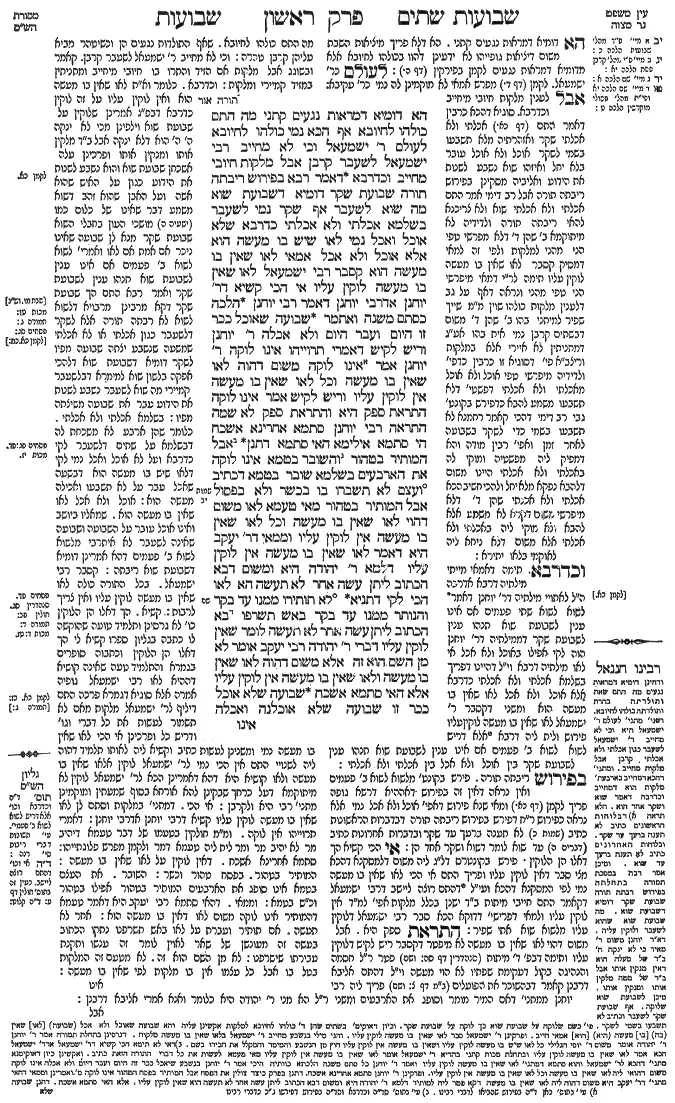
הא דומיא דמראות נגעים קתני מה התם כולהו לחיובא אף הכא נמי כולהו לחיובא לעולם ר' ישמעאל וכי לא מחייב רבי ישמעאל לשעבר קרבן אבל מלקות חיובי מחייב וכדרבא דאמר רבא בפירוש ריבתה תורה שבועת שקר דומיא דשבועת שוא מה שוא לשעבר אף שקר נמי לשעבר בשלמא אכלתי ולא אכלתי כדרבא שלא אוכל ואכל נמי לאו שיש בו מעשה הוא אלא אוכל ולא אכל אמאי לאו שאין בו מעשה הוא קסבר רבי ישמעאל לאו שאין בו מעשה לוקין עליו אי הכי קשיא דר' יוחנן אדרבי יוחנן דאמר רבי יוחנן הלכה כסתם משנה ואתמר שבועה שאוכל ככר זו היום ועבר היום ולא אכלה ר' יוחנן וריש לקיש דאמרי תרוייהו אינו לוקה ר' יוחנן אמר אינו לוקה משום דהוה לאו שאין בו מעשה וכל לאו שאין בו מעשה אין לוקין עליו וריש לקיש אמר אינו לוקה התראת ספק היא והתראת ספק לא שמה התראה רבי יוחנן סתמא אחרינא אשכח הי סתמא אילימא האי סתמא דתנן אבל המותיר בטהור והשובר בטמא אינו לוקה את הארבעים בשלמא שובר בטמא דכתיב (שמות יב, מו) ועצם לא תשברו בו בכשר ולא בפסול אבל המותיר בטהור מאי טעמא לאו משום דהוי לאו שאין בו מעשה וכל לאו שאין בו מעשה אין לוקין עליו וממאי דר' יעקב היא דאמר לאו שאין בו מעשה אין לוקין עליו דלמא ר' יהודה היא ומשום דבא הכתוב ליתן עשה אחר לא תעשה הא לאו הכי לקי דתניא (שמות יב, י) לא תותירו ממנו עד בקר והנותר ממנו עד בקר באש תשרפו בא הכתוב ליתן עשה אחר לא תעשה לומר שאין לוקין עליו דברי ר' יהודה רבי יעקב אומר לא מן השם הוא זה אלא משום דהוה לאו שאין בו מעשה ולאו שאין בו מעשה אין לוקין עליו אלא האי סתמא אשכח שבועה שלא אוכל ככר זו שבועה שלא אוכלנה ואכלה
Comments from Rashi on Masechet Shevu'ot Page 3b
מה התם כולהו לחיובא . שאף התולדות נגעים הן וכשיטהר מביא עליהן קרבן טהרה: וכי לא מחייב ר' ישמעאל לשעבר קרבן . קאמר ובשוגג אבל מלקות אם הזיד והתרו בו חיובי מיחייב ומתניתין במזיד קמיירי ומלקות: וכדרבא . כלומר וא"ת לאו שאין בו מעשה הוא ואין לוקין עליו על זה לוקין כדרבא דבפ"ג אמרינן שלוקין על שבועת שוא וילפינן מכי לא ינקה ה' ה' הוא דלא ינקה אבל ב"ד מלקין אותו ומנקין אותו ופרכינן עלה אשכחן שבועת שוא והוא נשבע לשנות את הידוע כגון על האיש שהוא אשה ועל האבן שהוא זהב דשוא משמע דבר שאינו של כלום כמו (ישעיהו ה) מושכי העון בחבלי השוא שבועת שקר מנא לן שבועה שאינו ניכר אם אמת אם לאו ואמרי' לשוא לשוא ב' פעמים אם אינו ענין לשבועת שוא תנהו ענין לשבועת שקר ואמר רבא התם הך שבועת שקר דקא מרבינן מרבויא דלשוא לשוא לא רבתה תורה אלא לשקר דלשעבר כגון אכלתי או לא אכלתי שמשעה שנשבע יצתה שבועה מפיו לשקר דומיא דשבועת שוא דלהכי אפקה בלשון שוא למימרא דבלשעבר קמיירי מה שוא לשעבר נשבע לשנות את הידוע עבר את שבועה משיצתה מפיו: בשלמא אכלתי ולא אכלתי . כלומר שהן ארבע לא משכחת לה דבשלמא על שתים דלשעבר לקי כדרבא ועל לא אוכל ואכל נמי לקי דלאו שיש בו מעשה הוא דבשעה שאכל עבר על לא תשבעו ואכילה מעשה הוא: אוכל ולא אכל לאו שאין בו מעשה הוא . שמאליו ביושב ואינו אוכל עובר על השבועה ושבועה שאינה לשעבר לא איתרבי מלשוא לשוא ב' פעמים דהא אמרינן דומיא דשבועת שוא ריבתה: קסבר רבי ישמעאל . בכל התורה כולה לאו שאין בו מעשה לוקין עליו ואין צריך לרבות: קשיא הך דאלו הן הלוקין כו' לא גרסינן ותלמיד טועה שהוקשה לו כתבה בגליון ספרו קשיא לי הך דאלו הן הלוקין וכתבוה סופרים בגמרא והתלמיד טעה שאינה קושיא דההיא לאו רבי ישמעאל גופיה אמרה אלא סוגיא דגמרא פרכה התם דיליף לר' ישמעאל מלקות מאם לא תשמור לעשות את כל דברי וגו' ודריש כל ופרכינן אי הכי לאו שאין בו מעשה נמי ומשנינן לעשות כתיב וקשיא ליה לאותו תלמיד דהוה ליה לשנויי התם אין הכי נמי לר' ישמעאל לוקין אלאו שאין בו מעשה ולאו קושיא היא דהא דאמרינן הכא לר' ישמעאל לוקין לא מיתוקמא דעל כרחך שבקינן להא אורחא בסוף שמעתין ומוקמינן מתני' רבי היא ולקרבן: אי הכי . דמתני' במלקות וסתם לן לאו שאין בו מעשה לוקין עליו קשיא דרבי יוחנן אדרבי יוחנן: דאמרי תרוייהו אין לוקה . ומ"מ חולקין בטעמו של דבר טעמא דיהיב מר לא יהיב מר ומר לית ליה טעמא דמר ולקמן מפרש פלוגתייהו: סתמא אחרינא אשכח . דאין לוקין על לאו שאין בו מעשה: המותיר בטהור . בפסח טהור וכשר: השובר . את העצם בטמא אינו סופג את הארבעים המותיר בטהור אפילו בטהור וכ"ש בטמא: וממאי . דהאי סתמא רבי יעקב היא דאמר טעמא דהמותיר אינו לוקה משום לאו דאין בו מעשה הוא: אחר לא תעשה . אם תותיר ועברת על לאו באש תשרפנו נתקו הכתוב בעשה זה מעונשן של שאר לאוין לומר זה ענשו ותקנת עבירתו שישרפנו: לא מן השם הוא זה . לא מטעם זה המלקות בטל בו אבל כל עצמו אין בו מלקות לפי שאין בו מעשה:
Comments from Tosafot - Shevu'ot 3b
הא דומיא דמראות נגעים קתני. הא דלא פריך מיציאות השבת משום דיציאות גופייהו לא ידעינן דהוו בכולהו לחיובא אלא מדומיא דמראות נגעים לקמן בפירקין (שבועות דף ה.): לעולם כר' ישמעאל. לקמן (שבועות דף ד.) מפרש אמאי לא מוקמינן לה נמי כר' עקיבא: אבל לענין מלקות חיובי מיחייב וכדרבא. סוגיא דהכא כרבין דאמר התם (דף כא.) אכלתי ולא אכלתי שקר ואזהרתיה מלא תשבעו בשמי לשקר אוכל ולא אוכל עובר בלא יחל ואיזהו שוא נשבע לשנות את הידוע ואליביה מסקינן בפירוש ריבתה תורה אבל רב דימי אמר התם אכלתי ולא אכלתי שוא ולא צריכנא להאי ריבתה תורה ולדידיה לא מיתוקמא ב' שהן ד' דלא מפרשי טפי הני מהני למלקות ולפי זה למאי דמסיק קסבר לאו שאין בו מעשה לוקין עליו תימה לר"י דמאי מיפרשי הני טפי מהני ונראה דאף על גב דלענין מלקות כולהו שוין מ"מ שייך שפיר למיתני בהו ב' שהן ד' משום דבשתים קרבן נמי אית בהו אע"ג דמתניתין לא איירי אלא במלקות וריצב"א פי' דסוגיא זו כרבין כדפי' ולדידיה מיפרשי טפי אוכל ולא אוכל מאכלתי ולא אכלתי דפשטי' דלא תשבעו משמע להבא כדפירש בקונט' גבי רב דימי דהכי קאמר רחמנא לא תשבעו בשמי כדי לשקר בשבועה לאחר זמן ואפי' רבין מודה והא דמפיק ליה מפשטיה ומוקי לה באכלתי ולא אכלתי היינו משום דלהבא נפקא מלא יחל ולהכי חשיב הכא אכלתי ולא אכלתי שהן ד' דלא מיפרשי משום דקרא לא משמע אלא להבא ולא מוקי ליה באכלתי ולא אכלתי אלא משום דלא ניחא ליה לאוקמי בלאו יתירא: וכדרבא. תימה דאמאי מייתי מילתיה דרבא אדרבה ה"ל לאתויי מילתיה דר' יוחנן דאמר לשוא לשוא שתי פעמים אם אינו ענין לשבועת שוא תנהו ענין לשבועת שקר דממילתיה דר' יוחנן הוה לקי אפילו באוכל ולא אכל אי לאו מילתיה דרבא וי"ל דהיינו דפריך בשלמא אכלתי ולא אכלתי כדרבא אלא אוכל ולא אכל לאו שאין בו מעשה הוא ומשני דקסבר ר' ישמעאל לאו שאין בו מעשה לוקין עליו פירוש ולית ליה דרבא אלא דריש לשוא לשוא ב' פעמים אם אינו ענין לשבועת שוא תנהו ענין לשבועת שקר בין אוכל ולא אכל בין אכלתי ולא אכלתי: בפירוש ריבתה תורה. פירש בקונט' מלשוא לשוא ב' פעמים ואין נראה דאין זה בפירוש דאההיא דרשא גופה פריך לקמן (שבועות דף כא.) ומאי שנא פירוש דאפי' אוכל ולא אכל נמי אלא נראה כפירוש ר"ח דפירש בפירוש ריבתה תורה דבדברות הראשונות כתיב (שמות כ) לא תענה ברעך עד שקר ובדברות אחרונות כתיב (דברים ה) עד שוא לומר דשוא ושקר אחד הן: אי הכי קשיא הך דאלו הן הלוקין. פירש בקונטרס דל"ג ליה משום דלמסקנא דהכא מצי סבר דאין לוקין עליו ופריך התם אי הכי לאו שאין בו מעשה נמי לפי המסקנא דהכא ועי"ל דהתם רוצה ליישב דרבי ישמעאל דקאמר התם חייבי מיתות ב"ד ישנן בכלל מלקות אפי' למ"ד אין לוקין עליו ולמאי דפרישי' דדוקא הכא סבר רבי ישמעאל דלוקין עליו מלשוא שוא אתי שפיר: התראת ספק היא. אבל משום דהוי לאו שאין בו מעשה לא מיפטר דקסבר ריש לקיש דלוקין עליו ותימה דבפ' ד' מיתות (סנהדרין דף סה: ושם) פטר ר"ל חסמה והנהיגה בקול דעקימת שפתיו לא הוי מעשה וי"ל דהתם אליבא דרבנן קאמר דבהשוכר את הפועלים (ב"מ דף צ: ושם) פריך ליה רבי יוחנן ממתני' דאם המיר מומר וסופג את הארבעים ומשני ר"ל הא מני ר' יהודה היא כלומר ואנא אמרי אליבא דרבנן:
Shevu'ot 3b - Mishnah translated into english
But the mishna teaches these cases similar to the different shades of leprous marks, which indicates that just as there, all four of them are shades for which there is liability to bring an offering, so too here, with regard to oaths and the cases of one’s awareness of the defiling of the Temple or its sacrificial foods, all four of them are cases for which there is liability to bring an offering.
The Gemara suggests a different resolution: Actually, the mishna expresses the opinion of Rabbi Yishmael. And while Rabbi Yishmael does not deem one liable for oaths pertaining to the past, that is only with regard to liability to bring an offering; but he does deem one liable to be administered lashes.
And this is in accordance with the statement of Rava, as Rava says: The Torah explicitly amplifies the prohibition of taking a false oath to be similar to the prohibition of an oath taken in vain, to teach that one is flogged for its violation. It follows that just as an oath taken in vain pertains to the past and renders one liable to receive lashes, so too, taking a false oath that pertains to the past renders one liable to receive lashes.
The Gemara asks: Granted that one who stated: On my oath I ate, but in fact he did not eat, or one who stated: On my oath I did not eat, but in fact he ate, is liable to receive lashes, as this is in accordance with the statement of Rava. And also if one stated: On my oath I will not eat, and he ate in violation of his oath, he is liable to receive lashes, as it is a prohibition that involves an action, and, in general, such prohibitions are punishable by flogging. But if one stated: On my oath I will eat, and in violation of his oath he did not eat, why should he be liable to receive lashes? It is a prohibition that does not involve an action. The generally accepted principle is that one is not liable to receive lashes for violating a prohibition without performing an action.
The Gemara answers: Rabbi Yishmael disagrees with the generally accepted principle and holds that one is flogged for the violation of a prohibition that does not involve an action.
The Gemara challenges: If so, then a difficulty arises between one statement of Rabbi Yoḥanan and another statement of Rabbi Yoḥanan.
As Rabbi Yoḥanan says: The halakha is always in accordance with the ruling of an unattributed mishna. Since the mishna here is unattributed and assumes that one is flogged for taking a false oath, Rabbi Yoḥanan should rule that this is the halakha.
And an amoraic dispute was stated with regard to one who said: On my oath I will eat this loaf today, and the day passed and he did not eat it. Rabbi Yoḥanan and Reish Lakish both say: He is not flogged for taking a false oath. They disagree with regard to the reason that he is not flogged. Rabbi Yoḥanan says: He is not flogged due to the fact that it is a prohibition that does not involve an action, as he violates the oath by failing to perform an action rather than by performing an action, and the principle is: With regard to any prohibition that does not involve an action, one is not flogged for its violation. And Reish Lakish says: He is not flogged because it is an uncertain forewarning, as one cannot forewarn him before he fails to fulfill the oath because as long as time remains in the day he can still later eat the loaf and fulfill the oath; and an uncertain forewarning is not characterized as forewarning. Evidently, Rabbi Yoḥanan does not rule in accordance with the mishna here.
The Gemara resolves the difficulty: Rabbi Yoḥanan found another unattributed mishna which holds that one is not flogged for a prohibition that does not involve an action, and he rules in accordance with that mishna.
The Gemara asks: Which other unattributed mishna did he find? If we say he found this unattributed mishna, as we learned (Pesaḥim 84a): But one who leaves over some of the meat of a ritually pure Paschal offering until the morning of the fifteenth of Nisan and one who breaks a bone of a ritually impure Paschal offering are not flogged with the forty lashes, that is difficult.
First, the Gemara explains how this mishna demonstrates Rabbi Yoḥanan’s opinion: Granted that breaking a bone of an impure Paschal offering does not incur lashes, as it is written: “Nor shall you break a bone in it” (Exodus 12:46). The term “in it” indicates that the verse refers only to a valid Paschal offering, but not to a disqualified one, such as one that is impure. But in the case of one who leaves over some of the meat of a pure Paschal offering, what is the reason he is not flogged? Is it not because it is a violation of a prohibition that does not involve an action, and for a violation of any prohibition that does not involve an action one is not flogged?
The Gemara now questions this explanation of the mishna: But from where is it apparent that this mishna is in accordance with the opinion of Rabbi Ya’akov, who says that for a violation of a prohibition that does not involve an action, one is not flogged? Perhaps the mishna is in accordance with the opinion of Rabbi Yehuda, and he holds that the reason the mishna rules that one is not flogged is due to the fact that the verse comes to position the positive mitzva of burning the leftover meat after the prohibition of leaving over the meat, and one is not flogged for a prohibition whose violation obligates one in a positive mitzva. But were it not for this, one would be flogged, despite the fact it is a prohibition that does not involve an action. Since the unattributed mishna is not necessarily in accordance with Rabbi Yaakov’s opinion, it cannot be the basis of Rabbi Yoḥanan’s ruling.
The Gemara cites the source of Rabbi Yaakov’s and Rabbi Yehuda’s opinions: As it is taught in a baraita: “And you shall let nothing of it remain until the morning, and that which remains of it until the morning you shall burn in fire” (Exodus 12:10). The verse comes to position the positive mitzva of burning the leftover meat after the prohibition against leaving over the meat, to say that one is not flogged for its violation; this is the statement of Rabbi Yehuda. Rabbi Ya’akov says: This is not for that reason; rather, it is due to the fact that it is a prohibition that does not involve an action, and for a violation of a prohibition that does not involve an action one is not flogged.
Rather, Rabbi Yoḥanan found this unattributed mishna, which teaches (27b): If one states: On my oath I will not eat this loaf, and immediately states: On my oath I will not eat it, and then he ate it,
Traduction : The William Davidson digital edition of the Koren Noé Talmud, with commentary by Rabbi Adin Even-Israel Steinsaltz.