 Talmud Bavli
Bekhorot 34b : Youtube
Rabbi Dr. Moshe WeisblumYoutube
1 video class :
Bekhorot Page 34b
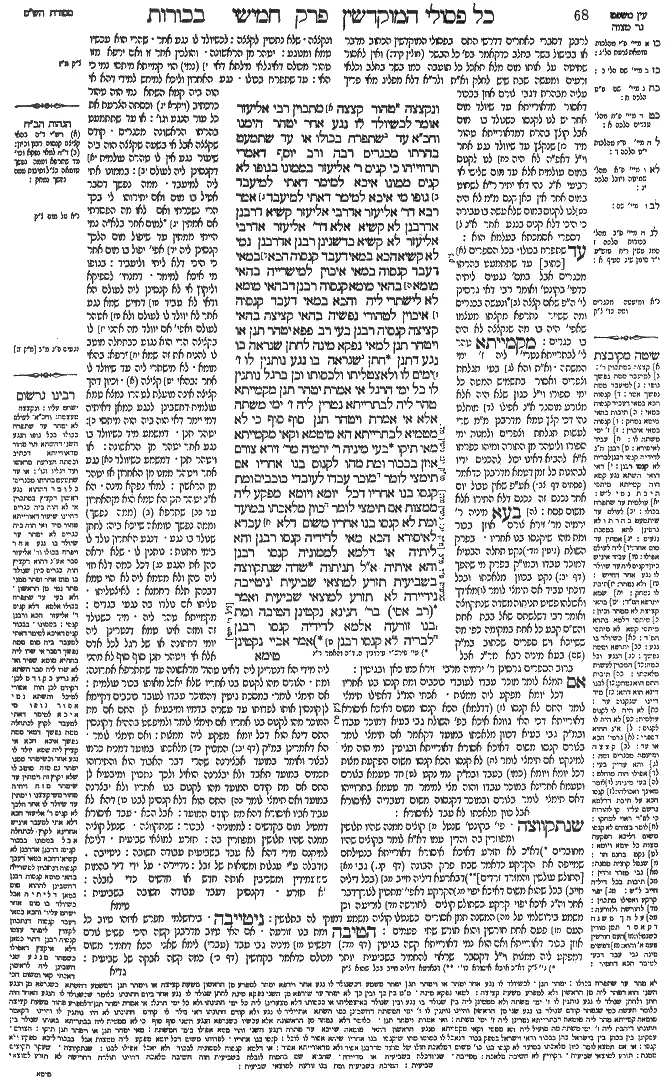
Bekhorot 34b - Guemara
ונקצצה טהור קצצה מתכוין רבי אליעזר אומר לכשיולד לו נגע אחר יטהר הימנו וחכ"א עד שתפרח בכולו או עד שתמעט בהרתו מכגריס רבה ורב יוסף דאמרי תרווייהו כי קניס ר' אליעזר בממונו בגופו לא קניס ממונו איכא למימר דאתי למיעבד גופו מי איכא למימר דאתי למיעבד אמר רבא דר' אליעזר אדרבי אליעזר קשיא דרבנן אדרבנן לא קשיא אלא דר' אליעזר אדרבי אליעזר לא קשיא כדשנינן רבנן אדרבנן נמי לא קשיא הכא במאי דעבד קנסוה הכא במאי דעבד קנסוה במאי איכוין למישרייה בהאי מומא בהאי מומא קנסוה רבנן דבהאי מומא לא לישתרי ליה והכא במאי דעבד קנסוה איכוין לטהורי נפשיה בהאי קציצה בהאי קציצה קנסוה רבנן בעי רב פפא יטהר תנן או ויטהר תנן למאי נפקא מינה לחתן שנראה בו נגע דתנן חתן שנראה בו נגע נותנין לו ז' ימים לו ולאצטליתו ולכסותו וכן ברגל נותנין לו כל ימי הרגל אי אמרת יטהר תנן מקמייתא טהר ליה לבתרייתא נטרין ליה ז' ימי משתה אלא אי אמרת ויטהר תנן סוף סוף כי לא מטמיא לבתרייתא הא מיטמא וקאי מקמייתא מאי תיקו בעי מיניה ר' ירמיה מר' זירא צורם אוזן בבכור ומת מהו לקנוס בנו אחריו אם תימצי לומר מוכר עבדו לעובדי כוכבים ומת קנסו בנו אחריו דכל יומא ויומא מפקע ליה ממצות אם תימצי לומר כוון מלאכתו במועד ומת לא קנסו בנו אחריו משום דלא עבדא לאיסורא הכא מאי דידיה קנסו רבנן והא ליתיה או דלמא לממוניה קנסו רבנן והא איתיה א"ל תניתוה שדה שנתקווצה בשביעית תזרע למוצאי שביעית ניטייבה נידיירה לא תזרע למוצאי שביעית ואמר רב אסי בר' חנינא נקטינן הטיבה ומת בנו זורעה אלמא לדידיה קנסו רבנן לבריה לא קנסו רבנן אמר אביי נקטינן
Comments from Rashi on Masechet Bekhorot Page 34b
ונקצצה . שלא נתכוין לקצצה: לכשיולד לו נגע אחר . שהרי הוא עכשיו טמא ומנוגע: יטהר . מן הראשונה והולכין אחר זו ואם ירפא מזו טהור מכולם דאיגלאי מילתא דאי (נמי) הוי קמייתא מיתסי נמי כי האי: עד שתפרח בכולו . נגע האחרון וליכא למיחש למידי דהא אי הוה ביה קמא השתא נמי הוה טהור כדכתיב (ויקרא יג) וכסתה הצרעת את כל עור הנגע וגו': או עד שתתמעט בהרתו . הראשונה מכגריס קודם שקצצה אבל אי בשעה שקצצה הוה ביה שיעור נגע אין לו טהרה עולמית דקנסינן ליה לעולם: בממונו אתי ליה למיעבד . ממה נפשך דסבר אטיל בו מום ואם יתירוהו לי בכך הרי נשכרתי ואם לאו מה הפסדתי אם אמתין למום אחר בלא"ה נמי הייתי ממתין עד שיפול מום הלכך קנסינן ליה אפי' יפול בו מום אחר כי היכי דלא ליתי וליעביד: בגופו מי איכא למימר . דמנחי' לספיקא וליקוץ אי לא קנסינן ליה לעולם הא ודאי לא עביד דחייש שמא נגע אחר לא יוולד לו לעולם ולא אטהר לעולם ואפי' אם יוולד מה אהני לו בקציצה הרי הוא נגוע כבתחלה מוטב לו להניח את זה שמא ירפא: בהאי מומא . לא מישתרי ליה עד שיוולד לו אחר: בהאי קציצה . וכיון דהך קציצה אינה מועלת לטהרו נמצא טמא עולמית דחשבינן לנגע כמאן דאיתיה דמי יימר דאי הוה ביה הוה מיתסי: יטהר תנן . דמשמע מיד כשיוולד בו נגע אחר יטהר מן הראשונה: או ויטהר תנן . דמשמע כשיוולד נגע אחר ויטהר ממנו מן האחרון אז יטהר מן הראשון: לחתן שנולד בו נגע . דנגע האחרון נולד לו בימי חתנות: למאי נפקא מינה . הא א"נ יטהר תנן הא טמא הוא מן האחרון עד שתרפא (ממה נפשך) וממה נפשך טומאה שייכא ביה: נותנין לו . שלא יראה כהן את הנגע דכל כמה דלא חזי ליה כהן ולא מטמא ליה לא הוי טמא דבכהן תלא רחמנא: לאיצטליתו . טליתו אם נולדו בה נגעי בגדים: מקמייתא טהר ליה . מיד כשנולד זה ומזה אינו טמא דנטרינן ליה יומי דחתונה או של רגל לכל אדם. אלא אי ויטהר תנן סוף סוף לא מהני ליה מידי הא דנטרינן ליה דאינו טהור מראשונה עד שתתרפא אחרונה: ומת . הצורם מהו לקנוס בנו אחריו שלא יאכל מאותו בכור עולמית: אם תימצי לומר . במסכת גיטין דהמוכר עבדו לעובד כוכבים דקיימא לן קונסין אותו לפדותו עד עשרה בדמיו ומיבעיא לן התם אם מת המוכר מהו לקנוס בנו אחריו אם תימצי לומר ולמיפשט בההיא דקונסין התם דינא הוא דכל יומא מפקע ליה ממצות: ואם תימצי לומר . הא דאמרינן במ"ק (דף יב:) המכוין מלאכתו במועד דמניח כרמו לבצור ואומר במועד אבצירנה שהרי דבר האבוד הוא והתירוהו חכמים במועד תאבד ולא יבצרנה הואיל ולכך נתכוין ומיבעיא לן התם אם מת קודם המועד מהו לקנוס בנו אחריו ולא יבצרנה במועד. ואם תימצי לומר התם הוא דלא קנסינן לבנו דהא לא עביד אביו איסורא דהא מת קודם המועד: אבל הכא . עבד איסורא דמטיל מום בקדשים: לממוניה . לבכור: שנתקווצה . שנטל קוציה ממנה שהיו תלושין ומפוזרין בה: תזרע למוצאי שביעית . דליכא למיקנס מידי דהא לא עבד בשביעית עבודה חשובה: ניטייבה . נזדבלה ע"י עגלות ומשואות של זבל: נידיירה . על ידי דיר בהמות שמעמידין ומשכיבין אותה חדש או חדשים כדי לזבלה: לא תזרע . דקנסינן דעבד עבודה חשובה בשביעית:
Comments from Tosafot - Bekhorot 34b
עד שתפרח בכולו . בכל הספרים [כתוב] עד שתתמעט בהרתו מכגריס אבל במס' נגעים ליתיה כדפי' בקונט' ואומר רבי דאי גרסינן לי' ה"פ שאם קצצה ונעשה בכגריס ומה ששייר נתרפא מקצתו מעצמו שאפי' היה בו מה שנקצצה לא היה בו כגריס: מקמייתא טהר לי' לבתרייתא נטרי' ליה ז' ימי המשתה . וא"ת והא בעי תגלחת וצפרים ואסור בתשמיש המטה כל ימי ספורו וי"ל כגון שלא היה אלא מצורע מוסגר א"נ אפילו מוחלט נהי דכי קצץ טמא מדרבנן מ"מ שרי לעשות תגלחת וצפרים ולמנות ימי ספורו וליטהר מן התורה ומיהו כפרתו א"א להביא דאינו יכול להכניס ידיו לבהונות כל זמן דטמא מדרבנן כדאמר (פסחים דף צב.) אע"פ שאין טבול יום אחר נכנס זה נכנס דלא התירו אלא משום פסח: בעא מיניה ר' ירמיה מר' זירא צורם אוזן בכור ומת מהו שיקנסו בנו אחריו . בפרק השולח (גיטין מד.) נקט תחלה הבעיא דמוכר עבדו ובמו"ק בפרק מי שהפך (דף יב:) נקט בכוון מלאכתו ובכל דוכתי עביד אם תימצי לומר מאידך ואכולהו פשיט תניתוה משדה שנתקווצה ואומר רבי דשלשתם שאל בבת אחת והש"ס קבע כל אחת במקומה כפי מה ששייכא ויש ספרים שכתוב במ"ק (שם) בעא מיניה רבא מר"נ אבל ברוב הספרים גרסינן ר' ירמיה מרבי זירא כמו כאן ובגיטין: אם תמצא לומר מוכר עבדו לעובדי כוכבים ומת קנסו בנו אחריו דכל יומא מפקע ליה ממצות . אכתי המ"ל דאפילו תימצי לומר התם לא קנסו (דדלמא) הכא קנסו משום דאיכא איסורא דאורייתא דכי האי גוונא איכא בפ' השולח גבי בעיא דמוכר עבדו ובמ"ק גבי בעיא דכוון מלאכתו במועד דקאמר אם תימצי לומר בצורם קנסו משום דאיכא אסורא דאורייתא ובגיטין נמי הוה מצי למינקט אם תימצי לומר לא קנסו הכא קנסו משום הפקעת מצות דכל יומא ויומא (כמו) בעבד ובמ"ק נמי נקט חד טעמא בצורם וטעמא אחרינא במוכר עבדו והוה מצי למימר חד טעמא בתרוייהו דאם תימצי לומר בצורם ובמוכר דקנסוה משום דעבדיה לאיסורא אבל כוון מלאכתו לא עבד לאיסורא: שנתקווצה . פי' בקונט' שנטל קוצים ממנה שהיו תלושין ומפוזרין בה והדין עמו דא"א לומר בקוצים שהיו מחוברים דא"כ לא תזרע דאיכא איסורא דאורייתא בנטילתם שמייפה את הקרקע כדאמר שבת פרק הבונה (דף קג.) גבי [התולש עולשין והמזרד זרדים] דבארעא דיליה חייב (בכל דיליה חייב) בכל שהוא משום דאיכא יפוי הקרקע דאפי' מתכוין לצורך דבר אחר וה"נ איכא יפוי קרקע כשתולש קוצים לחורשה לזריעה וכן משמע בירושלמי על המשנה תמן אסורים כשנטלו קוציה משמע דמוקי לה בתלושין: ניטייבה . בירושלמי מפרש איזהו טיוב כל העם פעם אחת חורשין והוא חורש שתי פעמים: הטיבה ומת בנו זורעה . אם האי טיוב מדרבנן קשה היכי פשיט צורם אוזן בכור דאורייתא ואם הוא נמי דאורייתא קשה בגיטין (דף מד:) דפשיט מיניה גבי עבד (עברי) לימא שאני הכא דחמיר משום דמפקע ליה ממצות וי"ל דקסבר שראוי להחמיר בשביעית יותר מכולם כדאמר בקדושין (דף כ.) כמה קשה אבקה של שביעית:
Bekhorot 34b - Mishnah translated into english
and it inadvertently got excised, that individual is ritually pure. If he excised it intentionally, in an attempt to render himself ritually pure, the Sages impose a punitive impurity upon him. The tanna’im disagree with regard to the extent of the penalty: Rabbi Eliezer says: When he will develop another leprous mark, his status of ritual purity is assessed based on this new mark. When that mark is ruled ritually pure, he will become ritually pure from the ritual impurity generated by the mark he excised.
And the Rabbis say: The development of a new leprous mark is insufficient. Rather, he must wait either until the leprosy of the new mark spreads over his entire body, a sign of ritual purity (see Leviticus 13:12), or unless his old baheret had shrunk to a size smaller than that of a split beanbefore he excised it. Otherwise, he remains ritually impure. In any event, it is clear from this mishna that Rabbi Eliezer does not impose an indefinite penalty on one who transgresses. If so, why does he impose an indefinite penalty in the mishna discussing one who causes a blemish on the ear of a firstborn offering?
Rabba and Rav Yosef both say, in answer to this question, that when Rabbi Eliezer penalizes one who transgresses, that is only in a case which involves his property, e.g., a firstborn offering. But in a case which affects his body, e.g., leprosy, he does not penalize him to such an extent.
The Gemara elaborates: With regard to his property, i.e., the firstborn offering, if he would not be penalized indefinitely, there is reason to say that he might come to perform an action which would cause a blemish. Since the firstborn offering is anyway prohibited for personal use until it is blemished, he suffers no risk in blemishing it. A greater deterrent than usual is therefore needed to prevent such action. By contrast, in the case of leprosy on his body, is there a basis to say that he will come to perform an action and remove the white spot? In this case, the limited penalty of having to wait for purification from another leprous mark serves as a sufficient deterrent, as there is no guarantee that another mark will ever appear.
Rava said: Is this to say that the statement of Rabbi Eliezer in the mishna here is difficult in light of the other statement of Rabbi Eliezer in the mishna in Nega’im, whereas the statement of the Rabbis in the mishna is not difficult in light of the other statement of the Rabbis in Nega’im? In the mishna here, the Rabbis impose a limited penalty on the transgressor, whereas in the mishna in Nega’im they impose an indefinite one. This contradiction also requires resolution.
Rather, say: The statement of Rabbi Eliezer in the mishna here is not difficult in light of the statement of Rabbi Eliezer in Nega’im, as we answered. Likewise, the statement of the Rabbis in the mishna is not difficult in light of the statement of the Rabbis in Nega’im, as both rulings follow the same logic. Here, the Rabbis penalized him for what he did, and there, the Rabbis penalized him for what he did.
The Gemara elaborates: In the case of causing a blemish in a firstborn offering, by what means did he intend to permit it? By means of this blemish. Therefore, the Rabbis penalized him only with regard to this blemish, i.e., that the animal will not become permitted to him by means of this blemish that he himself caused. The firstborn offering retains its status as unblemished and will become permitted only if it develops another blemish. And similarly, here, with regard to the removal of the leprous mark, the Rabbis penalize him for what he did. He intended to render himself ritually pure by means of this act of excising the mark. Therefore, the Rabbis penalized him with regard to this act of excision. It is considered as though he did not excise the mark, and as a result, he remains impure permanently.
§ The Gemara analyzes Rabbi Eliezer’s statement: When he will develop another leprous mark, he will become ritually pure [yit’har] from the first. Rav Pappa asks: What is the correct version of Rabbi Eliezer’s statement? Did we learn: Yit’har, or did we learn: Veyit’har, and he will become ritually pure? Yit’har indicates that he will immediately be rendered ritually pure from the first leprous mark upon the appearance of the second mark. Veyit’har, by contrast, indicates that the punitive ritual impurity by rabbinic law imparted by the first mark remains until the second mark is deemed ritually pure.
The Gemara asks: What is the practical difference between the two versions? After all, he is in any case ritually impure due to the second mark until that mark is deemed pure. The Gemara explains that there is a difference in the case of a bridegroom who had removed a leprous mark upon whom a new leprous mark appeared during the seven days of his wedding celebrations.
As we learned in a mishna (Nega’im 3:2): In the case of a bridegroom upon whom a leprous mark appeared, the court grants him seven days of his wedding celebrations before the mark is examined by a priest. This grace period is granted to him whether the mark appeared on him, i.e., his body, or on his cloak, or on any other garment of his. And similarly, with regard to any individual upon whom a leprous mark appeared during a pilgrimage Festival, the court grants him all the days of the pilgrimage Festival as a grace period, during which the mark is not examined by a priest.
The Gemara continues: If you say that we learned that the correct reading of Rabbi Eliezer’s statement is yit’har, i.e., the individual is rendered ritually pure upon the development of the new mark, this means that he is ritually pure during the seven-day period, as he has already become ritually pure of the punitive impurity from the first mark. As for the latter mark, we wait the seven days of feasting for him, before the mark is examined by a priest. He is therefore ritually pure in all regards.
But if you say that we learned that the correct reading of Rabbi Eliezer’s statement is veyit’har, and the punitive impurity of the first mark remains intact until the ritual purity of the second mark has been confirmed, the grace period has no effect. The reason is that ultimately, even if the individual does not yet contract ritual impurity from the latter mark, he remains ritually impure on account of the first mark until the purification of the latter mark. The Gemara asks: What is the resolution to Rav Pappa’s query? Since there is no clear resolution, the Gemara concludes that the dilemma shall stand unresolved.
§ The mishna teaches that one who slits the ear of a firstborn offering is prohibited indefinitely from slaughtering the animal on account of that blemish. Rabbi Yirmeya raises a dilemma before Rabbi Zeira: In the case of one who slits the ear of a firstborn offering and subsequently dies, what is the halakha with regard to penalizing his son after the father’s death? Does the penalty prohibiting consumption of the firstborn offering extend to the son?
The Gemara compares this dilemma to two similar cases. If you say the halakha should be derived from the case of one who sells his Canaanite slave to gentiles and the seller subsequently dies, where the Sages penalized his son after the father’s death and required him to redeem the slave, this is not a direct parallel. The Gemara explains: It is possible that the penalty is extended to the son only there, as each day that the slave is in the servitude of the gentile master, that master prevents the slave from performing mitzvot. A Canaanite slave is obligated to perform the same mitzvot as a Jewish woman, and he is unable to fulfill the mitzvot when in the possession of a gentile. Since this reason does not apply in a case of a firstborn offering, the case of the Canaanite slave cannot be cited as a source to resolve this dilemma.
And if you say the halakha should be derived from the case of one who planned from the outset to perform his labor on the intermediate days of a Festival, by placing himself in a situation in which the labor should in theory be permitted, i.e., that a significant monetary loss would otherwise be incurred, that comparison is also inaccurate. The Gemara elaborates: In such a case the Sages penalized him by deeming it prohibited for him to perform the labor and by removing his rights to any of the finished products, but if he died before the start of the Festival, they did not penalize his son after the father’s death. This case is not a direct parallel either, as it is possible that it is only there that the penalty is not extended to the son, since the father did not yet perform a prohibited act, as he did not carry out any action on the Festival before he died.
If so, here, in the case of mutilating the ear of a firstborn offering, what is the halakha? Should one say that the Sages penalized only him, i.e., the father, and he is no longer alive? Or perhaps the Sages imposed the penalty upon his property, i.e., that no benefit may be derived from the animal, and that animal still exists in the possession of his heirs.
Rabbi Zeira said to Rabbi Yirmeya: You learned the resolution to your dilemma in a mishna (Shevi’it 4:2). A field whose thorns were removed during the Sabbatical Year may be sown at the conclusion of the Sabbatical Year, as removing thorns is not full-fledged labor that renders the field prohibited. But if it had been improved with fertilizer, or if it had been enclosed so that the animals inside would fertilize it with their manure, it may not be sown at the conclusion of the Sabbatical Year, as both these acts cause significant improvements to the field. The Sages imposed a penalty that one may not derive benefit from prohibited labor. And Rav Asi, son of Rabbi Ḥanina, says: We have a tradition that if one improved his field in a prohibited manner and then died, his son may sow it. Apparently, the Sages penalized only him, i.e., the father, but the Sages did not penalize his son.
Abaye says: We have a tradition
Traduction : The William Davidson digital edition of the Koren Noé Talmud, with commentary by Rabbi Adin Even-Israel Steinsaltz.