 Talmud Bavli
The learning on the whole site is dedicated : L'ilui Nishmat Amram ben Itshak Loubaton
The learning on the whole site is dedicated : L'ilui Nishmat אליעזר בן רחל
The learning on the whole site is dedicated : L'ilui Nishmat Chemouel Eliezer ben Batcheva
Rosh Hashanah 7a : Youtube
Rabi Yitzchok LobensteinYoutube
3 video classes :
Rosh Hashanah Page 7a
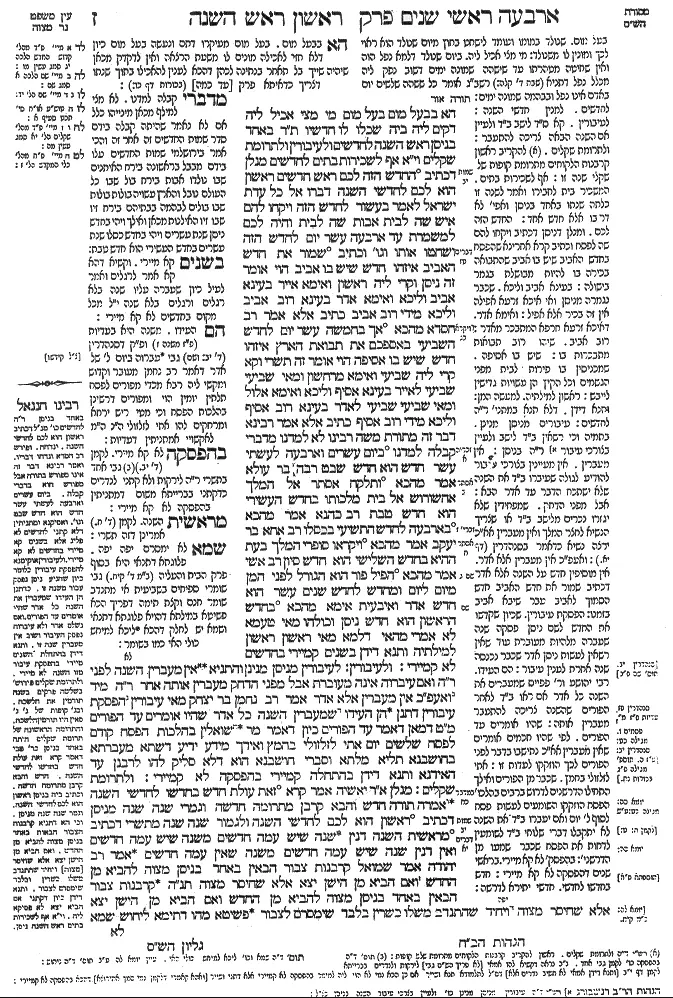
Rosh Hashanah 7a - Guemara
הא בבעל מום בעל מום מי מצי אכיל ליה דקים ליה ביה שכלו לו חדשיו ת"ר באחד בניסן ראש השנה לחדשים ולעיבורין ולתרומת שקלים וי"א אף לשכירות בתים לחדשים מנלן דכתיב (שמות יב, ב) החדש הזה לכם ראש חדשים ראשון הוא לכם לחדשי השנה דברו אל כל עדת ישראל לאמר בעשור לחדש הזה ויקחו להם איש שה לבית אבות שה לבית והיה לכם למשמרת עד ארבעה עשר יום לחדש הזה ושחטו אותו וגו' וכתיב (דברים טז, א) שמור את חדש האביב איזהו חדש שיש בו אביב הוי אומר זה ניסן וקרי ליה ראשון ואימא אייר בעינא אביב וליכא ואימא אדר בעינא רוב אביב וליכא מידי רוב אביב כתיב אלא אמר רב חסדא מהכא (ויקרא כג, לט) אך בחמשה עשר יום לחדש השביעי באספכם את תבואת הארץ איזהו חדש שיש בו אסיפה הוי אומר זה תשרי וקא קרי ליה שביעי ואימא מרחשון ומאי שביעי שביעי לאייר בעינא אסיף וליכא ואימא אלול ומאי שביעי שביעי לאדר בעינא רוב אסיף וליכא מידי רוב אסיף כתיב אלא אמר רבינא דבר זה מתורת משה רבינו לא למדנו מדברי קבלה למדנו (זכריה א, ז) ביום עשרים וארבעה לעשתי עשר חדש הוא חדש שבט רבה בר עולא אמר מהכא (אסתר ב, טז) ותלקח אסתר אל המלך אחשורוש אל בית מלכותו בחדש העשירי הוא חדש טבת רב כהנא אמר מהכא (זכריה ז, א) בארבעה לחדש התשיעי בכסלו רב אחא בר יעקב אמר מהכא (אסתר ח, ט) ויקראו סופרי המלך בעת ההיא בחדש השלישי הוא חדש סיון רב אשי אמר מהכא (אסתר ג, ז) הפיל פור הוא הגורל לפני המן מיום ליום ומחדש לחדש שנים עשר הוא חדש אדר ואיבעית אימא מהכא (אסתר ג, ז) בחדש הראשון הוא חדש ניסן וכולהו מאי טעמא לא אמרי מהאי דלמא מאי ראשון ראשון למילתיה ותנא דידן בשנים קמיירי בחדשים לא קמיירי:
ולעיבורין:
לעיבורין מניסן מנינן והתניא אין מעברין השנה לפני ר"ה ואם עיברוה אינה מעוברת אבל מפני הדחק מעברין אותה אחר ר"ה מיד ואעפ"כ אין מעברין אלא אדר אמר רב נחמן בר יצחק מאי עיבורין הפסקת עיבורין דתנן הן העידו שמעברין השנה כל אדר שהיו אומרים עד הפורים מ"ט דמאן דאמר עד הפורים כיון דאמר מר שואלין בהלכות הפסח קודם לפסח שלשים יום אתי לזלזולי בחמץ ואידך מידע ידיע דשתא מעברתא בחושבנא תליא מלתא וסברי חושבנא הוא דלא סליק להו לרבנן עד האידנא ותנא דידן בהתחלה קמיירי בהפסקה לא קמיירי:
ולתרומת שקלים:
מנלן א"ר יאשיה אמר קרא (במדבר כח, יד) זאת עולת חדש בחדשו לחדשי השנה אמרה תורה חדש והבא קרבן מתרומה חדשה וגמרי שנה שנה מניסן דכתיב (שמות יב, ב) ראשון הוא לכם לחדשי השנה ולגמור שנה שנה מתשרי דכתיב (דברים יא, יב) מראשית השנה דנין שנה שיש עמה חדשים משנה שיש עמה חדשים ואין דנין שנה שיש עמה חדשים משנה שאין עמה חדשים אמר רב יהודה אמר שמואל קרבנות צבור הבאין באחד בניסן מצוה להביא מן החדש ואם הביא מן הישן יצא אלא שחיסר מצוה תנ"ה קרבנות צבור הבאין באחד בניסן מצוה להביא מן החדש ואם הביא מן הישן יצא אלא שחיסר מצוה ויחיד שהתנדב משלו כשרין בלבד שימסרם לצבור פשיטא מהו דתימא ליחוש שמא
Comments from Rashi on Masechet Rosh Hashanah Page 7a
בעל מום . שנולד במומו ועומד לישחט בחוץ מיום שנולד הוא ראוי לכך ומונין לו משנולד: מי מצי אכיל ליה . ביום שנולד דלמא נפל הוה ואין שחיטה מטהרתו עד שישהה שמונה ימים דשוב נפק ליה מכלל נפל דתניא (שבת ד' קלה:) רשב"ג אומר כל ששהה שלשים יום באדם אינו נפל ובבהמה שמונה ימים: לחדשים . למנין חדשי השנה: לעיבורין . קא ס"ד לישב ב"ד ולעיין אם השנה הבאה צריכה להתעבר: ולתרומת שקלים . להקריב ראשון קרבנות הלקוחים מתרומת קופות של שקלי שנה זו: אף לשכירות בתים . המשכיר בית לחבירו ואמר לשנה זו כלתה שנתו באחד בניסן ואפי' לא דר בו אלא חודש אחד: החדש הזה לכם . ומנלן דניסן דכתיב ויקחו להם שה לפסח וכתיב קרא אחרינא שהפסח בחדש האביב שיש בו אביב שהתבואה בכירה בו להיות מבושלת בגמר בישולה: בעינא אביב וליכא . שכבר נגמרה מניסן ואי איכא זרעא אפילה אין זה בכיר אלא אפיל: ואימא אדר . דאיכא זרעא חרפא המתבכר מאדר: רוב אביב . שיהו רוב תבואות מתבכרות בו: שיש בו אסיפה . שמכניסין בו פירות לבית מפני הגשמים וכל הקיץ הן עשויות גדישין לייבש: ראשון למילתיה . למעשה המן: ותנא דידן . דלא תנא במתני' ר"ה לחדשים: עיבורים מניסן מנינן . בתמיה וכי רשאין ב"ד לישב ולעיין בצרכי עיבור ר"ה בניסן: אין מעברין . אין מעיינין בצורכי צבור להודיע לגולה שעיברו בית דין את השנה שלא ישתכח הדבר עד אדר הבא: אבל מפני הדחק . שמפחידין שלא יגזרו נכרים מלישב ב"ד או שצריך הנשיא לחצר המלך ואין מעברין אא"כ ירצה נשיא כדאמר בסנהדרין (דף יא.): ואעפ"כ אין מעברין אלא אדר . אין מוסיפין חדש על השנה אלא אדר דכתיב שמור את חדש האביב חדש הסמוך לאביב עבר שיבוא אביב בזמנו: הפסקת עיבורין . שכיון שקדשו את החדש לשם ניסן פסקה שנה שעברה מלהיות מעוברת עוד שאין רשאין לעשות ניסן אדר שכבר נכנסה שנה אחרת לענין עיבור: הם העידו . רבי יהושע ור' פפייס שמעברים את השנה כל אדר אם ראו ב"ד לאחר הפורים שהשנה צריכה להתעבר מעברין אותה: שהיו אומרים עד הפורים . לפי שהיו חכמים אומרים שאין מעברין אא"כ נתישבו בדבר לפני הפורים לכך הוזקקו לעדות זו: אתי לזלזולי בחמץ . שכבר מן הפורים ואילך התחילו הדרשנים לדרוש ברבים בהלכו' הפסח הוזקקו השומעים לעשות פסח לסוף ל' יום ואם יעברו ב"ד את השנה לא יתקבלו דברי שלוחי ב"ד לשומעין לדחות את הפסח שכבר שמעו מן הדרשני': בהפסק' לא קא מיירי . בראשי שנים דהפסקה לא קא מיירי: חדש בחדשו לחדשי . חדשי יתירא לדרשה:
Comments from Tosafot - Rosh Hashanah 7a
הא בבעל מום. בעל מום מעיקרו דתם ונעשה בעל מום כיון דלא חזי לאכילה מונים לו משעת הרצאה ואין לדקדק מכאן שיהיה שייך בל תאחר בנתינה לכהן דהכא לענין להאכילו בתוך שנתו דצריך כדאיתא פרק [עד כמה] (בכורות דף כו:): מדברי קבלה למדנו. לא מצי למילף מכאן מינייהו כלל אם לא נאמר שהיתה קבלה בידם סדר שמות החדשים זה אחר זה והכי אמר בירושלמי שמות החדשים עלו בידם מבבל בראשונה בירח האיתנים שבו נולדו אבות בירח בול שבו כל העולם נובל והארץ עשויה בולות בולות שבו בולים לבהמה בבתיהם בירח זיו שבו זיו האילנות מכאן ואילך ויהי בחדש ניסן שנת עשרים ויהי בחדש כסלו שנת עשרים בחדש העשירי הוא חדש טבת: בשנים קא מיירי. וקשיא דהא קא אמר לרגלים ואמר לעיל כיון שעברה עליו שנה בלא רגלים ורגלים בלא שנה י"ל מכל מקום בחדשים לא קא מיירי: הם העידו. משנה היא בעדיות (פ"ז משנה ז) ופ"ק דסנהדרין (ד' יב: ושם) גבי עברוה ביום ל' של אדר דאמר רב נחמן מעובר וקדוש ומקשי ליה רבא מכדי מפורים לפסח תלתין יומין הוי ומפורים דרשינן בהלכות הפסח וכי מטי ריש ירחא ומרחקים להו אתי לזלזולי ה"נ ה"מ לאקשויי אמתניתין דעדיות: בהפסקה לא קא מיירי. לקמן (ראש השנה ד' יב.) גבי אחד בתשרי ר"ה לירקות ולא קתני לנדרים כדקתני בברייתא משום דמתניתין בהפסקה לא קא מיירי: מראשית השנה. לקמן (ראש השנה ד' ח.) אמרינן דזה תשרי: שמא לא ימסרם יפה יפה . פלוגתא דתנאי היא בסוף פרק הבית והעליה (ב"מ ד' קיח.) גבי שומרי ספיחים בשביעית אי מתנדב שומר חנם וקצת תימה דפריך הכא פשיטא במילתא דהויא פלוגתא דתנאי ושמא יש לחלק דהכא ליכא למיחש . כולי האי כמו בשומר:
Rosh Hashanah 7a - Mishnah translated into english
That one, Abaye, who said that one counts from the time that the animal is born, is speaking about a blemished animal. Since it was already fit to be slaughtered from the day of its birth, if one does not give it to the priest within a year of that day he transgresses the prohibition against delaying.
The Gemara asks: Can an animal with a blemish really be eaten immediately on the day that it is born? Isn’t there a requirement to wait eight days before slaughtering it, in order to ascertain that the animal is viable and was not born prematurely? The Gemara answers: This is referring to a case where one is certain of when the animal was conceived and that its months of gestation have been completed, so that it may be presumed to be viable.
§ The Sages taught a baraita that expands upon what was taught in the mishna: On the first of Nisan is the New Year for counting the months of the year, and for leap years, and for collection of the shekels that had been collected in Adar and used to purchase animals for communal offerings and other needs of the Temple; and some say that it is also the New Year for the renting of houses.
From where do we derive that the first of Nisan is the New Year for months? As it is written: “This month shall be to you the beginning of months; it shall be the first month of the year to you. Speak to all the congregation of Israel, saying: On the tenth day of this month they shall take to them every man a lamb, according to the house of their fathers, a lamb for a household…And you shall keep it until the fourteenth day of the same month: And the whole assembly of the congregation shall slaughter it toward evening” (Exodus 12:2–6). And elsewhere it is written: “Observe the month of ripening and keep Passover to the Lord your God; for in the month of ripening the Lord your God brought you forth out of Egypt by night” (Deuteronomy 16:1). Which is the month in which there is a ripening of grain? You must say that this is Nisan, and it is called the first month of the year.
The Gemara asks: But one could say that it is the month of Iyyar. The Gemara answers: A month of ripening is required, and in Iyyar there is no ripening, as the grain has already ripened. The Gemara asks further: But one could say that it is the month of Adar, the month in which some of the grain begins to ripen. The Gemara answers: The month in which most of the ripening takes place is required, and this is not the case in Adar, as most of the grain ripens during the next month, the month of Nisan. The Gemara asks: But is most of the ripening written in the verse? The verse merely speaks of the month of ripening, and since there is some ripening in Adar, it is possible that this is the first month.
Rather, Rav Ḥisda said: It is derived that Nisan is the first of the months from here. The verse states: “Also on the fifteenth day of the seventh month, when you have gathered in the fruit of the land” (Leviticus 23:39). Which is the month in which there is a gathering of the grain of the field before the rains begin? You must say that this is Tishrei, and it is called the seventh month. Therefore, Nisan is the first month of the year.
The Gemara asks: But one could say that verse is referring to the month of Marḥeshvan, and what is meant by seventh? It is the seventh month from the month of Iyyar. The Gemara rejects this possibility: A month of gathering is required, and in Marḥeshvan there is no gathering, as the crops have already been gathered in, and the fields have already begun to be plowed to prepare them for the next year’s planting. The Gemara asks further: But one could say that it is the month of Elul, the month in which the gathering of the grain from the fields begins, and what is meant by seventh? It is the seventh month from the month of Adar. The Gemara answers: The month in which most of the gathering takes place is required, and this is not the case in Elul, as most of the gathering is done in Tishrei. The Gemara asks: But is most of the gathering written in the verse?
Rather, Ravina said: This matter we did not learn from the Torah of Moses, our teacher; rather, we learned it from the texts of the tradition, i.e., the Prophets and Writings: “On the twenty-fourth day of the eleventh month, which is the month of Shevat” (Zechariah 1:7). If Shevat is the eleventh month, Nisan must be the first month. Rabba bar Ulla said: It is derived from here, as it is stated: “So Esther was taken to the king Ahasuerus into his royal house in the tenth month, which is the month of Tevet” (Esther 2:16).
Rav Kahana said: It is derived from here: “On the fourth day of the ninth month, in Kislev” (Zechariah 7:1). Rav Aḥa bar Ya’akov said: It is derived from here, as it is stated: “And the scribes of the king were called at that time in the third month, that is the month of Sivan” (Esther 8:9). Rav Ashi said: It is derived from here: “He cast pur, that is, the lot, before Haman from day to day, and from month to month, to the twelfth month, that is, the month of Adar” (Esther 3:7). And if you wish, say that it is derived from here: “In the first month, that is, the month of Nisan” (Esther 3:7).
The Gemara asks: And all of the others, what is the reason that they did not say that it is derived from here, the last verse mentioned, which is explicitly referring to Nisan as the first month? The Gemara answers: It is because one could perhaps have said: What is meant here by first? It means the first in relation to its matter, i.e., the months of the decree, and so it cannot be proven from here that Nisan is the first of the months of the year.
The Gemara asks: And why didn’t the tanna of our mishna list the first of Nisan as the New Year for months, as did the tanna of the baraita? The Gemara answers: He is dealing with matters connected to years, but he is not dealing with matters connected to months.
§ It was taught in the baraita: And on the first of Nisan is the New Year for leap years. The Gemara asks: Do we really count leap years from Nisan? But isn’t it taught in a baraita: The court may not declare a leap year before Rosh HaShana, and if they did declare a leap year before Rosh HaShana, the declaration is not valid and it is not considered a leap year. But due to pressing circumstances, e.g., religious persecution, it may be declared immediately after Rosh HaShana. At that time, the Sages may declare that the coming year will be a leap year in accordance with their calculations. Even so, the additional month added to the leap year can be only a second Adar. In what sense, then, is Nisan the New Year for leap years?
Rav Naḥman bar Yitzḥak said: What is meant here by leap years? It means the end of the leap year. Once the month of Nisan has arrived, the previous year can no longer be declared a leap year, as we learned in a mishna: They, Rabbi Yehoshua and Rabbi Papeyyas, testified that the court may declare a leap year all through the month of Adar, as there were Sages who said: A year may be declared a leap year only until Purim, and if the decision to declare a leap year was not made before Purim, the year can no longer be declared a leap year.
The Gemara explains the dispute: What is the rationale of the one who said that a leap year can be declared only until Purim? It is since the Master said: One asks about the halakhot of Passover thirty days before Passover. Immediately following Purim, on the fifteenth of Adar, people already began to immerse themselves in the halakhot of Passover, which occurs on the fifteenth of Nisan. Were the court to declare a leap year after Purim, the festival of Passover would then be delayed for another month. In that case, there is concern that people will come to demean the prohibition against leavened bread and not observe Passover on its new date in the proper manner.
And the other Sages, Rabbi Yehoshua and Rabbi Papeyyas, who are not concerned about this, what do they say? They say that people know that a leap year is dependent on the calculation, and they will assume that the Sages did not complete the calculation until now, after Purim. Since this is a matter of common knowledge, there is no concern that declaring a leap year at that late time will lead to a disregard of the halakhot of Passover.
The Gemara asks: And why didn’t the tanna of our mishna include the first of Nisan as the New Year for leap years? The Gemara answers: He is dealing with years that begin on the first of Nisan, but he is not dealing with years that end on that date. With regard to leap years, the first of Nisan is the end not a beginning.
§ It was taught in the baraita: And the first of Nisan is the New Year for collection of the shekels that had been collected in Adar and were used to purchase animals for communal offerings and other needs of the Temple. The Gemara asks: From where do we derive this? Rabbi Yoshiya said that the verse states: “This is the burnt-offering of each month in its month throughout the months [leḥodshei] of the year” (Numbers 28:14). The seemingly superfluous term: “Throughout the months [leḥodshei] of the year,” should be understood as follows: The Torah is saying here: Renew [ḥaddesh] the year and bring an offering from the new collection of the shekels. And it is derived by way of a verbal analogy between one instance of the word “year” and another instance of the word “year” that the year begins for this purpose from Nisan, as it is written with regard to Nisan: “It shall be the first month of the year to you” (Exodus 12:2).
The Gemara asks: But let us learn by way of a verbal analogy between one instance of the word “year” and a different instance of the word “year” that the year begins for this purpose from Tishrei, as it is written with regard to Tishrei: “From the beginning of the year” (Deuteronomy 11:12). The Gemara answers: One derives the meaning of the word “year” together with which “months” are mentioned, as the verse states: “Throughout the months of the year,” from another instance of the word “year” together with which months are mentioned, as the verse states: “It shall be the first month of the year to you.” And one does not derive the meaning of the word “year” together with which months are mentioned from an instance of the word “year” together with which “months” are not mentioned, as the verse states: “From the beginning of the year.”
§ Rav Yehuda said that Shmuel said: With regard to communal offerings that are brought on the first of Nisan, there is a mitzva to bring them from the new contribution of shekels collected for that year. However, if one brought them from the old contribution, i.e., from last year’s shekels, he has fulfilled the obligation with regard to the offerings, but he lacks the mitzva of bringing them from the new shekels.
The Gemara comments: This halakha is also taught in a baraita: With regard to communal offerings that are brought on the first of Nisan, there is a mitzva to bring them from the new contribution of shekels. However, if one brought them from the old contribution, he has fulfilled the obligation with regard to the sacrifices, but he lacks the mitzva of bringing them from the new shekels. If a private individual volunteered to bring the communal offerings from his own property, they are fit for the altar, provided that he transfers them over to the community.
The Gemara asks: It is obvious that one may donate of his own property to the community, provided that he transfers it to the community in the proper manner. The Gemara answers: Lest you say that we should be concerned that perhaps
Traduction : The William Davidson digital edition of the Koren Noé Talmud, with commentary by Rabbi Adin Even-Israel Steinsaltz.