 Talmud Bavli
The learning on the whole site is dedicated : L'ilui Nishmat אסתר בת חיים
The learning on the whole site is dedicated : L'ilui Nishmat Jacques Isaac Ben Amram Loubaton
The learning on the whole site is dedicated : L'ilui Nishmat Rav Chlomo Ben Jamilla
Rosh Hashanah 6a : Youtube
Daf TubeYoutube
4 video classes :
Rosh Hashanah Page 6a
Rosh Hashanah 6a - Guemara
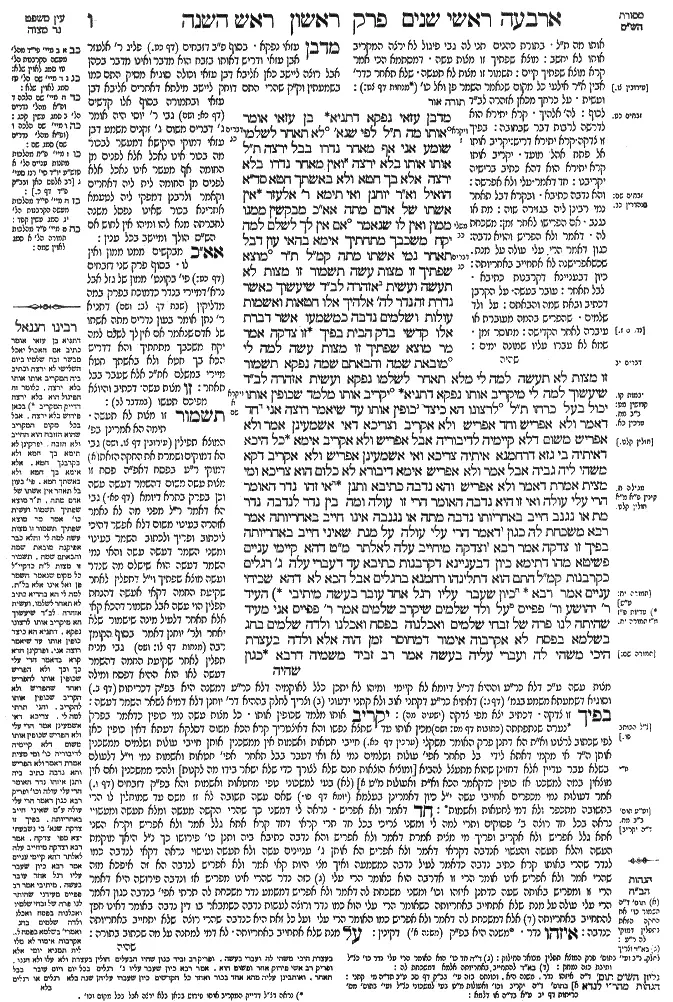
מדבן עזאי נפקא דתניא בן עזאי אומר (ויקרא ז, ל) אותו מה ת"ל לפי שנא' (דברים כג, כב) לא תאחר לשלמו שומע אני אף מאחר נדרו בבל ירצה ת"ל אותו אותו בלא ירצה ואין מאחר נדרו בלא ירצה אלא בך חטא ולא באשתך חטא סד"א הואיל וא"ר יוחנן ואי תימא ר' אלעזר אין אשתו של אדם מתה אא"כ מבקשין ממנו ממון ואין לו שנאמר (משלי כב, כז) אם אין לך לשלם למה יקח משכבך מתחתיך אימא בהאי עון דבל תאחר נמי אשתו מתה קמ"ל ת"ר (דברים כג, כד) מוצא שפתיך זו מצות עשה תשמור זו מצות לא תעשה ועשית אזהרה לב"ד שיעשוך כאשר נדרת זה נדר לה' אלהיך אלו חטאות ואשמות עולות ושלמים נדבה כמשמעו אשר דברת אלו קדשי בדק הבית בפיך זו צדקה אמר מר מוצא שפתיך זו מצות עשה למה לי (דברים יב, ה) מובאת שמה והבאתם שמה נפקא תשמור זו מצות לא תעשה למה לי מלא תאחר לשלמו נפקא ועשית אזהרה לב"ד שיעשוך למה לי מיקריב אותו נפקא דתניא (ויקרא א, ג) יקריב אותו מלמד שכופין אותו יכול בעל כרחו ת"ל (ויקרא א, ג) לרצונו הא כיצד כופין אותו עד שיאמר רוצה אני חד דאמר ולא אפריש וחד אפריש ולא אקריב וצריכא דאי אשמעינן אמר ולא אפריש משום דלא קיימיה לדיבוריה אבל אפריש ולא אקריב אימא כל היכא דאיתיה בי גזא דרחמנא איתיה צריכא ואי אשמעינן אפריש ולא אקריב דקא משהי ליה גביה אבל אמר ולא אפריש אימא דיבורא לא כלום הוא צריכא ומי מצית אמרת דאמר ולא אפריש והא נדבה כתיבא ותנן אי זהו נדר האומר הרי עלי עולה ואי זו היא נדבה האומר הרי זו עולה ומה בין נדר לנדבה נדר מת או נגנב חייב באחריותו נדבה מתה או נגנבה אינו חייב באחריותה אמר רבא משכחת לה כגון דאמר הרי עלי עולה על מנת שאיני חייב באחריותה בפיך זו צדקה אמר רבא וצדקה מיחייב עלה לאלתר מ"ט דהא קיימי עניים פשיטא מהו דתימא כיון דבעניינא דקרבנות כתיבא עד דעברי עלה ג' רגלים כקרבנות קמ"ל התם הוא דתלינהו רחמנא ברגלים אבל הכא לא דהא שכיחי עניים אמר רבא כיון שעבר עליו רגל אחד עובר בעשה מיתיבי העיד ר' יהושע ור' פפייס על ולד שלמים שיקרב שלמים אמר ר' פפייס אני מעיד שהיתה לנו פרה של זבחי שלמים ואכלנוה בפסח ואכלנו ולדה שלמים בחג בשלמא בפסח לא אקרבוה אימור דמחוסר זמן הוה אלא ולדה בעצרת היכי משהי לה ועברי עליה בעשה אמר רב זביד משמיה דרבא כגון
Comments from Rashi on Masechet Rosh Hashanah Page 6a
אותו מה ת"ל . בתורת כהנים תני לה גבי פיגול לא ירצה המקריב אותו לא יחשב: מוצא שפתיך זו מצות עשה . דמסתמא הכי אמר קרא מוצא שפתיך קיים: תשמור זו מצות לא תעשה . שלא תאחר כדר' אבין א"ר אילעי כל מקום שנאמר השמר פן ואל כו' (מנחות דף צט:): ועשית . על כרחך מכאן אזהרה לב"ד לכוף: לה' אלהיך . קרא יתירא הוא לדרשה לרבות דבר שבחובה: בפיך זו צדקה . קרא יתירא דריש: יקריב אותו אל פתח אהל מועד . יקריב אותו קרא יתירא הוא דהא כתיב ברישיה יקריבנו: חד דאמר . עלי ולא אפרשה: והא נדבה כתיבא . ובקרא דבל תאחר נמי רבינן ליה בגזירה שוה: מת או נגנב . אם הפרישו לאחר זמן: משכחת לה . דאמר ולא הפריש והויא נדבה: כגון דאמר הרי עלי עולה על מנת . שכשאפרישנה לא אתחייב באחריותה: כיון דבעניינא דקרבנות כתיבא . לבל תאחר: עובר בעשה . על הקרבן דכתיב ובאת שמה והבאתם: על ולד שלמים . שהפריש בהמה מעוברת או עיברה לאחר הקדישה: מחוסר זמן . שמא לא עברו עליו שמונה ימים:
Comments from Tosafot - Rosh Hashanah 6a
מדבן עזאי נפקא. בסוף פ"ב דזבחים (דף כט.) פליג ר' אלעזר אבן עזאי ודריש דאותו בזבח הוא מדבר ואינו מדבר בכהן אבל רוצה ליישב כאן אליבא דבן עזאי וכולה סוגיא מסיק התם כמו בשמעתין וק"ק שהרי התם דוחק ליישב מילתא דאחרים אליבא דבן עזאי ובתמורה בסוף אלו קדשים (דף כא: ושם) גבי ר' יוסי היה אומר ג' דברים משום ג' זקנים משמע דבן עזאי דמוקי היקישא דמעשר לבכור מה בכור אינו נאכל אלא לפנים מן החומה אף מעשר אינו נאכל אלא לפנים מן החומה לית ליה דאחרים וקאמר ולרבנן דמפקי ליה לטעמא אחרינא בכור שאינו נפסל משנה לחברתה מנא להו ומיהו אין לחוש אם הש"ס הולך ומיישב בכל ענין: אא"כ מבקשים ממנו ממון ואין לו. בסוף פרק שני דזבחים (דף כט:) פי' בקונט' ממון של גזל אבל נרא' דמיירי בנדר כדמוכח בפרק במה מדליקין (שבת דף לב: ושם) דתניא ר' נתן אומר בעון נדרים מתה אשתו של אדם שנאמר אם אין לך לשלם למה יקח משכבך מתחתיך והא דדריש הכא בך חטא ולא באשתך חטא מיירי במשלם אח"כ אלא שעבר בבל תאחר: זו מצות עשה. דכתיב והיוצא מפיכם תעשו (במדבר לב): תשמור זו מצות לא תעשה. תימה הא אמרינן בפ' המוצא תפילין (עירובין דף צו. ושם) גבי הא דמוקים ושמרת את החקה הזאת דמוקי ר"ע בפסח דאפ"ה פסח זו מצות עשה משום דהשמר דעשה עשה וכן בפרק בתרא דיומא (דף פא.) גבי הא דאמר ר"ל מפני מה לא נאמר אזהרה בעינוי משום דלא אפשר דהיכי ליכתוב ופריך ולכתוב השמר בעינוי ומשני השמר דעשה עשה והאי נמי השמר דעשה הוא שישלם מה שנדר ועשה מוצא שפתיך וי"ל דתפלין לאחר שקיעת החמה דקאי אעשה דהנחת תפלין הוי עשה אבל תשמור דהכא קאי אלא תאחר דלעיל מינה שישמור שלא יאחר ולר' יוחנן דאמר בסוף הקומץ רבה (מנחות דף לו: ושם) גבי מניח תפלין לאחר שקיעת החמה דהשמר דעשה לאו הוא ההיא דפסח ומילה מצות עשה ע"כ דלא כר"ע וההיא דר"ל דיומא לא קיימי ומיהו לא יתכן כלל לאוקמיה דלא כר"ע דמשנה היא בפ"ק דכריתות (דף ב.) וסוגיא דשמעתא משמע בגמ' (דף ג:) דאתיא כר"ע דקתני אוב ולא קתני ידעוני וצריך לחלק בההיא דר' יוחנן דלא דמיא לשאר השמר דעשה: בפיך. זו צדקה. דכתיב יצא מפי צדקה (ישעיהו מה): יקריב אותו מלמד שכופין אותו. כל מצות עשה נמי כופין כדאמר בפרק נערה שנתפתתה (כתובות דף מט: ושם) מכין אותו עד שתצא נפשו והא דאיצטריך קרא הכא משום דסלקא דעתא דאין כופין כאן לפי שכתוב לרצונו וא"ת הא דתנן פרק האומר משקלי (ערכין דף כא.) חייבי חטאות ואשמות אין ממשכנין אותן חייבי עולות ושלמים ממשכנין אותן ה"ד אי מקמי דאתא לידי בל תאחר אפי' עולות ושלמים נמי לא ואי דעבר בבל תאחר אפי' חטאות ואשמות נמי וי"ל דלעולם בשלא עבר עדיין אלא דחזינן שהוא מתעצל להביא [ומוציא הוצאות חנם שלא לצורך כדי שלא ישאר בידו מה לקנות] ולהכי ממשכנין ואם אין מוצאין במה למשכנו אז כופין כדקאמר הכא וא"ת ואעולות מ"ט (לא) בעי למשכוני טפי מחטאות ואשמות והא בפ"ק דזבחים (דף ו.) אמר דעולות נמי מכפרים אחייבי עשה י"ל כיון דאמרינן בעלמא (יומא דף פו.) שאם עשה תשובה לא זז משם עד שמוחלין לו הרי בתשובה מתכפר ולא דמי לחטאות ואשמות: חד דאמר ולא אפריש. נראה לי דמשני כך שהרי הקשה מעשה ומלא תעשה ומעשויי נראה בכל חד רוצה ב' פסוקים ותרי למה לי ומשני צריכי בכל חד תרי קראי דחד קרא אתא גלל אמר ולא אפריש וקרא השני אתא גלל אפריש ולא אקריב ופריך מי מצית אמרת דאמר ולא אפריש והא נדבה כתיבא ביה ותנן כו' פירושו כך נ"ל היאך מוקמת העשה והלא תעשה והעשוי אנדבה דקראי דאמר ולא אפריש הא אותן ג' עניינים עשה ולא תעשה ועישוי נראה דקאי לנדבה כמו לנדר שהרי באותו קרא כתיב נדבה כדאמר לעיל נדבה כמשמעה ואיך מצי היות קאי אמר ולא אפריש לנדבה הא זה איפכא מזה שהרי אמר ולא אפריש אינו אומר הרי זו אדרבה הוא כאומר הרי עלי כזה נדר שהרי אינו מפריש אז ונדבה פירושה היא דאמר הרי זו ומפריש באותה שעה כדתנן איזהו וכו' ומשני משכחת לה דאמר ולא אפריש דמשמע נדר משכחת לה תרתי אפי' בנדבה כגון דאמר הרי עלי עולה על מנת שלא אתחייב באחריותה כשאומר הרי עלי הוא כמו נדר ורוצה לעשות נדבה כשמבאר בו דין נדבה באומר דאינו חפץ להתחייב באחריותה אלא דמשכחת לה דאמר ולא אפריש כמו האומר הרי עלי ועל כל זאת היא כנדבה שהרי רוצה שלא יתחייב באחריותה כנדבה: איזהו נדר. משנה היא בפ"ק (משנה א') דקינין: על מנת שלא אתחייב באחריותה. לא דמי למתנה על מה שכתוב בתורה:
Rosh Hashanah 6a - Mishnah translated into english
as this halakha is derived from that which ben Azzai said, as it is taught in a baraita that ben Azzai says: The verse states: “And if any of the flesh of the sacrifice of his peace-offering be eaten at all on the third day, it shall not be accepted, neither shall it be imputed to him who offers it, it shall be piggul” (Leviticus 7:18).
For what purpose does the verse state the word “it”? Since elsewhere it states: “When you shall vow a vow to the Lord your God, you shall not delay paying it; for the Lord your God will surely require it from you, and it would be sin in you” (Deuteronomy 23:22), I might have interpreted from this verse that even one who is late in paying his vow is included in: It shall not be accepted. Therefore, the verse states “it.” It, an offering disqualified by improper intention [piggul], is included in the halakha of: “It shall not be accepted,” but the animal of one who is late in paying his vow is not included in the halakha of: “It shall not be accepted.”
The Gemara rejects what was said above; rather, the explanation of the verse is as follows. The phrase: “And it would be sin in you” comes to teach that there would be a sin in you, but there would not be a sin in your wife.
It was necessary to say that the lateness is not imputed to the other members of one’s household for the following reason: It might enter your mind to say: Since Rabbi Yoḥanan said, and some say that it was Rabbi Elazar who said: A person’s wife dies only because others demand of him money and he does not have means with which to pay, as it is stated about one who commits himself to guarantee a loan: “If you have nothing with which to pay, why should he take away your bed from under you?” (Proverbs 22:27). The verse warns one who takes a loan that incurring debt may result in one losing the very sheets that he sleeps on to his creditor. The Gemara understands this homiletically: Why should you cause God to take away your wife, i.e., she who shares your bed, so that she dies? Consequently, you might say that one’s wife also dies for this transgression of the prohibition: You shall not delay, in that one fails to fulfill his commitment. Therefore, the verse teaches us that this is not so. Rather, this sin is imputed to him alone.
§ The Sages taught in a baraita: The verse states: “That which is gone out of your lips you shall keep and do; as you have vowed as a gift to the Lord your God, which you have promised with your mouth” (Deuteronomy 23:24). “That which is gone out of your lips”; this is a positive mitzva. “You shall keep”; this is a prohibition, as the phrase “you shall keep” is a warning to keep oneself from sinning. “And do”; this is an admonition to the court to make you fulfill your vow. “As you have vowed”; this is referring to a vow-offering. “To the Lord your God”; this is referring to sin-offerings, guilt-offerings, burnt-offerings, and peace-offerings, teaching that one must keep his word and bring them. “As a gift”; this is understood in its literal sense to be referring to a gift-offering. “Which you have promised”; this is referring to objects consecrated for Temple maintenance. “With your mouth”; this is referring to vows of charity, to which one commits himself with his mouth.
The Gemara clarifies the details mentioned in this baraita. The Master said: “That which is gone out of your lips”; this is a positive mitzva. Why do I need this derivation? Isn’t the positive mitzva derived from the verse: “And there you shall come; and there you shall bring your burnt-offerings and your sacrifices, and your tithes, and the offering of your hand, and your vows, and your gift-offerings, and the firstborn of your herd and of your flock” (Deuteronomy 12:5–6)? The baraita continues: “You shall keep”; this is a prohibition. Why do I need this derivation; this is derived from the verse: “You shall not delay paying it” (Deuteronomy 23:22).
“And do”; this is a warning to the court to make you fulfill your vow. Why do I need this derivation? This rule is derived from the verse: “He shall offer it” (Leviticus 1:3), as it is taught in a baraita: The verse states: “He shall offer it,” which teaches that he must be forced to bring his offering. One might have thought that he may be forced to bring his offering even against his will. Therefore, the verse states: “In accordance with his will” (Leviticus 1:3). How so? The court coerces him until he says: I want to bring the offering. Now, since all of these halakhot are already known from other sources, what is the point of this repetition?
The Gemara answers: One set of verses is referring to a case where one said that he vowed to bring an offering but did not yet set aside a specific animal for his vow, and one set of verses is referring to a case where he set aside a specific animal for his vow but did not yet sacrifice it on the altar.
And it is necessary to teach the halakha in both cases, as had the Torah taught us only about the halakha of the case where one said that he vowed to bring an offering but did not yet set aside a specific animal for his vow, one might have said that only in this case has he transgressed because he did not keep his word; however, if he set aside a specific animal for his vow but did not yet sacrifice it on the altar, one might say that anywhere that it is, it is in the treasure house of the Merciful One, as the world and everything in it belongs to God, and therefore it makes no difference if he delays in bringing it to the Temple. Therefore, it is necessary to teach that even when one has set aside a specific animal he transgresses the prohibition.
And had the Torah taught us only about the case where one set aside a specific animal for his vow but did not yet sacrifice it on the altar, one might have said that only in this case has he transgressed because he is keeping the animal for himself. But if he said that he vowed to bring an offering but did not yet set aside a specific animal for his vow, one might say that his mere speech is nothing, and there is no transgression provided he has not actually set aside an animal. Therefore, it is necessary to teach the halakha in both cases.
The Gemara raises a difficulty: How can you say that the Gemara is dealing with a case where one merely said that he vowed to bring an offering but did not yet set aside a specific animal? Isn’t a gift-offering mentioned in the verse, and we learned in a mishna: What is a vow-offering? It is an offering brought by one who says: It is incumbent upon me to bring a burnt-offering. And what is a gift-offering? It is an offering brought by one who says, concerning a particular animal: I undertake to bring this animal as a burnt-offering.
And what is the difference between a vow-offering and a gift-offering? With regard to vow-offerings, if the animal died or was stolen, the one who took the vow is obligated to pay restitution for it. He undertook to bring a burnt-offering without specifying the animal, and therefore until he brings that offering he is not absolved of his obligation. With regard to a gift-offering, however, if the animal died or was stolen, he is not obligated to pay restitution for it because he undertook to bring a specific animal, and that is no longer possible. In the case of a gift-offering, then, a specific animal must have already been set aside as an offering.
Rava said: You can find a case of a gift-offering where a specific animal has not yet been set aside; for example, where one said: It is incumbent upon me to bring a burnt-offering on the condition that after I set an animal aside in fulfillment of my vow, I will not be liable to replace it should the animal die or be stolen.
§ The baraita stated: “With your mouth”; this is referring to vows of charity. Rava said: In the case of vows of charity, one is liable immediately if he is late in distributing the charity that he had promised to give. What is the reason for this halakha? It is that poor people to whom the charity may be given exist in all places, and so the charity can be distributed to them immediately, unlike an offering, which must be brought to the Temple.
The Gemara asks: It is obvious that charity must be given to the poor without delay. The Gemara explains: Lest you say that since the halakha pertaining to vows of charity is written in the passage dealing with offerings, perhaps one does not transgress the prohibition against delaying until three Festivals have passed, as is the halakha with regard to offerings, therefore Rava teaches us that this is not so. Rather, there, with regard to the offerings, the Merciful One made the timing of the transgression dependent upon the time of the Festivals, when one must go on pilgrimage to the Temple. However, here, with regard to charity vows, this is not so because poor people who are ready to accept charity are found in all places.
Rava said: Although, according to most opinions one transgresses the prohibition against delaying only after three Festivals have elapsed, once even one Festival has passed and he has not sacrificed the offerings that he vowed to bring, he immediately violates a positive mitzva.
The Gemara raises an objection from the following mishna: Rabbi Yehoshua and Rabbi Papeyyas testified about the offspring of peace-offerings. They said that if the mother animal was consecrated before it conceived or during its pregnancy, the offspring, too, must be sacrificed as a peace-offering. Rabbi Papeyyas said: I testify that we once had a cow that was sacrificed as a peace-offering, and we ate it on Passover [beFesaḥ], and we ate its offspring as a peace-offering on the Festival [beḤag], i.e., on Sukkot.
The Gemara clarifies the details of this story: Granted, on Passover itself Rabbi Papeyyas and his family did not sacrifice the offspring, as one can say that the animal was lacking the requisite time, i.e., it was less than eight days old, and it is prohibited to sacrifice such a young animal. But how could they delay and not sacrifice the offspring on Shavuot, the first Festival after Passover, if, according to Rava, they would violate a positive mitzva as soon as the first Festival passed?
Rav Zevid said in the name of Rava: For example, this occurs
Traduction : The William Davidson digital edition of the Koren Noé Talmud, with commentary by Rabbi Adin Even-Israel Steinsaltz.