 Talmud Bavli
Rosh Hashanah 25a : Youtube
Daf TubeYoutube
2 video classes :
Rosh Hashanah Page 25a
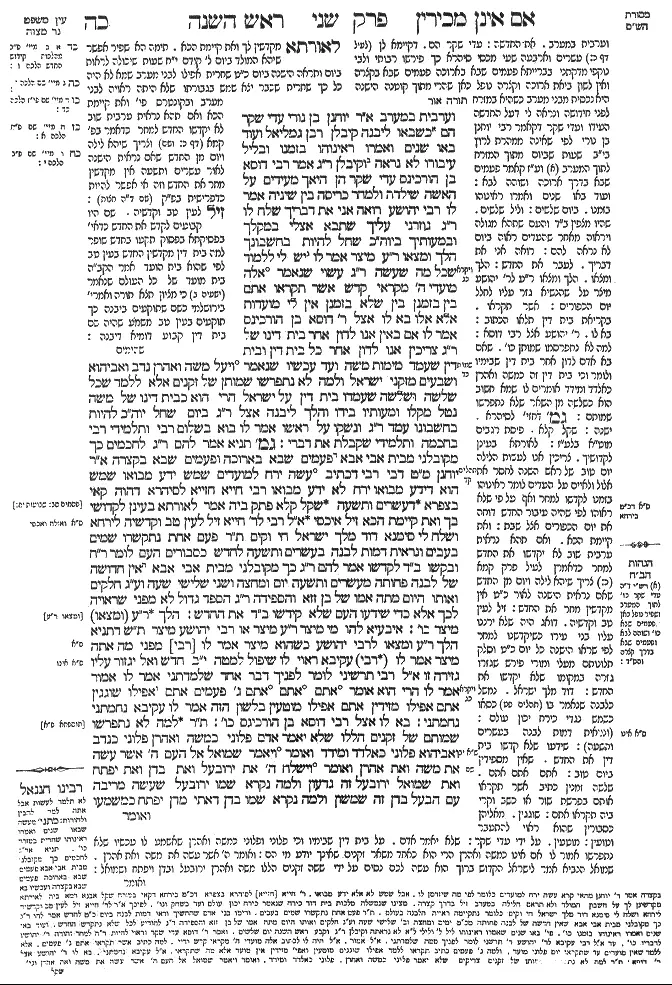
Rosh Hashanah 25a - Guemara
וערבית במערב א"ר יוחנן בן נורי עדי שקר הם כשבאו ליבנה קיבלן רבן גמליאל ועוד באו שנים ואמרו ראינוהו בזמנו ובליל עיבורו לא נראה וקיבלן ר"ג אמר רבי דוסא בן הורכינס עדי שקר הן היאך מעידים על האשה שילדה ולמחר כריסה בין שיניה אמר לו רבי יהושע רואה אני את דבריך שלח לו ר"ג גוזרני עליך שתבא אצלי במקלך ובמעותיך ביוה"כ שחל להיות בחשבונך הלך ומצאו ר"ע מיצר אמר לו יש לי ללמוד שכל מה שעשה ר"ג עשוי שנאמר (ויקרא כג, ד) אלה מועדי ה' מקראי קדש אשר תקראו אתם בין בזמנן בין שלא בזמנן אין לי מועדות אלא אלו בא לו אצל ר' דוסא בן הורכינס אמר לו אם באין אנו לדון אחר בית דינו של ר"ג צריכין אנו לדון אחר כל בית דין ובית דין שעמד מימות משה ועד עכשיו שנאמר (שמות כד, ט) ויעל משה ואהרן נדב ואביהוא ושבעים מזקני ישראל ולמה לא נתפרשו שמותן של זקנים אלא ללמד שכל שלשה ושלשה שעמדו בית דין על ישראל הרי הוא כבית דינו של משה נטל מקלו ומעותיו בידו והלך ליבנה אצל ר"ג ביום שחל יוה"כ להיות בחשבונו עמד ר"ג ונשקו על ראשו אמר לו בוא בשלום רבי ותלמידי רבי בחכמה ותלמידי שקבלת את דברי:
גמ׳ תניא אמר להם ר"ג לחכמים כך מקובלני מבית אבי אבא פעמים שבא בארוכה ופעמים שבא בקצרה א"ר יוחנן מ"ט דבי רבי דכתיב (תהלים קד, יט) עשה ירח למועדים שמש ידע מבואו שמש הוא דידע מבואו ירח לא ידע מבואו רבי חייא חזייא לסיהרא דהוה קאי בצפרא דעשרים ותשעה שקל קלא פתק ביה אמר לאורתא בעינן לקדושי בך ואת קיימת הכא זיל איכסי א"ל רבי לר' חייא זיל לעין טב וקדשיה לירחא ושלח לי סימנא דוד מלך ישראל חי וקים ת"ר פעם אחת נתקשרו שמים בעבים ונראית דמות לבנה בעשרים ותשעה לחדש כסבורים העם לומר ר"ח ובקשו ב"ד לקדשו אמר להם ר"ג כך מקובלני מבית אבי אבא אין חדושה של לבנה פחותה מעשרים ותשעה יום ומחצה ושני שלישי שעה וע"ג חלקים ואותו היום מתה אמו של בן זזא והספידה ר"ג הספד גדול לא מפני שראויה לכך אלא כדי שידעו העם שלא קידשו ב"ד את החדש:
הלך ר"ע (ומצאו) מיצר כו':
איבעיא להו מי מיצר ר"ע מיצר או רבי יהושע מיצר ת"ש דתניא הלך ר"ע ומצאו לרבי יהושע כשהוא מיצר אמר לו [רבי] מפני מה אתה מיצר אמר לו (רבי) עקיבא ראוי לו שיפול למטה י"ב חדש ואל יגזור עליו גזירה זו א"ל רבי תרשיני לומר לפניך דבר אחד שלמדתני אמר לו אמור אמר לו הרי הוא אומר (ויקרא כג, ב) אתם אתם אתם ג' פעמים אתם אפילו שוגגין אתם אפילו מזידין אתם אפילו מוטעין בלשון הזה אמר לו עקיבא נחמתני נחמתני:
בא לו אצל רבי דוסא בן הורכינס כו':
ת"ר למה לא נתפרשו שמותם של זקנים הללו שלא יאמר אדם פלוני כמשה ואהרן פלוני כנדב ואביהוא פלוני כאלדד ומידד ואומר (שמואל א יב, ו) ויאמר שמואל אל העם ה' אשר עשה את משה ואת אהרן ואומר (שמואל א יב, יא) וישלח ה' את ירובעל ואת בדן ואת יפתח ואת שמואל ירובעל זה גדעון ולמה נקרא שמו ירובעל שעשה מריבה עם הבעל בדן זה שמשון ולמה נקרא שמו בדן דאתי מדן יפתח כמשמעו
Comments from Rashi on Masechet Rosh Hashanah Page 25a
וערבית במערב . את החדשה: עדי שקר הם . דקיימא לן (לעיל ראש השנה דף כ:) עשרים וארבעה שעי מכסי סיהרא כך פירשו רבותי ולבי נוקפי מדקתני בברייתא פעמים שבא בארוכה פעמים שבא בקצרה ואין לשון ביאת ארוכה וקצרה נופל כאן שהרי מתוך קוטנה הישנה היא נכסית מבני מערב כשהיא במזרח לפני חידושה ונראה לי דעל החדשה העידו ועדי שקר דקאמר רבי יוחנן בו נורי לפי שאינה ממהרת לרוץ בי"ב שעות שביום מתוך המזרח לתוך המערב וע"ז קאמר פעמים שבא בדרך ארוכה ושוהה לבא: ועוד באו שנים ואמרו ראינוהו בזמנו . ביום שלשים: וליל שלשים . שהיו מצפין ב"ד והעם שתהא מגולה ויראוה מאחר שהעדים ראוה ביום לא נראה להם: רואה אני את דבריך . לעבר את החדש: הלך ומצאו . הלך ומצאו ר"ע לר' יהושע מיצר על שהנשיא גזר עליו לחלל יום הכפורים: אשר תקראו . בקריאת בית דין תלאו הכתוב: בא לו . ר' יהושע אצל רבי דוסא: למה לא נתפרסמו שמותן כו' . שאם בא אדם לדון אחר בית דין שבימיו ולומר וכי בית דין זה כמשה ואהרן כאלדד ומידד אומרים לו שמא חשוב הוא כשלשה מן השאר שלא נתפרשו שמותם: גמ' דחזי' לסיהרא . ישנה: שקל קלא . פיסת רגבים מוט"א בלע"ז: לאורתא בעינן לקדושיך . צריכין אנו לעשות הלילה יום טוב של ראש השנה לחסר את אלול ולאיים על העדים לומר ראינוהו בזמנו לקדשו למחר ואף על פי שלא ראוהו לפי שהיה עיבור החדש דוחה את יום הכפורים אצל שבת: ואת קיימת הכא . ואם תהא נראית ערבית שוב לא יקדשו את החדש למחר כדאמרן לעיל פרק קמא (ראש השנה כ:) צריך שיהא לילה ויום מן החדש שאם נראית הישנה לאור כ"ט אין מקדשין מחר את החדש: זיל לעין טב וקדשיה . דואג היה שלא ירננו עליו בני עירו כשיקדשנו למחר לפי שראו הישנה כל יום כ"ט וסלק תלונותם מעלי ומורי פירש שגזרו גזרה במקומו שלא יקדשו את החדש: דוד מלך ישראל . נמשל כלבנה שנאמר בו (תהלים פט) כסאו כשמש נגדי כירח יכון עולם: (ונראית דמות לבנה. בעשרים ותשעה): שידעו שלא קדשו בית דין את החדש . שאין מספידין ביום טוב: אתם אתם אתם . שלשה זמנין כתיב אשר תקראו אותם בפרשת שור או כשב וקרי ביה תקראו אתם: שוגגין . מאליהן כסבורין שהוא ראוי להתעבר וטועין: מוטעין . על ידי עדי שקר: שלא יאמר אדם . על בית דין שבימיו וכי פלוני ופלוני כמשה ואהרן שאשמע לו עכשיו שלא נתפרשו אמור לו אם אינו כמשה ואהרן הרי הוא כאחד משאר זקנים שאינך יודע מי הם: ואומר ה' אשר עשה את משה ואת אהרן . שמואל הנביא אמר לישראל הקדוש ברוך הוא עשה לכם נסים על ידי ששה זקנים הללו משה ואהרן ירובעל ובדן ויפתח ושמואל:
Comments from Tosafot - Rosh Hashanah 25a
לאורתא מקדשין לך ואת קיימת הכא. תימה הא שפיר אפשר שיהא המולד ביום ל' קודם י"ח שעות שיכולה לראות ביום ותראה הישנה ביום כ"ט שחרית אפילו לבני מערב שמא לא היה כל כך שחרית שכבר יצא שמש בגבורתו שלא היתה ראויה לבני מערב ובקונטרס פי' ואת קיימת הכא ואם תהא נראית ערבית שוב לא יקדשו החדש למחר כדאמר בפ' קמא (דף כ: ושם) וצריך שיהא לילה ויום מן החדש שאם נראית הישנה לאור עשרים ותשעה אין מקדשין מחר את החדש וזה אי אפשר להיות כדפרישית בפ"ק (שם ד"ה חצות): זיל לעין טב וקדשיה. שם היו קבועים לקדש את החדש כדאי' בפסיקתא בפסוק תקעו בחדש שופר למה בית דין מקדשין החדש בעין טב לפי שהוא בית הועד אמר הקב"ה בית מועד של כל העולם שנאמר (ישעיהו ב) כי מציון תצא תורה ואמרי' בירושלמי כשם שתוקעים ביבנה כך תוקעים בעין טב משמע שהיה שם בית דין קבוע דומיא דיבנה:
Rosh Hashanah 25a - Mishnah translated into english
and that same day we saw the new moon in the evening in the west. Rabbi Yoḥanan ben Nuri said: They are false witnesses, as it is impossible to see the new moon so soon after the last sighting of the waning moon. However, when they arrived in Yavne, Rabban Gamliel accepted them as witnesses without concern.
And there was another incident in which two witnesses came and said: We saw the new moon at its anticipated time, i.e., on the night of the thirtieth day of the previous month; however, on the following night, i.e., the start of the thirty-first, which is often the determinant of a full, thirty-day month, it was not seen. And nevertheless Rabban Gamliel accepted their testimony and established the New Moon on the thirtieth day.
Rabbi Dosa ben Horkinas disagreed and said: They are false witnesses; how can witnesses testify that a woman gave birth and the next day her belly is between her teeth, i.e., she is obviously still pregnant? If the new moon was already visible at its anticipated time, how could it not be seen a day later? Rabbi Yehoshua said to him: I see the logic of your statement; the New Moon must be established a day later. Upon hearing that Rabbi Yehoshua had challenged his ruling, Rabban Gamliel sent a message to him: I decree against you that you must appear before me with your staff and with your money on the day on which Yom Kippur occurs according to your calculation; according to my calculation, that day is the eleventh of Tishrei, the day after Yom Kippur.
Rabbi Akiva went and found Rabbi Yehoshua distressed that the head of the Great Sanhedrin was forcing him to desecrate the day that he maintained was Yom Kippur. In an attempt to console him, Rabbi Akiva said to Rabbi Yehoshua: I can learn from a verse that everything that Rabban Gamliel did in sanctifying the month is done, i.e., it is valid. As it is stated: “These are the appointed seasons of the Lord, sacred convocations, which you shall proclaim in their season” (Leviticus 23:4). This verse indicates that whether you have proclaimed them at their proper time or whether you have declared them not at their proper time, I have only these Festivals as established by the representatives of the Jewish people.
Rabbi Yehoshua then came to Rabbi Dosa ben Horkinas, who said to him: If we come to debate and question the rulings of the court of Rabban Gamliel, we must debate and question the rulings of every court that has stood from the days of Moses until now. As it is stated: “Then Moses went up, and Aaron, Nadav and Avihu, and seventy of the Elders of Israel” (Exodus 24:9). But why were the names of these seventy Elders not specified? Rather, this comes to teach that every set of three judges that stands as a court over the Jewish people has the same status as the court of Moses. Since it is not revealed who sat on that court, apparently it is enough that they were official judges in a Jewish court.
When Rabbi Yehoshua heard that even Rabbi Dosa ben Horkinas maintained that they must submit to Rabban Gamliel’s decision, he took his staff and his money in his hand, and went to Yavne to Rabban Gamliel on the day on which Yom Kippur occurred according to his own calculation. Upon seeing him, Rabban Gamliel stood up and kissed him on his head. He said to him: Come in peace, my teacher and my student. You are my teacher in wisdom, as Rabbi Yehoshua was wiser than anyone else in his generation, and you are my student, as you accepted my statement, despite your disagreement.
GEMARA: It is taught in a baraita that Rabban Gamliel said to the Sages, in explanation of his opinion that it is possible for the new moon to be visible so soon after the last sighting of the waning moon: This is the tradition that I received from the house of my father’s father: Sometimes the moon comes by a long path and sometimes it comes by a short one.
Rabbi Yoḥanan said: What is the reason for the opinion of the house of Rabbi Yehuda HaNasi, i.e., the house of the heads of the Great Sanhedrin, the source of Rabban Gamliel’s ruling? As it is written: “Who appointed the moon for seasons; the sun knows its going down” (Psalms 104:19). This verse indicates that it is only the sun that knows its going down, i.e., its seasons and the times that it shines are the same every year. In contrast, the moon does not know its going down, as its course is not identical every month.
§ The Gemara relates that Rabbi Ḥiyya once saw the waning moon standing in the sky on the morning of the twenty-ninth of the month. He took a clump of earth and threw it at the moon, saying: This evening we need to sanctify you, i.e., the new moon must be visible tonight so that we may declare the thirtieth of the month as the New Moon, and you are still standing here? Go and cover yourself for now, so that the new moon will be seen only after nightfall. The Gemara further relates that Rabbi Yehuda HaNasi once said to Rabbi Ḥiyya: Go to a place called Ein Tav and sanctify the New Moon there, and send me a sign that you have sanctified it. The sign is: David, king of Israel, lives and endures.
The Sages taught in a baraita: Once the sky was covered with clouds, and the form of the moon was visible on the twenty-ninth of the month. The people thought to say that the day was the New Moon, and the court sought to sanctify it. However, Rabban Gamliel said to them: This is the tradition that I received from the house of my father’s father: The monthly cycle of the renewal of the moon takes no less than twenty-nine and a half days, plus two-thirds of an hour, plus seventy-three of the 1,080 subsections of an hour.
The baraita continues: And on that day the mother of the Sage ben Zaza died, and Rabban Gamliel delivered a great eulogy on her behalf. He did this not because she was worthy of this honor; rather, he eulogized her so that the people would know that the court had not sanctified the month, as eulogies are prohibited on the New Moon.
§ The mishna taught that Rabbi Akiva went and found him distressed that the head of the Great Sanhedrin was forcing him to desecrate the day that he maintained was Yom Kippur. A dilemma was raised before the Sages: Who was distressed? Was Rabbi Akiva distressed or was Rabbi Yehoshua distressed? The Gemara answers: Come and hear, as it is taught in a baraita: Rabbi Akiva went and found Rabbi Yehoshua in a state of distress, and he said to him: My teacher, for what reason are you distressed? Rabbi Yehoshua said to him: Rabbi Akiva, it is fitting for one to fall sick in bed for twelve months, rather than to have this decree issued against him that he should have to desecrate Yom Kippur.
Rabbi Akiva said to him: My teacher, allow me to say before you one matter that you yourself once taught me. He said to him: Speak. He said to him: It states with respect to the Festivals: “The appointed seasons of the Lord, which you shall proclaim them [otam] to be sacred convocations (Leviticus 23:2). And it is written: “These are the appointed seasons of the Lord, sacred convocations; you shall proclaim them [otam] in their season” (Leviticus 23:4). And it is written: “These are the appointed seasons of the Lord; you shall proclaim them [otam] to be sacred convocations” (Leviticus 23:37). Three times the verses use the term: Them [otam], which can also be read as you [atem], in plural.
This comes to teach: You [atem] are authorized to determine the date of the new month, even if you unwittingly establish the New Moon on the wrong day; you, even if you do so intentionally; you, even if you are misled by false witnesses. In all cases, once the court establishes the day as the New Moon, it is sanctified, and God grants His consent. After hearing this, Rabbi Yehoshua said to him in these words: Akiva, you have consoled me; you have consoled me.
§ The mishna taught that Rabbi Yehoshua next came to Rabbi Dosa ben Horkinas, who proved to him that the court of Rabban Gamliel has the same legal status as the court of Moses. The Sages taught in a baraita: Why were the names of these seventy Elders who sat together with Moses on his court not specified? The reason is so that a person not say: Is so-and-so the judge in my time, like Moses and Aaron? Is so-and-so like Nadav and Avihu? Is so-and-so like Eldad and Medad? Therefore, the names of the other elders were not specified, so that there is no way of knowing the qualifications of the elders in the time of Moses to compare them to later judges.
And similarly it says: “And Samuel said to the people: It is the Lord Who made Moses and Aaron” (I Samuel 12:6). And it says further: “And the Lord sent Jerubaal and Bedan and Jephthah and Samuel” (I Samuel 12:11). The Gemara explains: Jerubaal, this is Gideon. And why is he called Jerubaal? The reason is that he waged a quarrel against Baal. Bedan, this is Samson. And why is he called Bedan? As he came from the tribe of Dan. Jephthah, in accordance with its regular meaning, i.e., this is referring to Jephthah himself and is not a nickname.
Traduction : The William Davidson digital edition of the Koren Noé Talmud, with commentary by Rabbi Adin Even-Israel Steinsaltz.