 Talmud Bavli
Rosh Hashanah 22a : Youtube
Daf TubeYoutube
3 video classes :
Rosh Hashanah Page 22a
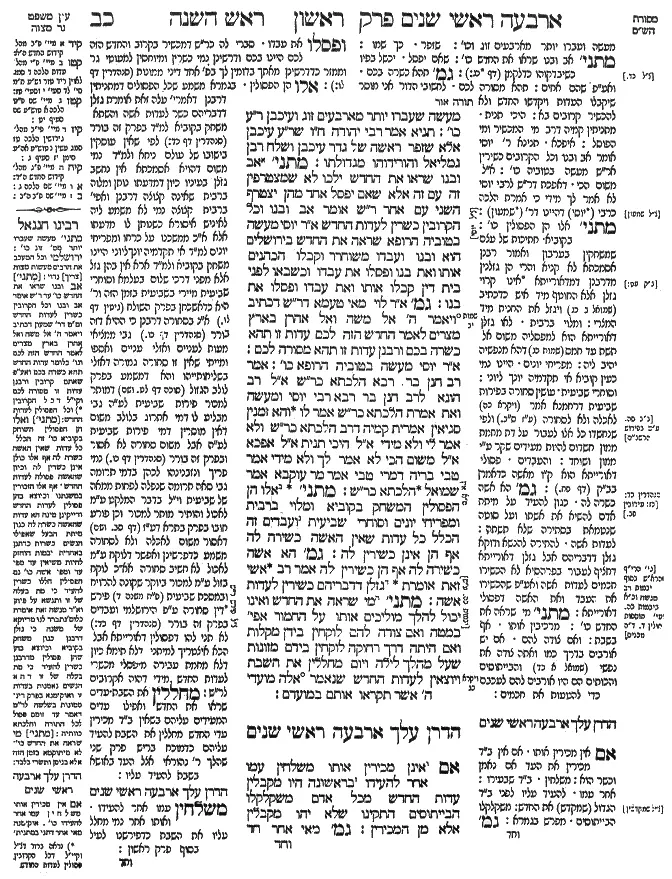
Rosh Hashanah 22a - Guemara
מעשה שעברו יותר מארבעים זוג ועיכבן ר"ע כו':
תניא אמר רבי יהודה ח"ו שר"ע עיכבן אלא שזפר ראשה של גדר עיכבן ושלח רבן גמליאל והורידוהו מגדולתו:
מתני׳ אב ובנו שראו את החדש ילכו לא שמצטרפין זה עם זה אלא שאם יפסל אחד מהן יצטרף השני עם אחר ר"ש אומר אב ובנו וכל הקרובין כשרין לעדות החדש א"ר יוסי מעשה בטוביה הרופא שראה את החדש בירושלים הוא ובנו ועבדו משוחרר וקבלו הכהנים אותו ואת בנו ופסלו את עבדו וכשבאו לפני בית דין קבלו אותו ואת עבדו ופסלו את בנו:
גמ׳ א"ר לוי מאי טעמא דר"ש דכתיב (שמות יב, א) ויאמר ה' אל משה ואל אהרן בארץ מצרים לאמר החדש הזה לכם עדות זו תהא כשרה בכם ורבנן עדות זו תהא מסורה לכם:
א"ר יוסי מעשה בטוביה הרופא כו':
אמר רב חנן בר רבא הלכתא כר"ש א"ל רב הונא לרב חנן בר רבא רבי יוסי ומעשה ואת אמרת הלכתא כר"ש אמר לו והא זמנין סגיאין אמרית קמיה דרב הלכתא כר"ש ולא אמר לי ולא מידי א"ל היכי תנית א"ל אפכא א"ל משום הכי לא אמר לך ולא מידי אמר טבי בריה דמרי טבי אמר מר עוקבא אמר שמואל הלכתא כר"ש:
מתני׳ אלו הן הפסולין המשחק בקוביא ומלוי ברבית ומפריחי יונים וסוחרי שביעית ועבדים זה הכלל כל עדות שאין האשה כשירה לה אף הן אינן כשירין לה:
גמ׳ הא אשה כשירה לה אף הן כשירין לה אמר רב אשי זאת אומרת גזלן דדבריהם כשירין לעדות אשה:
מתני׳ מי שראה את החדש ואינו יכול להלך מוליכים אותו על החמור אפי' במטה ואם צודה להם לוקחין בידן מקלות ואם היתה דרך רחוקה לוקחין בידם מזונות שעל מהלך לילה ויום מחללין את השבת ויוצאין לעדות החדש שנאמר (ויקרא כג, לז) אלה מועדי ה' אשר תקראו אותם במועדם:
הדרן עלך ארבעה ראשי שנים
מתני׳ אם אינן מכירין אותו משלחין עמו אחר להעידו בראשונה היו מקבלין עדות החדש מכל אדם משקלקלו הבייתוסים התקינו שלא יהו מקבלין אלא מן המכירין:
גמ׳ מאי אחר חד
Comments from Rashi on Masechet Rosh Hashanah Page 22a
מעשה ועברו יותר מארבעים זוג וכו': שזפר . כך שמו: מתני' אב ובנו שראו את החדש כו': שאם יפסל . יכשל בפיו כשיבדקוהו כדלקמן (ראש השנה דף כג:): גמ' תהא כשרה בכם . ואע"פ שהם אחים: תהא מסורה לכם . לחשובי הדור אני מוסר שיקבלו העדות ויקדשו החדש ולא להכשיר קרובים בא: היכי תנית . מתניתין קמיה דרב מי המכשיר ומי הפוסל: איפכא . תנינא ר' יוסי אומר אב ובנו וכל הקרובים כשירין אר"ש מעשה בטוביה כו': א"ל משום הכי . דאפכת דר"ש לרבי יוסי לא אמר לך מידי כי אמרת הלכה כרבי (יוסי) דהיינו דר' (שמעון): מתני' אלו הן הפסולין כו': בקוביא . חתיכות של עצם שמשחקין בערבון ואמור רבנן אסמכתא לא קניא והרי הן גזלנין מדרבנן דמדאורייתא אינו קרוי גזלן אלא החוטף מיד איש כדכתיב (שמואל ב כג) ויגזל את החנית מיד המצרי: ומלוי ברבית . לא גזלן דאורייתא הוא למפסליה משום אל תשת עד חמס (שמות כג) דהא מנפשיה יהיב ליה: מפריחי יונים . היינו נמי כעין קוביא אי תקדמיה יונך ליוני: וסוחרי שביעית . עושין סחורה בפירות שביעית דרחמנא אמר (ויקרא כה) לאכלה ולא לסחורה (ע"ז סב.) ולפי שנחשדו כל אלו לעבור על דת מחמת ממון חשדום להיות מעידים שקר ע"י ממון ושוחד: והעבדים . פסולי דאורייתא הוא ק"ו מאשה כדאמרן בב"ק (דף פח.): גמ' הא אשה כשרה לה . כגון להעיד על מיתת אדם להשיא את אשתו ועל סוטה שנטמאת בסתירה שלא תשתה: לעדות אשה . להתירה להנשא ודוקא גזלן דדבריהם אבל גזלן דאורייתא דחציף לעבור בפרהסיא לא הכשירו חכמים לעדות אשה ואע"פ שהכשירו את העבד ואת האשה דפסולי דאורייתא: מתני' מי שראה את החדש כו': מרכיבין אותו . אף בשבת: ואם צודה להם . אם יש אורבים בדרך כמו ואתה צודה את נפשי (שמואל א כד) והבייתוסים והכותים הם היו אורבים להם לעכבם כדי להטעות את חכמים: פרק שני . אם אינן מכירין מתני' אם אין מכירין אותו . אם אין ב"ד מכירין את העד אם נאמן וכשר הוא: משלחין . ב"ד שבעירו: אחר עמו . להעיד עליו לפני ב"ד הגדול (שבמקדש) את החדש: משקלקלו הבייתוסים . מפרש בגמרא: גמ'
Comments from Tosafot - Rosh Hashanah 22a
ופסלו את עבדו. סברי לה כר"ש דמכשיר בקרוב והחדש הזה לכם היינו בכם ודרשינן נמי כשרין ומיוחסין למעוטי גר וממזר כדדרשינן מאתך בדומין לך בפ' אחד דיני ממונות (סנהדרין דף לו:): אלו הן הפסולין. בגמרא משמע שכל הפסולים דמתניתין דרבנן דאמרי' עלה זאת אומרת גזלן דדבריהם כשר לעדות אשה והשתא משחק בקוביא למ"ד בפרק זה בורר (סנהדרין דף כד:) לפי שאין עוסקין בישובו של עולם ניחא ולמ"ד נמי משום דהויא אסמכתא אין נחשב גזלן בעיניו כיון דמדעתו נותן ומלוה ברבית שאינה קצוצה דרבנן ואפי' ברבית קצוצה נמי לא משמע ליה לאיניש איסורא כשנותן לו מדעתו אלא א"כ ממשכנו על כרחו ומפריחי יונים למ"ד אי תקדמיה יונך ליוני היינו משחק בקוביא ולמ"ד ארא אין בהן גזל אלא מפני דרכי שלום בעלמא וסוחרי שביעית מיירי בשביעית בזמן הזה ור' היא כדאשכחן בפרק השולח (גיטין דף לו.) א"נ בסחורה דרבנן כי ההיא דזה בורר (סנהדרין דף כו.) גבי ממציאי מעות לעניים ואזלי עניים ואספו ומייתי שאין זו סחורה גמורה דאזלי בשליחותייהו והא דמשמע בפרק לולב הגזול (סוכה דף לט. ושם) דמותר למכור פירות שביעית לע"ה גבי מבליע לו דמי אתרוג בלולב משום דאין מוסרין דמי פירות שביעית לע"ה אבל משום סחורה לא אסור ובפרק זה בורר (סנהדרין דף כו.) נמי פריך ונזבנינהו לכהן בדמי תרומה גבי סאה תרומה שנפלה לפחות ממאה של שביעית וי"ל בדבר המלקט ע"מ לאכול והותיר מותר למכור וכן פורע חובו בפרק בתרא דע"ז (דף סב. ושם) דאסור משום לאכלה ולא לסחורה משמע כדפרשינן ואפשר דלוקח ע"מ לאכול לא חשיב סחורה אא"כ לוקח בזול ע"מ למכור ביוקר שקונה להרויח ובמסכת שביעית (פ"ח משנה ד) פירש דין סחורה ע"פ הירושלמי ועבדים בפרק זה בורר (סנהדרין דף כד:) לא תני להו דפסולין דאורייתא אבל הכא איצטריך למיתני דלא תימא כיון דלא מחמת עבירה מיפסלי מכשרי לעדות החדש מידי דהוה אקרובים לר"ש: מחללין את השבת. עדים שראו את החדש ואפילו עדים המעידים עליהם בשאין ב"ד מכירין עדי החדש מחללין את השבת להעיד עליהם כדמוכח בריש פרק שני שהלך ר' נהוראי אצל העד באושא בשבת להעיד עליו: משלחין עמו אחר להעידו. ואותו אחר נמי מחלל עליו את השבת כדפירשנו לעיל בסוף פרק ראשון:
Rosh Hashanah 22a - Mishnah translated into english
§ It was taught in the mishna: There was once an incident where more than forty pairs of witnesses were passing through on their way to Jerusalem to testify about the new moon, and Rabbi Akiva detained them in Lod, telling them that there was no need for them to desecrate Shabbat for this purpose. It is taught in a baraita: Rabbi Yehuda said: Heaven forbid that Rabbi Akiva detained them, for he would certainly not have made such an error. Rather, it was that Zefer, the head of the city of Geder, detained them. And Rabban Gamliel sent and they removed him from his high office because he had acted inappropriately.
MISHNA: If a father and his son saw the new moon, they should both go to the court in Jerusalem. It is not that they can join together to give testimony, for close relatives are disqualified from testifying together, but they both go so that if one of them is disqualified, the second may join together with another witness to testify about the new moon. Rabbi Shimon says: A father and his son and all their relatives are fit to combine together as witnesses for testimony to determine the start of the month.
Rabbi Yosei said: There was an incident with Toviyya the doctor. When he saw the new moon in Jerusalem, he and his son and his freed slave all went to testify. The priests accepted him and his son as witnesses and disqualified his slave, for they ruled stringently that the month may be sanctified only on the basis of the testimony of those of Jewish lineage. And when they came before the court, they accepted him and his slave as witnesses and disqualified his son, due to the familial relationship.
GEMARA: Rabbi Levi said: What is the reason for Rabbi Shimon’s opinion permitting relatives to jointly testify about the new moon, despite the fact that relatives are generally disqualified from testifying together? It is as it is written: “And the Lord spoke to Moses and Aaron in the land of Egypt, saying: This month shall be to you the beginning of months; it shall be the first month of the year to you” (Exodus 12:1–2). The words “to you” come to teach that this testimony concerning the new moon will be valid even when it is given by you two, i.e., Moses and Aaron, who are brothers and could not ordinarily testify together.
The Gemara asks: And with regard to the Rabbis, who disagree with Rabbi Shimon and prohibit relatives from testifying together about the new moon, how do they understand this verse? The Gemara answers: They interpret the verse as follows: This testimony is given over to you and others like you. That is to say, the months are to be established by the most outstanding authorities of each generation.
§ The mishna taught: Rabbi Yosei said: There was an incident with Toviyya the doctor. When he saw the new moon in Jerusalem, he and his son and his freed slave all went to testify. Rav Ḥanan bar Rava said: The halakha is in accordance with the opinion of Rabbi Shimon. Relatives are permitted to testify together about the new moon. Rav Huna said to Rav Ḥanan bar Rava: But Rabbi Yosei, whose position is usually accepted over those of his colleagues, ruled otherwise, and also, there was an incident in which the court actually ruled against Rabbi Shimon, and yet you say that the halakha is in accordance with the opinion of Rabbi Shimon?
Rav Ḥanan bar Rava said to him: But many times I said before Rav that the halakha is in accordance with the opinion of Rabbi Shimon on this matter, and never did he say anything to me to indicate that he disagreed. Rav Huna said to him: How did you teach the mishna? Rav Ḥanan bar Rava said to him: With the opposite attributions, that is say, the position that is attributed in the mishna to Rabbi Yosei, I would teach in the name of Rabbi Shimon. Rav Huna said to him: Due to that reason, he never said anything to you, for according to your version you ruled correctly. Tavi, son of Mari Tavi, said that Mar Ukva said that Shmuel said: The halakha is in accordance with the opinion of Rabbi Shimon.
MISHNA: The following are unfit to give testimony, as they are considered thieves and robbers: One who plays with dice [kubbiyya] or other games of chance for money; and those who lend money with interest; and those who race pigeons and place wagers on the outcome; and merchants who deal in produce of the Sabbatical Year, which may be eaten, but may not be an object of commerce; and slaves. This is the principle: Any testimony for which a woman is unfit, these too are unfit. Although in certain cases a woman’s testimony is accepted, e.g., to testify to the death of someone’s husband, in the majority of cases her testimony is not valid.
GEMARA: This implies that any testimony for which a woman is fit, these too are fit. Rav Ashi said: That is to say, one who is regarded as a robber by rabbinic law, i.e., one who illegally came into possession of money but did not actually steal it from another, is like those mentioned in the mishna. Although they are generally unfit to give testimony, they are fit to give testimony to enable a woman to remarry.
MISHNA: With regard to one who saw the new moon but is unable to go to Jerusalem by foot because he is sick or has difficulty walking, others may bring him on a donkey or even in a bed, even on Shabbat if necessary. And if the witnesses are concerned that bandits may be lying in wait for them along the road, they may take clubs or other weapons in their hands, even on Shabbat.
And if it was a long journey to Jerusalem, they may take sustenance with them, although it is ordinarily prohibited to carry on Shabbat, since for a distance of a walk of a night and a day, the witnesses may desecrate Shabbat and go out to give testimony to determine the start of the month. This is as it is stated: “These are the Festivals of the Lord, sacred gatherings, which you shall declare in their seasons” (Leviticus 23:4). This teaches that, in all cases, the Festivals must be fixed at their proper times, even if it entails the transgression of Torah prohibitions.
MISHNA: If the members of the Great Sanhedrin in Jerusalem are not familiar with that one who saw the new moon, i.e., that he is a valid witness, the members of his local court of twenty-three send another with him to testify about him. The mishna adds: Initially, the court would accept testimony to determine the start of the month from any person, as all are presumed to be qualified witnesses, absent any disqualifying factors. However, when the Boethusians, a sect whose members had their own opinions with regard to the establishment of the Festivals, corrupted the process by sending false witnesses to testify about the new moon, the Sages instituted that they would accept this testimony only from those men familiar to the Sanhedrin as valid witnesses.
GEMARA: The Gemara asks: What is the meaning of the statement in the mishna that another would be sent along to testify with regard to the qualification of the witness to the new moon? If it means that one other individual would be sent,
Traduction : The William Davidson digital edition of the Koren Noé Talmud, with commentary by Rabbi Adin Even-Israel Steinsaltz.
Rosh Hashanah 22a : Significance
Next step
Finished studying Rosh Hashanah 22a? Carry on with the rest of the tractate.
Study Rosh Hashanah 22bFrequently asked questions: Rosh Hashanah 22a
Where is Rosh Hashanah 22a in tractate Rosh Hashanah?
Rosh Hashanah 22a is page 41 of 67 in tractate Rosh Hashanah (Seder Moed).
When is daf 22 of Rosh Hashanah studied in Daf Yomi?
Daf Yomi covers one daf a day, both sides. Daf 22 of Rosh Hashanah will be studied on April 3, 2029.
Is there a video class on Rosh Hashanah 22a?
Yes, by Daf Tube, Rabi Yitzchok Lobenstein, Rabbi Dr. Moshe Weisblum. These classes were published on YouTube by their authors and are gathered on this site.
What is tractate Rosh Hashanah about?
The Masechet Rosh Hashanah is the eighth treatise of the Seder Moed. The Gemara Rosh Hashanah is the study of the Jewish calendar, neomenia, the laws of the Shoffar (sounding of the shofar) and its blessings. The Rosh Hashanah tractate contains four paragraphs (perek).
Your study is also dedicated to them
- L'ilui Nishmat Yechayahou ben Moche
- L'ilui Nishmat Jamila bat Chlomo Abensour
- L'ilui Nishmat יוסף בן מושה