 Talmud Bavli
Rosh Hashanah 15a : Youtube
Daf TubeYoutube
4 video classes :
Rosh Hashanah Page 15a
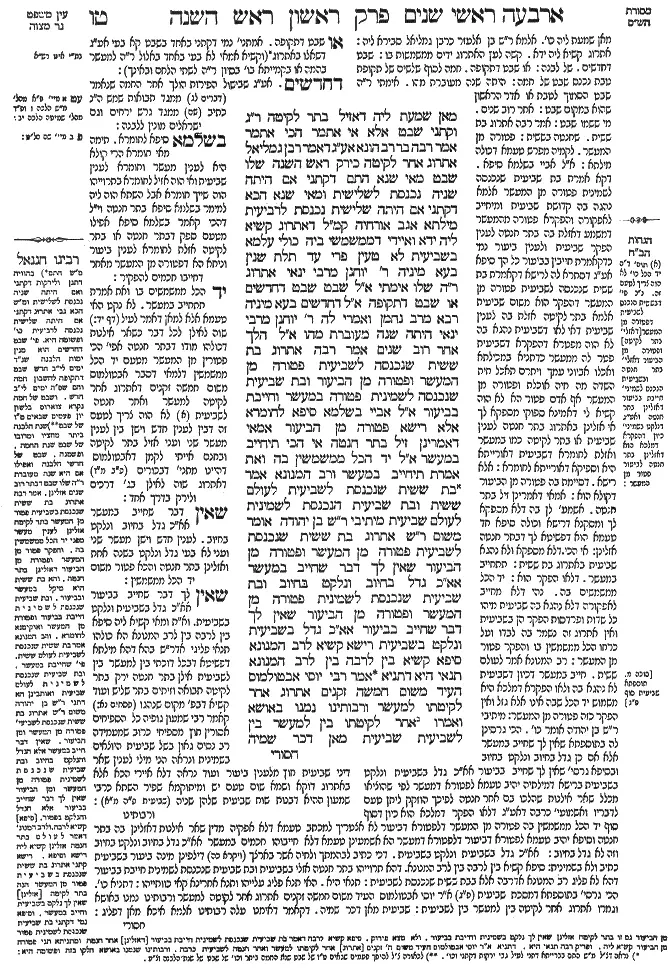
Rosh Hashanah 15a - Guemara
מאן שמעת ליה דאזיל בתר לקיטה ר"ג וקתני שבט אלא אי אתמר הכי אתמר אמר רבה בר רב הונא אע"ג דאמר רבן גמליאל אתרוג אחר לקיטה כירק ראש השנה שלו שבט מאי שנא התם דקתני אם היתה שניה נכנסת לשלישית ומאי שנא הכא דקתני אם היתה שלישית נכנסת לרביעית מילתא אגב אורחיה קמ"ל דאתרוג קשיא ליה ידא ואיידי דממשמשי ביה כולי עלמא בשביעית לא טעין פרי עד תלת שנין בעא מיניה ר' יוחנן מרבי ינאי אתרוג ר"ה שלו אימתי א"ל שבט שבט דחדשים או שבט דתקופה א"ל דחדשים בעא מיניה רבא מרב נחמן ואמרי לה ר' יוחנן מרבי ינאי היתה שנה מעוברת מהו א"ל הלך אחר רוב שנים אמר רבה אתרוג בת ששית שנכנסה לשביעית פטורה מן המעשר ופטורה מן הביעור ובת שביעית שנכנסה לשמינית פטורה במעשר וחייבת בביעור א"ל אביי בשלמא סיפא לחומרא אלא רישא פטורה מן הביעור אמאי דאמרינן זיל בתר חנטה אי הכי תיחייב במעשר א"ל יד הכל ממשמשין בה ואת אמרת תיחייב במעשר ורב המנונא אמר בת ששית שנכנסת לשביעית לעולם ששית ובת שביעית הנכנסת לשמינית לעולם שביעית מיתיבי ר"ש בן יהודה אומר משום ר"ש אתרוג בת ששית שנכנסת לשביעית פטורה מן המעשר ופטורה מן הביעור שאין לך דבר שחייב במעשר אא"כ גדל בחיוב ונלקט בחיוב ובת שביעית שנכנסת לשמינית פטורה מן המעשר ופטורה מן הביעור שאין לך דבר שחייב בביעור אא"כ גדל בשביעית ונלקט בשביעית רישא קשיא לרב המנונא סיפא קשיא בין לרבה בין לרב המנונא תנאי היא דתניא אמר רבי יוסי אבטולמוס העיד משום חמשה זקנים אתרוג אחר לקיטתו למעשר ורבותינו נמנו באושא ואמרו אחר לקיטתו בין למעשר בין לשביעית שביעית מאן דכר שמיה
Comments from Rashi on Masechet Rosh Hashanah Page 15a
מאן שמעת ליה כו' . אלמא ר"ש בן אלעזר כרבן גמליאל סבירא ליה: אתרוג קשיא ליה ידא . קשה לעץ האתרוג ידים ממשמשות בו: שבט דחדשים . של לבנה: או שבט דתקופה . חמה לסוף שלשים של תקופת טבת נכנס שבט של חמה: היתה שנה מעוברת מהו . אימתי ר"ה שבט הסמוך לטבת או אדר הראשון שהוא במקום שבט: אחר רוב שנים . מי ששמו שבט: אמר רבה אתרוג בת ששית . שחנטה בששית: פטורה מן המעשר . לקמיה מפרש טעמא דכולה מילתא: א"ל אביי בשלמא סיפא . דקא אמרת בת שביעית שנכנסה לשמינית פטורה מן המעשר אלמא נהגה בה קדושת שביעית ומיחייב לאפקורה והפקרא פטורה מהמעשר דמשמע דאזלת בה בתר חנטה לענין הפקר שביעית ולענין ביעור נמי כדקאמרת חייבין בביעור כל הך סיפא אע"ג דסתרא לה לרישא דקאמרת בת ששית שנכנסה לשביעית פטורה מן המעשר דהפקר הוא משום שביעית אלמא בתר לקיטה אזלת בה לענין שביעית דאי לאו דשביעית נהגא בה לא הוה מפטרא דהפקרא דשביעית פטר לה ממעשר כדתניא במכילתא ואכלו אביוני עמך ויתרם תאכל חית השדה מה חיה אוכלת ופטורה מן המעשר אף אדם פטור הא לא הוה קשיא לי דאמינא ספוקי מספקא לך אי אזלינן באתרוג בתר חנטה לענין שביעית או בתר לקיטה כמו במעשר ואזלת לחומרא דשביעית דאורייתא היא וספיקא דאורייתא לחומרא: אלא רישא . דסיימת בה פטורה מן הביעור דקולא הוא: אמאי דאמרינן זיל בתר חנטה . אשמע' לן בה דלא מספקא לך ומסקנא דרישא וכולה סיפא חד טעמא הוא דפשיטא לך דבתר חנטה אזלינן: אי הכי . דלא מספקא ולא נהגא שביעית באתרוג בת ששית: תתחייב במעשר . דלאו הפקר הוא: יד הכל ממשמשים בה . נהי דלא מחייב לאפקורה דלא נהגא בה שביעית מיהו כל שדות ופרדסות הפקר הן בשביעית ואין אתרוג זה נשמר בה לבדו ועל כרחו הכל ממשמשין בו והפקר פטור מן המעשר: רב המנונא אמר לעולם ששית . חייב במעשר דכיון דשביעית לא נהגא בה ולאו הפקרא דמלכא היא משמוש יד הכל שבה אינו אלא גזל ואין הפקר כזה פטורה מן המעשר: מיתיבי ר"ש בן יהודה אומר כו' . הכי גרסינן לה בתוספתא שאין לך שחייב במעשר אלא אם כן גדל בחיוב ונלקט בחיוב ובסיפא גרסי' שאין לך שחייב בביעור אא"כ גדל בשביעית ונלקט בשביעית ברישא דמילתיה יהיב טעמא לפטורא דמעשר לפי שהוציאו מכלל שאר אילנות שהלכו בם אחר חנטה לפיכך הוזקק ליתן טעם לדבריו ואשמועי' כרבה דאע"ג דלאו הפקר דמלכא הוא כיון דסוף סוף יד הכל ממשמשין בה פטורה מן המעשר דלפטורא דביעור לא אצטריך למכתב טעמא דלא אפקיה מדין שאר אילנות דאזלינן בה בתר חנטה וסיפא יהיב טעמא לפטורא דביעור דלפטורא דמעשר הא אשמעינן טעמא דלא חייבוהו חכמים במעשר אא"כ גדל בחיוב ונלקט בחיוב וזה לא גדל בחיוב: אא"כ גדל בשביעית ונלקט בשביעית . דכי כתיב לבהמתך ולחיה אשר בארצך (ויקרא כה) דילפינן מינה ביעור בשביעית כתיב ולא בשמינית: סיפא קשיא בין לרבה בין לרב המנונא . דהא תרוייהו בתר חנטה אזלי בשביעית ובת שביעית שנכנסת לשמינית חייבת בביעור דהא לא פליג רב המנונא אדרבה אלא בבת ששית שנכנסת לשביעית: תנאי היא . האי תנא פליג עלייהו ותנא אחרינא קאי כוותייהו: דתניא כו' . הכי גרסי' בתוספתא דמסכת שביעית (פ"ג) א"ר יוסי אבטולמוס העיד משום חמשה זקנים אתרוג אחר לקיטה למעשר ורבותינו נמנו באושא וגמרו אתרוג אחר לקיטה בין למעשר בין לשביעית: שביעית מאן דכר שמיה . דקאמר דאימנו עלה רבותינו אלמא איכא מאן דפליג:
Comments from Tosafot - Rosh Hashanah 15a
או שבט דתקופה. אמתני' נמי דקתני באחד בשבט קא בעי אע"ג דשאלו באתרוג (וקשיא אמאי לא בעי באחד באלול ר"ה למעשר בהמה או בקמייתא בו' בסיון ר"ה לשתי הלחם ובאינך): דחדשים. אע"ג שבישול הפירות הולך אחר החמה שנאמר (דברים לג) ממגד תבואות שמש ה"נ כתיב (שם) ממגד גרש ירחים וגם ישראלים מונין ללבנה: בשלמא סיפא לחומרא. תימה מאי חומרא הרי קולא היא לענין מעשר וחומרא לענין שביעית ואי הוה אזיל לחומרא בתרוייהו הוה שייך חומרא אבל השתא הוה ליה למימר בשלמא סיפא בתר חנטה וי"ל דהכי קאמר בשלמא סיפא אפילו מטעם ספק דבתר חנטה או בתר לקיטה אזלת לחומרא לענין ביעור וניחא הא דפטורה מן המעשר מאחר דחייבו חכמים להפקיר: יד הכל ממשמשים בו ואת אמרת תתחייב במעשר. לא נקט האי טעמא אלא למאן דאמר לעיל (ראש השנה דף יד:) שוה לאילן לכל דבר כשאר אילנות דכולהו מודו דבתר חנטה אפי' הכי פטורין מן המעשר מטעם יד הכל ממשמשין דלמאי דסבר אבטולמוס משום חמשה זקנים דאתרוג אחר לקיטה למעשר ואחר חנטה לשביעית לא הוה צריך לטעם זה דבין לענין חדש וישן בין לענין מעשר שני ועני אזיל בתר לקיטה ובחנם אייתי לקמן דאבטולמוס דהיינו מתני' דבכורים (פ"ב מ"ו) דאתרוג שוה לאילן בג' דרכים ולירק בדרך אחד: שאין דבר שחייב במעשר אא"כ גדל בחיוב ונלקט בחיוב. לענין חדש וישן מעשר שני ועני לא בעי גדל ונלקט בשנה אחת ואזלינן בתר חנטה והכא פטור משום יד הכל ממשמשין: שאין לך דבר שחייב בביעור אא"כ גדל בשביעית ונלקט בשביעית. וא"ת ומאי קשיא ליה סיפא בין לרבה בין לרב המנונא הא כולהו תנאי פליגי אדר"ש בהא דהא מילתא דפשיטא דבכל דוכתי בין למעשר בין לשביעית אילן בתר חנטה ירק בתר לקיטה תבואה וזיתים בתר שליש ועוד קשיא דבפ' מקום שנהגו (פסחים נא:) קאמר רבי שמעון גופיה כל הספיחים אסורין חוץ מספיחי כרוב שמעמידה רב נסים גאון בשל שביעית היוצאים בשמינית ונראה הני מילי לענין שאר דיני שביעית חוץ מלענין ביעור ועוד נראה דלא איירי הכא אלא באתרוג דוקא ושמא שום טעם יש ומיתוקמא שפיר השתא כרבי שמעון ההיא דבנות שוח שביעית שלהן שניה (שביעית פ"ה מ"א):
Rosh Hashanah 15a - Mishnah translated into english
The Gemara clarifies this ruling: Whom did you hear that said the tithe year of an etrog follows the time of the picking of its fruit? It was Rabban Gamliel. And yet this baraita is teaching that the new year for tithing an etrog is the fifteenth of Shevat, against the opinion of Rabba bar Rav Huna, who says that according to Rabban Gamliel it is the first of Tishrei.
Rather, if this was said, it was said as follows: Rabba bar Rav Huna said: Even though Rabban Gamliel said that the tithe year of an etrog follows the time of the picking of its fruit, like a vegetable, its new year is in Shevat, like a tree.
The Gemara asks: What is different there, in the baraita with regard to one who picked vegetables on the eve of Rosh HaShana, such that it teaches the case when it was the second year of the Sabbatical cycle going into the third year, and what is different here, in the baraita dealing with one who was picking the fruit of an etrog tree on the eve of the fifteenth of Shevat, such that it teaches the case when it was the third year going into the fourth year? Why is the same example not brought in both cases?
The Gemara answers: It teaches us a matter in passing, that it is damaging for an etrog when the tree is handled, and since everyone handles it in the Sabbatical Year, as all the orchards are declared ownerless and everyone is permitted to enter and pick produce, the tree does not bear fruit that is fit for eating for another three years.
Rabbi Yoḥanan inquired of Rabbi Yannai: With regard to an etrog, when is its new year? Rabbi Yannai said to him: It is in Shevat. Rabbi Yoḥanan asked again: Are you referring to the lunar month of Shevat or to the Shevat of the solar season, which begins thirty days after the winter solstice, but on a different date each year? Rabbi Yannai said to him: I am referring to the lunar month of Shevat.
Rava inquired of Rav Naḥman, and some say that it was Rabbi Yoḥanan who inquired of Rabbi Yannai: If it was a leap year, what is the halakha? Does the new year for trees then move to the First Adar, which is the penultimate month in a leap year? He said to him: Follow the majority of years. Even in a leap year the new year for trees is in Shevat.
Rabba said: An etrog from the sixth year of the Sabbatical cycle that entered into, and was picked in, the Sabbatical Year is exempt from tithes, like the produce of the Sabbatical Year, and is also exempt from the mitzva of elimination of Sabbatical Year produce from one’s house after produce of that particular species is no longer found in the field. A Sabbatical Year etrog that entered into, and was picked in, the eighth year is exempt from tithes but is subject to the mitzva of elimination of Sabbatical Year produce from one’s house.
Abaye said to him: Granted, in the latter clause the halakha follows the more stringent approach, as it follows the time of the formation of the fruit, which was in the Sabbatical Year, and therefore the etrog is subject to the mitzva of elimination. But in the first clause, which states that the etrog is exempt from the mitzva of elimination, why is this so? It must be that we say to follow the time of the formation of the fruit, which was in the sixth year. But if so, it should be subject to tithes.
Rabba said to him: Everyone’s hand is touching it, as all are permitted to enter the orchards and touch all the fruit, and so the etrog is regarded as ownerless, and yet you wish to say that it should be subject to tithes? Even if it is not exempt as fruit of the Sabbatical Year, it is exempt from tithes because it is now ownerless.
Rav Hamnuna argued and said: An etrog from the sixth year of the Sabbatical cycle that entered into, and was picked in, the Sabbatical Year is always and for all purposes considered sixth-year produce. And an etrog from the Sabbatical Year that entered into, and was picked in, the eighth year is always and for all purposes considered produce of the Sabbatical Year.
The Gemara raises an objection from the following baraita: Rabbi Shimon ben Yehuda said in the name of Rabbi Shimon: An etrog from the sixth year that entered into, and was picked in, the Sabbatical Year is exempt from tithes, and it is also exempt from the mitzva of elimination of Sabbatical Year produce from one’s house, as there is nothing that is subject to tithes unless it both grew at a time of obligation in tithes and was also picked at a time of obligation. Likewise, an etrog from the Sabbatical Year that entered into, and was picked in, the eighth year is exempt from tithes, and it is also exempt from the mitzva of elimination, as nothing is subject to the mitzva of elimination unless it both grew in the Sabbatical Year and was also picked in the Sabbatical Year.
The Gemara notes: The first clause of this baraita poses a difficulty with regard to the opinion of Rav Hamnuna, who says that a sixth-year etrog that was picked in the Sabbatical Year is subject to tithes. And the latter clause of the baraita poses a difficulty with regard to the opinions of both Rabba and Rav Hamnuna, as they both say that a Sabbatical-Year etrog that was picked in the eighth year is subject to the mitzva of elimination.
The Gemara answers: The matter is a dispute between tanna’im, as it is taught in a baraita: Rabbi Yosei said: Avtolemos testified in the name of five Elders: An etrog follows the time of its picking in the matter of tithes. But our Sages voted in Usha and said that an etrog follows the time of its picking, both in the matter of tithes and in the matter of the Sabbatical Year.
The Gemara raises a question about this baraita: Who mentioned anything about the Sabbatical Year? The subject of the discussion was tithes.
Traduction : The William Davidson digital edition of the Koren Noé Talmud, with commentary by Rabbi Adin Even-Israel Steinsaltz.