 Talmud Bavli
Rosh Hashanah 16a : Youtube
Daf TubeYoutube
4 video classes :
Rosh Hashanah Page 16a
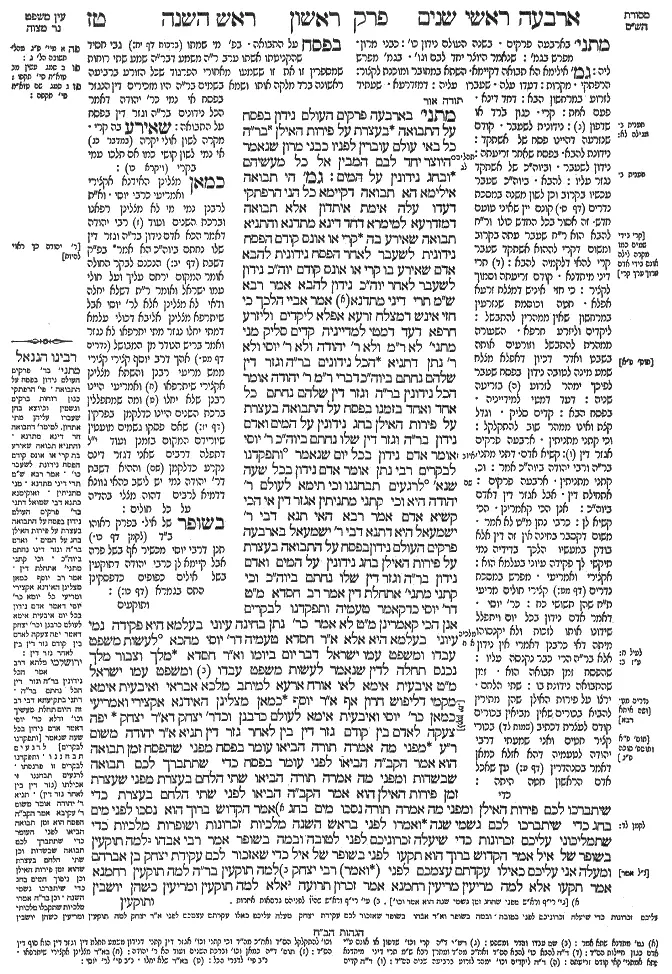
Rosh Hashanah 16a - Guemara
מתני׳ בארבעה פרקים העולם נידון בפסח על התבואה בעצרת על פירות האילן בר"ה כל באי עולם עוברין לפניו כבני מרון שנאמר (תהלים לג, טו) היוצר יחד לבם המבין אל כל מעשיהם ובחג נידונין על המים:
גמ׳ הי תבואה אילימא הא תבואה דקיימא כל הני הרפתקי דעדו עלה אימת איתדון אלא תבואה דמזדרעא למימרא דחד דינא מתדנא והתניא תבואה שאירע בה קרי או אונס קודם הפסח נידונית לשעבר לאחר הפסח נידונית להבא אדם שאירע בו קרי או אונס קודם יוה"כ נידון לשעבר לאחר יוה"כ נידון להבא אמר רבא ש"מ תרי דיני מתדנא אמר אביי הלכך כי חזי אינש דמצלח זרעא אפלא ליקדים וליזרע חרפא דעד דמטי למדייניה קדים סליק מני מתני' לא ר"מ ולא ר' יהודה ולא ר' יוסי ולא ר' נתן דתניא הכל נידונים בר"ה וגזר דין שלהם נחתם ביוה"כ דברי ר"מ ר' יהודה אומר הכל נידונין בר"ה וגזר דין שלהם נחתם כל אחד ואחד בזמנו בפסח על התבואה בעצרת על פירות האילן בחג נידונין על המים ואדם נידון בר"ה וגזר דין שלו נחתם ביוה"כ ר' יוסי אומר אדם נידון בכל יום שנאמר (איוב ז, יח) ותפקדנו לבקרים רבי נתן אומר אדם נידון בכל שעה שנא' (איוב ז, יח) לרגעים תבחננו וכי תימא לעולם ר' יהודה היא וכי קתני מתניתין אגזר דין אי הכי קשיא אדם אמר רבא האי תנא דבי ר' ישמעאל היא דתנא דבי ר' ישמעאל בארבעה פרקים העולם נידון בפסח על התבואה בעצרת על פירות האילן בחג נידונין על המים ואדם נידון בר"ה וגזר דין שלו נחתם ביוה"כ וכי קתני מתני' אתחלת דין אמר רב חסדא מ"ט דר' יוסי כדקאמר טעמיה ותפקדנו לבקרים אנן הכי קאמרינן מ"ט לא אמר כר' נתן בחינה עיוני בעלמא היא פקידה נמי עיוני בעלמא היא אלא א"ר חסדא טעמיה דר' יוסי מהכא (מלכים א ח, נט) לעשות משפט עבדו ומשפט עמו ישראל דבר יום ביומו וא"ר חסדא מלך וצבור מלך נכנס תחלה לדין שנאמר לעשות משפט עבדו ומשפט עמו ישראל מ"ט איבעית אימא לאו אורח ארעא למיתב מלכא אבראי ואיבעית אימא מקמי דליפוש חרון אף א"ר יוסף כמאן מצלינן האידנא אקצירי ואמריעי כמאן כר' יוסי ואיבעית אימא לעולם כרבנן וכדר' יצחק דא"ר יצחק יפה צעקה לאדם בין קודם גזר דין בין לאחר גזר דין תניא א"ר יהודה משום ר"ע מפני מה אמרה תורה הביאו עומר בפסח מפני שהפסח זמן תבואה הוא אמר הקב"ה הביאו לפני עומר בפסח כדי שתתברך לכם תבואה שבשדות ומפני מה אמרה תורה הביאו שתי הלחם בעצרת מפני שעצרת זמן פירות האילן הוא אמר הקב"ה הביאו לפני שתי הלחם בעצרת כדי שיתברכו לכם פירות האילן ומפני מה אמרה תורה נסכו מים בחג אמר הקדוש ברוך הוא נסכו לפני מים בחג כדי שיתברכו לכם גשמי שנה ואמרו לפני בראש השנה מלכיות זכרונות ושופרות מלכיות כדי שתמליכוני עליכם זכרונות כדי שיעלה זכרוניכם לפני לטובה ובמה בשופר אמר רבי אבהו למה תוקעין בשופר של איל אמר הקדוש ברוך הוא תקעו לפני בשופר של איל כדי שאזכור לכם עקידת יצחק בן אברהם ומעלה אני עליכם כאילו עקדתם עצמכם לפני (ואמר) רבי יצחק למה תוקעין בר"ה למה תוקעין רחמנא אמר תקעו אלא למה מריעין מריעין רחמנא אמר זכרון תרועה אלא למה תוקעין ומריעין כשהן יושבין
Comments from Rashi on Masechet Rosh Hashanah Page 16a
מתני' בארבעה פרקים . בשנה העולם נידון כו': כבני מרון . מפרש בגמ': שנאמר היוצר יחד לבם וגו' . בגמ' מפרש ליה: גמ' אילימא הא תבואה דקיימא . השתא במחובר ומוכנת לקצור: הרפתקי . מקרות: דעדו עלה . שעברו עליה: דמזדרעא. שעתיד לזרוע במרחשון הבא: דחד דינא . פעם אחת: קרי . כגון ברד או שדפון: נידונית לשעבר . קודם שנזרעה דהיינו פסח של אשתקד: נידונת להבא . בפסח שאחר זריעתה: נידון לשעבר . וביוה"כ של אשתקד נגזר עליו: להבא . ביוה"כ שעבר עכשיו בקרוב וכן לשון משנה במסכת נדרים (דף ס.) קונם יין שאיני טועם חדש זה אסור בכל החדש כולו ור"ח להבא הוא ר"ח שעבר עתה בקרוב ומשום דקרי לההוא אשתקד שעבר קרי להאי דלקמיה להבא: תרי דיני מיתדנא . קודם זריעתה וסמוך לקציר: כי חזי איניש דמצלח זרעא אפלא . חטה וכוסמת שנזרעין במרחשון שאין ממהרין להתבשל: ליקדים וליזרע חרפא . השעורה ממהרת להתבשל וזורעים אותה בשבט ואדר דכיון דאפלא מצלח שמע מינה לטובה נידון בפסח שעבר לפיכך ימהר לזרוע בזריעה שניה: דעד דמטי למידייניה . בפסח הבא: קדים סליק . וגדל קצת ואינו ממהר שוב להתקלקל: וכי קתני מתניתין . ארבעה פרקים אגזר דין: קשיא אדם . דתני מתני' בר"ה ורבי יהודה ביוה"כ אמר: וכי קתני מתניתין . ארבעה פרקים: אתחילת דין . אבל אגזר דין דאדם ביוה"כ: אנן הכי קאמרינן . הכי קשיא לן: כרבי נתן מ"ט לא אמר . משום דקסבר בחינה אין זה דין אלא בודק במעשיו הלכך בדידיה נמי תיקשי לך פקידה עיוני בעלמא הוא: אקצירי ואמריעי . מפרש במסכת נדרים (דף מט:) קצירי חולים מריעי ת"ח שהן תשושי כח: כר' יוסי . דאמר אדם נידון בכל יום ויתפלל שידונו אותו לזכות ולא יקנסוהו מיתה דאי כרבנן דאמרי אין נידון אלא בר"ה הרי כבר נקנסה עליו: שהפסח זמן תבואה הוא . זמן שהתבואה נידונת בו: שתי הלחם . ירצו על פירות האילן שהן מתירין להביא בכורים שאין מביאין בכורים קודם לעצרת דכתיב (שמות לד) בכורי קציר חטים ואני שמעתי דרבי יהודה לטעמיה דהא אזלא כמאן דאמר בסנהדרין (דף ע:) עץ שאכל אדם הראשון חטה היתה:
Comments from Tosafot - Rosh Hashanah 16a
בפסח על התבואה. בפ' מי שמתו (ברכות דף יח:) גבי חסיד שהקניטתו אשתו ערב ר"ה משמע דבר"ה שמע שתי רוחות שמספרין זו את זו ששמעו מאחורי הפרגוד שכל הזורע ברביעה ראשונה ברד מלקה אותו ושמא בשמים בר"ה היו מזכירים דין הנגזר בפסח אי נמי כר' יהודה דאמר הכל נידונים בר"ה וגזר דין בפסח על התבואה: שאירע בה קרי. מקרה לשון אולי יקרה (במדבר כג) אי נמי לשון קושי כמו אם תלכו עמי בקרי (ויקרא כו): כמאן מצלינן האידנא אקצירי ואמריעי כרבי יוסי. וא"ת לרבנן נמי מי לא מצלינן רפאנו וברכת השנים ועוד רבי יהודה דאמר הכא אדם נידון בר"ה וגזר דין שלו נחתם ביוה"כ הא אמר בפ"ק דשבת (דף יב:) הנכנס לבקר החולה אומר המקום ירחם עליך ועל חולי עמו ישראל ואומר ר"ת דשלא יחלה ודאי לא מצלינן אלא לר' יוסי אבל שיתרפא מצלינן אליבא דכולי עלמא דמתי יחלו נגזר מתי יתרפאו לא נגזר ואמר בריש הנודר מן המבושל (נדרים דף מט.) אהך דרב יוסף קצירי קצירי ממש מריעי רבנן והשתא מצלינן אקצירי שיתרפאו ואמריעי היינו רבנן שלא יחלו ומה שמתפללין ברכת השנים היינו כדלקמן בפרקין (ראש השנה דף יז:) שאם פסקו גשמים מועטין שיורידם המקום בזמנן ועוד. י"ל דתפלה דרבים שאני דגזר דינם נקרע כדלקמן (שם) וההיא דשבת דר' יהודה נמי יש לישב כהאי גוונא דדמיא לרבים דהוה מצלי בהדיה על כל חולים: בשופר של איל. בפרק ראוהו ב"ד (לקמן ראש השנה דף כו.) תנן דרבי יוסי מכשיר אף בשל פרה אבל קיימא לן כרבי יהודה דתוקעין בשל אילים כפופים כדפסקינן התם בגמרא (דף כו:):
Rosh Hashanah 16a - Mishnah translated into english
MISHNA: At four times of the year the world is judged: On Passover judgment is passed concerning grain; on Shavuot concerning fruits that grow on a tree; on Rosh HaShana all creatures pass before Him like sheep [benei maron], as it is stated: “He Who fashions their hearts alike, Who considers all their deeds” (Psalms 33:15); and on the festival of Sukkot they are judged concerning water, i.e., the rainfall of the coming year.
GEMARA: The mishna taught that on Passover judgment is passed concerning grain. The Gemara asks: Which grain is judged on Passover? If we say it is the grain that is presently standing in the fields ready to be reaped between Passover and Shavuot, when was judgment passed with regard to all those events [harpatkei] that already happened to the grain while it was growing in the winter? Rather, the mishna must be referring to the grain that will be sown over the coming year.
The Gemara asks further: Is this to say that only one judgment is passed concerning a particular crop, and no more? But isn’t it taught in a baraita: If grain suffers an incident or accident before Passover, it was judged in the past, the previous Passover; if this occurs after Passover, it was judged this Passover for the future. And similarly, if a person suffered an incident or accident before Yom Kippur, he was judged in the past, the previous Rosh HaShana; if this occurred after Yom Kippur, he was judged this Rosh HaShana for the future.
Rava said: Learn from here that two judgments are passed concerning each crop, one covering the period between the time it is sown and Passover and another covering the period between Passover and the time it is harvested. Abaye said: Therefore, if a person sees that his slow-growing crops, those that are sown at the beginning of the winter but ripen only in the spring or summer, are doing well, he should quickly sow fast-growing crops, such as barley, which can be sown at the end of the winter and still ripen before Passover, as before it is brought to judgment on the next Passover it will already have successfully grown, since he knows that this year’s crops were judged for a favorable yield.
The Gemara raises a question about the mishna: Whose opinion is expressed in the mishna? It is not in accordance with the opinion of Rabbi Meir, and not in accordance with the opinion of Rabbi Yehuda, and not in accordance with the opinion of Rabbi Yosei, and not in accordance with the opinion of Rabbi Natan.
The Gemara explains: As it is taught in a baraita: All are judged on Rosh HaShana, and their sentence is sealed on Yom Kippur; this is the statement of Rabbi Meir. Rabbi Yehuda says: All are judged on Rosh HaShana, and their sentence is sealed each in its own time: On Passover the sentence is sealed concerning grain; on Shavuot concerning fruits that grow on a tree; on the festival of Sukkot they are judged concerning water; and mankind is judged on Rosh HaShana, and the sentence is sealed on Yom Kippur.
Rabbi Yosei says: A person is judged every day, and not just once a year, as it is stated: “You visit him every morning” (Job 7:18), meaning that every morning an accounting is made and a judgment is passed. Rabbi Natan says: A person is judged every hour, as it is stated: “You try him every moment” (Job 7:18).
And lest you say that actually, the mishna is taught in accordance with the opinion of Rabbi Yehuda, and when the mishna is taught, it is taught with regard to the sentence, and not the judgments, which are all passed on Rosh HaShana, if so, it is difficult with regard to mankind, as the mishna should have stated that the sentence is sealed on Yom Kippur.
Rava said: The tanna of the mishna is a tanna from the school of Rabbi Yishmael, as a tanna from the school of Rabbi Yishmael taught: At four times of the year the world is judged: On Passover concerning grain; on Shavuot concerning fruits that grow on a tree; on the festival of Sukkot they are judged concerning water; and mankind is judged on Rosh HaShana and the sentence is sealed on Yom Kippur. And when the mishna is taught, it is taught with regard to the beginning of the judgment process, i.e., the judgment of mankind is initially passed on Rosh HaShana.
Rav Ḥisda said: What is the reason for the opinion of Rabbi Yosei? The Gemara is astonished by this question: Why ask about his reason? He stated his reason, the verse that states: “You visit him every morning.” The Gemara explains: This is what we are saying: If Rabbi Yosei relies on this verse, what is the reason that he did not state his opinion in accordance with the opinion of Rabbi Natan that a person is judged every hour? And if you say that he holds that the verse “You try him every moment” cannot serve as proof, because trying merely indicates examination and not actual judgment, then in the same way visiting merely indicates examination. If so, there is no clear proof from this verse.
Rather, Rav Ḥisda said: Rabbi Yosei’s reason is from here, another verse, which states: “To make the judgment of His servant and the judgment of His people Israel at all times, as each day may require” (I Kings 8:59), which indicates that the entire world is judged every day.
§ About this verse Rav Ḥisda said: When a king and a community are brought before God for judgment, the king is brought in for judgment first, as it is stated: “To make the judgment of His servant,” and afterward: “And the judgment of His people Israel.” What is the reason for this? If you wish, say that it is not proper conduct for the king to stand outside and wait for the trial of his subjects to come to an end. And if you wish, say instead that the king is brought in first so that he may be judged before God’s anger intensifies due to the sins of the community, and consequently he may be saved from overly harsh judgment.
Rav Yosef said: In accordance with whose opinion do we pray nowadays on a daily basis for the sick and afflicted? The Gemara repeats the question: In accordance with whose opinion? It is in accordance with the opinion of Rabbi Yosei, who holds that one is judged every day, and so there is reason to pray every day in order to affect the outcome of his judgment. And if you wish, say that actually, normative practice is even in accordance with the opinion of the Rabbis, who hold that one is judged only once a year, but also in accordance with the opinion of Rabbi Yitzḥak. As Rabbi Yitzḥak said: Crying out to God is beneficial for a person both before his sentence has been issued and after his sentence has been issued.
§ It is taught in a baraita that Rabbi Yehuda said in the name of Rabbi Akiva: For what reason did the Torah say: Bring the omer offering on the second day of Passover? It is because Passover is the time of grain, the beginning of the grain harvest season, and therefore the Holy One, Blessed be He, said: Bring the omer offering before Me on Passover so that the grain in the fields will be blessed for you. And for what reason did the Torah say: Bring the offering of the two loaves from the new wheat on Shavuot? It is because Shavuot is the time of the fruits that grow on a tree, when it begins to ripen, and therefore the Holy One, Blessed be He, said: Bring the offering of the two loaves before Me on Shavuot so that the fruits that grow on a tree will be blessed for you.
And for what reason did the Torah say: Pour water onto the altar in the Temple on the festival of Sukkot? The Holy One, Blessed be He, said: Pour water before Me on the festival of Sukkot so that the rains of the year, which begin to fall after Sukkot, will be blessed for you. And recite before Me on Rosh HaShana verses that mention Kingships, Remembrances, and Shofarot: Kingships so that you will crown Me as King over you; Remembrances so that your remembrance will rise before Me for good; and with what will the remembrance rise? It will rise with the shofar.
Similarly, Rabbi Abbahu said: Why does one sound a blast with a shofar made from a ram’s horn on Rosh HaShana? The Holy One, Blessed be He, said: Sound a blast before Me with a shofar made from a ram’s horn, so that I will remember for you the binding of Isaac, son of Abraham, in whose stead a ram was sacrificed, and I will ascribe it to you as if you had bound yourselves before Me.
Rabbi Yitzḥak said: Why does one sound [tokin] a blast on Rosh HaShana? The Gemara is astonished by the question: Why do we sound a blast? The Merciful One states in the verse: “Sound [tiku] a shofar” (Psalms 81:4). Rather, the question is: Why does one sound a staccato series of shofar blasts [terua] in addition to a long continuous shofar blast [tekia]? The Gemara is still surprised by the question: Sound a terua? The Merciful One states: “In the seventh month, in the first day of the month, shall be a solemn rest unto you, a memorial proclaimed with the blast of horns [terua]” (Leviticus 23:24). Rather, Rabbi Yitzḥak asked about the common practice in Jewish communities, which is not explicitly stated in the Torah: Why does one sound a long, continuous shofar blast [tekia] and then a staccato series of shofar blasts [terua] while the congregation is still sitting before the silent prayer,
Traduction : The William Davidson digital edition of the Koren Noé Talmud, with commentary by Rabbi Adin Even-Israel Steinsaltz.