 Talmud Bavli
The learning on the whole site is dedicated : L'ilui Nishmat Rav Chlomo Ben Jamilla
The learning on the whole site is dedicated : L'ilui Nishmat Jamila bat Chlomo Abensour
The learning on the whole site is dedicated : L'ilui Nishmat Yaakov ben Myriam
Rosh Hashanah 31a : Youtube
Daf TubeYoutube
3 video classes :
Rosh Hashanah Page 31a
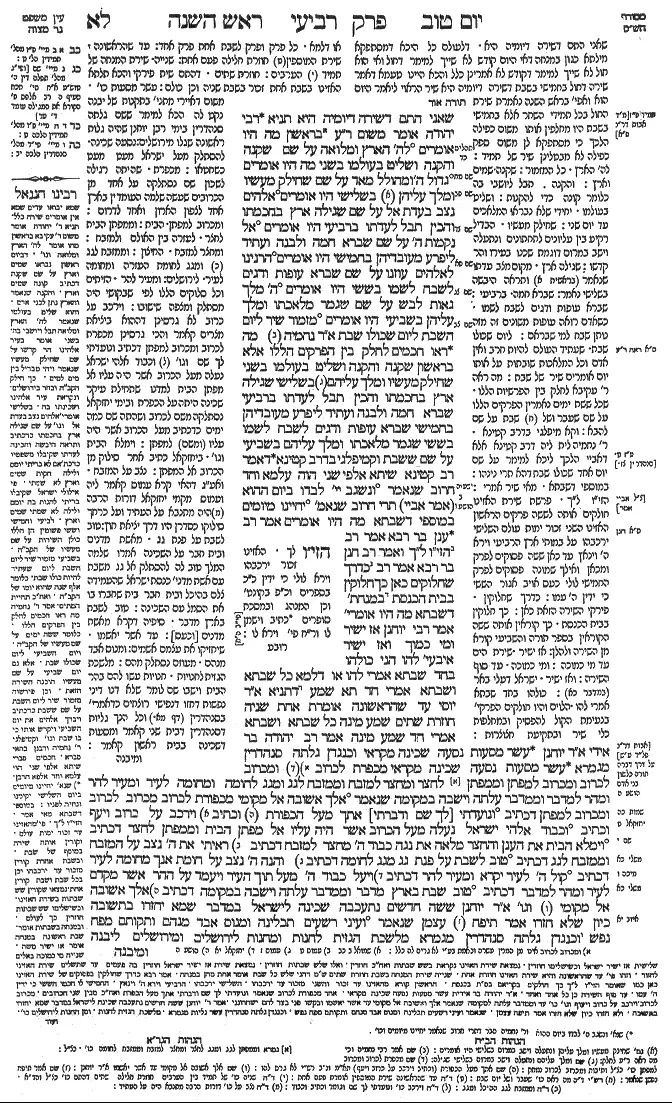
Rosh Hashanah 31a - Guemara
שאני התם דשירה דיומיה היא תניא רבי יהודה אומר משום ר"ע בראשון מה היו אומרים (תהלים כד, א) לה' הארץ ומלואה על שם שקנה והקנה ושליט בעולמו בשני מה היו אומרים (תהלים מח, ב) גדול ה' ומהולל מאד על שם שחילק מעשיו ומלך עליהן בשלישי היו אומרים (תהלים פב, א) אלהים נצב בעדת אל על שם שגילה ארץ בחכמתו והכין תבל לעדתו ברביעי היו אומרים (תהלים צד, א) אל נקמות ה' על שם שברא חמה ולבנה ועתיד ליפרע מעובדיהן בחמישי היו אומרים (תהלים פא, ב) הרנינו לאלהים עוזנו על שם שברא עופות ודגים לשבח לשמו בששי היו אומרים (תהלים צג, א) ה' מלך גאות לבש על שם שגמר מלאכתו ומלך עליהן בשביעי היו אומרים (תהלים צב, א) מזמור שיר ליום השבת ליום שכולו שבת א"ר נחמיה מה ראו חכמים לחלק בין הפרקים הללו אלא בראשון שקנה והקנה ושליט בעולמו בשני שחילק מעשיו ומלך עליהם בשלישי שגילה ארץ בחכמתו והכין תבל לעדתו ברביעי שברא חמה ולבנה ועתיד ליפרע מעובדיהן בחמישי שברא עופות ודגים לשבח לשמו בששי שגמר מלאכתו ומלך עליהם בשביעי על שם ששבת וקמיפלגי בדרב קטינא דאמר רב קטינא שיתא אלפי שני הוה עלמא וחד חרוב שנאמר (ישעיהו ב, יא) ונשגב יי' לבדו ביום ההוא (אמר אביי) תרי חרוב שנאמ' (הושע ו, ב) יחיינו מיומים במוספי דשבתא מה היו אומרים אמר רב ענן בר רבא אמר רב הזי"ו ל"ך ואמר רב חנן בר רבא אמר רב כדרך שחלוקים כאן כך חלוקין בבית הכנסת במנחת' דשבתא מה היו אומרי' אמר רבי יוחנן אז ישיר ומי כמוך ואז ישיר איבעי' להו הני כולהו בחד שבתא אמרי להו או דלמא כל שבתא ושבתא אמרי חד תא שמע דתניא א"ר יוסי עד שהראשונה אומרת אחת שניה חוזרת שתים שמע מינה כל שבתא ושבתא אמרי חד שמע מינה אמר רב יהודה בר אידי א"ר יוחנן עשר מסעות נסעה שכינה מקראי וכנגדן גלתה סנהדרין מגמרא עשר מסעות נסעה שכינה מקראי מכפרת לכרוב ומכרוב לכרוב ומכרוב למפתן וממפתן לחצר ומחצר למזבח וממזבח לגג ומגג לחומה ומחומה לעיר ומעיר להר ומהר למדבר וממדבר עלתה וישבה במקומה שנאמר (הושע ה, טו) אלך אשובה אל מקומי מכפורת לכרוב מכרוב לכרוב ומכרוב למפתן דכתיב (שמות כה, כב) ונועדתי [לך שם ודברתי] אתך מעל הכפורת וכתיב וירכב על כרוב ויעף וכתיב (יחזקאל ט, ג) וכבוד אלהי ישראל נעלה מעל הכרוב אשר היה עליו אל מפתן הבית וממפתן לחצר דכתיב (יחזקאל י, ד) וימלא הבית את הענן והחצר מלאה את נגה כבוד ה' מחצר למזבח דכתיב ראיתי את ה' נצב על המזבח וממזבח לגג דכתיב (משלי כא, ט) טוב לשבת על פנת גג מגג לחומה דכתיב והנה ה' נצב על חומת אנך מחומה לעיר דכתיב (מיכה ו, ט) קול ה' לעיר יקרא ומעיר להר דכתיב ויעל כבוד ה' מעל תוך העיר ויעמד על ההר אשר מקדם לעיר ומהר למדבר דכתיב (משלי כא, יט) טוב שבת בארץ מדבר וממדבר עלתה וישבה במקומה דכתיב אלך אשובה אל מקומי וגו' א"ר יוחנן ששה חדשים נתעכבה שכינה לישראל במדבר שמא יחזרו בתשובה כיון שלא חזרו אמר תיפח עצמן שנאמר (איוב יא, כ) ועיני רשעים תכלינה ומנוס אבד מנהם ותקותם מפח נפש וכנגדן גלתה סנהדרין מגמרא מלשכת הגזית לחנות ומחנות לירושלים ומירושלים ליבנה
Comments from Rashi on Masechet Rosh Hashanah Page 31a
שאני התם דשירה דיומיה היא . דלעולם כל היכא דמסתפקא מילתא כגון במנחה דאי היום קודש לא שייך למימר דחול ואי הוא חול לא שייך למימר דקודש לא אמרינן כלל והכא היינו טעמא דאמר שירה דחול בחמישי בשבת דשירה דיומיה היא שיר הראוי ליאמר היום הוא ואפי' בראש השנה נאמרת שירת החול בכל תמידי השחר אלא בחמישי בשבת היו מחלפין אותו משום כפילה הלכך כי מסתפקא לן משום ספק כפילה לא מבטלינן שיר של תמיד: לה' הארץ . כל המזמור: שקנה . שמים וארץ: והקנה . תבל ליושבי בה כלומר קונה כדי להקנות: ושליט בעולמו . יחידי שלא נבראו המלאכים עד יום שני: שחילק מעשיו . הבדיל רקיע בין עליונים לתחתונים ונתעלה וישב במרום דוגמת שכנו בעירו והר קדשו: שגילה ארץ . מקום מצב עדתו שנאמר (בראשית א) ותראה היבשה בשלישי נאמר: שברא חמה . ברביעי: שברא עופות ודגים לשבח לשמו . כשאדם רואה עופות משונים זה מזה נותן שבח למי שבראם: ליום שכולו שבת . שעתיד העולם להיות חרב ואין אדם וכל המלאכות שובתות על אותו יום אומרים שיר של שבת: מה ראה ר' עקיבא לחלק בין הפרשיות הללו . שכל ששת ימים נאמרין הפרקים הללו על שם שעבר ושל שבת על שם להבא: וקא מיפלגי בדרב קטינא . ר' נחמיה לית ליה דרב קטינא אלא דאביי הלכך ליכא למימר על שם יום אחד שכולו שבת דהא תרי נינהו: במוספי דשבתא . מאי שיר אמרי: הזי"ו ל"ך . פרשת שירת האזינו חולקים אותה לששה פרקים הראשון האזינו השני זכור ימות עולם השלישי ירכבהו על במותי ארץ הרביעי וירא ה' וינאץ עד כאן ששה פסוקים לפרק ומכאן ואילך שמונה פסוקים לפרק החמישי לולי כעס אויב אגור הששי כי ידין ה' עמו: כדרך שחלוקין . פירקי השירה הזאת כאן: כך חלוקין בבית הכנסת . כך קוראין אותה ששה הקוראין בספר תורה והשביעי קורא מן השירה ולהלן: אז ישיר . שירת הים עד מי כמוכה: ומי כמוכה . עד סוף השירה: ואז ישיר . ישראל דעלי באר (במדבר כא): כולהו בחד שבתא אמרי להו . הלוים והיו חולקים הפרקי' בנעימת הקול להפסיק ובמחלפות כלי שיר ובתקיעת חצוצרות: או דלמא . כל פרק ופרק לשבת אחת פרק אחד: עד שהראשונה . שירת המוספין חוזרת חלילה פעם אחת: שנייה . שירת המנחה של תמיד הערבים: חוזרת שתים . דהתם שית פירקי והכא תלתא: האזינו בשבת אחת זכור בשבת שניה וכן כולם: עשר מסעות כו' . משום דאיירי מתני' בתקנות של יבנה נקט לה הכא למימר ששם גלתה סנהדרין בימי רבן יוחנן שהיה גלות ראשונה שגלו מירושלים: נסעה שכינה . להסתלק מעל ישראל מעט מעט כשחטאו: מכפרת . שהיתה רגילה לשכון שם נסתלקה על אחד מן הכרובים שעשה שלמה העומדין בארץ אחד לצפון הארון ואחד לדרום: ומכרוב למפתן . הבית: וממפתן הבית לחצר . לעזרה בין האולם ולמזבח: ומחצר למזבח . החיצון: וממזבח לגג ומגג לחומת העזרה ומחומה לעיר . לירושלים: ומעיר להר . הזיתים וכל סלוקים הללו לפי שבקושי היה מסתלק ומצפה שישובו: וירכב על כרוב לא גרסינן דההוא ביציאת מצרים קאמר והכי גרסינן מכפרת לכרוב ומכרוב למפתן דכתיב ונועדתי לך שם וגו' וכבוד אלהי ישראל נעלה מעל הכרוב אשר היה עליו אל מפתן הבית למדנו שתחילת עיקר שכינה היתה על הכפרת ובימי יחזקאל נסתלקה משם לכרוב ושהתה שם כמה ימים כדכתיב מעל הכרוב אשר היה עליו (ומשם) למפתן: וימלא הבית וגו' . ביחזקאל כתיב אחר סילוק מן הכרוב אל המפתן: נצב על המזבח . ואע"ג דהאי קרא עמוס קאמר ליה ועמוס מקמי יחזקאל דורות הרבה היה מתנבא על העתיד ועל כרחך סילוקו כסדרן היו דרך יציאת חוץ: טוב לשבת על פנת גג . מאשת מדנים ובית חבר על השכינה אמרו שלמה המלך טוב לה להסתלק אל גג משבת עם אשת מדני' כנסת ישראל שהעמידה צלם בהיכל ובית חבר בית שחברו בו את הסמל עם השכינה: טוב לשבת בארץ מדבר . סיפיה דקרא מאשת מדנים [וכעס]: עד אשר יאשמו . שיחזיקו את עצמם אשמים: ומנוס אבד מנהם . מעוזם נסתלק מהם: מלשכת הגזית לחנויות . חנויות עשו להם בהר הבית וישבו שם לומר שלא דנו דיני נפשות דחזו דנפישי רוצחים כדאמרי' בסנהדרין (דף מא.) וכל הנך גליות דסנהדרין דבית שני קאמר ומסעות דשכינה בבית ראשון קאמר:
Comments from Tosafot - Rosh Hashanah 31a
הזי"ו לך. האזינו זכור ירכבהו וירא לולי כי ידין כ"כ בספרים וכ"פ בקונט' וכן המנהג ובמסכת סופרים כתיב וישמן לו ור"ח פי' וירא לו:
Rosh Hashanah 31a - Mishnah translated into english
The Gemara rejects this argument. It is different there, as in any case “Sing aloud” is the psalm of the day, either because it was an ordinary Thursday or because it was Rosh HaShana. However, there is no proof from here that in all uncertain cases they would recite the psalm for an ordinary weekday, as it is possible that they did not recite any psalm at all.
§ The Gemara expands on the topic of the daily psalms recited by the Levites. It is taught in a baraita that Rabbi Yehuda said in the name of Rabbi Akiva: On the first day of the week, Sunday, what psalm would the Levites recite? The psalm beginning with the phrase: “The earth is the Lord’s, and its fullness” (Psalms 24:1), in commemoration of the first day of Creation, because on that day He acquired the world and transferred it to man, and He was the only ruler in His world, as the angels were not created until the second day.
On the second day of the week what psalm would the Levites recite? The psalm that begins: “Great is the Lord, and highly to be praised in the city of our God, His sacred mountain” (Psalms 48:2). This is because on the second day of Creation He separated His works, dividing between the upper waters and the lower waters, and ruled over them as King; and this psalm speaks of Jerusalem as “The city of a great King” (Psalms 48:3).
On the third day of the week they would recite the psalm beginning: “God stands in the congregation of God” (Psalms 82:1), because on the third day of Creation He revealed the land in His wisdom and thereby prepared the world for His assembly that could now live on the dry land. On the fourth day of the week they would recite the psalm beginning: “O Lord God, to Whom vengeance belongs” (Psalms 94:1), because on the fourth day of Creation He created the sun and the moon, and in the future He will punish and take vengeance upon those who worship them.
On the fifth day of the week the Levites would recite the psalm beginning: “Sing aloud to God our strength” (Psalms 81:2), because on the fifth day of Creation He created birds and fish to praise His name. On the sixth day of the week they would recite the psalm beginning: “The Lord reigns, He is clothed with majesty” (Psalms 93:1), because on that day He completed His labor and ruled over all of creation in full glory. On the seventh day of the week, Shabbat, they would recite the psalm beginning: “A psalm, a song for the day of Shabbat” (Psalms 92:1), as the future world will be a day that is all Shabbat.
Rabbi Neḥemya said: What did the Sages see that led them to distinguish between these chapters, as they interpret the psalms recited on the six weekdays as referring to the past, whereas the psalm recited on Shabbat is referring to the future. Rather, all of the psalms refer to the past. The first six are as explained above: On the first day, the reason is that He acquired the world and transferred it to man, and He was the only ruler in His world; on the second day, the reason is that He separated His works and ruled over them as King; on the third day, the reason is that He revealed the land in His wisdom and thereby prepared the world for His assembly.
On the fourth day, the reason is that He created the sun and the moon, and in the future He will punish those who worship them; on the fifth day, the reason is that He created birds and fish to praise His name; on the sixth day, the reason is that He completed His labor and ruled over all of creation. However, on the seventh day, the reason is that He rested from His work, as the phrase “A psalm, a song for the day of Shabbat” is referring to the first Shabbat of Creation.
The Gemara comments: And these tanna’im disagree with regard to a statement of Rav Ketina, as Rav Ketina said: The world will exist for six thousand years, and for one thousand years it will be destroyed, as it is stated: “And the Lord alone shall be exalted on that day” (Isaiah 2:11), and one day for God is a thousand years, as indicated in the verse: “For a thousand years in Your sight are but as yesterday when it is past” (Psalms 90:4). Rav Ketina’s statement is in accordance with the opinion of Rabbi Akiva. Conversely, Abaye said: The world will be destroyed for two thousand years, as it is stated: “After two days He will revive us” (Hosea 6:2). According to the opinion of Abaye that the destruction will be for two days, there is no connection between the future world and the day of Shabbat, which is only one day.
§ The Gemara further asks: When it came to the additional offerings of Shabbat, what would the Levites recite? Rav Anan bar Rava said that Rav said: They would recite in accordance with the mnemonic hei, zayin, yod, vav, lamed, kaf. They would divide the song of Ha’azinu into six sections, each of which began with a letter of the mnemonic: “Give ear [ha’azinu], you heavens” (Deuteronomy 32:1); “Remember [zekhor] the days of old” (Deuteronomy 32:7); “He made him ride [yarkivehu] on the high places of the earth” (Deuteronomy 32:13); “The Lord saw it [vayar] and spurned” (Deuteronomy 32:19); “Were it not [lulei] that I dread the enemy’s provocation” (Deuteronomy 32:27); “For [ki] the Lord will judge His people” (Deuteronomy 32:36).
And Rav Ḥanan bar Rava said that Rav said: In the manner that the verses of the song of Ha’azinu are divided here for the recitation of the additional offerings of Shabbat in the Temple, so too are they divided when they are read in the synagogue on Shabbat.
The Gemara asks another question: When it came to the daily afternoon offering on Shabbat, what would the Levites recite? Rabbi Yoḥanan said: “Then sang Moses” (Exodus 15:1), and: “Who is like You” (Exodus 15:11), the two halves of the Song of the Sea, and: “Then Israel sang this song” (Numbers 21:17), the entire Song of the Well.
A dilemma was raised before the Sages: Does one recite all these sections of the song of Ha’azinu on each Shabbat, or perhaps on each and every Shabbat they would recite one section? The Gemara suggests: Come and hear, as it is taught in a baraita that Rabbi Yosei said: By the time that those who recite the first set, i.e., the verses for the additional offerings brought on Shabbat, recite it once, those who recite the second set, for the daily afternoon offering, would repeat their cycle twice, as the first set was comprised of six sections, whereas the second set included only three sections. Learn from here that each and every Shabbat they would recite only one section. The Gemara concludes: Indeed, learn from here that this is correct.
§ Rav Yehuda bar Idi said that Rabbi Yoḥanan said: The Divine Presence traveled ten journeys, i.e., it left the Temple and Eretz Yisrael in ten stages at the time of the destruction of the First Temple, as derived from verses. And corresponding to them the Sanhedrin was exiled in ten stages at the end of the Second Temple period and after the destruction of the Temple, and this is known from tradition.
The Gemara elaborates. The Divine Presence traveled ten journeys, as derived from verses. The ten journeys are: From the Ark cover to the cherub; and from one cherub to the other cherub; and from the second cherub to the threshold of the Sanctuary; and from the threshold to the courtyard; and from the courtyard to the altar; and from the altar to the roof; and from the roof to the wall of the Temple Mount; and from the wall to the city; and from the city to a mountain close to Jerusalem; and from that mountain to the wilderness; and from the wilderness it ascended and rested in its place in Heaven, isolated from humanity, as it is stated: “I will go and return to My place” (Hosea 5:15).
The Gemara cites the sources for each of these stages: From the Ark cover the Divine Presence traveled to the cherub, and from one cherub to the other cherub, and from the second cherub to the threshold, as it is written with regard to Moses in the Tabernacle: “And there I will meet with you, and I will speak to you from above the Ark cover, from between the two cherubs” (Exodus 25:22). And it is written: “And He rode upon a cherub, and flew” (II Samuel 22:11), which indicates that the glory of the Divine Presence can rest upon one cherub. And it is written: “And the glory of the God of Israel had ascended from the cherub, on which it was, to the threshold of the House” (Ezekiel 9:3), i.e., the Divine Presence moved from the cherub to the threshold.
And from the threshold of the Sanctuary the Divine Presence went to the courtyard, as it is written: “And the House was filled with the cloud and the courtyard was full of the brightness of the Lord’s glory” (Ezekiel 10:4). From the courtyard to the altar, as it is written: “I saw the Lord standing on the altar” (Amos 9:1). And from the altar to the roof, as it is written: “It is better to dwell in a corner of the roof than in a house together with a contentious woman” (Proverbs 21:9). From the roof to the wall, as it is written: “And behold, the Lord stood upon a wall made by a plumb line” (Amos 7:7). From the wall to the city, as it is written: “The Lord’s voice cries to the city” (Micah 6:9).
And from the city the Divine Presence arose to the mountain nearest the Sanctuary, i.e., the Mount of Olives, as it is written: “And the glory of the Lord went up from the midst of the city, and stood upon the mountain, which is on the east side of the city” (Ezekiel 11:23). And from the mountain to the wilderness, as it is written: “It is better to live in the wilderness than with a contentious and fretful woman” (Proverbs 21:19). And from the wilderness it ascended and rested in its place in Heaven, as it is written: “I will go and return to My place until they acknowledge their guilt” (Hosea 5:15).
Rabbi Yoḥanan said: For six months the Divine Presence lingered in the wilderness, waiting for the Jewish people, hoping that perhaps they would repent and it would be able to return to its place. When they did not repent, the Divine Presence said: Let them despair and be lost, as it is stated: “But the eyes of the wicked shall fail, and they shall have no way to flee, and their hope shall be the drooping of the soul” (Job 11:20). This concludes the discussion of the ten stages of the exile of the Divine Presence from the Holy of Holies.
And corresponding to these ten stages, the Sanhedrin was exiled in ten stages at the end of the Second Temple period and after the destruction of the Temple, and this is known from tradition: From the Chamber of Hewn Stone, its fixed seat in the Temple, to Ḥanut, literally, shop, a designated spot on the Temple Mount outside the Temple proper; and from Ḥanut to Jerusalem; and from Jerusalem to Yavne;
Traduction : The William Davidson digital edition of the Koren Noé Talmud, with commentary by Rabbi Adin Even-Israel Steinsaltz.