 Talmud Bavli
The learning on the whole site is dedicated : L'ilui Nishmat Avraham Ben Simha
The learning on the whole site is dedicated : L'ilui Nishmat Jamila bat Chlomo Abensour
The learning on the whole site is dedicated : L'ilui Nishmat יוסף בן מושה
Rosh Hashanah 35a : Youtube
Daf TubeYoutube
3 video classes :
Rosh Hashanah Page 35a
Rosh Hashanah 35a - Guemara
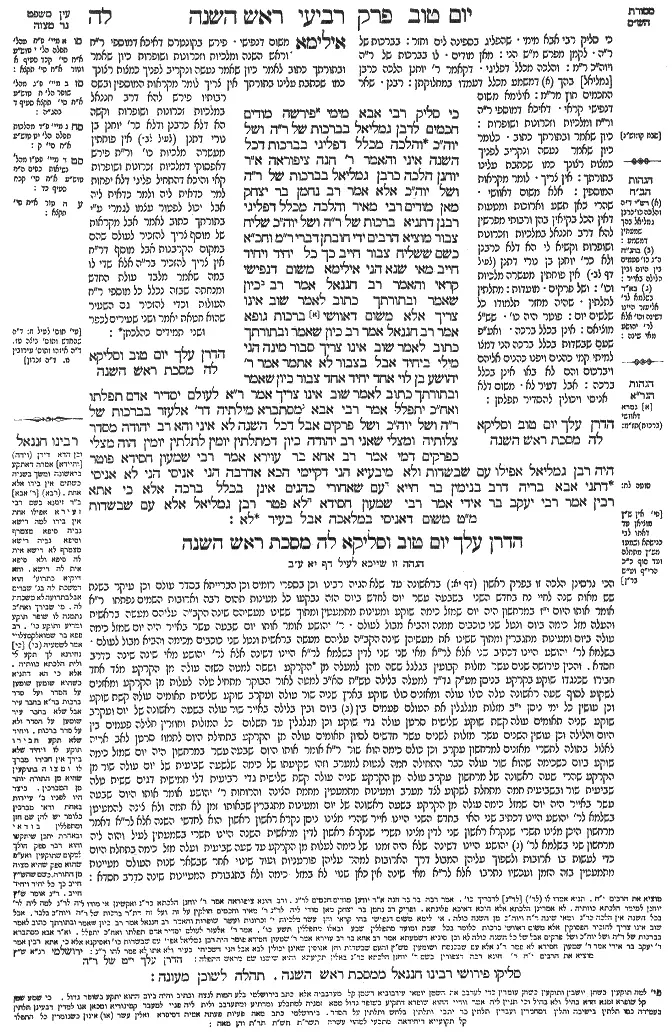
כי סליק רבי אבא מימי פירשה מודים חכמים לרבן גמליאל בברכות של ר"ה ושל יוה"כ והלכה מכלל דפליגי בברכות דכל השנה איני והאמר ר' חנה ציפוראה א"ר יוחנן הלכה כרבן גמליאל בברכות של ר"ה ושל יוה"כ אלא אמר רב נחמן בר יצחק מאן מודים רבי מאיר והלכה מכלל דפליגי רבנן דתניא ברכות של ר"ה ושל יוה"כ שליח צבור מוציא הרבים ידי חובתן דברי ר"מ וחכ"א כשם ששליח צבור חייב כך כל יחיד ויחיד חייב מאי שנא הני אילימא משום דנפישי קראי והאמר רב חננאל אמר רב כיון שאמר ובתורתך כתוב לאמר שוב אינו צריך אלא משום דאוושי ברכות גופא אמר רב חננאל אמר רב כיון שאמר ובתורתך כתוב לאמר שוב אינו צריך סבור מינה הני מילי ביחיד אבל בצבור לא אתמר אמר ר' יהושע בן לוי אחד יחיד אחד צבור כיון שאמר ובתורתך כתוב לאמר שוב אינו צריך אמר ר"א לעולם יסדיר אדם תפלתו ואח"כ יתפלל אמר רבי אבא מסתברא מילתיה דר' אלעזר בברכות של ר"ה ושל יוה"כ ושל פרקים אבל דכל השנה לא איני והא רב יהודה מסדר צלותיה ומצלי שאני רב יהודה כיון דמתלתין יומין לתלתין יומין הוה מצלי כפרקים דמי אמר רב אחא בר עוירא אמר רבי שמעון חסידא פוטר היה רבן גמליאל אפילו עם שבשדות ולא מיבעיא הני דקיימי הכא אדרבה הני אניסי הני לא אניסי דתני אבא בריה דרב בנימין בר חייא עם שאחורי כהנים אינן בכלל ברכה אלא כי אתא רבין אמר רבי יעקב בר אידי אמר רבי שמעון חסידא לא פטר רבן גמליאל אלא עם שבשדות מ"ט משום דאניסי במלאכה אבל בעיר לא:
הדרן עלך יום טוב וסליקא לה מסכת ראש השנה
Comments from Rashi on Masechet Rosh Hashanah Page 35a
כי סליק רבי אבא מימי . שהפליג בספינה לים וחזר: בברכות של ר"ה . לקמן מפרש מ"ש הני: מאן מודים . לו בברכות של ר"ה ויוה"כ ר"מ: והלכה מכלל דפליגי . דקאמר ר' יוחנן הלכה כרבן [גמליאל] בהך דמשמע מכלל דעמדו במחלוקתן: רבנן . שאר החכמים חוץ מר"מ: אילימא משום דנפישי קראי . דאיכא דמוספי ר"ה ור"ח ומלכיות וזכרונות ושופרות: כיון שאמר ובתורתך כתוב . כלומר כיון שאמר נעשה ונקריב לפניך כמצות רצונך כמו שכתבת עלינו בתורתך: אין צריך . לומר מקראות המוספין: אלא משום דאוושי . שהרי כאן תשע וארוכות ומטעות דאין הכל בקיאין בהן ורבותי מפרשין להא דרב חננאל במלכיות וזכרונות ושופרות וקשיא לי הא דלא כרבנן ולא כר' יוחנן בן נורי דתנן (לעיל ראש השנה דף לב.) אין פוחתין מעשרה מלכיות וכו': ושל פרקים . מועדות: מתלתין לתלתין . שהיה מחזר תלמודו כל שלשים יום: פוטר היה כו' . שש"צ מוציאם: אינן בכלל ברכה . ואע"פ שעם שבשדות בכלל ברכה הני דמצו למיתי קמי כהנים ויפנו כהנים אליהם ויברכום והם לא באו אינן בכלל ברכה: אבל דעיר לא . משום דלא אניסי ויכולין להסדיר תפלתן:
Comments from Tosafot - Rosh Hashanah 35a
אילימא משום דנפישי. פירש בקונטרס דאיכא דמוספי ר"ח וראש השנה ומלכיות וזכרונות ושופרות כיון שאמר. ובתורתך כתוב לאמר כיון שאמר נעשה ונקריב לפניך כמצות רצונך כמו שכתבת עלינו בתורתך אין צריך לומר מקראות המוספין ובשם רבותיו פירש להא דרב חננאל במלכיות זכרונות ושופרות וקשה הא דלא כרבנן ודלא כר' יוחנן בן נורי דתנן (לעיל ראש השנה לב.) אין פוחתין מעשרה מלכיות כו' ור"ת פירש דאפסוקי דמלכיות זכרונות ושופרות קאי והיכא דהתחיל פליגי דלא יפחות למר כדאית ליה ולמר כדאית ליה אבל יכול לפטור עצמו לגמרי ע"י בתורתך כתוב לאמר אבל מקראות של מוסף צריך להזכיר לעולם שהם במקום הקרבנות אבל מוסף דר"ח אין צריך להזכיר בר"ה אלא שדי לו במה שאמר מלבד עולת החדש ומנחתה שבזה נכלל כל מוספי ר"ח העולות וכדי להזכיר גם השעיר שהוא חטאת יאמר ושני שעירים לכפר ושני תמידים כהלכתן:
Rosh Hashanah 35a - Mishnah translated into english
The Gemara answers: When Rabbi Abba returned from his travels at sea, he explained the matter as follows: The Sages concede to the opinion of Rabban Gamliel with regard to the blessings of Rosh HaShana and of Yom Kippur, that in these cases the prayer leader fulfills the obligation on behalf of the many. And Rabbi Yoḥanan’s statement that the halakha is in accordance with Rabban Gamliel, which, by inference, indicates that the tanna’im still disagree, is referring to the blessings of the entire year.
The Gemara raises a difficulty. Is that so? Didn’t Rabbi Ḥana from the city of Tzippori say that Rabbi Yoḥanan said: The halakha is in accordance with the opinion of Rabban Gamliel with regard to the blessings of Rosh HaShana and of Yom Kippur? Apparently, he holds that the tanna’im remain in dispute even with regard to these blessings.
Rather, Rabbi Yoḥanan’s statements must be attributed to different Sages, as Rav Naḥman bar Yitzḥak said: Who concedes to the opinion of Rabban Gamliel? Rabbi Meir. And with regard to Rabbi Yoḥanan’s ruling that the halakha is in accordance with Rabban Gamliel, which, by inference, indicates that the tanna’im still disagree, this is referring to the Rabbis, who disagree with Rabbi Meir.
The Gemara explains: As it is taught in a baraita: With regard to the blessings of Rosh HaShana and of Yom Kippur, the prayer leader fulfills the obligation on behalf of the many. This is the statement of Rabbi Meir. And the Rabbis say: Just as the prayer leader is obligated in these prayers, so too, every individual is obligated to recite them on his own. Clearly, Rabbi Meir agrees with Rabban Gamliel with regard to the blessings of Rosh HaShana and Yom Kippur, while the Rabbis dispute this ruling.
The Gemara asks: What is different about these blessings of Rosh HaShana and Yom Kippur, that Rabbi Meir concedes to the opinion of Rabban Gamliel only with regard to them, but not about the blessings recited the rest of the year? If we say that it is due to the many verses that are included in these blessings, this is difficult. Didn’t Rav Ḥananel say that Rav said: Once one has recited the line of the prayer: And in Your Torah it is written, saying, it is no longer necessary to recite the verses themselves. Rather, it is because there are many blessings, and as the blessings are long, not everyone is capable of learning them by heart.
The Gemara discusses the matter itself. Rav Ḥananel said that Rav said: Once one has recited the line of the prayer: And in Your Torah it is written, saying, it is no longer necessary to recite the verses themselves. The Gemara clarifies the scope of this ruling: Some understood from this that it applies only to an individual; however, with regard to a congregation, no, this is not the case. Nevertheless, it is stated that Rabbi Yehoshua ben Levi said: Both with regard to an individual and a congregation, once one has recited: And in Your Torah it is written, saying, it is no longer necessary to recite the verses.
§ Rabbi Elazar said: A person should always arrange his prayer in his mind and only then pray. Rabbi Abba said: Rabbi Elazar’s statement is reasonable with regard to the blessings of Rosh HaShana and Yom Kippur and in the case of prayers that are recited only intermittently. However, with regard to blessings recited all year, no, this practice is not necessary.
The Gemara asks: Is that so? Didn’t Rav Yehuda first arrange his prayer in his mind and only then pray, even on an ordinary day? The Gemara answers: Rav Yehuda was different, since he would pray only once every thirty days. During the rest of the month he would not engage in prayer, as he was busy with Torah study. Therefore, for him even regular weekdays prayers were like prayers recited intermittently.
Rav Aḥa bar Avira said that Rabbi Shimon Ḥasida said: Rabban Gamliel would allow the prayer leader to exempt even the people who were in the fields and away from the synagogue. The Gemara challenges: This statement implies that the prayer leader exempts even the people in the fields, and needless to say, he exempts those who are here in the city but did not attend the prayer service in the synagogue.
The Gemara questions this conclusion: On the contrary, the opposite is more reasonable: Those in the fields did not come to the synagogue due to circumstances beyond their control, and therefore they should be allowed to fulfill their obligation through the prayer leader. By contrast, those in the city were not prevented from coming to the synagogue due to circumstances beyond their control. Consequently, they should not fulfill their obligation through the prayer leader.
As Abba, son of Rav Binyamin bar Ḥiyya, taught in a baraita: Those people standing in the synagogue behind the priests during the Priestly Blessing, who are not positioned in front of them, face-to-face, are not included in the blessing. They are expected to make the minimal effort to stand in front of the priests. However, those in the fields are included in the Priestly Blessing.
Rather, Rabban Gamliel’s statement should be understood differently: When Ravin came from Eretz Yisrael to Babylonia, he reported that Rabbi Ya’akov bar Idi said that Rabbi Shimon bar Ḥasida said: Rabban Gamliel allowed the prayer leader to exempt only the people in the fields. What is the reason for this? Because the people in the fields are unable to come to the synagogue due to work circumstances beyond their control, and do not have time to prepare their prayers. However, Rabban Gamliel did not exempt those in the city who do not come to the synagogue, as they are able to prepare their prayers and pray by themselves.
Traduction : The William Davidson digital edition of the Koren Noé Talmud, with commentary by Rabbi Adin Even-Israel Steinsaltz.