 Talmud Bavli
Rosh Hashanah 24a : Youtube
Daf TubeYoutube
2 video classes :
Rosh Hashanah Page 24a
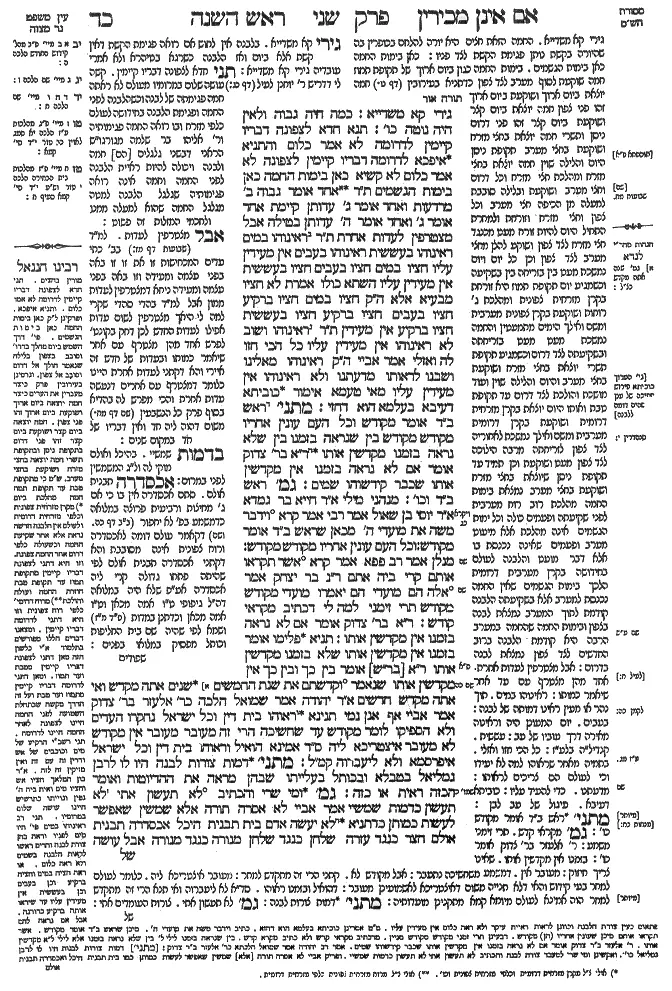
Rosh Hashanah 24a - Guemara
גירי קא משדייא:
כמה היה גבוה ולאין היה נוטה כו':
תנא חדא לצפונה דבריו קיימין לדרומה לא אמר כלום והתניא איפכא לדרומה דבריו קיימין לצפונה לא אמר כלום לא קשיא כאן בימות החמה כאן בימות הגשמים ת"ר אחד אומר גבוה ב' מרדעות ואחד אומר ג' עדותן קיימת אחד אומר ג' ואחד אומר ה' עדותן בטילה אבל מצטרפין לעדות אחרת ת"ר ראינוהו במים ראינוהו בעששית ראינוהו בעבים אין מעידין עליו חציו במים חציו בעבים חציו בעששית אין מעידין עליו השתא כולו אמרת לא חציו מבעיא אלא ה"ק חציו במים חציו ברקיע חציו בעבים חציו ברקיע חציו בעששית חציו ברקיע אין מעידין ת"ר ראינוהו ושוב לא ראינוהו אין מעידין עליו כל הכי חזו לה ואזלי אמר אביי ה"ק ראינוהו מאלינו ושבנו לראותו מדעתנו ולא ראינוהו אין מעידין עליו מאי טעמא אימור כוביתא דעיבא בעלמא הוא דחזי:
מתני׳ ראש ב"ד אומר מקודש וכל העם עונין אחריו מקודש מקודש בין שנראה בזמנו בין שלא נראה בזמנו מקדשין אותו ר"א בר' צדוק אומר אם לא נראה בזמנו אין מקדשין אותו שכבר קידשוהו שמים:
גמ׳ ראש ב"ד וכו':
מנהני מילי א"ר חייא בר גמדא א"ר יוסי בן שאול אמר רבי אמר קרא (ויקרא כג, מד) וידבר משה את מועדי ה' מכאן שראש ב"ד אומר מקודש:
וכל העם עונין אחריו מקודש מקודש מנלן אמר רב פפא אמר קרא (ויקרא כג, ב) אשר תקראו אותם קרי ביה אתם ר"נ בר יצחק אמר (ויקרא כג, ב) אלה הם מועדי הם יאמרו מועדי מקודש מקודש תרי זימני למה לי דכתיב מקראי קודש:
ר"א בר' צדוק אומר אם לא נראה בזמנו אין מקדשין אותו:
תניא פלימו אומר בזמנו אין מקדשין אותו שלא בזמנו מקדשין אותו ר"א [בר"ש] אומר בין כך ובין כך אין מקדשין אותו שנאמר (ויקרא כה, י) וקדשתם את שנת החמשים שנים אתה מקדש ואי אתה מקדש חדשים א"ר יהודה אמר שמואל הלכה כר' אלעזר בר' צדוק אמר אביי אף אנן נמי תנינא ראוהו בית דין וכל ישראל נחקרו העדים ולא הספיקו לומר מקודש עד שחשיכה הרי זה מעובר מעובר אין מקודש לא מעובר איצטריכא ליה ס"ד אמינא הואיל וראוהו בית דין וכל ישראל איפרסמא ולא ליעברוה קמ"ל:
מתני׳ דמות צורות לבנה היו לו לרבן גמליאל בטבלא ובכותל בעלייתו שבהן מראה את ההדיוטות ואומר הכזה ראית או כזה:
גמ׳ ומי שרי והכתיב (שמות כ, כג) לא תעשון אתי לא תעשון כדמות שמשיי אמר אביי לא אסרה תורה אלא שמשין שאפשר לעשות כמותן כדתניא לא יעשה אדם בית תבנית היכל אכסדרה תבנית אולם חצר כנגד עזרה שלחן כנגד שלחן מנורה כנגד מנורה אבל עושה
Comments from Rashi on Masechet Rosh Hashanah Page 24a
גירי קא משדייא . החמה הזאת חצים היא יורה להלחם בכופרין בה שהיורה בקשת נותן פגימת הקשת לצד פניו: כאן בימות החמה כאן בימות הגשמים . בימות החמה כגון ביום ארוך של תקופת תמוז חמה שוקעת לסוף מערב לצד צפון כדתניא בעירובין (דף נו.) חמה יוצאת ביום ארוך ושוקעת ביום ארוך זהו פני צפון חמה יוצאת ביום קצר ושוקעת ביום קצר זהו פני דרום ניסן ותשרי חמה יוצאת בחצי מזרח ושוקעת בחצי מערב תקופת ניסן היום והלילה שוין חמה יוצאת בחצי מזרח ומהלכת חצי מזרח וכל דרום וחצי מערב ושוקעת ובלילה סובבת למעלה מן הכיפה חצי מערב וכל צפון וחצי מזרח וזורחת ולמחרת התחיל היום להיות זורח מעט מכנגד חצי מזרח לצד צפון ושוקע להלן מחצי מערב לצד צפון וכן כל יום ויום נמשכת מעט בין בזריחה בין בשקיעה וכשמגיע יום תקופת תמוז היא זורחת בקרן מזרחית צפונית ומהלכת ג' רוחות ושוקעת בקרן צפונית מערבית ומשם ואילך הימים מתמעטין והחמה נמשכת מעט מעט בזריחתה ובשקיעתה לצד דרום וכשמגיע תקופת תשרי יוצאת בחצי מזרח ושוקעת בחצי מערב והיום והלילה שוין ועוד מושכת והולכת לצד דרום עד תקופת טבת ואותו היום יוצאת בקרן מזרחית דרומית ושוקעת בקרן דרומית מערבית ומשם ואילך נמשכת לאחוריה לצד צפון לזריחתה מרבה הילוכה לצד צפון מעט ושוקעת וכן תמיד עד תקופת ניסן שיוצאת בחצי מזרח ושוקעת בחצי מערב נמצאת בימות החמה מהלכת רוב רוח מערבית לפני שקיעתה ופעמים כולה וכל ימות הגשמים אינה מהלכת אלא מיעוט מערב ופעמים שאינה נכנסת בו אלא דבר מועט והלבנה לעולם בחידושה בקרן מערבית דרומית הלכך בימות הגשמים שאין החמה נכנסת למערב אלא בשקיעתה הלבנה קודמת לתוך המערב נמצאת לבנה בצפון ובימות החמה שהחמה במערב הרבה היא קודמת הלבנה ברוב החדשים לצד צפון נמצאת לבנה בדרום: אבל מצטרפין לעדות אחרת . אחד מהן מצטרף עם עד אחר שיאמר כמותו: ראינוהו במים . תוך נהר או מעין ראינו דמותה של לבנה: בעבים . יום המעונן היה וראינוה מאירה דרך עוביו של עב: עששית . קנדיל"ה בלע"ז: כל הכי חזו ואזלי . בתמיה מאחר שראוהו למה לא יעידו וכי לעולם הם צריכים לראותו: מדעתנו . כדי להעיד עליו: כוביתא דעיבא . עיגול של עב לבן: מתני' ראש ב"ד אומר מקודש כו': גמ' מקראי קדש . תרי זימני משמע: ר' אלעזר בר' צדוק אומר כו': בזמנו אין מקדשין אותו . שאינו צריך חיזוק: מעובר אין . דמשמע משחשיכה נתעבר: אבל מקודש לא . קתני הרי זה מתקדש למחר: מעובר איצטריכא ליה . כלומר לעולם למחר בעי קידוש והאי דלא תנייה משום דאיצטריכא לאשמועינן מעובר: דהואיל ובזמנו ראוהו . סד"א לא ליעברוה ואי תנא הרי זה מתקדש למחר הוה אמינא לעולם מיומא קמא מתקנינן מועדותיה: מתני' דמות צורות לבנה: גמ' לא תעשון אתי . צורות העומדים אתי:
Comments from Tosafot - Rosh Hashanah 24a
גירי קא משדייא. בלבנה אין לחוש אם רואה פגימת הקשת דאין קשת אלא ביום ואז הלבנה כשרגא בטיהרא ולא אמרי עובדיה גירי קא משדייא: תני חדא לצפונה דבריו קיימין. קשה לי דדריש ר' יוחנן לעיל (ראש השנה דף כג.) עושה שלום במרומיו מעולם לא ראתה חמה פגימתה של לבנה וכשהלבנה לפני החמה ופגימת הלבנה בחידושה לעולם כלפי מזרח ובו רואה החמה פגימותיה ור' אליהו בר שלמה מגורגו"ש הראני דבשני גלגלים [הם] חמה ולבנה ויכולה להיות ראיית הלבנה לפני החמה וחמה אינה רואה פגימותיה שגלגל הלבנה למטה מגלגל החמה שהוא למעלה ממנו ולחכמי המזלות זה פשוט: אבל מצטרפין לעדות. למ"ד (שבועות דף מז:) בב' כתי עדים המכחישות זו את זו זו באה בפני עצמה ומעידה וזו באה בפני עצמה ומעידה ניחא דמצטרפין לעדות ממון אבל למ"ד בהדי סהדי שקרי למה לי היאך מצטרפין לשום עדות אפילו לעדות החדש לכן דחק בקונט' לפרש אחד מהן מצטרף עם אחר שיאמר כמותו ובעדות של חדש זה איירי והא דקתני לעדות אחרת היינו כלומר דמצטרף עם אחרים דנעשה עדות אחרת והכי מפרש לה בהדיא בסוף פרק כל הנשבעין (שם דף מח.) משום דהוה ליה חד ואין דבריו של חד במקום שנים: בדמות שמשיי. בהיכל ואולם מוקי לה ול"ג המשמשין לפני במרום: אכסדרה תבנית אולם. סתם אכסדרה אין בו כי אם ג' מחיצות ורביעית פרוצה במלואה כדמשמע בפ' לא יחפור (ב"ב דף כה. ושם) דקאמר עולם דומה לאכסדרה ורוח צפונית אינה מסובבת והא דקתני אכסדרה תבנית אולם לפי שהיתה פתחו גדולה קרי ליה אכסדרה אע"פ שלא היה במלואה דה"ל גיפופי ט"ו אמה מכאן וט"ו אמה מכאן וכדתנן במדות (פ"ד מ"ז) ושמא לפי שהיה שם בית החליפות וכותל מפסיק במלואו בפנים:
Rosh Hashanah 24a - Mishnah translated into english
that the sun is shooting arrows at those who deny its divinity, using the rainbow as its bow. The concave side of the rainbow always faces away from the sun, so that it does not look like a bow held by the sun.
§ The mishna taught that the examination of the witnesses included the following questions: How high was the moon over the horizon, and in which direction did it tilt? It was taught in one baraita: If the witness testifies that he saw the moon to the north of the sun, his statement is valid. However, if he says that he saw it to its south, he has not said anything of significance, as this is impossible. The Gemara asks: Isn’t the opposite taught in a different baraita: If he testifies that he saw the moon to the south of the sun, his statement is valid. However, if he says he saw it to its north, he has not said anything.
The Gemara answers: This is not difficult. Here, in the second baraita mentioned above, it is referring to the summer, when the moon is to the south of the sun; there, in the first baraita mentioned above, it is referring to the rainy season, when the moon is to the north of the sun.
The Sages taught in a baraita: If one witness says that he saw the moon two plow handles high above the horizon, and the other one says it was three plow handles high, their testimony is valid, as a small discrepancy of this kind is reasonable. However, if one says that he saw the moon three plow handles above the horizon, and the other one says it was five plow handles high, their testimony is void, as that discrepancy is unacceptable. However, this does not mean that the witnesses themselves are disqualified, as either of them may join with another testimony, i.e., he may combine his account with that of another witness who testifies likewise.
The Sages taught in another baraita that if the witnesses say: We did not actually see the moon, but we saw it reflected in the water, or we saw it reflected in a glass lantern, or we saw it through thin clouds, they may not testify about it, as only a direct sighting of the moon is acceptable. If they say: We saw half of the moon’s reflection in the water, or we saw half of it through the clouds, or we saw half of it in a lantern, they still may not testify about it.
The Gemara analyzes this baraita: Now, if when one sees the entire moon in this manner, you said that this is not valid testimony, is it necessary to teach that one may not testify when he sees only half of it? Rather, this is what the baraita is saying: If the witnesses saw half of the moon’s reflection in water and half of it directly in the sky, or half of it through the clouds and half of it in the sky, or half of it in a lantern and half of it in the sky, although they saw half of the moon directly, they may not testify about it until they see the entire moon in the sky.
The Sages taught in another baraita that if the witnesses say: One moment we saw the new moon, but we did not see it again, they may not testify about it. The Gemara asks: Must they go on watching it to such an extent, i.e., why should they have to see it for a long period of time?
Abaye said that this is what the baraita is saying: If the witnesses say: We saw the moon on our own accord, i.e., by chance, without looking for it, and then we returned to look for it on purpose, to deliver precise testimony about it, but we did not see it again, they may not testify about it. What is the reason? Because one can say that the first time it was merely a small round white cloud that they saw, which they mistook for the moon, and that is why when they looked for it again they could not find it.
MISHNA: After the witnesses have been examined and their testimony accepted, the head of the court says: It is sanctified. And all the people respond after him: It is sanctified; it is sanctified. Whether the moon was seen at its anticipated time, on the thirtieth day of the previous month, or whether it was not seen at its anticipated time, in which case witnesses are not necessary to establish the following day as the New Moon, the court sanctifies it and formally proclaims the day as the New Moon.
Rabbi Elazar, son of Rabbi Tzadok, says: If the new moon was not seen at its anticipated time, the court does not sanctify the New Moon on the following day, as the celestial court in Heaven has already sanctified it, precluding the need for the additional sanctification by the earthly court.
GEMARA: The mishna teaches that the head of the court says: It is sanctified. The Gemara asks: From where are these matters, that the court must sanctify the New Moon, derived? Rabbi Ḥiyya bar Gamda said that Rabbi Yosei ben Shaul said that Rabbi Yehuda HaNasi said that the verse states: “And Moses declared to the children of Israel the appointed seasons of the Lord” (Leviticus 23:44). From here it is derived that the head of the court says: It is sanctified, as it is evident from the verse that Moses, whose status was equivalent to that of the head of the Great Sanhedrin, declared the appointed times of the Festivals and New Moons in a formal manner.
§ The mishna further teaches that after the head of the court says: It is sanctified, all the people respond after him: It is sanctified; it is sanctified. The Gemara asks: From where do we derive this? Rav Pappa said that the verse states: “Which you shall proclaim them [otam] to be sacred convocations” (Leviticus 23:2). Instead of otam, read into the verse: You [atem], as though the verse stated: Which you shall proclaim, you. This superfluous word you teaches that the month must be proclaimed not only by the head of the court, but also by you, the people. Rav Naḥman bar Yitzḥak said that it is derived from the phrase: “These are [hem] My appointed seasons” (Leviticus 23:2). The term hem can also mean: They, which indicates that they, the people, should likewise say and announce My appointed seasons.
The Gemara further asks: Why do I need the people to declare: It is sanctified; it is sanctified, twice? The Gemara answers that the reason is that it is written: “Sacred convocations” (Leviticus 23:2) in the plural, which indicates that they must announce it twice.
§ The mishna taught that Rabbi Elazar, son of Rabbi Tzadok, says: If the new moon was not seen at its anticipated time, the court does not sanctify the New Moon on the following day. The Gemara cites other opinions in this regard: It is taught in a baraita that the Sage Palaimo says: If the new moon was seen at its anticipated time, the court does not sanctify the New Moon, as the new moon appeared as expected and there is no need for any special sanctification. However, if the new moon was seen not at its anticipated time, the court must sanctify the New Moon.
The baraita continues: Rabbi Elazar, son of Rabbi Shimon, says: In either case, the court does not sanctify the New Moon formally, as it is stated: “And you shall sanctify the fiftieth year” (Leviticus 25:10), from which it is derived: You must formally sanctify years in court, but you do not have to formally sanctify months, as they are sanctified automatically by Heaven. Rather, it is enough merely to announce to the public that a certain day was established as the New Moon. Rabbi Yehuda said that Shmuel said: The halakha is in accordance with the opinion of Rabbi Elazar, son of Rabbi Tzadok, that if the new moon was seen at its anticipated time, the court sanctifies the new month; however, if it was not seen at its anticipated time, they do not sanctify it.
Abaye said: We, too, learn in a mishna: If the court and all of the Jewish people saw the new moon, and the witnesses were interrogated, but the court did not manage to say: Sanctified, before nightfall, the previous month is rendered a full, thirty-day month. This indicates that full, yes; i.e., in this case, it is necessary to extend the previous month. However, sanctified, no; there is no need to formally sanctify the month, as the New Moon does not occur on its anticipated date in this case.
The Gemara rejects this argument: There is no proof from here, as it was necessary for the mishna to mention that the month is rendered a full, thirty-day month. The reason is that it might enter your mind to say that since the court and the entire Jewish people saw the new moon, it has become public knowledge and therefore there is no need to render the previous month a full, thirty-day month. Consequently, the mishna teaches us that even in this case the previous month must be extended. Nevertheless, it is still possible that the New Moon must be formally sanctified on the following day.
MISHNA: Rabban Gamliel had a diagram of the different forms of the moon drawn on a tablet that hung on the wall of his attic, which he would show to the laymen who came to testify about the new moon but were unable to describe adequately what they had seen. And he would say to them: Did you see a form like this or like this?
GEMARA: The Gemara asks: And is it permitted to create these types of forms? Isn’t it written: “You shall not make with Me gods of silver, or gods of gold” (Exodus 20:20), which is interpreted as teaching: You shall not make images of My attendants, i.e., those celestial bodies that were created to serve God, including the sun and the moon?
§ Abaye said: The Torah prohibited only the images of those attendants with regard to which it is possible to reproduce an item in their likeness. Since it is impossible for anyone to reproduce the sun and the moon, the prohibition does not apply to these objects. As it is taught in a baraita: A person may not construct a house in the exact form of the Sanctuary, nor a portico in the exact form of the Entrance Hall of the Sanctuary, nor a courtyard corresponding to the Temple courtyard, nor a table corresponding to the table in the Temple, nor a candelabrum corresponding to the candelabrum in the Temple. However, one may fashion
Traduction : The William Davidson digital edition of the Koren Noé Talmud, with commentary by Rabbi Adin Even-Israel Steinsaltz.