 Talmud Bavli
Beitza 18b : Youtube
Daf TubeYoutube
3 video classes :
Beitza Page 18b
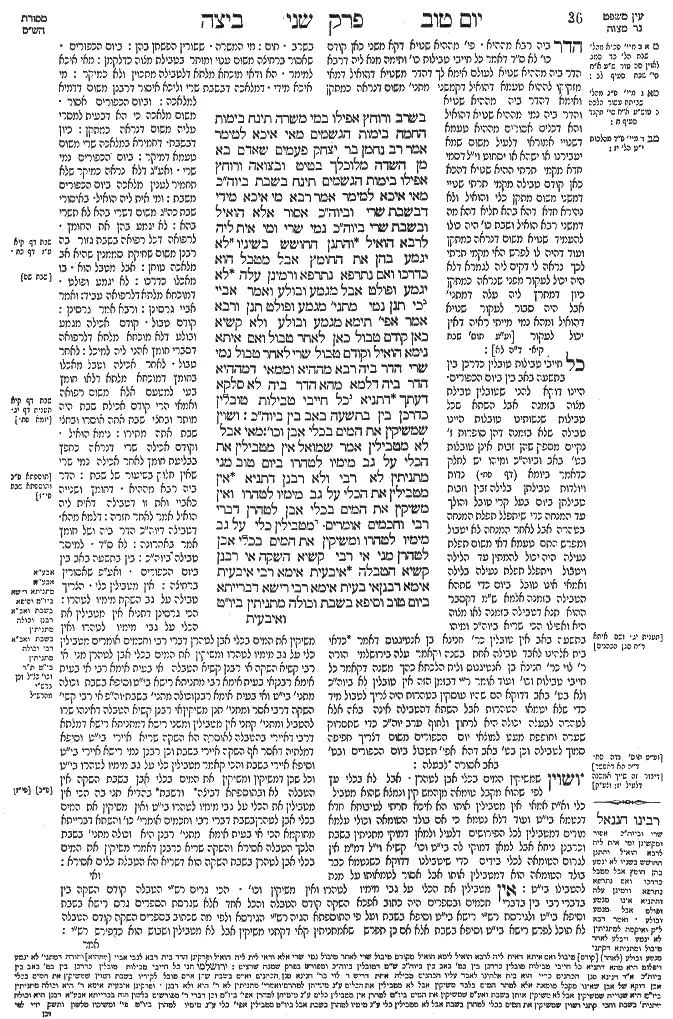
Beitza 18b - Guemara
בשרב ורוחץ אפילו במי משרה תינח בימות החמה בימות הגשמים מאי איכא למימר אמר רב נחמן בר יצחק פעמים שאדם בא מן השדה מלוכלך בטיט ובצואה ורוחץ אפילו בימות הגשמים תינח בשבת ביוה"כ מאי איכא למימר אמר רבא מי איכא מידי דבשבת שרי וביוה"כ אסור אלא הואיל ובשבת שרי ביוה"כ נמי שרי ומי אית ליה לרבא הואיל והתנן החושש בשיניו לא יגמע בהן את החומץ אבל מטבל הוא כדרכו ואם נתרפא נתרפא ורמינן עלה לא יגמע ופולט אבל מגמע ובולע ואמר אביי כי תנן נמי מתני' מגמע ופולט תנן ורבא אמר אפי' תימא מגמע ובולע ולא קשיא כאן קודם טבול כאן לאחר טבול ואם איתא נימא הואיל וקודם טבול שרי לאחר טבול נמי שרי הדר ביה רבא מההיא וממאי דמההיא הדר ביה דלמא מהא הדר ביה לא סלקא דעתך דתניא כל חייבי טבילות טובלין כדרכן בין בתשעה באב בין ביוה"כ:
ושוין שמשיקין את המים בכלי אבן וכו':
מאי אבל לא מטבילין אמר שמואל אין מטבילין את הכלי על גב מימיו לטהרו ביום טוב מני מתניתין לא רבי ולא רבנן דתניא אין מטבילין את הכלי על גב מימיו לטהרו ואין משיקין את המים בכלי אבן לטהרן דברי רבי וחכמים אומרים מטבילין כלי על גב מימיו לטהרו ומשיקין את המים בכלי אבן לטהרן מני אי רבי קשיא השקה אי רבנן קשיא הטבלה איבעית אימא רבי איבעית אימא רבנן אי בעית אימא רבי רישא דברייתא ביום טוב וסיפא בשבת וכולה מתניתין ביו"ט
Comments from Rashi on Masechet Beitza Page 18b
בשרב . חום: מי המשרה . ששורין הפשתן בהן: ביום הכפורים . שאסור ברחיצה משום ענוי ומותר בטבילת מצוה כדלקמן: מאי איכא למימר . הא ודאי מוכחא מלתא דלטבילה מתכוין ולא כמיקר: מי איכא מידי . דמלאכה דבשבת שרי וליכא איסור דרבנן משום דדמיא למלאכה: וביום הכפורים אסור . משום מלאכה כי הא דבעית למסרי עליה משום דנראה כמתקן: כיון דבשבת . דחמירא במלאכה שרי משום טעמא דמיקר: ביום הכפורים נמי שרי . ואע"ג דלא נראה כמיקר שלא תחמיר לענין מלאכה ביום הכפורים משבת: ומי אית ליה הואיל . באיסורי שבת כה"ג משום דשרי בהא לא תשרי בהא: לא יגמע בהן את החומץ . לרפואה דכל רפואה בשבת גזור בה רבנן משום שחיקת סממנין שהיא אב מלאכה טוחן: אבל מטבל הוא . בו מאכלו כדרכו: לא יגמע ופולט . דמוכחא מלתא דלרפואה עביד: ואמר אביי גרסינן: ורבא אמר . גרסינן: קודם טבול . קודם אכילה מגמע ובולע דלא מוכחא מלתא דלרפואה דסברי חומץ אהני ליה למיכל: לאחר טבול . לאחר אכילה וטבל מאכלו בחומץ דמוכחא מלתא דלאו חומץ בעי למטעם אלא משום רפואה ואמאי הרי קודם אכילת שבת היה מותר ובחצי שבת אתה אוסרו ובחצי שבת אתה מתירו: נימא הואיל . וקודם אכילה שרי דנראה כחפץ בבליעת חומץ לאחר אכילה נמי שרי שאין חלוק בשיעור של שבת: הדר ביה רבא מההיא . דחומץ ושנייה כאביי ואת זו דטבילה דאית ליה הואיל אמר לאחר חזרה: דלמא מהא . דטבילה דיוה"כ הדר ביה ושל חומץ אמר באחרונה: לא ס"ד . למיסר טבילה ביוה"כ: בין בתשעה באב בין ביום הכפורים . ואע"פ שאסורין ברחיצה: אין מטבילין כלי . הצריך טבילה על גב השקת מימיו לטהרו: הכי גרסינן דתניא אין מטבילין את הכלי על גב מימיו לטהרו ואין משיקין את המים בכלי אבן לטהרן דברי רבי וחכמים אומרים מטבילין כלי על גב מימיו לטהרו ומשיקין את המים בכלי אבן לטהרן מני אי רבי קשיא השקה אי רבנן קשיא הטבלה אי בעית אימא רבי אי בעית אימא רבנן אי בעית אימא רבי מתניתא רישא בי"ט וסיפא בשבת וכולה מתני' בי"ט ואי בעית אימא רבנן וכולה מתני' בשבת . וה"פ אי רבי קשי' השקה דרבי אסר ומתני' תנן משיקין אי רבנן קשיא הטבלה דאינהו שרו להטביל ומתניתין קתני אין מטבילין ומשני רישא דמתניתא רישא דמלתא דרבי דאיירי בהטבלה לאוסרה הא השקה שריא איירי בי"ט וסיפא דמלתיה דאסר אף השקה איירי בשבת וכן רבנן נמי רישא איירי בי"ט וסיפא איירי בשבת והכי קאמר מטבילין כלי על גב מימיו לטהרו ביו"ט וכל שכן דמשיקין ומשיקין את המים בכלי אבן בשבת השקה אין הטבלה לא ובתוספתא דביצה ודשבת בהדיא תני בה הכי אין מטבילין את הכלי על גב מימיו לטהרו בי"ט ואין משיקין את המים בכלי אבן לטהרן בשבת דברי רבי וחכמים אומרים כו' והשתא דברייתא מתוקמא הכי אי בעית אימא מתני' רבנן היא וכולה מתני' בשבת הלכך הטבלה אסירא והשקה שריא כרבנן דאמרי משיקין את המים בכלי אבן לטהרן בשבת השקה הוא דשריא הא הטבלת כלים אסירא:
Comments from Tosafot - Beitza 18b
הדר ביה רבא מההיא. פי' מההיא שנויא דקא משני כאן קודם כו' לא ס"ד דאמר כל חייבי טבילות כו' ותימה מנא ליה דרבא הדר ביה מההיא שנויא לעולם אימא לך דהדר משנויא דהואיל דמאי מזקיקו לההוא טעמא דהואיל דקמשני מתני' משום דנראה כמתקן ואימא דהדר ביה מההיא שנויא והדר ביה נמי מההיא שנויא דהואיל והא דכלים אסורים מההיא טעמא דשנויי אמוראי דלעיל משום שמא יעבירנו או ישהא או יסחוט וי"ל דסמי חדא מקמי תרתי ההיא שנויא דהכא כאן קודם טבילה מקמי תרתי שנויי דמשני משום מתקן כלי והואיל ולא נהירא חדא דהא בהא תליא דהא מה דמשני רבא הואיל ושבת כו' היה כולו להעמיד שנויא משום דנראה כמתקן ועוד דהיה לו לפרש האי מקמי תרתי לכך נראה לי דקים ליה לגמרא דלא היה יכול לעקור מפני שנראה כמתקן כיון דמתרץ ליה עלה דמתני' אבל היה סבור לעקור שנויא דהואיל ומהא נמי מייתי ראיה דאין יכול לעקור [וע"ע תוס' שבת קיא. ד"ה לא]: כל חייבי טבילות טובלין כדרכן בין בתשעה באב בין ביום הכפורים. היינו דוקא להני שטובלין טבילת מצוה בזמנה אבל השתא שכל טבילות שנשותינו טובלות היינו טבילה שלא בזמנה דהן סופרות ז' נקיים מספק שהן זבות אינן טובלות בט' באב וביוה"כ ומיהו יש לחלק כדאמר ביומא (דף פח.) נדות ויולדות טבילתן בלילה זבין וזבות טבילתן ביום בעל קרי טובל והולך עד המנחה כדי שיתפלל תפלת המנחה בטהרה אבל לאחר המנחה לא יטבול ומפרש התם טעמא דאי משום תפלת נעילה היה יכול להמתין עד הלילה ויטבול ויתפלל תפלת נעילה בלילה ואמאי אינו טובל ביום כדי שתהא הטבילה בזמנה אלמא ש"מ דקסבר ההוא תנא דטבילה בזמנה לאו מצוה היא ואפילו הכי שריא ביוה"כ ומיהו בתשעה באב אין טובלין כר' חנינא בן אנטיגנוס דאמר כדאי בית אלהינו לאבד טבילה אחת בשנה וקאמר עלה בירושלמי הורה ר' לוי כר' חנינא בן אנטיגנוס ולית הלכתא כהך משנה דקאמר כל חייבי טבילות וכו' ועוד אומר ר"י דבזמן הזה אין טובלין לא ביוה"כ ולא בט' באב דדוקא הם שהיו עוסקין בטהרות היה צריך לטבול מיד כדי שלא יטמאו הטהרות אבל השתא דהטבילה אינה באה אלא לטהרה לבעלה יכולה היא לרחוץ ולחוף ערב יוה"כ כדי שתסרוק שערה וחופפת מעט למוצאי יום הכפורים משום דצריך חפיפה סמוך לטבילה וכן בט' באב דהא אפי' תטבול ביום הכפורים ובט' באב אסורה. לבעלה: ושוין שמשיקין המים בכלי אבן לטהרן. אבל לא בכלי עץ לפי שהוא מקבל טומאה מן המשקין ונמצא שהוא מטביל כלי וא"ת אמאי אין מטבילין אותו הא איכא תרתי לטיבותא חדא דנטמא בי"ט ועוד דלא נטמא כי אם בולד הטומאה וכולי עלמא מודים דמטבילין לכל הפירושים דלעיל ולמאן דמוקי מתניתין בשבת וכרבנן ניחא אבל למאן דמוקי לה בי"ט וכו' קשיא וי"ל דמ"מ אין לגרום הטומאה לכלי בידים כדי שיטבילנו דדוקא כשנטמא כבר בולד הטומאה הוא דמטבילין אותו אבל אסור לטמאותו על מנת להטבילו בי"ט: אין מטבילין את הכלי על גבי מימיו לטהרו ואין משיקין וכו'. הכי גריס רש"י הטבלה קודם השקה בין בדברי רבי בין בדברי חכמים ובספרים היה כתוב אפכא השקה קודם הטבלה והכל אחד אלא שגרסת הספרים גרס רישא בשבת וסיפא בי"ט ולגירסת רש"י רישא בי"ט וסיפא בשבת ועל פי התוספתא הגיה רש"י הגירסא ולפי מה שכתוב בספרים השקה קודם הטבלה לא תוכל לפרש רישא בי"ט וסיפא בשבת אלא אם כן תפרש שאמתניתין קאי דקתני משיקין אבל לא מטבילין ושבוש הוא כדפירש רש"י:
Beitza 18b - Mishnah translated into english
on a hot day and washes himself even in putrid water in which flax was soaked, because the heat has made him so uncomfortable.
The Gemara raises another objection: This works out well in the summer season; however, in the rainy season, when people do not usually immerse themselves in water in order to cool off, what is there to say? Rav Naḥman bar Yitzḥak said: Sometimes a person comes home from the field soiled with mud and excrement and washes himself even in the rainy season.
The Gemara continues with another objection: This works out well and explains why it is permitted for one to immerse himself on Shabbat, when it is permitted to wash, and therefore it can be argued that it is not clearly evident that he is immersing in order to purify himself; but on Yom Kippur, when all bathing apart from ritual immersion is prohibited, what is there to say? His actions prove that his intention is to purify himself, and this should be prohibited because it looks as though he is repairing himself through purification.
Rava said: It is impossible to prohibit immersion on Yom Kippur alone, as is there anything that is permitted on Shabbat and the very same act is prohibited as labor on Yom Kippur? In fact, the prohibition against labor is more stringent on Shabbat than on Yom Kippur. Rather, since it is permitted on Shabbat, it is also permitted on Yom Kippur. The Sages did not issue decrees with regard to Yom Kippur that would make it more stringent than Shabbat. Therefore, since they allowed a person to immerse on Shabbat because it looks as if he is doing so for pleasure, to escape the heat or to remove dirt, and not necessarily in order to purify himself, they permitted it on Yom Kippur as well, even though it is evident in that situation that his immersion is for the purpose of achieving purity.
The Gemara asks: Does Rava accept the principle of: Since? But didn’t we learn in a mishna: One who is concerned about pain in his teeth may not sip vinegar through them on Shabbat in order to alleviate his toothache; however, he may dip his food in vinegar in his usual manner during the meal and eat it, and if he is healed by the vinegar, he is healed. And we raised a contradiction to this mishna from the following baraita: One may not sip vinegar and immediately spit it out, as this is clearly done for medicinal purposes; however, one may sip the vinegar and swallow it, since it looks as though he is drinking it. This indicates that there is a permitted way to use vinegar even without dipping his food into it.
And Abaye said: Also when we learned this ruling in the mishna, we learned it with regard to the case of one who sips and spits it out. Rava said: Even if you say that the mishna prohibits sipping vinegar even in a case where one sips and swallows it, it is still not difficult: Here, the baraita permits sipping vinegar before dipping one’s food in it, as he appears to be doing so for pleasure. There, the mishna prohibits sipping the vinegar after dipping his food in it, when it is clear that one is doing so for medicinal purposes only.
The Gemara completes its question: And if it is so that Rava accepts the principle of: Since, let him say: Since it is permitted to sip vinegar before dipping, it is also permitted to do so after dipping. The Gemara answers: Rava retracted that statement with regard to vinegar and accepted Abaye’s resolution of the difficulty, along with the principle of: Since.
The Gemara asks: And from where can it be determined that he retracted that teaching? Perhaps he retracted this statement with regard to immersion in a ritual bath on Yom Kippur. The Gemara answers: This cannot enter your mind that he retracted his view in that case, as it is taught in a baraita: All who are obligated in immersions immerse in their usual manner, both on the Ninth of Av and on Yom Kippur, even though it is prohibited to wash on these days. Rava would certainly have aligned his opinion with the explicit ruling of a baraita.
§ It was taught in the mishna: And Beit Shammai and Beit Hillel both agree that one may bring ritually impure water into contact with ritually pure water in stone vessels in order to purify the water. However, one may not immerse the impure water. The Gemara asks: What is the meaning of the mishna’s statement: However, one may not immerse the impure water? Shmuel said: One may not immerse an impure vessel on account of its water in order to purify it on a Festival. The Sages allowed impure water to be purified through contact with ritually pure water only in a stone vessel or in another vessel that does not contract impurity, but not in an impure vessel that would itself become purified through this immersion.
The Gemara asks: If that is its meaning, in accordance with whose opinion is the mishna? It is not in accordance with the opinion of Rabbi Yehuda HaNasi nor with that of the Rabbis. As it is taught in the Tosefta: One may not immerse an impure vessel on account of its water in order to purify the vessel, and one may not bring impure water into contact with pure water in a stone vessel in order to purify the water; this is the statement of Rabbi Yehuda HaNasi. And the Rabbis say: One may immerse an impure vessel on account of its water in order to purify the vessel, and one may bring impure water into contact with pure water in a stone vessel in order to purify the water.
If so, in accordance with whose opinion is the mishna? If it is in accordance with the opinion of Rabbi Yehuda HaNasi, then the ruling with regard to bringing impure water into contact with pure water in a stone vessel is difficult, as in the Tosefta Rabbi Yehuda HaNasi prohibits doing so, whereas the mishna permits it; and if it is in accordance with the opinion of the Rabbis, then the ruling with regard to the immersion of an impure vessel on account of its water is difficult, as in the Tosefta the Rabbis permit this, while the mishna, as explained by Shmuel, prohibits it.
The Gemara answers: If you wish, say that the mishna is in accordance with the opinion of Rabbi Yehuda HaNasi; and if you wish, say instead that it is in accordance with the opinion of the Rabbis. How so? If you wish, say that the mishna is in accordance with the opinion of Rabbi Yehuda HaNasi and explain that the first clause of that baraita, i.e., the first part of Rabbi Yehuda HaNasi’s statement in the Tosefta, deals with a Festival; it is in that case that Rabbi Yehuda HaNasi prohibits immersing an impure vessel on account of its water, but bringing impure water into contact with pure water in a stone vessel would be permitted. And the latter clause, which extends the prohibition to bringing impure water into contact with pure water, is referring to the more stringent case of Shabbat. And the entire mishna is referring to a Festival, when it is permitted to purify impure water by bringing it into contact with pure water in a stone vessel.
Traduction : The William Davidson digital edition of the Koren Noé Talmud, with commentary by Rabbi Adin Even-Israel Steinsaltz.