 Talmud Bavli
Beitza 16b : Youtube
Daf TubeYoutube
3 video classes :
Beitza Page 16b
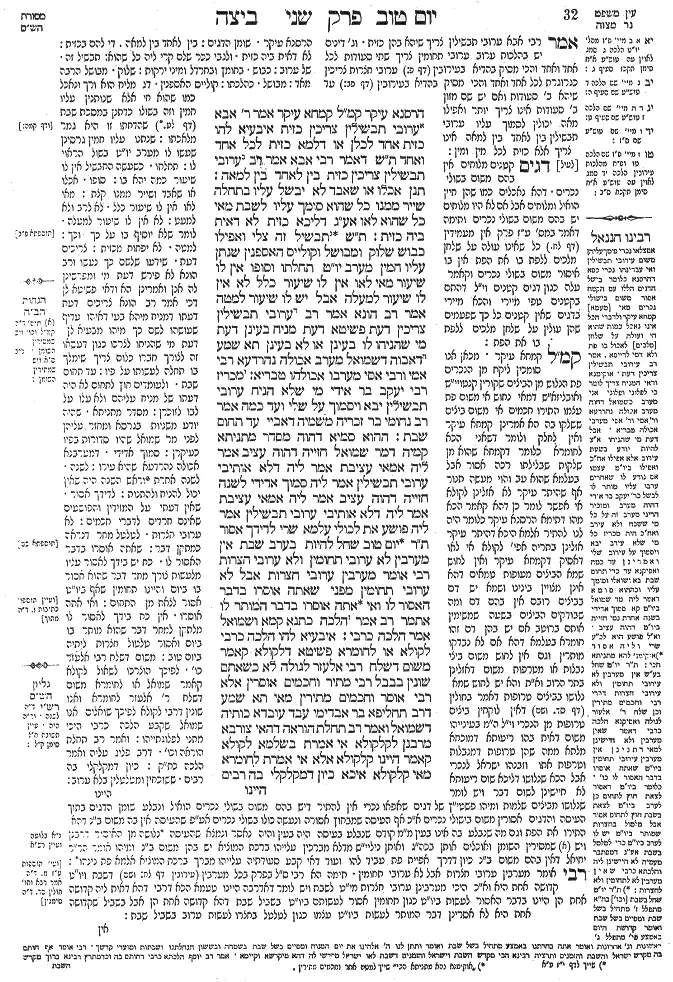
Beitza 16b - Guemara
הרסנא עיקר קמ"ל קמחא עיקר אמר ר' אבא ערובי תבשילין צריכין כזית איבעיא להו כזית אחד לכלן או דלמא כזית לכל אחד ואחד ת"ש דאמר רבי אבא אמר רב ערובי תבשילין צריכין כזית בין לאחד בין למאה:
תנן אכלו או שאבד לא יבשל עליו בתחלה שייר ממנו כל שהוא סומך עליו לשבת מאי כל שהוא לאו אע"ג דליכא כזית לא דאית ביה כזית:
ת"ש תבשיל זה צלי ואפילו כבוש שלוק ומבושל וקולייס האספנין שנתן עליו חמין מערב יו"ט תחלתו וסופו אין לו שיעור מאי לאו אין לו שיעור כלל לא אין לו שיעור למעלה אבל יש לו שיעור למטה אמר רב הונא אמר רב ערובי תבשילין צריכין דעת פשיטא דעת מניח בעינן דעת מי שהניחו לו בעינן או לא בעינן תא שמע דאבוה דשמואל מערב אכולה נהרדעא רבי אמי ורבי אסי מערבו אכולהו טבריא:
מכריז רבי יעקב בר אידי מי שלא הניח ערובי תבשילין יבא ויסמוך על שלי ועד כמה אמר רב נחומי בר זכריה משמיה דאביי עד תחום שבת:
ההוא סמיא דהוה מסדר מתניתא קמיה דמר שמואל חזייה דהוה עציב אמר ליה אמאי עציבת אמר ליה דלא אותיבי ערובי תבשילין אמר ליה סמוך אדידי לשנה חזייה דהוה עציב אמר ליה אמאי עציבת אמר ליה דלא אותיבי ערובי תבשילין אמר ליה פושע את לכולי עלמא שרי לדידך אסור ת"ר יום טוב שחל להיות בערב שבת אין מערבין לא ערובי תחומין ולא ערובי חצרות רבי אומר מערבין ערובי חצרות אבל לא ערובי תחומין מפני שאתה אוסרו בדבר האסור לו ואי אתה אוסרו בדבר המותר לו אתמר רב אמר הלכה כתנא קמא ושמואל אמר הלכה כרבי:
איבעיא להו הלכה כרבי לקולא או לחומרא פשיטא דלקולא קאמר משום דשלח רבי אלעזר לגולה לא כשאתם שונין בבבל רבי מתיר וחכמים אוסרין אלא רבי אוסר וחכמים מתירין מאי תא שמע דרב תחליפא בר אבדימי עבד עובדא כותיה דשמואל ואמר רב תחלת הוראה דהאי צורבא מרבנן לקלקולא אי אמרת בשלמא לקולא קאמר היינו קלקולא אלא אי אמרת לחומרא מאי קלקולא איכא כיון דמקלקלי בה רבים
Comments from Rashi on Masechet Beitza Page 16b
הרסנא עיקר . שומן הדגים: בין לאחד בין למאה . די להם בכזית: לא דאית ביה כזית . ולגבי ככר שלם קרי ליה כל שהוא: תבשיל זה . של ערוב: כבוש . בחומץ ובחרדל ומיני ירקות: שלוק . מבושל הרבה מאד: מבושל . כהלכתו: קולייס האספנין . דג מליח הוא ורך ונאכל כמו שהוא חי אלא שנותנין עליו חמין וזה בשולו כדתנן במסכת שבת (דף לט.) שהדחתו זו היא גמר מלאכתו: שנתנו עליו חמין . גרסינן שעשו לו מערב יו"ט בשול הראוי לו: תחלתו . כשעשה התבשיל אין לו שיעור כמה יהא בו: סופו . אכלו או שאבד ושייר ממנו קצת: מאי לאו אין לו שיעור כלל . לא לרב ולא למעט: לא אין לו שיעור למעלה . לומר שלא יוסיף בו על כך וכך: למטה . לא יפחות מכזית: צריכים דעת . שידעו שלשם כך נעשו ורב הונא לא פירש דעת מי ומפרשינן לה אנן ואמרינן הא ודאי פשיטא לן דכי אמר רב הונא צריכים דעת דעתו דמניח מיהא בעי דאיהו עדיף שעושהו לשם כך מיהו מבעיא לן דעת מי שהניחו לצרכו כגון דעשהו זה לצורך חברו כלום צריך שימלך בו תחלה לעשותו על פיו: עד תחום שבת . ולעומדים חוץ לתחום לא היה דעתו של מניח עליהם ולא עלו על לבו לזוכרן: מסדר מתניתא . שהיה יודע משניות בגרסא ומחזר עליהן לפני מר שמואל שהיו סדורות בפיו כעיקרן: סמוך אדידי . דמערבנא אכולה נהרדעא שהיא עירו: לשנה . לשנה אחרת וראש השנה היה שאין יכול להניח ולהתנות: לדידך אסור . שאין דעתי על המזידין והפושעים שאינם חרדים לדברי חכמים: לא ערובי חצרות . לטלטל מחר דנראה כמתקן דבר: שאתה אוסרו בדבר האסור לו . כח יש בידך לאסור עליו מלעשות צורך מחר דבר שהוא אסור בו ביום והיינו תחומין שאף ביו"ט אסור לצאת מן התחום: ואי אתה אוסרו . אין כח בידך לאסור לו מלתקן למחר דבר שהוא מותר בו ביום ואסור טלטול חצרות ליתיה ביום טוב: משום דשלח רבי אלעזר כו' . לפיכך הוצרכו לשאול לקולא קאמר שמואל או לחומרא משום דשלח ר' אלעזר לחומרא ואנו שונין דרבי לקולא לפיכך שואלים אנו שמואל שקבע הלכה כרבי היכי מתני לפלוגתייהו: ואמר רב תחלת הוראה וכו' . דרב פליג עליה ואמר הלכה כת"ק: כיון דמקלקלי בה רבים . ששוכחין ומטלטלין בלא ערוב:
Comments from Tosafot - Beitza 16b
[לעיל] דגים קטנים מלוחים אין בהם משום בשולי נכרים. דהא נאכלים כמו שהן חיין הואיל ומלוחים אבל אם לא היו מלוחים יש בהם משום בשולי נכרים ותימה דאמר במס' ע"ז פרק אין מעמידין (דף לח.) כל שאינו עולה על שלחן מלכים ללפת בו את הפת אין בו איסור משום בשולי נכרים וקאמר עלה כגון דגים קטנים וי"ל דהתם בקטנים טפי מיירי והכא מיירי בדגים שאין קטנים כל כך שפעמים שהן עולין על שלחן מלכים ללפת בו את הפת: קמ"ל קמחא עיקר. מכאן אנו סומכין ליקח מן הנכרים פת הנלוש מן הביצים שקורין קנטויי"ש ואובליזא"ש דמאי נחוש אי משום פת עצמו התירו חכמים אי משום ביצים ששלקו בה הא אמרינן קמחא עיקר ואין לחלק ולומר דשאני הכא לחומרא כלומר דקמחא שהוא מן שלקות שבלילתו רכה אסור אבל בעלמא שהוא עב והוי מעשה תנור אף שהיתר עיקר לא אזלינן לקולא אי אפשר לומר כן דהא קאמר הכא מהו דתימא הרסנא עיקר כלומר היה לנו להתיר אלמא היכא דהיתר עיקר אזלינן בתריה אפי' לקולא אי לאו דאסיק דקמחא עיקר ואין לחוש שמא הביצים מעופות טמאים דהא אינן מצויין בינינו ושמא יש דם בביצים רובם אין בהם דם ומה שבודקים הביצים בשעה שמשימין אותם ברוטב אם יש בהן דם זהו חומרא בעלמא דהא אם לא נבדקו מותרין וגם אין לחוש משום ביצי נבלות או מטרפות משום דאזלינן בתר הרוב וא"ת והא יש לחוש שמא נלושו בביצים טרופות דאמר בחולין (דף סד. ושם) דאין לוקחין ביצים טרופות מן הנכרי וי"ל ה"מ בעינייהו משום דאית בהו ריעותא דמוכחא מלתא ממה שהן טרופות דמנבלות וטרפות אתו וזבנהו ישראל לנכרי אבל הכא שנלושו דליכא שום ריעותא לא חיישינן לשום דבר ויש לומר שנלושו מביצים שלמות ומיהו פשטי"ץ של דגים שאפאו נכרי אין להתיר דיש בהם משום בשולי נכרים הואיל ונבלע שומן הדגים בתוך העיסה והדגים אסורין משום בישולי נכרים א"כ אף העיסה שמבחוץ אסורה ונעשה כולו בשולי נכרים אע"פ שהעיסה אין בה משום ב"נ דהא התירו את הפת וגם מה שנבלע בה אינו בעין מ"מ קודם שנבלע בעיסה היה בעין והיה נאסר ונמצא שהעיסה נלושה מן האיסור דרבנן ויש שמסירין השומן ואוכלים אותן בכה"ג ואותן ניליי"ש מדלא מברכין עלייהו ברכת המוציא יש בהן משום ב"נ ומיהו אומר הר"ר יחיאל דאין בהם משום ב"נ כיון דדרך אפיית פת עביד להו ועוד דאי קבע סעודתיה עלייהו מברך ברכת המוציא אלמא פת נינהו: אמר רבי אבא ערובי תבשילין צריך שיהא בהן כזית. וג' דינים יש בהלכות ערוב ערובי תחומין צריך שתי סעודות לכל אחד ואחד והכי מסיק בהדיא בעירובין (דף פ:) ערובי חצרות צריכין כגרוגרת לכל אחד ואחד והכי מסיק בהדיא בעירובין (דף פב:) עד שיהא ב' סעודות ואם יש שם מזון ב' סעודות אינו צריך יותר ואפילו מאה יכולין לסמוך עליו ערובי תבשילין בין לאחד בין למאה אינו צריך אלא כזית לכל מין ומין: רבי אומר מערבין ערובי חצרות אבל לא ערובי תחומין. תימה הא רבי ס"ל בפרק בכל מערבין (עירובין דף לח: ושם) דשבת ויו"ט קדושה אחת היא וא"כ היכי מערבינן ערובי חצרות מי"ט לשבת ויש לומר דאדרבה היינו טעמא הכא דרבי דהא דאית ליה קדושה אחת הן היינו בדבר האסור לעשות ביו"ט כגון תחומין אסור לעשותם ביו"ט בשביל שבת דהא קדושה אחת הן אבל בשביל שקדושה אחת היא לא אסרינן דבר המותר לעשות ביו"ט עצמו כגון לטלטל בחצרו לעשות ערוב בשביל שבת:
Beitza 16b - Mishnah translated into english
the fish fat, which one is permitted to eat even if cooked by gentiles, is the essential element. Therefore, he teaches us that the flour is the essential element, and the gentile has created a new and significant dish, which is consequently prohibited.
Rabbi Abba said: A joining of cooked foods requires an olive-bulk of food. A dilemma was raised before the Sages: Is it enough to have one olive-bulk for all of the household members who are relying on this eiruv, or perhaps must there be a separate olive-bulk for each and every one in the household? Come and hear that which Rabbi Abba said that Rav said: A joining of cooked foods requires an olive-bulk, whether it is cooked for a single person or for one hundred people.
The Gemara comments: We learned in the mishna: If one ate the joining of cooked foods that he prepared, or if it was lost, he may not rely on it and cook with the initial intent to cook for Shabbat; but if he left any part of the eiruv, he may rely on it to cook for Shabbat. The Gemara asks: What is the meaning of: Any part of it? Doesn’t it mean that it is valid although there is not an olive-bulk? The Gemara answers: No, the phrase: Any part of it, means that there is at least an olive-bulk left.
The Gemara attempts to bring another proof. Come and hear: The cooked dish that is required for a joining of cooked foods may be roasted, or even pickled, or well-boiled, or boiled in the regular manner, or may even be Spanish soft sea fish [koleyas ha’ispenin] upon which one poured hot water on the eve of the Festival, rendering it cooked. With regard to its beginning and end, meaning its required size ab initio and after it has been reduced by being partially lost or partially eaten, the eiruv has no required measure. What, is it not that it has no required measure at all, not even a minimum one? The Gemara rejects this: No, it means it does not have a maximum measure, but it does have a minimum measure, namely an olive-bulk.
Rav Huna said that Rav said: A joining of cooked foods requires knowledge, meaning that one must be aware of the eiruv for it to be effective. The Gemara comments: It is obvious that we require the knowledge of the one who prepares the eiruv; the question is: Do we also require the knowledge of the one for whom the eiruv is prepared, or do we not require it?
The Gemara suggests: Come and hear a proof from the following testimonies: Shmuel’s father would prepare an eiruv for the entire city of Neharde’a, and Rabbi Ami and Rabbi Asi would prepare an eiruv for the entire city of Tiberias. Similarly, Rabbi Ya’akov bar Idi would announce: Anyone who did not prepare a joining of cooked foods for himself should come and rely on mine. The Gemara asks: And up to how much may one rely on it, i.e., how far may one be from such an eiruv and still rely upon it? Rav Neḥumi bar Zekharya said in the name of Abaye: One may be as far away as the Shabbat limit.
The Gemara relates: With regard to the blind person who would present mishnayot before Mar Shmuel, the latter observed that he was sad. Mar Shmuel said to him: Why are you sad? He said to him: Because I did not prepare a joining of cooked foods before the Festival. Mar Shmuel said to him: Then rely on mine. In the following year, he once again observed that he was sad. He said to him: Why are you sad? He said to him: Because I did not prepare a joining of cooked foods. Mar Shmuel said to him: If so, you are consistently negligent in this regard. Therefore, for the entire world, i.e., anyone else but you, it is permitted to rely on my eiruv if they forgot to prepare one, but for you it is prohibited to do so, as I did not intend to include such negligent people as yourself in my eiruv.
The Sages taught: If a Festival occurs on Shabbat eve, one may not prepare an eiruv on that day, neither a joining of Shabbat boundaries [eiruv teḥumin] nor a joining of courtyards [eiruv ḥatzerot], for Shabbat. If one did not prepare these before the Festival, he may not do so on the Festival itself.
Rabbi Yehuda HaNasi says: On a Festival that occurs on a Friday, one may prepare an eiruv for a joining of courtyards, but not for a joining of Shabbat boundaries. His reasoning is as follows: There is a distinction between the two types of eiruv because you may prohibit him from a matter that is prohibited to him, e.g., venturing beyond the Shabbat limit, which is prohibited on a Festival as well as Shabbat, but you may not prohibit him from a matter that is permitted to him, e.g., carrying from one domain to another, which is permitted on a Festival. Therefore, on a Festival, one may not prepare a joining of Shabbat boundaries in order to render it permitted to venture beyond the boundary on the Shabbat following the Festival. However, one may prepare a joining of courtyards on the Festival in order to render it permitted to carry from one domain to another on the Shabbat following the Festival.
It was stated that the amora’im disagreed as to the conclusive ruling. Rav said: The halakha is in accordance with the opinion of the first tanna, who said that it is prohibited to prepare both types of eiruvin, and Shmuel said: The halakha is in accordance with the opinion of Rabbi Yehuda HaNasi, and it is permitted to prepare a joining of courtyards on a Festival.
A dilemma was raised before the Sages: Is stating that the halakha is in accordance with the opinion of Rabbi Yehuda HaNasi a leniency or a stringency? The Gemara wonders at this query: It is obvious that he stated it as a leniency. The Gemara explains: The question was asked because Rabbi Elazar sent a message from Eretz Yisrael to the Diaspora: This baraita is not as you teach it in Babylonia, that Rabbi Yehuda HaNasi permits one to prepare a joining of courtyards on a Festival and the Rabbis prohibit it. Rather, the opinions should be reversed, so that Rabbi Yehuda HaNasi prohibits it and the Rabbis permit it. Therefore, the question arose: What is the conclusive ruling for this halakha? Is it lenient or stringent?
The Gemara attempts to cite a proof: Come and hear that Rav Taḥlifa bar Avdimi performed an action in accordance with the opinion of Shmuel, who ruled that the halakha is in accordance with the opinion of Rabbi Yehuda HaNasi, and Rav said in anger about this: The first public ruling of this young Torah scholar is bringing about corruption of the halakha. The Gemara analyzes this statement: Granted, if you say that Rabbi Yehuda HaNasi said it as a leniency, this explains the corruption of the halakha involved, as Rav was angered by a young scholar who relied on his own judgment to issue a lenient ruling on a disputed issue. However, if you say that Rabbi Yehuda HaNasi meant it as a stringency, what corruption of the halakha is there in the young scholar’s ruling?
The Gemara answers: Since it corrupts the behavior of the masses, as, if they refrain from preparing a joining of courtyards on the Festival although it is permitted to do so, they might mistakenly carry from one domain to another on Shabbat,
Traduction : The William Davidson digital edition of the Koren Noé Talmud, with commentary by Rabbi Adin Even-Israel Steinsaltz.