 Talmud Bavli
Beitza 39a : Youtube
Daf TubeYoutube
2 video classes :
Beitza Page 39a
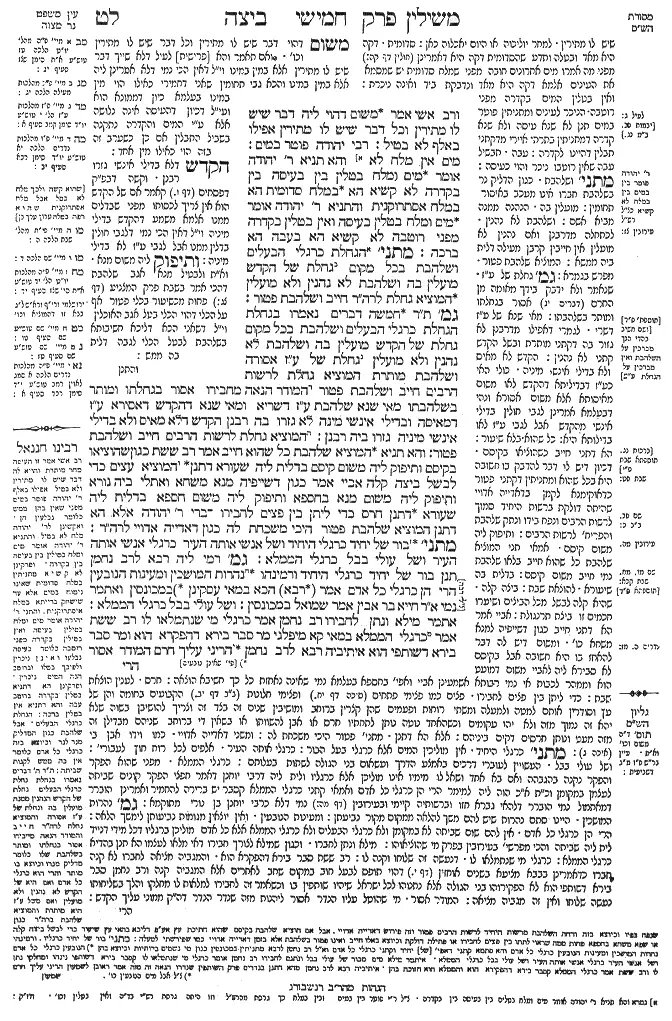
Beitza 39a - Guemara
ורב אשי אמר משום דהוי ליה דבר שיש לו מתירין וכל דבר שיש לו מתירין אפילו באלף לא בטיל:
רבי יהודה פוטר במים:
מים אין מלח לא והא תניא ר' יהודה אומר מים ומלח בטלין בין בעיסה בין בקדרה לא קשיא הא במלח סדומית הא במלח אסתרוקנית והתניא ר' יהודה אומר מים ומלח בטלין בעיסה ואין בטלין בקדרה מפני רוטבה לא קשיא הא בעבה הא ברכה:
מתני׳ הגחלת כרגלי הבעלים ושלהבת בכל מקום גחלת של הקדש מועלין בה ושלהבת לא נהנין ולא מועלין המוציא גחלת לרה"ר חייב ושלהבת פטור:
גמ׳ ת"ר חמשה דברים נאמרו בגחלת הגחלת כרגלי הבעלים ושלהבת בכל מקום גחלת של הקדש מועלין בה ושלהבת לא נהנין ולא מועלין גחלת של ע"ז אסורה ושלהבת מותרת המוציא גחלת לרשות הרבים חייב ושלהבת פטור המודר הנאה מחבירו אסור בגחלתו ומותר בשלהבתו מאי שנא שלהבת ע"ז דשריא ומאי שנא דהקדש דאסירא ע"ז דמאיסה ובדילי אינשי מינה לא גזרו בה רבנן הקדש דלא מאיס ולא בדילי אינשי מיניה גזרו ביה רבנן:
המוציא גחלת לרשות הרבים חייב ושלהבת פטור:
והא תניא המוציא שלהבת כל שהוא חייב אמר רב ששת כגון שהוציאו בקיסם ותיפוק ליה משום קיסם בדלית ליה שעורא דתנן המוציא עצים כדי לבשל ביצה קלה אביי אמר כגון דשייפיה מנא משחא ואתלי ביה נורא ותיפוק ליה משום מנא בחספא ותיפוק ליה משום חספא בדלית ליה שעורא דתנן חרס כדי ליתן בין פצים לחבירו דברי ר' יהודה אלא הא דתנן המוציא שלהבת פטור היכי משכחת לה כגון דאדייה אדויי לרה"ר:
מתני׳ בור של יחיד כרגלי היחיד ושל אנשי אותה העיר כרגלי אנשי אותה העיר ושל עולי בבל כרגלי הממלא:
גמ׳ רמי ליה רבא לרב נחמן תנן בור של יחיד כרגלי היחיד ורמינהו נהרות המושכין ומעינות הנובעין הרי הן כרגלי כל אדם אמר (רבא) הכא במאי עסקינן) במכונסין ואתמר נמי א"ר חייא בר אבין אמר שמואל במכונסין:
ושל עולי בבל כרגלי הממלא:
אתמר מילא ונתן לחבירו רב נחמן אמר כרגלי מי שנתמלאו לו רב ששת אמר כרגלי הממלא במאי קא מיפלגי מר סבר בירא דהפקרא הוא ומר סבר בירא דשותפי הוא איתיביה רבא לרב נחמן הריני עליך חרם המודר אסור
Comments from Rashi on Masechet Beitza Page 39a
שיש לו מתירין . למחר יוליכוה או היום יאכלוה כאן: סדומית . דקה היא מאוד ובטלה ותדע שהסדומית דקה היא דאמרינן (חולין דף קה:) מפני מה אמרו מים אחרונים חובה מפני שמלח סדומית יש שמסמא את העינים אלמא דקה היא מאד ונדבקת ביד ואינה נכרת: ואין בטלין המים בקדרה מפני רוטבה . הניכר לעינים ומתניתין פוטר במים תנן לא שנא עיסה ולא שנא קדרה דמתניתין בתרתי איירי מדקתני תבלין דהיינו לקדרה: עבה . תבשיל עבה שאין רוטבו ניכר והוי כעיסה: מתני' ושלהבת . כגון הדליק נר בשלהבת חברו אינו מעכב באיסור תחומין: מועלין בה . הנהנה ממנה מביא אשם: ושלהבת לא נהנין . לכתחלה מדרבנן ואם נהנין לא מועלין אין חייבין קרבן מעילה דלית ביה ממשא: המוציא שלהבת פטור . מפרש בגמרא: גמ' גחלת של ע"ז . שנאמר ולא ידבק בידך מאומה מן החרם (דברים יג) אסור בגחלתו ומותר בשלהבתו: מאי שנא של ע"ז דשרי . לגמרי דאפילו מדרבנן לא גזור בה דקתני ומותרת ובשל הקדש קתני לא נהני: הקדש לא מאיס ולא בדילי אינשי מינה . כולי האי כע"ז דבדיליתא דהקדש לאו משום מאיסותא אלא משום אסורא ונהי דבעלמא אמרינן לגבי חולין בדילי אינשי מהקדש אבל לגבי ע"ז לאו בדילותא היא: כל שהוא . בלא שיעור: הא דתני חייב כשהוציאו בקיסם . דכיון דיש לו דבר להדבק בו חשובה היא בכל שהוא ומתניתין דקתני פטור כדאוקימנא לקמן בדאדייה אדויי שהיתה דולקת ברשות היחיד סמוך לרשות הרבים ונפח בידו ונתק שלהבת והפריחה לרשות הרבים: ותיפוק ליה משום קיסם . אמאי תני המוציא שלהבת כל שהוא חייב בלאו שלהבת נמי חייב משום קיסם: בדלית בה שיעורא . להוצאת שבת: ביצה קלה . שהיא קלה לבשל מכל הביצים ושיערו חכמים זו ביצת תרנגולת: אביי אמר הא דתני חייב כגון דשייפיה למנא משחא כו' . ומשום דיש לה דבר להאחז בו היא חשובה אבל בקיסם לא סבירא ליה לאביי משום דמועט הוא וממהר לכבות אי נמי רבותא אשמעינן אביי ואפי' בחספא בעלמא נמי שאינה נאחזת כל כך חשיבא הוצאה: חרס . לענין הוצאת שבת: כדי ליתן בין פצים לחבירו . פצים כמו פצימי פתחים (סוכה דף יח.) ופצימי חלונות (ב"ב דף יב.) הקבועים בחומה והן של עץ וסודרין אותם למטה ולמעלה ומשתי רוחות ופעמים שהן קצרים ברוחב ומושיבין שנים זה בצד זה וצריך להושיבן בשוה שלא יהא זה נמוך מזה ולא יהו עקומים וכשהאחד נוטה נותן לתחתיו חרס או אבן להשוותו או בשאין די ברוחב שניהם מבדילן זה מזה מעט ונותן חרסים דקים ביניהם: אלא הא דתנן . מתני' פטור היכי משכחת לה: ומשני דאדייה אדויי . כמו וידו אבן בי (איכה ג): מתני' כרגלי היחיד . אין מוליכין המים אלא כרגלי בעל הבור: כרגלי אותה העיר . אלפים לכל רוח חוץ לעבורי': ושל עולי בבל . העשויין לעוברי דרכים באמצע הדרך ועשאום בני הגולה לשתות בעלותם: כרגלי הממלא . מפני שהוא הפקר והפקר נקנה בהגבהה ואם בא אחד ושאל לו מימיו אינו מוליכן אלא כרגליו ולית ליה דרבי יוחנן דאמר חפצי הפקר קונים שביתה לעצמן במקומן וכ"ת א"כ הוה ליה למימר הרי הן כרגלי כל אדם ואמאי קתני כרגלי הממלא קסבר יש ברירה להחמיר ואמרינן הוברר דמאתמול נמי הוברר דלהאי גברא חזו וברשותיה קיימי ובעירובין (דף מה:) נמי דלא כרבי יוחנן בן נורי מתוקמא: גמ' נהרות המושכין . היינו סתם נהרות שיש להם משך להלאה ממקום מקור נביעתן: ומעינות הנובעין . ואין יוצאין מגומות נביעתן לימשך הלאה: הרי הן כרגלי כל אדם . אין להם שום שביתה לא במקומן ולא כרגלי הבעלים ולא כרגלי הממלא אלא כל אדם מוליכן ברגליו דכל מידי דנייד לית ליה שביתה והכי מפרשי' בעירובין בפרק מי שהוציאוהו: מילא ונתן לחבירו . וכגון שמילא לצורך חבירו דאי מלאו לעצמו הא תנן בהדיא כרגלי הממלא: כרגלי מי שנתמלאו לו . דנעשה זה שלוחו וקנה לו: רב ששת סבר בירא דהפקרא הוא . והמגביה מציאה לחבירו לא קנה חבירו כדאמרינן בבבא מציעא בשנים אוחזין (דף י.) דהוי תופס לבעל חוב במקום שחב לאחרים אלא המגביה קנה ורב נחמן סבר בירא דשותפי הוא לא הפקירוהו בני הגולה אלא נתנוהו לכל ישראל שיהיו שותפין בו וכשאמר זה לחבירו למלאות לו מחלקו והלך בשליחותו נעשה שלוחו ואין זה מגביה מציאה: המודר אסור . מי שהוטל עליו הנדר אסור ליהנות מזה שנדר הנדר דה"ק ממוני עליך הקדש:
Comments from Tosafot - Beitza 39a
משום דהוי דבר שיש לו מתירין וכל דבר שיש לו מתירין וכו'. ואם תאמר והא [פרישית] לעיל דלא שייך דבר שיש לו מתירין אלא במין במינו וי"ל דאין הכי נמי דלא אמרינן ליה אלא במין במינו והכא גבי תחומין שאני דחמירי כאילו הוי מין במינו בעלמא כיון דממונא הוא ועי"ל דכיון דהעיסה אינה נלושה אלא ע"י המים והקדרה נתקנה בשביל התבלין אם כן כשערב זה בזה הוי כאילו מין אחד: הקדש דלא בדילי אינשי גזרו רבנן. וקשה דבפ"ק דפסחים (דף ו.) קאמר אם של הקדש הוא אין צריך לכסותו מפני שבדלים ממנו אלמא משמע דהקדש בדילי מיניה וי"ל דאין הכי נמי דלגבי חולין בדלין ממנו אבל לגבי ע"ז לא בדילי מיניה: ותיפוק ליה משום מנא. וא"ת ולבטיל מנא אגב שלהבת דהכי אמר בשבת פרק המצניע (דף צג:) פחות מכשיעור בכלי פטור אף על הכלי דהוי הכלי בטל אגב האוכלין וי"ל דשאני הכא דליכא חשיבותא בשלהבת לבטל הכלי לגבה דלית בה ממש:
Beitza 39a - Mishnah translated into english
And Rav Ashi said a different explanation as to why the spices, water, and salt are not subject to nullification: It is because any one of these ingredients is an object whose prohibition is temporary, as the prohibition against their being taken out of the Shabbat limits lapses once the Festival has passed, and the general principle is that anything whose prohibition is temporary cannot become nullified, even by one part in one thousand.
§ It is taught in a mishna: Rabbi Yehuda exempts one from travel limitations in the case of water. The Gemara asks: Does this mean to imply that water, yes, it is exempted by Rabbi Yehuda, but salt, no, it is not? But isn’t it taught in a baraita: Rabbi Yehuda says: Water and salt are both nullified, whether in a dough or in a pot of cooked food. The Gemara answers: This is not difficult. In this case of the mishna, the reference is to salt of Sodom, which is quite coarse and does not blend in easily with the dough, and, being noticeable in the final product, is not nullified. In that case of the baraita, the reference is to a type of fine salt known as isterokanit salt. Consequently, it is not noticeable in the final product and can be nullified.
The mishna states that according to Rabbi Yehuda water mixed into dough, and presumably into a cooked dish as well, is considered nullified. The Gemara challenges this: But isn’t it taught in a baraita that Rabbi Yehuda says: Water and salt are nullified in dough but not in a pot, due to its sauce. The pot, unlike bread, ends up with liquid in it, so the borrowed water is still recognizable. The Gemara replies: This is not difficult. This case of the mishna, where Rabbi Yehuda says that the water is nullified in the cooked food, is referring to a thick dish that has no liquid sauce. That case of the baraita, in which Rabbi Yehuda said the water is not nullified, is referring to a thin dish with liquid sauce.
MISHNA: A coal that one borrowed from another on the Festival is as the feet of the owner, and it may be carried on the Festival to any place where its owner may walk. Since it has substance, it is associated with its owner. But a flame that one lit from another’s flame may be taken anywhere, as it has no substance. This essential difference between a coal and a flame has additional halakhic ramifications: If one uses a coal of consecrated property for a non-consecrated purpose, he is liable for misuse of consecrated property, since it has substance. But if one uses a consecrated flame, although according to rabbinic law one may not derive benefit from it ab initio, if one did benefit from it, he is not liable for misuse, since it does not have substance. Similarly, one who takes out a coal from a private domain to the public domain on Shabbat is liable for the prohibited labor of carrying, but one who takes out a flame is exempt.
GEMARA: The Sages taught in a Tosefta (Beitza 4:7): Five things were stated with regard to a coal, in relation to the practical halakhic differences between a coal and a flame: (1) Coal is as the feet of the owner with regard to its Festival resting place, whereas a flame may be carried anywhere. (2) One is liable for misusing property consecrated to the Temple with a consecrated coal, whereas with regard to a flame, according to rabbinic law one may not benefit from it, but he is not liable for misusing property consecrated to the Temple. (3) Coal used for idol worship is prohibited for one to benefit from it, whereas from a flame of this sort it is permitted to benefit. (4) One who carries out a coal to the public domain is liable, whereas one who carries out a flame is exempt. (5) One who is prohibited by a vow from deriving benefit from another is prohibited from using his coal, but he is permitted to derive benefit from his flame.
With regard to the halakhot cited in the baraita above, the Gemara asks: What is different in the case of a flame of idol worship, that one is permitted to use it even ab initio, as the baraita uses the term permitted in that case; and what is different in the case of a consecrated flame, in that it is prohibited to be used ab initio, as the baraita states: One may not benefit from it, but he is not liable for misuse? The Gemara explains: In the case of idol worship, which is repulsive to Jews and from which Jewish people inherently maintain separation, the Sages did not decree additional restrictions with regard to it. However, concerning consecrated property, which is not repulsive and from which people do not inherently maintain separation, in order to prevent its misuse, the Sages did decree with regard to it that it is prohibited to use the flame.
§ It is taught in the baraita that one who carries out a coal to the public domain is liable, whereas one who carries out a flame is exempt. The Gemara asks: But isn’t it taught in another baraita: One who carries out a flame of any size on Shabbat is liable? Rav Sheshet said: The second baraita is referring to a case where one carried out the flame along with a wooden chip. Since the flame is attached to a physical object, it is considered significant.
The Gemara raises an objection: But if so, let it derive that one is liable for carrying out in this case due to the wooden chip, and the presence of the flame is irrelevant. The Gemara responds: That baraita speaks of a chip that does not have the minimum measure that determines liability for carrying out, as we learned in a mishna (Shabbat 89b): In the case of one who carries out wood on Shabbat, the measure that determines liability is enough wood to cook an egg of the kind that is the easiest to cook, which is the egg of a chicken. Because the chip is too small to cook an egg, one is not liable for carrying it out, but one is liable for carrying out the flame attached to it.
Abaye said a different scenario: The mishna is referring to a case where one smeared a vessel with oil, and lit a fire on it, and carried out that flame. The Gemara asks: If so, let it derive that one is liable for carrying out in this case due to the vessel itself, and the flame is irrelevant. The Gemara replies: The mishna is referring to a fire lit in an earthenware shard, not in a whole vessel.
The Gemara challenges: And nevertheless, let it derive that one is liable for carrying due to the earthenware shard itself. The Gemara answers: It deals with a shard that is not of the minimum measure that determines liability for carrying out, as we learned in a mishna (Shabbat 82a): The measure that determines liability for carrying out earthenware is enough to place between one window frame and another, as small shards of earthenware were sometimes placed between window frames during construction. This is the statement of Rabbi Yehuda.
The Gemara asks: But if so, if one is liable for carrying it out whenever the flame is attached to an object of substance, that which we learned in the mishna here: One who carries out a flame is exempt, under what circumstances can this case be found? The Gemara answers: The mishna is speaking of a case where one fanned the fire with his hand so that it spread into the public domain without its being attached to any vessel.
MISHNA: With regard to a cistern of an individual, water drawn from it is as the feet of the individual who owns the cistern, and the water may be carried only to those places where its owner is permitted to walk. And water drawn from a cistern belonging jointly to all the people dwelling in a particular town is as the feet of the people of that town. And water drawn from a cistern of those who come up to Eretz Yisrael from Babylonia, i.e., a public cistern, is as the feet of whoever fills his vessel with its water; the water has no defined boundary of its own since it is made available to all.
GEMARA: Rava raised a contradiction to Rav Naḥman: We learned in the mishna that the water of a cistern of an individual is as the feet of the individual; and Rava raised a contradiction from the Tosefta (Beitza 4:8): Water drawn from flowing rivers and flowing springs are as the feet of all people. Rava said: With what are we dealing here in the mishna? With cisterns that contain collected water, not flowing water. And it was also said that Rabbi Ḥiyya bar Avin said that Shmuel said: The mishna applies only to collected water.
§ The mishna states: And water drawn from a cistern of those who come up to Eretz Yisrael from Babylonia, i.e., a public cistern, is as the feet of whoever fills his vessel with its water. It was stated that amora’im disagreed with regard to this issue: In the case of one who filled a vessel with water from a public cistern on behalf of another and gave the water to him, Rav Naḥman said: The water is as the feet of the one for whom they were filled; Rav Sheshet said: It is as the feet of the one who filled it.
The Gemara asks: With regard to what principle do they disagree? The Gemara explains: One Sage, Rav Sheshet, holds that a public cistern is ownerless, and the halakha is that one cannot take possession of ownerless property on behalf of someone else. Therefore, the water belongs to the one who drew it; it is as his feet, and this status does not change even if he subsequently gave it to anyone else. And one Sage, Rav Naḥman, holds that a public cistern is considered jointly owned by all its partners, namely, all of the Jewish people. Therefore, it is possible for one partner to draw water on behalf of another partner, and the drawn water immediately belongs to the person for whom it was drawn.
Rava raised a challenge to Rav Naḥman from a mishna (Nedarim 47b): One who says to another: I am hereby prohibited to you by force of ḥerem, a kind of vow of prohibition, as objects declared as ḥerem are generally consecrated to the Temple, the one prohibited by the vow, the addressee, is prohibited to derive benefit from the person who made the vow or from his property, as the point of the vow was to prohibit the addressee from deriving any benefit from the one who made the vow.
Traduction : The William Davidson digital edition of the Koren Noé Talmud, with commentary by Rabbi Adin Even-Israel Steinsaltz.