 Talmud Bavli
Beitza 11a : Youtube
Daf TubeYoutube
3 video classes :
Beitza Page 11a
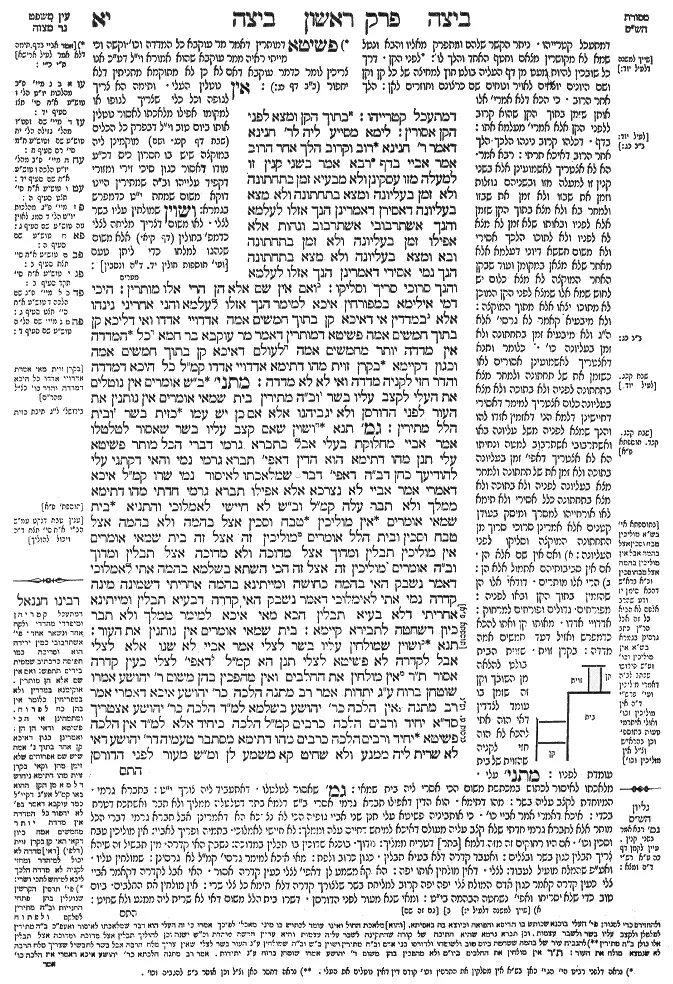
Beitza 11a - Guemara
דמתעכל קטרייהו:
בתוך הקן ומצא לפני הקן אסורין:
לימא מסייע ליה לר' חנינא דאמר ר' חנינא רוב וקרוב הלך אחר הרוב אמר אביי בדף רבא אמר בשני קנין זו למעלה מזו עסקינן ולא מבעיא זמן בתחתונה ולא זמן בעליונה ומצא בתחתונה ולא מצא בעליונה דאסירן דאמרינן הנך אזלו לעלמא והנך אשתרבובי אשתרבוב ונחות אלא אפילו זמן בעליונה ולא זמן בתחתונה ובא ומצא בעליונה ולא מצא בתחתונה הנך נמי אסירי דאמרינן הנך אזלו לעלמא והנך סרוכי סריך וסליקו:
ואם אין שם אלא הן הרי אלו מותרין:
היכי דמי אילימא במפורחין איכא למימר הנך אזלו לעלמא והני אחריני נינהו אלא במדדין אי דאיכא קן בתוך חמשים אמה אדדויי אדדו ואי דליכא קן בתוך חמשים אמה פשיטא דמותרין דאמר מר עוקבא בר חמא כל המדדה אין מדדה יותר מחמשים אמה לעולם דאיכא קן בתוך חמשים אמה וכגון דקיימא בקרן זוית מהו דתימא אדדויי אדדו קמ"ל כל היכא דמדדה והדר חזי לקניה מדדה ואי לא לא מדדה:
מתני׳ בית שמאי אומרים אין נוטלים את העלי לקצב עליו בשר ובית הלל מתירין בית שמאי אומרים אין נותנין את העור לפני הדורסן ולא יגביהנו אלא אם כן יש עמו כזית בשר ובית הלל מתירין:
גמ׳ תנא ושוין שאם קצב עליו בשר שאסור לטלטלו אמר אביי מחלוקת בעלי אבל בתברא גרמי דברי הכל מותר פשיטא עלי תנן מהו דתימא הוא הדין דאפילו תברא גרמי נמי והאי דקתני עלי להודיעך כחן דבית הלל דאפילו דבר שמלאכתו לאיסור נמי שרו קמ"ל איכא דאמרי אמר אביי לא נצרכא אלא אפילו תברא גרמי חדתי מהו דתימא ממלך ולא תבר עלה קמ"ל ובית שמאי לא חיישי לאמלוכי והתניא בית שמאי אומרים אין מוליכין טבח וסכין אצל בהמה ולא בהמה אצל טבח וסכין ובית הלל אומרים מוליכין זה אצל זה בית שמאי אומרים אין מוליכין תבלין ומדוך אצל מדוכה ולא מדוכה אצל תבלין ומדוך ובית הלל אומרים מוליכין זה אצל זה הכי השתא בשלמא בהמה אתי לאמלוכי דאמר נשבק האי בהמה כחושה ומייתינא בהמה אחריתי דשמינה מינה קדרה נמי אתי לאימלוכי דאמר נשבק האי קדרה דבעיא תבלין ומייתינא אחריתי דלא בעיא תבלין הכא מאי איכא למימר ממלך ולא תבר כיון דשחטה לתבירא קיימא:
בית שמאי אומרים אין נותנין את העור:
תנא ושוין שמולחין עליו בשר לצלי אמר אביי לא שנו אלא לצלי אבל לקדרה לא פשיטא לצלי תנן הא קמ"ל דאפילו לצלי כעין קדרה אסור תנו רבנן אין מולחין את החלבים ואין מהפכין בהן משום ר' יהושע אמרו שוטחן ברוח על גבי יתדות אמר רב מתנה הלכה כר' יהושע איכא דאמרי אמר רב מתנה אין הלכה כר' יהושע בשלמא למאן דאמר הלכה כר' יהושע אצטריך סד"א יחיד ורבים הלכה כרבים קמ"ל הלכה כיחיד אלא למאן דאמר אין הלכה פשיטא יחיד ורבים הלכה כרבים מהו דתימא מסתבר טעמיה דר' יהושע דאי לא שרית ליה ממנע ולא שחיט קא משמע לן ומאי שנא מעור לפני הדורסן
Comments from Rashi on Masechet Beitza Page 11a
דמתעכל קטרייהו . ניתר הקשר שלהם ומתפרק מאליו והבא ונטל שמא לא מקושרין מצאם וחטף האחד והלך לו: לפני הקן . דרך כל שובכין להיות מעט מן דף העליה בולט חוץ למחיצה של כל קן וקן ושם היונים יוצאים לאויר ונוחים שם כרצונם וחוזרים לקן: הלך אחר הרוב . כי הכא דלא אמרי' אלו אותן שזמן בתוך הקן שהוא קרוב ללפני הקן אלא אמרי' מעלמא אתו: בדף . דכלהו קרוב נינהו הלכך הלך אחר הרוב דאיכא תרתי: רבא אמר . הא לא אצטריך לאשמועינן אלא בשני קנין זו למעלה מזו ובשניהם גוזלות וזמן את שבזו ולא זמן את שבזו ולמחר בא ולא מצא בתוך הקן שזמן אלא לפניו ובאותו שלא זמן לא מצא לא לפניו ולא לתוכו הלכך אסירי ולא משום חששא דיוני דעלמא אלא מאחר שלא מצאן במקומן ועוד שבקן האחר המוקצה לא מצא כלום יש לחוש שמא אלו שמצא לפני הקן המוכן לא מתוכו יצאו אלא מתוך המוקצה: ולא מיבעיא קאמר לא גרסי' אלא ה"ג ולא מיבעיא זמן בתחתונה ולא זמן בעליונה כו'. כלומר ותנא דאצטריך לאשמועינן אסורים לאו כשזמן את של תחתונה ולמחר מצא בתחתונה לפניה ולא בתוכה ולא מצא בעליונה כלום אצטריך למימר דאסירי דחיישינן דלמא הני דאזמין אזדו להו והנך שמצא לפניה משל עליונה באו ואשתרבובי אשתרבוב למטה ונחיתו הא לא אצטריך דאפי' זמן בעליונה בתוכה ולא זמן את של תחתונה ולמחר מצא בעליונה לפניה ולא בתוכה ולא מצא בתחתונה כלל אסירי ולא תימא לאו אורחייהו למסרך ומיסק בעודן קטנים אלא אמרינן סרוכי סרוך מן התחתונה המוקצה וסליקו לפני העליונה: ואם אין שם אלא הן . אם אין סביבותיהם אתמול אלא הן הרי אלו מותרים. דודאי אלו הן שהזמין בתוך הקן ובאו לפניה: מפורחים . גדולים ופורחים למרחוק: אדדויי אדדו . מאותו קן ואתו להכא כדמפרש ואזיל דעד חמשים אמה מדדה: בקרן זוית . שזוית הבית בולט להלאה מן השובך וקן זה שזמן בו עומד לצדדין דאי הוה אתי להכא לא הוה חזי לקניה שהזוית של בית עומדת לפניו:  מתני' עלי . מלאכתו לאיסור לכתוש במכתשת משום הכי אסרי ליה בית שמאי: גמ' שאסור לטלטלו . דאתעביד ליה צורך י"ט: בתברא גרמי . המיוחדת לקצב עליה בשר: מהו דתימא . הוא הדין דאפילו תברא גרמי אסרי ב"ש דלמא בתר דטלטלה ממליך ולא תבר ואשתכח דטרח בכדי: איכא דאמרי אמר אביי כו' . כי אותביניה פשיטא עלי תנן שני אביי גופיה הכי לא נצרכא הא דאמרינן אבל תברא גרמי דברי הכל מותר אלא לתברא גרמי חדתי שלא קצב עליה מעולם דאיכא למיחש דחייס עלה וממלך:
לא חיישי לאמלוכי . בתמיה ופריך לאביי: אין מוליכין טבח וסכין וכו' . אם היו רחוקים זה מזה דלמא [בתר] דטריח ממליך: מדוך . בוכנא שדוכין בו תבלין במדוכה: נשבק האי קדרה . מין תבשיל זה שיהא צריך תבלין כגון בשר ובצלים: ואעבד קדרה דלא בעיא תבלין . כגון כרוב ולפת: מאי איכא למימר גרסי' קמ"ל לא גרסינן: שמולחין עליו . ואע"פ שהמלח מועיל לעבוד: לצלי . דאין מולחין אותו יפה: הא קא משמע לן דאפי' לצלי כעין קדרה אסור . האי אבל לקדרה דקאמר אביי צלי כעין קדרה קאמר כגון אדם המולח צלי יפה יפה קרוב למליחת בשר שלצורך קדרה דלא תימא כל צלי שרי: אין מולחין את החלבים . ביום טוב כדי שלא יסריחו ואפי' נשחטה הבהמה בי"ט: ומאי שנא מעור לפני הדורסן . דשרו בית הלל משום דאי לא שרית ליה ממנע ולא שחיט:
Comments from Tosafot - Beitza 11a
פשיטא דמותרין דאמר מר עוקבא כל המדדה וכו'. וקשה וכי מייתי ראיה ממר עוקבא שהוא אמורא וי"ל דע"כ אנו צריכין לומר כדמר עוקבא דאם לא כן לא מתוקמא מתניתין דלא יחפור (ב"ב דף כג:): אין נוטלין העלי. ותימה הא צריך לגופה וכל כלי שצריך. לגופו או למקומו אפילו מלאכתו לאסור נוטלין אותו ביום טוב וי"ל דבפרק כל הכלים (שבת דף קכג. ושם) מוקמינן ליה במוקצה שיש בו חסרון כיס דכ"ע מודו דאסור כגון סיכי זירי ומזורי דקפיד עלייהו וב"ה שמתירין היינו דוקא משום שמחת י"ט כדמפרש בגמרא: ושוין שמולחין עליו בשר לצלי. לאו משום דצריך מליחה לצלי כדמפ' בחולין (דן קיא.) אלא משום שנהגו למלחו כדי ליתן טעם [ועי' תוספות חולין יד. ד"ה ונסבין]:
Beitza 11a - Mishnah translated into english
their knot becomes worn and untied. Consequently, it is possible that someone took only one of the two pouches.
§ The mishna taught that if one designated fledglings inside the nest and found them before the nest, they are prohibited. The Gemara comments: Let us say that this supports the opinion of Rabbi Ḥanina, as Rabbi Ḥanina said: In a case involving a majority and an item that is near, one follows the majority. Since doves from the outside world are more numerous than those that one designated, the assumption is that these fledglings are from the majority, and therefore they are prohibited.
Abaye said, in refutation of this claim: Here we are dealing with a ledge affixed to the front of the nest, where all the doves gather. Therefore, the principle pertaining to a majority and an item that is near does not apply to this case. Rava said: Here we are dealing with two nests, one above the other, i.e., adjacent nests rather than any two nests. And it is not necessary to state that in the case of one who designated the fledglings in the lower nest and did not designate those in the upper one, and he found fledglings in the lower one and he did not find fledglings in the upper one, that the fledglings are all prohibited. The reason is that we say: These that were in the lower nest went to the outside world, while these still present have dragged themselves and come down.
Rather, even if one designated fledglings in the upper nest and did not designate fledglings in the lower one, and he came and found fledglings in the upper one and did not find fledglings in the lower one, those in the upper nest are also prohibited, as we say: Those that he originally designated went to the outside world, and those in the lower nest have clutched and climbed. Therefore, there is cause for concern in both of these cases.
The mishna states that if there are no others there apart from them, they are permitted. The Gemara asks: What are the circumstances? If we say that the mishna is dealing with fledglings that are already able to fly, it is possible to say that those that he designated went to the outside world, and the ones that are present are other ones.
Rather, the mishna must be referring to fledglings that can only hop from one place to another. However, if it deals with a case where there is another dove nest within fifty cubits, the fledglings might have jumped and come from that nest; and if there is no nest within fifty cubits, it is obvious that they are permitted, for from where could they have come? As Mar Ukva bar Ḥama said: With regard to any creature that hops, it does not hop more than fifty cubits.
The Gemara answers: Actually, it is referring to a case where there is another nest within fifty cubits, and it deals with a situation where the additional nest is situated around a corner from the first nest, rather than in a straight line from it. Lest you say: The fledglings jumped from one nest to the other, the mishna therefore teaches us that anywhere that a fledgling hops and turns and sees its nest, it will continue to hop. But if it can no longer see its original nest, it will not hop any farther.
MISHNA: Beit Shammai say: One may not take a large pestle from a mortar, which is normally used for crushing wheat in the preparation of porridge, for any other purpose on a Festival, e.g., to cut meat on it; and Beit Hillel permit it. Likewise, Beit Shammai say: One may not place an unprocessed hide before those who will tread on it, as this constitutes the prohibited labor of tanning on a Festival. And one may not lift the hide from its place, as it is considered muktze, unless there is an olive-bulk of meat on it, in which case it may be carried on account of its meat; and Beit Hillel permit it in both cases.
GEMARA: The Sage taught in a baraita: And Beit Shammai and Beit Hillel agree that if one already cut the meat he needs for the Festival on the pestle, it is prohibited to move the pestle farther on the Festival. The reason is that the vessel is muktze as a utensil whose primary function is a prohibited use, and therefore it is permitted to handle it only when one requires it.
Abaye said: This dispute applies specifically in the case of a pestle; however, in the case of a wooden anvil used for breaking bones, everyone agrees that it is permitted. The Gemara asks: This is obvious; we learned in the mishna: A pestle. Why would one think that an object not even mentioned in the mishna is prohibited?
The Gemara answers: Abaye’s statement is necessary, lest you say: The same is true, i.e., Beit Shammai and Beit Hillel disagree, even with regard to a wooden anvil used for breaking bones; and that which the mishna specifically teaches: A pestle, is to convey the far-reaching nature of the opinion of Beit Hillel, that they permitted moving even an object whose primary function is for a prohibited use. Abaye therefore teaches us that Beit Shammai and Beit Hillel did not disagree with regard to a wooden anvil used for breaking bones.
Some say a different version of the previous discussion. Abaye said: It is necessary to say only: Even a new wooden anvil used for breaking bones is also permitted. Lest you say: Perhaps one will reconsider and not break bones on it, but rather set it aside for a different purpose, Abaye therefore teaches us that this is not a concern.
The Gemara asks: And is that so? Are Beit Shammai not concerned about the possibility that one might reconsider? But isn’t it taught (Tosefta, Beitza 1:13): Beit Shammai say: On a Festival, one may not lead a butcher with a knife in hand to an animal located far from him, so that he can slaughter it; nor may one lead an animal to a butcher with a knife, lest he reconsider, in which case he will have handled the knife unnecessarily, which is prohibited; and Beit Hillel say: One may lead them from one to the other, as they are not concerned about unnecessary use of the knife.
By the same reasoning, Beit Shammai say: One may not bring spices or a pestle to a mortar, nor a mortar to spices and a pestle, as he might change his mind and will have handled these utensils on the Festival for no purpose. And Beit Hillel say: One may bring one to the other, as there is no concern that he may reconsider. This shows that Beit Shammai are, in general, concerned that one might reconsider, as they prohibit one to handle items for this reason.
The Gemara refutes this: How can these cases be compared? Granted, in the case of an animal, one is liable to come to reconsider, as he might say: Let us leave aside this animal, as it is thin, and we will bring a different animal, fatter than it. With regard to a pot, too, one is liable to come to reconsider, as he might say: Let us leave aside this pot of cooked food, as it requires spices and would take great effort to prepare, and I will bring a different one that does not require spices and can be cooked as it is. However, here, with regard to a wooden anvil used for breaking bones, what is there to say? Will one reconsider and not break the bones? Since he has slaughtered an animal, it stands ready for its bones to be broken, as it cannot be eaten in any other way.
§ It was taught in the mishna that Beit Shammai say: One may not place an unprocessed hide before the one who will tread on it. The Sage taught (Tosefta, Beitza 1:13): And Beit Shammai and Beit Hillel agree that one may salt meat for roasting on this hide, and there is no concern that some of the salt will fall on the hide, which would be similar to tanning the hide by salting. Abaye said: They taught that one may salt meat only for roasting, in which case it is not salted a great deal. However, in the case of meat for a pot, i.e., for cooking, the Sages did not say that one may salt it on the hide, as meat must be well-salted on all sides before cooking, and a large amount of salt will inevitably spill onto the hide.
The Gemara asks: It is obvious the one may not salt meat for cooking in a pot, as we explicitly learned in the Tosefta just cited: For roasting, and not for cooking. The Gemara answers: This comes to teach us that even the permission to salt meat for roasting applies only if one does so in the usual manner. However, if one salts it in a manner of meat salted to be cooked in a pot, which requires more salt than is necessary for roasting, it is prohibited.
The Sages taught: On a Festival, one may not salt the fats of an animal, which is done so that they will not decompose and emit a foul odor. This is true even if the animal was slaughtered on the Festival. And one may not turn them over. The fats are unfit for use on the Festival, and therefore they are muktze. They said in the name of Rabbi Yehoshua: One may spread the fats out in the wind on pegs to prevent them from decaying.
Rav Mattana said: The halakha is in accordance with the opinion of Rabbi Yehoshua. Some say that Rav Mattana said: The halakha is not in accordance with the opinion of Rabbi Yehoshua. The Gemara asks: Granted, according to the one who said that the halakha is in accordance with the opinion of Rabbi Yehoshua, this statement is necessary. Otherwise, it might enter your mind to say that since this is a dispute between an individual and the many, one should apply the principal that the halakha is in accordance with the opinion of the many. Rav Mattana therefore teaches us that, in this case, the halakha is in accordance with the opinion of the individual.
However, according to the one who said that the halakha is not in accordance with the opinion of Rabbi Yehoshua, this is obvious. In a case involving an individual and the many, the halakha is in accordance with the many. The Gemara answers: This ruling is nevertheless necessary, lest you say: Rabbi Yehoshua’s opinion is more reasonable, for if you do not permit him to air out the fats, he will refrain and not slaughter an animal at all. Rav Mattana therefore teaches us that this factor is not taken into consideration.
The Gemara asks: And in what way is this case different from placing a hide before those who will tread on it, which Beit Hillel, whose ruling is accepted as halakha, permit for the very reason that, if one is not allowed to do so, he will refrain from slaughtering animals?
Traduction : The William Davidson digital edition of the Koren Noé Talmud, with commentary by Rabbi Adin Even-Israel Steinsaltz.