 Talmud Bavli
The learning on the whole site is dedicated : L'ilui Nishmat Jamila bat Chlomo Abensour
The learning on the whole site is dedicated : L'ilui Nishmat רינה בת לדיסיה
The learning on the whole site is dedicated : For the success of Elyahou ben H'anna & family
Beitza 21b : Youtube
Daf TubeYoutube
2 video classes :
Beitza Page 21b
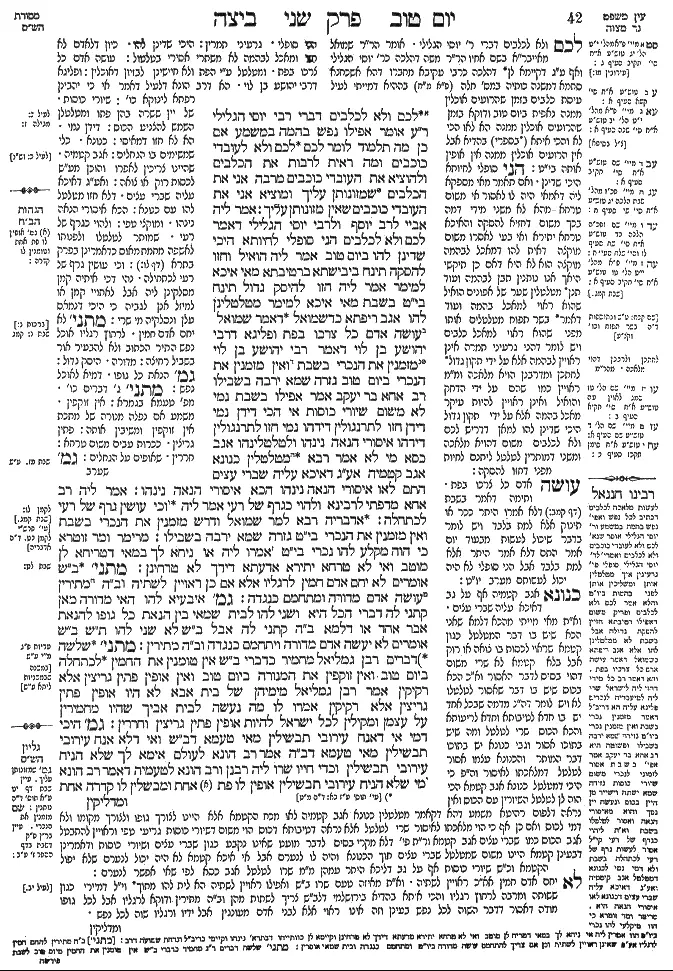
Beitza 21b - Guemara
לכם ולא לכלבים דברי רבי יוסי הגלילי ר"ע אומר אפילו נפש בהמה במשמע אם כן מה תלמוד לומר לכם לכם ולא לעובדי כוכבים ומה ראית לרבות את הכלבים ולהוציא את העובדי כוכבים מרבה אני את הכלבים שמזונותן עליך ומוציא אני את העובדי כוכבים שאין מזונותן עליך:
אמר ליה אביי לרב יוסף ולרבי יוסי הגלילי דאמר לכם ולא לכלבים הני סופלי לחיותא היכי שדינן להו ביום טוב אמר ליה הואיל וחזו להסקה תינח ביבישתא ברטיבתא מאי איכא למימר אמר ליה חזו להיסק גדול תינח בי"ט בשבת מאי איכא למימר מטלטלינן להו אגב ריפתא כדשמואל דאמר שמואל עושה אדם כל צרכו בפת ופליגא דרבי יהושע בן לוי דאמר רבי יהושע בן לוי מזמנין את הנכרי בשבת ואין מזמנין את הנכרי ביום טוב גזרה שמא ירבה בשבילו רב אחא בר יעקב אמר אפילו בשבת נמי לא משום שיורי כוסות אי הכי דידן נמי דידן חזו לתרנגולין דידהו נמי חזו לתרנגולין דידהו איסורי הנאה נינהו ולטלטלינהו אגב כסא מי לא אמר רבא מטלטלין כנונא אגב קטמיה אע"ג דאיכא עליה שברי עצים התם לאו איסורי הנאה נינהו הכא איסורי הנאה נינהו:
אמר ליה רב אחא מדפתי לרבינא ולהוי כגרף של רעי אמר ליה וכי עושין גרף של רעי לכתחלה:
אדבריה רבא למר שמואל ודרש מזמנין את הנכרי בשבת ואין מזמנין את הנכרי בי"ט גזרה שמא ירבה בשבילו:
מרימר ומר זוטרא כי הוה מקלע להו נכרי בי"ט אמרו ליה אי ניחא לך במאי דטריחא לן מוטב ואי לא טרחא יתירא אדעתא דידך לא טרחינן:
מתני׳ ב"ש אומרים לא יחם אדם חמין לרגליו אלא אם כן ראויין לשתיה וב"ה מתירין עושה אדם מדורה ומתחמם כנגדה:
גמ׳ איבעיא להו האי מדורה מאן קתני לה דברי הכל היא ושני להו לבית שמאי בין הנאת כל גופו להנאת אבר אחד או דלמא ב"ה קתני לה אבל ב"ש לא שני להו ת"ש ב"ש אומרים לא יעשה אדם מדורה ויתחמם כנגדה וב"ה מתירין:
מתני׳ שלשה דברים רבן גמליאל מחמיר כדברי ב"ש אין טומנין את החמין לכתחלה ביום טוב ואין זוקפין את המנורה ביום טוב ואין אופין פתין גריצין אלא רקיקין אמר רבן גמליאל מימיהן של בית אבא לא היו אופין פתין גריצין אלא רקיקין אמרו לו מה נעשה לבית אביך שהיו מחמירין על עצמן ומקילין לכל ישראל להיות אופין פתין גריצין וחררין:
גמ׳ היכי דמי אי דאנח עירובי תבשילין מאי טעמא דב"ש ואי דלא אנח עירובי תבשילין מאי טעמא דב"ה אמר רב הונא לעולם אימא לך שלא הניח עירובי תבשילין וכדי חייו שרו ליה רבנן ורב הונא לטעמיה דאמר רב הונא מי שלא הניח עירובי תבשילין אופין לו פת אחת ומבשלין לו קדרה אחת
Comments from Rashi on Masechet Beitza Page 21b
הני סופלי . גרעיני תמרין: היכי שדינן להו . כיון דלאדם לא חזו ומאכל לבהמה לא משתרי אסירי בטלטול: עושה אדם כל צרכו בפת . ומטלטל ע"י הפת ולא חיישינן לבזיון דאוכלין: ופליגא דרבי יהושע בן לוי . הא דרב הונא דלעיל דאמר אי כי יהבינן רפתא לינוקא כו': שיורי כוסות . של יין ששרה בהן פתו ומטלטלן השמש להצניע הכוס: דידן נמי . הא לא חזו דמאיסי: כנונא . כלי שמשימים בו הגחלים: אגב קטמיה . שהיינו צריכין לאפרו והוכן מע"ש לכסות רוק או צואה: ואע"ג דאיכא עליה שברי עצים . דלא חזו מטלטל להו עם כנונא: הכא איסורי הנאה נינהו . ומוקצי טפי: ולהוי כגרף של רעי . שמותר לטלטלו ולפנותו לאשפה מחמת מאוס כדאמרינן בפרק בתרא (דף לו:): וכי עושין גרף של רעי לכתחילה . נהי דכי איתיה קמן מסלקינן ליה אבל לאתויי קמן או למיזל אנן לגביה כי היכי דנמאס עלן ונסלקיה מי שרי: מתני' לא יחם אדם חמין . לרחוץ רגליו אוכל נפש התיר הכתוב ולא להבעיר אור בשביל רחיצה: מדורה . היסק גדול: גמ' הנאת כל גופו . דמיא לאוכל נפש: מתני' ג' דברים כו' . מפ' טעמא בגמרא: אין זוקפין . משמע אם נפלה מנורה של מתכת אין זוקפין ומשיבין אותה: פתין גריצין . ככרות עבים משום טרחא: חררין . שאופים על הגחלים: גמ'
Comments from Tosafot - Beitza 21b
לכם ולא לכלבים דברי ר' יוסי הגלילי. אומר הר"ר שמואל מאייבר"א בשם אחיו הר"ר משה דהלכה כר' יוסי הגלילי ואף ע"ג דקיימא לן דהלכה כרבי עקיבא מחברו דהא אשכחנא סתמא דמשנה כותיה במס' חלה (פ"א מ"ח) בההיא דמייתי לעיל עיסת כלבים בזמן שהרועים אוכלין ממנה נאפית ביום טוב ודוקא בזמן שהרועים אוכלין ממנה הא לאו הכי לא והכי איתא (בספרי) בהדיא אבל אין הרועים אוכלין ממנה אין אופין אותה בי"ט: הני סופלי לחיותא היכי שדינן. ואם תאמר מאי מספקא ליה דאמאי היה לו לאסור אי משום טרחא מהא לא משני מידי דמה בכך משום דחזיא להסקה והאיכא טרחא יתירא ואי בעי לאסרו משום מוקצה דאית להו דמאכל לבהמה מוקצה הוא לא היא דאם כן תיקשי היאך אנו נותנין תבן לבהמה ועוד תנן מטלטלין שער של אפונים הואיל שהוא ראוי למאכל בהמה ועוד דאמר בשר תפוח מטלטלים אותו מפני שהוא ראוי למאכל כלבים ויש לומר דהני גרעיני תמרה אינן ראויין לבהמה אלא על ידי תקון גדול לחתכן ומדרבנן הויא מלאכה ומ"מ ראויין כמו שהם על ידי הדחק והואיל ואינן ראויין להיות עיקר מאכל בהמה אלא על ידי תקון גדול היכי שדינן להו למאן דדריש לכם ולא לכלבים משום דהויא מלאכה ומשני דמותרין לטלטל ליתנם לחיות מפני דחזו להסקה: עושה אדם כל צרכו בפת. ותימה דאמר בשבת (דף קמב:) דלא אמרו היתר ככר או תינוק אלא למת בלבד ויש לומר בדבר שיכול לעשות מבעוד יום אמר התם דלא אמר היתר אלא למת בלבד אבל הני סופלי לא היה יכול לעשותם מערב יו"ט: כנונא אגב קטמיה אף על גב דאיכא עליה שברי עצים. וא"ת מאי מייתי מהכא דלמא שאני הכא שיש בו דבר המטלטל כגון קטמא שראוי לכסות בו צואה או רוק אבל בלא קטמא לא שרי משום דהוי בסיס לדבר האסור וא"כ הכא בכוס שיש בו דבר שאסור לטלטלו לא ויש לומר דה"נ מדמה שבכל אחד יש בו חדא לטיבותא וחדא לריעותא והכא הכוס שרי לטלטל ומה שיש בתוכו אסור וגבי כנונא יש בתוכו דבר המותר והכנונא עצמו אסור לטלטל דמלאכתו לאיסור וה"פ כי היכי דמטלטל כנונא אגב קטמא הכי הוה לן לטלטל השיורין עם הכוס ואין נראה דלפום רהיטא משמע דהא דקאמר מטלטלין כנונא אגב קטמיה לאו מכח הקטמא אלא היינו לצורך גופו ולצורך מקומו ולא דמי לכוס ואם כן אף כי הוי מלאכתו לאיסור שרי לטלטל אלא נראה דטיבותא דכוס הוי משום דשיורי כוסות גריעי טפי וראויין להתבטל אגב הכוס כמו שברי עצים אגב קטמא ור"ת פי' דלא מקרי בסיס לדבר מועט שאינו נקבע כגון שברי עצים ושיורי כוסות ודאמרינן דבעינן קטמא היינו משום שמטלטל שברי עצים תוך הכנונא והיה לו לנערם אבל אי איכא קטמא לא היה יכול לנערם שלא יפול הקטמא וכ"ש שיורי כוסות אף על גב דליכא היתר עמהן מ"מ שרו לטלטל אגב כסא לפי שאי אפשר לנערם: לא יחם אדם חמין אא"כ ראויין לשתיה. וא"ת מאיזה טעם שרו ב"ש ואפילו ראויין לשתיה הא לית להו מתוך וי"ל דמיירי כגון ששותה ומרבה לרחוץ רגליו והכי איתא בהדיא בירושלמי דלב"ש צריך לשתות מהן וב"ה מתירין ודוקא לרגליו אבל לכל גופו מודה דאסור דדבר השוה לכל נפש בעינן וזה אינו ראוי אלא לבני אדם מעונגין אבל ידיו ורגליו שוה לכל נפש:
Beitza 21b - Mishnah translated into english
indicating for you, but not for dogs; this is the statement of Rabbi Yosei HaGelili. Rabbi Akiva says: When the verse states “every soul,” it comes to teach that even the soul of an animal is included. If so, what is the meaning when the verse states “for you”? It means for you, but not for gentiles.
The Gemara asks: And what did you see that led you to include dogs among those on whose behalf one is permitted to perform a labor on a Festival, and to exclude gentiles? The Gemara explains: I include dogs because the responsibility for their sustenance is incumbent upon you, as one is obligated to feed the animals in his possession; and I exclude gentiles because the responsibility for their sustenance is not incumbent upon you.
With regard to this baraita, Abaye said to Rav Yosef: And according to Rabbi Yosei HaGelili, who said that the verse indicates: “For you,” but not for dogs, how are we permitted to cast date stones to animals on a Festival? Since date stones are not fit for human consumption, they should be considered muktze, and therefore it should be prohibited to handle them.
Rav Yosef said to him: Since they are fit for fuel, they may be handled, and therefore they may also be given to animals. Abaye objected: This works out well in the case of dry date stones; but in the case of moist ones, which are not suited for fuel, what is there to say? He said to him: They are fit for a large fire, which dries them out, after which they burn well.
Abaye raised another objection: This works out well in the case of a Festival, when it is permitted to fuel a fire, but in the case of Shabbat, what is there to say? Why should one be permitted to handle date stones on Shabbat? Rav Yosef answered: We carry them along with bread. We place the date stones upon a loaf of bread and move them together with it. This is in accordance with the opinion of Shmuel, as Shmuel said: A person may perform all his needs with bread; as long as the bread remains edible, he need not be concerned that he is treating the bread contemptuously.
The Gemara comments: And the ruling of Rav Huna that one is permitted to bake for gentiles on a Festival if they allow a Jew to eat of the bread differs from the opinion of Rabbi Yehoshua ben Levi. As Rabbi Yehoshua ben Levi said: One may invite a gentile for a meal on Shabbat, as he will certainly not cook for him on Shabbat, and it is permitted to give a gentile food that was prepared the day before. But one may not invite a gentile for a meal on a Festival; this is prohibited as a preventive measure lest he come to cook more for the gentile’s sake. This indicates that Rabbi Yehoshua ben Levi holds that one may not prepare more for a gentile, even if the meal is primarily meant for Jews.
Rav Aḥa bar Ya’akov said: Even on Shabbat as well, one may not invite a gentile for a meal due to the wine remnants in the cups. Once a gentile has drunk wine from a cup, whatever remains in the cup may not be used and is therefore considered muktze. Therefore, a Jew may not host a gentile on Shabbat lest he come to handle the muktze wine remnants on Shabbat. The Gemara asks: If so, our cups should also be prohibited, as they too contain wine remnants that have no use whatsoever and should therefore be considered muktze. The Gemara answers: The remnants in our cups are fit for chickens. The Gemara objects: If so, the remnants in their cups are also fit for chickens. The Gemara rejects this argument: The remnants in their cups are items from which it is prohibited to derive any benefit whatsoever; consequently, they may not be handled at all.
The Gemara asks: And let him move what remains of the wine on account of the cup, which is a vessel that may be handled, as the wine remnants should be considered nullified in relation to the cup. Didn’t Rava say: One may move a coal pan [kannuna] on account of the ashes that can be used to cover filth, even though there are broken pieces of wood on it that have no use? This indicates that one may move something that is muktze along with something else that one is permitted to handle.
The Gemara rejects this argument: There is a difference between the two cases. There, the broken sticks are not items from which it is prohibited to derive any benefit but are merely muktze, whereas here, what remains of the wine in the gentile’s cup is an item from which it is prohibited to derive any benefit, and therefore the prohibition is more stringent.
Rav Aḥa of Difti said to Ravina: But let it be like a chamber pot for feces, which may be removed from a room because it is repulsive. One should likewise be permitted to discard the remnants of these cups, since it is unseemly to leave them on the table. Ravina said to him: If the cups contain such remnants, they may be removed, but may one make a chamber pot for feces ab initio? The Sages ruled that one may not invite a gentile for a meal on Shabbat so as to avoid such complications.
In summary of this halakha, the Gemara states that Rava authorized the Sage Mar Shmuel, from the house of the Exilarch, to deliver a public lecture, and the latter taught: One may invite a gentile for a meal on Shabbat, but one may not invite a gentile for a meal on a Festival as a preventive measure, lest he come to cook more for his sake. It is related about Mareimar and Mar Zutra that when a gentile would happen to come to their house on a Festival, they would say to him: If you are satisfied with the food that we have prepared for ourselves, good; and if not, we will not go to any extra trouble on your account.
MISHNA: Beit Shammai say: A person may not heat water on a Festival in order to wash his feet unless it is also fit for drinking, as they hold that kindling a fire on a Festival is permitted only for the sake of preparing food, but not for washing. But Beit Hillel permit one to kindle a fire on a Festival even for washing. A person may kindle a large fire and warm himself at it.
GEMARA: A dilemma was raised before the Sages: This halakha with regard to a fire, who taught it? Is it a statement accepted by all, including Beit Shammai, and Beit Shammai differentiate between benefit affecting one’s entire body and benefit affecting a single limb, so that they agree that kindling a fire to heat one’s entire body is similar to kindling a fire for food and is therefore permitted, while heating water to wash one’s feet remains prohibited? Or perhaps Beit Hillel taught it, but Beit Shammai do not differentiate between the two cases, and they permit kindling a fire on a Festival only for the purpose of preparing food.
Come and hear a proof from an explicit baraita: Beit Shammai say: A person may not make a fire and warm himself at it, but Beit Hillel permit it. It is clear from here that the latter clause of the mishna was taught only in accordance with the opinion of Beit Hillel.
MISHNA: Rabban Gamliel was stringent about three things in accordance with the statement of Beit Shammai: One may not insulate hot food on a Festival for Shabbat ab initio, but rather one ought to do so on the eve of the Festival; and one may not set up a metal candelabrum that fell on a Festival; and one may not bake thick loaves on a Festival but only thin ones, due to the great effort entailed in preparing the former. Rabban Gamliel said: From the days of my father’s household they would never bake thick loaves on a Festival, but only thin ones. The Sages said to him: What shall we do for your father’s household, who were stringent with themselves but lenient with all of the Jewish people, to allow them to bake thick loaves and cakes baked on coals.
GEMARA: With regard to the mishna’s statement that Rabban Gamliel would not permit the insulation of hot water on a Festival ab initio, the Gemara asks: What are the circumstances? If it is referring to a case where he prepared a joining of cooked foods [eiruv tavshilin], what is the reason that Beit Shammai prohibit it? And if it speaks of a case where he did not set aside an eiruv tavshilin, what is the reason for the lenient ruling of Beit Hillel? Rav Huna said: Actually, I will say to you that the mishna is referring to a case where one did not prepare an eiruv tavshilin, but Beit Hillel hold that the Sages nevertheless permitted him to prepare what he needs for his basic sustenance.
The Gemara comments: And Rav Huna conforms to his standard line of reasoning, as Rav Huna said: With regard to one who did not prepare an eiruv tavshilin on the eve of a Festival, others may bake one loaf of bread for him, and cook one pot of food for him,
Traduction : The William Davidson digital edition of the Koren Noé Talmud, with commentary by Rabbi Adin Even-Israel Steinsaltz.