 Talmud Bavli
Beitza 18a : Youtube
Daf TubeYoutube
3 video classes :
Beitza Page 18a
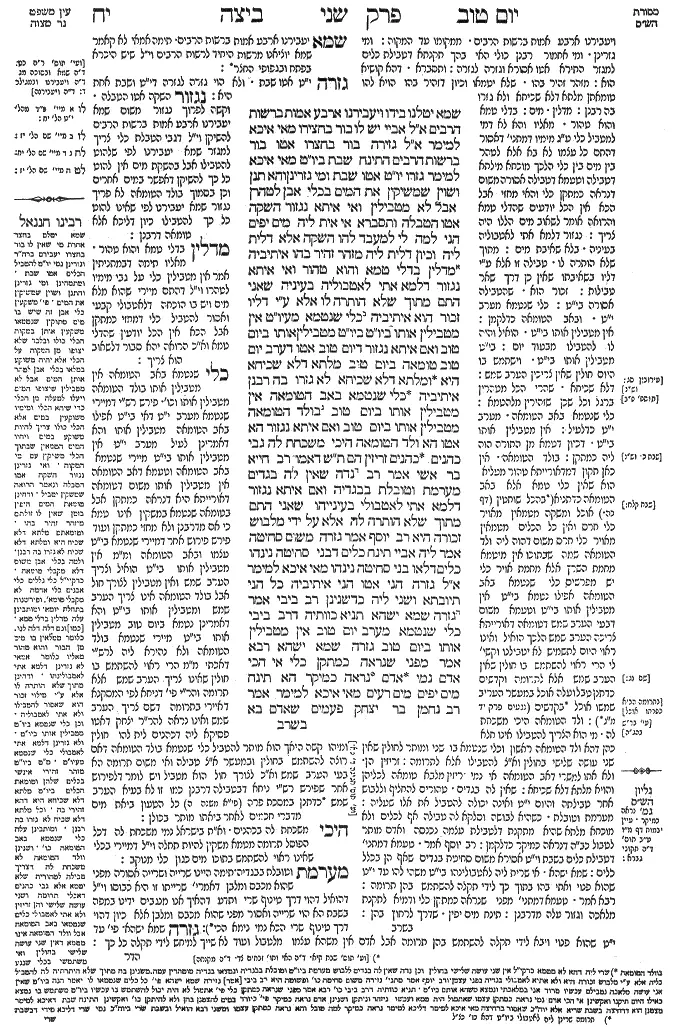
Beitza 18a - Guemara
שמא יטלנו בידו ויעבירנו ארבע אמות ברשות הרבים א"ל אביי יש לו בור בחצירו מאי איכא למימר א"ל גזירה בור בחצרו אטו בור ברשות הרבים התינח שבת ביו"ט מאי איכא למימר גזרו יו"ט אטו שבת ומי גזרינן והא תנן ושוין שמשיקין את המים בכלי אבן לטהרן אבל לא מטבילין ואי איתא נגזור השקה אטו הטבלה ותסברא אי אית ליה מים יפים הני למה לי למעבד להו השקה אלא דלית ליה וכיון דלית ליה מזהר זהיר בהו איתיביה מדלין בדלי טמא והוא טהור ואי איתא נגזור דלמא אתי לאטבוליה בעיניה שאני התם מתוך שלא הותרה לו אלא ע"י דליו זכור הוא איתיביה כלי שנטמא מעיו"ט אין מטבילין אותו ביו"ט ביו"ט מטבילין אותו ביום טוב ואם איתא נגזור דיום טוב אטו דערב יום טוב טומאה ביום טוב מלתא דלא שכיחא היא ומלתא דלא שכיחא לא גזרו בה רבנן איתיביה כלי שנטמא באב הטומאה אין מטבילין אותו ביום טוב בולד הטומאה מטבילין אותו ביום טוב ואם איתא נגזור הא אטו הא ולד הטומאה היכי משכחת לה גבי כהנים כהנים זריזין הם ת"ש דאמר רב חייא בר אשי אמר רב נדה שאין לה בגדים מערמת וטובלת בבגדיה ואם איתא נגזור דלמא אתי לאטבולי בעינייהו שאני התם מתוך שלא הותרה לה אלא על ידי מלבוש זכורה היא רב יוסף אמר גזרה משום סחיטה אמר ליה אביי תינח כלים דבני סחיטה נינהו כלים דלאו בני סחיטה נינהו מאי איכא למימר א"ל גזרה הני אטו הני איתיביה כל הני תיובתא ושני ליה כדשנינן רב ביבי אמר גזרה שמא ישהא תניא כוותיה דרב ביבי כלי שנטמא מערב יום טוב אין מטבילין אותו ביום טוב גזרה שמא ישהא רבא אמר מפני שנראה כמתקן כלי אי הכי אדם נמי אדם נראה כמיקר הא תינח מים יפים מים רעים מאי איכא למימר אמר רב נחמן בר יצחק פעמים שאדם בא
Comments from Rashi on Masechet Beitza Page 18a
גמרא ויעבירנו ארבע אמות ברשות הרבים . ממקומו עד המקוה: ומי גזרינן . ומי אחמור רבנן כולי האי בהך תקנתא דטבילת כלים למגזר התירא אטו אסורא וגזרה לגזירה: ותסברא . דהא קושיא הוא: מזהר זהיר בהו . שלא יטמאו וכיון דזהיר בהו הויא להו טומאתן מלתא דלא שכיחא ולא גזרו בה רבנן: מדלין . מים: בדלי טמא והוא טהור . מאליו והא לא דמי למטביל כלי ע"ג מימיו דמתני' דאסור דהתם כל עצמו לא בא אלא לטהר בין מים בין כלי הלכך מוכחא מילתא דטבילה וטעמא דטבילה אסורה משום דנראה כמתקן כלי והאי מחזי אבל הכא אין הכל יודעים שהדלי טמא והרואה אומר לשאוב מים הללו היה צריך: נגזור דלמא אתי לאטבוליה בעיניה . בלא שאיבת מים: מתוך שלא הותרה לו . טבילה זו אלא ע"י דליו בשאיבתו שאין כן דרך שאר טבילות: זכור הוא . שהטבילה אסורה בי"ט: כלי שנטמא מערב י"ט . ובאב הטומאה כדלקמן: אין מטבילין אותו בי"ט . הואיל והיה לו להטבילן מבעוד יום: בי"ט מטבילין אותו בי"ט . וישתמש בו היום חולין שאין צריכין הערב שמש: דלא שכיחא . שהרי הכל מטהרין ברגל וכל שכן שזהירין מלהטמא: כלי שנטמא באב הטומאה . מערב י"ט כדלעיל: אין מטבילין אותו בי"ט . דכיון דטמא מן התורה הוה ליה כמתקן: בולד הטומאה . אין כאן תקון דמדאורייתא טהור מעליא הוא שאין כלי טמא אלא באב הטומאה כדתניא (בהכל שוחטין (דף כה.) אוכל ומשקה מטמאין מאויר כלי חרס ואין כל הכלים מטמאין מאויר כלי חרס משום דהוה ליה ולד הטומאה שמה שבתוכו אין מיטמא מחמת השרץ אלא מחמת אויר כלי יש מפרשים כלי שנטמא באב הטומאה אפילו נטמא בי"ט אין מטבילין אותו בי"ט וטעמא משום דבעי הערב שמש דטומאה דאורייתא צריכה הערב שמש הלכך הואיל ואינו ראוי היום לתשמיש לא יטבילנו וקשי' לי הרי ראוי להשתמש בו חולין שאין הערב שמש אלא לתרומה וקדשים כדתנן טבל ועלה אוכל במעשר העריב שמשו אוכל בקדשים (נגעים פרק יד מ"ג): ולד הטומאה היכי משכחת לה . מי הוא הצריך להטבילו אינו אלא כהן דהא ולד הטומאה ראשון וכלי שנטמא בו שני ומותר לחולין שאין שני עושה שלישי בחולין וא"צ להטבילו אלא לתרומה: זריזין הן . ולא אתו למשרי דאב הטומאה אי נמי זריזין מלבא טומאה לכליהן והויא מלתא דלא שכיחא: שאין לה בגדים . טהורים להחליף וללבוש אחר טבילתה והיום י"ט ואינה יכולה להטביל את אלו שעליה: מערמת וטובלת . כשהיא לבושה וסלקא לה טבילה אף לכלים ולא מוכחא מלתא שהיא מתקנת דלטבילת עצמה נכנסה ואדם מותר לטבול כב"ה דנראה כמיקר כדלקמן: רב יוסף אמר . טעמא דמתני' דטבילת כלים בשבת וי"ט אסירא משום סחיטת בגדים שאף הן בכלל כלים: שמא ישהא . אי שרית ליה לאטבולינהו ביו"ט משהי להו עד י"ט שהוא פנוי ואתי בהו בתוך כך לידי תקלה להשתמש בהן תרומה: רבא אמר . טעמא דמתני' מפני שנראה כמתקן כלי ודמיא לתקנת מלאכה וגזור עלה מדרבנן: תינח מים יפין . שדרך לרחוץ בהן:
Comments from Tosafot - Beitza 18a
שמא יעבירנו ארבע אמות ברשות הרבים. תימה אמאי לא קאמר שמא יוציאנו מרשות היחיד לרשות הרבים וי"ל שיש היכרא בפתח ובגפופי החצר: גזרה י"ט אטו שבת. ולא הוי גזרה לגזרה די"ט ושבת אחת היא: נגזור השקה אטו הטבלה. וקשה לפרוך נגזור משום שמא יעבירנו ארבע אמות ברשות הרבים להשיקן וי"ל דגבי הטבלת כלי צריך למגזר שמא יעבירנו לפי שלהוט להטבילו אבל בהשקת מים אין להוט כל כך להשיקן דאפשר במים אחרים וכן בסמוך בולד הטומאה לא פריך נגזור שמא יעבירנו לפי שאינו להוט כל כך להטבילו כיון דליכא אלא טומאה דרבנן: מדלין בדלי טמא והוא טהור. מאליו תימה דבמתניתין אמר אין מטבילין כלי על גבי מימיו לטהרו וי"ל דהתם מיירי שהוא מלא מים ויש בו הוכחה דלאטבולי קבעי ואסור להטביל כלי דמחזי כמתקן אבל הכא אין הכל יודעין שהדלי טמא וא"כ הרואה יהא סבור דלשאוב הוא צריך: כלי שנטמא באב הטומאה אין מטבילין אותו בולד הטומאה מטבילין אותו וכו'. פירש רש"י דמיירי שנטמא מערב י"ט דאי בי"ט אפילו באב הטומאה מטבילין אותו והא דאמרינן לעיל מערב י"ט אין מטבילין אותו בי"ט מיירי שנטמא באב הטומאה וטעמא דאב הטומאה אין מטבילין אותו משום דטומאה דאורייתא היא דנראה כמתקן אבל בטומאה שנטמא במשקין אינו טמא כי אם מדרבנן ולא מחזי כמתקן ועוד פירש פירוש אחר דמיירי שנטמא בי"ט עצמו ובאב הטומאה ומ"מ אין מטבילין אותו בי"ט הואיל וצריך הערב שמש ואין מטבילין לצורך חול אבל בולד הטומאה אינו צריך הערב שמש ומטבילין אותו בי"ט והא דאמרינן נטמא ביום טוב מטבילין אותו בי"ט מיירי שנטמא בולד הטומאה ולא נהירא ליה לרש"י דאכתי מ"מ הרי ראוי להשתמש בו חולין שאינו צריך הערב שמש אלא תרומה והר"י פי' דניחא לפי המסקנא דאיירי בתרומה דשם צריך הערב שמש ואינו נראה להר"ר יצחק דאטו פסיקא ליה דכהנים לית להו חולין ומיהו קשה היאך הוא מותר להטביל כלי שנטמא בולד הטומאה דאם רוצה להשתמש בחולין ובמעשר א"צ טבילה ואי משום תרומה הא בעי הערב שמש וא"כ לצורך חול הוא מטביל ויש לומר דלפירוש אחר שפירש רש"י ניחא דבטבילה דרבנן כמו זו לא בעיא הערב שמש. כדתנן במסכת פרה (פי"א משנה ה) כל הטעון ביאת מים מדברי חכמים לאחר ביאתו מותר בכולן: היכי משכחת לה בכהנים. וא"ת בישראל נמי משכחת לה דכל הפוסל תרומה מטמא משקין להיות תחלה וי"ל דמיירי בכלי שאינו ראוי להשתמש בתוכו מים כגון כלי מנוקב: מערמת וטובלת בבגדיה. תימה היינו שרייה ושרייה אסורה מפני שהוא מכבס ומלבן דאמרי' שרייתו זו היא כבוסו וי"ל דהואיל דהוי דרך טינוף שרי ותדע דהאיך אנו מנגבים ידינו במפה בשבת הא הוי שרייה ואסור מפני שהוא מכבס ומלבן אלא כיון דהוי דרך טינוף שרי הכא נמי נימא הכי: גזרה שמא ישהא. פי' עד י"ט שהוא פנוי ויבא לידי תקלה להשתמש בהן תרומה אבל אדם אין משהא עצמו מלטבול ועוד לא שייך למיחש לידי תקלה כל כך:
Beitza 18a - Mishnah translated into english
lest one come to pick up the vessel in his hand and carry it four cubits in the public domain to a ritual bath. Abaye said to Rabba: If one has a pit full of water of a ritual bath in his courtyard, so that this decree should not apply, what is there to say? Rabba said to him: The Sages issued a decree against immersing vessels even in a pit of water in one’s own courtyard due to a pit situated in the public domain.
Abaye posed another challenge: This works out well with regard to Shabbat, but with regard to a Festival, when there is no prohibition against carrying from one domain to another, what is there to say? Rabba replied: The Sages issued a decree that it is prohibited to immerse a vessel on a Festival, due to the prohibition against immersing it on Shabbat.
The Gemara asks: And do we issue a decree in such a case? But didn’t we learn in the mishna: And Beit Shammai and Beit Hillel both agree that one may bring ritually impure water into contact with ritually pure water in stone vessels in order to purify the water. However, one may not immerse the impure water in a ritually impure vessel in order to purify the vessel at the same time. And if it is so that such a decree was issued, let us also decree here that bringing ritually impure water into contact with ritually pure water is prohibited due to the prohibition against immersing a ritually impure vessel in a ritual bath.
The Gemara rejects this challenge: And how can you understand that there is substance to this question? If he has other good, ritually pure, water to drink, why do I need to bring this ritually impure water into contact with the ritually pure water? Rather, one must say that he does not have suitable drinking water, and since he does not have other water, he is particularly careful about this water, so that it not become impure. Therefore, perforce, this must be an exceptional case, as the water became impure despite the precautions that were taken; and the Sages did not apply their decrees to unusual cases.
Abaye raised an objection from the following baraita: One may draw water from a spring or a ritual bath on a Festival with a ritually impure pail, and the pail becomes ritually pure because while being filled with water, the bucket is completely immersed in the ritual bath. And if it is so that the Sages issued such a decree, let us also decree here that it is prohibited to draw water on Festival with a ritually impure pail lest one come to immerse the pail by itself. Rabba answered: It is different there; since it is permitted for him to immerse the pail only by drawing water with it, he remembers that it is prohibited to immerse a vessel by itself, and therefore there is no reason to issue a decree.
Abaye raised an objection from a different baraita, in which it was taught: With regard to a vessel that was rendered ritually impure on the eve of a Festival, one may not immerse it on the Festival; however, if it became impure on the Festival itself, one may immerse it on the Festival. And if it is so that the Sages issued such a decree, let us also decree here that it is prohibited to immerse a vessel that became impure on a Festival due to the prohibition against immersing a vessel that became impure on the eve of a Festival. Rabba answered: Contracting ritual impurity on a Festival, when all are ritually pure, is an uncommon occurrence, and the general principle is that in the case of an uncommon occurrence, the Sages did not issue a decree as a preventive measure.
Abaye raised yet another objection from the following baraita: With regard to a vessel that was rendered ritually impure by a primary source of impurity, one may not immerse it on a Festival. However, if it was rendered impure only by a derivative source of impurity, meaning that the vessel came into contact with an object that was rendered impure by a primary source of impurity, so that the object has the status of first-degree ritual impurity and confers upon the vessel the status of second-degree ritual impurity, a type of impurity that applies to vessels only by rabbinic decree; in such a case, one may immerse the vessel on a Festival. And if it is so that the Sages issued such a decree, let us also decree here that it is prohibited to immerse this, a vessel rendered impure by a derivative source of impurity, due to the prohibition to immerse that, a vessel rendered impure by a primary source of impurity.
Rabba replied: Where do you find a case where people are particular about purifying a vessel that contracted ritual impurity from a derivative source of impurity? It is only in one situation, namely, with regard to priests, since they eat teruma, and teruma contracts ritual impurity even from a vessel that came into contact with only a derivative source of impurity. An ordinary person, who eats non-consecrated produce, does not go to the trouble of purifying such a vessel, since regular produce contracts ritual impurity only from a vessel that came into contact with a primary source of impurity, but not from a vessel that came into contact with a derivative source of impurity. And as for priests, the general principle is that priests are vigilant; they are careful not to allow their vessels to become impure. Therefore, impurity in the case of priests is considered a rare occurrence, with regard to which the Sages did not issue a decree.
The Gemara further suggests: Come and hear a different proof, as Rav Ḥiyya bar Ashi said that Rav said: A menstruating woman who has no ritually pure clothes to wear after she immerses herself in a ritual bath to purify herself, as all her clothes had become impure, and it is Shabbat or a Festival, when she is unable to immerse them, may employ an artifice to circumvent the prohibition and immerse herself in her clothes. She is permitted to purify herself, and when she immerses herself while wearing her garments, they become purified at the same time. And if it is so that the Sages issued such a decree, let us also decree that it is prohibited for the woman to immerse herself in her clothes lest she come to immerse the clothes by themselves.
The Gemara answers: It is different there; since it is permitted for her to immerse the clothes only by wearing them as garments, she remembers that it is prohibited to immerse them by themselves and will not come to violate this prohibition.
Apropos Rabba’s view that one may not immerse a vessel on Shabbat lest he come to carry it four cubits in the public domain, Rav Yosef said that it is prohibited to immerse a vessel on Shabbat for a different reason: It is a decree issued by the Sages as a preventive measure due to the prohibition against wringing. After immersing certain items, such as clothes, one might come to wring them, and this is prohibited on Shabbat and Festivals as a subcategory of the biblically prohibited labor of threshing.
Abaye said to Rav Yosef: This works out well with regard to vessels that are fit for wringing, such as clothes, but with regard to vessels that are not fit for wringing, what is there to say? Rav Yosef said to him: The Sages issued a decree against these vessels, which cannot be wrung, due to those vessels, which can be wrung. Abaye raised against Rav Yosef all of these objections that he had raised against Rabba, in an attempt to prove that the Sages did not issue such a decree, and Rav Yosef answered him as we answered in the name of Rabba.
Rav Beivai said a different reason: The prohibition against immersing a vessel on a Festival is a decree issued by the Sages lest one come to delay the immersion of his impure vessels. Were the Sages to permit him to immerse vessels on a Festival, he might delay immersing all of his impure vessels until the Festival, when he has more free time; and were he to leave ritually impure vessels in his possession for a lengthy period, he might come to defile items that must be kept ritually pure, such as teruma. The Gemara comments: It is taught in a baraita in accordance with the opinion of Rav Beivai: With regard to a vessel that became ritually impure on the eve of a Festival, one may not immerse it on a Festival, due to a decree lest he come to delay and keep impure vessels in his home in order to immerse them on the Festival.
Rava said yet a different reason: It is prohibited to immerse a vessel on Shabbat because it looks as if he is repairing the vessel. Since the vessel was previously unfit for use, and the act of immersion renders it usable, this is similar to the repair of a vessel, which Torah law proscribes on Shabbat and Festivals. The Gemara challenges this understanding: If so, a person should likewise be prohibited to immerse himself, because it looks as if he is repairing himself through purification. The Gemara answers: A person undergoing immersion looks as if he is cooling himself. Since it is not clearly evident that he is immersing in order to purify himself, as he might be bathing for his pleasure, there is no reason to prohibit the immersion.
The Gemara challenges this explanation: This works out well in a case where he immerses himself in good, clean water, in which it would be a pleasure to bathe; but if he immerses himself in bad, murky water, as the water of a ritual bath is not always sufficiently clean, what is there to say? Rav Naḥman bar Yitzḥak said: Even in that case, his actions do not prove that his intention is to purify himself, as sometimes a person comes home
Traduction : The William Davidson digital edition of the Koren Noé Talmud, with commentary by Rabbi Adin Even-Israel Steinsaltz.